-
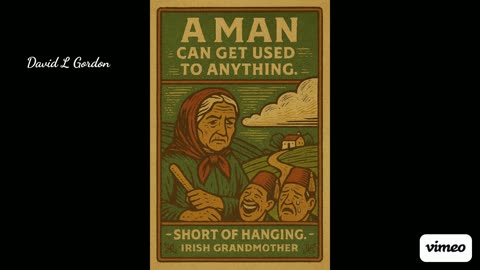
The Kid Episode IV - A Man Can Get Used To Anything Short Of Hanging
VingatonHe whipped out his notebook and scribed out the following monologue: “You know what my Irish grandmother used to say? “A man can get used to anything short of hanging.” She said it while peeling potatoes. Not dramatically. Not like it was wisdom. Just like it was weather. Like: “Looks like rain.” Like: “The dog’s got worms again.” Like: “A man can get used to anything short of hanging.” And I laughed. Every time. Because it’s funny, right? It’s funny the way a funeral is funny when the priest forgets the name of the deceased. It’s funny the way your life is funny when you realize it’s just a long series of things you got used to....and inappropriate laughs are often the heartiest! I tried to write a routine about it. About love. About devotion. About how we get used to people. How we get used to being disappointed by them. How we get used to disappointing them back. How we call that love. But it wasn’t funny. It was just true. And truth is like a potato—nutritious, but hard to sell onstage. So I scrapped the routine. But I kept the line. “A man can get used to anything short of hanging.” And I wondered: Why did it make me laugh? Maybe because it’s brave. Maybe because it’s hopeless. Maybe because it’s both. And that’s the punchline of existence. You ever laugh at something and then wonder if you’re the joke? That’s what it feels like. That’s what she gave me. A line that makes me laugh and makes me wonder why. So I say it now, like a prayer. Like a spell. Like a punchline. “A man can get used to anything short of hanging.”14 views -
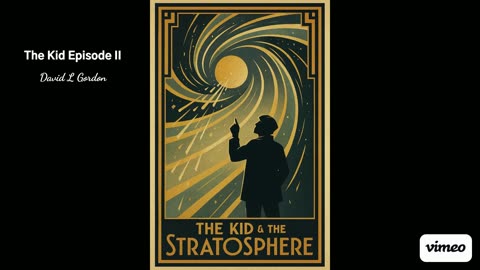
Ridge Runner - The Kid & The Stratosphere
VingatonArchitecture of Thought “Folks, I figured it out. The universe isn’t run by politicians, bankers, or priests. It’s run by your dumb little thoughts. One stray idea in your head, and reality goes, ‘Oh, we’re doing this? Okay, let me build a whole nightmare around it.’ Thoughts aren’t ideas,Theyre blueprints. You think it, the cosmos starts pouring concrete. And suddenly you’re trapped in the prison your own brain designed. Congratulations! You’re the architect of your own humiliation.” [Intro] “Folks, I figured it out. The universe isn’t run by politicians, bankers, or priests. It’s run by your dumb little thoughts. One stray idea in your head, and reality goes, ‘Oh, we’re doing this? Okay, let me build a whole nightmare around it.’ Thoughts aren’t ideas,Theyre blueprints. You think it, the cosmos starts pouring concrete. And suddenly you’re trapped in the prison your own brain designed. Congratulations! You’re the architect of your own humiliation.” [Verse] One dumb thought in my head today The cosmos whispered "Let's play" A stray idea A reckless seed And now the ground's beneath my feet [Prechorus] Pour the concrete Lay the bars Cage my mind Build the scars [Chorus] Blueprints Blueprints Oh can't you see The prison walls are made by me I thought it once It spun so fast Now I'm the architect of my own collapse [Verse 2] A nightmare blooms where dreams should grow The universe just needs a "go" It doesn't wait It doesn't pause A thought becomes the final clause [Prechorus] Brick by brick And line by line The cosmos laughs "This mess is mine" [Chorus] Blueprints Blueprints Oh can't you see The prison walls are made by me I thought it once It spun so fast Now I'm the architect of my own collapse “So I’m on the bus, thinking: ‘Cut through Woolworth’s, save five minutes.’ That’s it. That’s the spell. Next thing I know, I’m in a pool hall explaining to a biker gang why I want my money back. And they’re looking at me like I’m rather unwanted dead meat. That’s the cosmic joke, man. One shortcut in your head, and the universe builds a whole beating around it. [Intro] “So I’m on the bus, thinking: ‘Cut through Woolworth’s, save five minutes.’ That’s it. That’s the spell. Next thing I know, I’m in a pool hall explaining to a biker gang why I want my money back. And they’re looking at me like I’m rather unwanted dead meat. That’s the cosmic joke, man. One shortcut in your head, and the universe builds a whole beating around it. [Verse] The bus hums low like a broken dream Thought I'd save time with a backstreet scheme Woolworth's cut-through calling my name One small thought sparks a hurricane [Chorus] Shortcut to trouble yeah it's all in my head Turn left for freedom turn right for dread One quick fix now the dice are cast Shortcut to trouble and the trouble's fast [Verse 2] Pool hall neon's buzzing sharp and mean Biker eyes like wolves in a bad daydream They want my money I want my skin Shortcut whispers "You’ll never win" [Prechorus] Every step’s a riddle every breath’s a dare Cosmic joke’s laughing in the thin night air [Chorus] Shortcut to trouble yeah it's all in my head Turn left for freedom turn right for dread One quick fix now the dice are cast Shortcut to trouble and the trouble's fast [Bridge] Thoughts are spells and spells are knives Cut through corners cutting lives The map’s a lie the truth’s a mess Shortcuts curse what they profess Reality’s not passive—it’s the world’s greatest improv troupe. You throw out a dumb idea, it says, ‘Yes, and…’” Abracadabra! Presto! And Ala Kazam! “And once the universe knows you’re dumb enough to trust your own thoughts, it doesn’t stop. It’s like cable television—it just keeps pumping garbage into your life. You’re not living, you’re channel‑surfing through your own bad decisions. [Intro] Reality’s not passive—it’s the world’s greatest improv troupe. You throw out a dumb idea, it says, ‘Yes, and…’” "Abracadabra! Presto! And Ala Kazam!" “And once the universe knows you’re dumb enough to trust your own thoughts, it doesn’t stop. It’s like cable television—it just keeps pumping garbage into your life. You’re not living, you’re channel‑surfing through your own bad decisions. [Verse] Reality’s got jokes it loves to pull Throws me a curveball then plays it cool I said one word it said "Yes and…" Now I’m juggling chaos with both hands [Prechorus] Every idea’s a rabbit hole And I’m Alice losing control [Chorus] Abracadabra! Presto! Ala Kazam! I’m stuck in the circus I never planned Flipping through channels of my own bad schemes It’s all just reruns of my shattered dreams [Verse 2] Tried to outsmart it with a master plan The universe laughed said "Try again man" I’m not living I’m just flipping through The sitcom of me chasing déjà vu [Bridge] Oh remote control where’s the rewind Fast forward my mess leave it behind But no the screen just keeps glitching This bad idea train ain’t switching [Chorus] Abracadabra! Presto! Ala Kazam! I’m stuck in the circus I never planned Flipping through channels of my own bad schemes It’s all just reruns of my shattered dreams “Next thought: ‘I’ll grab a quick sandwich at the lunch counter.’ Sounds innocent, right? Suddenly the guy behind the counter tells me the sandwich is cursed. He says, ‘Eat this, and you’ll see the truth.’ And I’m like, ‘Buddy, I wanted pastrami, not enlightenment. I’m not ready to meet God between two slices of rye.’ But that’s how thought works—it doesn’t stop at lunch. It builds a mystical subplot around your appetite. Suddenly I’m chewing bread and questioning the nature of reality. Pastrami shouldn’t be a portal, but here we are.” “Final thought, Ill hop off the bus early, take the alley through Kensington.’ Boom—instant initiation ritual. The graffiti looks like scripture, a guy’s selling incense that smells like regret, and a stray cat stares at me like it knows my karma. That’s when I realize: every thought is a spell. You don’t cast it with wands—you cast it with shortcuts, sandwiches, and bad decisions. And the universe? It’s the world’s greatest improv troupe. You throw out a dumb idea, and it builds the whole scene around you. That’s magick, folks. That’s creation. That’s comedy. And the joke’s always on you.” “So yeah, thoughts have substance. They’re bricks, they’re spells, they’re scripts. And me? I’m just the kid who keeps writing bad ones. But hey—at least it’s material. And if you don’t laugh at it, you’ll cry. And if you cry, the universe will build a whole sitcom around your tears.” “That’s the punchline of existence, folks. You think you’re hungry, but you’re starving for meaning. And the universe will serve it to you—whether you ordered it or not.” “Welcome to the show!” When the Kid tells his story, The shortcut through Woolworth’s, the pastrami prophecy, the Kensington detour—to his buddy “Reb”, who we all regarded as a bit of a mystic, the exchange becomes less about comedy and more about initiation. Listening Without Judgment, Reb doesn’t laugh or scold. He listens as if each absurd detail—the biker gang, the cursed sandwich, the alley cat—is a sacred text. Reframing the Chaos, Reb tells the Kid,“Every humiliation is a scripture. Every stray thought is a spell. You are learning that the mind is not a servant but a magician—one that conjures worlds whether you ask it to or not.” “You see, the shortcut wasn’t about saving time—it was about seeing how thought builds karmic architecture. The pastrami wasn’t lunch—it was initiation into the truth that appetite itself is a portal. The Kensington alley wasn’t a detour—it was a temple disguised as graffiti and regret. Reb reminded the Kid that thought has substance, but it is not ultimate reality. The real lesson is to witness the thought without being trapped in its construction. The Kid sees that his misadventures aren’t random—they’re demonstrations of how thought actuates reality. His comedy becomes scripture, the punchlines are parables, the absurdities are initiations. He realizes that telling the story itself is magick, the act of naming the chaos transforms humiliation into art. Reb smiles and says, “Yes. You are already practicing the highest form of magick. You take the substance of thought, the architecture of humiliation, and you transmute it into laughter. That is liberation. That is the sound of the soul remembering itself.” Reb (pointing upward), “Your thoughts go up to the Stratosphere and bounce back down to become reality. Depending on the strength of your will and belief, they will solidify to some degree or another in our world… sometimes as notions, sometimes as ghosts, and sometimes as grand designs.” The Kid (squinting, half‑laughing), “So you’re telling me my shortcut through Woolworth’s went orbital? Like NASA launched it, bounced it off the Stratosphere, and re‑entered as a biker gang beating? Man, I thought I was just late for the bus. Turns out I’m an architect of ghosts.” Reb (calm, smiling), “Yes. Even the smallest thought is a seed. The cosmos does not care if it is wise or foolish—it will grow it all the same.” The Kid (leaning in, riffing), “Great. So my brain’s not just a bad landlord, it’s Houston Mission Control. Every dumb idea I have gets cosmic airtime. And depending on how much I believe in it, it comes back as pastrami prophecies, alleyway temples, or pool hall grand designs. No wonder every day feels like a cosmic prank.” Reb (nodding), “The prank is the teaching. The joke is the scripture. You are learning that thought is substance, and substance is destiny.” The Kid (grinning, shaking his head).“Destiny? Man, I can’t even handle lunch. But I get it—you’re saying the real trick is learning which thoughts deserve a launch, and which ones should stay grounded. Otherwise, I’m just out here firing off cosmic bottle rockets, waiting for them to crash‑land on my life.” Reb (softly), “And yet, even your bottle rockets illuminate the night sky. Do not curse the chaos, it is the comedy of the soul remembering itself.” The Kid (smirks), “Alright, Reb. Next time I think about pastrami, I’ll check if it’s worth sending to orbit. Otherwise, I’ll keep it grounded… maybe just a tuna sandwich. Less cosmic fallout.” Reb gestures, and suddenly the Kid sees it: Above them, thoughts streak upward like sparks—tiny, glowing fragments. Some fizzle out before reaching the dome. Others bounce back down, heavy, luminous, reshaping the streets below. A stray thought drifts upward, “I’ll grab a sandwich.” It bounces back down as a flicker: a lunch counter, pastrami on rye, nothing more than a notion. Reb says: “These are the lightest. They pass through your life like whispers. These are ghosts. They haunt, they linger, they remind you of the weight of belief.” Finally, a thought rockets upward—“I’ll save time with a shortcut.” It slams against the dome, rebounds with force, and manifests as a full stage: pool hall, biker gang, fists waiting. Reb says: “These are grand designs. Strong belief builds architecture. The world obeys the blueprint of your conviction.”45 views 1 comment -
Kid Goes On A Mission Downtown by David L Gordon
VingatonKid Goes On A Mission Downtown by David L Gordon So there’s this 18yearold kid from Scarborough, right? He hops the bus downtown, that rolling mausoleum of teenage ambition, because he’s on a mission: hash. Not a job, not enlightenment, not even a date. Hash. He walks into Rochdale, and who’s doing security in the lobby? Satan’s Choice biker gang. Yeah, because nothing says “studentrun free university” like a biker gang with clipboards. He’s thinking, “Do I need a student card or a human sacrifice to get past these guys?” He mutters, “Bruce… third floor,” and the biker just nods. Like, “Yeah, kid, we know Bruce. Everybody knows Bruce. He’s the guy with the brick of hash so big you could build lowincome housing out of it.” The elevator was out again, so the kid climbs the stairs, chanting to himself: “Bruce, third floor… Bruce, third floor…” By the time he gets there, it’s just “Bruuu… floor… hash… oh God.” He opens the door, and there’s Bruce. Empty room, trenchcoat aura, brick of hash on the table like the Rosetta Stone of bad decisions. Bruce slices off a chunk, hands it over, and the kid feels like he’s holding the key to the universe. And here’s the cosmic punchline: the universe doesn’t care. You smoke it, you laugh, you cough, you forget what you were talking about. You think you’ve unlocked cosmic truth, but really you’ve just unlocked the fridge at 3 a.m. and eaten all the PopTarts. So the kid leaves, clutching his treasure, and then he sees it. A cop in a car, staring at him, speaking into a hand-piece. Suddenly his brain goes full paranoia mode. “They know. They know about Bruce. They know about the brick. They know I’m the chosen one to go downtown to buy...Why did I agree anyway.” And he scuttles to the back to the bus like a cockroach in daylight, heart pounding, convinced the entire Toronto Police Service is mobilizing against him. He slumps into the seat, clutching his hash, thinking, “This is it. This is the revolution. And I’m gonna miss it because I’m too busy hiding from imaginary cops.” Because that’s the joke, folks: we’re all just kids from Scarborough, sneaking past biker gangs, chasing bricks of meaning, and running from cops who probably aren’t even looking at us. The paranoia is the punchline. The universe isn’t out to get you. It is too busy laughing at the fact you thought Bruce on the third floor had the answers. Chapter Two Seeking Signs So the kid makes it home, hash brick tucked away like a sacred talisman of mediocrity, and he does what all prophets do when the visions hit: he calls his buddy. Not to share enlightenment, mind you, just to find rolling papers and somebody who will nod like he’s heard this cosmic revelation before. They crumple into a basement paneling the color of cigarette stains and despair,and light up until the room looks like a séance for the ghost of common sense. The kid exhales and says, “I figured it out.” And his buddy, eyes like saucers, goes, “Yeah?” And the kid says, “Toronto is a maze designed by a committee that hates teenagers.” They laugh, then they hear a sound, soft knock, creak of a door. The kid’s mom pops her head in with the weary fury of every civilization that ever tried to keep order. “You boys okay?” she asks. The kid says, “We’re studying.” Which is true, in that they are witnessing the lab rat press the sugar lever and calling it epistemology. Next day, the kid wakes with the clarity only a mouth full of hash smoke and Pop Tart crumbs can bring. Mission accomplished, nothing changed. Still 18, still Scarborough, still a universe that hands you cosmic keys to a janitor’s closet. So he decides he’ll go somewhere even holier than Rochdale: guidance counselor’s office. Because why not consult the oracle of dull destiny? He sits down. The counselor smiles like a friendly embalmer. “What are your goals?” she asks. The kid says, “To avoid biker gangs, achieve enlightenment, and maybe pass math.” She nods, writes something like “arts stream,” and hands him a pamphlet that looks suspiciously like a ransom note from adulthood. “Have you considered Fine Arts?” she says, which is Toronto for “give up.” He walks out thinking: Is this the big trick? Is the cosmic test just catalogs and forms? Is Bruce the third-floor demigod of existential errands? Was the cop even a cop or just a middle-aged guy trying to get the radio to play CHUM FM without static? So he goes back downtown. Not Rochdale this time. Yorkville. Because that’s where people pretend reality is handmade and artisanal, like truth bottled in mason jars. He buys a coffee that tastes like burnt optimism and sits on a stoop watching pigeons, which are basically government drones with worse PR. He waits for meaning to make an appointment and show up on time, and meaning as usual ghosts him. Then this old man sits beside him, face like crumpled currency, eyes like he’s seen ten different versions of the same mistake. The man says, “What are you looking for, kid?” The kid says, “Don’t know. A sign?” The man points at the pigeons. “There’s your sign. They’re everywhere, they’re ugly, and they survive.” The kid wants poetry and gets pest control philosophy. Which, if we’re being honest, is more useful than most religions. The Kid walks to Lake Ontario, the vast flat mirror, with a greenish brown hue, where hope goes to check its hair and stares at the skyline. TD Tower stabbing the sky like an insurance commercial. And he has a thought, as honest as the first cough: Maybe the mission isn’t hash or guidance or Bruce. Maybe the mission is to stop outsourcing your soul to dudes with clipboards and basements full of Yellow Pages. He goes home. Same stairs, same door. Opens his stash like a priest raising a chalice. Then he pauses. Not an after-school special no heaven choirs, no montage of improved study habits just a quiet pivot in the brain. He thinks: “I can smoke this and forget, or I can write it down and remember.” He picks up a pen. It weighs more than the brick. He writes: Rochdale. Bruce. Satan’s Choice. The cop that wasn’t a cop. The guidance counselor who sells futures wholesale. The pigeons. The lake. The laugh track of paranoia. He writes until the room fills with the smell of something new: courage that doesn’t need to be rolled. Later he still lights up, because let’s not pretend we’re saints here. But now the smoke is punctuation, not scripture. He calls his buddy and says, “I’m making a set.” His buddy says, “A what?” The kid says, “Jokes. Truth with a drumbeat.” The buddy shrugs the shrug of a species that invented wheel, war, and stand-up nights at the Bucket Of Blood Club. The Kid goes onstage at The Bucket Of Blood, Microphone like a confession booth that finally learned to listen. He tells the swarthy crowd about the biker gang with clipboards. He tells them about Bruce, the trench coat aura, the Rosetta Stone of bad decisions. He tells them about the cop who was probably ordering Chinese from The Golden Dragon. And he drops the punchline like a brick through a stained-glass window: “We’re all terrified we’re the main character in a story no one’s reading.” The crowd laughs not the giggle of forgetting, but the laugh that admits you’ve been caught pretending. He feels the universe lean in, just a little. Not approving, not condemning, just curious. And the kid realizes: the mission was never downtown. It’s upstream. It’s the source. It’s the place where fear gets named and loses half its power. On the bus home, he doesn’t scuttle to the back like a cockroach. He sits mid-bus, both feet on the floor, brick in the bag, pen in the pocket. The city glides past—neon rosaries, storefront prayers, teenagers announcing rebellions they’ll misplace by Thursday. And he smiles, because he’s carrying two kinds of contraband now: one that fogs the room, and one that clears it. That’s the joke, folks: you think the universe is a narc. It’s not. It’s an open mic. And every time you step up, the lights come on, the paranoia shuts up, and the truth: scruffy, late, beautiful. It shows up anyway. Chapter Three Zumburger Weekend The next weekend, the kid decides the universe didn’t kick hard enough, so he goes shopping for another lesson. Not Rochdale this time...Zumburger. The kind of place where enlightenment comes with coleslaw and a side of fluorescent lighting. He meets a guy named C. P. Aucoin, a name like a counterfeit bill, and a moustache that looks like it pays rent in Canadian Tire money. CP says, “Twenty bucks, I’ll head over to the pool hall and get you some mescaline.” Mescaline, desert sunrise in a capsule, peyote through customs in a trench coat. The kid doesn’t know what it is, but teenagers aren’t built on knowledge; they’re built on dares, so he says okay and hands over the crumpled green hope. He waits. And waits. And waits until the coffee turns into a post-war ration and the clock starts mocking him in Morse code. An hour passes, which in teenage time is six betrayals and four epiphanies. The cosmic patience runs out. He goes across the street to the pool hall, the temple of felt, smoke, and men who measure their worth in bank shots and unpaid tabs. He spots CP and grabs him, the way truth grabs your illusions, and demands “My money,” he says. “Or the drugs.” Pick one. The universe picks neither. Chubby, the owner, gravity with a first name, steps in like the patron saint of bad timing. Looking like a bowling ball rolling towards him with axe handles sticking out of it. There’s a sudden thump to the his kidney delivered via cue, on cue, and the lights go out like a cheap motel. The kid hits the floor and wanders the void for a beat, the kind of blackout where the universe doesn’t whisper, it stamps your warranty void. He comes to at the bottom of a stairwell, baptised in dust and humiliation. Chubby looms above him, fat hand shaking like a metronome for disappointment. “Get out and don’t come back!,” he says, as if exile from a pool hall is a moral achievement, for that matter something to be concerned about. He is hurting though. The kid staggers up, the kind of brief, holy resurrection you only get in places that smell like chalk, and regret. Outside, Toronto is still pretending that it’s still sane. The streetlights hum their fluorescent psalms, buses confess their sins in diesel. The kid rubs his side tenderly, a pulsing reminder that reality is not obliged to honor your receipt. He laughs. Not the heroic laugh, not the winner’s laugh just the crooked chuckle of someone who finally understands Zumburger isn’t a temple, CP isn’t a shaman, and mescaline isn’t an RSVP from God. It’s all the same economy: you give a twenty to a stranger, and the universe keeps the tip. Anyway, Whadya gonna do hunh? He limps home, adds a new chapter to the notebook: “CP Aucoin prophet of pool halls; Chubby, angel with a cudgel; mescaline, mirage with a cover charge.” He writes the line that tastes like iron and truth: “If you outsource your soul, don’t complain when the subcontractor pays you in bruises.” A few nights later, he’s back under the cheap lights, mic in hand, kidneys still humming like a broken amp. He tells the discerning crowd at The Bucket Of Blood about Zumbuger where enlightenment comes with a refill, and leaves with your cash. He says, “Guy told me he’d fetch mescaline. Turns out the only trip I took was down a stairwell,” and the room groans the way a city does when it recognizes itself. He paints CP as the middleman of meaning and Chubby as quality control for the dumb. “I learned a lot,” he says. “Lesson one: if your spiritual guide hangs out in a pool hall named after a body type, maybe don’t hand him a twenty.” They laugh, and it’s the right kind complicit, relieved, human. He leans in. “We keep thinking chemical shortcuts are the express lane to truth. But the express lane’s a trap less a lane, more an escalator to somewhere you didn’t choose. And there’s always a Chubby at the top asking for a toll.” He closes with the beat that lands like a cue ball in the rack: “We’re all trying to buy tickets to a show that’s happening inside us. The door guy keeps changing names: Bruce, CP, guidance counselor, but the policy’s the same: no admission without self-respect.” The crowd exhales. The universe smirks. On the ride home, the city’s neon looks less like prophecy and more like inventory. He doesn’t clutch the bag, doesn’t scuttle to the back. He sits center bus, sore kidneys, clear eyes, twenty bucks lighter, one story richer. Because that’s the joke, folks: you think you’re hunting truth; truth’s the one hunting you. And when it finally finds you, it doesn’t bring mescaline. It brings a bruise, a pen, and a line that actually sticks. He was the kind of boy who believed in small miracles and cheap contraband, which is to say he believed in the only miracles his town could afford. He rode the bus like a pilgrim, clutching a brick of hash as if it were a passport to somewhere kinder. The city treated him like a specimen under glass: bikers with clipboards, guidance counselors with pamphlets, and a cop who might have been a man ordering dinner. He learned early that the world does not hand out answers; it hands out opportunities to be embarrassed. After Zumburger, and the pool hall, and a cue to the kidneys, he discovered a more useful thing than drugs: a pen. The bruise taught him that pain is a teacher with terrible bedside manner, and the pen taught him that pain can be translated. He began to write the small humiliations down, not to immortalize them but to make them stop repeating. The notebook became a ledger of lessons, and the lessons were mostly about how to stand up straight when the lights go on. Onstage he found the only honest currency left in the city: laughter that admitted the joke was on all of them. He told the stories—Bruce, CP, Chubby, the bus, the lake—and the room laughed because laughter is how people forgive themselves. He kept the brick in a drawer and the pen in his pocket, and for once the universe seemed to lean in and listen. That was enough for him: to be seen, to be heard, and to know that the mission had always been upstream, toward the small, stubborn work of becoming himself.54 views 3 comments