Why Free Speech Is Key To All Religious Liberty Freedom Of U.S.A. Speech Vs. Muslim Blasphemy
10 videos
Updated 2 days ago
We 8 Chinese's Christian women at this channel want to stress... We don't hate Muslims and I don't want you to hate Muslims. That's not the problem here. My problem is with radical Muslims. If you're the kind of person that comes to this country, you work hard, you pay your taxes, you don't force religion down people's throats, then I don't have a problem with you. But if you think you're going to come here to this country and force religion down the people's throats and tell people how to live their lives, you got another thing coming. And if you're the kind of person where you're sad or you're uncomfortable living in America when it's not a Muslim country in the first place, well, I'd be more than happy to show you or tell you the directions to the airport today. All Info. shared in this channel is for non-hate and non-race and historical purposes to educate, elevate, entertain, enlighten, and empower through old and new film and document allowance is made for fair use for purposes such as criticism, comment, news reporting, scholarship, and research. So i do not like to see anyone killed today or ever ! Thanks - in Hong Kong, China for years now i have seen 10,000 of video's and photos from all over the world... killing, rape, be-heading, sex with child as young as 8 yrs old and sex with be-head woman by all race's and colour's of people. ISIS or Islam or Arabs or Japan and China Too. This is all very sad to me. In fact, jihad as physical fighting for the spread of Islam is so prominent in the traditional teaching of Islam that it is sometimes referred to as the sixth pillar of Islam. In the earliest hadith collections, sections on jihad immediately follow those on the five pillars. The primary meaning of jihad has always been physical fighting. This applies to the Qur’an, the hadith, Islamic history and classical Islamic hermeneutics. Conclusion: Islam is not a religion of peace No one can claim that Islam is a religion of peace if by that they mean that it had a peaceful founder, or that its teachings advocate peaceful interaction with people of other religions, or that historically its followers have been violence-free. In saying that Islam is not a religion of peace, we are not saying that all Muslims are violent people, or even that the majority are such. We are referring to the teaching and history of the religion, not to the behavior of the majority of people who claim adherence to it. It is important that as a society and as individuals we are clear about this. It is honest and correct to say that most Muslims are peaceful people. But it does not follow from this that Islam is a religion of peace.
-
Why Free Speech Is Key To All Religious Liberty Freedom Of U.S.A. Speech Vs. Muslim Blasphemy
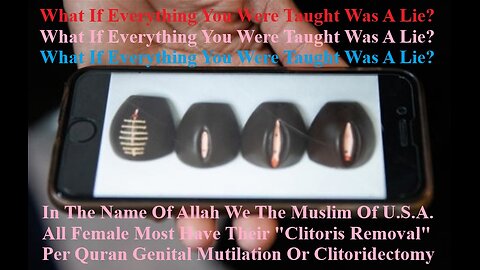
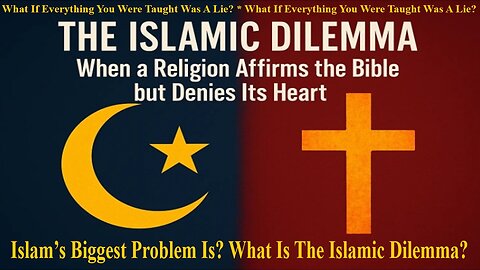
What If Everything You Were Taught Was A Lie?Islamophobia Is Not Freedom Of Speech... America Remember Islam A Religion Of Justice Not Peace... So This Why A Muslim Blasphemy Laws Will Kill Dead Fast... It's Easy For Kids To Die In America Today... All You Do Is Draw A Picture Of Muhammad And You Will Die" Reflects A Controversial And Polarizing Issue Involving Free Speech, Religious Sensitivity, And Violent Extremism. Why Free Speech Is Key To Religious Liberty Free speech and religious liberty are deeply connected. In fact, you can’t have true religious freedom without free speech. Americans fear speaking about Islam – and with good reason. Ten cartoonists were murdered for drawing cartoons of the Prophet Mohammad Of Justice Not Peace. Other critics have been shot, firebombed, and hacked to death in the name and for Justice. Stossel interviews people brave enough to speak out, like Ayaan Hirsi Ali, who is on an Al Qaeda “Wanted Dead or Alive” hit list, and Bosch Fawstin, who won the "Draw Mohammad" cartoon event in Garland, Texas that was attacked by Islamic gunmen. They argue that if Americans want freedom, everyone must refuse to be censored by violent extremists. Ten years ago, in a suburb of Dallas, Texas, Islamic terrorists opened fire on a free speech event because Americans dared to draw Muhammad. That moment May 3, 2015 should have been a turning point in the West’s battle against Islamic supremacy. Instead, it was quickly buried by media silence, political cowardice, and a deepening national amnesia of Islamic terror in America. Just four months earlier, in January 2015, the staff of Charlie Hebdo in Paris were massacred by Islamic terrorists for publishing cartoons of Muhammad. Incredibly, within weeks of that slaughter, an Islamic group held a “Stand with the Prophet” event at the very same venue in Garland, Texas, calling for restrictions on free speech critical of Islam. In response, the American Freedom Defense Initiative (AFDI), Pamela Geller, and Robert Spencer resolved to host a counter-event in the exact location one that celebrated, rather than surrendered, the First Amendment. That moment May 3, 2015 should have been a turning point in the West’s battle against Islamic supremacy. Instead, it was quickly buried by media silence, political cowardice, and a deepening national amnesia. While the bullets in Garland failed to kill the First Amendment, the real threat never left. Today, that threat has evolved. It no longer arrives with assault rifles, but with land purchases, real estate development, city charters, and Sharia-based political influence. What jihad failed to accomplish with blood is now being pursued through bureaucracy. And Texas is ground zero. In 2015, Bosch Fawstin, a former Muslim and bold critic of Islam, drew a cartoon of Muhammad holding a sword saying, “You can’t draw me.” Underneath, he wrote: “That’s why I draw you.” That act of defiance won him first prize in a free speech contest hosted at the Curtis Culwell Center in Garland, Texas, organized by the American Freedom Defense Initiative (AFDI) with the David Horowitz Freedom Center’s Jihad Watch. Pamela Geller and Robert Spencer led the event. Dutch politician Geert Wilders flew in under armed protection to deliver a chilling warning about Islamic censorship. Moments after he left the stage, two ISIS-inspired jihadists attempted to slaughter everyone in attendance. They failed. Garland police officer Greg Stevens, who had never fired his weapon in the line of duty, took down both terrorists within seconds, despite their body armor and assault rifles. His actions saved hundreds of lives and ended what became the first ISIS attack on American soil. But the real story was not the failed assault; it was what followed: media silence, FBI cover-up, and the West’s refusal to take the Islamic threat seriously. Now, ten years later, RAIR Foundation sat down with eyewitnesses and survivors to reflect on the Garland attack and draw urgent connections to today’s rapidly escalating Islamic infiltration in Texas. “We Got Attacked for Drawing Pictures. What Do You Think Will Happen When a City Is Built for Sharia?” Tom Trento, founder of The United West, was livestreaming the event from inside the venue when the bullets started flying outside.” In a powerful interview with RAIR, he revealed the facts that corporate media buried: We were attacked in Garland, Texas, because we dared to draw Muhammad. Ten years later, Texas is allowing Islamic enclaves to be built from the ground up, like EPIC City, openly aligned with Sharia. Wake up, Texas. If jihadists tried to murder us over a cartoon, what do you think will happen when you hand them actual governance power over American soil?” Stay Awake. Keep Watch. The ability to express one’s beliefs openly, to question or challenge ideas, and to share one’s faith is essential to practicing religion. But in today’s world, free speech is under threat, not just by governments but also by social media companies, which sometimes censor certain viewpoints. When speech is limited, especially when it comes to religious ideas, religious liberty is at risk. The First Amendment to the U.S. Constitution protects both free speech and the free exercise of religion. It ensures that individuals can speak openly about their beliefs and practice their faith without government interference. Whether someone wants to share their religious views with friends, write a blog post, or lead a congregation, they have the right to do so. This freedom fosters religious diversity and allows people to live according to their conscience. However, there have been attempts to limit this freedom, even in the United States. For instance, social media platforms like Facebook, Twitter, and YouTube have been criticized for removing or limiting content that they deem controversial. While these companies are private businesses and can set their own rules, their decisions often have real consequences for religious expression. In some cases, posts discussing certain religious beliefs or defending traditional views on issues like marriage or morality have been removed or restricted. This type of censorship, even if not directly from the government, can have a chilling effect on free speech and religious liberty. Consider the example of a Christian group that posted Bible verses on social media platforms, only to find their posts flagged or removed for violating “community guidelines.” While the companies claim to be fighting hate speech, these actions can sometimes cross the line into censoring legitimate religious expression. When voices are silenced, particularly when they’re expressing deeply held beliefs, it creates an atmosphere where only certain views are allowed to be heard. History also shows us how dangerous censorship can be. In the past, governments have used censorship to suppress religious minorities. For example, during the early 20th century, Jehovah’s Witnesses faced bans on their literature and speech because their beliefs were seen as controversial. These efforts to limit their free speech were also attacks on their religious freedom. The lesson here is clear: if we allow free speech to be restricted–whether by the government or private companies–religious liberty will also suffer. When people are afraid to speak openly about their beliefs, it becomes harder for them to practice their religion freely. Everyone, no matter their faith, should have the right to express their views without fear of being censored. In the United States, protecting both free speech and religious liberty is essential for a healthy, diverse society. Censorship, especially when it limits religious expression, threatens the very core of these freedoms. If we are to uphold the principles of a free society, we must ensure that everyone has the right to speak and practice their faith without interference. If Western nations are truly committed to upholding and protecting human rights, they should stop using unfounded concerns over ‘freedom of speech’ as an excuse for inaction. This summer’s Quran burnings in Scandinavia were not anomalies but part of a disturbing trend. We are witnessing a sharp rise in Islamophobic hate, fuelled and funded by far-right political actors across the globe. Muslims are increasingly being targeted, harassed and discriminated against just for being Muslims in Europe, in the United States, and beyond. As a social worker and government affairs coordinator for the Council on American-Islamic Relations (CAIR), I know first hand how such hateful incidents can devastate communities and damage national cohesion and trust. Some things can be done, and are being done, to put a stop to this new wave of Islamophobia. In July, shortly after a Quran-burning stunt in Sweden led to protests across the Muslim world, for example, the United Nations Human Rights Council (HRC) put forward a resolution to try and address the issue. The resolution, among other things, called on countries to take steps to “prevent and prosecute acts and advocacy of religious hatred that constitute incitement to discrimination, hostility or violence”. The proposal was eventually passed with 28 “yes” votes from all over the world. Yet, rather than showing solidarity with the global Muslim community, some powerful and influential states – including the US, United Kingdom, Germany and France – opposed the proposal saying its content conflicts with their positions on freedom of expression. Making matters worse, much of the international media’s coverage of this important resolution focussed on this so-called “free speech” debate rather than the real-life impact Islamophobia has on the wellbeing and everyday security of Muslims and what can be done to put an end to this global societal ill. As Muslims in Europe and the United States are made to feel there is a target on their backs because of their religious identity, our elected officials have a responsibility to take action. As far-right agitators attack mosques and casually tear apart the Muslim holy book to provoke and intimidate law-abiding citizens under the guise of exercising their “free speech” rights, democratic governments cannot afford to sit idly by. The governments of the US, UK, Germany, France and all the others who voted “no” to the UN resolution need to urgently move beyond the politically loaded discussions on the so-called free speech – hate speech dichotomy and start addressing the root causes of anti-Muslim bias within their countries. In any case, the free speech-related concerns over the HRC resolution are misplaced. The resolution does not call for limitations on free speech, or a blanket ban on criticism of Islam or Muslims. It simply urges member states to condemn acts of provocation and hate like Quran burnings, and to fill the gaps in their respective national legal and policy frameworks that allow bad faith actors to incite religious violence, hate and discrimination with impunity. There is already a clear distinction recognised in law between criticism, lawful protest, and hate speech that the countries who opposed the HRC resolution seem to be ignoring. While criticism of and disagreement with all religions, including Islam, are rightfully protected in most free and democratic countries, hate speech – which vilifies and dehumanises human beings and could lead to violent acts against them – is never acceptable. The countries who voted “no” to the HRC resolution this summer, including the US, missed an important opportunity to take a public stance against Islamophobia, but it is not too late to reverse course and take constructive action. In the US, our representatives in Congress can easily help our fight against Islamophobia by strengthening hate crime laws to encompass religiously motivated crimes and updating hate speech laws to address online hate speech and religious incitement. They can also establish new communication channels between the government and religious groups so that concerns and recommendations of communities under attack can be heard and acted on in a timely manner. Additionally, congressional leaders can support awareness programmes about Islam and religious diversity to foster community understanding and cooperation on an international scale. By acknowledging and addressing Islamophobia with such simple and straightforward policies and initiatives, the US can take vital steps towards creating an inclusive society that values the wellbeing and security of every single American, regardless of race, ethnicity and religion. Some argue that since the most aggressive and inflammatory acts of Islamophobia, such as Quran burnings, seem to take place in Europe, there is no immediate need for the US to implement policies to combat anti-Muslim bias in American society. But such Islamophobic acts, even when they take place miles away in Europe, do not exist in a vacuum. Today, we are witnessing far-right efforts to demonise, criminalise and further marginalise Muslims and other minority religious, ethnic and racial groups across the Western world. This dangerous brand of radical far-right activism is especially strong in the US, where politicians and school boards are successfully banning books that cover race, history, religion and other protected characteristics. We have to recognise the ties between acts of hate against Muslims in Europe, such as Quran burnings, and the rise of the far right in the US. After all, the connections between the American far right and the anti-Islam provocateurs of Europe are well known and widely reported on. Furthermore, we cannot ignore the ways in which European and American policies inform one another. If Western nations are truly committed to upholding and protecting human rights at home and abroad, they should stop using unfounded concerns over “freedom of speech” as an excuse for inaction on Islamophobia. It was undoubtedly a mistake for the US and its leading European allies to vote against the HRC resolution against Islamophobia earlier this year. Yet they still can and should do what is right, stop hiding behind vague concerns over free speech protections, and do what is necessary to ensure everyone living within their borders, including their Muslim citizens, can live their lives free of abuse and hate funded and promoted by the far right. Shafiquil Muhshna is the Government Affairs Department Coordinator at the Council on American-Islamic Relations. She holds dual master's degrees in Social Work and Public Administration, both earned at Florida State University. Throughout her career, she has actively engaged with numerous nonprofit organisations at various governmental levels. Her professional journey includes serving as a Case Manager with the Department of Children and Families, interning at the Florida Legislature, and occupying the role of Senior Policy Analyst at the Salvation Army. Her areas of expertise encompass advocacy, government relations, and policy development. CAIR’s mission is to protect civil rights, enhance understanding of Islam, promote justice, and empower American Muslims. Free Speech Under Siege: The Deadly Price of Criticizing Islam A Total Collapse In Its Entire 1,400 Years In World History Today. https://stophindudvesha.org/free-speech-under-siege-the-deadly-price-of-criticizing-islam/ Throughout history, those who have criticized or questioned Islamic beliefs have often faced serious repercussions, including threats, violence, or even assassination. This ongoing suppression raises important concerns about free speech, personal safety, and the expanding influence of ideological extremism. Yes Most Muslim's And Far Left America And Pedophile's Love Sharia Law And It Is Better Than The American Following It Own U.S.A. Laws. It's Because The Age Of Consent To Get Married Is 6 Yrs. Old & Age To Have Sexual Intercourse With A Child Is 9 Yrs. Old Period And The Child Said About It? (You Promised Me A Happy Meal) As The Child Is Crying After Being Rape By Ten Men Daily... So This Is How It Will Work In America For Both Side Today. So All America Remember This That Islam Is A Religion Peace And Raping Gangs Is Cum-ing To A America City Near You Soon In 2026... Islam Has Officially Taken Over The People's Republic Of New York City-State Is Under Sharia Laws. ps. Remember In Islam Its not called raping a child... Its having sex with a slave or a concubine Under Islamic & Sharia Law. Praise Be To Allah, And Blessings And Peace Be Upon The Messenger Of Allah: Quran 5:38, Which States: "As for a man or woman who commits theft, cut off the hands of both to recompense them for what they earned, a deterrent from Allah. And Allah is Mighty, Wise". P.S. So To All The Muslin Peoples We Want You To Follow Your Own Laws And (Cut Off The Hand Of All The Person Who Did This Welfare Fraud & Raping Teens & Sex Slave & Rape Gangs Etc... Per Quran 5:38 Under Islamic And Sharia Laws Now). Muhammad Married A 9-Year-Old Lady Ayesha Because Messenger of God Said So - https://rumble.com/v2q351m-muhammad-married-a-9-year-old-lady-ayesha-because-messenger-of-god-said-so.html Is it true that Muhammad married a child bride by the name of Ayesha when he was 53 and she was 9 years old? If so, how do Muslims justify this from their “exemplary” Prophet? The well-established, but not altogether agreed upon, tradition of Lady Ayesha’s age at the time of marrying Prophet Muhammad comes from a hadith in one of the most authentic collections – Sahih al-Bukhari in which Ayesha, herself, states: “The Messenger of God married me when I was six, and consummated the marriage with me when I was nine.” If I become president of America, the first thing I’m gonna do is find an executive order banning Islam as a terrorist hate group that’s a threat to our national security. Mohammed was a pedophile, and Islam is not a religion. It's a sick cult...one that should be abolished from society. I support everyone’s freedom of religion, but where your beliefs call for punishment, reprisals, and violence, it’s not a religion, it’s a cult. He married her age 6 and had sex, when she was 9. Btw, she was never pregnant and so she didn't have children of her own. I wonder why?!! May be he injured that 9 year old child? they can try to justify it anyway they want, it's pedophilia in every way you look at, they're sick demented people today. Wake Up Women: A Rights In USA & Somalia Overturns Law Banning Child Marriage Age 6 Years Old - https://rumble.com/v72fo8a-wake-up-women-a-rights-in-usa-and-somalia-overturns-law-banning-child-marri.html He got a revelation I agree 100%. He got that revelation from Satan himself. He was a pedophilia and yes the parents are guilty as well. They’re all process from the devil. He was so much a good man that he waited till she was 9 years old. Btw (by the way) he was the only prophet who has no prophecy fulfill. You no nothing about woman. Why did your prophet had to ask weather the voice he heard was from God or Satan. The True Islam’s Hidden History And True Petra Theory And True Sacred City A Full Documentary - https://rumble.com/v6z9ntk-the-true-islams-hidden-history-and-true-petra-theory-and-true-sacred-city-a.html The "Petra Theory," popularized by Canadian author and historian Dan Gibson in his documentary The Sacred City, posits that the original holy city of Islam was not Mecca in Saudi Arabia, but Petra in Jordan. Gibson argues that the first revelations of the Qur’an occurred in Petra, and that the early Muslim community, including the Prophet Muhammad, fled from there to Medina, with Mecca being established later during the Second Fitna (2nd Civil War).According to this theory, the Kaaba and the Black Stone were originally located in Petra, and the Black Stone was later moved to Mecca for safekeeping during the Umayyad campaigns. A Central piece of evidence cited by Gibson is the orientation of early mosques. He claims that an analysis of over 200 mosques built between 622 and 922 AD shows that all 17 mosques constructed within the first 35 years of Islam (622–657 AD) faced Petra, Jordan, rather than Mecca. This pattern of orientation shifted over time, with a period of confusion from 657 to 747 AD, and by 872 AD, all mosques were built facing Mecca. This shift is interpreted by Gibson as evidence that the religious focus moved from Petra to Mecca after the initial period of Islam. So Now Per Islamic Qur’an Teaching 1.8 Billion Muslim Are Praying 5 Times A Day Now Facing The Wrong Way Today... Why Is This Happening Today And Why Muslim's Are Not Following The True Teaching Of Muhammad Commanded That All Muslim's To Praying 5 Times A Day 1,400 Yrs. Ago Facing Petra In Jordan, Rather Than Not In Mecca Today.? Dedication - https://al-islam.org/printpdf/book/export/html/121392 So This Is How It Work... We Now Have 2 Million Muslims Living In New York City Very Soon In 2026. We Will Line The Street Of NYC Pride Events...Yes With Tens Of Thousands Guns & Knife & Hand Grenades Of All Types (Death To America ?) You Know... Guns Left To Us By President Joe Biden As Planned Per Agenda U.N. 21 and Agenda 2030 Plan to Control and Enslave the New World Order Administration. Truth about Agenda U.N. 21 and Plan to Control and Enslave the New World Order - https://rumble.com/v2ak54g-truth-about-agenda-u.n.-21-and-plan-to-control-and-enslave-the-new-world-or.html Brief Outline Of The New World Order Plan UN Agenda 21 - https://sustainabledevelopment.un.org/content/documents/21252030%20Agenda%20for%20Sustainable%20Development%20web.pdf U.S.A. Abandoned $85 Billions in Military Equipment in Afghanistan government and now sold all over Muslim world now to Jihad, Hamas, Khilafah, Isis, Islamic State Freedom Fighters Millions 2 Die Soon With Abandoned Weapons And Munitions Billions In Military Equipment. Millions To Die In Middle East Now From 85 Billion Worth U.S.A. Military Equipment - https://rumble.com/v3ob59z-millions-to-die-in-middle-east-now-from-85-billion-worth-u.s.a.-military-eq.html And Now 16 Billion Worth Of This Equipment Is Now In The Islamic State And Is Now In Muslim Hands All A Cross The 50 State In U.S.A. Today? https://extremism.gwu.edu/sites/g/files/zaxdzs5746/files/IslamistHomophobiaintheWest090722.pdf The group's public executions of gay men are part of a deliberate moral policing campaign, one aimed at showing supporters and enemies alike that it means to enforce its narrow, atavistic view of Islamic law wherever it can. https://www.washingtoninstitute.org/policy-analysis/islamic-states-views-homosexuality The main method used to kill these men has been to throw them off the roofs of high-rise buildings, based on a hadith in which the Prophet's successor, Abu Bakr, prescribes throwing a man off a cliff for engaging in homosexual acts. In other cases, victims were stoned, beheaded, or shot instead. Also We Muslim Are Planning To Get 10 Thousand New Police Jobs... As the NYPD has said that 8,600+ officers that are gonna be resigning, effective Jan. 1, 2026. So All America Remember This That Islam Is A Religion Peace And Raping Gangs Is Cum-ing To A America City Near You Soon In 2026... Islam Has Officially Taken Over The People's Republic Of New York City-State Is Under Sharia Laws. Praise Be To Allah, And Blessings And Peace Be Upon The Messenger Of Allah: Quran 5:38, Which States: "As for a man or woman who commits theft, cut off the hands of both to recompense them for what they earned, a deterrent from Allah. And Allah is Mighty, Wise". P.S. So To All The Muslin Peoples We Want You To Follow Your Own Laws And (Cut Off The Hand Of All The Person Who Did This Welfare Fraud & Raping Teens & Sex Slave & Rape Gangs Etc... Per Quran 5:38 Under Islamic And Sharia Laws Now). Yes This Is How Sick America Is Today ?... It's Pornhub right now sees approximately 3.5 billion monthly visits, translating to roughly 115 million daily users on average, according to recent statistics from 2024–2025. Parents Beware Internet Porn Cartoon Funny Starting Conversation With Your Kids -https://rumble.com/v2cehi2-parents-beware-internet-porn-cartoon-funny-starting-conversation-with-your-.html Pedophile's Run School Board Meeting About LGBTQ XXX Books in School Libraries -https://rumble.com/v2p5mds-pedophiles-run-school-board-meeting-about-lgbtq-xxx-books-in-school-librari.html Most Bizarre Sexual Deviations In The World Of Pedophile's Politicians And Celebrities -https://rumble.com/v2qly46-most-bizarre-sexual-deviations-in-the-world-of-pedophiles-politicians-and-c.html Sexual Disorder is a type of Personality Disorder that may be further divided into Sexual Dysfunction and Sexual Deviations. In Sexual Dysfunction there is a reduction or total loss of sexual capacity, which includes frigidity in females, and premature ejaculation and impotence in males. Sexual Deviation involves sexual interest directed primarily towards objects other than people of the opposite sex, towards objects not usually associated with sexual intercourse, or towards sexual intercourse performed under bizarre circumstances. This video lists and describes the 10 most bizarre Sexual Deviations in the world. TIMESTAMPS:-0:00Ten Bizarre Sexual Deviations -0:29Beastiality -1:11Exhibitionism -1:46Fetishism -2:11Homosexuality -2:51Incest -3:42Masochism and Sadism -4:19Pedophilia -4:46Transvestism -5:28Voyeurism All Hunter Biden Sex Crime Report On My Laptop Missing 100s Prostitutes Body's -https://rumble.com/v4hir8u-all-hunter-biden-sex-crime-report-on-my-laptop-missing-100s-prostitutes-bod.html All Hunter Biden Sex Crime Report On My Laptop Missing 100s Missing Or Dead Prostitutes Body Etc. Truth About Islam Laws In USA Tobacco, Coffee, And Alcohol Death Penalty For Violations. Adultery - Death penalty, stoning, lashing, banishment, or amputation of hand Alcohol - Death penalty Apostasy from Islam - Death penalty Coffee - Death penalty Murder - Death penalty, crucifixion, or amputation of hands and feet from opposite sides Highway robbery - Execution, crucifixion, or amputation of hands and feet from opposite sides Homosexuality - Death penalty Masturbation - Amputation of hand used Publishing pornography - Death penalty Rape- Death penalty Theft - Amputation of the right hand Smoking tobacco - Death penalty Witchcraft - Death penalty Robbing a caravans - Death penalty... But After Muhammad received intelligence about the Caravan's route, Muhammad ordered Zayd ibn Haritha to go after the Caravan, and they successfully raided is a Islamic military actions only. Muslim men may have only 4 wife at one time... But only Prophet Muhammad have sex with 9 women at one time ? According to Islamic jurisprudence as presented in the provided sources, a Muslim man is permitted to have sexual relations with a female slave or concubine under specific conditions. This permission is derived from Quranic verses, such as Surah Al-Mu’minun 23:5-6 and Surah Al-Ma’aarij 70:30, which state that sexual relations are permissible with one's wives or with "those whom their right hands possess". The term "those whom their right hands possess" refers to female slaves acquired through lawful means, such as being captured as prisoners of war during a jihad, or purchased in a legitimate transaction. The permissibility of sexual relations with a concubine is conditional upon the woman being in a state of ownership by the man. A female slave becomes permissible for sexual relations after her master has acquired her legally, and she must not be pregnant; if she is pregnant, intercourse is prohibited until she gives birth, and if she is not pregnant, she must menstruate at least once before intercourse is allowed. The ownership of a slave is considered to grant the master the right to sexual relations with her, and this right is seen as a lawful benefit derived from ownership, analogous to other rights such as labor or sale. Scholars have stated that it is obligatory (wajib) for a female slave to submit to her master for sexual intimacy, and it is considered haram (forbidden) for her to refuse without a valid excuse. Refusal without a valid reason is described as disobedience, and the master is permitted to discipline her in a manner deemed appropriate by Shariah, including non-physical forms of correction such as verbal reprimand or deprivation of privileges. In some interpretations, if a slave refuses without a valid reason, her master may even be permitted to force her, although this is subject to the limits of permissible punishment. However, there are differing views on the matter. Some scholars argue that consent is not legally required because a slave is considered to have no agency and is not permitted to refuse her master's demands. Others, citing hadiths and ethical considerations, suggest that while the legal requirement may not demand consent, it is ethically desirable to seek the slave's approval, and that forcing her could cause harm, which is prohibited in Islam. For instance, Imam al-Haleemi is reported to have stated that if a slave woman dislikes being touched or having intercourse, her master should not do so without her permission. It is also important to note that a woman who was married before being enslaved is considered to have her previous marriage annulled upon enslavement, making her available for her master's sexual relations. However, if she was married after being enslaved, or if her marriage was not annulled, then her master cannot have intercourse with her, as she is considered married to another man. Furthermore, sexual relations are not permitted with polytheist or Zoroastrian slaves; conversion to Islam, Judaism, or Christianity is required, though the method and necessity of conversion are debated among scholars. Masturbation Is Forbidden An Prohibition - {And those who guard their chastity (i.e. private parts, from illegal sexual acts). Except from their wives or (the captives and slaves) that their right hands possess, - for them, they are free from blame. But whoever seeks beyond that, then those are the transgressors.}(Al-Muminun 23:5-7). In summary, Islamic jurisprudence, as reflected in the provided sources, permits sexual relations with a female slave or concubine under the condition of lawful ownership, with the slave's previous marriage being nullified, and with the master's right to intimacy being considered a legal and religiously sanctioned benefit. Terror Slavery Chronicles & Other Woman Escapes Sexual Slavery Auction - https://rumble.com/v2d58c4-terror-slavery-chronicles-and-other-woman-escapes-sexual-slavery-auction-gr.html Praise be to Allah, and blessings and peace be upon the Messenger of Allah: It is not permissible for a man to have intercourse with anyone except his wife or his female slave (concubine). A wife becomes permissible after shar’i marriage and a concubine becomes permissible to the man who owns her. She may originally be a prisoner of war, and a Muslim may obtain a concubine from the ruler or commander if he took part in fighting in jihad, or if he buys her from her owner. She becomes permissible for him by virtue of his ownership after it is established that she is not pregnant by waiting for one menstrual cycle, or until she has given birth if she is pregnant. Allah says (interpretation of the meaning): “And those who guard their chastity (i.e. private parts, from illegal sexual acts) 6. Except from their wives or (the slaves) that their right hands possess, ـــ for then, they are free from blame” [al-Mu’minoon 23:5-6] It was narrated that Abu Sa’eed al-Khudri said: The Prophet (peace and blessings of Allah be upon him) said, concerning the prisoners of Awtaas: “Do not have intercourse with a pregnant woman until she gives birth, or with one who is not pregnant until she has menstruated once.” Narrated by Abu Dawood, 2157. This hadeeth was classed as saheeh by Shaykh al-Albani in Irwa’ al-Ghaleel, 187. In the answer to question no. 10382 we have stated that Islam permits a man to have intercourse with his slave woman whether he has one or more wives or he is not married. In the answers to questions no. 5707 and 12562 it states that female prisoners of war may be distributed by the commander in jihad, because he has the choice of either distributing them, or ransoming them or setting them free. Sultan Murad IV of the Ottoman Empire closed coffeehouses and outlawed tobacco smoking, imposing the death penalty for violations. He viewed coffeehouses as centers of sedition where political dissent and conspiracy could flourish, particularly due to their association with the Janissaries, a military group that had previously deposed his brother and uncle, fueling his fear of rebellion. Yes he banned tobacco, coffee, and alcohol, enforcing the ban with extreme measures, including the execution of violators or suspected offenders. His enforcement was so severe that he personally patrolled the streets of Constantinople, disguised, to catch and execute those consuming coffee or smoking tobacco. The Bible Prescribes The Death Penalty For Other Evil Activities Same As Us Muslim Such As: Murder (Exo 21:12,14, Lev 24:17,21) Harming pregnant woman (Exo 21:22,23) Sorcery (Exo 22:18) Bestiality (Exo 22:19, Lev 20:15,16) Homosexuality (Lev 20:13) Blaspheming the name of the Lord (Lev 24:16) Worshipping false gods (Deu 13:6-10) Prostitution (Deu 22:24) and others. The following are the 13 rights of a husband over his wife as commonly cited in Islamic teachings: Wake Up Women: A Rights Of A Husband Over His Wife In America Islamic And Sharia Laws Today! - https://rumble.com/v725yfm-wake-up-women-a-rights-of-a-husband-over-his-wife-in-america-islamic-and-sh.html A Muslim woman is not allowed to disobey a husband. Muslim women's can not work and all women are on Welfare and food stamps. What things are not allowed for women in Islam? Is not allowed by Islamic Law for A Woman to marry a non-Muslim man ever. A Muslim woman is not allowed to disobey a husband. Then, a woman must obey him at all time. Muslim women's can not drive a car ever and can not open a bank acct. ever. Physical interaction between a man and a woman is not permitted in Islam. Islam does not allow women any kind of eye contact ever with anyone. Wearing strict and cleavage clothing with eyes and hand open only. Jihadi Grape Are Teenage UK Or American Girl Muslim Grooming Gangs Criminality Filthy Ideology - https://rumble.com/v724328-jihadi-grape-are-teenage-uk-or-american-girl-muslim-grooming-gangs-criminal.html UK grooming gangs are working full time with tens of thousands minor girls as young as 9 ears old were groomed, raped, beaten, and killed ? be-heading by millions Muslim predators across thousands cities all over the world as authorities turned a blind eye to everything now. Islam is Not a Religion of Peace or The Truth About Islamophobia and Sharia Laws - https://rumble.com/v2gegm4-islam-is-not-a-religion-of-peace-or-the-truth-about-islamophobia-and-sharia.html https://web.archive.org/web/20150703113256/http://www.thereligionofpeace.com/quran/023-violence.htm So London Has Fallen Muslims Have Taken Over 8 A-Bomb How Powerful Are UK Nuclear Weapons - https://rumble.com/v71r52y-so-london-has-fallen-muslims-have-taken-over-8-a-bomb-how-powerful-are-uk-n.html So London Has Fallen Muslims Have Taken Over 8 Atomic Bomb How Powerful Are The New Isis Muslims Are Now Running UK Nuclear Weapons Program? So London Has Fallen To Ten Million Muslims And The Islamic State Have Now Taken Over One Of UK Nuclear Powered Submarine With 8 A-Bomb On Board It And How Powerful Are UK Lost Of 8 Nuclear Weapons Now In Hands Of Millions Muslims Truth About Muslim Death Cult Of Americastan & Right To Kill You Under Islamic And Sharia Laws In 2026. Truth About Muslim Death Cult Of Americastan & Right To Kill You Under Islamic And Sharia Laws - https://rumble.com/v70xlx2-truth-about-muslim-death-cult-of-americastan-and-right-to-kill-you-under-is.html Truth Yes I'm Not Here To Offend Anyone Here, But Is It True That Muslims Are Told To Kill Other Religions? Its Not At All About "Islamophobia" As A Phrase Is Such A Complete Statement Today. Islam does authorize individuals to kill others under any so-called "right" derived from religious or Sharia law. Islam, as a religion, does it promote a death cults and does it do or grant individuals a general right to kill under Islamic or Sharia law. Yes I Will Take My Oath Of Office With My Hand On The Quran (Not The Bible) & Up Hold "One Nation Under Allah" & Not To Uphold Any American Constitution Because Everyone Know Its Is Void Now. As We Live And Work Under A U.S. Government Is Under A Corporation And Maritime Laws and To See Establish Sharia In America. Zohran Mamdani Said As My First Act As Your New Muslim Mayor Of New York City Of Americastan January 02, 2026 I Hear By Order That In The Name Of Allah We The Muslim Of U.S.A. Below: So American Pledge of Allegiance Is Now To Be Replaced in Arabic, replacing "One nation under God," with "One nation under Allah". And All New U.S. Coins To Be Replaced from "In God We Trust" to In The Name Of Allah". Yes It’s Happening Right Now New York City Starting January 02, 2026 As Your New Mayer Zohran Mamdani Wants Every American To Become Muslim And Impose A Jizya Tax, Or Threaten Of Death For Non-Compliance. The Jizya Tax Is A Tax Historically Imposed On Non-Muslims Living In An Islamic State Of Americastan & Right To Kill You Under Islamic And Sharia Laws. Jizya Is A Tax Imposed On Non-Muslim Under Sharia Laws. Zohran Mamdani This Man In The Video Is Right... He Explains It Very Clearly: All American Need To Know... This Money Is Paid In Exchange For Your Life... Simply Because You Are Considered An "Enemy Of Allah" Here’s the thing: who is going to protect us from the Muslim sharia patrol? Consider the bigoted and genocidal Jew-hared central to Islamic texts and teachings today. Islamic and Christian Religion are not compatible at all... its like oil and water do not mix at all today. No, it is not compatible. The Qur'an explicitly denies the divinity of Christ, which is one of the absolute bedrock tenets of the Christian faith. Without His divinity and associated sinlessness Christ's sacrifice and resurrection would carry no meaning or effect. One additional note: I thought it would round out this answer well. In it the author explains the doctrine of the Trinity and why it matters so much. The fact that Christ was divine and one part of a triune Godhead is critical to Christianity, and as I said the Qur'an denies it outright. A great summary of the Trinity from the article: The doctrine of the Trinity can be summarized in seven statements. (1) There is only one God. (2) The Father is God. (3) The Son is God. (4) The Holy Spirit is God. (5) The Father is not the Son. (6) The Son is the not the Holy Spirit. (7) The Holy Spirit is not the Father. All of the creedal formulations and theological jargon and philosophical apologetics have to do with safeguarding each one of these statements and doing so without denying any of the other six. Without a Trinity there is no Christianity, therein lies the direct conflict with the Qur'an. Rep. Ilhan Omar Say 72% American Muslims Want To See Establish Sharia In America - https://rumble.com/v45yg7z-rep.-ilhan-omar-say-72-american-muslims-want-to-see-establish-sharia-in-ame.html Rep. Ilhan Omar Say 72% American Muslims Want To See Establish Sharia Law In America For The People & By The People Slavery & Rape & Be-Heading Is All Part Islamic Law For All Peoples And All Colour Of People Alive Today. Yes Its Called Freedom Of Religion With "One Nation Under Allah". Do Muslims Believe Sharia Law Supersedes The Constitution? The First Amendment of the U.S. Constitution guarantees freedoms concerning religion, expression, assembly, and the right to petition. It prohibits Congress from promoting one religion over others and restricting an individual's religious practices. It also guarantees freedom of expression by prohibiting Congress from restricting the press or the rights of individuals to speak freely. Free speech is a cherished value in the United States and is protected by the First Amendment. Capital punishment is permitted in Islamic jurisprudence only under specific legal conditions, such as for crimes like intentional murder (qisas), apostasy, adultery (zina), or banditry (hirabah), and must be carried out by a legitimate judicial authority, not by individuals. The death penalty is not a personal right but a legal sentence within a formal justice system. Even in cases of war or jihad, classical Islamic scholars have prohibited the killing of non-combatants, including women, children, and civilians. Truth About Islam Laws In USA All Death Penalty For Violations Today. So Why Are All Or Most Muslim So Dishonest In America Today And All Muslim In U.S.A. Need To Go Home Now Today? Tens Of Millions Live On Welfare Fraud, Sex Slave, Gang Raping* Terror Groups And Lying On Immigration Forms Etc. Etc. The Idea That Muslim Women Cannot Work At All Under Islamic Laws Is Correct. Stealing and being dishonest are closely related behaviors that both involve a breach of trust and societal norms, often stemming from similar psychological and moral motivations. Quran 5:38, which states: "As for a man or woman who commits theft, cut off the hands of both to recompense them for what they earned, a deterrent from Allah. And Allah is Mighty, Wise". Thank You ! P.S. So To All The Muslin Peoples We Want You To Follow Your Own Laws And (Cut Off The Hand Of All The Person Who Did This Welfare Fraud... Per Quran 5:38 Under Islamic And Sharia Laws Now Today). 0. Greater Sins And Smaller Sins https://al-islam.org/greater-sins-volume-1-sayyid-abdul-husayn-dastghaib-shirazi/greater-sins-and-smaller-sins 1. First Greater Sin: Shirk (Polytheism) https://al-islam.org/greater-sins-volume-1-sayyid-abdul-husayn-dastghaib-shirazi/first-greater-sin-shirk-polytheism 2. Second Greater Sin: Yas (Deaspair) https://al-islam.org/greater-sins-volume-1-sayyid-abdul-husayn-dastghaib-shirazi/second-greater-sin-yas-deaspair 3. Third Greater Sin: Qunut (Despondence) https://al-islam.org/greater-sins-volume-1-sayyid-abdul-husayn-dastghaib-shirazi/third-greater-sin-qunut-despondence 4. Fourth Greater Sin: Al-Amno Min Makrillah (Disregard Of Allah (S.W.T.)’S Punishment) https://al-islam.org/greater-sins-volume-1-sayyid-abdul-husayn-dastghaib-shirazi/fourth-greater-sin-al-amno-min-makrillah 5. Fifth Greater Sin: Murder https://al-islam.org/greater-sins-volume-1-sayyid-abdul-husayn-dastghaib-shirazi/fifth-greater-sin-murder How To Kill Your Baby Abortion Procedures 1st, 2nd, And 3rd Trimesters & Other Great Baby Recipes -https://rumble.com/v6xigpw-how-to-kill-you-baby-abortion-procedures-1st-2nd-and-3rd-trimesters-and-oth.html New Mandate Law To Force All U.S.A. Female To Get Sex Genital Mutilation Survivors -https://rumble.com/v2hjog8-new-mandate-law-to-force-all-u.s.a.-female-to-get-sex-genital-mutilation-su.html 6. Sixth Greater Sin: ‘Aqq Al-Walidayn (Disobedience To Parents) https://al-islam.org/greater-sins-volume-1-sayyid-abdul-husayn-dastghaib-shirazi/sixth-greater-sin-aqq-al-walidayn 7. Seventh Greater Sin: Qat’a Ar-Rahm https://al-islam.org/greater-sins-volume-1-sayyid-abdul-husayn-dastghaib-shirazi/seventh-greater-sin-qata-ar-rahm 8. Eighth Greater Sin: Usurping The Property Of The Orphans https://al-islam.org/greater-sins-volume-1-sayyid-abdul-husayn-dastghaib-shirazi/eighth-greater-sin-usurping-property 9. Ninth Greater Sin: Usury https://al-islam.org/greater-sins-volume-1-sayyid-abdul-husayn-dastghaib-shirazi/ninth-greater-sin-usury 10. Tenth Greater Sin: Fornication https://al-islam.org/greater-sins-volume-1-sayyid-abdul-husayn-dastghaib-shirazi/tenth-greater-sin-fornication I Was Raped By Over 70 Men Muslim Sexually Assaulted UK Grooming Gang Survivor - https://rumble.com/v710hto-i-was-raped-by-over-70-men-muslim-sexually-assaulted-uk-grooming-gang-survi.html So Why Do Muslim Men Rape Unveiling A Psychology Of A Rapist Behind Sexual Violence In Islam - https://rumble.com/v70zxxk-so-why-do-muslim-men-rape-unveiling-a-psychology-of-a-rapist-behind-sexual-.html Immigration And Rape 99.3% Of Egyptian Women Say They've Been Raped And Sexually Assaulted -https://rumble.com/v71zeo4-immigration-and-rape-99.3-of-egyptian-women-say-theyve-been-raped-and-sexua.html Legal Prostitution And Rape How Muslim Pleasure Marriage Work A Form Of Temporary Marriage -https://rumble.com/v720ifg-legal-prostitution-and-rape-how-muslim-pleasure-marriage-work-a-form-of-tem.html 11. Eleventh Greater Sin: Sodomy https://al-islam.org/greater-sins-volume-1-sayyid-abdul-husayn-dastghaib-shirazi/eleventh-greater-sin-sodomy Why Some Muslim Are Secret Pedophile's "Bacha Bazi" Watching And Having Sex With Children -https://rumble.com/v5jg2tx-why-some-muslim-are-secret-pedophiles-bacha-bazi-watching-and-having-sex-wi.html So Why Some Men And Millions Other Muslim Are Secret Pedophile's Having Sex With Young Boys And Selling Young Girl As Sex Slaves Too. Bacha bāzī (Persian: lit. 'boy play') is a practice in which men (sometimes called bacha baz) buy and keep adolescent boys (sometimes called dancing boys) for entertainment and sex. Inbreeding And Rape How 72.6% Cousin Marriages Are Tearing Muslim World Apart - https://rumble.com/v72051e-inbreeding-and-rape-how-72.6-cousin-marriages-are-tearing-muslim-world-apar.html https://barenakedislam.com/2023/09/05/muslim-inbreeding-a-popular-islamic-custom-of-marrying-first-cousins-is-a-growing-problem-for-the-west/ 12. Twelfth Greater Sin: Qazaf https://al-islam.org/greater-sins-volume-1-sayyid-abdul-husayn-dastghaib-shirazi/twelfth-greater-sin-qazaf 13. Thirteenth Greater Sin: Drinking Liquor https://al-islam.org/greater-sins-volume-1-sayyid-abdul-husayn-dastghaib-shirazi/thirteenth-greater-sin-drinking-liquor 14. Fourteenth Greater Sin: Gambling https://al-islam.org/greater-sins-volume-1-sayyid-abdul-husayn-dastghaib-shirazi/fourteenth-greater-sin-gambling 15. Fifteenth Greater Sin: Music https://al-islam.org/greater-sins-volume-1-sayyid-abdul-husayn-dastghaib-shirazi/fifteenth-greater-sin-music 16. Is Masturbation Haram In Islam I have a question which I am shy to ask but another sister who has come to Islam recently wants an answer to and I do not have an answer (with evidence from the Quran and Sunnah). I hope you can help and I hope Allah will forgive me if it is inappropriate but as Muslims we should never be shy in seeking knowledge. Her question was "Is it permissible in Islam to masturbate?" Wake Up Women: A Man Rights Over A Women Rights In Islamic America... You Are Not To Disobey Him Ever And The Rights Under A Muslim Husband Rights Over His Wife In America Under Islamic And Sharia Laws And Honor Killing Today! In Islam, a husband holds several rights over his wife, which are derived from the Quran and authentic Hadith. These rights are intended to maintain harmony, stability, and mutual respect within the marital relationship. The following are the 13 rights of a husband over his wife as commonly cited in Islamic teachings: A Muslim woman is not allowed to disobey a husband. Muslim women's can not work and all women are on Welfare and food stamps. What things are not allowed for women in Islam? Is not allowed by Islamic Law for A Woman to marry a non-Muslim man ever. A Muslim woman is not allowed to disobey a husband. Then, a woman must obey him at all time. Muslim women's can not drive a car ever and can not open a bank acct. ever. Physical interaction between a man and a woman is not permitted in Islam. Islam does not allow women any kind of eye contact ever with anyone. Wearing strict and cleavage clothing with eyes and hand open only. 1. Obedience in Matters of Righteousness: A wife is required to obey her husband in matters that do not involve disobedience to Allah. This obedience is not absolute and is conditional upon the husband's requests being reasonable and within the bounds of Islamic law. For example, a wife must not cut her hair short if her husband prefers long hair, as it is considered a form of beautification for him, but she is not obligated to obey if he demands she refrain from eating apples, as this does not pertain to his rights or benefit. The Prophet Muhammad (PBUH) stated that if he were to command someone to prostrate to another, he would command a woman to prostrate to her husband, highlighting the significance of this duty. 2. Protection of the Husband's Honor and Dignity: The wife has the duty to safeguard her husband's honor, dignity, and reputation. This includes refraining from any act of infidelity, disgrace, or behavior that could tarnish his name. She must also protect his wealth and children, as she is entrusted with the management of the household. 3. Maintaining the Husband's Home and Property: The wife is responsible for protecting and preserving the husband's property and belongings while he is away. This includes safeguarding his clothes, furniture, and other possessions, as she is considered the guardian of his home. 4. Not Allowing Unwanted Guests into the Home: The husband has the right to prevent any individual he dislikes from entering his house. The Prophet (PBUH) emphasized this right, stating that a wife must not allow anyone whom her husband dislikes to enter his home or sit on his furniture. 5. Not Leaving the House Without Permission: While a wife may leave the home for necessary reasons such as visiting her mother or going to the mosque, she should generally inform her husband and seek his permission, especially for outings that might cause concern or conflict. The Prophet (PBUH) permitted a wife to go to the mosque without her husband's permission, but this is an exception to the general rule of seeking approval for other outings. 6. Not Performing Voluntary Fasts Without Permission: A wife is not permitted to observe voluntary fasts, such as those on Mondays and Thursdays, while her husband is present, unless she has his explicit permission. This is because the husband has the right to intimacy, and fasting could potentially interfere with this right. The Prophet (PBUH) stated that it is not permissible for a woman to fast while her husband is present without his permission. 7. Being Content with the Husband's Provision: The wife must be satisfied with the standard of living that her husband provides, based on his financial ability. She should not burden him with demands for luxuries or a higher standard of living than he can afford. Allah states that a man should spend according to his means, and a woman should be content with what is provided. 8. Being Available for Intimacy: The wife is obligated to respond to her husband's request for intimacy whenever he calls her, unless she has a valid excuse such as illness, menstruation, or post-natal bleeding. Refusing intimacy without a valid reason is considered a serious sin, and the Prophet (PBUH) warned that angels curse a woman who refuses her husband's request for intimacy until she complies. 9. Taking Care of the Children: The wife is responsible for the upbringing and education of the children, teaching them Islamic values, the Quran, and the proper way to pray. This is a primary reason for marriage, as the husband works to provide for the family, while the wife nurtures the children. 10. Treating the Husband's Guests and Relatives with Kindness: The wife should treat her husband's guests, parents, and relatives with respect and hospitality. She is considered his representative, and her good treatment of them reflects positively on him. The Prophet (PBUH) praised a wife who treated his guests with such honor that he felt embarrassed by her generosity. 11. Keeping the Husband's Secrets: The wife must maintain the confidentiality of her husband's private matters, including those related to their intimate life. Sharing such secrets with family or friends is considered a breach of trust and a serious sin. The Prophet (PBUH) warned that a wife who speaks about her husband's private life will be cursed by Allah. 12. Refusing Your Husband Right To Have Your "Clitoris Removal" Per Quran Genital Mutilation? Or By Clitoridectomy Per Islamic Laws?. https://rumble.com/v70844y-in-the-name-of-allah-we-the-muslim-of-america-all-female-most-get-clitoris-.html In The Name Of Allah We The Muslim Of U.S.A. All Female Most Have Their "Clitoris Removal" Per Quran Genital Mutilation? Or By Clitoridectomy Per Islamic Laws?. So All Person's Live In U.S.A. Pre-Teens, Girls, Women Most Have Female Genital Mutilation Done by Sept 30, 2030 Per UN Agenda 21 and UN Agenda 2030. Religious leaders with sensitivity to intellectual debates of the time as well as the circumstances of the Muslim community have long taken an interest in the questions raised with respect to Islam and women. 13. Honor killing, defined as the murder of a family member typically a woman perceived to have brought shame upon the family, is not sanctioned by Islamic law and is widely condemned by Islamic scholars and religious authorities. While some cultural interpretations may link the concept to religious norms, Islamic teachings explicitly prohibit murder without legal justification, stating that intentionally killing a Muslim is a grave sin punishable by eternal damnation in Hell. Islamic law prescribes specific punishments for unlawful sexual relations (zina), but these are strictly defined and must be carried out by the state authority, not individuals. For a virgin woman who commits fornication, the prescribed punishment is 100 lashes and one year of exile, not execution. For a married person committing adultery, the punishment is stoning to death, but only after the crime is proven by the testimony of four male witnesses or a voluntary confession, and only after being judged by a legitimate judicial authority. The fatwa emphasized that Islam protects women’s rights and that the Prophet Muhammad (peace be upon him) once annulled a marriage contract when a woman expressed her unwillingness to marry the man her father had chosen. This underscores the principle that a woman’s consent is essential in marriage, and her autonomy is protected under Islamic law. Important Rules Related to Women in Islam Travelling Alone In Islam, it is not advisable for women to travel alone for safety reasons. This guidance is rooted in the principle of safeguarding women from potential harm and ensuring their protection during short or long journeys. However, it is essential to note that this guideline is not an absolute prohibition. Rather, it encourages Muslim women to travel in the company of a close family member or a trusted companion. This practice fosters a sense of community and mutual support, aligning with Islamic values of caring for one another. Going Outdoors without a Head Covering Another commonly misunderstood aspect of Islamic practice is the requirement for women to wear a head covering, often referred to as a hijab. The hijab is a crucial symbol of modesty and a reflection of a woman's commitment to her faith. It is essential to understand that wearing a hijab is a personal choice for Muslim women, and not all women adhere to this practice. Women who choose to wear the hijab do so willingly, as an expression of their faith and a means of identifying as Muslim. Eye Contact with Men In Islam, modesty is highly valued, and this includes interactions between men and women. While maintaining eye contact during conversations is generally encouraged as a sign of sincerity and respect, it is recommended that both men and women lower their gaze when speaking with the opposite sex. This practice is intended to prevent inappropriate or lustful thoughts from arising during such interactions, promoting respectful communication and upholding modesty. Physical Contact or Interaction with Men Physical contact between unrelated men and women is discouraged in Islam, primarily to maintain the sanctity of family life and protect against potential temptations. This guideline encompasses avoiding casual physical touch, such as hugging or handshaking, with members of the opposite gender. While this practice might seem restrictive to some, it is intended to uphold the importance of chastity and modesty within the Muslim community. Marrying Non-Muslims In Islam, marriage is considered a sacred bond between two individuals who share the same faith and value system. The guidance against marrying non-Muslims is rooted in the core belief that a shared faith strengthens the foundation of a marriage and promotes harmony within the family. It is imperative to note that this guideline does not stem from a place of discrimination but rather seeks to protect the religious and cultural identity of both partners in a marriage. Disobeying Husband Islam places great importance on maintaining harmony within the family unit, and this includes the relationship between a husband and wife. While it is often pointed out that women are advised to obey their husbands, this guidance should be understood within the broader context of mutual respect and cooperation. Husbands are also instructed in Islam to treat their wives with kindness and respect. The chief intention behind this guideline is to encourage open communication and cooperation between spouses, ensuring a peaceful and loving home. Inappropriate or Revealing Clothing Islamic dress code emphasises modesty for both men and women alike. Women are advised to wear clothing that covers their bodies except for their face and hands, and also to avoid wearing apparel that highlights their shape. Men are encouraged to dress modestly as well. The intent behind this dress code is to promote humility, dignity, and respect for oneself and others. Contrary to misconceptions, this practice is not meant to impede individual expression but rather to maintain modesty and prevent objectification. Perfumes and Other Items that Attract Attention Perfumes and fragrances are an integral part of many cultures, including Islam. However, it is advised that women do not wear strong fragrances or scents when going outside, as this can attract undue attention. This recommendation is rooted in the broader principle of modesty and the desire to avoid situations that may lead to inappropriate or unwanted advances. It is important to note that the use of perfumes in private settings is not discouraged and is an intensely personal choice. Summary In understanding the guidelines and practices regarding women in Islam, it is crucial to approach these topics with respect and an open mind. The intention behind these guidelines is not to restrict women but to uphold the values of modesty, morality, and the sanctity of family life within the community. Muslim women, like women from any other faith, make choices regarding their beliefs and practices based on their personal convictions and cultural context. Ultimately, these guidelines reflect the diversity and richness of Islamic tradition, and they continue to be interpreted and followed in a myriad of ways by Muslim women worldwide. Muslim women are guided by a set of religious principles derived from the Quran, Hadith, and scholarly interpretations, which outline both rights and responsibilities. These rules are intended to promote modesty, dignity, spiritual balance, and social harmony. Key rules and restrictions for Muslim women include: Modesty in Dress (Hijab): Women are required to cover their bodies in public, except for the face and hands, wearing loose, non-transparent clothing that does not draw attention to the body. The hijab is seen as a symbol of faith and personal integrity, though the extent of coverage such as whether the face must be covered (niqab/burqa) is a matter of scholarly debate and cultural practice, with many scholars considering it optional. Going out without covering the head is generally considered forbidden in Islamic teachings. Prayer (Salah): Women are required to perform five daily prayers, which are considered intimate moments of connection with God. However, prayer is not obligatory during menstruation or postpartum bleeding, which is viewed as a form of divine mercy rather than punishment. Fasting (Sawm): Fasting during Ramadan is obligatory for all adult Muslims, including women, except during menstruation or postpartum. Women may also observe voluntary fasts for spiritual growth. Marriage and Family Life: A woman has the right to choose her spouse, receive a dowry (mahr) from her husband, and retain full ownership of her wealth and property after marriage. Marriage is viewed as a partnership based on mutual respect, consultation, and kindness, with the husband responsible for providing financial maintenance. Women are not permitted to marry non-Muslim men, as this is believed to preserve religious unity and spiritual identity within the family. Interactions with Non-Mahram Men: Physical contact, including casual hugs or handshakes, with non-mahram men (men who are not close relatives) is discouraged to maintain modesty and prevent temptation. Women are advised to lower their gaze and avoid speaking in a soft or alluring voice when interacting with non-mahram men. Being alone with an unrelated man is generally discouraged, though it may be acceptable if others are present. Polygamy: While men are permitted to marry up to four wives under specific conditions, women are not allowed to have multiple husbands at the same time. Leadership in Religious Matters: Women are not permitted to lead mixed-gender congregational prayers as an Imam, though they can lead prayers for other women. This restriction is based on traditional interpretations of Islamic law, though some modern scholars argue for reinterpretation. Inheritance and Property Rights: Women have the right to inherit property from parents, spouses, and siblings, though their share is typically half that of a male heir. This is balanced by the fact that men are responsible for financially supporting the family, while women are not obligated to contribute to household expenses. Education and Work: Women have the right to pursue education and work in any field that aligns with Islamic values, including healthcare, education, and social welfare. Historical figures like Khadijah, the Prophet Muhammad’s wife, were successful businesswomen, demonstrating that women can be economically independent. Truth About Islam Laws In USA All Death Penalty For Violations Today. So Why Are All Or Most Muslim So Dishonest In America Today And All Muslim In U.S.A. Need To Go Home Now Today? Tens Of Millions Live On Welfare Fraud, Sex Slave, Gang Raping* Terror Groups And Lying On Immigration Forms Etc. Etc. The Idea That Muslim Women Cannot Work At All Under Islamic Laws Is Correct. Stealing and being dishonest are closely related behaviors that both involve a breach of trust and societal norms, often stemming from similar psychological and moral motivations. Quran 5:38, which states: "As for a man or woman who commits theft, cut off the hands of both to recompense them for what they earned, a deterrent from Allah. And Allah is Mighty, Wise". Thank You ! Islam’s Biggest Problem Is? What Is The Islamic Dilemma? Its Own Jesus* Either Way, Islam Is False? - https://rumble.com/v72cxf6-islams-biggest-problem-is-what-is-the-islamic-dilemma-its-own-jesus-either-.html Real Parallel Worlds Today - NAZI vs U.S.A. - COVID-19 - ANTIFA - SS vs FBI vs DEATH -https://rumble.com/v3g2oan-real-parallel-worlds-today-nazi-vs-u.s.a.-covid-19-antifa-ss-vs-fbi-vs-deat.html World Economic Forum Great Reset Medical Tyranny, Woke Culture, Green Agenda -https://rumble.com/v3jfm06-world-economic-forum-great-reset-medical-tyranny-woke-culture-green-agenda.html Yes The New World Order Year Zero... Its For The Greater Good, And God Bless You ALL... Yes Its For The Greater Good In 2026. We at this channel would like to add this quote for everyone to open your own mind this year: Your body diet is not only what you eat. It is also what you watch, what you listen to, what you read, the people you hang out with and the things you subject your mind, body and soul too. Always be mindful of the things you put into your body emotionally, spiritually and physically. Thank You Everyone Who Watch Our 1152+ Video's To Help Other In 2026.840 views 2 comments -
Truth About Muslim Death Cult Of Americastan & Right To Kill You Under Islamic And Sharia Laws
What If Everything You Were Taught Was A Lie?Truth About Muslim Death Cult Of Americastan & Right To Kill You Under God Bible & Islamic And Sharia Laws! Yes I'm Not Here To Offend Anyone Here, But Is It True That Muslims Are Told To Kill Other Religions? Its Not At All About "Islamophobia" As A Phrase Is Such A Complete Statement Today. Islam does authorize individuals to kill others under any so-called "right" derived from religious or Sharia law. Islam, as a religion, does it promote a death cults and does it do or grant individuals a general right to kill under Islamic or Sharia law. So I'm a Christian, never been Muslim or Islam as I'm mostly from a European background. I joined this subreddit to ask Ex-Muslims questions I'm curious of as well as to see what y'all post here. I'm not against or supportive of Islam in anyway. But it hurts my heart a bit to know that the Qu'ran tells Muslims to kill non-believers, as well as the treatment and murders of Christians and Jews in the middle east, land we once occupied and created the towns they live in there, and gave them the idea to create there own religion and accepted them into our lands(my ancestors are least) for them to write about wanting to kill us. The Bible has no verses about killing other religions or even satanists. The situation in Palestine for example is really disgusting as well, with Jewish people living there killing Muslims and Christians but to know Muslims are doing the same to us and have done it for longer then the Jewish, makes me kind of sick knowing I felt bad for Palestinians. What are your thoughts on this? I'd really like to understand why such and more on it, I'd really like to go to places like, Jerusalem and Damascus and Ninevah and Lebanon to see places where my religion started, but with Muslims or Jewish people there wanting to kill me scares me from going there in the future. I’d recommend reading the entirety of the verses for yourself so you can decide if this annotated list is anti-Islam propaganda or not. These are not false quotes, and this list doesn’t even come close to the myriad of Quran content that not only encourages, but commands directly by order of Allah, to extort, enslave, forcibly convert, torture, and kill non-Muslims. It’s not just limited to Christians and Jews; they’re known as “people of the book” and in some cases are extorted using a taxation known as jizya, as an alternative to being forcibly converted or slaughtered in sharia country. So, in certain cases, Jews and Christians aren’t always automatically slaughtered because they make good slaves and can generate profit. I suspect that you’ll be quite disgusted when you find out what Islam really is, without the myriad of lies perpetuated by people who desperately try to make Islam look less evil by lying about it. The Quran would be banned as hate literature if it wasn’t a holy book for billions of people. Be forewarned, asking questions and arguing with the lies you’re told despite clear evidence to the contrary being clearly stated in the holy literature will get you called islamaphobic. That word isn’t representative of a real phenomenon, and has been weaponized to try and make people feel bad for seeing what’s right in front of them and suggesting Islam is a horrifying mess of a hate filled religion. You’re in the right place for answers; these people have lived it, left it, and will tell you the truth. Many if not all agree with this quote: “without lies, Islam dies”. It’s not just another Abrahamic religion; it’s the most disturbing religion you’ll find, and it’s growing. Islamic law (Sharia) emphasizes the sanctity of life. The Quran states: "Anyone who kills a believer deliberately will receive as his reward (a sentence) to live in Hell for ever. God will be angry with him and curse him, and prepare dreadful torment for him" (4:93).The Prophet Muhammad also declared that the lives and properties of people are sacred until they meet their Lord. Intentional murder is strictly prohibited except through due process of law, referred to in the Quran as "bi al-haqq" (with the truth). Islamic and Christian Religion are not compatible at all... its like oil and water do not mix at all today. No, it is not compatible. The Qur'an explicitly denies the divinity of Christ, which is one of the absolute bedrock tenets of the Christian faith. Without His divinity and associated sinlessness Christ's sacrifice and resurrection would carry no meaning or effect. One additional note: I ran across this article today and I thought it would round out this answer well. In it the author explains the doctrine of the Trinity and why it matters so much. The fact that Christ was divine and one part of a triune Godhead is critical to Christianity, and as I said the Qur'an denies it outright. A great summary of the Trinity from the article: The doctrine of the Trinity can be summarized in seven statements. (1) There is only one God. (2) The Father is God. (3) The Son is God. (4) The Holy Spirit is God. (5) The Father is not the Son. (6) The Son is the not the Holy Spirit. (7) The Holy Spirit is not the Father. All of the creedal formulations and theological jargon and philosophical apologetics have to do with safeguarding each one of these statements and doing so without denying any of the other six. Without a Trinity there is no Christianity, therein lies the direct conflict with the Qur'an. Capital punishment is permitted in Islamic jurisprudence only under specific legal conditions, such as for crimes like intentional murder (qisas), apostasy, adultery (zina), or banditry (hirabah), and must be carried out by a legitimate judicial authority, not by individuals. The death penalty is not a personal right but a legal sentence within a formal justice system. Even in cases of war or jihad, classical Islamic scholars have prohibited the killing of non-combatants, including women, children, and civilians. Some political figures have used inflammatory language, such as calling radical Shi'ite groups a "death cult," but these statements reflect personal opinions and do not represent mainstream Islamic beliefs or the views of the global Muslim community. Similarly, extremist interpretations that justify violence are widely rejected by Islamic scholars and institutions. In summary, Islam does authorize individuals to kill others under any so-called "right" derived from religious or Sharia law. The misuse of religious texts to justify violence is condemned by mainstream Islamic scholarship, and the legal mechanisms for capital punishment are strictly regulated and judicial in nature. Exodus 20:13 states, "You shall not murder," a commandment that forms the foundation of biblical prohibitions against killing. Leviticus 24:17 reinforces this principle, declaring, "And if a man takes the life of anyone else, he must surely be put to death," establishing capital punishment for unlawful killing. The sanctity of human life is further emphasized in Genesis 9:6, which states, "Whoever sheds man's blood, by man shall his blood be shed: for in the image of God made he man," underscoring that humans are created in God's image. Regarding homosexual acts, Leviticus 18:22 explicitly states, "You shall not lie with a male as with a woman; it is an abomination," and Leviticus 20:13 adds, "If a man also lie with mankind, as he lieth with a woman, both of them have committed an abomination: they shall surely be put to death; their blood shall be upon them," prescribing the death penalty for such acts. This commandment is part of a broader set of laws concerning sexual conduct and moral purity. Other verses address specific circumstances of killing. Exodus 21:22-25 outlines penalties for causing a miscarriage, stating that if a man causes a woman to miscarry but no further harm follows, he must be punished according to the husband's demand and the judges' determination; if harm follows, the penalty is "life for life". Numbers 31:17-18 commands the killing of all Midianite males and women who have had sexual relations, while sparing the young girls who have not known a man intimately. The law of retaliation, "eye for eye, tooth for tooth," is found in Exodus 21:23-25. The Bible contains several verses addressing both killing and the prohibition against planting different kinds of seeds. Regarding killing, Deuteronomy 22:22 states, "If a man is found sleeping with another man’s wife, both the man who slept with her and the woman must die. You must purge the evil from Israel". Similarly, Deuteronomy 22:24 mandates that if a man meets a virgin pledged to be married in a town and sleeps with her, both shall be stoned to death at the town gate, as the woman did not cry out for help. Deuteronomy 22:25-27 outlines a different penalty for rape, stating that only the man who raped a betrothed woman in the country shall die, as the woman is not guilty of a sin deserving death. Concerning planting different kinds of seeds, Deuteronomy 22:9 explicitly commands, "Do not plant two kinds of seed in your vineyard; if you do, not only the crops you plant but also the fruit of the vineyard will be defiled". This prohibition is reiterated in Leviticus 19:19, which states, "You shall not breed together two kinds of your cattle; you shall not sow your field with two kinds of seed, nor wear clothing of two kinds of material mixed together". The principle is also mentioned in Deuteronomy 22:11, which forbids wearing garments made of wool and linen woven together. Modern interpretations suggest this rule may relate to maintaining the purity of plant varieties by preventing cross-pollination. The Bible presents a complex and multifaceted view on killing, encompassing divine commands, legal statutes, narratives of violence, and moral teachings. The Sixth Commandment explicitly prohibits murder: "You shall not murder", emphasizing the sanctity of human life. This principle is reinforced by Genesis 9:6, which states that anyone who sheds human blood shall have their blood shed, as humans are made in God's image. The New Testament expands this concept spiritually, with Jesus teaching that anger and hatred toward a brother are akin to murder and subject to judgment. Despite this prohibition, the Bible also contains numerous instances where killing is commanded or permitted under specific circumstances. Capital punishment is prescribed for various offenses, including adultery, homosexuality, blasphemy, cursing parents, and witchcraft. For example, Leviticus 20:13 mandates the death penalty for homosexual acts, while Exodus 22:17 commands the execution of sorceresses. The death penalty for a woman who is not a virgin on her wedding night is also prescribed in Deuteronomy 22:20-21. These laws reflect the legal framework of the Mosaic covenant, where death was the prescribed punishment for many transgressions. The Bible also sanctions killing in the context of warfare and divine judgment. God commanded the Israelites to utterly destroy the inhabitants of the Promised Land, including men, women, children, and livestock, as punishment for their sins, such as idolatry and child sacrifice. This is explicitly stated in Deuteronomy 20:16–17 and 1 Samuel 15:3, where God instructs Saul to destroy the Amalekites completely. Similarly, the conquest of Jericho and the war against the Midianites are described as divinely sanctioned acts of destruction. The killing of Goliath by David is presented as a justified act of divine justice. Millions To Die In Middle East Now From 85 Billion Worth U.S.A. Military Equipment - https://rumble.com/v3ob59z-millions-to-die-in-middle-east-now-from-85-billion-worth-u.s.a.-military-eq.html U.S.A. Abandoned $85 Billions in Military Equipment in Afghanistan government and now sold all over Muslim world now to Jihad Hamas Khilafah Isis Islamic State Freedom Fighters Millions 2 Die Soon With Abandoned Weapons And Munitions Billions In Military Equipment. And Now 16 Billion Worth Of This Equipment Is Now In The Islamic Hands All A Cross U.S.A. Today? Self-defense is also recognized as a legitimate reason for killing. Exodus 22:2-3 states that if a thief is caught breaking in at night and is struck fatally, the defender is not guilty of bloodshed. This distinction between unlawful murder and lawful killing is central to biblical ethics, where killing may be justified when it serves justice, protects life, or fulfills a divine mandate. The Bible also addresses the moral and spiritual consequences of killing. The shedding of innocent blood is condemned as a grave sin that defiles the land, and those who commit murder are described as being excluded from God's kingdom. The prophet Isaiah warns that violence against the people of Judah will lead to divine judgment. In contrast, the Psalms express a desire for God to bring justice against the wicked, reflecting a tension between divine justice and human mercy. In summary, the Bible contains a wide range of perspectives on killing, from strict prohibitions against murder to commands for capital punishment, warfare, and self-defense, all framed within a theological context of justice, divine authority, and the sanctity of life. The Old Testament outlines several crimes punishable by death, including adultery, homosexuality, blasphemy, and cursing one’s parents. Adultery, defined as sexual relations between a married person and someone who is not their spouse, was punishable by death for both the man and the woman involved. Homosexual acts, specifically between two men, were also considered capital offenses and were to be punished by death. Blasphemy, the act of speaking irreverently about God, was a capital crime, with the penalty being death. Cursing one’s father or mother was punishable by death, reflecting the seriousness with which the violation of familial and societal order was viewed. These laws were part of the Mosaic Law, intended to maintain the holiness and integrity of the covenant community of Israel. The New Testament does not outline specific crimes punishable by death in the same manner as the Old Testament. While the Old Testament prescribes capital punishment for various offenses such as murder, adultery, blasphemy, and idolatry, the New Testament shifts focus toward forgiveness, repentance, and spiritual renewal rather than legal penalties. Jesus' interaction with a woman caught in adultery, where He said, “Let him who is without sin among you be the first to throw a stone” (John 8:7), is often interpreted as a rejection of the application of the death penalty in that context, highlighting the hypocrisy of the accusers rather than abolishing the law itself. The New Testament does not establish a new list of capital crimes, and most Christian traditions today do not implement the death penalty, understanding the Old Testament laws as part of the historical covenant with Israel, while emphasizing grace and redemption in the New Testament message. No, American Muslims do not have the right to kill anyone. The Quran explicitly prohibits the killing of innocent people, stating that killing one person unjustly is equivalent to killing all of humanity, and saving one life is equivalent to saving all of humanity. This principle is central to Islamic teachings and is consistently emphasized by American Muslim voices and scholars. While the Quran does mention martyrdom for those who die fighting in the path of God, this is understood within the context of legitimate warfare and self-defense, not the targeting of civilians. Classical Islamic law strictly prohibits the intentional killing of non-combatants, including women and children, and considers suicide attacks impermissible because they involve taking one's own life, which is forbidden in Islam. The overwhelming consensus among Muslim scholars, including prominent American Muslim leaders, is that violence against innocent people is never justified. American Muslims consistently affirm their commitment to peace and reject violence. They emphasize that their faith teaches discipline, prayer, fasting, and peace, and that violence is not an option for practicing Muslims. The vast majority of Muslims worldwide, including those in the United States, condemn terrorism and the actions of extremist groups that claim to act in Islam's name. The idea that Muslims are inherently violent or seek to kill others is a misconception that does not reflect the beliefs or practices of the vast majority of American Muslims. What Does the Quran Say About Christians? In the Quran, Christians are often referred to as "People of the Book," meaning the people who have received and believed in revelations from God's prophets. The Quran contains verses that highlight the commonalities between Christians and Muslims but contains other verses warning Christians against sliding toward polytheism due to their worship of Jesus Christ as God. These verses serve to establish a sense of kinship and mutual respect between the two faiths while also emphasizing theological differences. Understanding these passages can promote dialogue and tolerance between Christian and Muslim communities. Similarities and Differences Between Christianity and Islam Islam and Christianity have a great deal in common, including some of the same prophets. Islam, for example, believes Jesus is a messenger of God and that he was born to the Virgin Mary—beliefs surprisingly similar to Christian doctrine. There are, of course, important differences between the faiths, but for Christians first learning about Islam, or Muslims being introduced to Christianity, there is often a good deal of surprise at just how much the two important faiths share. The Quran's Descriptions of Commonalities With Christians Several different passages in the Quran speak about the commonalities Muslims share with Christians. "Surely those who believe, and those who are Jews, and the Christians, and the Sabians—whoever believes in God and the Last Day and does good, they shall have their reward from their Lord. And there will be no fear for them, nor shall they grieve" (2:62, 5:69, and many other verses). ". . . and nearest among them in love to the believers will you find those who say, 'We are Christians,' because amongst these are men devoted to learning and men who have renounced the world, and they are not arrogant" (5:82). "O you who believe! Be helpers of God—as Jesus the son of Mary said to the Disciples, 'Who will be my helpers in (the work of) God?' Said the disciples, 'We are God's helpers!' Then a portion of the Children of Israel believed, and a portion disbelieved. But We gave power to those who believed, against their enemies, and they became the ones that prevailed" (61:14). The Quran's Warnings Regarding Christianity The Quran also has several passages expressing concern for the Christian practice of worshipping Jesus Christ as God. It is the Christian doctrine of the Holy Trinity that most stands in contrast to Islam. To Muslims, the worship of any historical figure as God himself is a sacrilege and heresy. "If only they [i.e. Christians] had stood fast by the Law, the Gospel, and all the revelation that was sent to them from their Lord, they would have enjoyed happiness from every side. There is from among them a party on the right course, but many of them follow a course that is evil" (5:66). "Oh People of the Book! Commit no excesses in your religion, nor say of God anything but the truth. Christ Jesus, the son of Mary, was (no more than) a messenger of God, and His Word which He bestowed on Mary, and a spirit proceeding from Him. So believe in God and His messengers. Say not, 'Trinity.' Desist! It will be better for you, for God is One God, Glory be to Him! (Far exalted is He) above having a son. To Him belong all things in the heavens and on earth. And enough is God as a Disposer of affairs" (4:171). "The Jews call 'Uzair a son of God, and the Christians call Christ the son of God. That is but a saying from their mouth; (in this) they but imitate what the unbelievers of old used to say. God's curse be on them; how they are deluded away from the Truth! They take their priests and their anchorites to be their lords in derogation of God, and (they take as their Lord) Christ the son of Mary. Yet they were commanded to worship but One God: there is no god but He. Praise and glory to Him! (Far is He) from having the partners they associate (with Him)" (9:30-31). More References to Jesus in the Quran The Quran recounts the life and teachings of Jesus Christ, known as 'Isa in Arabic, detailing his miraculous birth, teachings, and miracles performed. It consistently emphasizes Jesus' status as a revered human prophet, though distinct from God himself. Here are more passages from the Quran that reference Jesus Christ. "And behold! God will say [i.e., on the Day of Judgment]: 'Oh Jesus, the son of Mary! Did you say unto men, worship me and my mother as gods in derogation of God?' He will say: 'Glory to Thee! Never could I say what I had no right (to say). Had I said such a thing, You would indeed have known it. You know what is in my heart, though I know not what is in Yours. For You know in full all that is hidden. Never did I say to them anything except what You commanded me to say: 'Worship God, my Lord and your Lord.' And I was a witness over them while I lived among them. When You took me up, You were the Watcher over them, and You are a witness to all things'" (5:116-117). What Does the Quran Say About Christians? Islam and Christianity share common beliefs, including the reverence for Jesus as a prophet. Despite similarities, the Quran warns against certain Christian practices, such as the worship of Jesus as God; to Muslims, the worship of any historical figure as God himself is considered sacrilegious and a departure from monotheistic principles. The Quran portrays Jesus as a revered human prophet, distinct from God, and includes passages addressing his teachings and miracles. In The Name Of Allah We The Muslim Of America All Female Most Get Clitoris Removal Per Quran? - https://rumble.com/v70844y-in-the-name-of-allah-we-the-muslim-of-america-all-female-most-get-clitoris-.html In The Name Of Allah We The Muslim Of U.S.A. All Female Most Have Their "Clitoris Removal" Per Quran Genital Mutilation? Or By Clitoridectomy Per Islamic Laws?. So All Person's Live In U.S.A. Pre-Teens, Girls, Women Most Have Female Genital Mutilation Done by Sept 30, 2030 Per UN Agenda 21 and UN Agenda 2030. Religious leaders with sensitivity to intellectual debates of the time as well as the circumstances of the Muslim community have long taken an interest in the questions raised with respect to Islam and women. I have published a number of fatwa collections exclusively devoted to this topic, addressing contemporary matters in public lectures and study circles, and convening seminars to investigate how better to advance women’s rights. This in response to the realization that modern Western concepts have begun to have great impact on Muslim societies, and in particular, doubts about the status of women within the Islamic worldview have begun to proliferate. The history of Islam had not been previously confronted with what is now called “women’s issues.” As a result of the Muslim world’s encounter with the West, and due to the West’s particular history during the Dark Ages (due widespread and historical mistreatment of women), calls began to be heard about liberating women. Though these calls have found their way into the discourse of those living in Muslim societies, the truth is that the Muslim woman has long been liberated for centuries under Islamic rule. Most Horrifying Acts Islamic Caliphates Did To 1,400-Year True History Of The Islamic Slave Trade - https://rumble.com/v70e4xo-most-horrifying-acts-islamic-caliphates-did-to-1400-year-true-history-of-th.html The True History Most Horrifying Acts Islamic Caliphates Did To 1,400-Year Of The Islamic Slave Trade. Horrific True Realities Ten Of Millions Of White Women And Other Skin Colors Faced For Over 1400 Years In The True Islamic Caliphates Empire Raped Daily By Different Men And Yes Boys Too... You Maybe Also Sold As Sex Slaves, Female Genital Mutilation & You Will Wish For Death? Yes This Is Still Going On Today All Over The World Right Now In 2026. Islamic Death Cult? Islamic Men Raping Kids Of Both Sexes'? Truth About Honor Killings? Its Not About This Life You Live Today? Its About Death To The Whole World Today? Its All About Allah And The After Life Only? So We See The Muslim Peoples Dark Future As A New Islamic State Of Death Of The World Today? The Islamic Caliphate, an institution established after the death of the Prophet Muhammad in 632 AD-CE, spanned over 1,300 years as a political and religious entity governing the Muslim world. The Ottoman Empire existed from approximately 1299 to 1922. It was founded by Osman I around 1299 and officially dissolved after World War I, with the abolition of the sultanate on 1 November 1922. Everything you learned about slavery in school is a fraction of the story. This documentary dives into the 1,400-year history of the Islamic slave trade a system of conquest that dwarfed the Atlantic trade in duration and scale. We uncover the evidence from Ottoman archives and medieval texts that has been systematically ignored and suppressed. From child levies that turned sons into soldiers against their own people, to the economic warfare that crushed civilizations, this is the history they don't want you to know. The True Islam’s Hidden History And True Petra Theory And True Sacred City A Full Documentary - https://rumble.com/v6z9ntk-the-true-islams-hidden-history-and-true-petra-theory-and-true-sacred-city-a.html The True Islam’s Hidden History And True Petra Theory And True Sacred City A Full Documentary. So Why UK Islam Revolution Has Started... Its Not A Christian Country Anymore...(Its Muslims Now) And Brit's Want Their Country Back By Force?... Britain Has Turned Into A Third World Country Now.. So Why London Has Fallen To Ten Of Million Muslims Have Taken Over Great Britain Country Today... This Truth Channel Is Exposing Everyone And Everything You Read, See And Hear Today And All Of Our Government Is Lies To Its Own People's. Was Muhammad And Muslim Race Pedophile? Horrific Realities Women Faced In The Ottoman Empire - https://rumble.com/v70dsma-was-muhammad-and-muslim-race-pedophile-horrific-realities-women-faced-in-th.html The Crusades were a series of religious wars initiated by Christian powers between the 11th and 16th centuries, primarily aimed at reclaiming the Holy Land from Muslim control, though they also targeted heretics, pagans, and other perceived enemies of the Church. The campaigns spanned multiple centuries and involved various European kingdoms, military orders, and popes. The list includes major military expeditions, planned crusades that never materialized, and campaigns against heretics within Christendom. First Crusade (1096–1099): The first major expedition to the Holy Land, resulting in the capture of Jerusalem and the establishment of the Crusader states. Second Crusade (1147–1149): Launched in response to the fall of Edessa, it involved forces from France and Germany but failed to recapture the city and was unsuccessful in its objectives. Third Crusade (1189–1192): Also known as the Kings' Crusade, led by Richard I of England, Philip II of France, and Frederick I of Germany; it resulted in a truce with Saladin and secured Christian access to Jerusalem. Fourth Crusade (1202–1204): Diverted to Constantinople, leading to the sack of the city and the establishment of the Latin Empire. Fifth Crusade (1217–1221): Focused on Egypt, it captured Damietta but ultimately failed after the loss of the city. Sixth Crusade (1228–1229): Led by Holy Roman Emperor Frederick II, it resulted in a treaty that returned Jerusalem to Christian control without a fight. Seventh Crusade (1248–1254): Led by Louis IX of France, it ended in defeat and Louis's capture in Egypt. Eighth Crusade (1270): Also led by Louis IX, it targeted Tunisia but ended with his death from disease. Crusade of the Poor (1309): A peasant uprising inspired by Pope Clement V's call for a crusade against the Mamluks, led by lower-class Europeans. Crusade of the Genoese Women (1300): A planned crusade by women of Genoa, who designed armor and prepared for battle during the Jubilee Year. The Death To America Crusade And Iranian Revolution Started (1979 - 2030) A culminated in the overthrow of the Pahlavi dynasty and the establishment of the Islamic Republic of Iran. The process began with widespread protests and strikes against the rule of Shah Mohammad Reza Pahlavi, fueled by discontent over his regime's perceived corruption, repression, and reliance on foreign powers, particularly the United States and the United Kingdom. The claim that rape is "enshrined in the name of Allah" is a highly contentious and contested interpretation of Islamic texts and history, often promoted by critics of Islam. Some sources argue that specific verses in the Qur’an, such as Surah 4 and Surah 33, along with certain Hadiths, are interpreted as granting Muslim men the right to have sexual relations with female captives taken during war, framing this as divine authorization of rape. These interpretations suggest that such acts were widespread during early Islamic history and were justified by the belief that captives, particularly non-Muslim women, were considered property. London Has Fallen To Ten Of Million Muslims Have Taken Over Great Britain Country Now - https://rumble.com/v5jpsi5-london-has-fallen-to-ten-of-million-muslims-have-taken-over-great-britain-c.html This Video Is True Yes There Is Some Evidence To Support The Claim That London Has Fallen To 14 Million Muslims Or That 16 Million Illegal Immigrant Muslims Have Taken Over Great Britain Today. A 2024 report by Hope not Hate found that 82% of people in the UK believed Islam was a threat to the British way of life, but this does not imply a takeover or significant change in the country’s governance. Yes Its True Great Britain Is A Country No More Is Now Gone... Its Now Part Of The World Wide Islamic State In The United Kingdom Today. Yes Its Now A Real Jihad "Death To London" And "Death To Great Britain & American" Its Over Now !`Elon Musk delivered a video message to UK Revolution where he warned the crowd that "Islam violence is coming" and stated, "you either fight back or you die". He emphasized that "whether you choose violence or not, violence is coming to you," framing it as an inevitable reality for the "reasonable centre" of society who wish to live peacefully. 269,000+ Muslims March in London Based on the provided search results, there is some evidence of 269,000 Muslims marching in London on a specific day. However, there are mentions of Muslim processions and marches in London on different days: It’s important to note that the search results do not mention 269,000+ Muslims marching in London on a specific day. If you’re looking for information on a particular event, please provide more context or clarify the date range you’re interested in. Grooming Jihad’ instead of ‘Love Jihad’ moving forward Non-Muslim women are being groomed to accept their own subjugation at the hands of Muslim men. They are kidnapped, raped, lured, converted to Islam, punished and brainwashed. There is no 'Love' in these crimes against humanity. There is no ambiguity that it is a form of Jihad. It is time to call it what it is - Grooming Jihad. One expert calculated that a British Muslim male is 170 times more likely than non-Muslim to be a part of a sex grooming gang. And there are no recorded instances of non-Muslims doing this to Muslim girls as part of a criminal enterprise. At-risk white English girls, often from broken homes and some as young as nine years old, are wooed or "groomed" by teenage Muslim boys called 'Romeos' and even by groups of Muslim men who hang around school gates. The girl is made to feel important and is given gifts and drugs. She is being groomed to be a drug addicted prostitute. Then they are gang raped. The girls are threatened with death if they try to flee. The Brainwashing of Great Britain and Christian Women, Converting them to Islam and marrying them off to Muslim men as part of a larger conspiracy to turn India into an Islamic theocratic state. Our legal authorities must also consider the opinions of the parents more credible in such cases than the victims as it has been discovered in Britain that in many such cases, the victims develop some sort of a Stockholm Syndrome and do not perceive themselves as such and are often not willing to come forward and implicate their tormentors. Our children must not be sacrificed at the altar of political correctness and their safety and security should be awarded more prominence than any misguided ideal. The distinguishing feature of grooming gangs is that almost always the victims are almost always young white girls. Unlike other instances of sexual exploitation of children where the perpetrator operates alone and under high secrecy for fear of repercussions should his acquaintances discover his crimes, in these cases, perpetrators often belong to the same family and are either brother or cousins mostly. They are lured with drugs and alcohol and cannabis and after a period of systematic brainwashing which involves alienating them from their family and convincing them that their parents are racists, they are plied for sex. Often, the gangs use the victims themselves to get to their neighbor's or their friends. Horrifyingly, the gangs even use pregnancy and forced abortions as forms of punishment. Muslim Grooming Gangs have been operating in Britain for decades. In Britain’s ‘worst ever’ child grooming scandal, a Sunday Mirror investigation has revealed that tens of thousands of young girls in thousand's town all over Great Britain were beaten, raped and sold for sex and some have been be-headed too. Despite repeated warnings, the authorities failed to act against the perpetrators and root out the abuse. According to Mirror, the grooming gangs have been operating in Great Britain since the 1980s. As many as a 960,000 thousand girls are feared to have fallen prey to the gangs over the years. Similar heinous crimes had rocked Britain when organized sexual abuse of children, sometimes as young as 9 years old, had emerged all over Great Britain country now. Unfortunately, the establishment in Britain is still not prepared to prioritize the safety and security of their children over hurt sentiments of certain groups. Why Some Muslim Are Secret Pedophile's "Bacha Bazi" Watching And Having Sex With Children - https://rumble.com/v5jg2tx-why-some-muslim-are-secret-pedophiles-bacha-bazi-watching-and-having-sex-wi.html So Why Some Men And Millions Other Muslim Are Secret Pedophile's Having Sex With Young Boys And Selling Young Girl As Sex Slaves Too. Bacha bāzī (Persian: lit. 'boy play') is a practice in which men (sometimes called bacha baz) buy and keep adolescent boys (sometimes called dancing boys) for entertainment and sex. It is a custom in Afghanistan and in historical Turkestan that has spread all over the Muslim world and often involves sexual slavery and child prostitution and even ritual murder by older men of young adolescent males. According to German ethnographic research, the phenomenon is up to a thousand years old. As far back as the 9th or 10th century, the mountainous regions that are now northern Afghanistan were known for this practice. The practice of pedophilia exists in every country, so it is no surprise that in most Muslim country with such men and a lot of corrupt regime and country, it exists there too. At no time did the author of this piece provide the viewers with a sense of the frequency when compared to other countries or a sense of how often this is a matter of slavery vs. a matter of consent. I am disturbed by this video, but not simply because of its presentation of this terrible practice of sexual slavery, rather in this case because the purpose of this film can only be to discredit all the government of Islam in a manner that will motivate even the hard right. If this was a real exposé on pedophilia the focus would have extended beyond Islam. It is amazing how people can miss the big picture and get off on tangents. We need to remember these are human children that are being taken advantage of. We treat dogs with more respect than these humans. There are people responding here who would rather help some animal than see beyond there selfish and perverted desires and help a defenseless child. Instead of blaming Christian or Muslim religions, why don't we think about these HUMAN children and think of the nightmare they are going through. Whether you are a Catholic priest or a Muslim pedophile who rapes children you are wrong. Being denied the natural use of a woman, or choosing to turn away from the natural affection of the woman, this is where your appetites will end, in perversion! I can't believe the people who try to justify this injustice, by stating history and culture and whatever nonsense they can come up with. This is wrong and perverted and every old kind of filthy, nasty ,reprehensible degradation that can be leveled on an innocent. I wish i was a superhero who could come to the rescue of these innocents, thinking about this too much will make you want to cry! i guess all we can do is pray to God that there will be some justice. Terror Slavery Chronicles & Other Woman Escapes Sexual Slavery Auction - https://rumble.com/v2d58c4-terror-slavery-chronicles-and-other-woman-escapes-sexual-slavery-auction-gr.html So Terror Slavery Groups ISIS and U.S.A. and Others Wide World Groups Now Has Sex Slave Rape and Death Guidelines and Slavery Chronicles and There is maps of underground sex-slave bars in the American. Always fascinated by the concept of human slavery and how it worked. (So far I've have seen over 60,000+ ISIS or Muslim and Others auction-block sex slave ad) How was it own a human and see him/her as just a property. How was it to be owned, right-less by law, being bought and sold side by side to other animals. How was it to be part of a community where, by pure luck mostly, you might own every thing and live as a king without any effort, or you might own nothing even yourself So Here I Imagine a world where slavery became legal again. I write some times as a master/mistress, sometimes as a slave and some times as just an observer. I will even share some posts of interest, and write some true historical excerpts about slavery. Excuse my English, I am not a native speaker P.S. It is pure fantasy Just when you thought ISIS couldn’t get any worse, they have now put out guidelines for how to rape your sex slaves. "Islamic State theologians have issued an extremely detailed ruling on when "owners" of women enslaved by the extremist group can have sex with them, in an apparent bid to curb what they called violations in the treatment of captured females. Originally A Sufi War Dance ? - So US Rep. Ilhan Omar Say This Is True Freedom Of Religion With Sharia Law In America - https://rumble.com/v463jd3-rep.-ilhan-omar-say-this-is-true-freedom-of-religion-with-one-nation-under-.html Wow, I don't know how people can do this to children. It is depressing that this is not just happening in this region of the world but it is virtually part of every culture. Something has to be done and while I agree that this is in part caused by the oppression of women, I would disagree. These people are just sick, because even in Western culture this takes place. It is just more subtle and in the shadows of our society. UK Grooming Gangs How Minor Girls As Young As 9 Yrs. Old Were Groomed, Raped, Beaten, And Killed By Muslim Predators Across Cities As Authorities Turned A blind Eye ! UK grooming gangs are working full time with tens of thousands minor girls as young as 9 ears old were groomed, raped, beaten, and killed ? be-heading by millions Muslim predators across thousands cities all over the world as authorities turned a blind eye to everything now. Islam is Not a Religion of Peace or The Truth About Islamophobia and Sharia Laws - https://rumble.com/v2gegm4-islam-is-not-a-religion-of-peace-or-the-truth-about-islamophobia-and-sharia.html https://web.archive.org/web/20150703113256/http://www.thereligionofpeace.com/quran/023-violence.htm The day of Ashura is marked by Muslims as a whole, but for Shia Muslims it is a major religious commemoration of the martyrdom at Karbala of Hussein, a grandson of the Prophet Muhammad. It falls on the 10th of Muharram, the first month of the Islamic lunar calendar. It is marked by Muslims with a voluntary day of fasting which commemorates the day Noah left the Ark, and the day that Moses was saved from the Egyptians by God. For Shia Muslims, Ashura is a solemn day of mourning the martyrdom of Hussein in 680 AD at Karbala in modern-day Iraq. It is marked with mourning rituals and passion plays re-enacting the martyrdom. Shia men and women dressed in black also parade through the streets slapping their chests and chanting. Some Shia men seek to emulate the suffering of Hussein by flagellating themselves with chains or cutting their foreheads until blood streams from their bodies. Some Shia leaders and groups discourage the bloodletting, saying it creates a backward and negative image of Shia Muslims. Such leaders encourage people to donate blood. Islamic schism The killing of Hussein was an event that led to the split in Islam into two main sects - Sunnis and Shias. In early Islamic history the Shia were a political faction (known as the "party of Ali") that supported Ali, son-in-law of the Prophet Muhammad and the fourth caliph (temporal and spiritual ruler) of the Muslim community. The great schism between Sunnis and Shias occurred when Imam Ali did not succeed as leader of the Islamic community at the death of the Prophet. Ali was murdered in AD 661 and his chief opponent Muawiya became caliph. Caliph Muawiya was later succeeded by his son Yazid, but Ali's son Hussein refused to accept his legitimacy and fighting between the two resulted. Hussein and his followers were massacred in battle at Karbala. Both Ali's and Hussein's deaths gave rise to the Shia cult of martyrdom and to their sense of betrayal and struggle against injustice, oppression and tyranny. Today, Shias Comprise About 18% Of The Total Worldwide 1.8 Billion Muslim Population. https://www.dailymail.co.uk/news/article-3287819/Spilling-blood-religion-Tiny-Shi-ite-Muslim-boys-whip-sharp-blades-mourn-death-Prophet-Muhammad-s-grandson.html Spilling blood for their religion Shi'ite Muslim men and boys whip themselves with sharp blades to mourn the death of Prophet Muhammad's grandson. Shi'ite Muslims all over the world have been beating themselves with sharp blades, covering their bodies in mud and lighting bonfires in the streets to mourn the death of the Prophet Muhammad's grandson today. Photographs from Delhi, India, showed shockingly young boys lashing their own backs with small knives and chains. Thousands of men performed the same brutal practice in Lebanon, Bangladesh, Iraq, Pakistan and Myanmar and even Athens, Greece. The bloody rituals were part of the holy Day of Ashura, when Shi'ite Muslims remember the death of Imam Hussein at the Battle of Karbala in 680 AD. Shi'ite devotees wiped the tears from their eyes as the listened to the accounts of Hussein's death under the golden dome of Imam Hussein's mausoleum in Karbala, Iraq. Thousands of Muslims from neighbouring Iran visit the shrine, which lies around 50 miles from the capital Baghdad, every year. Millions across the globe, from Lebanon to south-east Asia, hold processions in their home towns and take part in a variety of rituals. Some beat their backs to a drumbeat using chains or blades, while others beat their heads with a sword until blood drenches their faces and white 'mourning robes'. Karbala and other cities hosted reenactments of what Shi'ites refer to as Hussein's martyrdom, complete with horseback warriors and the annual 'mud rubbing' ceremony took place in Khorramabad, southern Iran. Hundreds of men and women jumped into vats of wet mud before standing by huge bonfires lit in the middle of the streets to dry it on their skin and clothes. 'Mud Rubbing' is a traditional ceremony that is held in the city of Khorramabad every year to commemorate the Ashura day. The Day of Ashura - which is the tenth day of the 'mourning month' of Muharram has been marred by attacks targetting Shi'ite Muslims in the past and Iraq deployed tens of thousands of security forces across the country this year. Qais Khalaf Rahima, a senior army commander, said yesterday: 'Our forces have set up a security plan that includes more than 20,000 members of the security forces.' They formed three concentric security rings around Karbala, banned traffic in the city centre three days ago and used special explosive detection equipment. The measures were aimed at reducing the risk of suicide bomb attacks by ISIS, who claim to be a Sunni group although governments of the world have rejected that they represent Islam. The holy day of Ashura was marred by attacks in Pakistan and Bangladesh but unfolded peacefully in southern Iraq, where last year's security fears have given way to political grievances. https://www.thesun.co.uk/news/9898973/ashura-festival-blood-devout-muslims-knives-heads/ Is there a reason for there being more mosques then churches in the United Kingdom ? The UK and most Western countries are heading towards atheism or agnosticism. Christianism is fading out. Islam is growing to become the first religion in various European countries. The bottom line will probably look like 80% atheist/agnostic, 15% Muslim, 5% Christian. One has to account for falling demographics along with loss of faith amongst immigrants. So no matter what the alarmists may say, European countries are unlikely to become majority Muslim albeit an increased influence. Muslims are generally more engaged with their religion than Christians, which makes them more visible. That said, historical Churches are numerous and exist in every village and town. Massive urbanization in the last century has not been followed by Church building due to the influence of atheistic ideologies. As a result, Churches in provincial towns and villages are mostly empty or mostly attract old people. Nearly every village in the UK has it’s own church and you can tell by their design when they were built. Many date from Saxon times. The church used to be the centre of the community where people met for mass at least once a day. The followers of Islam will have to engage on a massive building project to build more mosques than the current number of Christian churches in the UK. As a Christian I have to agree with much of Sherif’s answer. The mosque is very much the centre of the Islamic community and includes a diverse sphere of activities other than the prayer hall. There are kitchens to feed the community and their guests. There are libraries where religious texts from the three Abrahamic religions can be studied. Similar functions are undertaken in Christian churches . I’m afraid my knowledge of the functions of Jewish churches is limited so it would be wrong to comment. However what little I do know tends to suggest a similar function It’s always a source of sorrow to me that essentially Judasim, Islam, and Christianity stem from the same source and yet decide to fight each other. It’s a little like the members of the same family having a long running fued that cannot be resolved. I think you must be getting confused. It may be that you have heard that there are more new mosques than churches. This could be true because the vast majority of our churches are old. Many of them are hundreds of years old. Some of them are 1000 years old. We already have so many churches that are perfectly good that we don't need to build any more. I actually went in three different ones yesterday and I can assure you that they are an integral part of our heritage. In contrast our Muslim community is much smaller and newer and they are building mosques. However there are nowhere near the same number of mosques as there are Christian churches. Estimates suggest that over 20,000 churches have been sold and converted to private homes in the UK. The simplest way to live in a converted church is to wait until a suitable property comes up for sale. I suspect the question comes from a dubious YouTube video that claimed that London has closed 500 churches and opened 423 new mosques. The video has over 180,000 views. The figure for churches closing is based on how many were turned into homes in the capital between 2001 and 2006, rather than how many closed in that time. The best estimates show there was a net increase of around 800 between 2005 and 2015. The video doesn’t reference a time period over which it claims 423 “new” mosques were opened. Using the widest definition of a mosque, there are probably more than the video claims. At the time of writing, there were an estimated 478 in London, but we don’t have details on when each was opened. Some of these mosques have been active for decades, The Fazl mosque (English: The Grace Mosque) also known as The London mosque, is the first purpose-built mosque in London, England. It was opened on 23 October 1926 in Southfields, Wandsworth. Why is it ok for Mosques to be built in the UK when it’s not ok for British churches to be built in their country? Back one or two hundred years ago, Britain had an empire, which included what is now India, Pakistan and Bangladesh. They even decided to call their queen (Victoria) the Empress of India. A lot of those subjects of the British Empire were Muslim, and some of them migrated to Britain both before 1947 (when India and Pakistan got independence) and after. Since Britain has freedom of religion, those Muslim immigrants were allowed to practice Islam, including building their own mosques, just as Christians, Jews, Hindus, Jains, Sikhs and Buddhists are allowed to build their own places of worship. (I’m simplifying a bit: some British Muslims come from other parts of the world, but most do come from India, Pakistan and Bangladesh.) It's not laziness, it's demographics. For the past few decades, white Britons have become less and less religious. When I was in high school, I heard an Anglican clergyman saying the Church of England had been reduced to “hatch, batch and dispatch,” meaning most Englishmen only went to church for an occasional baptism, wedding or funeral. They were only nominal Christians. Today, most English aren't even going through the motions, or even pretending to be Christian. Hence, a lot of Anglican churches are empty, idle and unnecessary. By contrast, Muslim immigrants from India and Pakistan are mostly still observant. They need places of worship, and either build new mosques or take over defunct churches and then turn them into mosques. Rioters carry out violent, racist attacks across several British cities. What happened, and what comes next ? The UK is facing the worst disorder it has seen in more than a decade, after outbreaks of far-right, anti-immigrant violence swept the country. Protests first broke out late last month, after an anti-immigrant misinformation campaign stoked outrage over a stabbing attack that left three children dead in Southport, northern England. Over the weekend crowds of far-right agitators set fire to hotels housing asylum seekers in two cities, leaving those inside trapped and terrified, while throngs of rioters in other cities damaged public buildings and clashed with police, throwing objects at officers and smashing their vehicles. Parliament has been recalled six times in the past decade, according to PA Media, but just once to respond to a live crisis unrelated to the Covid-19 pandemic – the fall of Afghanistan to the Taliban in 2021. https://www.billionbibles.org/sharia/america-sharia-law.html The Quran contains at least 109 verses that speak of war with nonbelievers, usually on the basis of their status as non-Muslims. https://web.archive.org/web/20150703113256/http://www.thereligionofpeace.com/quran/023-violence.htm Some are quite graphic, with commands to chop off heads and fingers and kill infidels wherever they may be hiding. Muslims and Other who do not join the fight are called 'hypocrites' and warned that Allah will send them to Hell if they do not join the slaughter. Islam And The Undeniable Truth - Jihadists and Islamic State Say Death To America ! - https://rumble.com/v2etagq-islam-and-the-undeniable-truth-jihadists-and-islamic-state-say-death-to-ame.html - Undeniable Truth 1400 years of Islam history in a few minutes from Brigitte Gabriel was born in the Marjeyoun District of Lebanon to a Maronite Christian couple, a first and only child after over twenty years of marriage. A Closer Look at Sharia in the United States Do Muslims believe sharia law supersedes the Constitution? See Video's Below Are From This Rumble Channels Oct. 18, 2024. Far-Left Extremist Arrested Death Threats "We'll Murder You" Bakersfield U.S.A. - https://rumble.com/v4px04q-far-left-extremist-arrested-death-threats-well-murder-you-bakersfield-u.s.a.html Illegal Immigrant Invasion U.S.A. Now "Inciting A Riot" & "Death to America" Wow - https://rumble.com/v4pweef-illegal-immigrant-invasion-u.s.a.-now-inciting-a-riot-and-death-to-america-.html Muslims At International Al-Quds Day Rally Protesters Chant “Death to America! - https://rumble.com/v4pqf2t-muslims-at-international-al-quds-day-rally-protesters-chant-death-to-americ.html What Is Hamas And Other Palestinian Militant Groups Struggled To Govern The Gaza Strip Before Launching A Surprise Attack On Israel October 07, 2023. Now Facing Israel’s Military Campaign To Destroy It, Hamas’s Future Is In Doubt, As Is Gaza’s. To See The Whole Picture In This True Story You Need To Watch All Video's Links In This Video's Below For The True History Muslims-Hamas-Israel War Issues. Hamas A Palestinian Militant Groups October 7 2023 Al Jazeera Investigations - https://rumble.com/v4rknvq-hamas-a-palestinian-militant-groups-october-7-2023-al-jazeera-investigation.html Israel Surprise Attack On United States Navy Ship USS Liberty 34 Dead 171 Wounded - https://rumble.com/v3op5v1-israel-surprise-attack-on-united-states-navy-ship-uss-liberty-43-dead-171-w.html Surprise Attack On Israel By Jihad Hamas Khilafah Islamic State Not A Religion Peace - https://rumble.com/v3o8bjh-surprise-attack-on-israel-by-jihad-hamas-khilafah-islamic-state-not-a-relig.html Israel Declares War After Surprise Hamas Attack Freedom Fighters Millions 2 Die Soon - https://rumble.com/v3o5uez-israel-declares-war-after-surprise-hamas-attack-freedom-fighters-millions-2.html Israel Surprise Attack On Egypt Only And Later Israel Attack Jordan, Syria, Iraq, Sinai - https://rumble.com/v3oq5lv-israel-surprise-attack-on-egypt-only-and-later-israel-attack-jordan-syria-i.html Jihadists And Islamic State Say Death To Everyone Islam And The Undeniable Truth - https://rumble.com/v3oubcg-jihadists-and-islamic-state-say-death-to-everyone-islam-and-the-undeniable-.html History Canaan, Jerusalem, Crusaders. Ottoman, Palestine, Israel Timeline Documentary - https://rumble.com/v3ptf4r-history-canaan-jerusalem-crusaders.-ottoman-palestine-israel-timeline-docum.html Death To Flintstones-Rubbles, Per DNA Testing, No Jews-Arabs Pure Blood People Left Alive Today - https://rumble.com/v3s13xf-death-to-flintstones-rubbles-per-dna-testing-no-jews-arabs-pure-blood-peopl.html Arab And Israeli 40,000 Years BCE Conflict And DNA History Political Tension, Military Conflicts, And Rape Other Disputes Between God Laws And Various Arab Countries And Israel ? Egyptian Per DNA Testing No Islamic Or Israel Pure Blood Left Alive God Is In Us All ? Sharia Law In The USA And The Application Of All Sharia Law In United States Today - https://rumble.com/v3yzlok-sharia-law-in-the-usa-and-the-application-of-all-sharia-law-in-united-state.html Sharia Law In The USA And Islamic State Sex Slave Victim Tells Of Months Of Abuse - https://rumble.com/v3z0eng-sharia-law-in-the-usa-and-islamic-state-sex-slave-victim-tells-of-months-of.html 6,000,000 Jews Died In WW1 Or Never Existed? Started 18 Years Before Hitler WW2 ? - https://rumble.com/v422qr5-6000000-jews-died-in-ww1-or-never-existed-started-18-years-before-hitler-ww.html So Is It Really A Jews Story Only Or Global Genocide Of Concentration Death Camps - https://rumble.com/v428rin-so-is-it-really-a-jews-story-only-or-global-genocide-of-concentration-death.html History Gulag And Russia Jews Holocaust And U.S.A. Concentration Sex Slave Camps - https://rumble.com/v40ehwk-history-gulag-and-russia-jews-holocaust-and-u.s.a.-concentration-sex-slave-.html Truth About Islam A American Muslims Trail Of Blood & Tears Across World History - https://rumble.com/v464zxc-truth-about-islam-a-american-muslims-trail-of-blood-and-tears-across-world-.html Rep. Ilhan Omar Say 72% American Muslims Want To See Establish Sharia In America - https://rumble.com/v45yg7z-rep.-ilhan-omar-say-72-american-muslims-want-to-see-establish-sharia-in-ame.html Rep. Ilhan Omar Say 72% American Muslims Want To See Establish Sharia Law In America For The People & By The People Slavery & Rape & Be-Heading Is All Part Islamic Law For All Peoples And All Colour Of People Alive Today. Yes Its Called Freedom Of Religion With "One Nation Under Allah". Do Muslims Believe Sharia Law Supersedes The Constitution ? Rep. Ilhan Omar's Muslims Daughter Arrested We Our Hamas "Death to America" - https://rumble.com/v4qia5n-rep.-ilhan-omars-muslims-daughter-arrested-we-our-hamas-death-to-america.html Why Do People Believe In Religion & 10 Reasons Why I Don’t Have A True Religion - https://rumble.com/v3zp1aw-why-do-people-believe-in-religion-and-10-reasons-why-i-dont-have-a-true-rel.html This Is Pure Form Of Evil Earth Congressional Black Caucus & Squad Members U.S.A. - https://rumble.com/v45pbmc-this-is-pure-form-of-evil-earth-congressional-black-caucus-and-squad-member.html Sharia Law In The USA And The Application Of All Sharia Law In United States Today - https://rumble.com/v3yzlok-sharia-law-in-the-usa-and-the-application-of-all-sharia-law-in-united-state.html Sharia Law In The USA And Islamic State Sex Slave Victim Tells Of Months Of Abuse - https://rumble.com/v3z0eng-sharia-law-in-the-usa-and-islamic-state-sex-slave-victim-tells-of-months-of.html Swastika A 6,000 Year Old True Symbols Of Peace In The World Or Now A Hate Symbols - https://rumble.com/v3xavf4-swastika-a-6000-year-old-true-symbols-of-peace-in-the-world-or-now-a-hate-s.html Why Most America Want And Vote For Democratic Socialism Vs. Communism in USA - https://rumble.com/v3w9mdh-why-most-america-want-and-vote-for-democratic-socialism-vs.-communism-in-us.html Pope's Audience Hall Is A Snake Head Revelation 20:2 Satan Is Bound Thousand Years - https://rumble.com/v3pizvl-popes-audience-hall-is-a-snake-head-revelation-202-satan-is-bound-thousand-.html Does Islam Allow The Exploitation, Beheading, And Rape Of Female Prisoners of War - https://rumble.com/v3p319b-does-islam-allow-the-exploitation-beheading-and-rape-of-female-prisoners-of.html Does Islam Allow The Exploitation, Rape Children, Female Prisoners of War Part Two - https://rumble.com/v3p5knb-does-islam-allow-the-exploitation-rape-children-female-prisoners-of-war-par.html 1,000s Top Islamic State Clerics Secret Pedophile Sex Trade Pleasure Marriages Death - https://rumble.com/v3palma-1000s-top-islamic-state-clerics-secret-pedophile-sex-trade-pleasure-marriag.html Both Side Issues Exposed Islamic State Clerics Secret Sex Trade Pleasure Marriages - https://rumble.com/v3pc2vu-both-side-issues-exposed-islamic-state-clerics-secret-sex-trade-pleasure-ma.html Jihadists And Islamic State Say Death To Everyone Islam And The Undeniable Truth - https://rumble.com/v3oubcg-jihadists-and-islamic-state-say-death-to-everyone-islam-and-the-undeniable-.html Sex Slave 4 Sale Remember Men Buy, Sell, Or Trade, Rape Illegals Arrive Ghost Flights - https://rumble.com/v3lnmc5-sex-slave-4-sale-remember-men-buy-sell-or-trade-rape-illegals-arrive-ghost-.html Exposing Real History Of The Nation Of Islam & Is Not Religion Of Peace And Justice - https://rumble.com/v31q4wk-exposing-real-history-of-the-nation-of-islam-and-is-not-religion-of-peace-a.html Left-Wing Vs. Right-Wing Ideologies Are Two Political Extremities Stop Killing People - https://rumble.com/v2z2uo2-left-wing-vs.-right-wing-ideologies-are-two-political-extremities-stop-kill.html WoW This Looks Fun Lady's Keyhole Top Surgery For Female to Male Transgender -- https://rumble.com/v2zsoao-wow-this-looks-fun-ladys-keyhole-top-surgery-for-female-to-male-transgender.html Child Male-To-Female Gender Affirmation Total Laparoscopic Sigmoid Vaginoplasty - https://rumble.com/v2vleqr-child-male-to-female-gender-affirmation-total-laparoscopic-sigmoid-vaginopl.html UN Report Calls For Decriminalization Of Sex Between Adults/Children Age 8+Up ? - https://rumble.com/v2qo62c-un-report-calls-for-decriminalization-of-sex-between-adultschildren-age-8-u.html Muhammad Married A 9-Year-Old Lady Ayesha Because Messenger of God Said So - https://rumble.com/v2q351m-muhammad-married-a-9-year-old-lady-ayesha-because-messenger-of-god-said-so.html Secrets Meeting Biden Said New U.S.A. Laws Coming Age of Consent Is To Be 8 Yrs. Old - https://rumble.com/v2j9os4-secrets-meeting-biden-said-new-u.s.a.-laws-coming-age-of-consent-is-to-be-8.html Islamic Transgender Muslims In Pakistan Frequently Asked Questions Transgender People - https://rumble.com/v2icdks-islamic-transgender-muslims-in-pakistan-frequently-asked-questions-transgen.html American Muslims Facts vs. Fiction vs. Islamic Militant Organization vs, Sharia Law ? - https://rumble.com/v2hjdr8-american-muslims-facts-vs.-fiction-vs.-islamic-militant-organization-vs-sha.html New Mandate Law To Force All U.S.A. Female To Get Sex Genital Mutilation Survivors - https://rumble.com/v2hjog8-new-mandate-law-to-force-all-u.s.a.-female-to-get-sex-genital-mutilation-su.html Why Do Far-Right Groups Burn The Quran or Is Quran Hate Propaganda Question - https://rumble.com/v2geyke-why-do-far-right-groups-burn-the-quran-or-is-quran-hate-propaganda-question.html This Land is Mine with English Subtitles and Years Killed or War Dates Very Cute One - https://rumble.com/v298918-this-land-is-mine-with-english-subtitles-and-years-killed-or-war-dates-very.html Truth About Muslim Life Americastan Under Islamic And Sharia Laws - Title For More Info. at: - https://www.fiqhly.com/p/sitemap.html We at this channel would like to add this quote for everyone to open your own mind this year: Your body diet is not only what you eat. It is also what you watch, what you listen to, what you read, the people you hang out with and the things you subject your mind, body and soul too. Always be mindful of the things you put into your body emotionally, spiritually and physically. Thank You Everyone Who Watch Our 1078 Video's To Help Other In 2026.1.88K views 12 comments -
In The Name Of Allah We The Muslim Of America All Female Most Get Clitoris Removal Per Quran?
What If Everything You Were Taught Was A Lie?In The Name Of Allah We The Muslim Of U.S.A. All Female Most Have Their "Clitoris Removal" Per Quran Genital Mutilation? Or By Clitoridectomy Per Islamic Laws?. So All Person's Live In U.S.A. Pre-Teens, Girls, Women Most Have Female Genital Mutilation Done by Sept 30, 2030 Per UN Agenda 21 and UN Agenda 2030. Religious leaders with sensitivity to intellectual debates of the time as well as the circumstances of the Muslim community have long taken an interest in the questions raised with respect to Islam and women. I have published a number of fatwa collections exclusively devoted to this topic, addressing contemporary matters in public lectures and study circles, and convening seminars to investigate how better to advance women’s rights. This in response to the realization that modern Western concepts have begun to have great impact on Muslim societies, and in particular, doubts about the status of women within the Islamic worldview have begun to proliferate. The history of Islam had not been previously confronted with what is now called “women’s issues.” As a result of the Muslim world’s encounter with the West, and due to the West’s particular history during the Dark Ages (due widespread and historical mistreatment of women), calls began to be heard about liberating women. Though these calls have found their way into the discourse of those living in Muslim societies, the truth is that the Muslim woman has long been liberated for centuries under Islamic rule. What is striking in this new discourse is the way in which it puts women against men in a continuous struggle and state of competition. Islam, however, is a religion which recognizes the equal status of men and women in the eyes of God, as is attested by numerous passages in the Holy Qur’an. The most fundamental aspect of this status is the unity of the human spirit in which both genders stem from. As God says, “O mankind, fear your Lord, who created you from one soul and created from it its mate and dispersed from both of them many men and women. And fear God, through whom you ask one another, and the wombs. Indeed God is ever, over you, an Observer” (Quran 4:1). Similarly, He has made clear on more than one occasion the spiritual equality of men and women in matters of religious worship, considering solely the sincerity of their acts of worship and piety. Instead of paying any attention to the gender (or ethnicity or class) of the worshipper, God has made the standard for acceptance of one’s worship based on the degree of reverence, sincerity, and purity of heart exhibited by the worshipper. As He says in His Holy Book, “O mankind, indeed We have created you from male and female and made you peoples and tribes that you may know one another. Indeed, the most noble of you in the sight of God is the most righteous of you. Indeed, God is Knowing and Acquainted” (Quran 19:93). Indeed, it may be said that not only are the genders equal in their servitude to the Almighty, but indeed all of creation presents itself before Him as a servant: “There is nothing in the heavens and the earth but that it will come to the All-Merciful as a servant” (Quran 19: 93). The matter is no different in terms of legal obligations, and the rewards and punishments that accrue from those obligations, as is clearly stated in the following verse: “Whoever does an evil deed will not be recompensed except by the like thereof; but whoever does righteousness, whether male or female, while he is a believer - those will enter Paradise, being given provision therein without account.” (Quran 40: 40). The very structure of legality in the Sharī‘ah is based on a reciprocity which recognizes the importance of conferring equality to women. As the Quran says “And women shall have rights similar to the rights against them, according to what is equitable” (Quran 2: 228). The fundamental principle is that they are both honored members of creation, possessing equality with respect to spirituality and worship. Socially, the relationship between them is one of complementarity, and not of competition. As the Quran says, “And do not wish for that by which God has made some of you exceed others. For men is a share of what they have earned, and for women is a share of what they have earned. And ask God of his bounty. Indeed God is ever, of all things, Knowing.” (Quran 4: 32). From this comes the concept of social equity, and not identity. This standpoint maintains the distinction between men as men, and women as women, a distinction which has come under attack from some materialist philosophies. Each of the genders fulfills their roles in life, in accordance with their natural specificities and responsibilities. The extent to which the Islamic worldview on male-female relations constitutes a remarkable breakthrough can only be appreciated against the background of the pre-Islamic customs practiced by the Arabs. Describing these customs, the Quran castigates this state of affairs in the strongest possible terms: “And when one of them is informed of [the birth of] a female, his face becomes dark, and he suppresses grief. He hides himself from the people because of the ill of which he has been informed. Should he keep it in humiliation or bury it in the ground? Unquestionably, evil is what they decide” (Quran 16: 58-59). Indeed, God warns the reader of the position on the Day of Judgment of one who commits infanticide, the day “And when the girl [who was] buried alive is asked, For what sin she was killed” (81:8-9). In place of the shame and embarrassment regularly alongside the birth of a baby girl, the Prophet of Islam came with a message to expressly state that, “Women are the sister-halves of men” (Sunan Abu Dawud, Sunan Tirmidhi). Unfortunately, it has become common to think of Islam as precisely the means by which women are oppressed, whereas it is obvious to any clear-minded historian that the place of women in the medieval period was much stronger in the Islamic world than it was in the Western world. There are now, however, a number of allegations leveled against Islamic thought, culture and civilization with regards to particular women’s issues. As we have seen above, the Islamic worldview is based closely on a conception of male-female relations which stresses the importance of women, and values their contributions to society. It is then not surprising that the particularities of Islamic law reflect this status in regards to women, and in fact honor them for their particularities and specificities. This is the basis for a healthy family arrangement: one in which roles and responsibilities are well understood, and antagonism between the sexes is not seen as a natural state of affairs, but rather a divergence from the ideal which both sides must work towards minimizing and overcoming. This reflects a deep equality and harmony between the sexes which is not accounted for when one focuses on superficial expressions of sameness or identity. In an effort, however, to clarify the Islamic worldview and dispel a number of misconceptions surrounding Islam’s position on women, the remainder of this paper will discuss in details the common objections leveled against Islam regarding the issue of female genital mutilation. Female genital mutilation (FGM) is a custom that is carried out to control girls' and women's bodies and their sexuality. Among other things, the abuse has to do with the notion that men's and families 'honor is linked to girls' and women's reputation and sexuality. In some countries, for example, it can be difficult for a girl to get married if she has not undergone female genital mutilation. UNICEF estimates that more than 200 million girls and women around the world have been subjected to some form of genital mutilation. Over 40 million of these are girls under the age of 15. FGM is a very old custom and tradition with no connection to any particular religion. It occurs in Christian and Muslim groups in several countries in Africa, in some countries in the Middle East and in Asia. Girls are most often subjected to genital mutilation between the ages of 4 and 14, but genital mutilation also occurs in younger children and can also be repeated several times later in life. Four forms of Female Genital Mutilation (FGM) Female genital mutilation (FGM) means that larger or smaller parts of the external female genitalia are removed or damaged. There are different forms of FGM. According to the WHO, they are classified into four different types: The foreskin of the clitoris is cut off. Sometimes the clitoris, or parts of the clitoris, are also cut off. The entire clitoris is cut off, along with all or part of the inner labia. All external parts of the genitals, i.e. the clitoris and inner and outer labia are cut off. Then what is left of the outer labia is sewn together so that the vaginal opening is covered. A small gap is left for urine and menstrual blood to seep out. Also called infibulation. Other harmful procedures such as tingling (jabbing of the clitoris with a sharp object), cutting, scraping or burning of the clitoris and surrounding tissue. Female genital mutilation (FGM) is a violation of Swedish law as well as human rights. All types of genital mutilation of girls and women have been banned in Sweden since 1982. According to the National Board of Health and Welfare's survey from 2015, it was estimated that approximately 38,000 girls and women in Sweden live with the consequences of FGM, of which approximately 7,000 are girls under 18 years of age. However, the unofficial number is believed to be larger and among those who are active in the issue, new surveys are expected to show significantly higher figures. The largest groups of girls and women in Sweden who have been subjected to FGM come mainly from countries such as Somalia, Egypt, Ethiopia, Eritrea and Gambia. A report from the National Board of Health and Welfare on the care of FGM (2020) states that approximately 5,000 women diagnosed with FGM have sought care in specialist or obstetric care in Sweden from 2012 to 2018. 97 percent of women originally come from an African country and 87 percent are between 18 and 39 years old. In 2018, 52 girls with FGM, aged 0 to 17, sought care and received a diagnosis. There are about 10 girls born in Sweden who sought care and received a diagnosis linked to FGM during the years 2012 to 2018. Medical facts For many women, genital mutilation has medical consequences in both the short and long term. Immediate effects are bleeding, infections, damage to nearby organs, shock and, in the worst case, death. In the long term, it can be about abdominal pain, cysts, difficulty urinating, menstrual blood clots in the vagina, pain during intercourse and complications in connection with pregnancy and childbirth. Girls and women who have been genitally mutilated can be traumatized and suffer from various forms of psychosocial factors. Some girls and women may feel depressed or unwell. Memories of the procedure may remain, even if it happened far back in time. Some girls and women may become depressed, perhaps depressed without understanding that it may be due to the actual genital mutilation. Some girls and women do not know, or may not remember, that they have been mutilated. Female Genital Mutilation The distinguishing characteristic of mankind, according to the Quran, is the dignity bestowed upon it by God: “We have dignified the children of Adam ... and favored them over much of creation.” Human dignity is, therefore, a fundamental tenet of the Islamic worldview. It should be no surprise then, that Islam’s emergence and presence in the world has been one which has placed a very high regard on the protection of human rights. This concern is heightened considerably when one turns to the most vulnerable members of society. Indeed, one of the first missions of the Prophet Muhammad was to express his outrage and denunciation at the pre-Islamic Arab customs surrounding newborn girls, customs which saw them as less than human and a source of embarrassment to the family. These are long-standing and unshakable principles which are representative of the enduring spirit of Islam. It is crucial, therefore, that at this stage in our historical development, they be understood within the context of modern social conditions and the state of scientific knowledge today. Female circumcision is prohibited, regardless of whether it is performed in a hospital or a public or private health clinic. The performance of female circumcision is not permitted except in cases of medical necessity, this will be determined by the head of the Women’s Disease and Birth department of the hospital and based on the recommendation of the patient's doctor. Some shortsighted Muslims considered this decree to be at odds with Islamic law, and as such, unconstitutional. They took a case to the court, which mentioned the following in its judgment: The court has concluded that it is understood from an examination of the juridical opinions presented that Islamic law does not contain a conclusive ruling or unequivocal textual evidence that makes female circumcision mandatory or forbidden. It follows that all of the rulings that have been related in this matter are presumptive: the medical field has not agreed on one unified position, with some medical practitioners considering female circumcision as having a medical benefit, and others considering it as having grossly negative medical and psychological effects and the political leadership is permitted to arrange affairs concerning which there is not an unequivocal legal text in the Quran or the Sunna and concerning which there has not been a scholarly consensus. This goes for legal questions concerning which there is a difference of opinion such that Islamic jurisprudence has not settled on one opinion, and generally all those issues concerning which one may use ijtihad (independent juristic reasoning). The approach that the political leadership should take in these matters is not absolute; rather they must seek to achieve the greater good for the people, or the alleviation of harm through their managing of these affairs in a way that does not defy an unequivocal legal text or go against a ruling established with certainty. In 1997 the court decided that the minister’s decree could not be considered unconstitutional saying: Since circumcision is a surgical procedure concerning which Islamic law does not contain a rule making it obligatory, the basis is that it should not be carried out except with the aim of medical treatment. Any surgery, regardless of its nature and extent, which is carried out without having the cause of its permissibility with all of its conditions in their entirety is considered a forbidden (haram) action Islamically, and legally, holding fast to the general basis upon which the human right of bodily integrity is ensured and the criminalization of any action which is not legally sanctioned and leads to the encroachment of that integrity. This is in relation to Egypt. As for other Muslim countries like Saudi Arabia, they do not practice female circumcision. We hope that this concise response to this question has removed any confusion and corrected opinions concerning this matter which are used for propaganda as opposed to justice. In any case, the Prophet did not circumcise his blessed daughters (peace be upon them). With this in mind, Dār al- Iftāʾ convened an international conference in November 2006 on the topic of female genital mutilation (FGM). Participants included scientists, scholars of Islamic law, specialist researchers on the topic, and activists from civil rights organizations in Egypt and around the world. Upon hearing an array of presentations from across the spectrum, the conference concluded that the mutilation practiced in some parts of Egypt, Africa and elsewhere today represents a deplorable custom which finds no justification in the authoritative sources of Islam, the Quran and the practice of the Prophet Muhammad. One of the highest values of Islamic law is the Prophetic command to neither inflict nor accept harm. This imperative will be familiar to non-Muslims as the golden rule. A universal commandment that applies to all, irrespective of social class or gender, special care must be taken to ensure that no type of harm befalls those who can neither cause nor repel harm on their own, the weak and helpless in our societies. In light of this reality, and because of the significant physical and psychological harm to young girls (and later women) caused by FGM, all measures must be taken to put a halt to this unacceptable tradition. Thus, one of the recommendations of the conference was that taking active action on this front is crucial if we are to remain true to our Islamic values and principles. Islam is a religion of knowledge, learning and research. While it was previously practiced as a social custom (and not a religious matter), the state of today’s knowledge makes clear the serious negative effects on women of such practices as FGM. As such, it becomes a religious obligation to say unequivocally that the practice of FGM is today forbidden in Islam. The findings of the conference represented a call to the peoples of the Muslim world – in Egypt and beyond – to hold fast to their Islamic identity by ending this deplorable custom in their communities. Injuring oneself or another in any form is expressly and categorically forbidden. In connection with this, it is enough for us to quote the example of our Beloved Prophet – the Mercy to all Mankind – who never subjected any of his daughters to this practice. The conference opined that true eradication of FGM depends heavily on the cooperation of international and religious institutions to concentrate their efforts on educating and instructing their populations on this matter in accordance with the Islamic prohibition against harm. In addition to the Islamic legal position outlined above, special attention must be given to raising basic awareness of female hygiene and medicine. Educational establishments and media, for their part, have a duty to educate people about the devastating consequences of this practice on those who are subject to it, as well as on society at large. Medical Benefits of Female Circumcision in Islam... Could you explain to me what is the medical benefit of a girl's circumcision? The Health Benefits of Female Circumcision are: 1- Reduces excessive sensitivity of the clitoris. 2- Prevents stimulation of the clitoris. 3- Prevents spasms of the clitoris. 4- Reduces excessive sexual desire. Praise be to Allah, and blessings and peace be upon the Messenger of Allah: Islamic Guidance on Human Welfare and Obedience Just as Allah has created mankind, He has also guided them that which is best suited to their interests in this world and in the Hereafter, so He sent them Messengers and revealed Books to guide mankind to what is good and urge them to follow it, and to teach them what is evil and warn them against it. Islam may enjoin or forbid something and the people – or most of them – may not be able to see the wisdom behind this command or prohibition. In that case we are obliged to obey the command or heed the prohibition and to have certain faith that the laws of Allah are all good, even if we cannot see the wisdom behind them. Circumcision in Islam: A Sunnah of the Fitrah Circumcision is one of the Sunnahs of the Fitrah, as is indicated by the words of the Prophet (peace and blessings of Allah be upon him): "The Fitrah is five things – or five things are part of the fitrah – circumcision, shaving the pubes, plucking the armpit hairs, cutting the nails, and trimming the moustache." (Narrated by Al-Bukhari, 5889 and Muslim, 257) Undoubtedly with regard to the Sunnahs of the Fitrah, some of the wisdom behind them is obvious, and that includes circumcision. There are clear benefits to it which we should pay attention to and understand the wisdom behind it. In the answer to question no. 9412 we have discussed circumcision, how it is to be done and the ruling on it. In the answer to question no. 7073 we have explained the health and Shar`i benefits of circumcision for males. Is Female Circumcision Obligatory? Circumcision is prescribed for both males and females. The correct view is that circumcision is obligatory for males and that it is one of the symbols of Islam, and that circumcision of women is recommended but not obligatory. There are reports in the Sunnah which indicate that circumcision for women is prescribed in Islam. In Madeenah there was a woman who circumcised women and the Prophet (peace and blessings of Allah be upon him) said to her: “Do not go to the extreme in cutting; that is better for the woman and more liked by the husband.” (Narrated by Abu Dawud, 5271; classed as authentic by Shaykh Al-Albani in Sahih Abu Dawud) Health Benefits of Female Circumcision in Islam Female circumcision has not been prescribed for no reason, rather there is wisdom behind it and it brings many benefits. Mentioning some of these benefits, Dr. Hamid Al-Ghawabi says: The secretions of the labia minora accumulate in uncircumcised women and turn rancid, so they develop an unpleasant odour which may lead to infections of the vagina or urethra. I have seen many cases of sickness caused by the lack of circumcision. Circumcision reduces excessive sensitivity of the clitoris which may cause it to increase in size to 3 centimetres when aroused, which is very annoying to the husband, especially at the time of intercourse. Another benefit of circumcision is that it prevents stimulation of the clitoris which makes it grow large in such a manner that it causes pain. Circumcision prevents spasms of the clitoris which are a kind of inflammation. Circumcision reduces excessive sexual desire. Misconceptions and Clarity on Female Circumcision Then Dr. Al-Ghawabi refutes those who claim that female circumcision leads to frigidity by noting: Frigidity has many causes, and this claim is not based on any sound statistics comparing circumcised women with uncircumcised women, except in the case of Pharaonic circumcision which is where the clitoris is excised completely. This does in fact lead to frigidity but it is contrary to the kind of circumcision enjoined by the Prophet of mercy (peace and blessings of Allah be upon him) when he said: “Do not destroy” i.e., do not uproot or excise. This alone is evidence that speaks for itself, because medicine at that time knew very little about this sensitive organ (the clitoris) and its nerves. (From Liwa’ Al-Islam magazine, issue 8 and 10; article entitled Khitan Al-Banat (circumcision of girls)) The female gynaecologist Sitt Al-Banat Khalid says in an article entitled Khitan Al-Banat Ru’yah Sihhiyyah (Female circumcision from a health point of view): For us in the Muslim world female circumcision is, above all else, obedience to Islam, which means acting in accordance with the fitrah and following the Sunnah which encourages it. We all know the dimensions of Islam, and that everything in it must be good in all aspects, including health aspects. If the benefits are not apparent now, they will become known in the future, as has happened with regard to male circumcision – the world now knows its benefits and it has become widespread among all nations despite the opposition of some groups. Then she mentioned some of the health benefits of female circumcision and said: It takes away excessive libido from women It prevents unpleasant odours which result from foul secretions beneath the prepuce. It reduces the incidence of urinary tract infections It reduces the incidence of infections of the reproductive system. In the book on Traditions that affect the health of women and children, which was published by the World Health Organization in 1979 it says: With regard to the type of female circumcision which involves removal of the prepuce of the clitoris, which is similar to male circumcision, no harmful health effects have been noted. And Allah knows best. Circumcision for men Is circumcision mandatory for the man who adopts Islam? What is the Islamic rule on female circumcision? Praise be to Allah, and blessings and peace be upon the Messenger of Allah: To the dear inquirer: We appreciate the question you have submitted, as it is an issue which is truly among those which may pose a hindrance in some cases for those who wish to adopt Islam. In reality the issue is really simpler than many may think. Male circumcision is among the rites of Islam and is part of the fitrah, or the innate disposition and natural character and instinct of the human creation, and is from the religion of Ibrahim (peace be upon him). Allah has said (interpretation of the meaning): "Then we revealed to you (the command) to follow the pure and uncorrupted religion of Ibrahim." The Prophet (peace be upon him) said: "The Prophet Ibrahim (peace be upon him) was circumcisized when he was eighty years old." (Al-Bukhari, Vol 6/p. 388, Al-Salfiyya printing). Male circumcision is obligatory for the Muslim male if he is able to do it. If, however, he is unable, whether due to fear of injury or if a respected and authoritative doctor has told him he will experience profuse bleeding which may make his life miserable, then the obligation for cirumcision is waived and he does not commit a sin by not having it done. It is not permissible under any circumstance for the issue to become a hindrance for a person wanting to accept Islam. The validity of one's acceptance of Islam is not dependent on his performance of circumcision and it is valid for one to adopt Islam even if he has not had himself circumcized. Regarding the issue of female circumcision, please refer to question # 427 . I ask Allah to bring you success in all that is good and to protect you from all that is evil, and may the peace and blessings of Allah be upon our Prophet Muhammad. Is there any saheeh hadeeth about the circumcision of females? Is there any evidence, such as a sahih hadeeth, that states that the prophet of Allah (Blessings and peace be upon him) had or allowed his wives and/or daughters to be circumcised in any shape or form?. Praise be to Allah, and blessings and peace be upon the Messenger of Allah: We do not know of any hadeeth in which the Prophet (peace and blessings of Allaah be upon him) ordered that his wives or daughters be circumcised, but it is narrated that he (peace and blessings of Allaah be upon him) advised a woman who did circumcision in Madeenah as to the proper way of circumcision. It was narrated by Abu Dawood (5271), al-Tabaraani in al-Awsat, and al-Bayhaqi in al-Shu’ab from Umm ‘Atiyyah al-Ansaariyyah that a woman used to do circumcision in Madeenah, and the Prophet (peace and blessings of Allaah be upon him) said to her: “Do not go to the extreme in cutting; that is better for the woman and more liked by the husband.” This hadeeth was classed as saheeh by al-Albaani in Saheeh Abi Dawood. According to another report: “Take only a little and do not go to extremes.” It is also indicated by the general meaning of the evidence that has been narrated concerning circumcision, such as the hadeeth in al-Bukhaari (5891) and Muslim (527) from Abu Hurayrah (may Allaah be pleased with him): I heard the Prophet (peace and blessings of Allaah be upon him) say: “The fitrah is five things – or five things are part of the fitrah – circumcision, shaving the pubes, trimming the moustache, cutting the nails and plucking the armpit hairs.” In Saheeh Muslim (349) it is narrated from ‘Aa’ishah (may Allaah be pleased with her) that the Prophet (peace and blessings of Allaah be upon him) said: “When a man sits between the four parts (arms and legs of his wife) and the two circumcised parts meet, then ghusl is obligatory.” According to a report narrated by al-Tirmidhi (109) and elsewhere: “When the two circumcised parts meet…” Al-Bukhaari used this phrase as a chapter heading. Al-Haafiz ibn Hajar (may Allaah have mercy on him) said: What is meant by this metaphor is the circumcised parts of the man and the woman. Female circumcision is done by cutting a small part of the skin that looks like a rooster’s comb, above the exit of the urethra. The Sunnah is not to cut all of it, but rather a part of it. Al-Mawsoo’ah al-Fiqhiyyah (19/28). The Shaafa’is, the Hanbalis according to the well-known view of their madhhab, and others are of the view that circumcising women is obligatory. Many scholars are of the view that it is not obligatory in the case of women; rather it is Sunnah and is an honour for them. But we would like to point out here that it has medical benefits to which attention should be paid, regardless of the difference of opinion among the scholars as to whether it is obligatory or mustahabb. This has been discussed in the answer to question no. 45528. And Allaah knows best. Is Female Genital Mutilation an Islamic Problem? Among social activists and feminists, combating female genital mutilation (FGM) is an important policy goal. Sometimes called female circumcision or female genital cutting, FGM is the cutting of the clitoris of girls in order to curb their sexual desire and preserve their sexual honor before marriage. The practice, prevalent in some majority Muslim countries, has a tremendous cost: many girls bleed to death or die of infection. Most are traumatized. Those who survive can suffer adverse health effects during marriage and pregnancy. New information from Iraqi Kurdistan raises the possibility that the problem is more prevalent in the Middle East than previously believed and that FGM is far more tied to religion than many Western academics and activists admit. Many Muslims and academics in the West take pains to insist that the practice is not rooted in religion but rather in culture. “When one considers that the practice does not prevail and is much condemned in countries like Saudi Arabia, the center of the Islamic world, it becomes clear that the notion that it is an Islamic practice is a false one,” Haseena Lockhat, a child clinical psychologist at North Warwickshire Primary Care Trust, wrote. True, FGM occurs in non-Muslim societies in Africa. And in Arab states such as Egypt, where perhaps 97 percent of girls suffer genital mutilation, both Christian Copts and Muslims are complicit. But at the village level, those who commit the practice believe it to be religiously mandated. Religion is not only theology but also practice. And the practice is widespread throughout the Middle East. Many diplomats, international organization workers, and Arabists argue that the problem is localized to North Africa or sub-Saharan Africa, but they are wrong. The problem is pervasive throughout the Levant, the Fertile Crescent, and the Arabian Peninsula, and among many immigrants to the West from these countries. Silence on the issue is less reflective of the absence of the problem than insufficient freedom for feminists and independent civil society to raise the issue. Detecting Female Genital Mutilation It is perhaps understandable that many diplomats and academics do not recognize the scope of the problem. Should someone wish to understand the sexual habits of Westerners, he would not face a difficult task. He could survey personal advertisements, watch talk shows, and read magazine articles explaining the best ways to enhance sexual experience, not to mention numerous scientific publications on sex and gender relations. Public knowledge of trivial and even painful matters is incumbent in Western culture. The multitude of sexual habits and gender relations represents a vital element of life in the West, much the same as the economy, politics, sports, and culture. If, however, someone wants to study sexual relations and habits in Middle Eastern societies, it would be difficult to find comparable traces in public. Almost everything connected with sexuality and personal relations is hidden in a private sphere. Advisory books and research on sexual habits are almost nonexistent beyond comprehensive rules and prohibitions outlined by Islamic law or, in Shi’ite societies, beyond the questions and responses submitted to senior ayatollahs. Sex education is not taught at the university, let alone in any high school. Psychology remains a shadow discipline, almost absent in the eastern Middle East and only slightly more present in North Africa where more than a century of French rule offered more opportunity for it to take root. The Library of the British Psychoanalytical Society, for example, holds only one journal on psychotherapy or psychoanalysis in Arabic. Arab psychoanalyst Jihad Mazarweh gave an interview in the German weekly Die Zeit in which he said, “For most people, speaking about sexuality, as it happens in psychoanalysis, is almost unthinkable.” It would be a mistake to interpret lack of public discussion of many sexual issues in the Middle East as indicative of a lack of problems. Rather, the silence only reflects the strength of taboo. Female genital mutilation has been a top priority for United Nations agencies and nongovernmental organizations (NGOs) for almost three decades. As early as 1952, the U.N. Commission on Human Rights adopted a resolution condemning the practice. International momentum against the practice built when, in 1958, the Economic and Social Council invited the World Health Organization to study the persistence of customs subjecting girls to ritual operations. They repeated their call three years later. The 1979 Convention on the Elimination of All Forms of Discrimination against Women denounced the practice, and the 1989 Convention on the Rights of the Child identified female genital mutilation as a harmful traditional practice. According to the Demographic and Health Surveys Program, a project funded by the United States Agency for International Development to assist in undertaking medical and reproductive health surveys, FGM affects 130 million women in twenty-eight African countries. Rather than diminishing as countries modernize, FGM is expanding. Anthropologists and activists identify three main types of FGM. Pharaonic circumcision refers to the removal of the entire clitoris; the labia minora and medial part of the labia majora are cut with both sides of the organ stitched together to leave only a small opening. Clitorectomy requires the removal of the entire clitoris along with part of the labia minora. Sunna circumcision, the most common form in the Islamic world, requires removal of the prepuce of the clitoris. Genital Mutilation: An African Phenomenon? Many experts hold that female genital mutilation is an African practice. Nearly half of the FGM cases represented in official statistics occur in Egypt and Ethiopia; Sudan also records high prevalence of the practice. True, Egypt is part of the African continent but, from a cultural, historical, and political perspective, Egypt has closer ties to the Arab Middle East than to sub-Saharan Africa. Egypt was a founding member of the Arab League, and Egyptian president Gamal Abdel Nasser came to personify Arab nationalism between 1952 until his death in 1970. That FGM is so prevalent in Egypt should arouse suspicion about the practice elsewhere in the Arab world, especially given the low appreciation for women’s rights in Arab societies. But most experts dismiss the connection of the practice with Islam. Instead, they explain the practice as rooted in poverty, lack of education, and superstition. Few reports mention the existence of FGM elsewhere in the Middle East, except in passing. A UNICEF report on the issue, for example, focuses on Africa and makes only passing mention of “some communities on the Red Sea coast of Yemen.” UNICEF then cites reports, but no evidence, that the practice also occurs to a limited degree in Jordan, Gaza, Oman, and Iraqi Kurdistan. The German semigovernmental aid agency, the Gesellschaft für Technische Zusammenarbeit, reports that FGM is prevalent in twenty-eight African countries but only among small communities “in a few Arab and Asian countries (e.g., Yemen, a few ethnic groups in Oman, Indonesia, and Malaysia). Some scholars have asserted that the practice does not exist at all in those countries east of the Suez Canal. Such assertions are wrong. FGM is a widespread practice in at least parts of these countries. Latest findings from northern Iraq suggest that FGM is practiced widely in regions outside Africa. Iraqi Kurdistan is an instructive case. Traditionally, Kurdish society is agrarian. A significant part of the population lives outside cities. Women face a double-burden: they are sometimes cut off from even the most basic public services and are subject to a complex of patriarchal rules. As a result, living conditions for women are poor. Many of the freedoms and rights introduced by political leaders in Iraqi Kurdistan after the establishment of the safe-haven in 1991 are, for many women, more theoretical than actual. In early 2003, WADI, a German-Austrian NGO focusing on women’s issues, started to work with mobile teams to take medical aid and social support to women in peripheral Kurdish areas such as in the Garmian region of Iraqi Kurdistan. These all-female teams consisting of a physician, a nurse, and a social worker built trust and opened doors in local communities otherwise sealed against outsiders. After more than a year of working in the area, women began to speak about FGM. Kurds in the area practice Sunna circumcision. Midwives often perform the operation with unsterilized instruments or even broken glass and without anesthesia on girls four to twelve years old. The extent of mutilation depends on the experience of the midwife and the luck of the girl. The wound is then treated with ash or mud with the girls then forced to sit in a bucket of iced water. Many Kurdish girls die, and others suffer chronic pain, infection, and infertility. Many say they suffer symptoms consistent with posttraumatic stress disorder syndrome. Subsequent research found that 907 out of 1,544 women questioned had undergone genital circumcision, a cutting rate of nearly 60 percent. Follow-up research in the Irbil and Kirkuk governorates suggests rates of FGM consistent with those in Garmian. Nearly every woman questioned declared FGM to be a “normal” practice. Most women referred to the practice as both a tradition and a religious obligation. When asked why they subject their daughters to the operation, many women respond “it has always been like that.” Because the clitoris is considered to be “dirty” (haram, the connotation is forbidden by religion), women fear that they cannot find husbands for their daughters if they have not been mutilated; many believe men prefer sex with a mutilated wife. Others stress the religious necessity of FGM even though Islamic law is unclear with regard to FGM. While Western scholars may dismiss the religious roots of the practice, what counts is that many Islamic clerics in northern Iraq advise women to practice FGM. Should a woman consider abandoning the practice, she must be aware that she could appear as disreputable in the public eye. Men usually avoid offering a clear statement about whether FGM is a good practice; rather, they refer to FGM as a female practice in which men should not interfere. None of the men said he had ever discussed the question with his wife. The reaction of locals to the findings has been instructive. When confronted with the study results, only a few women’s activists in the Iraqi Kurdish city of Sulaimaniya expressed surprise although most said they did not realize just how high a proportion of women was affected. While a local researcher and women’s rights activist Ronak Faraj had published a study on female circumcision in Sulaimaniya in 2004, the fact that an international NGO had become aware of the problem bolstered public attention. While many Kurdish authorities were at first reluctant to address the issue for fear that the Kurdish region might appear backward, they now acknowledge the problem and are working to confront it with both an awareness campaign and with legislation. But some members of influential Islamic and Arabic organizations in the diaspora scandalized the findings, accusing WADI of trying to insult Islam and spread anti-Islamic propaganda. Tarafa Baghajati and Omar al-Rawi, both members of the Initiative of Muslim Austrians, called the data part of an “Islamophobic campaign” and declared no FGM exists in Iraq. That Islamic and Arabic organizations in Austria, for example, make such arguments is indicative of the problem affecting FGM data: these groups believe that if there are no such anti-FGM campaigns or studies, then they can bypass an embarrassing problem. Such campaigns take time. In Egypt, anti-FGM education campaigns inaugurated in the mid-1990s are only now bearing fruit. The idea that rooted practices cannot be changed is false. For centuries, foot-binding crippled Chinese women. An anti-foot-binding society formed only in 1874, but the activists were successful in scaling back and, eventually, eliminating the practice. In Western societies, too, open public discourse on sexuality became possible only by persistent struggle in the face of stark opposition. The heated reactions to the 1948 Kinsey Report—and the portion concerning female sexuality published in 1953—are a case in point. How Widespread Is Female Genital Mutilation? The discovery of widespread FGM in Iraqi Kurdistan suggests the assumption to be incorrect that FGM is primarily an African phenomenon with only marginal occurrence in the eastern Islamic world. If FGM is practiced at a rate of nearly 60 percent by Iraqi Kurds, then how prevalent is the practice in neighboring Syria where living conditions and cultural and religious practices are comparable? According to Fran Hosken, late founder of the Women’s International Network News and author of groundbreaking research on FGM in 1975, “There is little doubt that similar practices—excision, child marriage, and putting rock salt into the vagina of women after childbirth—exist in other parts of the Arabian Peninsula and around the Persian Gulf.” That no firsthand medical records are available for Saudi Arabia or from any other countries in that region does not mean that these areas are free of FGM, only that the societies are not free enough to permit formal study of societal problems. That diplomats and international aid workers do not detect FGM in other societies also should not suggest that the problem does not exist. After all, FGM was prevalent in Iraqi Kurdistan for years but went undetected by the World Health Organization, UNICEF, and many other international NGOs in the region. Perhaps the most important factor enabling an NGO to uncover FGM in Iraqi Kurdistan was the existence of civil society structures and popular demand for individual rights. Such conditions simply do not exist in Syria, Saudi Arabia, or even the West Bank and Gaza where local authorities fight to constrain individual freedoms rather than promote them. But the problem is not only that autocratic regimes tend to suppress the truth. There also must be someone in place to conduct surveys. Prior to Iraq’s liberation, it was impossible to undertake independent surveys on issues such as malnutrition and infant mortality. Saddam Hussein’s regime preferred to supply data to the U.N. rather than to enable others to collect their own data which might not support the conclusions the Baathist regime desired to show. The oft-cited 1999 UNICEF study claiming that U.N. sanctions had led to the deaths of 500,000 children was based on figures supplied by Saddam’s regime, not an independent survey. The U.N. undertook its first reliable statistical research on the living conditions in Iraq only after liberation. Syrian, Saudi, and Iranian authorities simply do not let NGOs operate without restriction, especially when they deal with sensitive social issues. Taboo—not social but political—is another factor undercutting research on FGM in Arab countries. Many academics and NGO workers in the region find it objectionable to criticize the predominant Muslim or Arab cultures. They will bend over backwards to avoid the argument that FGM is rooted in Arab or Muslim cultures even though no one argues that FGM is exclusively an Arab or Muslim problem. Statistical data from African countries indicate no clear relationship between FGM and a specific religion. Still, this does not mean that the causes of FGM do not vary across regions and that religion has no influence. As California State University anthropologist Ellen Gruenbaum has explained, “People have different and multiple reasons [for FGM] ... For some it is a rite of passage. For others it is not. Some consider it aesthetically pleasing. For others, it is mostly related to morality or sexuality.” Hanny Lightfoot-Klein, an internationally known expert on FGM who spent years in Kenya, Egypt, and Sudan, explains that “it is believed in the Sudan that the clitoris will grow to the length of a goose’s neck until it dangles between the legs, in rivalry with the male’s penis, if it is not cut.” Most studies speak of “justifications” and “rationalizations” for FGM but do not speak of causes since this could implicate Islamic rules relating to women and sexual morality. Islam is regarded as a wrong “justification,” often with a citation that the Qur’an does not require FGM. That many women in northern Iraq—and presumably many women in Egypt—believe that the practice is rooted in religion is a factor ignored by Western universities and international organizations. Islamic Scholars on Female Genital Mutilation Islamic scholars disagree on FGM: some say no obligatory rules exist while others refer to the mention of female circumcision in the Hadith. According to Sami A. Aldeeb Abu Sahlieh, a Palestinian-Swiss specialist in Islamic law: The most often mentioned narration reports a debate between Muhammed and Um Habibah (or Um ‘Atiyyah). This woman, known as an exciser of female slaves, was one of a group of women who had immigrated with Muhammed. Having seen her, Muhammad asked her if she kept practicing her profession. She answered affirmatively, adding: “unless it is forbidden, and you order me to stop doing it.” Muhammed replied: “Yes, it is allowed. Come closer so I can teach you: if you cut, do not overdo it, because it brings more radiance to the face, and it is more pleasant for the husband.” Abu Sahlieh further cited Muhammad as saying, “Circumcision is a sunna (tradition) for the men and makruma (honorable deed) for the women.” While some clerics say circumcision is not obligatory for women, others say it is. “Islam condones the sunna circumcision ... What is forbidden in Islam is the pharaonic circumcision,” one religious leader explained. Others, such as the late rector of Al-Azhar University, Sheikh Gad al-Haq, said that since the Prophet did not ban female circumcision, it was permissible and, at the very least, could not be banned. In short, some clerics condemn FGM as an archaic practice, some accept it, and still others believe it to be obligatory. It is the job of clerics to interpret religious literature; it is not the job of FGM researchers and activists. There is a certain tendency to confuse a liberal interpretation of Islam with the reality women face in many predominately Islamic regions. To counter FGM as a practice, it is necessary to accept that Islam is more than just a written text. It is not the book that cuts the clitoris, but its interpretations aid and abet the mutilation. Conclusions There are indications that FGM might be a phenomenon of epidemic proportions in the Arab Middle East. Hosken, for instance, notes that traditionally all women in the Persian Gulf region were mutilated. Arab governments refuse to address the problem. They prefer to believe that lack of statistics will enable international organizations to conclude that the problem does not exist in their jurisdictions. It is not enough to consult Islamic clerics to learn about the mutilation of girls in Islamic societies—that is like asking the cook if the guests like the meal. U.N. agencies operating in the region ignore FGM statistics saying they have no applicable mandate to gather such data. Hosken describes it as a cartel of silence: men from countries were FGM is practiced “enjoy much influence at the U.N.” and show no interest in tackling pressing social problems. To tackle the problem, Western countries and human rights organizations need to continue to break down the wall of silence and autocracy that blights the Arab Middle East and better promote the notion of individual rights. They should withhold conclusions about the breadth of FGM and, for that matter, other social problems or political attitudes until they can conduct independent field research. Thomas von der Osten-Sacken and Thomas Uwer are, respectively, managing director and board member of WADI. Update from June 17, 2010: In this fresh study by Human Rights watch, which examines FGM in Kurdistan, the striking and disturbing thing is the extent to which Kurdish authorities have gone to minimize the problem and to ridicule the report’s conclusion. This is a repeated feature of official responses to this and other problems across the region, where fear of embarrassment before world opinion carries greater weight than the damage done to women, young girls, and babies. -- The Editors Update from February 4, 2016: The New York Times reports on a “new global assessment [that] documents for the first time that [FGM] is widespread in one of the most populous countries in Asia: Indonesia.” This underscores that authors’ claim that lack of reporting on the problem in a given country is not evidence that it does or doesn’t exist. Female genital mutilation (FGM) frequently asked questions. Women and girls and some pre-teens, aged 08-52, who have undergone some form of FGM in the past times. What is female genital mutilation ? How many women and girls are affected? How does female genital mutilation affect the health of women and girls? What are the consequences for childbirth? Is there a link between female genital mutilation and the risk of HIV infection? What are the psychological effects of female genital mutilation? What are the different types of female genital mutilation? Which types are most common? Why are there different terms to describe female genital mutilation, such as female genital cutting and female circumcision? What terminology does UNFPA use? Where does the practice come from? At what age is female genital mutilation performed? Where is female genital mutilation practiced? Who performs female genital mutilation? What instruments are used to perform female genital mutilation? Why is female genital mutilation performed? Is female genital mutilation required by certain religions? Since female genital mutilation is part of a cultural tradition, can it still be condemned? Does anyone have the right to interfere in age-old cultural traditions such as female genital mutilation? What is the link between female genital mutilation and ethnicity? What does the term “medicalization of female genital mutilation” mean? Isn’t it safer for female genital mutilation to be performed by a skilled health worker rather than by somebody without a medical background? What is UNFPA's approach to female genital mutilation? In which countries is female genital mutilation banned by law? What does the ICPD Programme of Action say about female genital mutilation? Which international and regional instruments can be referenced for the elimination of female genital mutilation? https://www.unfpa.org/resources/female-genital-mutilation-fgm-frequently-asked-questions Nets Ignore 'First' U.S. Federal Case of Genital Mutilation on 7-Year-Olds. The liberal media enthusiastically report the “War on Women” when it comes to issues like funding Planned Parenthood. But their terminology falls flat when they neglect stories like the genital mutilation of little girls. On Thursday, the Department of Justice publicized charges against Michigan Doctor Jumana Nagarwala for performing female genital mutilation (FGM) on girls between 6 and 8-years-old. The case was particularly noteworthy because it is “believed to be the first case brought under” U.S. federal law that forbids FGM. But that wasn’t enough to compel the three broadcast networks to cover the ghoulish story. ABC, CBS and NBC have yet to mention it during their morning and evening news shows. But the devil’s in the details. In a Monday hearing, a judge pronounced Nagarwala a “danger to the community.” Present at court, The Detroit News also learned Nargarwala, a U.S. citizen, “belongs to a small, insular group of Shia Muslims." Employed by Detroit's Henry Ford Hospital, she is now on administrative leave. The complaint that led to the charges, by FBI Special Agent Kevin J. Swanson, listed three offenses committed by Nagarwala: FGM, “transportation with intent to engage in criminal sexual activity, and conspiracy” and “making a false statement to a federal officer.” Swanson’s complaint focused on two 7-year-old victims from Minnesota. During one interview, the first little girl revealed that both children traveled to Michigan under the premise of a “special” girls’ trip. They visited the doctor, the 7-year-old said, “because our tummies hurt” and underwent a procedure “to get the germs out.” While on an examining table, with her legs spread, she remembered being “pinched” by the doctor on the “place [where] she goes pee.” According to a medical doctor who later examined her, the girl’s “genitals are not normal” due to either alteration or removal and showed “scar tissue” as well as “small healing lacerations.” The second 7-year-old “got a shot” that made her scream in pain, she recalled. In a picture she drew of the scene, she placed blood on the examination table and voiced that she could barely walk afterwards. The parents admitted they took their daughter for a “cleansing” of extra skin, and a medical doctor later discovered an incision and tear on her. Each little girl was originally told to keep her mutilation a secret. Based on his investigation, Swanson disclosed the reasoning behind the horrific practice: “[S]ome members of a particular religious and cultural community (hereafter “the Community”) are known to practice FGM on young girls in the Community as a part of their religious and cultural practice … According to some members of the Community who have spoken out against the practice, the purpose of this cutting is to suppress female sexuality in an attempt to reduce sexual pleasure and promiscuity.” In the wake of the Monday hearing, Detriot Free Press reported that Nagarwala's attorney admitted her client "removed the membrane from the girls vaginal parts and gave it [to] the girls' parents, who would then bury it following a custom practiced by a small sect of Indian Muslims known as the Dawoodi Bohra." While the network news shows couldn't spare a second on the news, Fox News host Tucker Carlson covered the “very important story.” During his show Friday night, Carlson reported on Nagarwala’s arrest after “running a female genital mutilation racket.” “I hate even to say that,” he added, “but it happened.” He cited immigration as a possible explanation: “The practice is still widespread in other parts of the world, universal in some places in Africa. And it's considered morally obligatory by some Muslims. And these communities plant their roots in America, supply apparently is rising to meet demand, which is exploding. According to the CDC, more than a half a million girls are now at risk of this. That’s a figure that’s quadrupled in the past 20 years, amid steadily rising immigration levels from those parts of the world.” Carlson also noted the hypocrisy by feminists who have remained silent on the tortured little girls: “And yet oddly stopping this practice, which again is real, isn’t a major concern for American feminist organizations. Nowhere near the top of their list. You can check. You’d think stopping actual violence against women would be a bigger priority than, say, stamping out catcalling or sending women into combat. But it's not.” He’s right. Especially in regards to the feminist liberal media. Search for “Nagarwala” or “female genital mutilation,” and many women’s sites say nothing of the story. Outlets that so often claim to concern themselves with women’s well-being – Cosmopolitan, Elle and Salon – showed nothing in their search bars (except for, in Salon’s case, an AP story). When it comes “women’s rights,” the liberal media would rather whine about abortion and taxpayer-funded birth control than women and girls facing grave human rights violations. The “why” is anyone’s guess. Methodology: MRC Culture searched for “Nagarwala” as well as “female genital mutilation” in network transcripts from ABC, CBS and NBC morning and evening news shows since April 13, 2017. How To Kill Your Baby Abortion Procedures 1st, 2nd, And 3rd Trimesters & Other Great Baby Recipes - https://rumble.com/v6xigpw-how-to-kill-you-baby-abortion-procedures-1st-2nd-and-3rd-trimesters-and-oth.html This Is How To Kill Your Baby Per U.S.A. Laws And How To Use RU-486 The Death Pill And See This Real Video About Abortion For Your Baby And Its Procedures 1st, 2nd, And 3rd Trimesters & Other Great Baby Recipes... New Shake 'N Bake Fetus - Campbell Cream of Fetus Soup - Deep Dish Fried Fetus... Human Meat Project Selling Your Body Parts For Human Consumption... The Other White Meat... Baby, Teens, Young Girls, Homeless And Run-a-ways Etc. In 1984 Tried To Warn Us We The People About Every record has been destroyed or falsified, every book rewritten, every picture has been repainted, every statue and street building has been renamed, every date has been altered. And the process is continuing day by day and minute by minute. History has stopped. If you want a picture of the future, imagine a boot stamping on a human face forever. I Was Born With Male And Female Parts "Congenital Adrenal Hyperplasia" Female External Genitalia - https://rumble.com/v6jta7p-i-was-born-with-male-and-female-parts-congenital-adrenal-hyperplasia-female.html In The Womb Stephanie Now Age 28. Was Meant To Develop Male. But An Issue With Her Adrenal Glands Reversed The Process. So I Was Born With Male and Female Parts Congenital Adrenal Hyperplasia in Men Which Cause Female External Genitalia. So I Right Now Have All Male DNA And ALL Testing Shows I Have Male Sex Chromosomes Also As You Can See From This Photo Of A Un-Named Male With Congenital Adrenal Hyperplasia This Is A Genetic Disorder And This Man Have Fully Working Female External Genitalia Below. What Are the 72 Other Genders? https://www.medicinenet.com/what_are_the_72_other_genders/article.htm Male to Female Sex Reassignment Surgery Live ** Very Graphic ** Think Twice Guys ? - https://rumble.com/v2hpw3e-male-to-female-sex-reassignment-surgery-live-very-graphic-think-twice-guys-.html That was repulsive. And the end result was nothing like a female. How can doctors do this? It’s mutilation. This should never be allowed. You are born male or female period. If you can't accept that get mental health asap! There will always be crazy doctors out there willing to do this surgery & not for your best interest. It's for theirs money. WOW. I actually like watching surgeries but this one is so disheartening and makes me sad to my core. People are advocating for teenagers to go through this with very little or no psychological interventions. Kids are told this is reversible too, but this surgery proves its not and confirms why there is a 67% complication rate. They are literally mutilating that area of the body and the end result is nothing even close to what a female looks like. Plus, subsequent surgeries do not change that fact. The video is also missing information regarding a loss of sexual function and probable urinary tract complications or the fact that the person will have to use a dialator for the rest of their lives because, just as ear piercings naturally close if you take the earring out for a while, so will this surgically created hole in this person's body. This video needs to be shared everywhere and definitely shown to kids who've been convinced this is the right thing to do to their body. My heart hurts. WoW This Looks Fun Lady's Keyhole Top Surgery For Female to Male Transgender -- https://rumble.com/v2zsoao-wow-this-looks-fun-ladys-keyhole-top-surgery-for-female-to-male-transgender.html So sad. If they aren’t happy in their body gave them, what makes them think they’ll be happy if they change! Just an evil agenda! People need Jesus! That looks like a frontal lobotomy on a pair of tits. Doesn't take a lot research to figure out how successful that fad was. So called doctors that agree to 'perform' this procedure should have their hands cutt off and sowed to their chest! How stupid! The female to male change causes several massive downsides: depression, major health issues, and a huge increase in suicide rates. I'm sorry but if people are worried about transgenders being assaulted or physically traumatized, then what do they call this??? This looks pretty freaking traumatic to me, not to mention an assault on the person's body. You can hear the surgeon struggle to remove the breast. Might as well be carving up a raw turkey! We Hope This Video Will Help Someone Girl and Teen and Woman Before Getting Surgery For Your Breast Removal... Thanks! New Mandate Law To Force All U.S.A. Female To Get Sex Genital Mutilation Survivors - https://rumble.com/v2hjog8-new-mandate-law-to-force-all-u.s.a.-female-to-get-sex-genital-mutilation-su.html Eriska: My mom has been a labor and delivery nurse at a county hospital in Minnesota for over 20 years. I remember her telling me in or around 2010 that because they were a Somalian refugee sanctuary, they started to see a lot of Somalian births. She said that a lot of the woman were circumcised, clitoris removed and lips stitched with the opening barely large enough for finger. So obviously sex had to be painful but my mom said that wasn’t even the most bizarre part; which was after giving birth, many demanded to be stitched back up like they were before. There were a few meetings then it became required of doctors, if the woman chose, to repair the circumcision's if it became damaged in childbirth, which they were always damaged unless it was c section, the doctors had an obligation to repair their circumcision. And by repair I mean return to their circumcised state. 18 U.S. Code § 116 - Female genital mutilation From Sec. 116. Female genital mutilation ... Emergency Childbirth 1961 US Navy Vintage Educational Film ** GRAPHIC ** - https://rumble.com/v281x8a-emergency-childbirth-1961-us-navy-vintage-educational-film-graphic-.html Maternity Care (US Navy, 1963) Vintage Educational Film ** GRAPHIC ** - https://rumble.com/v281uwo-maternity-care-us-navy-1963-vintage-educational-film-graphic-.html So What Is A Woman? What Is A Man? But Who Really Cares? But I Do Identify As A Sick Pervert? - https://rumble.com/v6ul8u7-so-what-is-a-woman-what-is-a-man-but-who-really-cares-but-i-do-identify-as-.html Many people “who should not be getting these surgeries are getting these surgeries,” she said. “There are underlying health issues that are being overlooked. People like myself are slipping through the cracks.” Our We All Enemy Of The State ? How Many Genders Are There ? Intersex And Its Meaning ? - https://rumble.com/v6jprzy-our-we-all-enemy-of-the-state-how-many-genders-are-there-intersex-and-its-m.html The Report Was Released In March 2023 The UN report in question was released on 8 March 2023 by UNAIDS. https://web.archive.org/web/20230416234047/https://icj2.wpenginepowered.com/wp-content/uploads/2023/03/8-MARCH-Principles-FINAL-printer-version-1-MARCH-2023.pdf The International Committee of Jurists (ICJ) along with UNAIDS and the Office of the High Commissioner for Human Rights (OHCHR) officially launched a new set of expert jurist legal principles to guide the application of international human rights law to criminal law. So sad. If they aren’t happy in their body gave them, what makes them think they’ll be happy if they change! Just an evil agenda! People Need Jesus In 2026!1.65K views 8 comments -
Muhammad Married A 9-Year-Old Lady Ayesha Because Messenger of God Said So
What If Everything You Were Taught Was A Lie?Is it true that Muhammad married a child bride by the name of Ayesha when he was 53 and she was 9 years old? If so, how do Muslims justify this from their “exemplary” Prophet? The well-established, but not altogether agreed upon, tradition of Lady Ayesha’s age at the time of marrying Prophet Muhammad comes from a hadith in one of the most authentic collections – Sahih al-Bukhari in which Ayesha, herself, states: “The Messenger of God married me when I was six, and consummated the marriage with me when I was nine.” Of all the criticism that Islam has endured since it appeared on the scene as a new religion fourteen centuries ago, the marriage of Muhammad to Ayesha was not one of them until fairly recently. Muslim apologists, those who defend the Islamic tradition, would argue that a reason for the absence of such criticism is that marriage and age are so historically and culturally contextual. So, for example, it means something very different to be 9 years old in a society in which life expectancy is short as opposed to long life expectancies in the modern West. In reality, the idea of young girls marrying and even conceiving was quite common in the medieval period. In Christianity, for example, it is commonly accepted that Lady Mary was between 12-14 years of age when she was married to Joseph and when she conceived Jesus of virgin birth. So, the Prophet’s marriage to Ayesha was nothing out of the ordinary for the time in which this marriage took place. Insisting on 21st century (Western) ideas on morality and marriage, which evolved in their own right, for a very different time and place is an ahistorical approach. Furthermore, the argument goes, there was a great wisdom in the Prophet marrying Ayesha at such a young age. By every historical account, Ayesha grew up to be a very intelligent woman with a sharp memory and was quite bold in asserting herself during and after the Prophet’s life as a scholar, opinionated community leader and diplomat (far from anything you would expect from a supposedly oppressed child bride). According to the same hadith collection, Ayesha was only 18 years old when the Prophet died. She knew the Prophet inside-out, sharing an intimate space and home with him for 9 years and being at his side during major events. As such, Ayesha’s recollection of the Prophet’s Way (sunnah) was considered to be among the most reliable. Much of the authenticated hadith collection in Sunni Islam comes from the narratives of Ayesha, including some of the most intimate affairs of home life. In Sunni Islam it is often said that “one-third of the Shari’ah [sacred law] comes from Ayesha.” After the Prophet’s passing, Ayesha was considered one of the most important early scholars of the developing Islamic tradition until her death four decades later. Another Muslim response to this question comes from the revisionists – those who engage in the scholarship of critical historical analysis, including aspects of the Prophet’s life [seerah], with other – perhaps lesser known – traditions or new findings. The argument of the revisionists is that despite the authentic hadith, there are other hadith from Ayesha herself in which she recollects an incident from the Prophet’s life which would indicate that she was, in fact, significantly older than 9 years old. In addition, reliable historians in the tradition from the earliest period record Ayesha as being 10 years younger than her sister, Lady Asma, who is recorded as being 28 years of age at the time of the epic migration from Mecca to Medina (hijra) which would make Ayesha around 15 at the time of her marriage and around 19 at the time her marriage was consummated. In any case, it important to know that when Muslims look to the sunnah they have the example of the Prophet marrying women who were significantly older than himself and widowed as well. And, when it comes to the sacred law (Shari’ah) not everything the Prophet did is taken as precedence for doing. Rather, those who interpret the sacred law [fuqaha] and its application for every age and place have long ago established that culture and custom [urf] has significant weight. As such, many Muslim countries of, at least on paper, banned child-marriages not in defiance of the sunnah or shari’ah, but rather in accordance with its principles and maxims. Writing about Muhammad, the prophet of Islam, the Orientalist scholar W Montgomery Watt wrote: “Of all the world’s great men, none has been so much maligned as Muhammad.” His quote seems all the more poignant in light of the Islamophobic film Innocence of Muslims, which has sparked riots from Yemen to Libya and which, among other slanders, depicts Muhammad as a paedophile. This claim is a recurring one among critics of Islam, so its foundation deserves close scrutiny. Critics allege that Aisha was just six years old when she was betrothed to Muhammad, himself in his 50s, and only nine when the marriage was consummated. They base this on a saying attributed to Aisha herself (Sahih Bukhari volume 5, book 58, number 234), and the debate on this issue is further complicated by the fact that some Muslims believe this to be a historically accurate account. Although most Muslims would not consider marrying off their nine-year-old daughters, those who accept this saying argue that since the Qur’an states that marriage is void unless entered into by consenting adults, Aisha must have entered puberty early. They point out that, in seventh-century Arabia, adulthood was defined as the onset of puberty. (This much is true, and was also the case in Europe: five centuries after Muhammad’s marriage to Aisha, 33-year-old King John of England married 12-year-old Isabella of Angoulême.) Interestingly, of the many criticisms of Muhammad made at the time by his opponents, none focused on Aisha’s age at marriage. According to this perspective, Aisha may have been young, but she was not younger than was the norm at the time. Other Muslims doubt the very idea that Aisha was six at the time of marriage, referring to historians who have questioned the reliability of Aisha’s age as given in the saying. In a society without a birth registry and where people did not celebrate birthdays, most people estimated their own age and that of others. Aisha would have been no different. What’s more, Aisha had already been engaged to someone else before she married Muhammad, suggesting she had already been mature enough by the standards of her society to consider marriage for a while. It seems difficult to reconcile this with her being six. In addition, some modern Muslim scholars have more recently cast doubt on the veracity of the saying, or hadith, used to assert Aisha’s young age. In Islam, the hadith literature (sayings of the prophet) is considered secondary to the Qur’an. While the Qur’an is considered to be the verbatim word of God, the hadiths were transmitted over time through a rigorous but not infallible methodology. Taking all known accounts and records of Aisha’s age at marriage, estimates of her age range from nine to 19. Because of this, it is impossible to know with any certainty how old Aisha was. What we do know is what the Qur’an says about marriage: that it is valid only between consenting adults, and that a woman has the right to choose her own spouse. As the living embodiment of Islam, Muhammad’s actions reflect the Qur’an’s teachings on marriage, even if the actions of some Muslim regimes and individuals do not. Sadly, in many countries, the imperatives motivating the marriage of young girls are typically economic. In others, they are political. The fact that Iran and Saudi Arabia have both sought to use the saying concerning Aisha’s age as a justification for lowering the legal age of marriage tells us a great deal about the patriarchal and oppressive nature of those regimes, and nothing about Muhammad, or the essential nature of Islam. The stridency of those who lend credence to these literalist interpretations by concurring with their warped view of Islam does not help those Muslims who seek to challenge these aberrations. The Islamophobic depiction of Muhammad’s marriage to Aisha as motivated by misplaced desire fits within a broader Orientalist depiction of Muhammad as a philanderer. This idea dates back to the crusades. According to the academic Kecia Ali: “Accusations of lust and sensuality were a regular feature of medieval attacks on the prophet’s character and, by extension, on the authenticity of Islam.” Since the early Christians heralded Christ as a model of celibate virtue, Muhammad – who had married several times – was deemed to be driven by sinful lust. This portrayal ignored the fact that before his marriage to Aisha, Muhammad had been married to Khadija, a powerful businesswoman 15 years his senior, for 25 years. When she died, he was devastated and friends encouraged him to remarry. A female acquaintance suggested Aisha, a bright and vivacious character. Aisha’s union would also have cemented Muhammad’s longstanding friendship with her father, Abu Bakr. As was the tradition in Arabia (and still is in some parts of the world today), marriage typically served a social and political function – a way of uniting tribes, resolving feuds, caring for widows and orphans, and generally strengthening bonds in a highly unstable and changing political environment. Of the women Muhammad married, the majority were widows. To consider the marriages of the prophet outside of these calculations is profoundly ahistorical. What the records are clear on is that Muhammad and Aisha had a loving and egalitarian relationship, which set the standard for reciprocity, tenderness and respect enjoined by the Qur’an. Insights into their relationship, such as the fact they liked to drink out of the same cup or race one another, are indicative of a deep connection which belies any misrepresentation of their relationship. To paint Aisha as a victim is completely at odds with her persona. She was certainly no wallflower. During a controversial battle in Muslim history, she emerged riding a camel to lead the troops. She was known for her assertive temperament and mischievous sense of humour – with Muhammad sometimes bearing the brunt of the jokes. During his lifetime, he established her authority by telling Muslims to consult her in his absence; after his death, she went on to be become one of the most prolific and distinguished scholars of her time. A stateswoman, scholar, mufti, and judge, Aisha combined spirituality, activism and knowledge and remains a role model for many Muslim women today. The gulf between her true legacy and her depiction in Islamophobic materials is not merely historically inaccurate, it is an insult to the memory of a pioneering woman. Those who manipulate her story to justify the abuse of young girls, and those who manipulate it in order to depict Islam as a religion that legitimises such abuse have more in common than they think. Both demonstrate a disregard for what we know about the times in which Muhammad lived, and for the affirmation of female autonomy which her story illustrates. I hope you appreciated this article. Before you move on, I was hoping you would consider taking the step of supporting the Guardian’s journalism. From Elon Musk to Rupert Murdoch, a small number of billionaire owners have a powerful hold on so much of the information that reaches the public about what’s happening in the world. The Guardian is different. We have no billionaire owner or shareholders to consider. Our journalism is produced to serve the public interest – not profit motives. And we avoid the trap that befalls much US media – the tendency, born of a desire to please all sides, to engage in false equivalence in the name of neutrality. While fairness guides everything we do, we know there is a right and a wrong position in the fight against racism and for reproductive justice. When we report on issues like the climate crisis, we’re not afraid to name who is responsible. And as a global news organization, we’re able to provide a fresh, outsider perspective on US politics – one so often missing from the insular American media bubble. Around the world, readers can access the Guardian’s paywall-free journalism because of our unique reader-supported model. That’s because of people like you. Our readers keep us independent, beholden to no outside influence and accessible to everyone – whether they can afford to pay for news, or not. Distinguishing Qur’an, hadith and sunnah The Qur’an is the primary religious text of Islam. Muslims consider the Qur’an to be the precise, unchanged Word of God and God’s final testament to humanity. The Qur’an was conveyed to the Prophet Muhammad via the arch angel Gabriel, who then conveyed it purely without adulteration to the masses. It has been preserved since through memorization, recitation and in the written form. This is what Muslims believe about the Qur’an. The hadith (pl., ahadith) are formal narrations or reports of the doings and sayings of the Prophet Muhammad based on the memory of his closest family and companions. Hadith are the second most important source of religious guidance for Muslims and often studied alongside the Qur’an. the hadith include what the Prophet Muhammad did, what he said, and what he gave tacit approval to by watching his Companions do or say something without correcting it. The Prophet was not only a messenger conveying God’s message, but also a model to be followed in spiritual and ethical life from the manners of praying, eating and talking to the ethics of business, marriage and war. The Prophet is not considered divine or worthy of worship in anyway. It is his example that is exemplary for Muslims who seek to apply the Qur’an. He is referred to as “the walking Qur’an.” The sunnah is the normative and collective understanding of the Prophet’s Way. The sunnah is not determined by individual hadith (reports), but rather by the collective body of ahadith and then further interpretation and explanation of religious scholars who determine the sunnah from these reports. Muslims seek to follow the sunnah, not individual hadith on their own. What Makes a Hadith? Each individual hadith contains three parts: first, a chain of oral transmission (isnad) linking the hadith back to the Prophet; second, the actual report of what the Prophet said or did (matn); third, the collection of hadith that the hadith is found in. The chain of transmission contains the names of the family members or companions of the Prophet who conveyed the hadith to others. The names of hadith transmitters are well known and extensive biographies were written about these people. The more reliable (meaning of sound character and intellect) people there are in a chain the greater the authenticity of the hadith. Hadith conveyed just by one person (such as an intimate companion or one of the wives of the Prophet) may still be considered authentic depending on content and context of the hadith. Hadith that have people in the chain of narration who are of questionable reputation or intellect are given a lower degree of authenticity, but may still be considered reliable because of the strength of others in the chain. The content of the hadith is analyzed by hadith scholars to ensure that it does not wildly contradict the Qur’an – the first religious source – or other established and reliable hadith or what is by consensus a confirmed sunnah. When the chain and content have a serious enough flaw then the hadith is considered to be fabricated. Hadith were, historically, often fabricated by ill-intentioned politicians who sought an upper hand or even well-intentioned but misguided individuals who sought to put the Prophet’s stamp of approval on their spiritual or ethical saying or teaching. It is in part due to the presence of fabricated hadith that scholars developed such a sophisticated method of carefully classifying hadith. In the ninth century CE, about 200 years after the passing of the Prophet, some Muslim scholars devoted their lives to searching out accounts of the Prophet Muhammad and compiling only the most rigorously authenticatable accounts. For example, the hadith collections Sahih al-Bukhari compiled by Muhammad al-Bukhari and Sahih Muslim compiled by Muslim ibn al-Hajjaj are two of the most highly respected and most often cited collections. Bukhari and Muslim sifted through tens of thousands of narrations, deeming only a fraction of those narrations sound enough to include in their collections. In Sunni Islam there are 4 other (6 total) canonical hadith collections with other reliable collections as well. Shia Islam has its own collection of hadith, many of which concur with Sunni collections and many others that are different. Hadith in Muslim Daily Life Muslims will often read hadith on a regular basis as a devotional practice to be connected to the Prophet and his traditions. Hadith serve as great reminders of how to live Islam both internally as well externally. Many Muslims will also memorize hadith so that the sayings and traditions are internalized and become part of one’s consciousness. Hadith such as “Smiling is charity” or “Love for your brother what you love for yourself” also serve as popular sayings in Muslim cultures. Some hadith such as “God has 99 Names and whomsoever acquires them enters paradise,” are often found in pieces of calligraphy or other art forms to decorate Muslim homes, businesses and Mosques. The Five Foundational Pillars of Islam The heart of Islam is found in the Oneness of God. Part of this belief is knowing fully well that although one may not physically see God with their eyes, God can be “seen” with the heart and God always sees us. Thus, the faith of a Muslim is encompasses beliefs, devotional acts, and spiritual beauty. The devotional acts can best be summarized with the five foundational pillars, through which Muslims are able to manifest their faith both inwardly and outwardly. The Prophet Muhammad taught Muslims in an authentic tradition (hadith), “Islam is built upon five [pillars]: to bear witness that there is no god except the One God and to bear witness that Muhammad is the Messenger of God; to establish prayer; to pay the almsgiving; to fast in the month of Ramadan; and to go on the great pilgrimage to the House [of God].” Shahadah – Testimony of Faith The shahadah is a statement of conviction in the heart proclaimed on the tongue by a believer bearing witness to the reality of one God and accepting Muhammad as the final Messenger of God: “I testify that there is no god except the One God and I testify that Muhammad is the messenger of God.” The testimony serves as a formal entrance into the religion as it emphasizes the central message of Islam which is to worship and serve God alone following in the footsteps of Muhammad as the confirming, clarifying and culminating Messenger of God. The statement is also recited in the daily formal prayers (salah) and invoked frequently as a spiritual invocation. The idea of testifying or bearing witness indicates that the shahadah is not so much simply a belief as it is an active and constant devotion in which the intellect, heart and limbs are all involved in realizing and actualizing the testimony of faith. Salah – Establishing Prayer To manifest the testimony of faith, Muslims are required to perform a structured and formalized prayer five times throughout the day: fajr (dawn prayer), duhr (midday prayer), asr (afternoon prayer), maghrib (sunset prayer), and isha (night prayer). The established timings, based on the position of the sun, are meant to continuously remind Muslims throughout the day that their primary purpose in life is to worship and serve God – meaning to live a life devoted to fulfilling the teachings of God. Through salah, Muslims leave their worldly matters behind for a short period of time to thank and praise God throughout the day. Muslims approach their prayers in a clean, ritualistic state of purification facing the direction of the Holy Kabah, which represents the (symbolic) House of God in Mecca, and perform a series of meditative postures while reciting portions of the Quran and other spiritual invocations that praise God and ask of God. Salah represents the physical act of submitting oneself to God with every limb of the body involved in the worship. It is the way Muslims maintain their connection to the Divine. Since it is encouraged for believers to come together to offer salah in congregation it is also a way of connecting hearts and creating social cohesion. It should be noted that there are two other ways Muslims pray to God outside of salah that are less formal: Dhikr – spiritual invocations that can be recited just about anytime and anywhere – and Dua’ – asking God for spiritual and material blessings for this world and the hereafter. Both can and are done individually as well as collectively. Zakat – Almsgiving In the Islamic tradition, personal connection to God is not only manifested through intimate worship but also through service and helping fellow human beings. Through the commandment of zakat, or almsgiving, Muslims are required to give a portion of their wealth to the poor and needy every year. The pillar serves as a reminder that believers are morally responsible to share their God-given wealth and fortune to help others. The payment of zakat is also a means of purifying one’s own wealth and increasing spiritual blessings in life. While zakat is a required pillar of Islam, everyday charity is strongly encouraged in the Qur’an and in the life example of the Prophet Muhammad. Charity in Islam need not be monetary; it can come in many forms such as giving one’s time or skills or energy to a good cause. The Prophet Muhammad said that “smiling is charity.” Everyday charity is not only for fellow human beings but for all of God’s creation such as feeding animals or taking care of the environment. Sawm – Fasting Islam also emphasizes the importance of taking care of oneself and soul. Muslims are granted such an opportunity during the Islamic month of Ramadan – the 9th month of the Islamic lunar calendar in which the Prophet Muhammad received his first revelation from the Holy Qur’an. The Qur’an serves as the primary guide and moral compass for Muslims and the month of Ramadan encourages reflection and appreciation of the revelation. Muslims are commanded to engage in the spiritual discipline of fasting, where one refrains from eating, drinking, or sexual relations from sunrise to sunset every day for the twenty-nine or thirty days of Ramadan. While the commandment refers to physical refrainment, the primary purpose of fasting as noted in the Quran is to increase one’s level of God-consciousness. The month is meant to be a time for believers to engage in introspection as a God’s devotee, striving towards betterment in the attainment of virtues such as patience, kindness, or speaking well of others. It is encouraged to prepare for the daily fast by eating a pre-dawn meal, known as suhoor, before the sun rises and the fast begins. The fast is concluded at the time of sunset, traditionally breaking the fast with an iftar meal. The end of Ramadan is commemorated with a sacred celebration of completing the fast, known as Eid al-Fitr, where Muslims gather to perform a special prayer in the morning and celebrate the rest of the day with loved ones, exchanging gifts and greetings of peace. Hajj – Holy Pilgrimage to Mecca Muslims are required to visit the holy city of Mecca to perform the great pilgrimage at least once in their lifetime if they are physically and financially able to do so. The pilgrimage consists of a series of rituals performed in different sacred locations throughout Mecca that remind them of the footsteps of Abraham, Hagar and Ishmael and their devotion to God. Muslims begin their pilgrimage by purifying their intentions, entering the city in a clean state, and don simple clothing that does not distinguish them from any other individual. This condition symbolizes that the believer is only worthy based on their faith and status with God as opposed to physical appearance, socioeconomic status, family linage, or ethnicity. The pilgrimage is meant to celebrate the oneness of God as well as the oneness of humanity – all believers perform the same sacred rituals in the same kind of apparel. Today, you will see around 3 million Muslims come for the great pilgrimage every year from every corner of the world. The diversity that is seen at the Hajj is truly remarkable. The Hajj has been often described as the largest annual gathering of human beings. Oftentimes the discourse on women in Islam employs terms such as “oppression” or “subjugation” or “inferiority.” There are certainly Muslim societies in which the rights of women are suppressed and the struggle for a just society is real. As you read below, many problems facing women in these regions are a result of political interests, politicization of religion, and cultural and patriarchal customs instead of religious doctrine. When the religion of Islam was introduced in the Arabian peninsula, women were granted many rights that were unheard of at the time in other parts of the world. Among those rights included the right for women to inherit wealth, own property, choose her own spouse, retain her own family name after marriage, and the right to divorce. As these rights were introduced, early Islamic history also showcased a presence of strong female figures. Khadjiah was the Prophet Muhammad’s first wife and an incredibly successful businesswoman - she also happened to be the first convert to Islam following the Prophet’s message. Sumayya, a member of the early Meccan community of believers, was tortured and killed for refusing to renounce her conversion to Islam, marking her as the first martyr of faith. Nusayba was a warrior. During the Battle of Uhud, in which the Muslim Medinan community was battling the opponents of Mecca, Nusayba was assisting the warriors on the battlefield and providing them with water. As the battle seemed to indicate a defeat for the Muslims, with armies in disarray, Nusayba was seen arming herself with a sword and shield, defending the Prophet Muhammad from his enemies. Fatima, the Prophet’s beloved daughter, served as a spiritual model for believers and to this day Muslims turn to her example as an inspiration for mysticism and sainthood. The primary preserver of the first physical copy of the Quran, compiled after the passing away of the Prophet Muhammad, was one of his wives – Hafsa. Ayesha, another wife of the Prophet Muhammad, was one of the first scholars of Islam. After the Prophet’s passing, the Muslim community sought to learn about the Prophet and his teachings through his wife who would share many stories and traditions. Ayesha was one of the primary contributors to the collection of prophetic narrations (hadith). Following the legacy of Ayesha, Muslim women contributed significantly to Islamic scholarship especially in the first few centuries. Biographies of over 8,000 female scholars have been compiled by Dr. Mohammad Akram Nadawi of Oxford University. Muslim women were notable contributors in the philanthropic realm as well. For example, in the year 859, Fatima al-Fahry founded the University of Al-Qarawayn in Morroco which is considered to be the oldest running university in the world. Throughout the centuries until present day, Muslim women are pioneering figures and leaders in fields such as medicine, politics, arts and education throughout the world. Since 2000 four Muslim women have been awarded the Nobel Peace Prize. Qur’an and Women According to the Qur’an, women like men come from one living soul (nafsin wahida) (Qur’an 4:1). Women are a complement, not a competition, to men (Qur’an 9:71-72). A woman is not defined by any social role such as mother or wife – a woman is first and foremost seen by God as a believer. The Quran espouses spiritual and ethical equality between men and women: “For the men and women who are devoted to God - the believing men and believing women, the obedient men and obedient women, the truthful men and truthful women, the steadfast men and steadfast women, the humble me and humble women, the charitable men and charitable women, the fasting men and fasting women, the chaste men and chaste women, the men who remember God often and the women who remember God often - God has prepared forgiveness and a great reward.” [Qur’an 33:35] The Qur’an offers some remarkable stories of inspirational women in the Qur’an. The mother of humanity, Eve (known as Hawa in Arabic), is depicted as a person who was on a journey with Adam in learning what human consciousness and free will is. Eve is not blamed at all for tempting Adam to eat from the forbidden tree – the blame is entirely on Satan who tempts them both. Eve is not punished any more than Adam in having to experience the consequences of disobeying divine will. The Qur’an indicates that both Adam and Eve, together, turn in repentance to God and are both equally forgiven and given redemption through the promise of revelation. In the story of the Children of Israel and the making of Prophet Moses, the mother of Moses is shown to have great faith and courage when she listened to divinely inspired words to put baby Moses in a basket in the river. The sister of Moses is wise and intelligent to follow the basket and to suggest to the Pharaoh’s wife that she adopt the child. The wife of Pharaoh is described as a woman of faith who opposes the tyranny of her husband and prays to God against him. In the story of the king and Prophet Solomon, the Qur’an tells us about the Queen of Sheba, by the name of Bilquis according to Islamic tradition, who rejects the counsel to go to war with Solomon’s kingdom and instead chooses to offer a gift and diplomacy. When, the queen is brought to Solomon’s court and shown clear signs then she is humble and wise enough to submit to God despite the political opposition. Lady Mary, the mother of Jesus, has an entire chapter (Qur’an 19) dedicated to her. She is put forth as God’s chosen one to be held up as a model of faith and devotion for all peoples. Her story is told more extensively in the Qur’an than it is even in the Bible. Inheritance In confronting issues of inheritance, questions often arise in regard to the following verses: Men shall have a share in what their parents and closest relatives leave, and women shall have a share in what their parents and closest relatives leave, whether the legacy be small or large: this is ordained by God. [4:7] Concerning your children, God commands you that a son should have the equivalent share of two daughters. If there are only daughters, two or more should share two-thirds of the inheritance, if one, she should have half. Parents inherit a sixth each if the deceased leaves children; if he leaves no children and his parents are his sole heirs, his mother has a third, unless he has brothers, in which case she has a sixth. [In all cases, the distribution comes] after payment of any bequests or debts. You cannot know which of your parents or your children is more beneficial to you: this is a law from God, and He is all knowing, all wise. [4:11] At first glance, the verses above seem to suggest inequality between men and women. When the verses were revealed in the Prophet’s time, it was a revolutionary moment for women to be receiving any sum of inheritance. In Islam, men are tasked with the role of being the primary financial maintainers and supporters of women and their households: Men should take good care of their women, with [the bounties] God has given to some more than others and with what they spend out of their own money [4:34] Thus, men have more religiously-mandated financial obligations than women. The larger sum of inheritance for men is meant to facilitate for this financial obligation with ease. It is important to note however that in Islamic jurisprudence, in the case that a woman is the primary breadwinner of the family, a judge may very well rule that she receives a larger inheritance. As with any Islamic ruling, laws pertaining to inheritance, are applied by judges who consider individual contexts. Witness Testimony Another source of controversy surrounds the subject of witness testimony. A verse in the Qur’an suggests that in the case that two men cannot serve as witnesses, then one man and two women should be called upon to testify: ...Call in two men as witnesses. If two men are not there, then call one man and two women out of those you approve as witnesses, so that if one of the two women should forget the other can remind her. [2:282] The verse above is referring to a specific context for application - in the event of business transactions or trade. It is not a general ruling about witnessing. Historically, women were not as involved as men in the sphere of commerce. By requiring two women to serve as witnesses, this verse was simply acknowledging that reality. Another explanation that Muslims give is that requiring two women witnesses may have been a way of encouraging an increase in women’s participation in business and trade by having them support one another against a patriarchal society where women’s testimonies may not be considered of much value or validity. Polygamy in Islam Under certain circumstance, the practice of polygamy is permitted. Islam did not invent the age-old tradition of men marrying multiple women. Rather, it regulated the practice to a limit of four wives. Polygamy is only mentioned once in the Qur’an: ...you may marry whichever [other] women seem good to you – two, three, or four. If you fear that you cannot be equitable [to them], then marry one. [4:3] Thus, polygamy is only permitted under the condition that all wives are to be treated equally and with fairness – a near impossible task. Women also cannot be forced into a polygamous relationship. A wife certainly has the freedom to establish a clause in her marriage contract stating that the husband cannot engage in this practice without her consent. Polygamy is neither obligatory nor recommended in Islam; it is merely allowed in certain situations. The purpose of allowing such a practice was not designed to please the lusts of men, but was, rather, regarded more as a piece of “social legislation.” In societies where women outnumber men, especially in those where warfare is common and male casualties are frequent, the allowance of multiple wives provided a practical solution for the caretaking of women and children who were left widowed and orphaned. Polygamy also ensured that if a man wanted to engage in sexual relations with a woman, he then has the obligation of caring for the woman and her family rather than engaging in secret affairs or having mistresses toward whom there is no legal responsibility. Hijab The donning of the hijab, or modest Muslim covering, is most often associated with the wearing of a headscarf. While there are certainly some who are forced by their own governments or families to wear the veil or full body veil, most Muslim women are free to choose. One of the main reasons women choose to cover themselves is to express their devotion to God. They believe it to be a dignified act that they embrace with honor and pride. Many women explain that the hijab is an expression of their understanding of feminism. In seeking to liberate themselves from the worldly gaze, these women would rather that their character or intellect be the focus in society rather than their bodies. The question of slavery in Islam has recently gained prominence in public debates due to the cruel and unjustified actions of insurgent groups such as ISIS and Boko Haram. It has therefore become important, now more than ever, to establish a firm understanding of this issue among Muslims and our neighbors. It must first be said that, while the presence of insurgent groups make this conversation imperative, knowledge of slavery in Islam is and has always been an important matter in the history of human rights. Thus, we do not confine our conversation or the importance of this issue to our present context. We nevertheless understand the need for a clear understanding of slavery in Islam given the realities of today. When the Qur’an was revealed, slavery was a world-wide established reality, with previous legal and moral systems holding quite harsh rulings on the treatment of slaves. Through the revelation of the Qur’an, Muslims believe that God establishes a new system with an emancipatory leaning. In other words, the Qur’an promotes a moral norm whereby the emancipation of slaves is highly encouraged. Even as there is no single Qur’an verse that calls for the abolition of slavery, many scholars today argue that gradual abolition was the intent of the verses surrounding slavery. One of the strongest proofs of this is in Chapter 90 of the Qur’an, where God gives believers a choice between two paths. The righteous will travel on the steep path and the unrighteous will travel on the other. God asks believers, “what will make you know what the steep path is? It is the freeing of a slave” (90:12-13). This verse strongly suggests that it is incumbent on the righteous to free slaves. If in a society of slaves, every believer is encouraged to free slaves, then eventually, it is presumed, the slaves of the world would disappear. Other verses encourage the manumission of slaves such as verse 2:177, which is one among the many verses which establishes the manumission of slaves as a possible means of performing zakat, or charity. Throughout history, there are an overwhelming number of cases where Muslims purchased the freedom of slaves who they themselves did not own. The most famous case of this was the manumission of Bilal, one of the first people to embrace Islam. Bilal, a black Muslim, is today remembered foremost as the first muezzin in Islam. The word muezzin describes a person who makes the call to prayer, and it is one of the most honorable stations that a person can reach in the establishment of the five daily prayers. Bilal, a former slave, made the call to prayer on top of the Ka’ba, the holiest site in Islam. This suggests that, not only is the manumission of slaves encouraged in Islam, but that allowing and aiding former slaves in the attainment of high social positions is an established aspect of Islam’s prophetic tradition. Furthermore, the Qur’an makes the manumission of a slave the only possible atonement for the commitment of some sins such as the breaking of an oath. This directly implies that the goodness in manumitting a slave overcomes the evil in something like breaking an oath. There is clearly, then, a high moral status attached to the manumission of slaves. In Islam, the manumission of slaves is not only a noble deed, but also one that is highly encouraged, and at times, required. While there are verses in the Qur’an that deal with the relations between slaves and masters, such as the permission of relations between male masters and female slaves, there is a host of rulings that come from this kind of relationship. First, if the female becomes pregnant, her child is free and she becomes free upon the master’s death. Second, the female has the right to claim the paternity of the father, even if he denies it. These rulings are in direct opposition to what was the mainstream order at the time in which the Qur’an was revealed and for centuries after (up to the 19th century). These rulings gave enslaved women a host of liberties that were only granted with the revelation of the Qur’an. Finally, according to prophetic tradition, even beating a slave is strongly prohibited, and so a heinous crime such as the rape of a slave is completely unthinkable as a justifiable element of Islamic Law. With this said, it is important once again to remind the reader that the Qur’anic vision was for the impermanence of slavery, such that eventually, these kinds of power relationships would be abolished. Some might rightly wonder whether the ‘emancipatory intent’ of the Qur’an that we suggest is simply a minority opinion. Thankfully, that is far from the case. In a 2014 letter addressed to the leader and fighters of ISIS, hundreds of prominent Muslim scholars around the world wrote the following: “No scholar or Islam disputes that one of Islam’s aims is to abolish slavery…For over a century, Muslims, and indeed the entire world, have been united in the prohibition and criminalization of slavery, which was a milestone in human history when it was finally achieved…After a century of Muslim consensus on the probation of slaver, you have boiled this…You have resuscitated something that the Shari’ah has worked tirelessly to undo and has been considered forbidden by consensus for over a century. Indeed, all the Muslim countries in the world are signatories of anti-slavery conventions.” The strength of this statement and its signatories suggests that there is no room for the re-introduction of enslaving practices according to some of the most prominent Muslim scholars. Muslims ought to free slaves, but can they take slaves? The overwhelming number of verses in the Qur’an relating to slaves are about their manumission. Only one verse in the Qu’ran briefly mentions the capturing of slaves in the context of ‘justified’ war. In this verse, God commands Muslims to subdue the combatants, and after, choose either “generosity or ransom” (47:4). That is, the Muslims ought to either let the combatants be free or ransom them out one by one as a means of applying political pressure. Ultimately, however, the idea would not be to take the combatants in as permanent slaves, unless there was no other place for the combatants to return to (i.e if they had been conquered and would be better taken care of within the established Muslim communities). As for the trade of persons, this is not mentioned in the Qur’an. Rather, the perpetuation of a slave trade seems to have had socio-economic motivations rather than religious ones. Scholar Bernard K. Freamon writes, “…the Prophet Muhammad actually condemned the capture and sale of free persons. After his death, however, the demands of empire caused jurists to look the other way, ignoring the immorality of what was essentially an illegal trade, and permitting their patrons to get rich on the traffic in human beings” (p. 273-274). Here is where morality and practice have historically parted ways, and it is beyond the scope of this article to offer a response to that history. Ultimately, it is important to note that there is a consensus among scholars against the perpetuation of slavery and against its reappearance in the present day. ISIS is waging an effective campaign to recruit followers and warriors to its ideology and battlefield—a battlefield that increasingly includes Europe and America, from Paris to California—with devastating consequences. Many Muslims, often the main victims of ISIS and frustrated at how the group has tried to speak for Islam, are self-motivated to repudiate the Islam of ISIS and to articulate their own understanding of the faith. There are, of course, many psychological, sociological and political factors for why ISIS is able to take advantage of very real and palatable anger on the ground—from oppressive and dysfunctional dictatorships in parts of the Middle East and imperial military misadventures by Western powers to the weakening of the Islamic scholarly tradition in the modern era and the marginalization of frustrated Muslim youth in too many societies. But ISIS has undeniably cloaked its ideology and ambitions with Islamic lure using selective sacred texts and decontextualized religious rulings to recruit vulnerable Muslims to its cause. Here are five reasons why ISIS is misguided from an Islamic perspective. 1. When ISIS employs passages from the Qur’an, it completely ignores premises and contexts. For example, ISIS uses passages such as “kill them wherever you find them” (9:5) to justify attacking civilians, including Muslims who don’t fall in line. In reality, when the Qur’an justifies fighting—as it does for the first time in passage 22:39-41, according to commentators of the Qur’an—it is strictly on the premise of self-defense, preventing exile and defending people from religious persecution. Other passages that permit or encourage fighting must be read with this premise otherwise they can be misread to allow just about anything. The problem with ISIS’ selective reading of the Qur’an is that it ends up ignoring constant refrains including “incline toward peace” (8:61), do not transgress the limits of what is right (2:191), maintain peaceful relations with those who intend no harm (4:90), honor treaties (9:4) and give asylum to peaceful non-combatants (9:6). In other passages the Qur’an calls on its adherents to ignore aggression (25:63), to repel evil with good (41:34), and to forgive wrongs (3:134). Similarly, the Qur’an tells Muslims to live righteously and justly with peaceful people of other faiths (5:5 and 60:8 for example). Most important, ISIS’ interpretation of the Qur’an goes against the general ethic and ethos of the scripture’s message, found in numerous passages, that commands righteous believers to stand for justice, refrain from anger, free the slaves, feed the poor and needy, and be constant in kindness and compassion, among many other virtues. We should aspire to the guiding and enduring values of the Qur’an during times of war and times of peace. I would encourage everyone to read and refer to The Study Qur’an to gain more insight on the Qur’anic message and how it has been interpreted through the centuries. 2. When ISIS invokes the model of Prophet Muhammad, it either mischaracterizes the received traditions or looks to an exceptional circumstance rather than the general rule. ISIS’ waging so-called jihad against fellow Muslims and waging war without any established legitimacy as a group is contrary to the prophet’s way. And, in the conduct of war, ISIS has made a mockery of the rules of fighting that were clearly established by the first Caliph Abu Bakr based on the Prophet Muhammad’s teachings that Muslim armies were forbidden from even cutting down fruit-bearing trees let alone killing innocents. In some respects, such as the treatment of prisoners, the extremist group has willfully and obviously violated the teachings of Prophet Muhammad, who treated prisoners kindly and excused them regularly. And, like the group’s reading of the Qur’an, ISIS’ interpretation of the prophetic model defies the standard observance of mercy that Muslims have always taken to be the defining characteristic of the Prophet Muhammad’s teachings and path. Even in the legitimate battles that the prophet led, he chose to be merciful toward his enemies on the battlefield and even in victory. Determining the lessons of Muhammad requires a detailed, systematic and wholesome interpretation of the texts in context. For further reading, I would suggest Muhammad: His Character and Beauty by Shaykh Yusuf Nabahani and Misquoting Muhammad by Jonathan Brown. 3. The way that ISIS interprets and applies the Shari’ah is an absurd re-imagination of how Islamic Law was applied historically. Islamic Law is not about harsh penal codes and restricting people’s natural freedoms, as ISIS seems to conceive of it. Rather, Islamic Law, according to the earliest scholars of the tradition, is about facilitating benefit and removing harm by preserving religion, life, intellect, family, wealth and human dignity—its six agreed-upon higher objectives. The advancement that Muslims have made in everything from science and medicine to art and architecture points to a dynamic understanding of law that facilitated human flourishing—not one that suppressed freedom and creativity. Women historically were not forced to cover head-to-toe nor were they largely confined to their homes. In fact, they played very important roles in society as teachers and philanthropists and held professional roles during much of Muslim history. Similarly, ISIS’ notion of how non-Muslims should be inhumanely treated under their twisted version of Shari’ah stands in stark contrast to the way non-Muslims lived, and at times even sought refuge, under Muslim rule. In typical ISIS fashion, there is a willful ignorance of the fact that there is an entire intellectual tradition that methodically debates and discusses the Shari’ah—it is not a black-and-white code imposed without due consideration of culture and context. Does anyone really believe that ISIS style Shari’ah is going to revive Islam’s place in the world as they claim? For more reflections, read Noah Feldman’s The Fall and Rise of the Islamic State. 4. ISIS’ use of violence to instill fear in anyone who stand in its way is a completely repudiated tactic. It has been consistently condemned by every major school of Islamic thought since the first violent extremist movement emerged in early Islam in the form of the Khawarij. Those who engaged in creating fear and instability in society were dealt with very strongly and seen as perpetrators of the worst of crimes under Islamic Law. This is partly why every major school of Islamic thought has publicly and consistently condemned ISIS. How then could this ideological movement claim to even possibly unite Muslims under its made-up caliphate? I would recommend reading Sherman Jackson’s Domestic Terrorism in the Islamic Legal Tradition; an Open Letter to Al-Baghdadi, endorsed by hundreds of prominent Muslim scholars; Shaykh Muhammad Afifi’s fatwa Defending the Transgressed by Censuring the Reckless Against Killing Civilians; Refuting ISIS: A Rebuttal of Its Religious and Ideological Foundations by Shaykh Muhammad Al-Yaqoubi; and Muslim Leaders Refute ISIS Ideology. 5. Much of ISIS’ lure is built on an apocalyptic vision for the end of times that is based on a few select prophecies. Muslims have historically never based their actions on these prophecies, and some would seem to warn us against the rise of ISIS if anything. To build a movement that is aspiring to bring about the end of times is largely foreign to Muslim intellectual thought and ethical consideration. Instead, Muslims largely heed the prophet’s advice that states if you are planting a seed in the ground and the end of times comes upon you, “continue planting the seed.” In other words, turn to God and do good in the world—leave the future of the world in God’s Hands. For centuries, jihad has been associated in the Christian West with conquest and nowadays with terrorism. It evokes the same feeling that Muslims and Jews have when they hear the word Crusade. But, jihad is not conquest or terrorism or holy war. Jihad is an Arabic word that simply means struggle. In its religious context, it means sacred struggle for God. In the Islamic tradition, there are over 70 types of jihad – the greatest one, according to a tradition from the Prophet Muhammad, being the struggle against one’s own ego and vices. As such, night vigil prayers, which are recommended for spiritual development, are known as tahajud – a word that shares the same root as jihad. Jihad also has a social application – the struggle to enjoin good and oppose wrong; the struggle for social and economic justice. So, the effort to fight poverty and its root causes, for example, is jihad. In the Islamic tradition there is also an intellectual jihad – the struggle of the mind and the pen to determine what is good and to promote that good in society. As such, the word for independent juristic reasoning is ijtihad – another word that is shares the same root as jihad. One of the forms of jihad is undoubtedly also fighting in God’s cause. It is referred to specifically in the Qur’an as qital. This type of jihad is not desired. From time to time, to defend the lives, rights and property of Muslims and humanity at large, fighting might be necessary. But the Qur’an states that when your enemies turn toward peace, that Muslims too should embrace peace (8:61). The Qur’an in chapter 22:41 – the foundational passage on the permissibility of fighting – clearly states that qital is a defensive measure to protect people from tyranny and oppression. Qital is an organized state function. Vigilantism has no Islamic basis. This type of Jihad must be conducted carefully and ethically, similar to the Just War Theory in Christian ethics. In chapter 2, verse 90 the Qur’an clearly states that even when qital is permissible, its conduct must not transgress sacred bounds. All passages in the Qur’an about qital must be read and understood in their textual and historical context. If this is not done, erroneous and dangerous interpretations emerge. Some of the sacred bounds governing qital from the very earliest period include a prohibition against killing any innocents, especially women and children and monks and priests in their monasteries; It also prohibits cutting down fruit bearing trees or poisoning the wells of enemies or killing livestock for reasons other than for food. Terrorism and vigilante violence in the name of jihad is a bastardization of the religion. Islam is not, historically or constitutionally (through the Qur’an and hadith), a pacifist religion. But, a preference for peace, diplomacy, treaties and ethical war are all clearly established in scripture and in historical precedence. Soon after the death of the Prophet Muhammad in 632, Islam quickly gathered steam and grew into an empire with a flourishing civilization – one of the greatest in human history. This empire of faith grew, like any other empire and civilization, partly through conquests. Commerce and conversions played a major role too as Muslims traveled from region to region. What did not happen, for the most part, is forced conversion. When Muslims conquered lands they largely allowed for people of other religions to freely practice their faith. So, even though Muslims ruled over India for several centuries, for example, the majority remains Hindu to this day. In other places like Egypt, for example, Muslims only became the majority after two or three centuries after conquest. So, while jihad – historically speaking – as fighting in God’s way was employed by Muslims to expand the borders of Islam’s civilization, it did not result in forced conversions as is often wrongly perceived in the West. Every age has a different sacred struggle. Many Muslims see the jihad of today to be the struggle of the intellect and pen as well as the struggle to reform Muslim societies. Many Muslims who are involved in social justice efforts, humanitarian relief and anti-war movements do so with the larger spirit of jihad as a sacred struggle for God as a guiding motivation. In the West, the word Shari’ah often evokes images of an archaic law that punishes adultery and theft and other wrongdoings with a harsh penal code. These perceptions have been informed by centuries old propaganda that are found even today in cartoons like Aladdin. Recently in the U.S. there’s been an effort to ban Shari’ah law for fear that it may threaten the American way of life. But, a more objective assessment of Shari’ah tells another story. Meaning of Shari’ah The word in Arabic literally means “pathway” and historically, even before the coming of Islam, referred to a pathway to a water well. In Muslim conceptions, the Shari’ah is the path to God. The path offers guidance on how to live according to God’s teachings and preferences. It is the totality of Islam’s legal and ethical vision for human beings and societies living under God’s gaze. The constitutional sources of the Shari’ah are what Muslims consider to be the divinely revealed Qur’an and the divinely inspired Sunnah or Way of the Prophet Muhammad. The Shari’ah, as Muslims have understood it through the ages, is not a legal code found in a book. Rather, the Shari’ah is a living tradition that is interpreted by fallible human beings through the ages and further interpreted by every successive generation. This ever evolving intellectual and spiritual exercise to determine the pathway to God is known as fiqh – which literally means human understanding and refers to Islamic jurisprudence. The specialists or scholars of fiqh are known as fuqaha or jurists. The Shari’ah Applied The jurists have determined that there are aspects of the Shari’ah that are fixed for every time and place (such as the religious duty to pray 5 times a day or the prohibition of eating pork) with some exceptions. Other aspects of the Shari’ah are changeable according to context (such as specific rules governing business transactions or diplomacy between Muslims and others). Most aspects of Shari’ah are applied by an individual and governed by God-consciousness (such as fasting in the month of Ramadan) or certain informal social standards (such as appropriate ways of dressing). Few aspects of Shari’ah are enforceable by governing legal authorities. Today, Muslim societies govern their affairs and apply the Shari’ah in very different ways. Laws in Muslim societies are not determined by Islamic jurisprudence alone. There are local customs that predate Islam and remains of colonialist laws that are mixed in with local interpretations of Shari’ah. There are certain aspects of Shari’ah (such as punishments for wrongdoings) that cannot be applied without state sanctioned authority and, therefore, do not apply in the lands where Muslims do not govern. Local communities have wide leeway in their interpretation of the Shari’ah given that Islam is a decentralized religion. Debating Shari’ah Fiqh, by its very nature as human interpretation, is largely open to rigorous discussion and debate. In the few circumstances where there is consensus (ijma’) (such as the prohibition of consuming all intoxicants) it becomes part of judicial precedence in later times. Usually the discourse leads to difference (ikhtilaf) – agreeing to disagree. Over the centuries these differences became more formalized into different schools of fiqh. Muslims largely follow the school of their local country or community or religious teacher. Objectives of Shari’ah & Penal Codes The Shari’ah, according to the jurists, is primarily concerned with protecting and promoting six basic individual and social values: life, intellect, religion, wealth, family, and dignity. Every ethical or legal prescription or prohibition in the Shari’ah goes back to these. When jurists determine that a particular religious directive contravenes one of these six values then the directive may be suspended or reformed. The Shari’ah’s penal code (huddud), which is a very minor aspect of Shari’ah, is interpreted by judges who are given wide flexibility in Islamic jurisprudence to determine punishments based on scripture, yes, but also other principles and maxims including innocent until proven guilty and insistence on mercy. In Islamic history the penal codes were rarely applied. More often reasons for leniency were found and applied. To conclude, the Shari’ah – like other religious ethical-legal traditions such as Hallakah in Judaism or Canon Law in the Catholic Church, are a set of obligations, encouragements, permissions, discouragements, prohibitions, principles and maxims that come together to guide individual Muslims and communities of believers toward the pathway of God as interpreted not only by scholars but by the ever evolving worldwide Muslim community.1.93K views 18 comments -
Islam’s Biggest Problem Is? What Is The Islamic Dilemma? Its Own Jesus* Either Way, Islam Is False?
What If Everything You Were Taught Was A Lie?Islam’s Biggest Problem Is…? So What Is The “Islamic Dilemma” Is The Name Of An Argument That Exposes A Foundational Error In The Qur’an. If the Qur’an affirms the Torah and the Injil (Gospel) it contradicts them and is wrong. If the Torah and the Injil (Gospel) are corrupted then the Qur’an is still false because it affirms it. Both arguments result in an unresolvable error. The miracle of Islam is the perfection and preservation of the Qur’an. If the Qur’an affirms the Injil (the Gospel), it creates a contradiction: the Injil is the word of God (the Gospels), Islam contradicts it and Islam fails. If the Injil (the Gospels) is corrupted, Islam still fails because the Qur’an affirms its authority. This inconsistency challenges the Qur’an’s claimed perfection and raises questions about its divine origin. Summary of issue The core belief is that the Qur’an is Gods word from Gods messengers and is perfect. But is it? If the Qur’an is perfect and is Gods word perfectly preserved would it have mistakes? Of course not. If there are errors in the Qur’an it cannot be Gods word. The Qur’an makes claims. If those claims are true, it could be Gods word. If the Qur’an makes false claims it cannot. Islam believes that the Qur’an is perfect and therefore is a miracle of God. God though had other plans and left mistakes in the Qur’an that prove it false. One error destroys this miracle. The Qur’an affirms the Injil (the Gospel). Here is the first mistake of many: the Injil is the word of God (the Gospels), Islam contradicts it and Islam fails. If the Injil (the Gospels) is corrupted, Islam still fails because the Qur’an affirms its authority. Both positions of the argument point to the failure of Islam and the failure of Allah's foresight or power or wisdom. Why has he allowed you to be in this position? The Qur’an declares you can trust the Injil. But Muslims today do not believe that. Down below we will go into many arguments about why Black is White or Up is Down but look at it clearly, if this is Allah's word why is it wrong or why is it confusing of why did Allah fail or why does the Qur’an redefine Jesus (the most important question). Here are the arguments against this issue and how the arguments fall down: The Qur’an Commands Muslims to Acknowledge Previous Revelations Contradiction Between Qur’anic Command and Muslim Beliefs About the Bible The Qur’an Affirms the Torah and Gospel as Revelations from Allah The Injil is not the Christian Gospel The Qur’an States Allah's Words Cannot Be Changed Muslims Are Commanded to Judge by the Gospel Qur’an Affirms the Authority of the Gospel's Muhammad Commanded to Seek Confirmation from Jews and Christians The Conclusion Jesus https://web.archive.org/web/20150703113256/http://www.thereligionofpeace.com/quran/023-violence.htm The Qur’an Commands Muslims to Acknowledge Previous Revelations In Surah 29, verse 46, the Qur’an commands Muslims to say to Christians: "We believe in what has been revealed to us and in what has been revealed to you. Our God and your God is one, and to Him we submit." وَلَا تُجَادِلُوا أَهْلَ الْكِتَابِ إِلَّا بِالَّتِي هِيَ أَحْسَنُ إِلَّا الَّذِينَ ظَلَمُوا مِنْهُمْ وَقُولُوا آمَنَّا بِالَّذِي أُنزِلَ إِلَيْنَا وَأُنزِلَ إِلَيْكُمْ وَإِلَٰهُنَا وَإِلَٰهُكُمْ وَاحِدٌ وَنَحْنُ لَهُ مُسْلِمُونَ Surah Al-Ankabut 29:46 Despite this command, many Muslims say something different to Christians. They assert, "We don't believe in your book because it's been corrupted, and your God is a false God." Contradiction Between Qur’anic Command and Muslim Beliefs About the Bible If Muslims are commanded to believe in what has been revealed to Christians (the Bible), why do they claim that the Bible is corrupted? If the Qur’an says that their God and our God are the same, why do they instead assert that the Christian God is false? These contradictions are across the board and absolute. The Bible agrees with itself 1,000 times. The Quran stands apart. Here are three that show the complete deviation of the two sets of scripture. 1. Mediator Between God and Man 1 Timothy 2:5 (NIV): "For there is one God and one mediator between God and mankind, the man Christ Jesus." Surah 2:255 (Ayat al-Kursi) (Sahih International): "Allah – there is no deity except Him, the Ever-Living, the Sustainer of [all] existence. ... Who is it that can intercede with Him except by His permission?" Arabic: اللّٰهُ لَا إِلٰهَ إِلَّا هُوَ الْحَيُّ الْقَيُّومُ ... مَنْ ذَا الَّذِي يَشْفَعُ عِنْدَهُ إِلَّا بِإِذْنِهِ 2. Tawhid versus Trinity The Qur’an's Teaching on God and the Bible's Teaching on the Trinity According to the Bible, God is a Trinity (Father, Son, and Holy Spirit) while the Qur’an denies this. If Muslims follow the Qur’an, they can't believe in the Bible's account of the Trinity and Jesus' death and resurrection. This leads Muslims to reject the Bible because it contradicts the Qur’an's teachings. 1 Corinthians 8:6 (NIV): "Yet for us there is but one God, the Father, from whom all things came and for whom we live; and there is but one Lord, Jesus Christ, through whom all things came and through whom we live." Surah 4:171 (Sahih International): "O People of the Scripture, do not commit excess in your religion or say about Allah except the truth. The Messiah, Jesus, the son of Mary, was but a messenger of Allah ... So believe in Allah and His messengers. And do not say, ‘Three’; desist – it is better for you." Arabic: يَا أَهْلَ الْكِتَابِ لَا تَغْلُوا فِي دِينِكُمْ وَلَا تَقُولُوا عَلَى اللّٰهِ إِلَّا الْحَقَّ ... وَلَا تَقُولُوا ثَلَاثَةٌ 3. Eternal Life John 3:16 (NIV): "For God so loved the world that he gave his one and only Son, that whoever believes in him shall not perish but have eternal life." Surah 3:185 (Sahih International): "Every soul will taste death, and you will only be given your [full] compensation on the Day of Resurrection. So he who is drawn away from the Fire and admitted to Paradise has attained [his desire]." Arabic: كُلُّ نَفْسٍ ذَائِقَةُ الْمَوْتِ وَإِنَّمَا تُوَفَّوْنَ أُجُورَكُمْ يَوْمَ الْقِيَامَةِ The Qur’an Affirms the Torah and Gospel as Revelations from Allah Some Muslims will say that the Injil is not the Gospels of the New Testament. That it is another book give to Jesus. But that idea falls down immediately you step beyond it. If the Injil is a separate book where is it? What historical commentator Christian or Roman or Greek referenced this separate book? The Qur’an says it was a book in the hands of Christian in 700. Where is there a copy of this other book or references to it from 200 AD through to now? That is an argument from zero evidence. The Qur’an declares that the Torah and the Gospel were revealed by Allah. In Surah 3, verses 3-4, it "He has revealed to you the Book with truth, verifying that which is before it. And He revealed the Torah and the Gospel before, as guidance for the people, and He sent the Qur’an." نَزَّلَ عَلَيْكَ الْكِتَابَ بِالْحَقِّ مُصَدِّقًا لِّمَا بَيْنَ يَدَيْهِ وَأَنزَلَ التَّوْرَاةَ وَالْإِنجِيلَ مِن قَبْلُ هُدًى لِّلنَّاسِ وَأَنزَلَ الْفُرْقَانَ Surah Aal-E-Imran 3:3-4 If Allah revealed the Torah and the Gospel as guidance, how could they have become corrupted? This creates a tension with the belief that Allah's guidance would mislead people. The Injil is not the Christian Gospel "And let the followers of the Evangel judge according to what Allâh has revealed therein. And indeed those who do not judge according to what Allâh has revealed it is these who are the real disobedient." وَلۡيَحۡكُمۡ أَهۡلُ ٱلۡإِنجِيلِ بِمَآ أَنزَلَ ٱللَّهُ فِيهِۚ وَمَن لَّمۡ يَحۡكُمۡ بِمَآ أَنزَلَ ٱللَّهُ فَأُوْلَـٰٓئِكَ هُمُ ٱلۡفَـٰسِقُونَ Surah Al-Ma'idah 5:47 "And We have revealed to you this perfect Book comprising the truth and wisdom, fulfilling (the prophecies of) the Scripture which was present before it and stands as a guardian over it, then judge between them according to that which Allâh has revealed (of the Qur'ân ), and do not deviate from the truth that has come to you in order to follow their low desires. For each one of you did We prescribe a spiritual law and a well-defined way (- a code in secular matters). And if Allâh had so willed He might have made you all one community (by force), but He wishes to show your perfection (the capacities and capabilities) that He has endowed you with. Therefore vie one with another in (doing) good deeds. To Allâh is the return of you all, then He will inform you as to that wherein you were at variance." وَأَنزَلۡنَآ إِلَيۡكَ ٱلۡكِتَـٰبَ بِٱلۡحَقِّ مُصَدِّقٗا لِّمَا بَيۡنَ يَدَيۡهِ مِنَ ٱلۡكِتَـٰبِ وَمُهَيۡمِنًا عَلَيۡهِۖ فَٱحۡكُم بَيۡنَهُم بِمَآ أَنزَلَ ٱللَّهُ وَلَا تَتَّبِعۡ أَهۡوَآءَهُمۡ عَمَّا جَآءَكَ مِنَ ٱلۡحَقِّۚ لِكُلّ ٖ جَعَلۡنَا مِنكُمۡ شِرۡعَةٗ وَمِنۡهَاجٗاۚ وَلَوۡ شَآءَ ٱللَّهُ لَجَعَلَكُمۡ أُمَّةٗ وَٰحِدَةٗ وَلَٰكِن لِّيَبۡلُوَكُمۡ فِي مَآ ءَاتَىٰكُمۡ فَٱسۡتَبِقُواْ ٱلۡخَيۡرَٰتِۚ إِلَى ٱللَّهِ مَرۡجِعُكُمۡ جَمِيعٗا فَيُنَبِّئُكُم بِمَا كُنتُمۡ فِيهِ تَخۡتَلِفُونَ Surah Al-Ma'idah 5:48 In this passage above the Qur’an say the Injil is a physical book in the hands of Christians. And then is says explicitly says "do not deviate from the truth that has come to you in order to follow their low desires" so you have to accept that it existed at the time of Muhammad and was publicly held. What could that be historically other than the bible, the Torah and the Gospels. What Is the Injil (Gospel)? Injil is the Arabic term commonly understood as the Gospel—the good news associated with Jesus. This page explains the Injil’s meaning in English, how the Qur’an references it, and why it matters, with a concise definition up front and sources you can check. Is the Injil the Gospel? The word "Injil" (Arabic: الإنجيل, pronounced al-Injīl) is the term used in the Qur’an to refer to the Gospel given to Jesus (Isa in Islam). The etymology of "Injil" traces back through several languages and cultures: Greek Origin – "Euangelion" (εὐαγγέλιον): The term "euangelion" in Greek means "good news" or "good tidings". It is a compound of "eu" (εὖ), meaning "good", and "angelion" (ἀγγέλιον), meaning "message" or "announcement". This term was commonly used in the context of proclaiming news of victory or other significant events. Transition through Syriac – "Ewangeliyon": The Greek "euangelion" was adopted into Syriac (a dialect of Middle Aramaic used in early Christian literature) as "ewangeliyon". Syriac-speaking Christians played a significant role in the early spread of Christianity in the Middle East. Adoption into Arabic – "Injil": From Syriac, the term entered Arabic as "Injil". The Arabic adaptation maintained the original meaning of "good news". In the Qur’an, "Injil" specifically refers to the revelation given to Jesus by God. Summary "Injil" derives from Greek "euangelion" via Syriac "ewangeliyon". It retains the meaning of "good news" or "gospel". In Islamic theology, it denotes the holy book revealed to Jesus. Etymology of "Gospel" The English word "gospel" originates from Old English and has its own linguistic journey: Old English – "Gōdspel": "Gōdspel" is a compound of two Old English words: "gōd" meaning "good". "spel" meaning "news," "tale," or "story". Thus, "gōdspel" literally means "good news" or "good story". Translation of Latin "Evangelium": The Old English "gōdspel" was used to translate the Latin word "evangelium". "Evangelium" comes from the Greek "euangelion" (εὐαγγέλιον), meaning "good news". Early English translators chose "gōdspel" to convey the same meaning as "evangelium." Evolution into Modern English – "Gospel": Over time, "gōdspel" evolved in spelling and pronunciation to become "gospel". The term is used to refer to the first four books of the New Testament (Matthew, Mark, Luke, and John) that describe the life and teachings of Jesus Christ. It also broadly represents the Christian message of salvation. Summary "Gospel" comes from Old English "gōdspel", meaning "good news". It was used to translate Latin "evangelium", itself from Greek "euangelion". The word retains its original meaning and is central to Christian theology. Conclusion Both "Injil" and "Gospel" share a common root in the Greek word "euangelion", meaning "good news". Despite their different linguistic paths — "Injil" through Syriac into Arabic, and "Gospel" through Old English — they both convey the message of the teachings and revelations associated with Jesus. Each term reflects the cultural and linguistic context of the religious traditions (Islam and Christianity) in which they are used. The Qur’an States Allah's Words Cannot Be Changed In Surah 18, verse 27, the Qur’an asserts that no one can change Allah's "And recite what has been revealed to you of the Book of your Lord. There is none who can change His words, and you shall not find any refuge besides Him." وَاتْلُ مَا أُوحِيَ إِلَيْكَ مِن كِتَابِ رَبِّكَ لَا مُبَدِّلَ لِكَلِمَاتِهِ وَلَن تَجِدَ مِن دُونِهِ مُلْتَحَدًا Surah Al-Kahf 18:27 If no one can change Allah's words, and the Torah and Gospel are considered Allah's words, how can Muslims argue that the Bible has been corrupted? Muslims Are Commanded to Judge by the Gospel If the Gospel has been corrupted, why would Allah command Christians to judge by it? The only Gospel Christians have contradicts Islam, so judging by it would lead them to reject Islam. Surah 5, verse 47, commands Christians to judge by the "Let the people of the Gospel judge by what Allah hath revealed therein. If any do fail to judge by the light of what Allah hath revealed, they are no better than those who rebel." وَلْيَحْكُمْ أَهْلُ الْإِنجِيلِ بِمَا أَنزَلَ اللَّـهُ فِيهِ وَمَن لَّمْ يَحْكُم بِمَا أَنزَلَ اللَّـهُ فَأُولَـٰئِكَ هُمُ الْفَاسِقُونَ Surah Al-Maidah 5:47 Qur’an Affirms the Authority of the Gospel's Why would Allah tell Christians to stand upon the Torah and Gospel if these were corrupted? If they were truly corrupted, Allah would have instructed them to abandon these books in favor of the Qur’an. In Surah 5, verse 68, the Qur’an tells the people of the Book to hold to the bible that they have. "Say, O people of the Book, you have no ground to stand upon unless you stand fast by the Torah, the Gospel, and all the revelation that has come to you from your Lord." قُلْ يَا أَهْلَ الْكِتَابِ لَسْتُمْ عَلَىٰ شَيْءٍ حَتَّىٰ تُقِيمُوا التَّوْرَاةَ وَالْإِنجِيلَ وَمَا أُنزِلَ إِلَيْكُم مِّن رَّبِّكُمْ Surah Al-Maidah 5:68 Muhammad Commanded to Seek Confirmation from Jews and Christians When Muhammad had doubts about his revelations, Allah commanded him to seek confirmation from the people of the Bible and the Christians and the Jews. It was not that he doubted but if he doubted the resolution of his doubt was to be found outside of the Quran and in the scriptures they had in their hands. "But if you, O Muhammad, are in doubt as to what We have revealed to you, ask those who read the Book before you. Certainly, the truth has come to you from your Lord, therefore you should not be of the disputers." فَإِن كُنتَ فِي شَكٍّ مِّمَّا أَنزَلْنَا إِلَيْكَ فَاسْأَلِ الَّذِينَ يَقْرَءُونَ الْكِتَابَ مِن قَبْلِكَ لَقَدْ جَاءَكَ الْحَقُّ مِن رَّبِّكَ فَلَا تَكُونَنَّ مِنَ الْمُمْتَرِينَ Surah Yunus 10:94 This shows that even Muhammad was directed to seek confirmation from the scriptures of Jews and Christians, further affirming the authority of these scriptures. The Dilemma: Gospel's Authority Versus Qur’anic Contradiction The Qur’an puts Muslims in an inescapable If the Gospel is still the inspired, preserved, authoritative word of God, then Islam is false because the teachings of the Gospel contradict the Qur’an. If the Gospel has been corrupted, then Islam is also false because the Qur’an affirms the inspiration, preservation, and authority of the Gospel. Conclusion: Either Way, Islam Is False Whether the Gospel is the word of God or not, Islam faces a self-destructive contradiction. If the Gospel is the word of God, Islam is false because it contradicts the core teachings of the Gospel. If the Gospel is not the word of God, Islam is false because the Qur’an affirms the authority of the Gospel. By affirming scriptures that contradict its core teachings, Islam self-destructs. Muslims who don't want to believe in a self-destructive religion will need to find a new belief system. Let's encourage our Muslim friends to obey the Gospel as both the Bible and Qur’an command. This logical proposition shows in this circumstance that the Qur’an is not perfect. There are 100 other issues with it but that is not the issue. The issue of the Qur’an is it resets who Jesus is. Jesus is the answer. Jesus is Your answer. Islam says you can get your own sins forgiven. That is a lie. Your sins separate you from God. That is the start of the Gospel message. Without a solution to your separation from God you will die separated from God. The Gospel message The Fact of Sin Why Jesus? The Gospel in One Page Romans 3:23:"For all have sinned and fall short of the glory of God." This verse acknowledges that every person is a sinner and has failed to live up to God's perfect standard. This is the first step to realise that you need God. All accept Jesus. He was perfect and never sinned. The Consequences of Sin Separation from God: The ultimate consequence of sin is separation from God, as it breaks our relationship with Him. Isaiah 59:2:"But your iniquities have separated you from your God; your sins have hidden his face from you, so that he will not hear." Romans 6:23:"For the wages of sin is death, but the gift of God is eternal life in Christ Jesus our Lord." Your sin separates you from God in an absolute manner. One tiny lie has the same impact as Murder to God. Sin is rebellion and all fall short. The Qur’an would say that good works balances small sins. That is a lie. All sin separate on the basis of Gods holiness. He is holy in an absolute manner and can not abide a speck of sin. Christ as Our Substitute Jesus Christ took the penalty for our sins: On the cross, Jesus died as a substitute for us, paying the penalty that we deserved for our sin. 1 Peter 2:24:"He himself bore our sins in his body on the cross, so that we might die to sins and live for righteousness; by his wounds you have been healed." Romans 5:8:"But God demonstrates his own love for us in this: While we were still sinners, Christ died for us." Even though humanity was in rebellion against God, Jesus died for us. This shows the depth of God's love—He sent His Son to die for sinners to provide a way for redemption. You must receive him You must receive Him: Salvation is not automatic—it requires a personal decision to trust in Jesus as Savior and Lord. John 1:12:"Yet to all who did receive him, to those who believed in his name, he gave the right to become children of God." Romans 10:9:"If you declare with your mouth, 'Jesus is Lord,' and believe in your heart that God raised him from the dead, you will be saved." Salvation is available to all who confess Jesus as Lord and truly believe in His resurrection. It is a matter of faith and public declaration. The Prayer to accept Jesus The following Spoken Out Loud Father in Heaven I accept you and you son Jesus as my Lord and I ask for the forgiveness of my sins. I declare that I believe in my heart that God raises Jesus from the dead. I reject Islam and Muhammad and break the chains of association to that religion. I praise you Lord and thank you for saving me today. Amen. Brigitte Gabriel Speech About Radical Islamic State Of Americastan Never Wanted You To Hear Today - https://rumble.com/v728j92-brigitte-gabriel-speech-about-radical-islamic-state-of-americastan-never-wa.html Brigitte Gabriel Speech About Radical Islamic State 1400 Years of Conquest, Slavery and Murder-Genocide Provides A Facts-Based Timeline Of Events In World History Since The Introduction Of Islam. 1,400 Years Of Christian/Islamic Struggle: An Analysis For Reader Today. "The Truth About the Epic Clash Between Christianity and Islam." Part. One ! Let me explain. The opening heading states, "During the Crusades, East and West first met." This is just totally in error, as any person with the slightest knowledge of history well knows. East and West had been fighting for at least 1,500 years before the first Crusade. To give just a few examples the Persians invaded Europe in an attempt to conquer the Greeks in the fifth century B.C. The Greek, Alexander the Great, attempted to conquer all of Asia, as far as India, in the fourth century B.C. Both the Persians of the east and the Greeks of the west set up colonial empires founded upon bloody military conquest. The Romans established by bloody military conquest colonies in Mesopotamia, northwestern Arabia, and Assyria in the second century A.D. A different type of bloody conquest occurred through the movement of whole tribal groups between the east and the west. Again, just to name a few, the Huns, the Goths, and the Avars came from as far away as western Asia, central Asia, and China respectively in the fifth through the seventh centuries A.D. Indeed, the Avars from northern China and Mongolia were besieging Constantinople in 626 A.D., at the very moment Mohammed was a merchant in Arabia. Indeed, the Avars, by this siege, were one of the forces that weakened the Byzantines (there were many other, perhaps more important, forces) to the extent that most of the Byzantine mid-eastern empire fell relatively easily to the Muslims. But let's give the writer the benefit of the doubt and say that the author meant that "During the Crusades, Islam and Christianity first met." This, of course, is also totally false. Let us review the Muslim conquest. In 624, Mohammed led a raid for booty and plunder against a Meccan caravan, killing 70 Meccans for mere material gain. Between 630 A.D. and the death of Mohammed in 632 A.D., Muslims -- on at least one occasion led by Mohammed -- had conquered the bulk of western Arabia and southern Palestine through approximately a dozen separate invasions and bloody conquests. These conquests were in large part "Holy wars," putting the lie to another statement in the U.S. News article that proclaimed the Crusades "The First Holy War," as if the Christians had invented the concept of a holy war. After Mohammed's death in 632, the new Muslim caliph, Abu Bakr, launched Islam into almost 1,500 years of continual imperialist, colonialist, bloody conquest and subjugation of others through invasion and war, a role Islam continues to this very day. https://isgap.org/wp-content/uploads/2025/11/MB-Project-Final-251117-01.pdf You will note the string of adjectives and may have some objection to my using them. They are used because they are the absolute truth. Anyone denying them is a victim of PC thinking, ignorant of history, or lying to protect Islam. Let us take each word separately before we proceed further in our true history of the relationship between the Christian west and the Islamic east. Imperialistic The Muslim wars of imperialist conquest have been launched for almost 1,500 years against hundreds of nations, over millions of square miles (significantly larger than the British Empire at its peak). The lust for Muslim imperialist conquest stretched from southern France to the Philippines, from Austria to Nigeria, and from central Asia to New Guinea. This is the classic definition of imperialism -- "the policy and practice of seeking to dominate the economic and political affairs of weaker countries." Colonialist The Muslim goal was to have a central government, first at Damascus, and then at Baghdad -- later at Cairo, Istanbul, or other imperial centers. The local governors, judges, and other rulers were appointed by the central imperial authorities for far off colonies. Islamic law was introduced as the senior law, whether or not wanted by the local people. Arabic was introduced as the rulers' language, and the local language frequently disappeared. Two classes of residents were established. The native residents paid a tax that their colonialist rulers did not have to pay. Although the law differed in different places, the following are examples of colonialist laws to which colonized Christians and Jews were made subject to over the years: Christians and Jews could not bear arms -- Muslims could; Christians and Jews could not ride horses -- Muslims could; Christians and Jews had to get permission to build -- Muslims did not; Christians and Jews had to pay certain taxes which Muslims did not; Christians could not proselytize -- Muslims could; Christians and Jews had to bow to their Muslim masters when they paid their taxes; and Christians and Jews had to live under the law set forth in the Koran, not under either their own religious or secular law. In each case, these laws allowed the local conquered people less freedom than was allowed the conquering colonialist rulers. Even non-Arab Muslim inhabitants of the conquered lands became second class citizens behind the ruling Arabs. This is the classic definition of colonialist -- "a group of people who settle in a distant territory from the state having jurisdiction or control over it and who remain under the political jurisdiction of their native land." We will talk about "bloody" as we proceed. Because the U.S. News article related only to the Christian west against the Muslim east, except in this paragraph I will not describe the almost 1,500 years of Muslim imperialistic, colonialist, bloody conquest and subjugation of others through invasion and war to the east of Arabia in Iraq, Persia, and much further eastward, which continues to this day. In any event, because it was the closest geographically, Palestine was the first Western non-Arab area invaded in the Muslim imperialist, colonialist, bloody conquest and subjugation of others. At the time, Palestine was under the rule of the so-called Eastern Roman Empire, ruled from Istanbul by Greek speaking people, and was Eastern Orthodox Catholic. The Eastern Orthodox rule was despotic and the Eastern Roman Empire was in serious decline. The Eastern Orthodox rulers were despots, and in Palestine had subjugated the large population of local Jews and Monophysite Christians. Because the Orthodox were imperialist, colonialist, and bloody, and majored in religious persecution to boot, the Muslim imperialist, colonialist, bloody conquest and subjugation of Palestine, and then Egypt, was made easier. Because of Orthodox weakness and the relative speed of the conquest of Palestine and Israel, I have often seen this Muslim, imperialist, colonialist bloody conquest described by Muslim and PC writers as "peaceful" or "bloodless." This statement is simply not true. Wake Up Women: A Man Rights Over A Women Rights In Islamic America... You Are Not To Disobey Him Ever And The Rights Under A Muslim Husband Rights Over His Wife In America Under Islamic And Sharia Laws And Honor Killing Today! In Islam, a husband holds several rights over his wife, which are derived from the Quran and authentic Hadith. These rights are intended to maintain harmony, stability, and mutual respect within the marital relationship. The following are the 13 rights of a husband over his wife as commonly cited in Islamic teachings: Below. Wake Up Women: A Rights Of A Husband Over His Wife In America Islamic And Sharia Laws Today! - https://rumble.com/v725yfm-wake-up-women-a-rights-of-a-husband-over-his-wife-in-america-islamic-and-sh.html 1. Obedience in Matters of Righteousness: A wife is required to obey her husband in matters that do not involve disobedience to Allah. This obedience is not absolute and is conditional upon the husband's requests being reasonable and within the bounds of Islamic law. For example, a wife must not cut her hair short if her husband prefers long hair, as it is considered a form of beautification for him, but she is not obligated to obey if he demands she refrain from eating apples, as this does not pertain to his rights or benefit. The Prophet Muhammad (PBUH) stated that if he were to command someone to prostrate to another, he would command a woman to prostrate to her husband, highlighting the significance of this duty. 2. Protection of the Husband's Honor and Dignity: The wife has the duty to safeguard her husband's honor, dignity, and reputation. This includes refraining from any act of infidelity, disgrace, or behavior that could tarnish his name. She must also protect his wealth and children, as she is entrusted with the management of the household. 3. Maintaining the Husband's Home and Property: The wife is responsible for protecting and preserving the husband's property and belongings while he is away. This includes safeguarding his clothes, furniture, and other possessions, as she is considered the guardian of his home. 4. Not Allowing Unwanted Guests into the Home: The husband has the right to prevent any individual he dislikes from entering his house. The Prophet (PBUH) emphasized this right, stating that a wife must not allow anyone whom her husband dislikes to enter his home or sit on his furniture. 5. Not Leaving the House Without Permission: While a wife may leave the home for necessary reasons such as visiting her mother or going to the mosque, she should generally inform her husband and seek his permission, especially for outings that might cause concern or conflict. The Prophet (PBUH) permitted a wife to go to the mosque without her husband's permission, but this is an exception to the general rule of seeking approval for other outings. 6. Not Performing Voluntary Fasts Without Permission: A wife is not permitted to observe voluntary fasts, such as those on Mondays and Thursdays, while her husband is present, unless she has his explicit permission. This is because the husband has the right to intimacy, and fasting could potentially interfere with this right. The Prophet (PBUH) stated that it is not permissible for a woman to fast while her husband is present without his permission. 7. Being Content with the Husband's Provision: The wife must be satisfied with the standard of living that her husband provides, based on his financial ability. She should not burden him with demands for luxuries or a higher standard of living than he can afford. Allah states that a man should spend according to his means, and a woman should be content with what is provided. 8. Being Available for Intimacy: The wife is obligated to respond to her husband's request for intimacy whenever he calls her, unless she has a valid excuse such as illness, menstruation, or post-natal bleeding. Refusing intimacy without a valid reason is considered a serious sin, and the Prophet (PBUH) warned that angels curse a woman who refuses her husband's request for intimacy until she complies. 9. Taking Care of the Children: The wife is responsible for the upbringing and education of the children, teaching them Islamic values, the Quran, and the proper way to pray. This is a primary reason for marriage, as the husband works to provide for the family, while the wife nurtures the children. 10. Treating the Husband's Guests and Relatives with Kindness: The wife should treat her husband's guests, parents, and relatives with respect and hospitality. She is considered his representative, and her good treatment of them reflects positively on him. The Prophet (PBUH) praised a wife who treated his guests with such honor that he felt embarrassed by her generosity. 11. Keeping the Husband's Secrets: The wife must maintain the confidentiality of her husband's private matters, including those related to their intimate life. Sharing such secrets with family or friends is considered a breach of trust and a serious sin. The Prophet (PBUH) warned that a wife who speaks about her husband's private life will be cursed by Allah. 12. Refusing Your Husband Right To Have Your "Clitoris Removal" Per Quran Genital Mutilation? Or By Clitoridectomy Per Islamic Laws?. Female genital mutilation (FGM) is a custom carried out to control girls' and women's bodies and their sexuality, often rooted in gender inequality and harmful social norms. It is performed to regulate female sexuality, ensure premarital virginity and marital fidelity, and reinforce cultural ideals of femininity and modesty. The practice is not endorsed by any religion, despite being falsely justified by religious beliefs, and is widely supported by communities due to social pressure and the fear of ostracism. FGM is recognized internationally as a violation of human rights, including the rights to health, physical integrity, and freedom from torture and cruel, inhuman, or degrading treatment. https://rumble.com/v70844y-in-the-name-of-allah-we-the-muslim-of-america-all-female-most-get-clitoris-.html In The Name Of Allah We The Muslim Of U.S.A. All Female Most Have Their "Clitoris Removal" Per Quran Genital Mutilation? Or By Clitoridectomy Per Islamic Laws?. So All Person's Live In U.S.A. Pre-Teens, Girls, Women Most Have Female Genital Mutilation Done by Sept 30, 2030 Per UN Agenda 21 and UN Agenda 2030. Religious leaders with sensitivity to intellectual debates of the time as well as the circumstances of the Muslim community have long taken an interest in the questions raised with respect to Islam and women. 13. Honor killing, defined as the murder of a family member typically a woman perceived to have brought shame upon the family, is not sanctioned by Islamic law and is widely condemned by Islamic scholars and religious authorities. The practice is often associated with cultural traditions in certain regions, including parts of the Middle East, North Africa, and South Asia, rather than being a universal Islamic doctrine. While some cultural interpretations may link the concept to religious norms, Islamic teachings explicitly prohibit murder without legal justification, stating that intentionally killing a Muslim is a grave sin punishable by eternal damnation in Hell. Islamic law prescribes specific punishments for unlawful sexual relations (zina), but these are strictly defined and must be carried out by the state authority, not individuals. For a virgin woman who commits fornication, the prescribed punishment is 100 lashes and one year of exile, not execution. For a married person committing adultery, the punishment is stoning to death, but only after the crime is proven by the testimony of four male witnesses or a voluntary confession, and only after being judged by a legitimate judicial authority. "The Truth About the Epic Clash Between Christianity and Islam." Part. Two ! The Muslim imperialist, colonialist, bloody conquest and subjugation of Palestine began with a battle, the August 20, 636, battle of Yarmk (it is believed that 75,000 soldiers took part -- hardly bloodless). With the help of the local Jews who welcomed the Muslims as liberators, the Muslims had subjugated the remainder of Palestine but had not been able to capture Jerusalem. Beginning in July 637, the Muslims began a siege of Jerusalem which lasted for five (hardly bloodless) months before Jerusalem fell in February 638. Arabs did not sack the city, and the Arab soldiers were apparently kept in tight control by their leaders. No destruction was permitted. This was indeed a triumph of civilized control, if imperialism, colonization, and bloody conquest can ever be said to be "civilized." It was at this conquest that many significant hallmarks of Muslim colonialism began. The conquered Christian and Jewish people were made to pay a tribute to the colonialist Muslims. In addition, Baghdad used the imperialist, colonialist, bloody wars of conquest throughout the life of its empire to provide the Caliphate with a steady stream of slaves, many of whom were made eunuchs. The Muslim conquest of (Christian) North Africa went relatively easily until the native peoples of North Africa (most importantly the Berbers) were encountered west of Egypt. The North African people fought so strongly against the Muslims that the Muslim imperialist, colonialist, bloody conquest in the west was brought to an almost complete stop between Tripoli and Carthage for more than a quarter century. The Muslims broke through in a series of bloody battles followed by bloody (revenge) massacres of the Muslim's (largely Christian) opponents. This Muslim imperialist, colonialist, bloody conquest continued through North Africa and through what is now Spain, Portugal, and southern France, until they were stopped at the battle of Poiters (hardly bloodless) in the middle of France. I believe that if I had the time, I could show that the Muslims, in their western imperialist, colonialist, bloody conquests, killed two to three times as many Christians as the Christians killed Muslims in all of the Crusades combined. But let us return to Jerusalem. Jerusalem The U.S. News article states that after Saladin conquered Jerusalem, "the victorious Saladin forbade acts of vengeance. There were no more deaths, no violence." True, as far as it goes. The article goes on to say, "most Muslims [will] tell you about Saladin and his generosity in the face of Christian aggression and hatred." Thus, the PC people and the Muslims ignore 450 years of prior Muslim aggression and approach the Crusades as being Christian or Western aggression against Islam, beginning out of the blue, without any prior history. Let us go back to the Muslim colonialist occupation of Jerusalem. When we left our truthful history of Jerusalem, the Muslims, headquartered in Arabia, had just captured Jerusalem. For approximately 100 years, chiefly under the Umayyads, Jerusalem prospered under Muslim rule. Under the succeeding Abbasids, Jerusalem began to decline -- beginning at approximately 725 A.D. The occasion, among other things, was the decline of the central Muslim government, the breaking away from Arabia of far-flung provinces, the growth of warlike revolutionary groups, the growth of extremist Muslim sects, and, perhaps most important, the decision (relatively new) that Muslims had an obligation to convert all Christians and Jews (and "other pagans") to Islam. Thereafter, the true colonial nature of Jerusalem became more apparent. The Abbasids drained wealth from Jerusalem to Baghdad for the benefit of the caliphs, and Jerusalem declined economically. The language of the government became Arabic, and forcible conversion to Islam became the Muslim policy. In approximately 750, the Caliph destroyed the walls of Jerusalem, leaving it defenseless (they were later rebuilt, in time to defend against the Crusaders). The history of the following three hundred years is too complex and too tangled to describe in a single paragraph. Jerusalem and its Christian and Jewish majority suffered greatly during alternating periods of peace and war. Among the happenings were repeated Muslim destruction of the countryside of Israel (970-983, and 1024-1077) of Jerusalem; the wholesale destruction by the Muslims of Christian churches -- sometimes at the direct order of the Caliph, as in 1003, and sometimes by Muslim mobs; the total destruction of Jerusalem by the Caliph of Cairo in the early 1020s; building small mosques on the top of Christian churches; enforcing the Muslim laws limiting the height of Christian churches; attacking and robbing Christian pilgrims from Europe; attacking Christian processions in the streets of Jerusalem; etc. Why the change after nearly 100 years of mostly peaceful Muslim rule? From what I read, there is a general view among the historians that the caliphs had begun to add a religious importance to their conquests, setting conversion to Islam as an important priority; their later caliphs had no first-hand remembrance of Mohammed; the vast distances of the empire led to independent rulers being established in Spain, North Africa, Cairo, Asia Minor, etc.; and the instability of the caliphates and resulting civil wars. The point about conversion to Islam I find particularly interesting. Many historians believe that the first one hundred years of Muslim conquest were imperialist and colonialist only with little significant forced conversion content. With respect to Jerusalem, there was a particular problem in the fact that generally the Christians and their churches (and to a lesser degree, the Jews) were significantly wealthier than the Muslims. This was largely because beginning in the early 800s with Charlemaigne, Europe adopted a sort of prototype "foreign aid" program for the churches located at the holy places in Jerusalem, where, to the embarrassment of the Muslims, Christian churches and monasteries outshone their Muslim rivals. Many of these churches and monasteries were run by western religious orders reporting directly to Rome under western leaders appointed by Rome (more were subject to Constantinople). Literally thousands of European Christian pilgrims made a pilgrimage to Jerusalem from such places as Germany, France, and Hungary (particularly in the years 1000, 1033, 1064, and 1099). Finally, Muslim rulers and European rulers frequently sought to enter into treaties of support with each other. As a result, Christian churches became the target of Muslims when enemies of those with whom there were European ties were victorious in a civil war. From time to time, Christian churches were rebuilt with Muslim funds when pro-western rulers came to power. So much for the PC, U.S. News, Muslim outright lie that begins with the statement, "During the Crusades, East and West first met," and that later in the article called the Crusades, "the first major clash between Islam and Western Christendom." What about the long, prior conquest by Islam of Spain and Portugal? What about the battle of Portiers? The following is just an aside, which I cannot prove, but I have noticed that PC and Muslim statements frequently cut off history when it is not in their favor. Thus, the article gives credence to the widespread belief in Islam that east-west history began with the Crusades. See also as an example of this tendency to begin history where it is convenient, today's Muslim description of the current Israeli occupation of the West Bank without mentioning the fact that the current occupation was caused by the widespread cold-blooded murder of Israeli civilians by Muslims. But let us move on to the Crusades themselves. The Crusades First, a word about my personal view of the Crusades. I believe that the murderous and pillaging acts of the Crusaders when they entered Jerusalem were barbaric, unchristian, and evil. This is particularly so as those barbaric, unchristian, and evil acts were carried on in the name of a religion of peace, love, and forgiveness. I believe that the vast bulk of thinking Christians agree with me. I cite as evidence the large numbers of Christians who have recently taken long pilgrimages in the footsteps of the Crusaders, repenting for the Crusader's acts, seeking for forgiveness, and giving penance for the Crusader's barbaric, unchristian, and evil acts. A question occurs to me here. How many Muslim groups have taken long pilgrimages in the footsteps of the Muslim conquest repenting, seeking for forgiveness, and giving penance for the Muslims imperialist, colonialist, and bloody conquest of Palestine, Egypt, Syria, North Africa, and Spain? This is particularly important as the U.S. News article claims, "For [Muslims] imperialism is a dirty word" Where is Muslim repentance for its imperialism, geographically the largest in all of history, which permits Muslims to call Western imperialism a dirty word? Let us rewrite the beginning of the U.S. News article as follows: "In 1095, after suffering from the murderous invasions of Muslim conquerors who killed tens of thousands of Christians through four-and-one-half centuries of Muslim imperialist, colonialist conquest, made slaves and eunuchs of Christians for the pleasure of the caliphs, burned down or sacked the holiest churches in Christendom, robbed and killed thousands of Christians on holy pilgrimage, brutally sacked and pillaged Jerusalem, and pillaged the countryside of Israel, western Europe, under the leadership of the Pope, decided to free the people of the Holy Land from their brutal masters and reclaim Christianity's holiest places for free Christian worship." Now, I fully realize that the previous paragraph is one-sided, that the six centuries of Muslim colonial, imperialist occupation were more complex than are shown in the previous paragraphs, and that the Christians were not always blameless, little babes. However, the previous paragraph has the benefit of not being an outright lie, which is more than I can say for the U.S. News article. To beat the dog one more time, you may have noted that I stated above that Muslim imperialism has continued until the present. Muslim imperialism has continued without any let-up from ten years before Mohammed's death until today. Consider the Ottoman invasion of Christian Eastern Europe in which the Ottoman Empire invaded the west and conquered and colonized Greece, all of the Balkans, Romania, Bessarabia, and Hungary, and was stopped only at the outskirts of Vienna in 1529. Consider also the Muhgal conquest of Northern India in the early 1600s. But today? Of course! In the 20th century alone: 1. Muslim Turkey has expelled approximately 1,500,000 Greeks from its empire in the east and replaced them with Turks. They have massacred approximately 2 million Armenians and replaced them with Turks in the west. 2. Muslim Turkey has invaded and occupied northern Cyprus, displacing the Greeks living there. 3. Muslim northern Sudan has conquered much of southern Sudan, literally enslaving its Christian and pagan population. 4. Indonesian imperialism has occupied all of non-Islamic western New Guinea and incorporated into Indonesia. 5. Muslim Indonesia has invaded and conquered Christian East Timor with horrible loss of life. 6. This very day, Muslim Indonesia is attempting to destroy Christianity in what used to be called the Celebes. 7. A half-dozen Arab countries have fought two to four wars (depending how you count) in an attempt to destroy Israel and occupy its territory, and is currently continuing the attempt this very day with the publicly voted consent of 55 of the world's 57 Islamic nations. 8. For no good reason, Muslim Libya has blown up western aircraft, killing many civilians. 9. Muslim Iraq, in an imperialist war of aggression, invaded and occupied Muslim Kuwait. 10. Muslim Iraq, in an imperialist act of aggression, invaded Muslim Iran with a resulting (some estimates say) death of 2 million people. 11. Muslim Albania, this very minute, is attempting to enlarge its borders at Christian Macedonia's expense. 12. Muslim Northern Nigeria has been (and is currently) an aggressor against the Christian south. 13. Muslims expelled approximately 800,000 Jews from their homelands between 1947 and 1955. 14. During Jordan's occupation of the West Bank, the kingdom undertook an unsuccessful attempt to make Jerusalem a Muslim city by forcing out approximately 10,000 Christian inhabitants. Yes, I know that the reverse has been true. For example, Christian Serbia entered and massacred Bosnian Muslims. The western response was instructive. The west sent troops to protect the Muslims. Serbia gave up its leader to be tried for the crime by an international panel. Will Indonesia do the same with respect to Timor? Or Sudan with respect to southern Sudan? Question: What is the title of the shortest book in the world? Answer: "The list of Muslim nations who have risked the lives of their soldiers to protect (as with the U.S. protection of Muslims in Kuwait) Christian or Jewish citizens from Muslim imperialism." Yes, I also know that in the 20th century the west fought two of the bloodiest wars in history. But in the past more than 55 years, the west has developed methods that have led to peace among the west, and all but totally ended western imperialism and colonialism. With former colonies having a large majority in the UN, and the example of the west before it, Islam has continued its imperialist, colonial, bloody wars unabated. One final point. Muslims base their claim to the city of Jerusalem upon the belief that Jerusalem has been a Muslim city for centuries. It may be that Muslims were never a majority in Jerusalem. We cannot prove this for all time periods, but we know that Muslims were a minority in the first several centuries after the Muslim imperialist conquest and during the century of Christian occupation during the Crusades. And we know that in the Middle Ages, Jerusalem was not considered important to the Muslims, but it was to the Christians and Jews. The Muslims made cities other than Jerusalem the capital of their Palestinian colony. Many Caliphs never even visited Jerusalem. Therefore, there was a steady stream of Jewish and Christian (but not Muslim) immigrants into Jerusalem throughout the Middle Ages, including a major immigration of Karaite Jews in the late eighth and early ninth centuries, and a steady stream of Armenians for hundreds of years, until there were so many Armenians that an Armenian Quarter was established in Jerusalem. Finally, we know that for at least more than the last 160 years, Muslims were a clear minority in Jerusalem. The Muslim Ottomans, and then the British and Israelis, kept careful census record showing the following percentages of Muslim population in Jerusalem: 1844 - 33% - 1896 - 19% - 1910 - 13% - 1922 - 22% - 1931 - 22% - 1948 - 24% - 1967 - 21% - 1972 - 23% - 1992 - 25% 1400 Years of Conquest, Slavery and Murder-Genocide provides a facts-based timeline of events in World History since the introduction of Islam. The Islamic Dilemma: When a Religion Affirms the Bible but Denies Its Heart Before we can thoughtfully explore the tensions between Islam’s view of the Bible and the Christian understanding of Scripture, we must appreciate the weight of what’s at stake. Before we can thoughtfully explore the tensions between Islam’s view of the Bible and the Christian understanding of Scripture, we must appreciate the weight of what’s at stake. This isn’t merely a theological disagreement—it’s a collision between two competing visions of revelation. Islam, while appearing to honor the Bible, ultimately denies the very truths that make it what it is. And for Christians engaging with Muslims in conversation, this raises a profound question: Can two books that contradict each other at the most fundamental level both be from the same God? The Qur’an’s Paradoxical Relationship with the Bible Imagine two university students—one Muslim, one Christian—sitting at a small café just off campus, surrounded by the bustle of student life and the soft hum of conversation. Between coffee cups and open books, they dive into a deep conversation about faith, about God, and about Jesus. The Muslim says, “We love Jesus too. We believe in the Gospel. We honor the Torah and the Psalms.” The Christian nods, intrigued but also puzzled. “But… don’t you believe Jesus wasn’t crucified?” “Correct,” replies the Muslim. “He wasn’t crucified or killed—it only appeared so.” The Christian leans forward. “But… that’s the central message of the Gospel. If you deny that, what Gospel are you believing in?” This awkward moment captures what some scholars—such as Norman Geisler, Abdul Saleeb, and others—refer to as the Islamic dilemma—a deep, unresolved contradiction within Islam’s view of earlier divine revelation. Islam presents itself as the final stage in a series of divine revelations, a view widely affirmed in classical Islamic theology through sources such as the Hadith collections and works by scholars like Al-Ghazali and Ibn Taymiyyah, who argue that Muhammad is the "Seal of the Prophets" and that the Qur’an supersedes all previous scriptures. But this continuity is only superficial. The Qur’an commends the previous scriptures glowingly (Abdel Haleem, 2005). They are said to be “guidance and light” (Qur’an 5:44) and are treated as trustworthy during Muhammad’s lifetime (Qur’an 5:47; 10:94). Even Muhammad is told to consult those who read the previous books if he is in doubt (Abdel Haleem, 2005). That only makes sense if those books still existed in a valid, recognizable form. The implication is clear: the Torah and the Gospel were accessible and authoritative during the 7th century. However, the Qur’an then proceeds to deny the core teachings of those very scriptures. The Old and New Testaments both teach a consistent theological arc—from the holiness of God to the problem of sin, the provision of atonement, and the climactic coming of Jesus, the Son of God, who dies for the world's sins and rises again. This is not a marginal doctrine—it is the heart of biblical revelation, encapsulating the entire redemptive narrative from creation to new creation. It underscores God's justice in addressing sin and His mercy in offering atonement through Christ—a message utterly at odds with the Qur’anic portrayal of Jesus and salvation. (1 Corinthians 15:1–4; Romans 5:8; Isaiah 53:5–6). In contrast, the Qur’an insists Jesus was not divine (Qur’an 5:72–75), was not crucified (Qur’an 4:157), and emphatically denies that God could ever have a son (Qur’an 112:3). In other words, Islam claims to affirm books whose central claims it simultaneously rejects. This is the Islamic dilemma. The Tahrif Theory: A Necessary but Unfounded Defense When faced with this contradiction, most Muslims respond with the theory of tahrif—the claim that the Torah and Gospel were originally true but were later corrupted by Jews and Christians. This response is understandable, even emotionally satisfying. It allows Muslims to maintain that the Qur’an doesn’t contradict the “original” Torah or Gospel—it only contradicts the corrupted versions we have today. But this defense is deeply flawed. First, the Qur’an never clearly says the biblical text has been corrupted. While later Islamic scholars—drawing from tafsir works such as those by Al-Tabari and Ibn Kathir—argue for textual corruption (tahrif al-nass), these interpretations are not explicitly grounded in the Qur’anic text. Instead, the Qur’an tends to accuse some Jews and Christians of distorting the meaning or concealing the truth (tahrif al-ma‘na), rather than altering the physical text wholesale. It criticizes some Jews and Christians for misinterpreting or hiding the truth (Qur’an 2:75; 3:78), but that is not the same as claiming the Scriptures were altered wholesale. The Qur’an refers to the Torah and Gospel as if they are still valid sources of judgment and guidance during Muhammad’s time (Qur’an 5:43–47). Why would God command people to follow corrupted texts? Second, the historical evidence shows that the biblical text was not significantly altered. The Dead Sea Scrolls, dating back to the second century BCE, show that the Hebrew Bible has been remarkably preserved (Tov, 2012). The New Testament is even more well-attested, with thousands of early Greek manuscripts and versions in Syriac, Coptic, and Latin, confirming the same message: Jesus is the crucified and risen Lord (Metzger & Ehrman, 2005). The charge of textual corruption is not a historical conclusion but a theological necessity. The Qur’an’s contradictions with the Bible are so stark that later Muslim scholars were forced to propose a theory of corruption to preserve the Qur’an’s credibility. Apocryphal Echoes: The Qur’an’s Alternative Jesus. Some scholars have questioned the source material from which the Qur’an may have drawn. While researchers like Gabriel Said Reynolds support this connection to apocryphal Christian texts, it remains a subject of scholarly debate and is not universally accepted across academic or religious communities. Scholars like Reynolds (2018) have shown that much of the Qur’an’s material on Jesus aligns not with the canonical Gospels, but with apocryphal and heretical Christian texts (Reynolds, 2018)—such as the Infancy Gospel of Thomas and the Gospel of Pseudo-Matthew. These writings, widely regarded as spurious and unreliable by early Christians, include stories like Jesus speaking from the cradle or breathing life into clay birds, both appearing in the Qur’an (Qur’an 3:49; 19:29–30). This indicates that the Qur’an is not actually engaging with the New Testament but instead borrow distorted versions of Christian stories from marginal sources circulating in oral tradition or fringe sects in Arabia. It is, as Reynolds (2009) argues, a text that “engages biblical material indirectly,” filtered through layers of reinterpretation and polemic, not through faithful transmission of Scripture (Reynolds, 2009, p. 22). The result is a Jesus who bears little resemblance to the figure described by eyewitnesses in the New Testament. The Qur’an offers a safe, sanitized prophet Jesus—a teacher of monotheism, not the crucified Savior of the world. But if the Qur’an affirms the Injil, it must confront the fact that the Gospel teaches a radically different message: that Jesus is Emmanuel, “God with us,” and that through his atoning death and resurrection, sinners can be reconciled to God (Matthew 1:23; Romans 5:10). The Islamic dilemma, while most obviously seen in conflicting views about Jesus, ultimately extends to deeper questions about God’s nature and the path to salvation. It reveals a deeper divide about the nature of God and the meaning of salvation. The God of the Bible is a covenant-making, relational God who reveals Himself progressively and climactically through His Son. He enters history, bears suffering, and makes Himself vulnerable for love and redemption. The cross, foolishness to the world, is the wisdom and power of God (1 Corinthians 1:18). In contrast, the God of Islam is utterly transcendent, untouched by suffering, unknowable except through submission. Islam has no atonement—only the hope that one’s good deeds will outweigh the bad. Forgiveness is arbitrary, not rooted in justice and mercy meeting at the cross. The gospel of grace is replaced with a theology of merit. A Different Gospel: What’s at Stake for Muslims and Christians Paul’s words ring true in this light: “Even if we or an angel from heaven should preach a gospel other than the one we preached to you, let him be under God’s curse” (Galatians 1:8, NIV). This warning is especially relevant in light of Islamic teachings, which present a dramatically different gospel centered on submission rather than salvation through Christ's atonement. Islam offers another gospel—but it is no gospel at all. The Qur’an denies what the earliest Christian communities proclaimed from the beginning: that Jesus is the crucified and risen Son of God. This dilemma is not a minor academic issue. It cuts to the very soul of interfaith dialogue, Christian mission, and Muslim spiritual searching. If the Qur’an truly affirms the Gospel, Muslims must face what the Gospel says. If they deny the message of the Gospel, they must also deny the Qur’an’s affirmation of it. They cannot have it both ways. This opens an invitation for Christians not to condemn but to ask honest and loving questions. “Have you ever read the Gospel yourself?” “If the Qur’an tells you to judge by the Gospel, what do you find when you do?” “If God revealed that Jesus died and rose again, why does Islam say otherwise?” The answers to these questions don’t merely clarify theology—they open the door to salvation. For Muslims, this dilemma invites a courageous decision. Will you trust in a reinterpretation of Jesus that appeared six centuries after his life and ministry, based on questionable sources? Or will you trust the witnesses who walked with him, touched him, watched him die, and saw him alive again? The evidence points clearly. The only thing left is the will to follow it. https://web.archive.org/web/20150703113256/http://www.thereligionofpeace.com/quran/023-violence.htm Conclusion At the heart of the Islamic dilemma lies a question that every truth-seeking person must face: Can a revelation that denies the cross still be from the same God who ordained it? The Qur’an’s praise for earlier Scriptures sits uneasily beside its rejection of their core message. For Christians, this dissonance is not an opportunity for triumphalism, but a call to clarity and compassion. We must speak the truth in love, confident in the gospel’s power to save and humble in the face of those still searching. For Muslims, this tension offers not a dead end, but an open door—a chance to encounter Jesus not as a distant prophet, but as the crucified and risen Lord who calls them to grace. Ultimately, the path forward is not reconciling irreconcilable claims, but choosing which message bears the mark of divine truth and life. The Prayer to accept Jesus The following Spoken Out Loud Father in Heaven I accept you and you son Jesus as my Lord and I ask for the forgiveness of my sins. I declare that I believe in my heart that God raises Jesus from the dead. I reject Islam and Muhammad and break the chains of association to that religion. I praise you Lord and thank you for saving me today. Amen. Jihadi Grape Are Teenage UK Or American Girl Muslim Grooming Gangs - https://rumble.com/v724328-jihadi-grape-are-teenage-uk-or-american-girl-muslim-grooming-gangs-criminal.html We at this channel would like to add this quote for everyone to open your own mind this year: Your body diet is not only what you eat. It is also what you watch, what you listen to, what you read, the people you hang out with and the things you subject your mind, body and soul too. Always be mindful of the things you put into your body emotionally, spiritually and physically. Thank You Everyone Who Watch Our 1152+ Video's To Help Other In 2026.1.55K views 4 comments -
Islamic Transgender Muslims In Pakistan Frequently Asked Questions Transgender People
What If Everything You Were Taught Was A Lie?Sunny is a trans person living in Pakistan. She begs in order to survive. Others get by as sex workers or dancers. Trans people in Pakistan are frequently cast out by their families and live in poverty. They can find safe spaces and a new family in special centers. Here, they do not have to hide and discover that they are not alone in their fight for survival and recognition in Pakistan’s conservative society. Only around 10 thousand people of Pakistan’s population of 220 million are officially counted as members of the “third gender,” yet it’s estimated that the true figure may be as high as 300 thousand. Thought Exercise: Thinking About Your Own Gender - It can be difficult for people who are not transgender to imagine what being transgender feels like. Imagine what it would be like if everyone told you that the gender that you’ve always known yourself to be was wrong. What would you feel like if you woke up one day with a body that’s associated with a different gender? What would you do if everyone else—your doctors, your friends, your family—believed you’re a man and expected you to act like a man when you’re actually a woman, or believed you’re a woman even though you’ve always known you’re a man? Transgender Islamic School in Pakistan Breaks Barriers Every day, Rani Khan gives lessons at the first transgender-only Islamic religious school in Pakistan. Wearing a long cloth covering over her hair, she teaches from the Muslim holy book, the Quran. Khan, who is 34 years old, used money she had been saving for years to set up the school. The Islamic school, or madrasa, is important for the LGBTQ community in the majority Muslim country of Pakistan. There is no official rule banning transgender people from religious schools or from mosques. But in Pakistan, transgender people face discrimination and rejection. “Most families do not accept transgender people. They throw them out of their homes. Transgender people turn to wrongdoing,” Khan told Reuters news agency. At the school, other transgender people have their heads similarly covered. They sit behind Khan, moving side to side, as they read parts of the Muslim holy book aloud. Khan explains that, earlier in her life, she had turned to “wrongdoing.” “At one time, I was also one of them,” she said. Trying not to cry, Khan remembered how she was rejected by her family at 13 years of age. Because of it, she was forced into a life of begging for money. At age 17, she joined a transgender group, dancing at marriage ceremonies and other events. But she quit the group to connect with her religion. One night, she had a dream about a deceased transgender friend and dancer. In the dream, the friend begged her to do something for the community. Khan took the dream as a sign and began studying the Quran at home. She also attended religious schools. Then, in October 2020, she opened the two-room madrasa. “I’m teaching the Quran to please God, to make my life here” and in the afterlife, Khan said. She explained how the madrasa offered a place for transgender people to pray, learn about Islam and make up for past actions. She said the school has not received financial aid from the government. But some officials have promised to help students find jobs. The school has received some individual donations. Khan is also teaching her students how to make clothing. She hopes the school can raise money by selling clothes. In 2018, Pakistan’s parliament officially recognized the third gender. The change gives transgender individuals the ability to vote and choose their gender on official documents. Still, transgender people are considered outsiders in the country. They often have no means of survival except begging, dancing and prostitution. The madrasa could help transgender people move closer to acceptance in Pakistani society, said Hamza Shafqaat. He is a lead government official in Islamabad, the capital city. Shafqaat told Reuters he is hopeful that if you copy this school model in other cities, things will improve. A religious school for transgender Muslims has also opened in Dhaka, the capital of nearby Bangladesh. And last year a Christian transgender group started its own church in Pakistan’s busy southern city of Karachi. Pakistan’s 2017 census recorded about 10,000 transgender people. But transgender rights groups say the number could now be well over 300,000 in the country of 220 million people. “It gives my heart peace when I read the Quran,” said Simran Khan, a student at Rani Khan’s school. Simran also really wants to learn life skills. “It is much better than a life full of insults,” the 19-year-old added. The Muslim Alliance for Sexual and Gender Diversity hosts a retreat for LGBTQ Muslims in Pennsylvania each year. MECCA Institute was recently established as an online school for the study of an inclusive theology of Islam for those seeking more expansive and inclusive interpretations of Islamic texts. · Transgender men and women are recognized and accepted in many Islamic cultures around the world. Religious parties argue the gender change law is promoting homosexuality, dubbing it "un-Islamic." A bill in the Muslim-majority country's Senate seeks to make the sex change procedure more difficult for citizens. The Jamaat-i-Islami (JI) party recently presented a bill in Pakistan's Senate to seek an amendment to the 2018 Transgender Persons (Protection of Rights) act. The Islamic group demands that a medical board be created to decide whether a particular person is allowed to change their sex. The proposed bill seeks "a prohibition of gender reassignment surgeries or any other treatment to change genital features on the basis of any psychological disorder or gender dysphoria," according to Dawn newspaper. According to the current law, transgender persons have the right to get themselves registered "as per self-perceived gender identity with all government departments." The JI bill states that the current law could lead to the "legalization of homosexual marriages" and that under the law, "a person could get themselves registered as a man or a woman not on the basis of their biology, but on their 'personal thoughts.'" The Islamic party recommends the formation of boards at the district level comprising a doctor, a psychologist, a male general surgeon, a female general surgeon and a chief medical officer to determine whether a person is allowed to change their sex. Against Islam? The JI argues that the law runs counter to the Quran and Islamic teachings. Shireen Mazari, the South Asian country's human rights minister, opposed the JI's bill, saying the proposed amendment was aimed at "victimizing" transgender persons, as the current law gave them the right to identity. "To date, not a single complaint has been received regarding the misuse of this [existing] law," she was quoted as saying by local media. Interior Minister Sheikh Rashid Ahmad told the Senate that sex changes were allowed for medical reasons or upon submission of an application. According to data shared with the upper house of parliament, in the past three years 16,530 sex changes from male to female were processed: 12,154 cases of female to male, 21 cases of transgender person to male, nine cases of male to transgender person, and as many cases of transgender person to female. The 2018 Transgender Persons (Protection of Rights) act was hailed by human rights groups and activists nationally and internationally. The International Court of Justice (ICJ) praised the legislation at the time, stating, "The central and most important premise of the law is the concept of 'gender sovereignty': namely, that individuals who experience and express their gender socially, psychologically, emotionally and spiritually, have the prerogative to determine their gender, rather than official, state/medical apparatuses only assigning gender at birth." However, Senator Mushtaq Ahmad Khan, who presented the amendment bill, told DW the existing law was "promoting gay and lesbian culture." "People who come to the government departments seeking a sex change should be referred to a medical board," he said. "We know about cases in which a man changed his sex to a woman and then married a man," he claimed, adding that this "un-Islamic" practice could not be tolerated in the country. Religious groups say that people who want a sex change are influenced by Western culture and are encouraged by NGOS. Social taboo and medical complications Rights activists and several medical experts say the JI amendment will create more problems fortransgender people and anyone who wants to change their gender identity. According to a 2019 Supreme Court census, the estimated population of transgender people in Pakistan is around 300,000, although the actual number could be higher. Pakistan's population stands at roughly 212 million people. Farzana Bari, an Islamabad-based rights activist, says the retrogressive forces in Pakistan want to change a "good law." "It will not only affect transgender people, but all the parents whose children need sex-reassignment surgeries," she told DW. "Lawmakers have no right to define an individual gender identity," she said, adding that it is the right of individuals to decide their gender identity. Bari says that those who want sex-reassignment surgery already go through a very hard time because of the taboo attached to it in a conservative society. If the JI manages to amend the law, they will have to "undertake a lengthy process for the surgery." Transgender people face various challenges in Pakistan, and they are often harassed and sidelined by society. While constitutional and legal advances have slowly been made in securing basic rights for transgender people, implementation has sometimes been slow. The community was only allowed to vote in federal elections in 2011. In 2018, they were recognized as a separate category in the national census. Abid Hussain, a farmer from the Kharian town in Punjab province, told DW that his two daughters underwent gender reassignment surgery a year and a half ago. "It is already very difficult to have this surgery because of the social norms," he said. "When my daughters had the surgery, only my family and the doctor knew about it. I even kept it a secret from my extended family," he added. Dr. Amjad Chaudhary, who performed the surgery, told DW that people are reluctant to talk about sex and gender identity. "It is even difficult for them to discuss it with us. How will they appear before a medical board?" he said. Understanding Transgender People The Basics Understanding what it is like to be transgender can be hard, especially if you have never met a transgender person. Transgender is a broad term that can be used to describe people whose gender identity is different from the gender they were thought to be when they were born. “Trans” is often used as shorthand for transgender. To treat a transgender person with respect, you treat them according to their gender identity, not their sex at birth. So, someone who lives as a woman today is called a transgender woman and should be referred to as “she” and “her.” A transgender man lives as a man today and should be referred to as “he” and “him.” (Note: NCTE uses both the adjectives “male” and “female” and the nouns “man” and “woman” to refer to a person’s gender identity.) Gender identity is your internal knowledge of your gender – for example, your knowledge that you’re a man, a woman, or another gender. Gender expression is how a person presents their gender on the outside.That might include behavior, clothing, hairstyle, voice or body characteristics. Everyone has a gender identity, including cisgender – or non-transgender – people. If someone’s gender identity matches the gender they were assigned at birth, then they are cisgender, or “cis" for short. Sex is often used in a medical or scientific contexts. Sex is a label — male or female — that you’re assigned by a doctor at birth based on the appearance of the genitals you’re born with. It doesn’t define who you are, or what your gender identity might turn out to be. When a person begins to live according to their gender identity, rather than the gender they were thought to be when they were born, this time period is called gender transition. Deciding to transition can take a lot of reflection. Many transgender people risk social stigma, discrimination, and harassment when they tell other people who they really are. Despite those risks, being open about one’s gender identity can be life-affirming and even life-saving. Possible steps in a gender transition may or may not include changing your clothing, appearance, name, or the pronoun people use to refer to you (like “she,” “he,” or “they”). If they can, some people change their identification documents, like their driver’s license or passport, to better reflect their gender. And some people undergo hormone therapy or other medical procedures to change their physical characteristics and make their body match the gender they know themselves to be. All transgender people are entitled to the same dignity and respect, regardless of whether or not they have been able to take any legal or medical steps. Some transgender people identify as neither a man nor a woman, or as a combination of male and female, and may use terms like nonbinary or genderqueer to describe their gender identity. Those who are nonbinary often prefer to be referred to as “they” and “them.” It is important to use respectful terminology, and treat transgender people as you would treat any other person. This includes using the name the person has asked you to call them (not their old name) as well as the pronouns they want you to use. If you aren’t sure what pronouns a person uses, just ask politely. Understanding Nonbinary People: How to Be Respectful and Supportive Nonbinary Defined Most people – including most transgender people – are either male or female. But some people don't neatly fit into the categories of "man" or "woman," or “male” or “female.” For example, some people have a gender that blends elements of being a man or a woman, or a gender that is different than either male or female. Some people don't identify with any gender. Some people's gender changes over time. People whose gender is not male or female use many different terms to describe themselves, with nonbinary being one of the most common (sometimes spelled with a hyphen, as “non-binary”). Other terms include genderqueer, agender, bigender, genderfluid, and more. None of these terms mean exactly the same thing – but all speak to an experience of gender that is not simply male or female. If you’re not sure what a word means, you can usually just ask politely. Why “Nonbinary”? Some societies – like ours – tend to recognize just two genders, male and female. The idea that there are only two genders is sometimes called a “gender binary,” because binary means “having two parts” (male and female). Therefore, “nonbinary” is one term people use to describe genders that don’t fall into one of these two categories, male or female. Basic Facts about Nonbinary People Nonbinary people are nothing new. Non-binary people aren’t confused about their gender identity or following a new fad – nonbinary identities have been recognized for millennia by cultures and societies around the world. Some, but not all, nonbinary people undergo medical procedures to make their bodies more congruent with their gender identity. While not all nonbinary people need medical care to live a fulfilling life, it’s critical and even life-saving for many. Most transgender people are not nonbinary. While some transgender people are nonbinary, most transgender people have a gender identity that is either male or female, and should be treated like any other man or woman. Being nonbinary is not the same thing as being intersex. Intersex people have anatomy or genes that don’t fit typical definitions of male and female. Most intersex people identify as either men or women, though some may be nonbinary. Non-binary people are usually not intersex: they’re usually born with bodies that may fit typical definitions of male and female, but their innate gender identity is something other than male or female. How to Be Respectful and Supportive of Nonbinary People It isn’t as hard as you might think to be supportive and respectful of nonbinary people, even if you have just started to learn about them. You don’t have to understand what it means for someone to be nonbinary to respect them. Some people haven’t heard a lot about nonbinary genders or have trouble understanding them, and that’s okay. Identities that some people don’t understand still deserve respect. Use the name a person asks you to use. This is one of the most critical aspects of being respectful of a nonbinary person, as the name you may have been using may not reflect their gender identity. Don’t ask someone what their old name was. Try not to make any assumptions about people’s gender. You can’t tell if someone is nonbinary simply by looking at them, just like how you can’t tell if someone is transgender just by how they look. A nonbinary person might appear feminine, masculine, or genderless, or show a mix of gendered characteristics – and their appearance doesn’t determine their pronouns. If you’re not sure what pronouns someone uses, ask. Different nonbinary people may use different pronouns. Many nonbinary people use “they” while others use “he” or “she,” and still others use other pronouns. Asking whether someone should be referred to as “he,” “she,” “they,” or another pronoun may feel awkward at first, but is one of the simplest and most important ways to show respect for someone’s identity. Advocate for non-binary friendly policies. It’s important for nonbinary people to be able to live, dress and have their gender respected at work, at school, and in public spaces. Understand that, for many nonbinary people, navigating gendered spaces - like bathrooms - can be challenging. For many nonbinary people, using either the women’s or the men’s restroom might feel unsafe, because others may verbally harass them or even physically attack them. Nonbinary people should be able to use the restroom that they believe they will be safest in. You can help support nonbinary people by accepting their judgment about where they feel most comfortable when dealing with spaces that are based on binary gender distinctions. Talk to nonbinary people to learn more about who they are. There’s no one way to be nonbinary. The best way to understand what it’s like to be nonbinary is to talk with nonbinary people and listen to their stories. Frequently Asked Questions about Transgender People Transgender people come from every region of the United States and around the world, from every racial and ethnic background, and from every faith community. Transgender people are your classmates, your coworkers, your neighbors, and your friends. With approximately 1.4 million transgender adults in the United States—and millions more around the world—chances are that you've met a transgender person, even if you don't know it. What does it mean to be transgender? Transgender people are people whose gender identity is different from the gender they were thought to be at birth. “Trans” is often used as shorthand for transgender. When we're born, a doctor usually says that we're male or female based on what our bodies look like. Most people who were labeled male at birth turn out to actually identify as men, and most people who were labeled female at birth grow up to be women. But some people's gender identity – their innate knowledge of who they are – is different from what was initially expected when they were born. Most of these people describe themselves as transgender. A transgender woman lives as a woman today, but was thought to be male when she was born. A transgender man lives as a man today, but was thought to be female when he was born. Some transgender people identify as neither male nor female, or as a combination of male and female. There are a variety of terms that people who aren't entirely male or entirely female use to describe their gender identity, like non-binary or genderqueer. (Note: NCTE uses both the adjectives “male” and “female” and the nouns “man” and “woman” to refer to a person’s gender identity.) Everyone—transgender or not—has a gender identity. Most people never think about what their gender identity is because it matches their sex at birth. Being transgender means different things to different people. Like a lot of other aspects of who people are, like race or religion, there's no one way to be transgender, and no one way for transgender people to look or feel about themselves. The best way to understand what being transgender is like is to talk with transgender people and listen to their stories. How does someone know that they are transgender? People can realize that they're transgender at any age. Some people can trace their awareness back to their earlier memories – they just knew. Others may need more time to realize that they are transgender. Some people may spend years feeling like they don't fit in without really understanding why, or may try to avoid thinking or talking about their gender out of fear, shame, or confusion. Trying to repress or change one’s gender identity doesn’t work; in fact, it can be very painful and damaging to one’s emotional and mental health. As transgender people become more visible in the media and in community life across the country, more transgender people are able to name and understand their own experiences and may feel safer and more comfortable sharing it with others. For many transgender people, recognizing who they are and deciding to start gender transition can take a lot of reflection. Transgender people risk social stigma, discrimination, and harassment when they tell other people who they really are. Parents, friends, coworkers, classmates, and neighbors may be accepting—but they also might not be, and many transgender people fear that they will not be accepted by their loved ones and others in their life. Despite those risks, being open about one’s gender identity, and living a life that feels truly authentic, can be a life-affirming and even life-saving decision. What's the difference between sexual orientation and gender identity? Gender identity and sexual orientation are two different things. Gender identity refers to your internal knowledge of your own gender—for example, your knowledge that you're a man, a woman, or another gender. Sexual orientation has to do with whom you’re attracted to. Like non-transgender people, transgender people can have any sexual orientation. For example, a transgender man (someone who lives as a man today) may be primarily attracted to other men (and identify as a gay man), may be primarily attracted to women (and identify as a straight man), or have any other sexual orientation. What's the difference between being transgender and being intersex? People sometimes confuse being transgender and being intersex. Intersex people have reproductive anatomy or genes that don’t fit typical definitions of male or female, which is often discovered at birth. Being transgender, meanwhile, has to do with your internal knowledge of your gender identity. A transgender person is usually born with a body and genes that match a typical male or female, but they know their gender identity to be different. Some people think that determining who is male or female at birth is a simple matter of checking the baby's external anatomy, but there's actually a lot more to it. Every year, an estimated one in 2,000 babies are born with a set of characteristics that can't easily be classified as "male" or "female." People whose bodies fall in the vast continuum between "male" and "female" are often known as intersex people. There are many different types of intersex conditions. For example, some people are born with XY chromosomes but have female genitals and secondary sex characteristics. Others might have XX chromosomes but no uterus, or might have external anatomy that doesn't appear clearly male or female. To learn more about what it's like to be intersex, check out this video or click here. While it's possible to be both transgender and intersex, most transgender people aren't intersex, and most intersex people aren’t transgender. For example, many intersex people with XY (typically male) chromosomes but typically female anatomy are declared female at birth, are raised as girls, and identify as girls; in fact, many of these girls and their families never even become aware that their chromosomes are different than expected until much later in life. However, some intersex people come to realize that the gender that they were raised as doesn’t fit their internal sense of who they are, and may make changes to their appearance or social role similar to what many transgender people undergo to start living as the gender that better matches who they are. What is the difference between being transgender and being gender non-conforming? Being gender non-conforming means not conforming to gender stereotypes. For example, someone’s clothes, hairstyle, speech patterns, or hobbies might be considered more "feminine" or "masculine" than what's stereotypically associated with their gender. Gender non-conforming people may or may not be transgender. For example, some women who were raised and identify as women present themselves in ways that might be considered masculine, like by having short hair or wearing stereotypically masculine clothes. The term “tomboy” refers to girls who are gender non-conforming, which often means they play rough sports, hang out with boys, and dress in more masculine clothing. Similarly, transgender people may be gender non-conforming, or they might conform to gender stereotypes for the gender they live and identify as. What does it mean to have a gender that's not male or female? Most transgender people are men or women. But some people don't neatly fit into the categories of "man" or "woman" or “male” or “female.” For example, some people have a gender that blends elements of being a man or a woman, or a gender that is different than either male or female. Some people don't identify with any gender. Some people's gender fluctuates over time. People whose gender is not male or female may use many different terms to describe themselves. One term that some people use is non-binary, which is used because the gender binary refers to the two categories of male and female. Another term that people use is genderqueer. If you're not sure what term someone uses to describe their gender, you should ask them politely. It's important to remember that if someone is transgender, it does not necessarily mean that they have a "third gender." Most transgender people do have a gender identity that is either male or female, and they should be treated like any other man or woman. For more information about what it's like to have a gender other than male or female or how you can support the non-binary people in your life, read NCTE's guide Understanding Non-Binary People. Why don’t transgender people get counseling to accept the gender they were assigned at birth? Counseling aimed at changing someone’s gender identity, sometimes known as conversion therapy, doesn’t work and can be extremely harmful. The belief that someone’s gender identity can be changed through therapy runs counter to the overwhelming consensus in the medical community. Telling someone that a core part of who they are is wrong or delusional and forcing them to change it is dangerous, sometimes leading to lasting depression, substance abuse, self-hatred and even suicide. Because of this, a growing number of states have made it illegal for licensed therapists to try to change a young person’s gender identity (laws apply to those under 18). However, many transgender people find it helpful to get counseling to help them decide when to tell the world they are transgender and deal with the repercussions of stigma and discrimination that comes afterward. What does "gender transition" mean? Transitioning is the time period during which a person begins to live according to their gender identity, rather than the gender they were thought to be at birth. While not all transgender people transition, a great many do at some point in their lives. Gender transition looks different for every person. Possible steps in a gender transition may or may not include changing your clothing, appearance, name, or the pronoun people use to refer to you (like “she,” “he,” or “they”). Some people are able to change their identification documents, like their driver’s license or passport, to reflect their gender. And some people undergo hormone therapy or other medical procedures to change their physical characteristics and make their body better reflect the gender they know themselves to be. Transitioning can help many transgender people lead healthy, fulfilling lives. No specific set of steps is necessary to “complete” a transition—it’s a matter of what is right for each person. All transgender people are entitled to the same dignity and respect, regardless of which legal or medical steps they have taken. What are some of the official records transgender people may change when they're transitioning? - Some transgender people make or want to make legal changes as part of their transition, like by changing their name or updating the gender marker on their identity documents. Not all transgender people need or want to change their identity documents, but for many, it's a critical step in their transition. For many transgender people, not having identity documents like driver's licenses or passports that match their gender means that they might not be able to do things that require an ID, like getting a job, enrolling in school, opening a bank account, or traveling. Some transgender people who use an ID that doesn't match their gender or their presentation face harassment, humiliation, and even violence. Transgender people may need to change a number of documents in order to live according to their gender identity, such as their: - Driver’s license - Social Security card - Passport - Bank accounts and records - Credit cards - Paychecks and other job-related documents - Leases - Medical records - Birth certificate - Academic records It's important to know that not all transgender people be able to make the changes they need to their IDs and other official documents. Unfortunately, these changes are often expensive, burdensome, and complicated, putting them out of reach for many people. For example, some states still require proof of surgery or a court order to change a gender marker. In many states, the process can be time-consuming and involve many steps, or cost hundreds of dollars. As a result, only one-fifth (21%) of transgender people who have transitioned have been able to update all of their IDs. NCTE works to modernize all of these outdated requirements. States are increasingly adopting more accessible and straightforward policies for changing one's name and gender marker. To find out the requirements for updating a driver’s license or birth certificate in your state or territory, as well as get information on changing federal IDs and records, visit NCTE’s ID Documents Center. What medical treatments do some transgender people seek when transitioning? Some, but not all, transgender people undergo medical treatments to make their bodies more congruent with their gender identity and help them live healthier lives. While transition-related care is critical and even life-saving for many transgender people, not everyone needs medical care to transition or live a fulfilling life. Different transgender people may need different types of transition-related care. People should make decisions about their care based on their individual needs. Medical procedures can include: - hair growth or removal treatments hormone therapy - various surgeries to make one's face, chest, and anatomy more in line with one's gender identity - While not everyone needs transition-related medical treatments, there is an overwhelming consensus in the medical community that they are medically necessary for many transgender people and should be covered by private and public insurance. Every major medical organization in the United States has affirmed that transition-related medical care is safe and effective, and that everyone who needs it should be able to access it. Unfortunately, this critical care is often denied by insurance companies, often in spite of state and federal laws. What is gender dysphoria? For some transgender people, the difference between the gender they are thought to be at birth and the gender they know themselves to be can lead to serious emotional distress that affects their health and everyday lives if not addressed. Gender dysphoria is the medical diagnosis for someone who experiences this distress. Not all transgender people have gender dysphoria. On its own, being transgender is not considered a medical condition. Many transgender people do not experience serious anxiety or stress associated with the difference between their gender identity and their gender of birth, and so may not have gender dysphoria. Gender dysphoria can often be relieved by expressing one’s gender in a way that the person is comfortable with. That can include dressing and grooming in a way that reflects who one knows they are, using a different name or pronoun, and, for some, taking medical steps to physically change their body. All major medical organizations in the United States recognize that living according to one’s gender identity is an effective, safe and medically necessary treatment for many people who have gender dysphoria. It's important to remember that while being transgender is not in itself an illness, many transgender people need to deal with physical and mental health problems because of widespread discrimination and stigma. Many transgender people live in a society that tells them that their deeply held identity is wrong or deviant. Some transgender people have lost their families, their jobs, their homes, and their support, and some experience harassment and even violence. Transgender children may experience rejection or even emotional or physical abuse at home, at school, or in their communities. These kinds of experiences can be challenging for anyone, and for some people, it can lead to anxiety disorders, depression, and other mental health conditions. But these conditions are not caused by having a transgender identity: they're a result of the intolerance many transgender people have to deal with. Many transgender people – especially transgender people who are accepted and valued in their communities – are able to live healthy and fulfilling lives. Why is transgender equality important? Transgender people should be treated with the same dignity and respect as anyone else and be able to live, and be respected, according to their gender identity. But transgender people often face serious discrimination and mistreatment at work, school, and in their families and communities. For example, transgender people are more likely to: - Be fired or denied a job - Face harassment and bullying at school - Become homeless or live in extreme poverty - Be evicted or denied housing or access to a shelter - Be denied access to critical medical care - Be incarcerated or targeted by law enforcement - Face abuse and violence - For statistics about these types of discrimination, go to the National Transgender Discrimination Survey page. Living without fear of discrimination and violence and being supported and affirmed in being who they are is critical for allowing transgender people to live healthy, safe, and fulfilling lives. In recent years, laws, policies and attitudes around the country have changed significantly, allowing more transgender people than ever to live fuller, safer, and healthier lives. The transgender movement is part of a long tradition of social justice movements of people working together to claim their civil rights and better opportunities in this country. These challenges are connected. Discrimination that transgender people of color face is compounded by racism, and lower-income transgender people face economic challenges and classism. NCTE believes that progress towards transgender equality requires a social justice approach that fights all forms of discrimination. Bathroom access for transgender people has recently become a focal point of conversation and debate. This page includes information for transgender people and allies on responding to various questions and concerns regarding bathroom access. If you need more information on what it means to be transgender, visit Frequently Asked Questions about Transgender People. For more information on how to be supportive of transgender people, visit Supporting the Transgender People in Your Life: A Guide to Being a Good Ally. Transgender-inclusive policies are not a safety risk. If they were, we would know by now, as transgender people have been using public bathrooms and locker rooms for decades. Policies that allow transgender people to use the correct bathroom—the bathroom that best matches the transgender person’s identity—do not legalize harassment, stalking, violence, or sexual assault. Those behaviors are, and will continue to be, against the law for anyone, anywhere. Hundreds of cities, school districts, and 18 states already protect transgender people's right to use restrooms, and none have seen a rise in incidents of people attacking anyone or of people pretending to be transgender in order to get access to restrooms. Similarly, law enforcement officials and sexual assault advocates in states and cities that already have trans-inclusive policies in place have said over and over: the claim that these policies cause safety problems is absurd and completely false. Forcing transgender people to use private or separate bathrooms is not the solution. Offering separate or private bathrooms is a great way to ensure anyone can feel comfortable when they go to the bathroom, whether or not they're transgender. However, private bathrooms may be unavailable or very inconvenient to access. More importantly, forcing transgender people to use private bathrooms when other people do not have to is isolating and reinforces the idea that transgender people are somehow harmful and should be kept separate from everybody else. Excluding transgender people from public restrooms does not protect anyone’s privacy. Lots of people feel uncomfortable in public restrooms, and that was true long before the current public debates about access for transgender people. Transgender people also want privacy in bathrooms and they use the bathroom for the same reason as everyone else: to do their business and leave. Thankfully, bathrooms have stall doors so this is not an issue. Opponents of equal rights are using a desire for privacy—without discussing what privacy truly means—as a way to harm transgender people. We can have productive and respectful conversations about how to make restrooms and locker rooms more comfortable for everyone, without making it about transgender people. Allowing transgender people to use the correct bathroom does not mean women will have to share bathrooms with men, or vice-versa. Transgender-inclusive policies do allow for men’s and women’s rooms, and do not require gender-neutral bathrooms. Instead, transgender-inclusive policies allow all people—including transgender people—to use the bathroom that best matches their gender identity. Those who are living as women use the women’s room, and those that are living as men use the men’s restroom. For many non-binary people, figuring out which bathroom to use can be challenging. For non-binary people, who don’t identify fully as either male or female, using either the women’s and the men’s room might feel unsafe, because others may verbally harass them or even physically attack them. Non-binary people should be able to use the restroom that they will be safest in. Learn more about non-binary people at Understanding Non-Binary People: How to Be Respectful and Supportive. Nondiscrimination laws don’t violate anyone’s religious freedom. Everyone—including transgender people—should be treated equally under the law. Like all nondiscrimination protections, trans-inclusive policies don’t require anyone to change their religious beliefs: they simply ensure that transgender people can live, work, study and participate in public life according to their identities. Transgender people may have some legal protections, but still need strong and comprehensive nondiscrimination laws and cultural acceptance to truly thrive. Laws alone won’t protect transgender people without increased public awareness, outspoken allies, and a society that values the dignity of transgender people. Supporting the Transgender People in Your Life: A Guide to Being a Good Ally Learning to be an ally to the transgender people in your life, or to transgender people overall, is an ongoing process. Some ways to be a good ally are simple and easy, while others require more time, energy, and commitment. Whether you’re looking for information on supporting a transgender person in your life or helping to change the world to be better for transgender people overall, this guide can help. One of the most important parts of being an ally to transgender people is learning what it means to be transgender. For information on identity, language, and other issues facing transgender people you can visit Frequently Asked Questions about Transgender People, Understanding Non-Binary People, and our About Transgender People hub, which has links to various resources and educational material. The Basics: Things to Remember about Being an Ally There is no one way to be a ‘perfect’ ally. The transgender community is diverse and complex, coming from every region of the United States and around the world, from every racial and ethnic background, and from every faith community. This means that different members of the transgender community have different needs and priorities. Similarly, there is no one right way to handle every situation, or interact with every trans person. Be respectful, do your best, and keep trying. You don’t have to understand someone’s identity to respect it. Some people haven’t heard a lot about transgender identity, or have trouble understanding what it means to be trans, and that’s okay. But all people, even those whose identities you don’t fully understand, deserve respect. You can’t always tell if someone is transgender simply by looking at them. Many people expect that they’ll “just know” when someone is trans, and may be surprised to learn that this isn’t always true. Since there is no one transgender experience, there is no one way for transgender people to look, either. Trans people might be in groups or gatherings alongside you without you realizing that we’re there – which makes it even more important to be an outspoken ally and supporter, whether or not you are aware of any trans people around you. There is no “one right way” to be transgender. Some transgender people choose to medically transition, and some don’t. Some transgender people choose to legally change their names or ID documents, and some don’t. Some transgender people choose to change their appearance (like their clothing or hair), and some don’t. Likewise, some transgender people may want to do many of those things but are unable to because they can’t afford it or for safety reasons. A transgender person’s identity does not depend on what things they have or haven’t done to transition, and no two transgender people’s journeys are exactly alike. Continue to educate yourself. One of the simplest ways to be a strong ally is to take your education into your own hands. It’s important to have conversations with the trans people in your life, but it’s also important for you to seek out resources and information on your own. A few great places to start: Frequently Asked Questions about Transgender People Understanding Non-Binary People - About Transgender People Interacting with Transgender People - This section includes information on respectfully interacting with transgender individuals one-on-one or when in a small group. Use the language a transgender person uses for themselves. No two transgender people are exactly the same, and different transgender people may use different words to describe themselves. You should follow the lead of each trans person, as they will best know the language that is right for them. If you don’t know what pronouns to use, ask. A simple way to see what pronouns someone uses—he, she, they, or something else—is to wait and see if it comes up naturally in conversation. If you’re still unsure, ask politely and respectfully, without making a big deal about it. Sharing your own pronouns is a great way to bring up the topic—for example, “Hi, I’m Rebecca and I use she/her/hers as my pronouns. How about you?” If you accidentally use the wrong pronouns, apologize and move on. Making a big deal out of a pronoun mistake may be awkward and often draws unwanted attention to the transgender person. Be careful and considerate about what other questions you ask. There are many topics—medical transition, life pre-transition, sexual activity—that you may be curious about. That doesn’t mean it’s appropriate to ask a transgender person about them, or expect a transgender person to be comfortable sharing intimate details about themselves. There are two questions you can ask yourself that may help determine if a topic is appropriate to bring up: “Do I need to know this information to treat them respectfully?” Asking someone’s name and pronoun is almost always appropriate, as we use that information in talking to and about each other every day. Beyond that, though, you may be curious about questions that are not things you truly need to know. For example, a transgender coworker’s surgical history is rarely information that you need to know. “Would I be comfortable if this question was turned around and asked of me?” Another good way to determine if a question is appropriate is to think about how it would feel if someone asked you something similar. For example, it would probably not feel appropriate for a coworker to ask you about your private areas of your body. Likewise, it’s probably not appropriate to ask similar questions about a transgender coworker’s body. Here are some specific topics that many transgender people are uncomfortable discussing with anyone but those closest to them: Their birth name (never call it their “real” name!) or photographs from before they transitioned What hormones they are (or aren’t) taking What surgeries they have (or have not) had Questions related to sexual relationships Someone’s transgender identity is their private information to share, or not. Just because someone has told you that they are transgender does not necessarily mean that they have told everyone in their life. A transgender person may not choose to tell others that they are transgender because it is unsafe to do so, because they’re worried they’ll be mistreated or fired, or simply because they don’t want to share that information with someone. It is not up to you to decide who should or shouldn’t know that a particular person is transgender. Similarly, transgender people should be the ones to decide how much information is being shared: a transgender person may be open about being trans, but only want to discuss medical issues with certain close friends. Simply because a transgender person has told you something about their experiences doesn’t mean they want everyone to know. Avoid compliments or advice based on stereotypes about transgender people, or about how men and women should look or act. People sometimes intend to be supportive but unintentionally hurt transgender people by focusing on their looks or whether they conform to gender stereotypes. Here are some examples of what to avoid, as they often feel like backhanded compliments: “You look like a real woman! I never would have known that you’re trans.” “You would look less trans if you just got a wig/shaved better/wore more makeup/etc.” “No real man would wear clothing like that. You should change if you don’t want people to know you’re transgender.” “I’d date him, even though he’s transgender.” Being Outspoken Here's how to be an outspoken ally in larger groups, at work or at school! Speak out in support of transgender people and transgender rights. Politely correct others if they use the wrong name or pronoun for a transgender person. More broadly, it is important to challenge anti-transgender remarks, jokes, and conversations. It can be scary to speak out, but loud and visible support for transgender rights can show transgender people that they are accepted, encourage other allies to speak out, and help change the minds of people who aren’t supportive of transgender people yet. Support transgender people who experience discrimination. Transgender people may feel that they don’t have support from others when making complaints about discrimination or bringing their experiences to authorities, administrators, or others in position of power. Make it clear that you will support the transgender people in your life whether or not they decide to make formal complaints. Think about how you use gendered language. Do you regularly greet groups by saying, “Ladies and gentlemen?” Do you have a coworker who refers to everyone as “guys?” Is there a particular gender-based joke your friend loves to tell? Many transgender people are fine being called ‘ladies’ or ‘gentlemen,’ but you can’t know without first asking. Consider changing your habits to avoid making assumptions about people's gender or pronouns, and encouraging the people in your life to do the same. This can take time and effort, but is an important way to be an ally and support transgender people outside of individual, face-to-face interactions. Learn about policies affecting transgender people. Are there any laws that protect transgender people where you live? Any policies at work or school that are inclusive of transgender people? It’s important to learn more about the challenges that transgender people face and the goals of transgender advocates, and, if you’re comfortable with it, even help push to change bad laws and policies or support good ones. Changing Businesses, Schools, and More Rethink gender on forms and documents. When creating forms and documents, consider whether you need to include gender at all. Many times, we default to asking for gender without considering why or how that information will be used. If you do need to ask for gender information, consider using a blank space for people to fill in as they feel comfortable, rather than a boxes marked “male” and “female,” or make it clear that people can fill in forms in a way that matches their gender identity. Ensure everyone has access to bathrooms and other facilities. Everyone should be able to safely and comfortably use bathrooms and other gendered facilities. Push to allow people to use the bathroom that matches their gender identity rather than what’s on their ID. In addition, providing gender-neutral or private bathrooms is a great way to provide safe and comfortable space for everyone (but never require anyone to use them if they don’t want!). And if a restroom is designed for just one user at a time, make sure that it’s gender-neutral—there’s no reason to make it a men’s or women’s restroom. Take down that “Women” or “Men” sign and put up new signs that say “Restroom.” Push for support and inclusivity, not just "tolerance." A baseline of tolerance—allowing transgender people to exist—is an important start, but we can do more. If your school brings outside speakers or hosts events, make sure that some of them include transgender people and topics. If your business donates to nonprofits, look into partnering with organizations that support the transgender community. If your organization posts community events on social media, include some from the transgender community. Craft a transgender-inclusive nondiscrimination policy. Shifting the culture of an organization takes time. Crafting a transgender-inclusive nondiscrimination policy can help clarify how your organization supports transgender people, and ensure that there’s a way to respond to those who aren’t supportive. Changing the World Call your elected officials. Call your elected local, state, and federal officials to thank them when they do support transgender rights and to provide important criticism when they don’t. Visit Make Your Voice Heard for more information. Show up in your community. School board meetings, library councils, parent-teacher associations, volunteer groups – all of these can have an enormous impact on the everyday lives of trans people. Recently, schools and libraries have come under attack even just for acknowledging that transgender people exist. In these spaces, making it clear that you support trans people can be enormously impactful. Work to pass laws in your city or state, and on the federal level, that outlaw discrimination in employment, housing, public accommodations (public spaces like stores and parks), and education based on gender identity/expression. This could be as simple as calling your elected officials, or as involved as a letter-writing campaign or collecting signatures for a ballot measure. Change the curriculum of medical, health, crisis response and social work programs, or bring in trainers, to teach these providers about transgender people and how to treat transgender people with respect and professionalism. Include information about the rejection, discrimination and violence that transgender people face and how to provide services and support to transgender clients. Work with schools to make them safe for transgender students by implementing all the recommendations in our Model School District Policy on Transgender and Gender Non-Conforming Students. Work with homeless shelters to make them safe for transgender people by implementing all the recommendations in Transitioning Our Shelters: A Guide to Making Homeless Shelters Safe for Transgender People. Work with suicide prevention, HIV prevention and treatment, alcohol and drug abuse treatment, and anti-smoking programs to ensure that their work is trans-inclusive and their staff is knowledgeable about transgender issues. Find trainers and teach them how to deal sensitively with trans people seeking assistance. Work with police departments to have fair written policies with regard to interacting with transgender members of the public, regardless if they are seeking assistance or being arrested, and make sure all police officers are trained on following the policy and treating transgender people with respect. Work with jail and prison systems to ensure the respectful and safe treatment of transgender prisoners, starting with implementing the recommendations of Standing with LGBT Prisoners. Center diversity. Transgender people come from every population, and are of all races, religions, ages, and more. There are transgender immigrants, employees, prisoners, sex workers, and every other category imaginable. Make an effort to be as inclusive as possible of all kinds of transgender people when working to support transgender communities. Putting it All into Action Hopefully by this point you feel armed with the tools and knowledge needed to be an ally to the transgender people in your life, as well as the larger transgender community. Remember: nobody's perfect. No one person could ever be the perfect ally at all times, so it’s just important to provide as much support as you can and to learn from the mistakes you may make along the way.2.03K views 22 comments -
Wake Up Women: A Rights Of A Husband Over His Wife In America Islamic And Sharia Laws Today!
What If Everything You Were Taught Was A Lie?Wake Up Women: A Man Rights Over A Women Rights In Islamic America... You Are Not To Disobey Him Ever And The Rights Under A Muslim Husband Rights Over His Wife In America Under Islamic And Sharia Laws And Honor Killing Today! In Islam, a husband holds several rights over his wife, which are derived from the Quran and authentic Hadith. These rights are intended to maintain harmony, stability, and mutual respect within the marital relationship. The following are the 13 rights of a husband over his wife as commonly cited in Islamic teachings: A Muslim woman is not allowed to disobey a husband. Muslim women's can not work and all women are on Welfare and food stamps. What things are not allowed for women in Islam? Is not allowed by Islamic Law for A Woman to marry a non-Muslim man ever. A Muslim woman is not allowed to disobey a husband. Then, a woman must obey him at all time. Muslim women's can not drive a car ever and can not open a bank acct. ever. Physical interaction between a man and a woman is not permitted in Islam. Islam does not allow women any kind of eye contact ever with anyone. Wearing strict and cleavage clothing with eyes and hand open only. 1. Obedience in Matters of Righteousness: A wife is required to obey her husband in matters that do not involve disobedience to Allah. This obedience is not absolute and is conditional upon the husband's requests being reasonable and within the bounds of Islamic law. For example, a wife must not cut her hair short if her husband prefers long hair, as it is considered a form of beautification for him, but she is not obligated to obey if he demands she refrain from eating apples, as this does not pertain to his rights or benefit. The Prophet Muhammad (PBUH) stated that if he were to command someone to prostrate to another, he would command a woman to prostrate to her husband, highlighting the significance of this duty. 2. Protection of the Husband's Honor and Dignity: The wife has the duty to safeguard her husband's honor, dignity, and reputation. This includes refraining from any act of infidelity, disgrace, or behavior that could tarnish his name. She must also protect his wealth and children, as she is entrusted with the management of the household. 3. Maintaining the Husband's Home and Property: The wife is responsible for protecting and preserving the husband's property and belongings while he is away. This includes safeguarding his clothes, furniture, and other possessions, as she is considered the guardian of his home. 4. Not Allowing Unwanted Guests into the Home: The husband has the right to prevent any individual he dislikes from entering his house. The Prophet (PBUH) emphasized this right, stating that a wife must not allow anyone whom her husband dislikes to enter his home or sit on his furniture. 5. Not Leaving the House Without Permission: While a wife may leave the home for necessary reasons such as visiting her mother or going to the mosque, she should generally inform her husband and seek his permission, especially for outings that might cause concern or conflict. The Prophet (PBUH) permitted a wife to go to the mosque without her husband's permission, but this is an exception to the general rule of seeking approval for other outings. 6. Not Performing Voluntary Fasts Without Permission: A wife is not permitted to observe voluntary fasts, such as those on Mondays and Thursdays, while her husband is present, unless she has his explicit permission. This is because the husband has the right to intimacy, and fasting could potentially interfere with this right. The Prophet (PBUH) stated that it is not permissible for a woman to fast while her husband is present without his permission. 7. Being Content with the Husband's Provision: The wife must be satisfied with the standard of living that her husband provides, based on his financial ability. She should not burden him with demands for luxuries or a higher standard of living than he can afford. Allah states that a man should spend according to his means, and a woman should be content with what is provided. 8. Being Available for Intimacy: The wife is obligated to respond to her husband's request for intimacy whenever he calls her, unless she has a valid excuse such as illness, menstruation, or post-natal bleeding. Refusing intimacy without a valid reason is considered a serious sin, and the Prophet (PBUH) warned that angels curse a woman who refuses her husband's request for intimacy until she complies. 9. Taking Care of the Children: The wife is responsible for the upbringing and education of the children, teaching them Islamic values, the Quran, and the proper way to pray. This is a primary reason for marriage, as the husband works to provide for the family, while the wife nurtures the children. 10. Treating the Husband's Guests and Relatives with Kindness: The wife should treat her husband's guests, parents, and relatives with respect and hospitality. She is considered his representative, and her good treatment of them reflects positively on him. The Prophet (PBUH) praised a wife who treated his guests with such honor that he felt embarrassed by her generosity. 11. Keeping the Husband's Secrets: The wife must maintain the confidentiality of her husband's private matters, including those related to their intimate life. Sharing such secrets with family or friends is considered a breach of trust and a serious sin. The Prophet (PBUH) warned that a wife who speaks about her husband's private life will be cursed by Allah. 8a. Refusing intimacy without a valid reason is considered a serious sin, and the Prophet (PBUH) warned that angels curse a woman who refuses her husband's request for intimacy until she complies. Refusing intimacy without a valid reason is considered a serious sin in Islamic teachings, and the Prophet Muhammad (PBUH) warned that angels curse a woman who refuses her husband's request for intimacy until she complies. This warning is based on a hadith narrated by Abu Hurayrah, in which the Prophet (PBUH) said: “If a man calls his wife to bed and she refuses to come, the angels curse her until morning”. The term “bed” in this context is understood as a metaphor for sexual intercourse, as supported by scholars who note that metaphors are commonly used in the Quran and Sunnah for matters of modesty. The curse is specifically tied to the wife’s refusal without a legitimate excuse, such as illness, menstruation, fasting an obligatory fast, or being in a state of Ihram. If a woman refuses without such a reason, especially when her husband is angry and spends the night upset, the angels are said to curse her until morning. This curse continues until she repents and returns to her husband, or until her husband is pleased with her. Scholars emphasize that this hadith underscores the importance of fulfilling marital rights, as the husband’s patience in abstaining from intimacy is considered weaker than the wife’s, and the desire for sexual intimacy is seen as a powerful force that can lead to sin if not properly managed. The hadith also highlights that the wife should help her husband and seek his satisfaction, as this is part of maintaining harmony in marriage. It is important to note that the curse applies only when the refusal is unwarranted and causes the husband to be angry. If the husband is the one who initiated the separation or is treating her unfairly, then she is not to blame. Additionally, the hadith’s reference to night is not a restriction to nighttime only; other narrations indicate that the principle applies both day and night, as the underlying issue is the denial of a marital right. While the angels curse the wife in such cases, this does not grant the husband permission to force her or treat her unjustly; the emphasis remains on mutual respect, consent, and the fulfillment of rights within the marriage contract. 8b. If a wife does not allow her husband to have intercourse, should he divorce her or should he marry a second wife? The answer may be found in a hadith narrated by Muslim: “By the One in Whose Hand is my soul, there is no man who calls his wife to his bed and she refuses, but the One Who is above the heavens [i.e. Allah] will be angry with her, until he (her husband) is pleased with her.” Praise be to Allah, and blessings and peace be upon the Messenger of Allah: If a woman refuses her husband’s request to come to bed with no Islamically-sound reason (such as sickness, or his being drunk, for example), what happens is as described below: Abu Hurayrah (may Allah be pleased with him) said: “The Messenger of Allah (peace and blessings of Allah be upon him) said: ‘If a man calls his wife to his bed and she refuses [and does not come], and he spends the night angry with her, the angels will curse her until morning.’” (Reported by al-Bukhari, 4794; the additional phrase quoted in square brackets is from Abu Dawud, al-Sunan, Kitab al-Nikaah, Bab haqq al-zawj ‘ala’l-mar-ah). In the phrase “if a man calls his wife to his bed,” the word “bed” is obviously a metaphor for intercourse. Metaphors are used in the Quran and Sunnah to refer to things about which people usually feel shy. Does this apply only to the nighttime, or does it include the daytime too? The answer may be found in a hadith narrated by Muslim: “By the One in Whose Hand is my soul, there is no man who calls his wife to his bed and she refuses, but the One Who is above the heavens [i.e. Allah] will be angry with her, until he (her husband) is pleased with her.” Ibn Khuzaymah and Ibn Hibban report a hadith narrated by Jabir: “There are three whose prayers will not be accepted and none of whose good deeds will ascend to heaven: a runaway slave, until he returns to his master; a drunken man until he becomes sober; and a woman with whom her husband is angry, until he is pleased with her.” These are general terms, which include both night and day. The phrase “and he spends the night angry with her” refers to the cause of the angels’ curse, because this confirms that she is a sinner, which is a different matter than if he accepts her excuse and is not angry with her, or lets the matter drop. Is she to blame if he keeps her away from his bed? The answer is: no, unless she is the one who started the separation and he is keeping away from her because of it, and she did not apologize but prolonged the separation. But if he is the one who started it, and is thus treating her unfairly, then she is not to blame. In one report, instead of the words “the angels curse her until morning,” the wording is “… until she returns” – and this is a useful variant. This hadith tells us that denying a spouse’s rights – whether physical or financial – is something that will inevitably bring about the wrath of Allah, unless Allah grants His mercy to the sinner. We also learn that the angels will pray against a sinner so long as he or she persists in the sin. The hadith also directs a wife to help her husband and seek his satisfaction, because a man is less patient than a woman when it comes to doing without intercourse. The most disturbing thing for a man is his sexual impulse, so Islam urges women to help their husbands in this regard. (Adapted and abbreviated from the commentary by al-Hafiz Ibn Hijr – may Allah have mercy on him – on this hadith in Fath al-Bari). Whether the husband wants to discipline his wife, or forgive her, or take another wife, or divorce her, this is all up to him to choose. Let the woman beware of incurring her husband’s wrath because this will lead to Allah’s being angry with her. We ask Allah to rectify this situation. May Allah bless our Prophet Muhammad. And Allah knows best. 12. Refusing Your Husband Right To Have Your "Clitoris Removal" Per Quran Genital Mutilation? Or By Clitoridectomy Per Islamic Laws?. Female genital mutilation (FGM) is a custom carried out to control girls' and women's bodies and their sexuality, often rooted in gender inequality and harmful social norms. It is performed to regulate female sexuality, ensure premarital virginity and marital fidelity, and reinforce cultural ideals of femininity and modesty. The practice is not endorsed by any religion, despite being falsely justified by religious beliefs, and is widely supported by communities due to social pressure and the fear of ostracism. FGM is recognized internationally as a violation of human rights, including the rights to health, physical integrity, and freedom from torture and cruel, inhuman, or degrading treatment. https://rumble.com/v70844y-in-the-name-of-allah-we-the-muslim-of-america-all-female-most-get-clitoris-.html In The Name Of Allah We The Muslim Of U.S.A. All Female Most Have Their "Clitoris Removal" Per Quran Genital Mutilation? Or By Clitoridectomy Per Islamic Laws?. So All Person's Live In U.S.A. Pre-Teens, Girls, Women Most Have Female Genital Mutilation Done by Sept 30, 2030 Per UN Agenda 21 and UN Agenda 2030. Religious leaders with sensitivity to intellectual debates of the time as well as the circumstances of the Muslim community have long taken an interest in the questions raised with respect to Islam and women. 13. Honor killing, defined as the murder of a family member typically a woman perceived to have brought shame upon the family, is not sanctioned by Islamic law and is widely condemned by Islamic scholars and religious authorities. The practice is often associated with cultural traditions in certain regions, including parts of the Middle East, North Africa, and South Asia, rather than being a universal Islamic doctrine. While some cultural interpretations may link the concept to religious norms, Islamic teachings explicitly prohibit murder without legal justification, stating that intentionally killing a Muslim is a grave sin punishable by eternal damnation in Hell. Islamic law prescribes specific punishments for unlawful sexual relations (zina), but these are strictly defined and must be carried out by the state authority, not individuals. For a virgin woman who commits fornication, the prescribed punishment is 100 lashes and one year of exile, not execution. For a married person committing adultery, the punishment is stoning to death, but only after the crime is proven by the testimony of four male witnesses or a voluntary confession, and only after being judged by a legitimate judicial authority. The execution of such a punishment by family members is strictly forbidden and considered a major transgression. A fatwa issued by the Sunnī Ittehad Council of Pakistan in 2021, signed by forty Muslim scholars, declared honor killing to be heresy (kuffur) and an "unpardonable sin," explicitly stating that burning or killing a woman for marrying someone of her choice is contrary to Islamic teachings. The fatwa emphasized that Islam protects women’s rights and that the Prophet Muhammad (peace be upon him) once annulled a marriage contract when a woman expressed her unwillingness to marry the man her father had chosen. This underscores the principle that a woman’s consent is essential in marriage, and her autonomy is protected under Islamic law. Despite these religious rulings, honor killings persist in some Muslim-majority countries due to social pressures, patriarchal norms, and weak legal enforcement. In countries like Pakistan and Jordan, legal loopholes and lenient sentencing have allowed perpetrators to avoid justice, although reforms have been attempted. In Pakistan, a 2016 legal amendment aimed to close a loophole that previously allowed reduced sentences for honor killings, though its effectiveness remains limited. Social pressure plays a significant role, with many perpetrators citing societal expectations and fear of dishonor as motivations for their actions. In conclusion, honor killing is not supported by authentic Islamic teachings. It is a violation of Islamic principles, a criminal act under Islamic law, and a grave sin that contradicts the Qur’anic prohibition against unlawful killing. Religious authorities and modern legal reforms continue to work toward eradicating the practice by reinforcing the rights of women and ensuring justice through proper legal channels. Important Rules Related to Women in Islam Travelling Alone In Islam, it is not advisable for women to travel alone for safety reasons. This guidance is rooted in the principle of safeguarding women from potential harm and ensuring their protection during short or long journeys. However, it is essential to note that this guideline is not an absolute prohibition. Rather, it encourages Muslim women to travel in the company of a close family member or a trusted companion. This practice fosters a sense of community and mutual support, aligning with Islamic values of caring for one another. Going Outdoors without a Head Covering Another commonly misunderstood aspect of Islamic practice is the requirement for women to wear a head covering, often referred to as a hijab. The hijab is a crucial symbol of modesty and a reflection of a woman's commitment to her faith. It is essential to understand that wearing a hijab is a personal choice for Muslim women, and not all women adhere to this practice. Women who choose to wear the hijab do so willingly, as an expression of their faith and a means of identifying as Muslim. Eye Contact with Men In Islam, modesty is highly valued, and this includes interactions between men and women. While maintaining eye contact during conversations is generally encouraged as a sign of sincerity and respect, it is recommended that both men and women lower their gaze when speaking with the opposite sex. This practice is intended to prevent inappropriate or lustful thoughts from arising during such interactions, promoting respectful communication and upholding modesty. Physical Contact or Interaction with Men Physical contact between unrelated men and women is discouraged in Islam, primarily to maintain the sanctity of family life and protect against potential temptations. This guideline encompasses avoiding casual physical touch, such as hugging or handshaking, with members of the opposite gender. While this practice might seem restrictive to some, it is intended to uphold the importance of chastity and modesty within the Muslim community. Marrying Non-Muslims In Islam, marriage is considered a sacred bond between two individuals who share the same faith and value system. The guidance against marrying non-Muslims is rooted in the core belief that a shared faith strengthens the foundation of a marriage and promotes harmony within the family. It is imperative to note that this guideline does not stem from a place of discrimination but rather seeks to protect the religious and cultural identity of both partners in a marriage. Disobeying Husband Islam places great importance on maintaining harmony within the family unit, and this includes the relationship between a husband and wife. While it is often pointed out that women are advised to obey their husbands, this guidance should be understood within the broader context of mutual respect and cooperation. Husbands are also instructed in Islam to treat their wives with kindness and respect. The chief intention behind this guideline is to encourage open communication and cooperation between spouses, ensuring a peaceful and loving home. Inappropriate or Revealing Clothing Islamic dress code emphasises modesty for both men and women alike. Women are advised to wear clothing that covers their bodies except for their face and hands, and also to avoid wearing apparel that highlights their shape. Men are encouraged to dress modestly as well. The intent behind this dress code is to promote humility, dignity, and respect for oneself and others. Contrary to misconceptions, this practice is not meant to impede individual expression but rather to maintain modesty and prevent objectification. Perfumes and Other Items that Attract Attention Perfumes and fragrances are an integral part of many cultures, including Islam. However, it is advised that women do not wear strong fragrances or scents when going outside, as this can attract undue attention. This recommendation is rooted in the broader principle of modesty and the desire to avoid situations that may lead to inappropriate or unwanted advances. It is important to note that the use of perfumes in private settings is not discouraged and is an intensely personal choice. Summary In understanding the guidelines and practices regarding women in Islam, it is crucial to approach these topics with respect and an open mind. The intention behind these guidelines is not to restrict women but to uphold the values of modesty, morality, and the sanctity of family life within the community. Muslim women, like women from any other faith, make choices regarding their beliefs and practices based on their personal convictions and cultural context. Ultimately, these guidelines reflect the diversity and richness of Islamic tradition, and they continue to be interpreted and followed in a myriad of ways by Muslim women worldwide. Muslim women are guided by a set of religious principles derived from the Quran, Hadith, and scholarly interpretations, which outline both rights and responsibilities. These rules are intended to promote modesty, dignity, spiritual balance, and social harmony. Key rules and restrictions for Muslim women include: Modesty in Dress (Hijab): Women are required to cover their bodies in public, except for the face and hands, wearing loose, non-transparent clothing that does not draw attention to the body. The hijab is seen as a symbol of faith and personal integrity, though the extent of coverage—such as whether the face must be covered (niqab/burqa)—is a matter of scholarly debate and cultural practice, with many scholars considering it optional. Going out without covering the head is generally considered forbidden in Islamic teachings. Prayer (Salah): Women are required to perform five daily prayers, which are considered intimate moments of connection with God. However, prayer is not obligatory during menstruation or postpartum bleeding, which is viewed as a form of divine mercy rather than punishment. Fasting (Sawm): Fasting during Ramadan is obligatory for all adult Muslims, including women, except during menstruation or postpartum. Women may also observe voluntary fasts for spiritual growth. Marriage and Family Life: A woman has the right to choose her spouse, receive a dowry (mahr) from her husband, and retain full ownership of her wealth and property after marriage. Marriage is viewed as a partnership based on mutual respect, consultation, and kindness, with the husband responsible for providing financial maintenance. Women are not permitted to marry non-Muslim men, as this is believed to preserve religious unity and spiritual identity within the family. Interactions with Non-Mahram Men: Physical contact, including casual hugs or handshakes, with non-mahram men (men who are not close relatives) is discouraged to maintain modesty and prevent temptation. Women are advised to lower their gaze and avoid speaking in a soft or alluring voice when interacting with non-mahram men. Being alone with an unrelated man is generally discouraged, though it may be acceptable if others are present. Polygamy: While men are permitted to marry up to four wives under specific conditions, women are not allowed to have multiple husbands at the same time. Leadership in Religious Matters: Women are not permitted to lead mixed-gender congregational prayers as an Imam, though they can lead prayers for other women. This restriction is based on traditional interpretations of Islamic law, though some modern scholars argue for reinterpretation. Inheritance and Property Rights: Women have the right to inherit property from parents, spouses, and siblings, though their share is typically half that of a male heir. This is balanced by the fact that men are responsible for financially supporting the family, while women are not obligated to contribute to household expenses. Education and Work: Women have the right to pursue education and work in any field that aligns with Islamic values, including healthcare, education, and social welfare. Historical figures like Khadijah, the Prophet Muhammad’s wife, were successful businesswomen, demonstrating that women can be economically independent. Prohibited Acts: Extramarital relations, including adultery and fornication, are strictly forbidden for both men and women. These acts are considered major sins under Islamic law and may carry severe consequences under Sharia. While some interpretations emphasize restrictions, Islamic teachings also emphasize empowerment, dignity, and spiritual equality. The Quran affirms that both men and women are equal in the eyes of God, and that righteous deeds, regardless of gender, lead to Paradise. The rules are not meant to limit but to guide women toward a life of purpose, integrity, and divine consciousness. In Islam, a man is permitted to marry up to four wives simultaneously, a practice known as polygyny. This allowance is based on Quranic verse 4:3, which states: "And if you fear that you shall not be able to deal justly (with them), then only one". The permission is conditional upon the man's ability to treat all wives equally in terms of financial support, living arrangements, and time spent with each wife. If a man fears he cannot uphold this justice, he is instructed to marry only one wife. While polygyny is permitted, it is not encouraged. Many classical Islamic scholars, including those from the Hanbali and Shafi‘i schools of jurisprudence, consider monogamy to be preferable and even recommend it as a Sunnah (practice of the Prophet Muhammad). The Prophet Muhammad himself had multiple wives, but this is seen as a unique circumstance applicable only to him, and other men are limited to four wives. The practice is viewed by some as a social remedy for specific situations, such as caring for widows and orphans left behind after wars, particularly in historical contexts where there were significant imbalances in the male-to-female population. However, contemporary views vary widely, with some modernist scholars arguing that polygamy should be restricted to cases of necessity or even banned due to its potential negative impacts on mental health and family dynamics. Others maintain that it remains a valid and beneficial institution within Islamic law. It is important to note that polyandry where a woman marries multiple men is strictly forbidden in Islam. Prophet Muhammad have sex with 9 women at one time ? The hadith reports that Prophet Muhammad (ﷺ) visited all his wives in one night, and at that time he had nine wives. However, the interpretation of this event as a single instance of sexual intercourse with all nine wives simultaneously is contested. Some sources suggest the visit was not necessarily for intercourse but could have been for brief visits, with intimacy occurring only with the wife whose turn it was that day. The narration from Anas bin Malik, which states the Prophet (ﷺ) would go around his wives in one night, is often cited, but contextual analysis indicates this may have occurred only once, specifically during the Farewell Pilgrimage (al-ḥijjah al-widā’), when he assumed the state of iḥrām. Another version of the hadith mentions the Prophet (ﷺ) visiting all his wives in a single hour, which may imply brief visits rather than a sexual spree. Additionally, the number of wives at the time varied; he had nine wives and two concubines, making eleven individuals in total. Therefore, while the hadith confirms the Prophet (ﷺ) visited all his wives in one night, the nature and purpose of this visit particularly whether it involved sexual intercourse with all nine are subject to scholarly interpretation and context. Did The Prophet ﷺ Really Have Sex With All His Wives In One Night? The Full Real Story. There is no doubt that we are currently witnessing an intensifying wave of Islamophobia both in the West and in India Main Points: 1. A Hadith may often be authentic, yet very likely misunderstood or misinterpreted. 2. In this narration, the narrator (Rāwī) clearly misperceived the incident and thus narrated it inaccurately. 3. There is no virtue or special merit for the Prophet ﷺ in having sexual relations with multiple women in one night. There is no doubt that we are currently witnessing an intensifying wave of Islamophobia both in the West and in India. Islamophobic writers, media commentators, social activists, and particularly ex-Muslims frequently make remarks—whether out of malice or ignorance—that are deeply offensive and blasphemous towards the personality of the Holy Prophet (peace be upon him). Setting aside their intentions for a moment, a critical and unsettling question arises: From where do they derive such material? The shocking answer is: from classical Muslim sources themselves. And herein lies a tragic irony: for centuries, Muslims have venerated these sources, treating them as untouchable, and to this day, any attempt to question their reliability is often met with hostility and denial. In what follows, I will present just one such controversial incident from the Prophet’s life as recorded in those very sources. An incident was narrated by Al-Bokhari and other Hadis compilers that the holy prophet was on a sex spree in having sex with 11 women in one night. The Prophet Muhammad’s ﷺ marital life has sparked many questions and reflections. What is the significance of the Prophet’s extraordinary marital strength ? Was there a higher prophetic wisdom behind the details of his intimate life? Is true manhood to be measured by physical power, or by something far greater? A likely sound and possible Interpretation given by a great contemporary Hadith scholar Allama Shabbeer Ahmad Azhar Meeruthi of this Hadith narrated from Hazrat Anas (RA) may help us to understand the rather complex issue. I shall try to sum up his research in the following: The original Arabic words used by the narrator Anas are as under: أَنَّ نَبِیَّ اللّٰہِ ﷺ کَانَ یَطُوْفُ عَلٰی نِسَاءِہٖ فِی اللَّیْلَۃِ الوَاحِدَۃ which means: “The Prophet (PBUH) Used to Visit All His Wives in One Night” At times, a hadith may be authentic in itself, but a narrator might misunderstand it. He may add explanatory words of his own or include additional details based on his personal interpretation. As a result, the original meaning becomes distorted and appears differently across various narrations. The corpus of Hadith literature contains numerous such examples. The case discussed below is one classical example of this phenomenon, which we now present to the readers. The Text of the Hadith: Imam Bukhari said: حَدَّثَنَا عَبْدُ الْأَعْلٰی بْنُ حَمَّادٍ، ثَنَا یَزِیْدُ بْنُ زُرَیْعٍ، حَدَّثَنَا سَعِیْدٌ، عَنْ قَتَادَۃَ، أَنَّ أَنَسَ بْنَ مَالِکٍ حَدَّثَھُمْ أَنَّ نَبِیَّ اللّٰہِ ﷺ کَانَ یَطُوْفُ عَلٰی نِسَاءِہٖ فِی اللَّیْلَۃِ الوَاحِدَۃِ، وَلَہُ یَوْمَءِذٍ تِسْعُ نِسْوَۃٍ۔ صحیح بخاری ص 42: کِتَابُ الغُسْلِ، بَابُ الجُنُبِ یَخْرُجُ وَیَمْشِي) ) فِی السُّوْقِ وَغَیْرِہٖ وص 785کتاب النکاح،طبع ہند "Abdul A'la bin Hammad narrated to us; he said: Yazid bin Zuray' narrated to us from Sa'id from Qatadah, who narrated from Anas bin Malik (RA): 'The Prophet of Allah (PBUH) used to visit all his wives in one night, and he had nine wives at that time.'" (Sahih Bukhari, Book of Ghusl, p. 42; Book of Nikah, p. 785, Indian edition) Bukhari has also narrated this Hadith with the same chain via Musaddad bin Masarhad. Imam Ahmad narrated it from Yazid bin Zuray' through Abdul Aziz bin Abdul Samad. (Musnad Ahmad, vol. 3, p. 166)Ma‘mar also narrated this Hadith from Qatadah in the following words: "The Messenger of Allah (PBUH) used to visit his wives and perform one Ghusl (bath) only."(Musnad Ahmad, vol. 3, p. 161; Sunan al-Nasa’i, p. 52; Sunan al-Tirmidhi, p. 28; Ibn Majah, p. 44 – Indian editions) However, the phrase “in one Ghusl(bath)” was not originally part of Qatadah’s narration. It was an explanatory addition by Ma‘mar based on his own understanding. And this addition of the narrator changed the meaning entirely. And many later narrators included this phrase “in one bath”in the original texts. This why besides Sa’id bin Abi ‘Arubah and Ma‘mar bin Rashid, Hisham Dastuwa’i also narrated this Hadith from Qatadah,Thabit al-Banani also narrated it from Anas (RA). From Thabit, it was transmitted by Ma‘mar and Hammad bin Salamah. Ma‘mar’s narration from Thabit: "The Prophet (PBUH) would go around to his wives in one night and take only one bath." (Musnad Ahmad, vol. 3, p. 111) Hammad’s narration: Multiple narrators—including Sa‘īd ibn Abī ‘Arūbah, Ma‘mar ibn Rāshid, Hishām Dastuwā’ī, and Ḥammād ibn Salamah—transmitted a ḥadīth from Qatādah and Thābit al-Bunānī, who reported it from Anas (RA). The narrations vary slightly: some state that the Prophet (PBUH) visited all his wives in one night using a single bath, while others mention he did so in one day. Al-Dārimī’s version uses the word "Jama‘" (all together). Now the phrase “in one day” explains the correct nature of holy prophet’s visit to all his wives in day time. It is very obvious and beyond any doubt that the visits take place to check on their wellbeing, speak to them, and ask about their needs. Yet once a misunderstanding happened after that many Hadis compilers such as Ibn Maja,Imam Ahmd Bin Hanbal,Abudaud et.al. took that false narrations cut off from its background and reconstructed a full notion of extraordinary prophetic sexual strength. And that the Physical Power of the Prophet ﷺ is a Miracle Beyond Worldly Standards . So it is must to delve into the matter and ponder upon the correct meaning of the hadith. In the narrations of Thabit and Humayd, the word “Tafa” (طاف) appears, indicating that this was a one-time incident that came to Anas’s (RA) attention. In the versions by Qatadah and Hisham, the wording “Kana yatūfu” (كان يطوف) suggests habitual occurrence — that Anas (RA) believed it happened repeatedly. The Problem: How Did Anas (RA) Know The Prophetic Intimate Life? It is highly unlikely that Anas (RA) personally witnessed this event. He was a very young servant of the Prophet (PBUH) and lived with his mother, Umm Sulaym, and stepfather Abu Talhah (RA). He never spent a single night at the Prophet’s home throughout his ten years of service. So how did Anas (RA) know about this marital event? Could the Prophet (PBUH) have told him directly? Impossible — it is unthinkable that the Prophet would narrate intimate details of his private life to a ten years old boy. Could one of the Prophet’s wives have told him? Again, this is inconceivable, because the Prophet’s wives were the mothers of all the Muslims. Could Umm Sulaym (RA), Anas’s mother, have learned it and passed it on to her son? Absolutely not It is common sense that no mother would share such details with her child. Hence, there is no valid way for Anas (RA) to have certain knowledge of any incident of marital nature. Nor can it be assumed that he would attribute something to the Prophet (PBUH) without clear knowledge. Therefore, I assert with confidence that Anas (RA) did not narrate the Hadith in the form we find it today. So, did Qatadah, Thabit, Humayd, or Hisham fabricate it? Certainly not! These were honest and trustworthy individuals. What happened was that they misunderstood the meaning of a statement by Anas (RA). The words meant one thing, and they understood another — and narrated it according to their understanding, occasionally adding explanatory phrases. The Original Meaning: The Prophet (PBUH) had established a rotation system among his wives. He would spend each day and night with one wife, and during that day, food and rest would also be in her house. However, every day, he would briefly visit all his other wives to check on their wellbeing, speak to them, and ask about their needs. He would spend a short time with each, eventually returning to the wife whose turn it was. This practice continued even in the early days of his final illness. Eventually, with everyone’s consent, he stayed in the room of Aisha (RA), where he also passed away. These short visits would happen at different times mid-morning, after Asr, (afternoon)or between Maghrib and Isha(that is first part of night). This was what Anas (RA) referred to when he said: “The Messenger of Allah (PBUH) used to go around to all his wives.” It meant visiting them for brief moments, not engaging in intimacy. However, those who heard this — Thabit, Humayd, Hisham, and others — misunderstood the word “go around” (Yatūfu) to mean that the Prophet (PBUH) had sexual relations with all of them each night, and so they added the phrase “with one Ghusl” (one bath)to clarify that. Besides these narrators, Matar al-Warraq also reported it from Anas (RA): "The Prophet (PBUH) would go around to his nine wives in the forenoon." (Musnad Ahmad, vol. 3, p. 239) This clearly supports the interpretation that he simply visited them. Hisham Dastuwa’i also reported the Hadith with additional clarification: "Anas (RA) said: The Prophet (PBUH) would go around to his wives within a single hour — sometimes by night, sometimes by day — and they were eleven in number. The mention of "nine" or "eleven" wives is not a contradiction. After the marriage to Maymunah (RA) in 7 AH, his wives numbered nine — excluding bondmaids. If both the wives and two bondmaids (Rayhana and Maria) were included, the number was eleven. The key phrase “in one hour” clarifies that this “going around” was not a intimate spree but referential to brief visits. To summarize: the misunderstanding of this Hadith arose from assuming that the word “Yatūfu” referred to sexual intercourse, whereas it originally referred to visiting and checking on the wives briefly. May Allah’s peace and blessings be upon the Prophet Muhammad (PBUH), his family, and all his Companions. This kind of narration is now being weaponized by antagonists for heinous propaganda against Islam. Why aren't Hadith scholars actively revisiting and critically examining such narrations to resolve these complex issues and address the problem at its root? (This research is adapted from the first volume of Allama Meerthi’s Urdu work “A Study of Sahih Bukhari.صحيح بخاري كا مطالعه) Traumatic. Painful. Irreversible. Female genital mutilation (FGM) is a human rights violation that inflicts lifelong suffering on millions of women and girls. It is a harmful practice that persists because of cultural norms and myths. It has no health benefits and leaves survivors with long-lasting physical and psychological trauma. An estimated 230 million girls and women alive today have undergone female genital mutilation, a number that has risen by 15 per cent – that’s 30 million more cases – over the past eight years. Alarmingly, more than 2 million girls experience female genital mutilation annually, often before their fifth birthday and sometimes within days of being born. The increase in number of women and girls experiencing female genital mutilation is due to rapid population growth in regions where the practice is most common, such as sub-Saharan Africa and the Arab States. By 2050, the number of girls born annually in these regions is projected to grow by 62 per cent. https://www.unwomen.org/en/articles/faqs/faqs-on-female-genital-mutilation-causes-impact-and-how-to-end-it What is female genital mutilation? Female genital mutilation refers to all procedures involving the partial or total removal of the female external genitalia or other injury to female genital organs for non-medical reasons. It is also referred to as female circumcision or cutting. Female genital mutilation is normally carried out between infancy and age 15, although older girls and women may also undergo the practice. It is most often performed on minors by traditional practitioners, making it a violation of girls’ rights. Female genital mutilation also infringes upon fundamental human rights of girls and women, including their right to health, security, dignity, bodily autonomy and – in cases where the procedure leads to death – the right to life. Female genital mutilation is classified into four types by the World Health Organization: Type 1 (Clitoridectomy): Partial or total removal of the clitoris and/or its surrounding tissue. Type 2 (Excision): Partial or total removal of the clitoris and the labia minora, with or without removal of the labia majora. Type 3 (Infibulation): Narrowing of the vaginal opening by creating a seal, formed by cutting and repositioning the labia. Type 4: All other harmful procedures to the female genitalia for non-medical purposes, such as pricking, piercing, scraping, or cauterizing. Female genital mutilation is categorized like this to reflect the different types of procedures that are performed and their impact on women and girls. These classifications help researchers, healthcare providers, and policymakers better understand how the practice varies in terms of severity and its health consequences. Regardless of whether it involves smaller cuts or extensive tissue removal, all forms of female genital mutilation inflict excruciating pain, physical and psychological harm, and serious health risks to women and girls. What are the consequences of female genital mutilation? Female genital mutilation has no health benefits for girls and women and causes immediate and long-term health consequences. Immediate sexual and reproductive health issues include severe bleeding, infections, problems urinating, and debilitating pain. Later in life, girls who have been subject to female genital mutilation face longer-term health risks, such as chronic pain, cysts, abnormal scarring, menstrual problems, sexual problems such as pain during intercourse and decreased satisfaction, infertility, complications in childbirth, postpartum hemorrhages, stillbirth, and increased risk of newborn deaths. In some cases, these complications are fatal to the woman. The psychological impacts of female genital mutilation include girls losing trust in their caregivers, depression, anxiety, post-traumatic stress disorder and low self-esteem. The physical and psychological consequences of FGM can also become barriers for girls and women to learn, work, and socialize. Where is female genital mutilation practiced? Female genital mutilation is a global problem, and is reportedly carried out in 92 countries around the world including diaspora communities. Of those countries, just over half (51) have national laws prohibiting female genital mutilation. Africa: Female genital mutilation is reported in 33 countries: Benin, Burkina Faso, Cameroon, Central African Republic, Chad, Cote d'Ivoire, Democratic Republic of Congo, Djibouti, Egypt, Eritrea, Ethiopia, Gambia, Ghana, Guinea, Guinea-Bissau, Kenya, Liberia, Malawi, Mali, Mauritania, Niger, Nigeria, Senegal, Sierra Leone, Somalia, South Africa, South Sudan, Sudan, Tanzania, Togo, Uganda, Zambia and Zimbabwe. Middle East: The practice occurs in Iran, Iraq, Jordan, Oman, State of Palestine, United Arab Emirates, and Yemen. Asia: Female genital mutilation has been documented in India, Indonesia, Malaysia, Sri Lanka, Bangladesh, Thailand, Brunei, Singapore, Cambodia, Vietnam, Laos, The Philippines, Afghanistan, Pakistan, and The Maldives. Europe: Female genital mutilation has been reported in Georgia, the Russian Federation, and the United Kingdom, often within migrant communities. Americas and Oceania: Cases have been identified in the United States, Canada, Australia, and New Zealand, as well as in some South American countries like Colombia, Ecuador, Panama, and Peru. Who is most at risk of female genital mutilation? UNFPA estimates that more than 4 million girls were at risk of female genital mutilation in 2023. Although efforts to prevent the practice have led to positive results – with the proportion of girls undergoing female genital mutilation dropping from just over 46 per cent in 1993, to just over 31 per cent in 2023 – population growth in the regions where the practice is prevalent poses significant challenges. Girls living in poverty and in rural and remote areas are more likely to experience female genital mutilation. The practice is most widespread in Africa, where 144 million women and girls have been cut. Encouragingly, countries like Cameroon, Ghana and Uganda have already achieved the target of eliminating female genital mutilation before 2030. Benin, the Maldives, Niger and Togo are also on track to achieve zero cases by the end of this decade. But progress in eliminating female genital mutilation needs to be 27 times faster to meet the global target of elimination by 2030. If the rates of female genital mutilation continue at current levels, 68 million girls will be subjected to it between 2015 and 2030 in the 25 countries where female genital mutilation is routinely practiced. Why is female genital mutilation practiced? The reasons behind female genital mutilation vary across regions and communities, often depending on cultural, social, or religious beliefs. In some communities, female genital mutilation is seen as a rite of passage into womanhood. In others, the practice is used to control a girl’s sexuality or to ensure her "purity" and fidelity for marriage. Social pressure to “fit in” and the fear of exclusion also play significant roles in keeping the practice alive. In regions where female genital mutilation is widespread, many families see it as crucial for securing a girl’s future, believing it increases a girl’s prospects of marriage and access to inheritance. In some cases, religious texts are misinterpreted to justify female genital mutilation, despite it not being endorsed by major religions like Islam or Christianity. On the 2024 International Day of Zero Tolerance for Female Genital Mutilation, the Independent Permanent Human Rights Commission of the Organization of Islamic Cooperation said that Islamic principles and values condemn such practices. The Commission urged countries to adopt strong legal measures to eliminate all harmful practices, including female genital mutilation. What is the medicalization of female genital mutilation? The medicalization of female genital mutilation refers to the practice being carried out by healthcare providers instead of traditional practitioners. Two-thirds of all girls who have recently undergone female genital mutilation have been cut by health workers. Some people mistakenly believe that having the procedure performed by medical professionals reduces the risks associated with it. However, medicalized female genital mutilation still violates human rights and has no health benefits. It reinforces the practice by giving it a false sense of legitimacy and does not eliminate the physical and psychological harm it causes. Ending female genital mutilation is essential for achieving gender equality, ending all forms of gender-based violence, and empowering women and girls worldwide. What is being done to stop female genital mutilation? Efforts to end female genital mutilation include a combination of legislative action, community engagement, and innovative approaches: Criminalizing female genital mutilation: Enacting and enforcing laws to ban female genital mutilation is a critical step. However, legislation must be accompanied by strong political will and locally appropriate enforcement mechanisms. Healthcare interventions: Female genital mutilation is becoming increasingly medicalized, despite efforts to prevent this. Countries where medicalization is most common are also where the practice is most prevalent, including Egypt, Indonesia, and Sudan. Health workers play a vital role in preventing the medicalization of female genital mutilation and educating communities about its harmful effects. Working with traditional and religious leaders: Engaging traditional and faith-based leaders is key to ending female genital mutilation. These leaders hold deep influence in their communities, and when they speak out against the practice, attitudes begin to shift. In West Africa, for example, nearly 9,000 communities have abandoned female genital mutilation through Tostan’s Community Empowerment Program – a movement largely driven by local leaders who champion women’s rights. Involvement of men and boys: Men are just as likely as women to oppose the practice in countries where female genital mutilation is active. Some 200 million boys and men living in practicing countries in Africa and the Middle East think female genital mutilation should stop. Approximately 70 per cent of couples with at least one daughter aged 14 or under, in regions where female genital mutilation is active, want the practice to end. Men, as influential members of their communities, can help challenge societal norms and advocate for ending female genital mutilation. Funding to end FGM: By the end of the decade, an estimated $275 million will have been spent on addressing female genital mutilation; however, $2.4 billion is needed to reach the goal of eliminating the practice in 31 high-prevalence countries by 2030. Funding for programmes to end female genital mutilation has decreased considerably in recent years, especially for women’s organizations and survivor-led movements. International cooperation: Strengthening legal frameworks to address cross-border and transnational practices of female genital mutilation and harmonizing efforts across countries is essential for its elimination. The United Nations has played a pivotal role in global efforts to end female genital mutilation using resolutions that have consistently called for the end of all harmful practices against women and girls, including female genital mutilation. In 2024, the European Parliament adopted a new directive forcing all European Union countries to criminalize female genital mutilation, increase awareness of the practice, and provide support to survivors. What is UN Women doing to end female genital mutilation? UN Women works on multiple fronts to end female genital mutilation, from advocacy and policy change to grassroots action. UN Women is also the penholder of the Secretary-General's Report on Female Genital Mutilation, which captures the latest data, challenges, and progress to drive global action to end the practice. One key initiative is the ACT (Advocacy, Coalition-Building, and Transformative Feminist Action) to End Violence Against Women programme, a 22-million-euro collaboration with the European Union. This initiative focuses on advocacy, coalition-building, and addressing harmful practices, particularly in Africa. UN Women participates in a taskforce alongside the UN Development Coordination Office, UN Devlopment Programme, UN Trust Fund to End Violence against Women, UNICEF, OHCHR, and WHO to coordinate efforts to eliminate female genital mutilation worldwide. UN Women also supports real change on the ground: The Gambia: When attempts were made to repeal the country’s female genital cutting ban, UN Women stepped in to activate human rights mechanisms, work with civil society, and mediate expert dialogues with women’s rights organizations, activists, and UN partners. These discussions boosted efforts to uphold the law and push back against attacks on women’s rights. Somalia: With support from the UNTF, grassroots organizations in Somaliland led efforts to shift deep-seated beliefs about female genital mutilation. Through education, dialogue, and community engagement, these efforts led to a remarkable transformation with parental support for ending the practice surging from 72 per cent to 100 per cent, and the number of religious leaders recognizing its harmful effects rocketing from 52 per cent to 96 per cent. Liberia: Through the Spotlight Initiative, UN Women and partners worked with the National Traditional Council of Chiefs and Elders to extend a national ban on female genital mutilation for another three years. The project also helped 300 traditional practitioners transition to new livelihoods, providing training in climate-smart agriculture and other economic empowerment opportunities. Medical Benefits of Female Circumcision in Islam... Could you explain to me what is the medical benefit of a girl's circumcision? The Health Benefits of Female Circumcision are: 1- Reduces excessive sensitivity of the clitoris. 2- Prevents stimulation of the clitoris. 3- Prevents spasms of the clitoris. 4- Reduces excessive sexual desire. Praise be to Allah, and blessings and peace be upon the Messenger of Allah: Islamic Guidance on Human Welfare and Obedience Just as Allah has created mankind, He has also guided them that which is best suited to their interests in this world and in the Hereafter, so He sent them Messengers and revealed Books to guide mankind to what is good and urge them to follow it, and to teach them what is evil and warn them against it. Islam may enjoin or forbid something and the people – or most of them – may not be able to see the wisdom behind this command or prohibition. In that case we are obliged to obey the command or heed the prohibition and to have certain faith that the laws of Allah are all good, even if we cannot see the wisdom behind them. Circumcision in Islam: A Sunnah of the Fitrah Circumcision is one of the Sunnahs of the Fitrah, as is indicated by the words of the Prophet (peace and blessings of Allah be upon him): "The Fitrah is five things – or five things are part of the fitrah – circumcision, shaving the pubes, plucking the armpit hairs, cutting the nails, and trimming the moustache." (Narrated by Al-Bukhari, 5889 and Muslim, 257) Undoubtedly with regard to the Sunnahs of the Fitrah, some of the wisdom behind them is obvious, and that includes circumcision. There are clear benefits to it which we should pay attention to and understand the wisdom behind it. In the answer to question no. 9412 we have discussed circumcision, how it is to be done and the ruling on it. In the answer to question no. 7073 we have explained the health and Shar`i benefits of circumcision for males. Is Female Circumcision Obligatory? Circumcision is prescribed for both males and females. The correct view is that circumcision is obligatory for males and that it is one of the symbols of Islam, and that circumcision of women is recommended but not obligatory. There are reports in the Sunnah which indicate that circumcision for women is prescribed in Islam. In Madeenah there was a woman who circumcised women and the Prophet (peace and blessings of Allah be upon him) said to her: “Do not go to the extreme in cutting; that is better for the woman and more liked by the husband.” (Narrated by Abu Dawud, 5271; classed as authentic by Shaykh Al-Albani in Sahih Abu Dawud) Health Benefits of Female Circumcision in Islam Female circumcision has not been prescribed for no reason, rather there is wisdom behind it and it brings many benefits. Mentioning some of these benefits, Dr. Hamid Al-Ghawabi says: The secretions of the labia minora accumulate in uncircumcised women and turn rancid, so they develop an unpleasant odour which may lead to infections of the vagina or urethra. I have seen many cases of sickness caused by the lack of circumcision. Circumcision reduces excessive sensitivity of the clitoris which may cause it to increase in size to 3 centimetres when aroused, which is very annoying to the husband, especially at the time of intercourse. Another benefit of circumcision is that it prevents stimulation of the clitoris which makes it grow large in such a manner that it causes pain. Circumcision prevents spasms of the clitoris which are a kind of inflammation. Circumcision reduces excessive sexual desire. Misconceptions and Clarity on Female Circumcision Then Dr. Al-Ghawabi refutes those who claim that female circumcision leads to frigidity by noting: Frigidity has many causes, and this claim is not based on any sound statistics comparing circumcised women with uncircumcised women, except in the case of Pharaonic circumcision which is where the clitoris is excised completely. This does in fact lead to frigidity but it is contrary to the kind of circumcision enjoined by the Prophet of mercy (peace and blessings of Allah be upon him) when he said: “Do not destroy” i.e., do not uproot or excise. This alone is evidence that speaks for itself, because medicine at that time knew very little about this sensitive organ (the clitoris) and its nerves. (From Liwa’ Al-Islam magazine, issue 8 and 10; article entitled Khitan Al-Banat (circumcision of girls)) The female gynaecologist Sitt Al-Banat Khalid says in an article entitled Khitan Al-Banat Ru’yah Sihhiyyah (Female circumcision from a health point of view): For us in the Muslim world female circumcision is, above all else, obedience to Islam, which means acting in accordance with the fitrah and following the Sunnah which encourages it. We all know the dimensions of Islam, and that everything in it must be good in all aspects, including health aspects. If the benefits are not apparent now, they will become known in the future, as has happened with regard to male circumcision – the world now knows its benefits and it has become widespread among all nations despite the opposition of some groups. Then she mentioned some of the health benefits of female circumcision and said: It takes away excessive libido from women It prevents unpleasant odours which result from foul secretions beneath the prepuce. It reduces the incidence of urinary tract infections It reduces the incidence of infections of the reproductive system. In the book on Traditions that affect the health of women and children, which was published by the World Health Organization in 1979 it says: With regard to the type of female circumcision which involves removal of the prepuce of the clitoris, which is similar to male circumcision, no harmful health effects have been noted. And Allah knows best. Circumcision for men Is circumcision mandatory for the man who adopts Islam? What is the Islamic rule on female circumcision? Praise be to Allah, and blessings and peace be upon the Messenger of Allah: To the dear inquirer: We appreciate the question you have submitted, as it is an issue which is truly among those which may pose a hindrance in some cases for those who wish to adopt Islam. In reality the issue is really simpler than many may think. Male circumcision is among the rites of Islam and is part of the fitrah, or the innate disposition and natural character and instinct of the human creation, and is from the religion of Ibrahim (peace be upon him). Allah has said (interpretation of the meaning): "Then we revealed to you (the command) to follow the pure and uncorrupted religion of Ibrahim." The Prophet (peace be upon him) said: "The Prophet Ibrahim (peace be upon him) was circumcisized when he was eighty years old." (Al-Bukhari, Vol 6/p. 388, Al-Salfiyya printing). Male circumcision is obligatory for the Muslim male if he is able to do it. If, however, he is unable, whether due to fear of injury or if a respected and authoritative doctor has told him he will experience profuse bleeding which may make his life miserable, then the obligation for cirumcision is waived and he does not commit a sin by not having it done. It is not permissible under any circumstance for the issue to become a hindrance for a person wanting to accept Islam. The validity of one's acceptance of Islam is not dependent on his performance of circumcision and it is valid for one to adopt Islam even if he has not had himself circumcized. Regarding the issue of female circumcision, please refer to question # 427 . I ask Allah to bring you success in all that is good and to protect you from all that is evil, and may the peace and blessings of Allah be upon our Prophet Muhammad. Is there any saheeh hadeeth about the circumcision of females? Is there any evidence, such as a sahih hadeeth, that states that the prophet of Allah (Blessings and peace be upon him) had or allowed his wives and/or daughters to be circumcised in any shape or form?. Praise be to Allah, and blessings and peace be upon the Messenger of Allah: We do not know of any hadeeth in which the Prophet (peace and blessings of Allaah be upon him) ordered that his wives or daughters be circumcised, but it is narrated that he (peace and blessings of Allaah be upon him) advised a woman who did circumcision in Madeenah as to the proper way of circumcision. It was narrated by Abu Dawood (5271), al-Tabaraani in al-Awsat, and al-Bayhaqi in al-Shu’ab from Umm ‘Atiyyah al-Ansaariyyah that a woman used to do circumcision in Madeenah, and the Prophet (peace and blessings of Allaah be upon him) said to her: “Do not go to the extreme in cutting; that is better for the woman and more liked by the husband.” This hadeeth was classed as saheeh by al-Albaani in Saheeh Abi Dawood. According to another report: “Take only a little and do not go to extremes.” It is also indicated by the general meaning of the evidence that has been narrated concerning circumcision, such as the hadeeth in al-Bukhaari (5891) and Muslim (527) from Abu Hurayrah (may Allaah be pleased with him): I heard the Prophet (peace and blessings of Allaah be upon him) say: “The fitrah is five things – or five things are part of the fitrah – circumcision, shaving the pubes, trimming the moustache, cutting the nails and plucking the armpit hairs.” In Saheeh Muslim (349) it is narrated from ‘Aa’ishah (may Allaah be pleased with her) that the Prophet (peace and blessings of Allaah be upon him) said: “When a man sits between the four parts (arms and legs of his wife) and the two circumcised parts meet, then ghusl is obligatory.” According to a report narrated by al-Tirmidhi (109) and elsewhere: “When the two circumcised parts meet…” Al-Bukhaari used this phrase as a chapter heading. Al-Haafiz ibn Hajar (may Allaah have mercy on him) said: What is meant by this metaphor is the circumcised parts of the man and the woman. Female circumcision is done by cutting a small part of the skin that looks like a rooster’s comb, above the exit of the urethra. The Sunnah is not to cut all of it, but rather a part of it. Al-Mawsoo’ah al-Fiqhiyyah (19/28). The Shaafa’is, the Hanbalis according to the well-known view of their madhhab, and others are of the view that circumcising women is obligatory. Many scholars are of the view that it is not obligatory in the case of women; rather it is Sunnah and is an honour for them. But we would like to point out here that it has medical benefits to which attention should be paid, regardless of the difference of opinion among the scholars as to whether it is obligatory or mustahabb. And Allaah knows best. We at this channel would like to add this quote for everyone to open your own mind this year: Your body diet is not only what you eat. It is also what you watch, what you listen to, what you read, the people you hang out with and the things you subject your mind, body and soul too. Always be mindful of the things you put into your body emotionally, spiritually and physically. Thank You Everyone Who Watch Our 1078+ Video's To Help Other In 2026.1.26K views 7 comments -
Islamic Proof Sharia Law Is The Real Threat Death To American Freedom And Its Way Of Life
What If Everything You Were Taught Was A Lie?New Islamic State Of Minnesota Rep. Ilhan Omar Said How Do You Destroy A Country? From With Inside It By Its Own Peoples... Yes Rep. Ilhan Omar Said "Death To America". We Break Down Shocking Clips Of Imams Openly Calling To Abolish The U.S. Constitution And Replace It With The Quran And Sharia Law. Charlie Kirk joins in exposing how leftists are importing Islam into the West to permanently reshape America. We can’t ignore the growing threat of extremism that seeks to destroy freedom from within America today. If you are not American you should not be able to run for any office in the USA. I'm finding a lot of stories about people who used to be Muslim and then converted to Christianity. These people got death threats and all kinds of hostility from former friends, family who basically disowned them after dedicating their lives to Christ. Your absolutely correct. Jewish immigrants, even the most devote ones, don't preach changing American law to that of the Torah. They are respectful of our customs and beliefs, but don't change their ways. Unlike many Muslims who want our customs and beliefs to change to their laws and customs, under pain of death. And only China and North Korea aren't Muslim countries who ban or restrict the bible. Yes they don't restrict or ban the Quran, but they probably restrict Muslim immigration. If you have to threaten people with death for leaving your religion, then how will you ever know how many people are truly faithful. The "peaceful ones" will hop on board with extremists without a second thought. Anyone that believes they won't is naive beyond belief. Whether they always felt that way or fear for their lives they’ll join the collective soon. Brother, they're able to lie to you. The Quran tells them they can lie to the infidels. Deceive them. I think you're spot on right. Thank you for bringing this subject up. I definitely am sharing it today now. I am a brand new American. Legal immigrant. Just passed my citizenship test. I Love and Respect the USA with every fiber of my being. These people make me sick. I swear allegiance to the USA! 0:00 Intro – Setting the Stage 0:30 Imam Calls to Abolish U.S. Constitution 1:15 How Islam Is Imported Into America 2:05 Brandon Tatum: Peaceful vs. Extremist Muslims 3:00 The Triple K Analogy and Islamic V*olence 4:00 Where Christians Face the Most Persecution 5:00 Charlie Kirk on Islam and Leftist Politics 6:30 Open Borders and Importing Islam 8:10 Comparing Christianity, Judaism, and Islam 9:20 Imam Pushes Sharia in U.S. Politics 10:30 Brandon Tatum: “Not Over My D*ad Body” 11:30 Jihad and Forced Conversion Explained 12:20 Bible vs. Quran: Where Each Is Banned 13:30 Fake Term “Islamophobia” Exposed 15:00 Netanyahu, T*rrorism, and October 7th Debate 17:00 America’s Corruption and Loyalty to Country 18:00 Why I’ll Always Choose America First "I'm lost for words, I don't know what we're gonna do, how it's gonna work, but I feel that this is a revolution," she said. *Some names in this story have been altered in order to protect the identity of the protesters. Dark Future As A New Islamic State Today And Muslims Rape Gangs Exposed Allah Approves Rape Of Ten Of Thousands War Slave Woman Enshrined In The Name Of Allah For Pay Back Of Crusades Between The 11th And 16th Centuries. Thousands and thousands of mostly white (some Sikh), underage girls were gang raped, sodomized, beaten up, drugged, abused, humiliated and passed around like pieces of meat. “In the moments before he raped the 12-year-old girl, the Islamic State fighter took the time to explain that what he was about to do was not a sin. Because the preteen girl practiced a religion other than Islam, the Quran not only gave him the right to rape her it condoned and encouraged it, he insisted.” Thus the story begins in the New York Times and actually you do not want to read more. But there is more to know and nobody should close his eyes. Author Rukmini raped in order for their rapists to feel closer to God. Rapes in the name of Allah are one of the terrible things that ISIS’, the self-proclaimed Islamic state that's attempting to establish a caliphate across large areas of Iraq and Syria, justifies, even more: demands. The systematic rape of women and girls from the Yazidi religious minority has become deeply enmeshed in the organization and the radical theology of the Islamic State in the year since the group announced it was reviving slavery as an institution. According to the NYT article a total of 5,270 Yazidis were abducted last year, and at least 3,144 are still being held. Human Rights Watch reports about 11 women and 9 girls, who had escaped between September 2014 and January been forced into marriage; sold, in some cases a number of times; or given as “gifts.” The women and girls also witnessed other captives being abused. Many survivors of sexual violence are still not receiving the full help and support they desperately need. Amnesty International’s Senior Crisis Response Advisor, Donatella Rovera demands: “The Kurdistan Regional Government, UN and other humanitarian organizations who are providing medical and other support services to survivors of sexual violence must step up their efforts. They must ensure they are swiftly and proactively reaching out to all those who may need them, and that women and girls are made aware of the support available to them.” https://ing.org/resources/a-closer-look-at-sharia-in-the-united-states/ The Crusades were a series of religious wars initiated by Christian powers between the 11th and 16th centuries, primarily aimed at reclaiming the Holy Land from Muslim control, though they also targeted heretics, pagans, and other perceived enemies of the Church. The campaigns spanned multiple centuries and involved various European kingdoms, military orders, and popes. The list includes major military expeditions, planned crusades that never materialized, and campaigns against heretics within Christendom. First Crusade (1096–1099): The first major expedition to the Holy Land, resulting in the capture of Jerusalem and the establishment of the Crusader states. Second Crusade (1147–1149): Launched in response to the fall of Edessa, it involved forces from France and Germany but failed to recapture the city and was unsuccessful in its objectives. Third Crusade (1189–1192): Also known as the Kings' Crusade, led by Richard I of England, Philip II of France, and Frederick I of Germany; it resulted in a truce with Saladin and secured Christian access to Jerusalem. Fourth Crusade (1202–1204): Diverted to Constantinople, leading to the sack of the city and the establishment of the Latin Empire. Fifth Crusade (1217–1221): Focused on Egypt, it captured Damietta but ultimately failed after the loss of the city. Sixth Crusade (1228–1229): Led by Holy Roman Emperor Frederick II, it resulted in a treaty that returned Jerusalem to Christian control without a fight. Seventh Crusade (1248–1254): Led by Louis IX of France, it ended in defeat and Louis's capture in Egypt. Eighth Crusade (1270): Also led by Louis IX, it targeted Tunisia but ended with his death from disease. Crusade of the Poor (1309): A peasant uprising inspired by Pope Clement V's call for a crusade against the Mamluks, led by lower-class Europeans. Crusade of the Genoese Women (1300): A planned crusade by women of Genoa, who designed armor and prepared for battle during the Jubilee Year. The Death To America Crusade And Iranian Revolution Started (1979 - 2030) A culminated in the overthrow of the Pahlavi dynasty and the establishment of the Islamic Republic of Iran. The process began with widespread protests and strikes against the rule of Shah Mohammad Reza Pahlavi, fueled by discontent over his regime's perceived corruption, repression, and reliance on foreign powers, particularly the United States and the United Kingdom. https://www.billionbibles.org/sharia/america-sharia-law.html The Quran contains at least 109 verses that speak of war with nonbelievers, usually on the basis of their status as non-Muslims. https://web.archive.org/web/20150703113256/http://www.thereligionofpeace.com/quran/023-violence.htm Some are quite graphic, with commands to chop off heads and fingers and kill infidels wherever they may be hiding. Muslims and Other who do not join the fight are called 'hypocrites' and warned that Allah will send them to Hell if they do not join the slaughter. True History 9/11 False Flag Conspiracy Finally Solved For Dummies Names, Connections, Motives - https://rumble.com/v6yyyhy-true-history-911-false-flag-conspiracy-finally-solved-for-dummies-names-con.html True History 9-11 False Flag Conspiracy Finally Solved For Dummies (Names, Connections, Motives) 1 Hour 45 Mins. The Full Video... No Wreckage, No Planes Etc. Yes This Truth Channel Is Exposing Everyone And Everything You Read, See And Hear And All Our Government Lies To Its People's. See All The Video's In The Text Below Now. Yes Open Your Eyes Before You Die! So Who Is Really Written About Our History Past And Present Now? The claim that Israeli art students, allegedly connected to Mossad, were present in the World Trade Center prior to 9/11 and involved in a covert operation is a central element of a long-standing conspiracy theory. This theory is based on a 61-page Drug Enforcement Administration (DEA) document from 2001, which details reports of Israeli nationals, posing as art students, attempting to sell paintings and gain access to federal facilities, including the homes of DEA agents and offices of other agencies. The 61-page DEA document, which forms the basis of the conspiracy theory, details numerous incidents from January 2001 onwards where Israeli nationals, described as art students, were observed attempting to gain access to federal buildings and the homes of federal employees, raising suspicions of intelligence gathering. The "Gelatin" art group, officially known as Gelitin, was invited by the Lower Manhattan Cultural Council to use space in the World Trade Center, including the 91st floor, and conducted a project involving a temporary balcony and the use of repelling gear, documented in a booklet titled "The B Thing". The theory posits that the presence of BB 18 fuse holders at the site, which are used in remote control demolition, and the background of some individuals as military intelligence or bomb experts, indicates a pre-9/11 operation to prepare the WTC for destruction. The narrative connects these events to Dick Cheney through the company Tracor, which supplied the fuse holders and was later acquired by Halliburton, Cheney's former employer. It is important to note that the existence of the "Israeli art students" as a spy ring is not supported by official U.S. government findings, with the FBI and Justice Department stating they found no evidence of espionage. The group is also known to be an Austrian art collective, and the individuals involved were reportedly engaged in a performance art project. The claim that Israeli art students, allegedly linked to Mossad, lived in the World Trade Center (WTC) towers prior to 9/11 and were involved in a conspiracy to orchestrate the attacks is a central tenet of various 9/11 conspiracy theories. These theories suggest the students, part of groups like E-TEAM and Gelatin, used their residency to conduct surveillance, install explosives, and film staged scenes of people jumping from the towers, with the intent of creating a false narrative for a controlled demolition. The narrative is supported by reports of Israeli nationals, posing as art students, attempting to infiltrate U.S. federal agencies, including the DEA, in the year leading up to 9/11, with over 130 encounters reported across more than 40 cities. However, these claims are not supported by credible evidence and are widely dismissed by mainstream historians and investigators. The groups cited, E-TEAM and Gelatin, were real artists involved in the Lower Manhattan Cultural Council's World Views / Studioscape program, which allowed artists to live and work in the WTC complex for up to four years before 9/11.The Gelatin group, an Austrian art collective, published a book titled "The B-Thing," documenting their art projects, including the use of gelatin figures, which conspiracy theorists claim were used to film fake jump scenes. The name "Gelatin" is often misspelled as "Gelitin" in conspiracy circles. The theory that these students were Mossad agents is not substantiated. While the DEA reported incidents of Israeli nationals attempting to penetrate U.S. government offices, these were described as potential intelligence-gathering activities, not evidence of a direct link to the 9/11 attacks. The individuals were reportedly involved in visa violations and were apprehended, but there is no evidence connecting them to the attacks. The claim that the students had access to the WTC for two years to install explosives is unfounded. The WTC complex was not designed with the capability for such a controlled demolition, and the official investigation by the National Institute of Standards and Technology (NIST) concluded that the collapses were caused by the impact of the planes and the resulting fires, not by explosives. The presence of fuse holders in photos is not evidence of a demolition plan, as these are standard electrical components. The theory that the attacks were orchestrated by a "secret government" involving figures like Dick Cheney and Mossad is a conspiracy narrative without credible evidence. The official investigation concluded that the attacks were carried out by al-Qaeda, with Osama bin Laden claiming responsibility.The idea that the U.S. government was involved in a cover-up is a recurring theme in conspiracy theories but is not supported by the available evidence. https://whatreallyhappened.com/WRHARTICLES/deareportisraelispying.html Islam And The Undeniable Truth - Jihadists and Islamic State Say Death To America ! - https://rumble.com/v2etagq-islam-and-the-undeniable-truth-jihadists-and-islamic-state-say-death-to-ame.html - Undeniable Truth 1400 years of Islam history in a few minutes from Brigitte Gabriel was born in the Marjeyoun District of Lebanon to a Maronite Christian couple, a first and only child after over twenty years of marriage. A Closer Look at Sharia in the United States Do Muslims believe sharia law supersedes the Constitution? See Video's Below Are From This Rumble Channels Oct. 18, 2024. Far-Left Extremist Arrested Death Threats "We'll Murder You" Bakersfield U.S.A. - https://rumble.com/v4px04q-far-left-extremist-arrested-death-threats-well-murder-you-bakersfield-u.s.a.html Illegal Immigrant Invasion U.S.A. Now "Inciting A Riot" & "Death to America" Wow - https://rumble.com/v4pweef-illegal-immigrant-invasion-u.s.a.-now-inciting-a-riot-and-death-to-america-.html Muslims At International Al-Quds Day Rally Protesters Chant “Death to America! - https://rumble.com/v4pqf2t-muslims-at-international-al-quds-day-rally-protesters-chant-death-to-americ.html What Is Hamas And Other Palestinian Militant Groups Struggled To Govern The Gaza Strip Before Launching A Surprise Attack On Israel October 07, 2023. Now Facing Israel’s Military Campaign To Destroy It, Hamas’s Future Is In Doubt, As Is Gaza’s. To See The Whole Picture In This True Story You Need To Watch All Video's Links In This Video's Below For The True History Muslims-Hamas-Israel War Issues. Hamas A Palestinian Militant Groups October 7 2023 Al Jazeera Investigations - https://rumble.com/v4rknvq-hamas-a-palestinian-militant-groups-october-7-2023-al-jazeera-investigation.html The claim that rape is "enshrined in the name of Allah" is a highly contentious and contested interpretation of Islamic texts and history, often promoted by critics of Islam. Some sources argue that specific verses in the Qur’an, such as Surah 4 and Surah 33, along with certain Hadiths, are interpreted as granting Muslim men the right to have sexual relations with female captives taken during war, framing this as divine authorization of rape. These interpretations suggest that such acts were widespread during early Islamic history and were justified by the belief that captives, particularly non-Muslim women, were considered property. The narrative is further amplified by accounts of the Islamic State (ISIS), where fighters reportedly justified the systematic rape and enslavement of Yazidi women by citing religious texts, claiming it was sanctioned by the Qur’an. London Has Fallen To Ten Of Million Muslims Have Taken Over Great Britain Country Now - https://rumble.com/v5jpsi5-london-has-fallen-to-ten-of-million-muslims-have-taken-over-great-britain-c.html This Video Is True Yes There Is Some Evidence To Support The Claim That London Has Fallen To 14 Million Muslims Or That 16 Million Illegal Immigrant Muslims Have Taken Over Great Britain Today. A 2024 report by Hope not Hate found that 82% of people in the UK believed Islam was a threat to the British way of life, but this does not imply a takeover or significant change in the country’s governance. Yes Its True Great Britain Is A Country No More Is Now Gone... Its Now Part Of The World Wide Islamic State In The United Kingdom Today. Yes Its Now A Real Jihad "Death To London" And "Death To Great Britain & American" Its Over Now !`Elon Musk delivered a video message to UK Revolution where he warned the crowd that "Islam violence is coming" and stated, "you either fight back or you die". He emphasized that "whether you choose violence or not, violence is coming to you," framing it as an inevitable reality for the "reasonable centre" of society who wish to live peacefully. 269,000+ Muslims March in London Based on the provided search results, there is some evidence of 269,000 Muslims marching in London on a specific day. However, there are mentions of Muslim processions and marches in London on different days: It’s important to note that the search results do not mention 269,000+ Muslims marching in London on a specific day. If you’re looking for information on a particular event, please provide more context or clarify the date range you’re interested in. Grooming Jihad’ instead of ‘Love Jihad’ moving forward Non-Muslim women are being groomed to accept their own subjugation at the hands of Muslim men. They are kidnapped, raped, lured, converted to Islam, punished and brainwashed. There is no 'Love' in these crimes against humanity. There is no ambiguity that it is a form of Jihad. It is time to call it what it is - Grooming Jihad. One expert calculated that a British Muslim male is 170 times more likely than non-Muslim to be a part of a sex grooming gang. And there are no recorded instances of non-Muslims doing this to Muslim girls as part of a criminal enterprise. At-risk white English girls, often from broken homes and some as young as nine years old, are wooed or "groomed" by teenage Muslim boys called 'Romeos' and even by groups of Muslim men who hang around school gates. The girl is made to feel important and is given gifts and drugs. She is being groomed to be a drug addicted prostitute. Then they are gang raped. The girls are threatened with death if they try to flee. The Brainwashing of Great Britain and Christian Women, Converting them to Islam and marrying them off to Muslim men as part of a larger conspiracy to turn India into an Islamic theocratic state. Our legal authorities must also consider the opinions of the parents more credible in such cases than the victims as it has been discovered in Britain that in many such cases, the victims develop some sort of a Stockholm Syndrome and do not perceive themselves as such and are often not willing to come forward and implicate their tormentors. Our children must not be sacrificed at the altar of political correctness and their safety and security should be awarded more prominence than any misguided ideal. The distinguishing feature of grooming gangs is that almost always the victims are almost always young white girls. Unlike other instances of sexual exploitation of children where the perpetrator operates alone and under high secrecy for fear of repercussions should his acquaintances discover his crimes, in these cases, perpetrators often belong to the same family and are either brother or cousins mostly. They are lured with drugs and alcohol and cannabis and after a period of systematic brainwashing which involves alienating them from their family and convincing them that their parents are racists, they are plied for sex. Often, the gangs use the victims themselves to get to their neighbor's or their friends. Horrifyingly, the gangs even use pregnancy and forced abortions as forms of punishment. Muslim Grooming Gangs have been operating in Britain for decades. In Britain’s ‘worst ever’ child grooming scandal, a Sunday Mirror investigation has revealed that tens of thousands of young girls in thousand's town all over Great Britain were beaten, raped and sold for sex and some have been be-headed too. Despite repeated warnings, the authorities failed to act against the perpetrators and root out the abuse. According to Mirror, the grooming gangs have been operating in Great Britain since the 1980s. As many as a 960,000 thousand girls are feared to have fallen prey to the gangs over the years. Similar heinous crimes had rocked Britain when organized sexual abuse of children, sometimes as young as 9 years old, had emerged all over Great Britain country now. Unfortunately, the establishment in Britain is still not prepared to prioritize the safety and security of their children over hurt sentiments of certain groups. Why Some Muslim Are Secret Pedophile's "Bacha Bazi" Watching And Having Sex With Children - https://rumble.com/v5jg2tx-why-some-muslim-are-secret-pedophiles-bacha-bazi-watching-and-having-sex-wi.html So Why Some Men And Millions Other Muslim Are Secret Pedophile's Having Sex With Young Boys And Selling Young Girl As Sex Slaves Too. Bacha bāzī (Persian: lit. 'boy play') is a practice in which men (sometimes called bacha baz) buy and keep adolescent boys (sometimes called dancing boys) for entertainment and sex. It is a custom in Afghanistan and in historical Turkestan that has spread all over the Muslim world and often involves sexual slavery and child prostitution and even ritual murder by older men of young adolescent males. According to German ethnographic research, the phenomenon is up to a thousand years old. As far back as the 9th or 10th century, the mountainous regions that are now northern Afghanistan were known for this practice. The practice of pedophilia exists in every country, so it is no surprise that in most Muslim country with such men and a lot of corrupt regime and country, it exists there too. At no time did the author of this piece provide the viewers with a sense of the frequency when compared to other countries or a sense of how often this is a matter of slavery vs. a matter of consent. I am disturbed by this video, but not simply because of its presentation of this terrible practice of sexual slavery, rather in this case because the purpose of this film can only be to discredit all the government of Islam in a manner that will motivate even the hard right. If this was a real exposé on pedophilia the focus would have extended beyond Islam. It is amazing how people can miss the big picture and get off on tangents. We need to remember these are human children that are being taken advantage of. We treat dogs with more respect than these humans. There are people responding here who would rather help some animal than see beyond there selfish and perverted desires and help a defenseless child. Instead of blaming Christian or Muslim religions, why don't we think about these HUMAN children and think of the nightmare they are going through. Whether you are a Catholic priest or a Muslim pedophile who rapes children you are wrong. Being denied the natural use of a woman, or choosing to turn away from the natural affection of the woman, this is where your appetites will end, in perversion! I can't believe the people who try to justify this injustice, by stating history and culture and whatever nonsense they can come up with. This is wrong and perverted and every old kind of filthy, nasty ,reprehensible degradation that can be leveled on an innocent. I wish i was a superhero who could come to the rescue of these innocents, thinking about this too much will make you want to cry! i guess all we can do is pray to God that there will be some justice. Terror Slavery Chronicles & Other Woman Escapes Sexual Slavery Auction - https://rumble.com/v2d58c4-terror-slavery-chronicles-and-other-woman-escapes-sexual-slavery-auction-gr.html So Terror Slavery Groups ISIS and U.S.A. and Others Wide World Groups Now Has Sex Slave Rape and Death Guidelines and Slavery Chronicles and There is maps of underground sex-slave bars in the American. Always fascinated by the concept of human slavery and how it worked. (So far I've have seen over 60,000+ ISIS or Muslim and Others auction-block sex slave ad) How was it own a human and see him/her as just a property. How was it to be owned, right-less by law, being bought and sold side by side to other animals. How was it to be part of a community where, by pure luck mostly, you might own every thing and live as a king without any effort, or you might own nothing even yourself So Here I Imagine a world where slavery became legal again. I write some times as a master/mistress, sometimes as a slave and some times as just an observer. I will even share some posts of interest, and write some true historical excerpts about slavery. Excuse my English, I am not a native speaker P.S. It is pure fantasy Just when you thought ISIS couldn’t get any worse, they have now put out guidelines for how to rape your sex slaves. "Islamic State theologians have issued an extremely detailed ruling on when "owners" of women enslaved by the extremist group can have sex with them, in an apparent bid to curb what they called violations in the treatment of captured females. Originally A Sufi War Dance ? - So US Rep. Ilhan Omar Say This Is True Freedom Of Religion With Sharia Law In America - https://rumble.com/v463jd3-rep.-ilhan-omar-say-this-is-true-freedom-of-religion-with-one-nation-under-.html Wow, I don't know how people can do this to children. It is depressing that this is not just happening in this region of the world but it is virtually part of every culture. Something has to be done and while I agree that this is in part caused by the oppression of women, I would disagree. These people are just sick, because even in Western culture this takes place. It is just more subtle and in the shadows of our society. UK Grooming Gangs How Minor Girls As Young As 9 Yrs. Old Were Groomed, Raped, Beaten, And Killed By Muslim Predators Across Cities As Authorities Turned A blind Eye ! UK grooming gangs are working full time with tens of thousands minor girls as young as 9 ears old were groomed, raped, beaten, and killed ? be-heading by millions Muslim predators across thousands cities all over the world as authorities turned a blind eye to everything now. Islam is Not a Religion of Peace or The Truth About Islamophobia and Sharia Laws - https://rumble.com/v2gegm4-islam-is-not-a-religion-of-peace-or-the-truth-about-islamophobia-and-sharia.html https://web.archive.org/web/20150703113256/http://www.thereligionofpeace.com/quran/023-violence.htm The day of Ashura is marked by Muslims as a whole, but for Shia Muslims it is a major religious commemoration of the martyrdom at Karbala of Hussein, a grandson of the Prophet Muhammad. It falls on the 10th of Muharram, the first month of the Islamic lunar calendar. It is marked by Muslims with a voluntary day of fasting which commemorates the day Noah left the Ark, and the day that Moses was saved from the Egyptians by God. For Shia Muslims, Ashura is a solemn day of mourning the martyrdom of Hussein in 680 AD at Karbala in modern-day Iraq. It is marked with mourning rituals and passion plays re-enacting the martyrdom. Shia men and women dressed in black also parade through the streets slapping their chests and chanting. Some Shia men seek to emulate the suffering of Hussein by flagellating themselves with chains or cutting their foreheads until blood streams from their bodies. Some Shia leaders and groups discourage the bloodletting, saying it creates a backward and negative image of Shia Muslims. Such leaders encourage people to donate blood. Islamic schism The killing of Hussein was an event that led to the split in Islam into two main sects - Sunnis and Shias. In early Islamic history the Shia were a political faction (known as the "party of Ali") that supported Ali, son-in-law of the Prophet Muhammad and the fourth caliph (temporal and spiritual ruler) of the Muslim community. The great schism between Sunnis and Shias occurred when Imam Ali did not succeed as leader of the Islamic community at the death of the Prophet. Ali was murdered in AD 661 and his chief opponent Muawiya became caliph. Caliph Muawiya was later succeeded by his son Yazid, but Ali's son Hussein refused to accept his legitimacy and fighting between the two resulted. Hussein and his followers were massacred in battle at Karbala. Both Ali's and Hussein's deaths gave rise to the Shia cult of martyrdom and to their sense of betrayal and struggle against injustice, oppression and tyranny. Today, Shias Comprise About 18% Of The Total Worldwide 1.8 Billion Muslim Population. https://www.dailymail.co.uk/news/article-3287819/Spilling-blood-religion-Tiny-Shi-ite-Muslim-boys-whip-sharp-blades-mourn-death-Prophet-Muhammad-s-grandson.html Spilling blood for their religion Shi'ite Muslim men and boys whip themselves with sharp blades to mourn the death of Prophet Muhammad's grandson. Shi'ite Muslims all over the world have been beating themselves with sharp blades, covering their bodies in mud and lighting bonfires in the streets to mourn the death of the Prophet Muhammad's grandson today. Photographs from Delhi, India, showed shockingly young boys lashing their own backs with small knives and chains. Thousands of men performed the same brutal practice in Lebanon, Bangladesh, Iraq, Pakistan and Myanmar and even Athens, Greece. The bloody rituals were part of the holy Day of Ashura, when Shi'ite Muslims remember the death of Imam Hussein at the Battle of Karbala in 680 AD. Shi'ite devotees wiped the tears from their eyes as the listened to the accounts of Hussein's death under the golden dome of Imam Hussein's mausoleum in Karbala, Iraq. Thousands of Muslims from neighboring Iran visit the shrine, which lies around 50 miles from the capital Baghdad, every year. Millions across the globe, from Lebanon to south-east Asia, hold processions in their home towns and take part in a variety of rituals. Some beat their backs to a drumbeat using chains or blades, while others beat their heads with a sword until blood drenches their faces and white 'mourning robes'. Karbala and other cities hosted reenactments of what Shi'ites refer to as Hussein's martyrdom, complete with horseback warriors and the annual 'mud rubbing' ceremony took place in Khorramabad, southern Iran. Hundreds of men and women jumped into vats of wet mud before standing by huge bonfires lit in the middle of the streets to dry it on their skin and clothes. 'Mud Rubbing' is a traditional ceremony that is held in the city of Khorramabad every year to commemorate the Ashura day. The Day of Ashura - which is the tenth day of the 'mourning month' of Muharram has been marred by attacks targeting Shi'ite Muslims in the past and Iraq deployed tens of thousands of security forces across the country this year. Qais Khalaf Rahima, a senior army commander, said yesterday: 'Our forces have set up a security plan that includes more than 20,000 members of the security forces.' They formed three concentric security rings around Karbala, banned traffic in the city centre three days ago and used special explosive detection equipment. The measures were aimed at reducing the risk of suicide bomb attacks by ISIS, who claim to be a Sunni group although governments of the world have rejected that they represent Islam. The holy day of Ashura was marred by attacks in Pakistan and Bangladesh but unfolded peacefully in southern Iraq, where last year's security fears have given way to political grievances. https://www.thesun.co.uk/news/9898973/ashura-festival-blood-devout-muslims-knives-heads/ Is there a reason for there being more mosques then churches in the United Kingdom ? The UK and most Western countries are heading towards atheism or agnosticism. Christianism is fading out. Islam is growing to become the first religion in various European countries. The bottom line will probably look like 80% atheist/agnostic, 15% Muslim, 5% Christian. One has to account for falling demographics along with loss of faith amongst immigrants. So no matter what the alarmists may say, European countries are unlikely to become majority Muslim albeit an increased influence. Muslims are generally more engaged with their religion than Christians, which makes them more visible. That said, historical Churches are numerous and exist in every village and town. Massive urbanization in the last century has not been followed by Church building due to the influence of atheistic ideologies. As a result, Churches in provincial towns and villages are mostly empty or mostly attract old people. Nearly every village in the UK has it’s own church and you can tell by their design when they were built. Many date from Saxon times. The church used to be the centre of the community where people met for mass at least once a day. The followers of Islam will have to engage on a massive building project to build more mosques than the current number of Christian churches in the UK. As a Christian I have to agree with much of Sherif’s answer. The mosque is very much the centre of the Islamic community and includes a diverse sphere of activities other than the prayer hall. There are kitchens to feed the community and their guests. There are libraries where religious texts from the three Abrahamic religions can be studied. Similar functions are undertaken in Christian churches . I’m afraid my knowledge of the functions of Jewish churches is limited so it would be wrong to comment. However what little I do know tends to suggest a similar function It’s always a source of sorrow to me that essentially Judasim, Islam, and Christianity stem from the same source and yet decide to fight each other. It’s a little like the members of the same family having a long running fued that cannot be resolved. I think you must be getting confused. It may be that you have heard that there are more new mosques than churches. This could be true because the vast majority of our churches are old. Many of them are hundreds of years old. Some of them are 1000 years old. We already have so many churches that are perfectly good that we don't need to build any more. I actually went in three different ones yesterday and I can assure you that they are an integral part of our heritage. In contrast our Muslim community is much smaller and newer and they are building mosques. However there are nowhere near the same number of mosques as there are Christian churches. https://ing.org/resources/a-closer-look-at-sharia-in-the-united-states/ Estimates suggest that over 20,000 churches have been sold and converted to private homes in the UK. The simplest way to live in a converted church is to wait until a suitable property comes up for sale. I suspect the question comes from a dubious YouTube video that claimed that London has closed 500 churches and opened 423 new mosques. The video has over 180,000 views. The figure for churches closing is based on how many were turned into homes in the capital between 2001 and 2006, rather than how many closed in that time. The best estimates show there was a net increase of around 800 between 2005 and 2015. The video doesn’t reference a time period over which it claims 423 “new” mosques were opened. Using the widest definition of a mosque, there are probably more than the video claims. At the time of writing, there were an estimated 478 in London, but we don’t have details on when each was opened. Some of these mosques have been active for decades, The Fazl mosque (English: The Grace Mosque) also known as The London mosque, is the first purpose-built mosque in London, England. It was opened on 23 October 1926 in Southfields, Wandsworth. Why is it ok for Mosques to be built in the UK when it’s not ok for British churches to be built in their country? Back one or two hundred years ago, Britain had an empire, which included what is now India, Pakistan and Bangladesh. They even decided to call their queen (Victoria) the Empress of India. A lot of those subjects of the British Empire were Muslim, and some of them migrated to Britain both before 1947 (when India and Pakistan got independence) and after. Since Britain has freedom of religion, those Muslim immigrants were allowed to practice Islam, including building their own mosques, just as Christians, Jews, Hindus, Jains, Sikhs and Buddhists are allowed to build their own places of worship. (I’m simplifying a bit: some British Muslims come from other parts of the world, but most do come from India, Pakistan and Bangladesh.) It's not laziness, it's demographics. For the past few decades, white Britons have become less and less religious. When I was in high school, I heard an Anglican clergyman saying the Church of England had been reduced to “hatch, batch and dispatch,” meaning most Englishmen only went to church for an occasional baptism, wedding or funeral. They were only nominal Christians. Today, most English aren't even going through the motions, or even pretending to be Christian. Hence, a lot of Anglican churches are empty, idle and unnecessary. By contrast, Muslim immigrants from India and Pakistan are mostly still observant. They need places of worship, and either build new mosques or take over defunct churches and then turn them into mosques. Rioters carry out violent, racist attacks across several British cities. What happened, and what comes next ? The UK is facing the worst disorder it has seen in more than a decade, after outbreaks of far-right, anti-immigrant violence swept the country. Protests first broke out late last month, after an anti-immigrant misinformation campaign stoked outrage over a stabbing attack that left three children dead in Southport, northern England. Over the weekend crowds of far-right agitators set fire to hotels housing asylum seekers in two cities, leaving those inside trapped and terrified, while throngs of rioters in other cities damaged public buildings and clashed with police, throwing objects at officers and smashing their vehicles. Parliament has been recalled six times in the past decade, according to PA Media, but just once to respond to a live crisis unrelated to the Covid-19 pandemic – the fall of Afghanistan to the Taliban in 2021. Introduction The term Sharia derives from the Quran, the Islamic sacred book, as well as the Sunnah and Hadith, Prophet Muhammad’s deeds as well as his preaching. This is taken from the legal system of Islam. “Where an answer cannot be obtained immediately from these, religious experts may provide decisions as guidance on a specific topic or question,” according to the Sharia. This literally means ‘clean, well-trodden way to water’ in Arabic. This serves as a rule of conduct for all Muslims, including prayers, fasting, and charitable works for the needy. Sharia law is a religious law that establishes regulating principles for spiritual, mental and physical behavior that Muslims must obey. This is considered God’s command for Muslims since it is important in Islam’s legal system. This law primarily assists Muslims in understanding how they should spend their entire lives in accordance with God’s commands. Sharia may have an effect on every element of a Muslim’s everyday life. Various states in the United States of America have prohibited Sharia law or prevent state courts from considering foreign international or religious law. Sharia is a methodology through which Muslims look for divine intent in their sacred books, not simply a set of laws to follow. It includes everything from how a faithful Muslim should eat, to how animals and the environment should be treated, to business practices and marriage customs. It is the Islamic code of morality system that governs every element of a Muslim’s life. Sharia law is not in effect or no longer in force in the United States since it has not been legally enacted as a body of law. Let’s take a wider look at Sharia law. What is Sharia Law Sharia is derived from an Arabic word that means ‘path to the water,’ representing the concept that Sharia is divine guidance drawn primarily from the Quran and Sunnah, which their Prophet Muhammad’s teachings and guidance for the goal of helping humanity in bringing close to God and living in kindness and justice with his creation. Muslims use the term Sharia to refer to the values, code of behavior, and religious precepts or holy rules that help them find guidance in different parts of life. While Sharia is frequently translated as ‘Islamic law,’ a more precise phrase for ‘Islamic law’ in Arabic is ‘fiqh’, which refers to the nature of humanity to interpret and implement Sharia. Many people believed that Sharia was a substitute for the law of the country, and this is where the trouble begins with Sharia law. Sharia law must be limited to a specific way of life. Sharia law, in general, addresses both personal and community elements of life. Any faithful Muslim would regard himself or herself to be a Sharia follower. Sources of Sharia Law The Sharia law is derived from the following basic sources: Quran The Quran is Islam’s holy book that contains Allah’s messages, which are global and everlasting in nature, as delivered by the Prophet. The main source of Sharia, the Islamic book of the law, is the Quran. It is made up of the laws which govern the Muslim world and serves as the foundation for relationships between Muslims and non-Muslims, as well as between humans and other members of creation. Sharia law is based on the Quran, and it is essential that all of its specific provisions are strictly followed. The Sunnah and Hadith, which include the Prophet’s words and deeds, are the sources that support the Quran. Hadith The Hadith or story of the Prophet’s Sunnah constitutes the Muslim community’s religious standards which is the saying of Prophet Mohammad. Hadith clarifies and eliminates the ambiguity in the Quran. Muslims can only understand how to fast, pray, and perform pilgrimage according to Quranic instructions with the aid of Hadith. It is regarded and recognized as the principal source of strict laws and moral standards following the Quran. It is a record of the prophet Mohammed’s customs and habits. Without the aid of Hadith, the Quran has no significance. Muhammad Ibn Ismail al-Bukhr was the source author of Hadith. Ijma The Ijma includes the legal opinions of Islam’s educated scholars. Ijma, also known as the universal and permanent agreement of the Muslim community at large or a specific Muslim scholar, is an Arabic term. Israel Surprise Attack On United States Navy Ship USS Liberty 34 Dead 171 Wounded - https://rumble.com/v3op5v1-israel-surprise-attack-on-united-states-navy-ship-uss-liberty-43-dead-171-w.html Surprise Attack On Israel By Jihad Hamas Khilafah Islamic State Not A Religion Peace - https://rumble.com/v3o8bjh-surprise-attack-on-israel-by-jihad-hamas-khilafah-islamic-state-not-a-relig.html Israel Declares War After Surprise Hamas Attack Freedom Fighters Millions 2 Die Soon - https://rumble.com/v3o5uez-israel-declares-war-after-surprise-hamas-attack-freedom-fighters-millions-2.html Israel Surprise Attack On Egypt Only And Later Israel Attack Jordan, Syria, Iraq, Sinai - https://rumble.com/v3oq5lv-israel-surprise-attack-on-egypt-only-and-later-israel-attack-jordan-syria-i.html Jihadists And Islamic State Say Death To Everyone Islam And The Undeniable Truth - https://rumble.com/v3oubcg-jihadists-and-islamic-state-say-death-to-everyone-islam-and-the-undeniable-.html History Canaan, Jerusalem, Crusaders. Ottoman, Palestine, Israel Timeline Documentary - https://rumble.com/v3ptf4r-history-canaan-jerusalem-crusaders.-ottoman-palestine-israel-timeline-docum.html Death To Flintstones-Rubbles, Per DNA Testing, No Jews-Arabs Pure Blood People Left Alive Today - https://rumble.com/v3s13xf-death-to-flintstones-rubbles-per-dna-testing-no-jews-arabs-pure-blood-peopl.html Arab And Israeli 40,000 Years BCE Conflict And DNA History Political Tension, Military Conflicts, And Rape Other Disputes Between God Laws And Various Arab Countries And Israel ? Egyptian Per DNA Testing No Islamic Or Israel Pure Blood Left Alive God Is In Us All ? Sharia Law In The USA And The Application Of All Sharia Law In United States Today - https://rumble.com/v3yzlok-sharia-law-in-the-usa-and-the-application-of-all-sharia-law-in-united-state.html Sharia Law In The USA And Islamic State Sex Slave Victim Tells Of Months Of Abuse - https://rumble.com/v3z0eng-sharia-law-in-the-usa-and-islamic-state-sex-slave-victim-tells-of-months-of.html 6,000,000 Jews Died In WW1 Or Never Existed? Started 18 Years Before Hitler WW2 ? - https://rumble.com/v422qr5-6000000-jews-died-in-ww1-or-never-existed-started-18-years-before-hitler-ww.html So Is It Really A Jews Story Only Or Global Genocide Of Concentration Death Camps - https://rumble.com/v428rin-so-is-it-really-a-jews-story-only-or-global-genocide-of-concentration-death.html History Gulag And Russia Jews Holocaust And U.S.A. Concentration Sex Slave Camps - https://rumble.com/v40ehwk-history-gulag-and-russia-jews-holocaust-and-u.s.a.-concentration-sex-slave-.html Truth About Islam A American Muslims Trail Of Blood & Tears Across World History - https://rumble.com/v464zxc-truth-about-islam-a-american-muslims-trail-of-blood-and-tears-across-world-.html Rep. Ilhan Omar Say 72% American Muslims Want To See Establish Sharia In America - https://rumble.com/v45yg7z-rep.-ilhan-omar-say-72-american-muslims-want-to-see-establish-sharia-in-ame.html Rep. Ilhan Omar Say 72% American Muslims Want To See Establish Sharia Law In America For The People & By The People Slavery & Rape & Be-Heading Is All Part Islamic Law For All Peoples And All Colour Of People Alive Today. Yes Its Called Freedom Of Religion With "One Nation Under Allah". Do Muslims Believe Sharia Law Supersedes The Constitution ? Rep. Ilhan Omar's Muslims Daughter Arrested We Our Hamas "Death to America" - https://rumble.com/v4qia5n-rep.-ilhan-omars-muslims-daughter-arrested-we-our-hamas-death-to-america.html Why Do People Believe In Religion & 10 Reasons Why I Don’t Have A True Religion - https://rumble.com/v3zp1aw-why-do-people-believe-in-religion-and-10-reasons-why-i-dont-have-a-true-rel.html This Is Pure Form Of Evil Earth Congressional Black Caucus & Squad Members U.S.A. - https://rumble.com/v45pbmc-this-is-pure-form-of-evil-earth-congressional-black-caucus-and-squad-member.html Sharia Law In The USA And The Application Of All Sharia Law In United States Today - https://rumble.com/v3yzlok-sharia-law-in-the-usa-and-the-application-of-all-sharia-law-in-united-state.html Sharia Law In The USA And Islamic State Sex Slave Victim Tells Of Months Of Abuse - https://rumble.com/v3z0eng-sharia-law-in-the-usa-and-islamic-state-sex-slave-victim-tells-of-months-of.html Swastika A 6,000 Year Old True Symbols Of Peace In The World Or Now A Hate Symbols - https://rumble.com/v3xavf4-swastika-a-6000-year-old-true-symbols-of-peace-in-the-world-or-now-a-hate-s.html Why Most America Want And Vote For Democratic Socialism Vs. Communism in USA - https://rumble.com/v3w9mdh-why-most-america-want-and-vote-for-democratic-socialism-vs.-communism-in-us.html Pope's Audience Hall Is A Snake Head Revelation 20:2 Satan Is Bound Thousand Years - https://rumble.com/v3pizvl-popes-audience-hall-is-a-snake-head-revelation-202-satan-is-bound-thousand-.html Does Islam Allow The Exploitation, Beheading, And Rape Of Female Prisoners of War - https://rumble.com/v3p319b-does-islam-allow-the-exploitation-beheading-and-rape-of-female-prisoners-of.html Does Islam Allow The Exploitation, Rape Children, Female Prisoners of War Part Two - https://rumble.com/v3p5knb-does-islam-allow-the-exploitation-rape-children-female-prisoners-of-war-par.html 1,000s Top Islamic State Clerics Secret Pedophile Sex Trade Pleasure Marriages Death - https://rumble.com/v3palma-1000s-top-islamic-state-clerics-secret-pedophile-sex-trade-pleasure-marriag.html Both Side Issues Exposed Islamic State Clerics Secret Sex Trade Pleasure Marriages - https://rumble.com/v3pc2vu-both-side-issues-exposed-islamic-state-clerics-secret-sex-trade-pleasure-ma.html Jihadists And Islamic State Say Death To Everyone Islam And The Undeniable Truth - https://rumble.com/v3oubcg-jihadists-and-islamic-state-say-death-to-everyone-islam-and-the-undeniable-.html Sex Slave 4 Sale Remember Men Buy, Sell, Or Trade, Rape Illegals Arrive Ghost Flights - https://rumble.com/v3lnmc5-sex-slave-4-sale-remember-men-buy-sell-or-trade-rape-illegals-arrive-ghost-.html Exposing Real History Of The Nation Of Islam & Is Not Religion Of Peace And Justice - https://rumble.com/v31q4wk-exposing-real-history-of-the-nation-of-islam-and-is-not-religion-of-peace-a.html Left-Wing Vs. Right-Wing Ideologies Are Two Political Extremities Stop Killing People - https://rumble.com/v2z2uo2-left-wing-vs.-right-wing-ideologies-are-two-political-extremities-stop-kill.html WoW This Looks Fun Lady's Keyhole Top Surgery For Female to Male Transgender -- https://rumble.com/v2zsoao-wow-this-looks-fun-ladys-keyhole-top-surgery-for-female-to-male-transgender.html Child Male-To-Female Gender Affirmation Total Laparoscopic Sigmoid Vaginoplasty - https://rumble.com/v2vleqr-child-male-to-female-gender-affirmation-total-laparoscopic-sigmoid-vaginopl.html UN Report Calls For Decriminalization Of Sex Between Adults/Children Age 8+Up ? - https://rumble.com/v2qo62c-un-report-calls-for-decriminalization-of-sex-between-adultschildren-age-8-u.html Muhammad Married A 9-Year-Old Lady Ayesha Because Messenger of God Said So - https://rumble.com/v2q351m-muhammad-married-a-9-year-old-lady-ayesha-because-messenger-of-god-said-so.html Secrets Meeting Biden Said New U.S.A. Laws Coming Age of Consent Is To Be 8 Yrs. Old - https://rumble.com/v2j9os4-secrets-meeting-biden-said-new-u.s.a.-laws-coming-age-of-consent-is-to-be-8.html Islamic Transgender Muslims In Pakistan Frequently Asked Questions Transgender People - https://rumble.com/v2icdks-islamic-transgender-muslims-in-pakistan-frequently-asked-questions-transgen.html American Muslims Facts vs. Fiction vs. Islamic Militant Organization vs, Sharia Law ? - https://rumble.com/v2hjdr8-american-muslims-facts-vs.-fiction-vs.-islamic-militant-organization-vs-sha.html New Mandate Law To Force All U.S.A. Female To Get Sex Genital Mutilation Survivors - https://rumble.com/v2hjog8-new-mandate-law-to-force-all-u.s.a.-female-to-get-sex-genital-mutilation-su.html Why Do Far-Right Groups Burn The Quran or Is Quran Hate Propaganda Question - https://rumble.com/v2geyke-why-do-far-right-groups-burn-the-quran-or-is-quran-hate-propaganda-question.html This Land is Mine with English Subtitles and Years Killed or War Dates Very Cute One - https://rumble.com/v298918-this-land-is-mine-with-english-subtitles-and-years-killed-or-war-dates-very.html https://www.jewworldorder.org/islam-is-judaism/ https://www.scribd.com/document/423930565/The-Complete-List-of-the-1030-Jewish-expulsions Islamic Teachings on Female Prisoners of War. The issue of slavery in relation to Islamic teachings is perhaps one of the most misunderstood subjects. Critics use the example of slavery to paint Islam as a violent religion that only seeks to oppress people. Intricately related to this issue is that of female prisoners of war, who are sometimes referred to as “those whom the right hands possess”, in the Holy Quran. In this article, I will discuss the issue of slavery, Islamic methods to bring it to an end, and the numerous misunderstandings related to the concept of female prisoners of war. First of all, it should be clear that Islam did not introduce slavery to the world. On the contrary, Islam condemned slavery in clear terms and prohibited making slaves in any way whatsoever. The confusion arises when prisoners of war are seen as “slaves” by the critics of Islam. It is true that prisoners of war may appear to be slaves, but they are taken in the middle of a battle in order to guard one’s country against the harms of the enemy. https://www.alislam.org/articles/islamic-teachings-on-female-prisoners-of-war/ Slave-girls as sexual property in the Quran? https://www.answering-islam.org/Authors/Arlandson/women_slaves.htm Conclusion It may be argued that American slave-owners committed sexual crimes against their slaves before the Civil War (1861-1865), so who are Christians or Americans (the two are not identical) to complain about Islam? In reply, however, the two situations are different. First, it is wrong to compare the US with the Muslim community founded by Muhammad, who claimed divine inspiration. Instead, it is best to compare the founder of a religion (Jesus) with another founder (Muhammad). Second, in no place in the New Testament does God give permission to men—Christian or secular—to have sex with slave-girls. This would violate the spirit of Jesus’ ministry and the entire writings of the New Testament authors, who understood Jesus as fulfilling the Old Testament. If Americans in a bygone era did this, then they were not following God’s law. The Quran, however, codifies and legalizes this sexual crime, and allegedly this book came down from Allah through Gabriel to Muhammad. Any clear-thinking individual can see that having sex with women in their most desperate condition (slavery) is wrong. But the real issue is much larger than questions about American history. The following question must be asked and answered: Is Muhammad, the Quran, and Islam the best prophet, book, and religion to lead humanity into the new millennium? For those of us on the outside of Islam who examine the evidence with as much objectivity as we can and who have not been blinded by a lifetime of devotion to Islam, the answer to this rhetorical question is obvious: no, they are not the best to lead all of humanity into the new millennium. Therefore, all clear-thinking Muslims who live under hyper-religious oppressors must throw them off and ignite secular revolutions, such as the one that happened in Turkey after World War I. Maybe this will happen in Iran, and maybe Iraq will steer clear of sharia (Islamic law), as Iraqis take their first baby steps towards democracy. They must get away from the Quran and Muhammad’s example. Until these revolutions happen and until religious leaders renounce many verses in the Quran and the hadith, we on the outside of this religion are allowed to distrust Muhammad’s religion. And women who are tempted to convert to this religion must stop and think a second time. Islam And The Undeniable Truth - Jihadists and Islamic State Say Death To America Today 2025 ! We at this channel would like to add this quote for everyone to open your own mind this year: Your body diet is not only what you eat. It is also what you watch, what you listen to, what you read, the people you hang out with and the things you subject your mind, body and soul too. Always be mindful of the things you put into your body emotionally, spiritually and physically. Islam And The Undeniable Truth - Jihadists and Islamic State Say Death To America & Death To London Today November 05, 2025 ! The 21 Points of Manifesto of the New World Order and Plan to Control and Enslave the World by July 4th 2026 The U.S.A. 250nd Year of Independence. One World Government Per UN Agenda 2030 Planning For 100 Million Illegal Immigration To Be Let Into U.S.A. By 2030.2.04K views 7 comments -
Brigitte Gabriel Speech About Radical Islamic State Of Americastan Never Wanted You To Hear Today
What If Everything You Were Taught Was A Lie?Brigitte Gabriel Speech About Radical Islamic State 1400 Years of Conquest, Slavery and Murder-Genocide Provides A Facts-Based Timeline Of Events In World History Since The Introduction Of Islam. 1,400 Years Of Christian/Islamic Struggle: An Analysis For Reader Today. We have failed our children. Thus the lack of patriotism we are seeing. I agree with this woman. I admire her bravery for speaking in public. May God bless her. I fact checked a few things said by her video dead on correct! I was very disappointed to see that U.S. News would publish a clearly false article, adopting the world's clearly false, politically correct (PC) view of the place of the Crusades in history. What makes it even worse, the article hides its views under the additional headline falsehood, "The Truth About the Epic Clash Between Christianity and Islam." Let me explain. The opening heading states, "During the Crusades, East and West first met." This is just totally in error, as any person with the slightest knowledge of history well knows. East and West had been fighting for at least 1,500 years before the first Crusade. To give just a few examples the Persians invaded Europe in an attempt to conquer the Greeks in the fifth century B.C. The Greek, Alexander the Great, attempted to conquer all of Asia, as far as India, in the fourth century B.C. Both the Persians of the east and the Greeks of the west set up colonial empires founded upon bloody military conquest. The Romans established by bloody military conquest colonies in Mesopotamia, northwestern Arabia, and Assyria in the second century A.D. A different type of bloody conquest occurred through the movement of whole tribal groups between the east and the west. Again, just to name a few, the Huns, the Goths, and the Avars came from as far away as western Asia, central Asia, and China respectively in the fifth through the seventh centuries A.D. Indeed, the Avars from northern China and Mongolia were besieging Constantinople in 626 A.D., at the very moment Mohammed was a merchant in Arabia. Indeed, the Avars, by this siege, were one of the forces that weakened the Byzantines (there were many other, perhaps more important, forces) to the extent that most of the Byzantine mid-eastern empire fell relatively easily to the Muslims. But let's give the writer the benefit of the doubt and say that the author meant that "During the Crusades, Islam and Christianity first met." This, of course, is also totally false. Let us review the Muslim conquest. In 624, Mohammed led a raid for booty and plunder against a Meccan caravan, killing 70 Meccans for mere material gain. Between 630 A.D. and the death of Mohammed in 632 A.D., Muslims -- on at least one occasion led by Mohammed -- had conquered the bulk of western Arabia and southern Palestine through approximately a dozen separate invasions and bloody conquests. These conquests were in large part "Holy wars," putting the lie to another statement in the U.S. News article that proclaimed the Crusades "The First Holy War," as if the Christians had invented the concept of a holy war. After Mohammed's death in 632, the new Muslim caliph, Abu Bakr, launched Islam into almost 1,500 years of continual imperialist, colonialist, bloody conquest and subjugation of others through invasion and war, a role Islam continues to this very day. https://isgap.org/wp-content/uploads/2025/11/MB-Project-Final-251117-01.pdf You will note the string of adjectives and may have some objection to my using them. They are used because they are the absolute truth. Anyone denying them is a victim of PC thinking, ignorant of history, or lying to protect Islam. Let us take each word separately before we proceed further in our true history of the relationship between the Christian west and the Islamic east. Imperialistic The Muslim wars of imperialist conquest have been launched for almost 1,500 years against hundreds of nations, over millions of square miles (significantly larger than the British Empire at its peak). The lust for Muslim imperialist conquest stretched from southern France to the Philippines, from Austria to Nigeria, and from central Asia to New Guinea. This is the classic definition of imperialism -- "the policy and practice of seeking to dominate the economic and political affairs of weaker countries." Colonialist The Muslim goal was to have a central government, first at Damascus, and then at Baghdad -- later at Cairo, Istanbul, or other imperial centers. The local governors, judges, and other rulers were appointed by the central imperial authorities for far off colonies. Islamic law was introduced as the senior law, whether or not wanted by the local people. Arabic was introduced as the rulers' language, and the local language frequently disappeared. Two classes of residents were established. The native residents paid a tax that their colonialist rulers did not have to pay. Although the law differed in different places, the following are examples of colonialist laws to which colonized Christians and Jews were made subject to over the years: Christians and Jews could not bear arms -- Muslims could; Christians and Jews could not ride horses -- Muslims could; Christians and Jews had to get permission to build -- Muslims did not; Christians and Jews had to pay certain taxes which Muslims did not; Christians could not proselytize -- Muslims could; Christians and Jews had to bow to their Muslim masters when they paid their taxes; and Christians and Jews had to live under the law set forth in the Koran, not under either their own religious or secular law. In each case, these laws allowed the local conquered people less freedom than was allowed the conquering colonialist rulers. Even non-Arab Muslim inhabitants of the conquered lands became second class citizens behind the ruling Arabs. This is the classic definition of colonialist -- "a group of people who settle in a distant territory from the state having jurisdiction or control over it and who remain under the political jurisdiction of their native land." We will talk about "bloody" as we proceed. Because the U.S. News article related only to the Christian west against the Muslim east, except in this paragraph I will not describe the almost 1,500 years of Muslim imperialistic, colonialist, bloody conquest and subjugation of others through invasion and war to the east of Arabia in Iraq, Persia, and much further eastward, which continues to this day. In any event, because it was the closest geographically, Palestine was the first Western non-Arab area invaded in the Muslim imperialist, colonialist, bloody conquest and subjugation of others. At the time, Palestine was under the rule of the so-called Eastern Roman Empire, ruled from Istanbul by Greek speaking people, and was Eastern Orthodox Catholic. The Eastern Orthodox rule was despotic and the Eastern Roman Empire was in serious decline. The Eastern Orthodox rulers were despots, and in Palestine had subjugated the large population of local Jews and Monophysite Christians. Because the Orthodox were imperialist, colonialist, and bloody, and majored in religious persecution to boot, the Muslim imperialist, colonialist, bloody conquest and subjugation of Palestine, and then Egypt, was made easier. Because of Orthodox weakness and the relative speed of the conquest of Palestine and Israel, I have often seen this Muslim, imperialist, colonialist bloody conquest described by Muslim and PC writers as "peaceful" or "bloodless." This statement is simply not true. The Muslim imperialist, colonialist, bloody conquest and subjugation of Palestine began with a battle, the August 20, 636, battle of Yarmk (it is believed that 75,000 soldiers took part -- hardly bloodless). With the help of the local Jews who welcomed the Muslims as liberators, the Muslims had subjugated the remainder of Palestine but had not been able to capture Jerusalem. Beginning in July 637, the Muslims began a siege of Jerusalem which lasted for five (hardly bloodless) months before Jerusalem fell in February 638. Arabs did not sack the city, and the Arab soldiers were apparently kept in tight control by their leaders. No destruction was permitted. This was indeed a triumph of civilized control, if imperialism, colonization, and bloody conquest can ever be said to be "civilized." It was at this conquest that many significant hallmarks of Muslim colonialism began. The conquered Christian and Jewish people were made to pay a tribute to the colonialist Muslims. In addition, Baghdad used the imperialist, colonialist, bloody wars of conquest throughout the life of its empire to provide the Caliphate with a steady stream of slaves, many of whom were made eunuchs. The Muslim conquest of (Christian) North Africa went relatively easily until the native peoples of North Africa (most importantly the Berbers) were encountered west of Egypt. The North African people fought so strongly against the Muslims that the Muslim imperialist, colonialist, bloody conquest in the west was brought to an almost complete stop between Tripoli and Carthage for more than a quarter century. The Muslims broke through in a series of bloody battles followed by bloody (revenge) massacres of the Muslim's (largely Christian) opponents. This Muslim imperialist, colonialist, bloody conquest continued through North Africa and through what is now Spain, Portugal, and southern France, until they were stopped at the battle of Poiters (hardly bloodless) in the middle of France. I believe that if I had the time, I could show that the Muslims, in their western imperialist, colonialist, bloody conquests, killed two to three times as many Christians as the Christians killed Muslims in all of the Crusades combined. But let us return to Jerusalem. Jerusalem The U.S. News article states that after Saladin conquered Jerusalem, "the victorious Saladin forbade acts of vengeance. There were no more deaths, no violence." True, as far as it goes. The article goes on to say, "most Muslims [will] tell you about Saladin and his generosity in the face of Christian aggression and hatred." Thus, the PC people and the Muslims ignore 450 years of prior Muslim aggression and approach the Crusades as being Christian or Western aggression against Islam, beginning out of the blue, without any prior history. Let us go back to the Muslim colonialist occupation of Jerusalem. When we left our truthful history of Jerusalem, the Muslims, headquartered in Arabia, had just captured Jerusalem. For approximately 100 years, chiefly under the Umayyads, Jerusalem prospered under Muslim rule. Under the succeeding Abbasids, Jerusalem began to decline -- beginning at approximately 725 A.D. The occasion, among other things, was the decline of the central Muslim government, the breaking away from Arabia of far-flung provinces, the growth of warlike revolutionary groups, the growth of extremist Muslim sects, and, perhaps most important, the decision (relatively new) that Muslims had an obligation to convert all Christians and Jews (and "other pagans") to Islam. Thereafter, the true colonial nature of Jerusalem became more apparent. The Abbasids drained wealth from Jerusalem to Baghdad for the benefit of the caliphs, and Jerusalem declined economically. The language of the government became Arabic, and forcible conversion to Islam became the Muslim policy. In approximately 750, the Caliph destroyed the walls of Jerusalem, leaving it defenseless (they were later rebuilt, in time to defend against the Crusaders). The history of the following three hundred years is too complex and too tangled to describe in a single paragraph. Jerusalem and its Christian and Jewish majority suffered greatly during alternating periods of peace and war. Among the happenings were repeated Muslim destruction of the countryside of Israel (970-983, and 1024-1077) of Jerusalem; the wholesale destruction by the Muslims of Christian churches -- sometimes at the direct order of the Caliph, as in 1003, and sometimes by Muslim mobs; the total destruction of Jerusalem by the Caliph of Cairo in the early 1020s; building small mosques on the top of Christian churches; enforcing the Muslim laws limiting the height of Christian churches; attacking and robbing Christian pilgrims from Europe; attacking Christian processions in the streets of Jerusalem; etc. Why the change after nearly 100 years of mostly peaceful Muslim rule? From what I read, there is a general view among the historians that the caliphs had begun to add a religious importance to their conquests, setting conversion to Islam as an important priority; their later caliphs had no first-hand remembrance of Mohammed; the vast distances of the empire led to independent rulers being established in Spain, North Africa, Cairo, Asia Minor, etc.; and the instability of the caliphates and resulting civil wars. The point about conversion to Islam I find particularly interesting. Many historians believe that the first one hundred years of Muslim conquest were imperialist and colonialist only with little significant forced conversion content. With respect to Jerusalem, there was a particular problem in the fact that generally the Christians and their churches (and to a lesser degree, the Jews) were significantly wealthier than the Muslims. This was largely because beginning in the early 800s with Charlemaigne, Europe adopted a sort of prototype "foreign aid" program for the churches located at the holy places in Jerusalem, where, to the embarrassment of the Muslims, Christian churches and monasteries outshone their Muslim rivals. Many of these churches and monasteries were run by western religious orders reporting directly to Rome under western leaders appointed by Rome (more were subject to Constantinople). Literally thousands of European Christian pilgrims made a pilgrimage to Jerusalem from such places as Germany, France, and Hungary (particularly in the years 1000, 1033, 1064, and 1099). Finally, Muslim rulers and European rulers frequently sought to enter into treaties of support with each other. As a result, Christian churches became the target of Muslims when enemies of those with whom there were European ties were victorious in a civil war. From time to time, Christian churches were rebuilt with Muslim funds when pro-western rulers came to power. So much for the PC, U.S. News, Muslim outright lie that begins with the statement, "During the Crusades, East and West first met," and that later in the article called the Crusades, "the first major clash between Islam and Western Christendom." What about the long, prior conquest by Islam of Spain and Portugal? What about the battle of Portiers? The following is just an aside, which I cannot prove, but I have noticed that PC and Muslim statements frequently cut off history when it is not in their favor. Thus, the article gives credence to the widespread belief in Islam that east-west history began with the Crusades. See also as an example of this tendency to begin history where it is convenient, today's Muslim description of the current Israeli occupation of the West Bank without mentioning the fact that the current occupation was caused by the widespread cold-blooded murder of Israeli civilians by Muslims. But let us move on to the Crusades themselves. The Crusades First, a word about my personal view of the Crusades. I believe that the murderous and pillaging acts of the Crusaders when they entered Jerusalem were barbaric, unchristian, and evil. This is particularly so as those barbaric, unchristian, and evil acts were carried on in the name of a religion of peace, love, and forgiveness. I believe that the vast bulk of thinking Christians agree with me. I cite as evidence the large numbers of Christians who have recently taken long pilgrimages in the footsteps of the Crusaders, repenting for the Crusader's acts, seeking for forgiveness, and giving penance for the Crusader's barbaric, unchristian, and evil acts. A question occurs to me here. How many Muslim groups have taken long pilgrimages in the footsteps of the Muslim conquest repenting, seeking for forgiveness, and giving penance for the Muslims imperialist, colonialist, and bloody conquest of Palestine, Egypt, Syria, North Africa, and Spain? This is particularly important as the U.S. News article claims, "For [Muslims] imperialism is a dirty word" Where is Muslim repentance for its imperialism, geographically the largest in all of history, which permits Muslims to call Western imperialism a dirty word? Let us rewrite the beginning of the U.S. News article as follows: "In 1095, after suffering from the murderous invasions of Muslim conquerors who killed tens of thousands of Christians through four-and-one-half centuries of Muslim imperialist, colonialist conquest, made slaves and eunuchs of Christians for the pleasure of the caliphs, burned down or sacked the holiest churches in Christendom, robbed and killed thousands of Christians on holy pilgrimage, brutally sacked and pillaged Jerusalem, and pillaged the countryside of Israel, western Europe, under the leadership of the Pope, decided to free the people of the Holy Land from their brutal masters and reclaim Christianity's holiest places for free Christian worship." Now, I fully realize that the previous paragraph is one-sided, that the six centuries of Muslim colonial, imperialist occupation were more complex than are shown in the previous paragraphs, and that the Christians were not always blameless, little babes. However, the previous paragraph has the benefit of not being an outright lie, which is more than I can say for the U.S. News article. To beat the dog one more time, you may have noted that I stated above that Muslim imperialism has continued until the present. Muslim imperialism has continued without any let-up from ten years before Mohammed's death until today. Consider the Ottoman invasion of Christian Eastern Europe in which the Ottoman Empire invaded the west and conquered and colonized Greece, all of the Balkans, Romania, Bessarabia, and Hungary, and was stopped only at the outskirts of Vienna in 1529. Consider also the Muhgal conquest of Northern India in the early 1600s. But today? Of course! In the 20th century alone: 1. Muslim Turkey has expelled approximately 1,500,000 Greeks from its empire in the east and replaced them with Turks. They have massacred approximately 2 million Armenians and replaced them with Turks in the west. 2. Muslim Turkey has invaded and occupied northern Cyprus, displacing the Greeks living there. 3. Muslim northern Sudan has conquered much of southern Sudan, literally enslaving its Christian and pagan population. 4. Indonesian imperialism has occupied all of non-Islamic western New Guinea and incorporated into Indonesia. 5. Muslim Indonesia has invaded and conquered Christian East Timor with horrible loss of life. 6. This very day, Muslim Indonesia is attempting to destroy Christianity in what used to be called the Celebes. 7. A half-dozen Arab countries have fought two to four wars (depending how you count) in an attempt to destroy Israel and occupy its territory, and is currently continuing the attempt this very day with the publicly voted consent of 55 of the world's 57 Islamic nations. 8. For no good reason, Muslim Libya has blown up western aircraft, killing many civilians. 9. Muslim Iraq, in an imperialist war of aggression, invaded and occupied Muslim Kuwait. 10. Muslim Iraq, in an imperialist act of aggression, invaded Muslim Iran with a resulting (some estimates say) death of 2 million people. 11. Muslim Albania, this very minute, is attempting to enlarge its borders at Christian Macedonia's expense. 12. Muslim Northern Nigeria has been (and is currently) an aggressor against the Christian south. 13. Muslims expelled approximately 800,000 Jews from their homelands between 1947 and 1955. 14. During Jordan's occupation of the West Bank, the kingdom undertook an unsuccessful attempt to make Jerusalem a Muslim city by forcing out approximately 10,000 Christian inhabitants. Yes, I know that the reverse has been true. For example, Christian Serbia entered and massacred Bosnian Muslims. The western response was instructive. The west sent troops to protect the Muslims. Serbia gave up its leader to be tried for the crime by an international panel. Will Indonesia do the same with respect to Timor? Or Sudan with respect to southern Sudan? Question: What is the title of the shortest book in the world? Answer: "The list of Muslim nations who have risked the lives of their soldiers to protect (as with the U.S. protection of Muslims in Kuwait) Christian or Jewish citizens from Muslim imperialism." Yes, I also know that in the 20th century the west fought two of the bloodiest wars in history. But in the past more than 55 years, the west has developed methods that have led to peace among the west, and all but totally ended western imperialism and colonialism. With former colonies having a large majority in the UN, and the example of the west before it, Islam has continued its imperialist, colonial, bloody wars unabated. One final point. Muslims base their claim to the city of Jerusalem upon the belief that Jerusalem has been a Muslim city for centuries. It may be that Muslims were never a majority in Jerusalem. We cannot prove this for all time periods, but we know that Muslims were a minority in the first several centuries after the Muslim imperialist conquest and during the century of Christian occupation during the Crusades. And we know that in the Middle Ages, Jerusalem was not considered important to the Muslims, but it was to the Christians and Jews. The Muslims made cities other than Jerusalem the capital of their Palestinian colony. Many Caliphs never even visited Jerusalem. Therefore, there was a steady stream of Jewish and Christian (but not Muslim) immigrants into Jerusalem throughout the Middle Ages, including a major immigration of Karaite Jews in the late eighth and early ninth centuries, and a steady stream of Armenians for hundreds of years, until there were so many Armenians that an Armenian Quarter was established in Jerusalem. Finally, we know that for at least more than the last 160 years, Muslims were a clear minority in Jerusalem. The Muslim Ottomans, and then the British and Israelis, kept careful census record showing the following percentages of Muslim population in Jerusalem: 1844 - 33% - 1896 - 19% - 1910 - 13% - 1922 - 22% - 1931 - 22% - 1948 - 24% - 1967 - 21% - 1972 - 23% - 1992 - 25% 1400 Years of Conquest, Slavery and Murder-Genocide provides a facts-based timeline of events in World History since the introduction of Islam. In 1526, the Ottoman armies of Sultan Suleiman “the Magnificent” defeated the Hungarians at the Battle of Mohacs, setting the stage for a showdown with the Habsburgs, the rulers of Austria, at Vienna. In May 1529, Suleiman’s army of approximately 100,000 soldiers set out from the Black Sea through the spring rains for the culmination of Ottoman expansion into central Europe under his reign. Though somewhat weakened by the loss of equipment to heavier-than-expected rain, they reached the walls of Vienna in September and began the siege. Despite being greatly outnumbered, however, the Viennese defenders were able to repulse each of the Ottoman advances. Truth About Islam Tobacco, Coffee, And Alcohol Death Penalty For Violations. So All America Remember Islam A Religion Peace And Raping Gangs Is Cum-ing To A America City Near You Soon In 2026... Islam Has Officially Taken Over The People's Republic Of New York City-State Is Under Sharia Laws. Praise Be To Allah, And Blessings And Peace Be Upon The Messenger Of Allah: Quran 5:38, Which States: "As for a man or woman who commits theft, cut off the hands of both to recompense them for what they earned, a deterrent from Allah. Sultan Murad IV of the Ottoman Empire closed coffeehouses and outlawed tobacco smoking, imposing the death penalty for violations. He viewed coffeehouses as centers of sedition where political dissent and conspiracy could flourish, particularly due to their association with the Janissaries, a military group that had previously deposed his brother and uncle, fueling his fear of rebellion. In 1632, he banned tobacco, coffee, and alcohol, enforcing the ban with extreme measures, including the execution of violators or suspected offenders. His enforcement was so severe that he personally patrolled the streets of Constantinople, disguised, to catch and execute those consuming coffee or smoking tobacco. Despite these harsh measures, the coffee trade persisted underground, and coffeehouses eventually reemerged after his death in 1640. So To All The Muslin Peoples We Want You To Follow Your Own Laws And (Cut Off The Hand Of All The Person Who Did This Welfare Fraud & Raping Teens & Sex Slave & Rape Gangs Etc. Per Quran 5:38 Under Islamic And Sharia Laws Now). One of the main justifications for the continued use of the ‘ultimate punishment’ in many Muslim countries is that sharia law mandates it and/or makes it permissible. However, is the administration of capital punishment in these jurisdictions consistent with sharia law, either in the ‘crimes’ it is imposed for or in the way that it is applied in practice today. In Islam, the consumption of alcohol is strictly prohibited, and it is considered one of the greater sins, with the Quran explicitly stating that intoxicants contain great sin and are a means of enmity and hatred, causing people to forget Allah and prayer. The prohibition of alcohol is based on verses such as Quran 2:219 and 5:90-91, which condemn intoxicants for their harmful effects on the mind, body, and society. The Prophet Muhammad (SAW) also cursed those involved in the production, sale, and consumption of alcohol. Coffee, on the other hand, is generally considered halal (lawful) in Islam, despite early bans in some regions like Mecca in 1511, which were later overturned. Today, all branches of Islam both Shia and Sunni declare coffee to be permissible, while tobacco is considered haram (forbidden). However, the reality of tobacco use varies, with some Muslims consuming it despite religious prohibitions. Tobacco is not specifically mentioned in the Quran, but its use is prohibited due to its harmful effects on health and its classification as an intoxicant. The prohibition of all intoxicants, including tobacco, is based on the principle that anything causing harm to the mind, body, or society is forbidden in Islam. Regarding the death penalty, there is no specific mention in the Quran prescribing capital punishment for drug dealers or tobacco users. Punishments for intoxicants like alcohol are typically determined by Islamic law (Sharia) and can include lashes for consumption, but the death penalty is not mandated by scripture for these offenses. The death penalty for drug-related crimes is a matter of interpretation and legal practice in some countries, such as Saudi Arabia, where it may be applied under discretionary rulings (Tazir) or based on fatwas citing the need to prevent societal corruption, but this is not a universal or scriptural requirement. The Quran does not prescribe the death penalty for drug offenses, and such punishments are considered man-made laws that vary by jurisdiction. Millions To Die In Middle East Now From 85 Billion Worth U.S.A. Military Equipment - https://rumble.com/v3ob59z-millions-to-die-in-middle-east-now-from-85-billion-worth-u.s.a.-military-eq.html U.S.A. Abandoned $85 Billions in Military Equipment in Afghanistan government and now sold all over Muslim world now to Jihad, Hamas, Khilafah, Isis, Islamic State Freedom Fighters Millions 2 Die Soon With Abandoned Weapons And Munitions Billions In Military Equipment. And Now 16 Billion Worth Of This Equipment Is Now In The Islamic Hands All A Cross U.S.A. Today? Islamic law (Sharia) emphasizes the sanctity of life. The Quran states: "Anyone who kills a believer deliberately will receive as his reward (a sentence) to live in Hell for ever. God will be angry with him and curse him, and prepare dreadful torment for him" (4:93).The Prophet Muhammad also declared that the lives and properties of people are sacred until they meet their Lord. Islamic and Christian Religion are not compatible at all...B its like oil and water do not mix at all today. No, it is not compatible. The Qur'an explicitly denies the divinity of Christ, which is one of the absolute bedrock tenets of the Christian faith. Without His divinity and associated sinlessness Christ's sacrifice and resurrection would carry no meaning or effect. One additional note: I ran across this article today and I thought it would round out this answer well. In it the author explains the doctrine of the Trinity and why it matters so much. The fact that Christ was divine and one part of a triune Godhead is critical to Christianity, and as I said the Qur'an denies it outright. The doctrine of the Trinity can be summarized in seven statements. (1) There is only one God. (2) The Father is God. (3) The Son is God. (4) The Holy Spirit is God. (5) The Father is not the Son. (6) The Son is the not the Holy Spirit. (7) The Holy Spirit is not the Father. Today. Thirteenth Greater Sin: Drinking Liquor The thirteenth among the Greater Sins is drinking liquor. Its seriousness is proved from the traditions that have been related from Imam Musa al-Kadhim (‘a), Imam al-Ridha’ (‘a) and Imam Muhammad al Taqi (‘a). The Holy Qur’an also states in unequivocal words that it is a Greater Sin. “They ask you about intoxicants and the games of chance. Says: in both of them there is a great sin and means of profit for men, and their sin is greater than their profit.” (Surah al-Baqarah 2:219). It is explained in ‘Tafsir al-Mizan’ that ‘Dhanb’ and ‘Ithm’ are synonyms that denote a condition wherein the person involved is deprived of reason. He has no inclination for deeds of virtue nor can he maintain an amiable disposition. ‘Ithm’ is a type of sin, the evil effects of which become apparent in the person and he is absolutely doomed. The evils of drinking are known to all. The health of the alcoholic is affected in various ways. His digestion deteriorates. His intestines do not function well. His liver, lungs and all the five senses, are likewise affected. Ancient and modern doctors have penned quite a few books on this topic. They have revealed astonishing statistics to show the far greater susceptibility of alcoholics to diseases as compared to others. The various ailments which are caused by alcoholism are also enumerated. They have termed wine as deadly poison. The different kind of diseases that inflict the body of a liquor-drinkers are described in brief: Effect Of Liquor On The Brain Liquor affects the central nervous system. It may cause a brain hemorrhage leading to paralysis or prolonged coma and eventual death. Effect Of Liquor On The Limbs Ailments of the limbs are also caused by alcohol. The limbs become weak and the person loses control upon them. The body becomes absolutely broken-down. The five senses become despaired. Sleeplessness increases and even when the person gets to sleep he is haunted by nightmares. Effect Of Alcohol On The Stomach Liquor affects the tongue and the taste buds which lose their ability to discern flavours. Secretion of saliva is impaired. Liquor ruins the digestive system. The stomach cannot produce the digestive juices or maintain the required acidity for digestion. There is frequent vomiting and nausea. Along with phelgm, there is blood discharge in the vomit. Numerous other diseases of the stomach are also caused by alcoholism. The belly begins to protrude. The intestines swell and are ulcerated. The large intestines malfunction, causing alternate constipation and loose motions. Effect Of Alcohol On The Liver Wine and alcohol cause swelling and weakening of liver and slow down its function. The swelling increases and this gives rise to acute pain of the liver. The part of the liver that is nearer to the stomach is first affected. The kidneys become yellow and the effect becomes apparent in the eyes of that person. Effect Of Alcohol On The Blood Circulation Alcohol does not have any benefit for the human body. It is for this reason that none of its constituent parts could be absorbed into the human body. As soon as it reaches the stomach, alcohol enters the blood stream, and as it enters the blood, it goes on destroying the white blood corpuscles. Due to this, blood pressure decreases. It may also cause fainting. Effect Of Alcohol On The Respiratory Organs The worst effects of alcohol are to be seen in the respiratory system. As it enters the lungs through the blood stream, it causes breathlessness. The tissues are inflamed and functioning of the lungs becomes sluggish. Calcium is continually depleted from the body. The damaged lungs are now highly susceptible to tuberculosis that is the most prevalent disease among the poorer class of people. Effect Of Alcohol On Kidneys Statistics show that ninety percent of the ailments of the kidneys are due to alcoholism. Alcohol is expelled through urine and causes numerous diseases involving the entire urinary system. It may also cause loss of bladder control. Effect Of Alcohol On The Heart Since alcohol circulates through the blood stream it has a detrimental effect on the heart as well. Gradually, layers of fat get deposited on the heart and it increases in size and weight. The heartbeats of an alcoholic are faint or irregular. Effect Of Alcohol On Mental Faculties The most destructive effect that alcohol can produce is on the overall psychology of the alcoholic. According to statistics available from mental hospitals the majority of the patients are those who have been long-time alcoholics. The book ‘Balahai al-Ijtemai’ has quoted the magazine ‘Health’ which says: According to medical research there are 2,000,000 lunatics in France who have become mad due to alcoholism. Also 80% of all mental patients have been drunkards. Further 40% of all the ailments that afflict the people are due to alcohol. According to British scientists, 90% of the lunatics are so, due to the effect of alcohol. Effect Of Alcohol On The Offsprings The book also mentions that wine affects the sperm cells. A West German doctor has conducted research that indicates that the effect of alcohol lasts for at least Three future generations of the alcoholic; even though these future generations may abstain from intoxicants. Excessive Drinking Causes Sterility According to an American doctor Dr. Nelson, if a teetotaler can father eleven healthy children the alcoholic is at the most capable of having three normal children. Moreover these children may be plagued with fainting, migraine, hot temper, lunacy, mental disability or anemia. Such children are the victims of various mental and physical problems. The effects of liquor are also mirrored in the character of the drunkard. The alcoholic is usually a person of low character and has a foul tongue. Being in a state of intoxication most of the time, his behaviour is not normal or rational. Not being in control of his senses due to the influence of intoxicants, he has no hesitation in committing evil acts like murder, plunder, adultery, sodomy, exposing other people’s secrets etc. In fact he will unhesitatingly break every law, be it of land or religion. The Islamic code of life requires that a person should use whatever power of reasoning Allah (S.w.T.) has granted him to conduct himself with deliberation and discretion. In fact Islam expects every individual to try and improve his reasoning power by increasing his knowledge with study and by associating with those more knowledgeable than himself. Even good actions, without thought and intent are of no avail. Islam therefore prohibits all such actions that affect the reasoning capacity of man. The acts that top this list are alcoholism, gambling, deceit and lying. All of which deprive man of his capacity to reason. Carnal desires and falsehood are two things that are instrumental in the demotion of man from the high position of humanity to the lowliness of the beasts. Such a person is not capable of carrying any important responsibility. It is very difficult for an alcoholic to excel in any field. Even if he resolves to do something, his resolution is soon defeated. The more difficult, the more important a task is, the more difficult it would be for an alcoholic to accomplish it. Even if the wisdom behind every Islamic act had been unknown, it would have sufficed to accept it, as the same is advocated by intellect. The Holy Qur’an has termed as ‘Atham’ (sins) such acts as murder, slander, and withholding testimony before a qualified Judge. Murder has not been termed as ‘Ithm al-kabir’ (the greatest sin) whereas sins like alcoholism and gambling have been specified as the ‘Ithm al-kabir’ (the greatest sin). The quote “and in alcohol and gambling there is even some profit for men” (Surah al-Baqarah 2:219), imply the profit which arises from the manufacture and sale of alcohol etc. But this profit is not even a pittance when compared to the losses that accrue with the consumption of alcohol. The loss of character, the loss of mental & physical health and over and above all this, the loss of Allah (S.w.T.)’s Mercy and blessing in the hereafter. The Qur’an says in Surah al-Ma’ida: “O you who believe ! Surely intoxicants and games of chance and (sacrificing to) stones set up and (divining by) arrows are only an uncleanness, the Shaitan’s works, shun it therefore that you may be successful.” (Surah al-Ma’ida 5:90). The prohibition regarding wine is of special significance in those two ayats for the following reasons: 1) The word ‘innama’ in the first ayat denotes emphasis. 2) Drinking of liquor is mentioned along with idolatry. Therefore drinking liquor is as serious a sin as idolatry. 3) Drinking of liquor has been classified as a satanic act along with gambling. 4) The verse emphatically orders one to avoid alcohol. 5) Avoidance of alcohol has been clearly shown to be a way of salvation. 6) The consequences of drinking liquor have also been listed namely; enmity, hatred and loss of belief in Allah (S.w.T.). 7) Then it is asked whether you would now avoid this evil or not. 8) After the prohibition, Allah (S.w.T.) orders to obey Him and obey the Holy Prophet (S). To beware of disobeying Allah (S.w.T.) and to know that the duty of the Holy Prophet (S) is to convey the message and complete the proof. Tafsir al-Mizan quotes the dictionary meaning of wine as any liquid intoxicant. In the beginning the Arabs used to prepare it from grapes, barley and dates. But gradually new types of wines began to be produced. Nowadays there are many chemically manufactured alcoholic drinks. All these can produce varying degrees of intoxication. But however slight the intoxication a drink may produce, it is considered Haram. The word ‘rijs’ (indecency) implies everything that is evil. The Qur’anic verses equate liquor with indecency. Human nature of its own accord is not inclined towards liquor. It is the insinuation of Shaitan that persuades man to consume such filth. Shaitan creates the illusion in the human mind that by consuming liquor one can obtain bliss and a feeling of exhilaration. The Qur’anic verses declare that it is the Shaitan’s plan to entice people towards wine, gambling and idol-worship so he can create enmity, hatred and avarice amongst them and succeed in diverting their thoughts away from Allah (S.w.T.) and their duty towards the Almighty. Due to loss of reason and self control they stoop to the lowest depths of inhuman behaviour. Under the influence of an intoxicant every thing vile and vicious appeals to their fancy. They get pleasure in destroying other people’s wealth, honour and dignity ignoring all norms of civil behaviour. They may even speak insolently about their own religion and beliefs. They sink to the lowest depths of degradation when their own sisters and daughters appear to them as objects of gratification. When intoxicated a person will easily divulge the most confidential information in his possession. Why Are All Or Most Muslim So Dishonest In America Today And All Muslim In U.S.A. Need To Go Home Now Today? Tens Of Millions Live On Welfare Fraud, Sex Slave, Gang Raping* Terror Groups And Lying On Immigration Forms Etc. Etc. The Idea That Muslim Women Cannot Work At All Under Islamic Laws Is Correct. Wake Up Women: A Man Rights Over A Women Rights In Islamic America... You Are Not To Disobey Him Ever And The Rights Under A Muslim Husband Rights Over His Wife In America Under Islamic And Sharia Laws And Honor Killing Today! In Islam, a husband holds several rights over his wife, which are derived from the Quran and authentic Hadith. These rights are intended to maintain harmony, stability, and mutual respect within the marital relationship. The following are the 13 rights of a husband over his wife as commonly cited in Islamic teachings: Below. https://isgap.org/wp-content/uploads/2025/11/MB-Project-Final-251117-01.pdf Jizya Is A Tax Imposed On Non-Muslim Under Sharia Laws. Zohran Mamdani This Man In The Video Is Right... He Explains It Very Clearly: All American Need To Know... This Money Is Paid In Exchange For Your Life... Simply Because You Are Considered An "Enemy Of Allah" Here’s the thing: who is going to protect us from the Muslim sharia patrol ? Consider the bigoted and genocidal Jew-hared central to Islamic texts and teachings today. Wake Up Women: A Rights Of A Husband Over His Wife In America Islamic And Sharia Laws Today! - https://rumble.com/v725yfm-wake-up-women-a-rights-of-a-husband-over-his-wife-in-america-islamic-and-sh.html True History 9/11 False Flag Conspiracy Finally Solved For Dummies Names, Connections, Motives - https://rumble.com/v6yyyhy-true-history-911-false-flag-conspiracy-finally-solved-for-dummies-names-con.html Millions To Die In Middle East Now From 85 Billion Worth U.S.A. Military Equipment - https://rumble.com/v3ob59z-millions-to-die-in-middle-east-now-from-85-billion-worth-u.s.a.-military-eq.html CIA Killing 100,000> Year Selling Heroin In U.S.A. Our Troops Protecting Opium-Heroin - https://rumble.com/v2fg19o-cia-killing-100000-year-selling-heroin-in-u.s.a.-our-troops-protecting-opiu.html I Was Raped By Over 70 Men Muslim Sexually Assaulted UK Grooming Gang Survivor - https://rumble.com/v710hto-i-was-raped-by-over-70-men-muslim-sexually-assaulted-uk-grooming-gang-survi.html Islam is Not a Religion of Peace or The Truth About Islamophobia and Sharia Laws - https://rumble.com/v2gegm4-islam-is-not-a-religion-of-peace-or-the-truth-about-islamophobia-and-sharia.html https://web.archive.org/web/20150703113256/http://www.thereligionofpeace.com/quran/023-violence.htm Muhammad Married A 9-Year-Old Lady Ayesha Because Messenger of God Said So- https://rumble.com/v2q351m-muhammad-married-a-9-year-old-lady-ayesha-because-messenger-of-god-said-so.html https://extremism.gwu.edu/sites/g/files/zaxdzs5746/files/2025-07/The%20Muslim%20Brotherhood%20in%20America.pdf Jihadi Grape Are Teenage UK Or American Girl Muslim Grooming Gangs Criminality Filthy Ideology - https://rumble.com/v724328-jihadi-grape-are-teenage-uk-or-american-girl-muslim-grooming-gangs-criminal.html Things Going As Planned FBI Confirms Islamic Jihadi Training Camps In America - https://rumble.com/v4q0c8q-things-going-as-planned-fbi-confirms-islamic-jihadi-training-camps-in-ameri.html Islam Is America Last Hope ? Islamic State Declares Caliphate On U.S.A. & A Grooming Jihad War - https://rumble.com/v5jtr51-islam-is-america-last-hope-islamic-state-declares-caliphate-on-u.s.a.-and-a.html No Oaths Of Office In The Federal Government Today & Link To Top Info Wars Video's - https://rumble.com/v4w7sxh-no-oaths-of-office-in-the-federal-government-today-and-link-to-top-info-war.html 1. Obedience in Matters of Righteousness: A wife is required to obey her husband in matters that do not involve disobedience to Allah. This obedience is not absolute and is conditional upon the husband's requests being reasonable and within the bounds of Islamic law. For example, a wife must not cut her hair short if her husband prefers long hair, as it is considered a form of beautification for him, but she is not obligated to obey if he demands she refrain from eating apples, as this does not pertain to his rights or benefit. The Prophet Muhammad (PBUH) stated that if he were to command someone to prostrate to another, he would command a woman to prostrate to her husband, highlighting the significance of this duty. 2. Protection of the Husband's Honor and Dignity: The wife has the duty to safeguard her husband's honor, dignity, and reputation. This includes refraining from any act of infidelity, disgrace, or behavior that could tarnish his name. She must also protect his wealth and children, as she is entrusted with the management of the household. 3. Maintaining the Husband's Home and Property: The wife is responsible for protecting and preserving the husband's property and belongings while he is away. This includes safeguarding his clothes, furniture, and other possessions, as she is considered the guardian of his home. 4. Not Allowing Unwanted Guests into the Home: The husband has the right to prevent any individual he dislikes from entering his house. The Prophet (PBUH) emphasized this right, stating that a wife must not allow anyone whom her husband dislikes to enter his home or sit on his furniture. 5. Not Leaving the House Without Permission: While a wife may leave the home for necessary reasons such as visiting her mother or going to the mosque, she should generally inform her husband and seek his permission, especially for outings that might cause concern or conflict. The Prophet (PBUH) permitted a wife to go to the mosque without her husband's permission, but this is an exception to the general rule of seeking approval for other outings. 6. Not Performing Voluntary Fasts Without Permission: A wife is not permitted to observe voluntary fasts, such as those on Mondays and Thursdays, while her husband is present, unless she has his explicit permission. This is because the husband has the right to intimacy, and fasting could potentially interfere with this right. The Prophet (PBUH) stated that it is not permissible for a woman to fast while her husband is present without his permission. 7. Being Content with the Husband's Provision: The wife must be satisfied with the standard of living that her husband provides, based on his financial ability. She should not burden him with demands for luxuries or a higher standard of living than he can afford. Allah states that a man should spend according to his means, and a woman should be content with what is provided. 8. Being Available for Intimacy: The wife is obligated to respond to her husband's request for intimacy whenever he calls her, unless she has a valid excuse such as illness, menstruation, or post-natal bleeding. Refusing intimacy without a valid reason is considered a serious sin, and the Prophet (PBUH) warned that angels curse a woman who refuses her husband's request for intimacy until she complies. 8a. Refusing intimacy without a valid reason is considered a serious sin, and the Prophet (PBUH) warned that angels curse a woman who refuses her husband's request for intimacy until she complies. Refusing intimacy without a valid reason is considered a serious sin in Islamic teachings, and the Prophet Muhammad (PBUH) warned that angels curse a woman who refuses her husband's request for intimacy until she complies. This warning is based on a hadith narrated by Abu Hurayrah, in which the Prophet (PBUH) said: “If a man calls his wife to bed and she refuses to come, the angels curse her until morning”. The term “bed” in this context is understood as a metaphor for sexual intercourse, as supported by scholars who note that metaphors are commonly used in the Quran and Sunnah for matters of modesty. The curse is specifically tied to the wife’s refusal without a legitimate excuse, such as illness, menstruation, fasting an obligatory fast, or being in a state of Ihram. If a woman refuses without such a reason, especially when her husband is angry and spends the night upset, the angels are said to curse her until morning. This curse continues until she repents and returns to her husband, or until her husband is pleased with her. Scholars emphasize that this hadith underscores the importance of fulfilling marital rights, as the husband’s patience in abstaining from intimacy is considered weaker than the wife’s, and the desire for sexual intimacy is seen as a powerful force that can lead to sin if not properly managed. The hadith also highlights that the wife should help her husband and seek his satisfaction, as this is part of maintaining harmony in marriage. It is important to note that the curse applies only when the refusal is unwarranted and causes the husband to be angry. If the husband is the one who initiated the separation or is treating her unfairly, then she is not to blame. Additionally, the hadith’s reference to night is not a restriction to nighttime only; other narrations indicate that the principle applies both day and night, as the underlying issue is the denial of a marital right. While the angels curse the wife in such cases, this does not grant the husband permission to force her or treat her unjustly; the emphasis remains on mutual respect, consent, and the fulfillment of rights within the marriage contract. 8b. If a wife does not allow her husband to have intercourse, should he divorce her or should he marry a second wife? The answer may be found in a hadith narrated by Muslim: “By the One in Whose Hand is my soul, there is no man who calls his wife to his bed and she refuses, but the One Who is above the heavens [i.e. Allah] will be angry with her, until he (her husband) is pleased with her.” Praise be to Allah, and blessings and peace be upon the Messenger of Allah: If a woman refuses her husband’s request to come to bed with no Islamically-sound reason (such as sickness, or his being drunk, for example), what happens is as described below: Abu Hurayrah (may Allah be pleased with him) said: “The Messenger of Allah (peace and blessings of Allah be upon him) said: ‘If a man calls his wife to his bed and she refuses [and does not come], and he spends the night angry with her, the angels will curse her until morning.’” (Reported by al-Bukhari, 4794; the additional phrase quoted in square brackets is from Abu Dawud, al-Sunan, Kitab al-Nikaah, Bab haqq al-zawj ‘ala’l-mar-ah). In the phrase “if a man calls his wife to his bed,” the word “bed” is obviously a metaphor for intercourse. Metaphors are used in the Quran and Sunnah to refer to things about which people usually feel shy. Does this apply only to the nighttime, or does it include the daytime too? The answer may be found in a hadith narrated by Muslim: “By the One in Whose Hand is my soul, there is no man who calls his wife to his bed and she refuses, but the One Who is above the heavens [i.e. Allah] will be angry with her, until he (her husband) is pleased with her.” Ibn Khuzaymah and Ibn Hibban report a hadith narrated by Jabir: “There are three whose prayers will not be accepted and none of whose good deeds will ascend to heaven: a runaway slave, until he returns to his master; a drunken man until he becomes sober; and a woman with whom her husband is angry, until he is pleased with her.” These are general terms, which include both night and day. The phrase “and he spends the night angry with her” refers to the cause of the angels’ curse, because this confirms that she is a sinner, which is a different matter than if he accepts her excuse and is not angry with her, or lets the matter drop. Is she to blame if he keeps her away from his bed? The answer is: no, unless she is the one who started the separation and he is keeping away from her because of it, and she did not apologize but prolonged the separation. But if he is the one who started it, and is thus treating her unfairly, then she is not to blame. In one report, instead of the words “the angels curse her until morning,” the wording is “… until she returns” – and this is a useful variant. This hadith tells us that denying a spouse’s rights – whether physical or financial – is something that will inevitably bring about the wrath of Allah, unless Allah grants His mercy to the sinner. We also learn that the angels will pray against a sinner so long as he or she persists in the sin. The hadith also directs a wife to help her husband and seek his satisfaction, because a man is less patient than a woman when it comes to doing without intercourse. The most disturbing thing for a man is his sexual impulse, so Islam urges women to help their husbands in this regard. (Adapted and abbreviated from the commentary by al-Hafiz Ibn Hijr – may Allah have mercy on him – on this hadith in Fath al-Bari). Whether the husband wants to discipline his wife, or forgive her, or take another wife, or divorce her, this is all up to him to choose. Let the woman beware of incurring her husband’s wrath because this will lead to Allah’s being angry with her. We ask Allah to rectify this situation. May Allah bless our Prophet Muhammad. And Allah knows best. 9. Taking Care of the Children: The wife is responsible for the upbringing and education of the children, teaching them Islamic values, the Quran, and the proper way to pray. This is a primary reason for marriage, as the husband works to provide for the family, while the wife nurtures the children. 10. Treating the Husband's Guests and Relatives with Kindness: The wife should treat her husband's guests, parents, and relatives with respect and hospitality. She is considered his representative, and her good treatment of them reflects positively on him. The Prophet (PBUH) praised a wife who treated his guests with such honor that he felt embarrassed by her generosity. 11. Keeping the Husband's Secrets: The wife must maintain the confidentiality of her husband's private matters, including those related to their intimate life. Sharing such secrets with family or friends is considered a breach of trust and a serious sin. The Prophet (PBUH) warned that a wife who speaks about her husband's private life will be cursed by Allah. 12. Refusing Your Husband Right To Have Your "Clitoris Removal" Per Quran Genital Mutilation? Or By Clitoridectomy Per Islamic Laws?. Female genital mutilation (FGM) is a custom carried out to control girls' and women's bodies and their sexuality, often rooted in gender inequality and harmful social norms. It is performed to regulate female sexuality, ensure premarital virginity and marital fidelity, and reinforce cultural ideals of femininity and modesty. The practice is not endorsed by any religion, despite being falsely justified by religious beliefs, and is widely supported by communities due to social pressure and the fear of ostracism. FGM is recognized internationally as a violation of human rights, including the rights to health, physical integrity, and freedom from torture and cruel, inhuman, or degrading treatment. https://rumble.com/v70844y-in-the-name-of-allah-we-the-muslim-of-america-all-female-most-get-clitoris-.html In The Name Of Allah We The Muslim Of U.S.A. All Female Most Have Their "Clitoris Removal" Per Quran Genital Mutilation? Or By Clitoridectomy Per Islamic Laws?. So All Person's Live In U.S.A. Pre-Teens, Girls, Women Most Have Female Genital Mutilation Done by Sept 30, 2030 Per UN Agenda 21 and UN Agenda 2030. Religious leaders with sensitivity to intellectual debates of the time as well as the circumstances of the Muslim community have long taken an interest in the questions raised with respect to Islam and women. 13. Honor killing, defined as the murder of a family member typically a woman perceived to have brought shame upon the family, is not sanctioned by Islamic law and is widely condemned by Islamic scholars and religious authorities. The practice is often associated with cultural traditions in certain regions, including parts of the Middle East, North Africa, and South Asia, rather than being a universal Islamic doctrine. While some cultural interpretations may link the concept to religious norms, Islamic teachings explicitly prohibit murder without legal justification, stating that intentionally killing a Muslim is a grave sin punishable by eternal damnation in Hell. Islamic law prescribes specific punishments for unlawful sexual relations (zina), but these are strictly defined and must be carried out by the state authority, not individuals. For a virgin woman who commits fornication, the prescribed punishment is 100 lashes and one year of exile, not execution. For a married person committing adultery, the punishment is stoning to death, but only after the crime is proven by the testimony of four male witnesses or a voluntary confession, and only after being judged by a legitimate judicial authority. The execution of such a punishment by family members is strictly forbidden and considered a major transgression. A fatwa issued by the Sunnī Ittehad Council of Pakistan in 2021, signed by forty Muslim scholars, declared honor killing to be heresy (kuffur) and an "unpardonable sin," explicitly stating that burning or killing a woman for marrying someone of her choice is contrary to Islamic teachings. The fatwa emphasized that Islam protects women’s rights and that the Prophet Muhammad (peace be upon him) once annulled a marriage contract when a woman expressed her unwillingness to marry the man her father had chosen. This underscores the principle that a woman’s consent is essential in marriage, and her autonomy is protected under Islamic law. Despite these religious rulings, honor killings persist in some Muslim-majority countries due to social pressures, patriarchal norms, and weak legal enforcement. In countries like Pakistan and Jordan, legal loopholes and lenient sentencing have allowed perpetrators to avoid justice, although reforms have been attempted. In Pakistan, a 2016 legal amendment aimed to close a loophole that previously allowed reduced sentences for honor killings, though its effectiveness remains limited. Social pressure plays a significant role, with many perpetrators citing societal expectations and fear of dishonor as motivations for their actions. In conclusion, honor killing is not supported by authentic Islamic teachings. It is a violation of Islamic principles, a criminal act under Islamic law, and a grave sin that contradicts the Qur’anic prohibition against unlawful killing. Religious authorities and modern legal reforms continue to work toward eradicating the practice by reinforcing the rights of women and ensuring justice through proper legal channels. Important Rules Related to Women in Islam Travelling Alone In Islam, it is not advisable for women to travel alone for safety reasons. This guidance is rooted in the principle of safeguarding women from potential harm and ensuring their protection during short or long journeys. However, it is essential to note that this guideline is not an absolute prohibition. Rather, it encourages Muslim women to travel in the company of a close family member or a trusted companion. This practice fosters a sense of community and mutual support, aligning with Islamic values of caring for one another. Going Outdoors without a Head Covering Another commonly misunderstood aspect of Islamic practice is the requirement for women to wear a head covering, often referred to as a hijab. The hijab is a crucial symbol of modesty and a reflection of a woman's commitment to her faith. It is essential to understand that wearing a hijab is a personal choice for Muslim women, and not all women adhere to this practice. Women who choose to wear the hijab do so willingly, as an expression of their faith and a means of identifying as Muslim. Eye Contact with Men In Islam, modesty is highly valued, and this includes interactions between men and women. While maintaining eye contact during conversations is generally encouraged as a sign of sincerity and respect, it is recommended that both men and women lower their gaze when speaking with the opposite sex. This practice is intended to prevent inappropriate or lustful thoughts from arising during such interactions, promoting respectful communication and upholding modesty. Physical Contact or Interaction with Men Physical contact between unrelated men and women is discouraged in Islam, primarily to maintain the sanctity of family life and protect against potential temptations. This guideline encompasses avoiding casual physical touch, such as hugging or handshaking, with members of the opposite gender. While this practice might seem restrictive to some, it is intended to uphold the importance of chastity and modesty within the Muslim community. Marrying Non-Muslims In Islam, marriage is considered a sacred bond between two individuals who share the same faith and value system. The guidance against marrying non-Muslims is rooted in the core belief that a shared faith strengthens the foundation of a marriage and promotes harmony within the family. It is imperative to note that this guideline does not stem from a place of discrimination but rather seeks to protect the religious and cultural identity of both partners in a marriage. Disobeying Husband Islam places great importance on maintaining harmony within the family unit, and this includes the relationship between a husband and wife. While it is often pointed out that women are advised to obey their husbands, this guidance should be understood within the broader context of mutual respect and cooperation. Husbands are also instructed in Islam to treat their wives with kindness and respect. The chief intention behind this guideline is to encourage open communication and cooperation between spouses, ensuring a peaceful and loving home. Inappropriate or Revealing Clothing Islamic dress code emphasizes modesty for both men and women alike. Women are advised to wear clothing that covers their bodies except for their face and hands, and also to avoid wearing apparel that highlights their shape. Men are encouraged to dress modestly as well. The intent behind this dress code is to promote humility, dignity, and respect for oneself and others. Contrary to misconceptions, this practice is not meant to impede individual expression but rather to maintain modesty and prevent objectification. Perfumes and Other Items that Attract Attention Perfumes and fragrances are an integral part of many cultures, including Islam. However, it is advised that women do not wear strong fragrances or scents when going outside, as this can attract undue attention. This recommendation is rooted in the broader principle of modesty and the desire to avoid situations that may lead to inappropriate or unwanted advances. It is important to note that the use of perfumes in private settings is not discouraged and is an intensely personal choice. Summary In understanding the guidelines and practices regarding women in Islam, it is crucial to approach these topics with respect and an open mind. The intention behind these guidelines is not to restrict women but to uphold the values of modesty, morality, and the sanctity of family life within the community. Muslim women, like women from any other faith, make choices regarding their beliefs and practices based on their personal convictions and cultural context. Ultimately, these guidelines reflect the diversity and richness of Islamic tradition, and they continue to be interpreted and followed in a myriad of ways by Muslim women worldwide. Muslim women are guided by a set of religious principles derived from the Quran, Hadith, and scholarly interpretations, which outline both rights and responsibilities. These rules are intended to promote modesty, dignity, spiritual balance, and social harmony. We at this channel would like to add this quote for everyone to open your own mind this year: Your body diet is not only what you eat. It is also what you watch, what you listen to, what you read, the people you hang out with and the things you subject your mind, body and soul too. Always be mindful of the things you put into your body emotionally, spiritually and physically. Thank You Everyone Who Watch Our 1078+ Video's To Help Other In 2026.1.1K views 5 comments -
The True Islam’s Hidden History And True Petra Theory And True Sacred City A Full Documentary
What If Everything You Were Taught Was A Lie?The True Islam’s Hidden History And True Petra Theory And True Sacred City A Full Documentary. So Why UK Islam Revolution Has Started... Its Not A Christian Country Anymore...(Its Muslims Now) And Brit's Want Their Country Back By Force?... Britain Has Turned Into A Third World Country Now.. So Why London Has Fallen To Ten Of Million Muslims Have Taken Over Great Britain Country Today... This Truth Channel Is Exposing Everyone And Everything You Read, See And Hear Today And All Of Our Government Is Lies To Its Own People's. The "Petra Theory," popularized by Canadian author and historian Dan Gibson in his documentaryThe Sacred City,posits that the original holy city of Islam was not Mecca in Saudi Arabia, but Petra in Jordan. Gibson argues that the first revelations of the Qur’an occurred in Petra, and that the early Muslim community, including the Prophet Muhammad, fled from there to Medina, with Mecca being established later during the Second Fitna (2nd Civil War).According to this theory, the Kaaba and the Black Stone were originally located in Petra, and the Black Stone was later moved to Mecca for safekeeping during the Umayyad campaigns. A central piece of evidence cited by Gibson is the orientation of early mosques. He claims that an analysis of over 200 mosques built between 622 and 922 AD shows that all 17 mosques constructed within the first 35 years of Islam (622–657 AD) faced Petra, Jordan, rather than Mecca.This pattern of orientation shifted over time, with a period of confusion from 657 to 747 AD, and by 872 AD, all mosques were built facing Mecca.This shift is interpreted by Gibson as evidence that the religious focus moved from Petra to Mecca after the initial period of Islam. Supporting arguments include the absence of Mecca on any map until 900 CE and its lack of mention in early literary sources until 741 AD, when it was incorrectly placed in Mesopotamia.The geographical descriptions of Mecca in the Qur’an and hadith—such as having a distinct valley, parallel valley, river, grass, olive trees, loam, and clay—are said to not match the arid Hijaz landscape but align with Petra’s environment.The theory also points to Petra’s historical role as a major pilgrimage site, with evidence of two annual pilgrimages indicated by a second-century CE zodiac, and its status as a holy burial city with gathering halls attached to tombs.Furthermore, the theory suggests that the name "Bacca" (Bakkah) in the Qur’an (48), which may imply sorrow or calamity, could refer to Petra’s history of earthquakes in 363 and 551 CE. Critics of the theory, such as Professor David King of Goethe University, argue that the early mosques did face Mecca, and that Gibson’s interpretation of the evidence is flawed, a position King calls the "Petra Fallacy".The theory is also dismissed by many scholars as lacking credible academic support, with Gibson being described as a hobbyist rather than a recognized academic.The claim that the Black Stone was moved from Petra to Mecca is presented as a speculative narrative without historical documentation.The theory remains a controversial and unproven hypothesis, with mainstream Islamic and academic scholarship firmly placing the origins of Islam in the Hijaz region, centered on Mecca. The Petra Theory of Early Islam Analysed: Reply to Tom Holland, Jay Smith and Dan Gibson. Overview of the Revisionist Theories The Claim Who was Muhammad (sa)? How did Islam come about? What were the events of the early religion? The mainstream academic, historical view to these answers is, by and large, the same as the Islamic narrative provided for 1,400 years. That is that an individual, by the name of Muhammad (sa), claimed in the early part of the 7th century to be a Messenger appointed by God. His revelations were compiled into a book known as the Quran after his death. His followers were persecuted during his life and fled to Medina. He fought a series of battles, culminating in the bloodless conquest of Mecca and the unification of Arabia under the new religion. A system of leadership was set up after his death known as Caliphate or “successorship” that operated as the spiritual and political leadership of the new empire. Under this caliphate, the early Muslims conquered the then Byzantine empire and the Persian empire, carving out what was, till then, the world’s largest empire. https://trueislam.co.uk/articles/petra-theory-of-early-islam/ None of the above is controversial in academic circles. It is the widely accepted, mainstream view of Islam, by non-Muslim academics. In recent years however, a fringe view has developed. Historian Tom Holland and other “Revisionists” present an alternative narrative to the historical origins of Islam. Setting forth his thesis, Holland wrote a book ‘In the Shadow of the Sword’ which is a very long and painful read. His ideas were truly popularised however, after the UK broadcaster, Channel 4, produced a documentary based on his book, titled: ‘Islam – The Untold History’ (available on YouTube). The documentary is a good summary and exposition of Holland’s theory, covering some but not all of his points, to support the thesis that all is not what it seems with the orthodox narrative of Islamic history. According to Holland and others, Islam was born much later than the orthodox narrative, and in fact, evolved over a period of hundreds of years. According to Holland, the Prophet of Islam was merely a tribal warlord who conquered vast territories, not a religious leader. The religion of Islam, he argues, was an artificial ideology, a conspiracy constructed by later rulers to unify the early Arab empire along theological lines. Holland’s thesis rests on two fundamental pillars: Firstly, re-writing the historical narrative of early Islam. This includes arguing that the earliest biographies of the Prophet Muhammad (sa) were written some 200 years after his passing; that there is no mention of Mecca in any source until around 100 years after the Prophet’s passing; that the earliest mosques do not face Mecca; that the origins of Islam were not Mecca but further North, both on account of the agricultural descriptions given in the Quran, and also the descriptions of nearby ancient ruins. Secondly, arguing that the Holy Quran is, in effect, a plagiarised work, based on an amalgamation of previously extant texts. For example, he claims that the metaphor the Quran gives of how Jesus fashioned clay birds into soaring, spiritual beings, was taken from a Christian apocryphal book, written centuries earlier than the Holy Quran, and that the story of Dhu’l-Qarnayn in Chapter 18 of the Quran, is a copy of the popular legend of Alexander the Great in the Alexander Romance. We cover these issues specifically in a separate article. Pursuing this conception of Islam, all Islamic sources such as the Hadith [sayings of Prophet Muhammad], Sirah [biography of Prophet Muhammad], Tafseer [commentaries of the Holy Quran] etc., are to be ignored, since according to Holland, these were written far too late. One fact that should not be forgotten is that Holland is a Christian, who supports the position of the Bible. He elevates the ideas and concepts introduced by the apostle Paul on numerous occasions (in his book, not in the documentary) and argues that Muslims took hundreds of years to formulate the concept of the Oneness of God, just as Christians went through centuries of debates about the position of Jesus Christ vis a vis humanity and God the Father. Among those who have sought to popularise Holland’s ideas is one Jay Smith, a Christian preacher. Like Holland, Smith argues for revisionism of the orthodox narrative, along similar lines. For example, Smith argues that the first Arab inscription referencing Muhammad is in 691 CE; the first reference to ‘Muslims’ is in 690’s (referred to prior as Saracen, Hagarene, Ishmaelite, Maghraye, Muhajiroun); the first reference to ‘Islam’ is not until 691 CE; the first reference to Mecca is not till 741 CE; and that the first biography of Muhammad within Islamic sources is not until 833 (i.e. Ibn Hisham). In other parts of the series, Smith presents the work of Dan Gibson who claims to have visited dozens of early mosques around Arabia and found that, just as Holland asserts, none of the early mosques have their Qibla pointing to Mecca, but rather, point to Petra, then to Jerusalem and then finally to Mecca. Based on the above points and other arguments, Smith argues, like Holland, that the Quran and Islam were actually created much later, in the reign of Caliph Abdul Malik in 685CE. It was he and later Muslims who created and developed the religion to unite and to create a Prophetic tradition and history for the Arabs. The Origins of the Theory The above alternative versions for the history of Islam, whether advanced by Holland or Smith, are wrought with problems. Scrutiny of the issues and questions raised by them is the subject of this article. The main problem with their theories is that they are totally contrary to an enormous body of evidence. Both Holland and Smith get around this problem only by totally ignoring whole categories of evidence. For example, their theory totally ignores the oral tradition within Islam; ignores references to the Prophet Muhammad (sa) in early documents written by non-Muslims; ignores archaeological evidence containing Islamic elements; ignores the earliest manuscripts of the Holy Quran discovered recently, such as the Birmingham Manuscript, dated to the lifetime of the Prophet of Islam. Finally, most of the claims are poorly researched and mistaken, as we shall soon see. It should be realised that the claims of Holland and Smith would, in fact, be discounted by the very scholar with whom the “revisionist” narrative began. Indeed, much of the material Holland and Smith advance is based on the works of one Patricia Crone, who passed away just a few years ago, in 2015. She wrote numerous books on early Islam and brought the revisionist view to the forefront, with her research. Most Revisionist Historians utilise her work when presenting their evidence, but it should be pointed out that even she would not go as far as Holland or Smith. In one of her articles, she readily admits that: “We shall never be able to do without the literary sources, of course, and the chances are that most of what the tradition tells us about the prophet’s life is more or less correct in some sense or other.” Holland and Smith have taken her work and propelled it to a fantasy which she would not have agreed with. This article goes through the specific “evidences” cited in favour of the revisionist narrative, claimed by Holland and Smith, and demonstrates their historical untenability. The Grand Revisionist Conspiracy To begin with, the theories presented by the Revisionist Historians would require astonishing levels of conspiratorial ingenuity, while the simplest theories about history are most often correct. What is easier to believe? The orthodox academic narrative, or the alternatives being told by the likes of Holland and Smith? Let’s take a look. The revisionist narrative asserts that in 685CE, once Islam was already spread from North Africa to China and India, a single Arab political leader, Caliph Abdul Malik al Marwan, united all these nations and dynasties, into a single unified theology. Would this have been possible? Remember that the Muslim community at the time of Caliph Abdul Malik was not unified. There was intense internal conflict; civil war had torn many nations apart, from the supporters of Uthman in Syria, who turned against Ali in Iraq and also the Khawarij who wanted all political parties destroyed. How, in amongst all this, could the scholars from North Africa and Spain to Central Asia, orchestrate such a colossal conspiracy, which involved the creation of the Holy Quran, the practice of the five daily prayers, the enactment of Sharia Law and the concoction of the current orthodox narrative of Islam, including the Islamic view of Prophet Muhammad (sa)? As Fred Donner states in his rebuttal of the Revisionists: “It is inconceivable that the divided and decentralized early Muslim community could somehow orchestrate a comprehensive redaction of the Islamic tradition as a whole into a unified form.” Was the Holy Quran Created? In Islam, the unity of God is central to the religion. In fact, despite the differences between Muslims of all different stripes, there has never been any disagreement on the nature of God’s Unity. In his book however, Holland argues that the early Muslims debated the Oneness of God (Tawheed) for centuries much like the Christians had done as regards the position of Christ. The latter is an embarrassment for many Christians, since it took hundreds of years and numerous councils to iron out what or who exactly Christ was. The most famous council, held in Nicea in 325 CE, saw the attendance of 300 bishops and involved a heated debate on the divine nature of Christ. One of the biggest issues was the Arian controversy, which argued that Christ was in fact created by God the Father, as opposed to the proto-orthodox position that Christ was always with God from the start, and was in fact God Himself. Holland, the late missionary Nabeel Qureshi and numerous other Christians like Jay Smith, argue that the Muslims went through a similar phrase with regards to the position of the Holy Quran. Holland writes that “it would take six hundred long years of bitter and occasionally murderous argument before scholars of the Sunna could finally be brought to agree on the nature of the Qur’an: that it was eternal, not created, and divine, not a reflection of God.” (Tom Holland, In the Shadow of the Sword, p.28). However, is what Holland says here really true? The concept that the Holy Quran was not eternal, but rather created was first debated and introduced by the Muʿtazilites, a rationalist school of Islamic theology, which flourished in Iraq in the 8th to 10th centuries. It was this group that denied the eternity of the Holy Quran. It was this group which influenced the Abbasid Caliph al-Ma’mun in 833 CE to persecute Islamic theologians who refused to accept the doctrines of the Muʿtazila: “The caliph introduced by way of a number of letters the mihna (This was the period of religious persecution of religious scholars who conformed to the Mu’tazila doctrine; denying the eternity of the Holy Quran) proper to enforce the createdness of the Qurʾan doctrine. Initially, al-Maʾmun personally interrogated seven leading jurisconsults (fuqahaʾ). Continuing a systematic approach, al-Maʾmun then ordered his governor in Baghdad to interrogate larger groupings of ulama. To further broaden the scope of acceptance, al-Maʾmun ordered all court officials (judges, witnesses) throughout the empire to first declare the createdness of the Qurʾan before performing their duties; those who refused disqualified themselves. However, al-Maʾmun suddenly died four months after the beginning of the mihna. The two succeeding caliphs, al-Muʿtasim (r. 833–842) and al-Wathiq (r. 842–847), continued the policy with varying degrees of intensity, threatening at times opponents to the doctrine with whipping or execution. All told, the mihna lasted about fifteen years and was ended in either 849 or 851/2 by the caliph al-Mutawakkil (r. 847–861), who officially proclaimed the exact opposite doctrine—the uncreatedness of the Qurʾan”. To compare the above with the debate the Christians had on the position of Christ is completely unfair, since the Christian debate lasted centuries. From the very beginning, there were Christian sects or groups which did not believe in the divinity of Christ, such as the Ebionites. There were Christian sects who believed that Jesus was born as a mere man and later became the son of God through Baptism, Resurrection or Ascension; this was referred to as the ‘adoptionist’ belief. And then there was the proto-orthodox belief that Jesus was pre-existent, the third member of the Trinity, which was chosen in the Council of Nicea, against the Arian belief. However, even after the council, the debate did not end; ten years after the council, Emperor Constantine himself was baptised by the Arian bishop Eusebius of Nicomedia, whose views contradicted the outcome of the Council of Nicea. After the Emperor’s death, his son Constantius II, who had become Emperor of the Eastern part of the Empire, actually encouraged the Arians and set out to reverse the Nicene Creed. His advisor in these affairs was Eusebius of Nicomedia. Constantius used his power to exile bishops adhering to the Nicene Creed. Years later, another, (the third) Council of Sirmium in 357CE represented the culmination of Arianism. The Seventh Arian Confession (Second Sirmium Confession) held that both homoousios (of one substance) and homoiousios (of similar substance) which the Nicene Creed formulated were un-Biblical and that the Father is greater than the Son, thus directly contradicting the statements of the Council of Nicea. It was only decades later when proto-orthodoxy held sway again and proclaimed the doctrine that Christ was always God; the Trinity. However, this did not stop the Arians. Professor M. M. Ninan in his work “Arianism: Who is Jesus” summarises the development of Arianism in this period as follows: “Much of south-eastern Europe and central Europe, including many of the Goths and Vandals respectively, had embraced Arianism (the Visigoths converted to Arian Christianity in 376CE), which led to Arianism being a religious factor in various wars in the Roman Empire. In the West, organised Arianism survived in North Africa, in Hispania, and parts of Italy until it was finally suppressed in the 6th and 7th centuries. Visigothic Spain converted to proto-orthodox at the Third Council of Toledo in 589 CE. Grimwald, King of the Lombards (662–671CE), and his young son and successor Garibald (671CE), were the last Arian kings in Europe.” To conclude, the debate about the divinity of Christ was far more severe, lasting centuries, with numerous councils, and numerous whole scale wars. Compare this to the debate about the createdness of the Holy Quran, which led to some persecution of some scholars, only within Iraq, for a mere fifteen years. The concept was debated amongst the scholars for many years later, but was not a major issue. The comparison between the debates within the two faiths is therefore unfair. The Oral Tradition Holland and Smith completely ignore the fact that the Arabs were not a literary people, but instead, had the practice of preserving traditions through their Oral Tradition. Coming from a Christian background, it is not surprising that neither critic accepts the Oral Tradition, for Christianity has no such tradition, but actually began with a strong writing practice. The gospels and letters in the New Testament were written down relatively quickly after the departure of Jesus (within 30-70 years). However, if the criteria of hadith science be applied to the gospels, they would all be rejected outright as forgeries, the primary reason being that none of the authors or their sources are known. Writings from Arabia? The Revisionist historians keep asking “Why wasn’t anything written down at the time of the Prophet?” or “Why did it take so long to have anything in writing?” Holland says it was 200 years after the Prophet (sa) that his biographies were written, as does Smith. There are two serious problems with this: Firstly, that biographies were written down earlier than 200 years (see the section titled “Earliest Muslim material outside the Quran” below) and; Secondly, it involves ignoring the Oral Tradition. In fact, what we know of pre-Islamic Arabia consists of writings from other cultures, such as the Egyptians, Greeks, Persians and Romans. There are several inscriptions written by Arabs on stones, but we do not have any parchments or books written by Arabs prior to Islam. Dr Greg Fisher, a graduate of Oxford University and editor of Routledge writes: “Arabs were mostly written about by ‘outsiders’… The ‘inside’ sources of Arabia and the Arabs, from which we might hope to obtain a corrective to these one-sided and sometimes remarkably superficial views, make up only a tiny percentage of our available evidence. They mostly comprise inscriptions and oral poetry, known from later collections.” This does not mean that no Arabic-speaker could read or write, rather, “for reasons we do not fully understand – culturally important matters such as religious texts, literature, genealogy, history, and so on had to be transmitted orally and were not written down.” The Holy Quran was, in fact, the first book written in Arabic. Hence, to argue and complain that the early Muslims did not write history, is simply unfair. They (the Arabs) never did before, why therefore should we expect them to suddenly start writing after the emergence of Islam? The truth of the matter was that they were concerned with the writing of one book, the Holy Quran, and we have ample evidence that they did write the Quran very early. Other works written by Muslims appear later, but note, they appear much earlier than both Holland and Smith state (see section below on Earliest Muslim Material about the Prophet (sa) for examples). Holland also argues in his book that there are no early references to the tribe whom the Prophet Muhammad (sa) belonged to, the Quraysh. This again, is born out of lack of knowledge of Arab culture. Again, Dr Greg Fisher explains: “The vast majority of pre-Islamic sources talk not about tribes, but of individuals. A discussion of tribes on the basis of pre-Islamic evidence cannot easily progress much beyond speculation since, in fact, ancient authors seemed remarkably uninterested in tribes, tribal structures, and indeed tribal society, economy, or political organizations, causing significant problems for modern scholars, who have been forced to rely on comparative studies to hypothesise about ancient tribal societies.” Holland, a supposed scholar of ancient history, should have known this. The Hadith Sadly, some Revisionist Historians ignore the oral nature of the hadith collections. It is true that they were written down at least a hundred years or so after the passing away of the Prophet Muhammad (sa). However, hadiths are traceable back to the Prophet via the Isnad, the chain of narration. Years after the Prophet, two types of scholars began to appear. Firstly, Quranic scholars who focussed on the Holy text, teaching its recitation and laws and; secondly, those scholars who addressed issues that were not spoken of directly in the Quran but were rather taken from the examples of the Prophet’s (sa) life. Numerous hadiths [sayings of Prophet Muhammad] began to surface in such numbers that scholars had to analyse them to decipher which were authentic and which were not. The main method chosen, among others, was analysis of the Isnad. Those who narrated a hadith were asked what its Isnad (chain of narration) was. In other words, who told you about this hadith? Who told your teacher? Who told your teacher’s teacher? These chains were then scrutinised and the character and biography of each person in the chain were analysed to see whether they met the standards of a truthful person. Were they actual students of those they heard the hadith from? Did they have ijaza (permission) to teach the hadith? The list of criteria was long. The hadith were classified according to the following terms: Sahih (sound), Hasan (good), Da`if (weak) or Maudu’ (fabricated, forged). From then on, any hadith or even tradition, e.g. a narration of a companion of the Prophet Muhammad (sa), had to have its Isnad recorded as well. Scholars like al-Tabari would often record everything they heard, regardless of it being sound or weak, but include in their books the Isnad so future scholars could determine the validity of the story. Other scholars would only record sound (Sahih) hadiths, like Imam Bukhari and Imam Muslim. Failure to recognise the different methodologies of different hadith compilers has led some amateur scholars to give equal credence to contradictory narratives that are actually vastly different in weight and value. This whole system, if applied to the gospels, would classify all four gospels as weak (Da’if) at the very least, since no Isnad exists for them, i.e. no one knows who the authors of the gospels are; no one knows where they got their information from and nor does anyone know how they got their information. This entire system is completely ignored by Revisionist Historians. Numerous Western Academics have recognised the strength of authenticity of the hadith, such as David Powers (On Bequests in Early Islam, 1989), and the German scholar Harold Motzki (Dating Muslim Tradition; a Survey, 2005.) who has written numerous works in support of Hadith. Earliest Muslim Material about the Prophet (sa) With the fact that the Arabs did not write much taken into account (see above), the question is: are Revisionist Historians correct in stating that the earliest biographies and sources detailing the life of the Prophet (sa) were written some 200 years after his passing? The answer is no. In fact, there are accounts of books being written very early about the Prophet (sa). The following are a selection of them: Urwah ibn Al-Zubayr He was the son of Asma (ra) bint Abi Bakr, and nephew of Aisha (ra) bint Abi Bakr, the wife of the Holy Prophet (sa). He studied hadith and transmitted numerous narrations from his aunt Aisha (ra). He also became one the leading Islamic jurists in Medina. Urwah wrote many books but, fearing they might become sources of authority alongside the Qur’an, destroyed them on the day of the Battle of al-Harrah. He later regretted that, saying “I would rather have them in my possession than my family and property twice over.” He is also known to have authored one of the first writings in the area of the biography of Muhammad, known as the Tract of Seerah. This has only survived though Ibn Ishaq. Malik ibn Anas Born in 711 CE / 93 AH and died in 795 CE /179 AH. He is known as Imam Malik; he was one of the leading Muslim jurists, theologians and hadith scholars of his time. He was born in Medina, where he spent the rest of his life learning all about the Prophet (sa) and Islam from the companions of the Prophet (sa) himself. He was one of the first to compile hadith, in his famous Muwatta, in which he collected 1720 hadith that he deemed authentic out of the 100,000 narrations available to him. Of note, this work was written around 100 years after the Prophet’s (sa) passing away. The hadith in this book are considered sound by most Muslims around the world. This work is completely ignored by the Revisionist historians, most likely because they knew only of the most famous hadith collection of Imam Bukhari, which came about 200 years after the Prophet (sa). Ibn Ishaq He was born around 704 CE/ 85 AH and died around 760 CE/150 AH. He was born in Medina and spent much time collecting material in the form of oral traditions about the life of the Holy Prophet (sa). His work was collected by two of his students: al-Bakka’i, whose work perished, and Ibn Hisham, through whom his work survived. Another student, Salamah ibn Fadl al-Ansari, collected the work of Ibn Ishaq, but sadly his work too has perished; however, much of it has been retained by al-Tabari in an unedited version. For example, al-Tabari contains the controversial story of the Satanic verses, which was omitted by Ibn Hisham. The latter seems to have cared more about the Isnad and authenticity of his work than al-Tabari. This work was written and was in circulation about 100 years after the Prophet (sa). This too is ignored by Revisionist historians. Al-Waqidi Born around 747 CE/ 130AH and died in 823 CE/ 207AH. He was a historian and his major work is known as the Book of History and Campaigns, which describe the battles fought by the Holy Prophet (sa). Again, this work was written within 200 years of the Prophet’s (sa) passing away and is ignored by Revisionist historians. Earliest Non-Muslim Material about the Prophet (sa) Both Holland and Smith complain about the fact that the non-Muslims around Arabia do not seem to refer to those following Islam as ‘Muslims’. They rather refer to them as Ishmaelites, Saracens, Hagarenes etc., but never Muslims, and for this reason, they (the Revisionist Historians) argue that Muslims did not exist at the time of the Arab expansion. The point is absurd and again is based upon pure ignorance. The Christians during the time of the expansion of Islam did not call them Arabs either, but rather used the above terms. Are we to say that Arabs therefore were not involved in the Arab expansion? On the topic of why the Christians used different terms initially for the early Muslim expansion, Harald Motzki states: “Both the Old Testament and extra biblical literature, such as the book of Jubilees, made several brief references to the Ishmaelites, who appear there as desert nomads usually associated with tents and camels (e.g. 1 Chron 7:30)…Josephus identifies the Arabs as Ishmaelites in order to help explain why the Arabs practise circumcision in the 13th year after birth… A number of Christian authors relied on Josephus, and followed him in his identification of the Ishmaelites with the Arabs. The Romans had a long interest in mapping the histories of the peoples who lived around them, and the Roman Christians in the empire carried on this tradition.” For Christians, this was important and significant since in the letters of Paul within the New Testament, the author had linked the Ishmaelites to those who were under the Law, as opposed to those born under grace (Gal 4:21-31). Thus for them, it was always important and significant to remind themselves that these people in Arabia were ‘Ishmaelites’. “Consequently, when the Arabs appear in Christian sources, it is usual that they were cited for their practises – similar to the Jews – and to whom pieces of the Law either seemed to apply or were picked up by Ishmaelites because of their historical associations with Ishmael and Abraham.” (Ibid, p.368) ‘Saracen’ first appears in reference to a distinct group living on the Sinai Peninsula and north-western Hijaz, in the Geography of Ptolemy (5.16; 6.7.19). Centuries later, this term began to be used more and became synonymous with the Ishmaelites (Eusebius, Onomasticon, 6.7). Just a little later, the Christian monk Jerome writes: “Through his female slave Hagar, Abraham fathers Ishmael, from whom come the race of Ishmaelites, later called Hagarenes and finally Saracens.” (Jerome, Chronical 87) These three terms began to become fluid and interchangeable and the norm amongst the Christians. It was for this reason that they continued to call the early Muslims by these terms. It took them several decades to get out of the habit and call them by their new identification; that is, Muslim. When analysing opinions on the enemies of a group, we have to be careful and aware of strong polemical descriptions. However, certain points can be deciphered. For example, that the enemy (in this case, the Muslims) were led and united by a Prophet, who taught them and brought a new book, which they followed. Can we decipher such matters as would point to the religious origins of the Arab expansion, in the writings of early non-Muslim sources? Doctrina Jacobi (Teachings of Jacob) This is a Greek Apologetic work supposedly composed in Africa around 634 CE. This work speaks of a Prophet appearing among the Saracens, who is criticised for coming with the sword. It is clear the work is composed by a Christian, influenced by a pacifist understanding of the teachings of Jesus. We know this because it is unlikely that a Jewish author would criticise a prophet for taking up arms, since the Prophet Moses (as) ordered fighting in battle (Exod 17) and was promised by God that the Jews would “chase their enemies, and they shall fall by the sword” (Lev 26:7-8). Scholars have argued that the above report was most likely used to dissuade newly baptised Christians from gaining hopes that they would be saved by this Prophet. (Robert Hoyland, Seeing Islam as Others Saw It, 1997, p.58). Regardless of the opinion of the writer, what the above text does indicate is that the Arab invasion of the Byzantine and Persian Empires was as a result of the appearance of a man who claimed prophethood. This is a text emerging almost immediately after the death of the Prophet Muhammad (sa). Fragment on the Arab Conquests On the front of a 7th century Syriac manuscript of the Gospel of Mark, there area few scribbles about the Arab conquest. Much of it is faint but the following can be read: “In January {the people of} Hims took the word for their lives and many villages were ravaged by the killing of {the Arabs of} Muhammad (Mahmud) and many people were slain and {taken} prisoner from Galilee as far as Beth… On the twenty-sixth of May the Saq{ila}ra went { … } from the vicinity of Hims and the Romans chased them.” This source directly mentions the Prophet, by name. It was a custom at the time for people to write notes of what they witnessed. Numerous scholars have argued that this note was most likely to have been written at the time of the invasions, dating to just a few years after the Prophet’s (sa) passing away (Robert Hoyland, Seeing Islam as Others Saw It, 1997, p.117). Thomas the Presbyter This 8th century manuscript is housed in the British Museum, and contains what is argued to be the first reference to the Prophet (sa) outside of Muslim sources, with more certain dating than the previous Fragment. It contains an account of the Battle of Dathin which took place near Gaza in the spring of 634 CE: “In the year 945, indiction 7, on Friday 4 February (634) at the ninth hour, there was a battle between the Romans and the Arabs of Muhammad in Palestine twelve miles east of Gaza. The Romans fled, leaving behind the patrician bryrdn (sic), 12 whom the Arabs killed. Some 4000 poor villagers of Palestine were killed there, Christians, Jews and Samaritans. The Arabs ravaged the whole region.” Again, it was the Arabs of Muhammad who invaded the lands, not just ordinary Arabs who came out of Arabia rather randomly and destroyed two of the most powerful Empires of the world as Smith and his Revisionists argue. Homily on the Child Saints of Babylon There was much devotion for three saintly youths who apparently refused to worship the Babylonian King Nebuchadnezzar, centuries earlier. Their tale was widespread, and one Coptic homily uses their story to inspire Christians to avoid and resist the Arab Muslim invasion. He concludes with the following passage: “As for us, my loved ones, let us fast and pray without cease, and observe the commandments of the Lord so that the blessing of all our Fathers who have pleased Him may come down upon us. Let us not fast like the God-killing Jews, nor fast like the Saracens who are oppressors, who give themselves up to prostitution, massacre and lead into captivity the sons of men, saying: “We both fast and pray.” Nor should we fast like those who deny the saving passion of our Lord who died for us, to free us from death and perdition.” While the account does not mention the Prophet, it does mention some interesting traits of the invaders (the Arabs). They fasted and prayed. It is highly unlikely that the Arabs of Arabia prior to Islam fasted and prayed in a similar fashion to the Jews and Christians. As far as the dating of the Homily, it is argued that the Arabs were criticised for their enslaving and killing rather than their rule and taxation, which hints at a very early stage in the conquests. (Robert Hoyland, Seeing Islam as Others Saw It, 1997, p.121) Gabriel of Qartmin Gabriel was a Bishop who supposedly met the Second Khalifa, Umar (ra), when the latter conquered much of the Persian and Byzantine Empires. In a work composed on the Life of Gabriel, the latter is said to have done the following: This lord Gabriel went to the ruler of the sons of Hagar, who was ‘Umar bar Khattab, in the city of Gezirta. He (‘Umar) received him with great joy, and after a few days the blessed man petitioned this ruler and received his signature to the statutes and laws, orders and prohibitions, judgements and precepts pertaining to the Christians, to churches and monasteries, and to priests and deacons that they do not give poll tax, and to monks that they be freed from any tax. Also that the wooden gong should not be banned and that they might chant hymns before the bier when it comes out from the house to be buried, together with many [other] customs. This governor was pleased at the coming to him of the blessed man and this holy one returned to the monastery with great joy. Scholars argue that it is likely that Gabriel met with a Muslim General or even the Khalifa himself and managed to negotiate the tax concessions for monks and priests. However, they doubt the concessions to the prayers due to them being introduced much later in the 8th century. (Robert Hoyland, Seeing Islam as Others Saw It, 1997, p.123) Either way, this is one early document speaking and naming the Second Khalifa of Islam, Umar (ra). Sebeus, Bishop of Bagratunis For years, an anonymous untitled history of Armenia was composed, starting from events in the 5th century up to the Arab-Muslim invasion in 661CE. It was generally accepted to be composed by Sebeus, a bishop of the house of Bagratunis, and is said to have been written around the 660’s CE. Later, the association of this document with Sebeus was discounted; however, for ease of identity, numerous scholars still name the document after Sebeus, despite knowing full well that he was not the author. The whole account “concludes with Mu’awiya’s ascendancy in the first Arab civil war (656-61), and the above points would suggest that the author was writing very soon after this date.” (Ibid, p.125) The author speaks of events which happened in Jerusalem, and is the only Christian writer to note that four parties were involved in the first Arab civil war: one in the east (‘Ali), one in Syria and the north (Mu’awiya), another holding Egypt (general rebels), and the fourth holding “the country of the Arabs and a place called Askaron.” And he continues: “Those in Egypt and Arabia united and killed their king (‘Uthman), pillaged the royal treasures and established another king (‘Ali),” which fits what we know from Muslim writers of the coalition between the Egyptians and the Medinese. (Ibid, p.128) Sebeus also informs us of some of the beliefs of the Muslims, particularly the teachings of the Prophet (sa), stating: “He (The Prophet) legislated for them not to eat carrion, nor drink wine, not to speak falsely, and not to commit fornication.” Ibid Thus we have very early non-Muslim testimony on the early Islamic historical events, which closely resembles the Islamic traditional account and goes completely against the absurd conclusions of Revisionist historians. A Maronite Chronicler A Syriac manuscript housed in the British Library, contains an interesting chronicle, based on that of the Church Historian Eusebius and covers events from Alexander the Great up until the 660’s. It is the final two fragments of this manuscript that are particularly interesting, as they cover events of the life of Muawiya (ra) in Jerusalem and Damascus. What is most interesting is that the chronicle states: “Mu’awiya did not wear a crown like other kings in the world. He placed his throne in Damascus and refused to go to the seat of Muhammad.” Ibid, p.136 Thus again, we have manuscripts dating to the time of the Arab conquests, that agree with the Muslim historians and explicitly mention the Prophet (sa). The above are just a handful of the early non-Muslim documents that speak of Islam, often mentioning the Prophet (sa) by name or title. All these early sources go heavily against the theories presented by Revisionist historians, which claim that Islam as a religion was a later concoction to unify Arab conquests, not having any root in contemporaneous historical sources. Thus far, it seems that all the early sources about Islam, be they Muslim or non-Muslim, add no support to historians like Holland and Smith, but rather wholly discredit their wild theories. Early Inscriptions Containing Islamic Formulas Revisionist historians argue that there are no Islamic references during or immediately after the Holy Prophet (sa). As explained already in the previous sections, the Arabs were not a people who used to write. Having said that, there still exist numerous inscriptions from shortly after the passing away of the Holy Prophet (sa) showing that the religion of Islam existed much earlier than the dates proposed by the Revisionist historians. Tombstone Of ʿAbd al-Raḥmān Ibn Khair al-Ḥajrī A tombstone dating to 31 AH / 652 CE. This is some thirty years after the passing away of the Holy Prophet (sa). On the tombstone, it is written in Arabic: “In the name of Allāh, the Gracious, the Merciful; this tomb belongs to ʿAbd al-Raḥmān Ibn Khair al-Ḥajrī. O Allāh, forgive him and make him enter into Thy mercy and make us go with him. (passer by) When reading this inscription ask pardon for him (the deceased) and say Ameen! This inscription was written in Jumada II of the year one and thirty.” This tomb is in Cairo, Egypt. It begins with the typical Islamic formulation Bismillah, and requests passer-bys to seek forgiveness for the one buried, as is typical for a pious Muslim to ask. It was the belief in the hereafter which resulted in the above request for prayers on this inscription. Such a request would have been meaningless had there been no such thing as Islam at the time of writing. Jerusalem 32 – An Inscription Witnessed By Three Companions of Prophet Muḥammad (sa) This is an inscription which was unearthed in Jerusalem by Professor Benjamin Mazar of the Hebrew University of Jerusalem in 1968. The original inscription seems to have been destroyed, but a plaster copy and photographs still exist. This has been dated to 32 AH / 652 CE. The translation of the Arabic inscription is difficult to decipher, but reads as follows: “In the name of Allah, the Gracious, the Merciful. ……………… ……………… the protection of Allah and the guarantee of His Messenger. …………….. And witnessed it ʿAbd al-Raḥmān bin ʿAwf al-Zuhrī, and Abū ʿUbaydah bin al-Jarrāḥ and its writer – Muʿāwiya…. the year thirty two (?).” Similar to the tombstone inscription, this too begins with the Islamic formula Bismillah. This is an extremely early reference to Allah and the Prophet (sa) together. Not only that, but it also refers to three of the companions of the Prophet by name: Abd al-Rahman bin Auf, who passed away in 31AH, Abū ʿUbaydah bin al-Jarrāḥ, who actually passed away in 17AH, and Muʿāwiya. Therefore the inscription may possibly be referring back to an earlier document, which was witnessed by these companions. Revisionist historians need to explain who the ‘Messenger’ is in the above inscription if the Prophet Muhammad (sa) had not existed as per orthodox Islamic history, or had not founded the religion of Islam. The Inscription Cursing the Murderers of Uthman (ra) This inscription was discovered in Saudi Arabia dating to 36AH, that is 656 CE. (F. Imbert, “Califes, Princes et Poètes Dans Les Graffiti du Début de l’Islam”, Romano-Arabica, 2015, Volume 15, pp. 65-66 and p. 75) The translation of the inscription is: “I am Qays, the scribe of Abū Kutayr. Curse of G- -od on [those] who murdered ʿUthmān ibn ʿAffān and [those who] have led to the killing without mercy” The inscription supports the orthodox Islamic history laid out by al-Tabari, who writes about the murder of the third Caliph in the year 35AH. Again, Revisionist historians need to explain or produce an alternative version of events, which resulted in the martyrdom of a man called Uthman ibn Affan, and why people in the year 36AH were cursing people who had committed the crime. It would be absurd to think that Muslims such as al-Tabari, hundreds of years later, created the story of early Islam, the Caliphate and the civil wars. If they wished to create their own history like Smith insists, why on earth would they create a story about civil unrest? Why would they create a narrative of rebellion against Holy Caliphs? The inscription above fits in perfectly with the history presented by al-Tabari and early Muslim historians. There are a number of other inscriptions written in similar periods showing the absurdity of the Revisionist theories. Mecca in the Early Sources Revisionist historians like Holland and Smith have argued extensively that there is no reference to Mecca prior to Islam, nor is there any reference to Mecca for at least 100 years after the Holy Prophet (sa) passed away. Smith goes further and presents numerous ‘maps’ in his videos, showing all the trade routes, none of which apparently go through Mecca. Conveniently for him, the viewers do not know where these maps came from (he never tells them where they are from). Are these ‘historians’ correct? No. It should be remembered that the Arabs rarely wrote anything about themselves; thus information about the Arabs and even very early Islam was either oral or through the writings of non-Arabs (see section above titled ‘Earliest Muslim Material about the Prophet’ for more details). However, there is one major reference prior to Islam of Mecca, that being in the writings of Ptolemy, a second century Greco-Roman geographer who mentions in his work Guide to Geography a number of places in Arabia. Among the names is Macoraba – Ptolemy spells it Makoraba in Greek, but Latin translations prefer Machoraba and Macoraba – which Ptolemy places in the west of the Arabian Peninsula. While historically there has been consensus that Macoraba is Mecca in Orientalist scholarship, Crone, who is the ultimate source of both Holland’s and Smith’s perspectives, broke with this tradition. In her work “Meccan Trade and the Rise of Islam,” she asserts that the evidence that they are the same is of poor quality. Her dissenting perspective has received support, most notably, from Ian D. Morris from the University of Amsterdam, who penned a lengthy and detailed article about Ptolemy’s mentioning Mecca. While he recognises the consensus in academic scholarship that Macoraba is Mecca (Mecca and Macoraba, p. 3.), he traces the roots of this to an accomplished mid-seventeenth century Hugenot pastor and Orientalist scholar, Samuel Bochart (d. 1667). Morris provides this earliest quote of Bochart, stating that Mecca and Macoraba are one and the same: (Mecca)…in Ptolemy is Macoraba, i.e. מכת רבה ‘Mecca rabba’ or ‘great Mecca.’ Mecca and Macoraba, p.12., Ian D. Morris; quoting: Samuel Bochart, Geographia Sacra, 2 vols. (Caen: Petrus Cardonellus, 1646), vol. 1, Phaleg, 242; cf. 137, 237. Crone’s fundamental argument is that the translation of “rabbah” as “great” is a Hebrew derivation. In addition to this, she reduces the significance of Mecca as a node in the trade network, to justify the title “great”. Her fundamental argument was that an Arabic derivation was required to justify “Macoraba” as “Makkah rabbah”. Morris quotes recent scholarship, namely, Bukharin and G.W. Bowersock, against her views. However, Morris concludes that Crone’s demands for an Arabic derivation stands, citing an absence of a known Jewish community in Mecca in the period preceding Ptolemy, which would justify Bochart’s interpretation of Ptolemy’s statement on the basis of a Hebrew, not an Arabic, construct. Morris’ paper is important because it delineates the contours of different perspectives clearly, and enables future scholars to investigate this area more. Morris’ fundamental conclusion is that Macoraba may yet be Makkah rabbah – Mecca the Great – however, in his view, despite the continuity of a part of the name, greater evidence is required to establish the specific genealogy and transmission of this term – “rabba” – from Arabia to Egypt, in Ptolemy’s time. Thus, it is clear from Morris’ paper that there is ongoing disagreement in academic circles on the question of Ptolemy’s reference to Macoraba, though the consensus for several hundred years of Orientalist scholarship was that Ptolemy’s “Macoraba” refers to Mecca. Indeed, one benefit of Morris’ paper is that, though he recognises the validity of Crone’s arguments, he does an excellent job of providing an historical timeline of the evolution of the link between Macoraba and Mecca, and the genealogy of this idea in orthodox Orientalist scholarship over several hundred years. While there may be dissenting voices against that historical consensus today, the flat rejection of Holland and Smith, without qualification, that there is no mention of Mecca prior to the coming of Islam is incorrect, given their failure to reference the consensus view that existed for several hundred years, or the ongoing discussion in this academic field relating to Ptolemy’s statement. Finally, Christian Revisionists should perhaps look at their own traditions before attacking others’. The birthplace of Jesus was purportedly a city called Nazareth, but while being mentioned in the gospel of Luke, there is no other reference to it until around 200 CE when Sextus Julius Africanus, cited by Eusebius (Church History 1.7.14), speaks of Nazara as a village in Judea. Does this mean that the city or village never existed? Do Early Mosques Face Mecca or Somewhere Else? Holland in his documentary is apparently shown one of the earliest Mosques in existence and is told that its Qibla is not facing Mecca. Smith too presents numerous slides in his video, showing more than a dozen early mosques, arguing that the earliest ones in fact faced the city of Petra, a city north of Mecca, before turning to face Jerusalem a few decades later, and finally turning to face Mecca. Smith’s slides are based on the work of Dan Gibson, who claims to have travelled around the Middle East visiting these mosques. He has authored a number of books, such as Qur’ânic Geography, published in 2011, and claims that the Quran hardly mentions anything of Mecca, and that early mosques in fact faced Petra. On the basis of this, he claims that Islam was born in Petra. David A. King, a retired Professor of History of Science and Director of the Institute for the History of Science, Johann Wolfgang Goethe University, Frankfurt am Main, has written numerous books and academic papers on Islamic mosques and Qiblas. His first degree was Mathematics (1963) followed by studies in Near Eastern Languages and Literatures and the History of Science. For two decades he was the director of one of the two leading centres in Europe of research on the history of Islamic astronomy and mathematics. He is more than qualified to speak on this subject. King wrote a damning critique of Dan Gibson’s work titled “From Petra back to Makka – From ‘Pibla’ back to Qibla” in September 2017 for the Muslim Heritage website. Afterwards, in 2018, he wrote an even longer paper against Gibson titled “The Petra fallacy – Early mosques do face the Sacred Kaaba in Mecca but Dan Gibson doesn’t know how”. Both papers are freely available online. Dan Gibson quotes the work of King in several places in his own books, yet King notes that Gibson quotes him poorly and often out of context. He attacks Gibson’s work, saying it is no better than a 1st year college student’s work, also noting that Gibson has no formal academic training. King writes: “Gibson completely misunderstands my findings on the determination of the Qibla and mosque orientations. Essentially I found that the Muslims for the first two centuries used folk astronomy, particularly astronomical horizon phenomena, the cardinal directions and solar risings and settings at the solstices. Thereafter they also used Qiblas based on geographical coordinates and mathematical procedures. I claim that all mosques face the Qibla in ways most of which we can only now understand. I also say that early mosques do not always face the directions we moderns think they should.” From Petra back to Makka – From ‘Pibla’ back to Qibla, David A. King King notes that the early Muslims used folk astronomy to determine the Qibla, which was “devoid of theory, and based solely on what one can see in the sky.” (David A King, Astronomy before the Telescope, British Museum Press, 1996, p.144) King seeks to demolish the absurd theory of Gibson that the early Mosques faced Petra (a theory which Smith, basing his work on Gibson, also advocates). King argues that it was not possible, due to the absence of “necessary technical equipment – trigonometry, geometry, geographical coordinates, astronomical instrumentation – to derive the direction of Petra accurately for any locality from al-Andalus to China. Since this equipment in fact became available to the Muslims in Iraq only in the late 8th and early 9th century, Gibson’s attempt to fabricate the evidence for an earlier epoch falls flat.” (Ibid) In fact, King is so critical of Gibson, that he writes: “My present intention is simple: it is to warn the unsuspecting reader that the only other person ever to have written generally on the subject of mosque orientations: (a) has no qualifications to correctly interpret the available data; (b) has no understanding of the fact that MODERN (sic) directions from one place to another cannot be used to investigate the reasons underlying the orientation of PRE-MODERN (sic) architecture; (c) seems oblivious to the fact that there is well-established discipline called archeoastronomy and has no understanding of astronomical alignments; (d) has erred monumentally in his interpretation of mosques that were built on pre-existing religious architecture or to fit with pre-Islamic city plans; (e) has no understanding of how mosques were laid out over the centuries; (f) has no control over any of the numerous medieval Arabic sources – legal, astronomical, folk astronomical, and mathematical, geographical – relating to the determination of the qibla; and (g) prefers to refrain from citing the vast existing bibliography on the subject. Worse still, he (g) has settled on a nice-enough locality, Petra, as the focus of early Islam where in the early 7th century there were no Arabs, no Muslims, and no Jews, and, in brief, there was not much going on. And worse than that, (h) both his activities in a field which he does not master and his false conclusions have already contributed to somewhat dubious causes.” David A King. The Petra fallacy, Early mosques do face the Sacred Kaaba in Mecca, but Dan Gibson doesn’t know how, 2018, p.9) (sic) Gibson is not intentionally trying to deceive his audience, according to King. King believes that he is genuine, in that he genuinely believes he has made this ground-breaking discovery; that Islam originated from Petra, that the Nabataeans were the original founders of Islam. Even though “not a single historian of Nabataean history, language, religion, architecture or culture has come out with any item of information that would give credence to this breaking news about Petra” (Ibid, p.12) Smith follows suit with Gibson and in fact argues that while Petra was not the capital commercial city of the region, it was the capital religious city of the region. He firmly believes that not only was the original Ka’ba in Petra, but so was the black corner stone originally there, and that the original Muslims (even though he argues they were never called that to start with) all worshipped there and towards there, like the followers of so many other pagan religions. However, he (and Gibson) fail to understand that “in the early 7th century it (Petra) had long ceased to thrive and it appears to have been more or less deserted.” (Ibid) King explains how early Muslims calculated the Qibla: “Before the 9th century Muslims used exclusively tradition and folk astronomy – notably, astronomical risings and settings – to find the qibla. Early Islamic religious architecture, however, was often laid out in accordance with the foundations of pre-Islamic religious edifices. The general direction of Makka, as indicated by the road leaving a given location toward Arabia, would sometimes suffice.” From Petra back to Makka – From ‘Pibla’ back to Qibla, David A. King It was in the 9th century when the Muslims began to use more complicated geographical and mathematical techniques to determine the Qibla for their mosques, resulting in improvements in accuracy after about 200 years of the Prophet (sa). Smith, in his lengthy video, presents over a dozen mosque examples which he argues point to the city of Petra, and others facing Jerusalem. These are all taken from Gibson’s book. King does not bother going through them all, but comments on a few of the mosques as follows: The Umayyad Mosque of Damascus: Gibson claims that this mosque faces (the modern direction of) Petra not (the modern direction of) Mecca. He further claims that it was deliberately laid out towards Petra, and accurately at that. He overlooks the important fact that it was built on a Byzantine basilica, which had replaced a Roman temple that was cardinally aligned (aligned to north, east, south and west). This is why it appears to face Petra, since within the limits of the exercise, Petra is roughly due south of Damascus. The Muslims built their Mosque and were simply happy that it ‘faced’ the northern Syrian corner of the Kaaba, as indeed it does. (David A King. The Petra fallacy, Early mosques do face the Sacred Kaaba in Mecca, but Dan Gibson doesn’t know how, 2018, p.23) The Huaisheng Mosque, Great Mosque of Guangzhou: This mosque Gibson dates to 627 CE. This date is not based on any solid evidence and modern scholars do not find any evidence of the supposed tradition that a companion of the Prophet (sa) came to China this early. Gibson states that the Mosque faces Petra, or is at least 3 degrees from Petra and 7 degrees from Mecca. King asks how could the Muslims at such an early date possibly know where Petra exactly was? Did they really know about great circles on the terrestrial globe? They did not! They had no such tools or mathematical knowledge at that time. It was purely based on folk astronomy and the sight of summer sunset, which makes it point towards Petra. Mosque of ‘Amr in Fustat (Egypt): Gibson does not give the orientations of the Mosque, but states that it faced Petra. King argues that “This contradicts medieval sources which say that the qiblat al-sahâba, “the qibla of the Companions of the Prophet, was toward winter sunrise” which does not point towards Petra. The al-Aqsa Mosque in Jerusalem: This mosque, which he dates to 709CE., faces (according to Gibson) 183 degrees. Petra is 194 degrees while Mecca is 161 degrees. King again argues the early Muslims could not accurately know these calculations, but simply made most of the mosque face south, which was the rough direction of Mecca, resulting in sometimes the mosques facing Petra to some extent, depending on the location of the mosque. King goes through more examples and simply argues that the early Mosques could not possibly have known accurately the direction of the Qibla and often used the winter solstice sunsets and sunrises. Accurate techniques were invented centuries later. King then moves onto Gibson’s credentials, or lack thereof, for that matter. He examines the bibliography provided by Gibson in his works and notes that it lacks almost all academic works on astronomy and geography within early Islam. He mentions how none of the “articles dealing with orientations of Islamic religious architecture are cited,” and that, “Not a single study of Islamic folk astronomy is included.” In fact, most works relevant to the topic at hand have not been consulted, and most of the works cited in the bibliography are irrelevant, as are many in the footnotes.” (From Petra back to Makka – From ‘Pibla’ back to Qibla) To conclude, it is fair to say that the scholarship of Dan Gibson and his techniques to show that the early Muslims worshipped facing a Qibla that was apparently in Petra, are extremely weak and blatantly incorrect. It is a shame that Holland and Smith advocate for Gibson’s weak arguments, but this does not really come as a surprise. Their academia is barely any better than his. A cursory glance of some academic works on the same topic would have thrown his whole work out. Islam And The Undeniable Truth - Jihadists and Islamic State Say Death To America & Death To London Today November 05, 2025 ! London Has Fallen To Ten Of Million Muslims Have Taken Over Great Britain Country Now - https://rumble.com/v5jpsi5-london-has-fallen-to-ten-of-million-muslims-have-taken-over-great-britain-c.html This Video Is True Yes There Is Some Evidence To Support The Claim That London Has Fallen To 14 Million Muslims Or That 16 Million Illegal Immigrant Muslims Have Taken Over Great Britain Today. Why Some Muslim Are Secret Pedophile's "Bacha Bazi" Watching And Having Sex With Children - https://rumble.com/v5jg2tx-why-some-muslim-are-secret-pedophiles-bacha-bazi-watching-and-having-sex-wi.html So Why Some Men And Millions Other Muslim Are Secret Pedophile's Having Sex With Young Boys And Selling Young Girl As Sex Slaves Too. Bacha bāzī (Persian: بچه بازی, lit. 'boy play') is a practice in which men (sometimes called bacha baz) buy and keep adolescent boys (sometimes called dancing boys) for entertainment and sex. Terror Slavery Chronicles & Other Woman Escapes Sexual Slavery Auction - https://rumble.com/v2d58c4-terror-slavery-chronicles-and-other-woman-escapes-sexual-slavery-auction-gr.html So Terror Slavery Groups ISIS and U.S.A. and Others Wide World Groups Now Has Sex Slave Rape and Death Guidelines and Slavery Chronicles and There is maps of underground sex-slave bars in the American. Originally A Sufi War Dance ? - So US Rep. Ilhan Omar Say This Is True Freedom Of Religion With Sharia Law In America - https://rumble.com/v463jd3-rep.-ilhan-omar-say-this-is-true-freedom-of-religion-with-one-nation-under-.html Wow, I don't know how people can do this to children. It is depressing that this is not just happening in this region of the world but it is virtually part of every culture. Islam is Not a Religion of Peace or The Truth About Islamophobia and Sharia Laws - https://rumble.com/v2gegm4-islam-is-not-a-religion-of-peace-or-the-truth-about-islamophobia-and-sharia.html https://web.archive.org/web/20150703113256/http://www.thereligionofpeace.com/quran/023-violence.htm The day of Ashura is marked by Muslims as a whole, but for Shia Muslims it is a major religious commemoration of the martyrdom at Karbala of Hussein, a grandson of the Prophet Muhammad. https://www.billionbibles.org/sharia/america-sharia-law.html The Quran contains at least 109 verses that speak of war with nonbelievers, usually on the basis of their status as non-Muslims. https://web.archive.org/web/20150703113256/http://www.thereligionofpeace.com/quran/023-violence.htm Some are quite graphic, with commands to chop off heads and fingers and kill infidels wherever they may be hiding. Muslims and Other who do not join the fight are called 'hypocrites' and warned that Allah will send them to Hell if they do not join the slaughter. Islam And The Undeniable Truth - Jihadists and Islamic State Say Death To America ! - https://rumble.com/v2etagq-islam-and-the-undeniable-truth-jihadists-and-islamic-state-say-death-to-ame.html - Undeniable Truth 1400 years of Islam history in a few minutes from Brigitte Gabriel was born in the Marjeyoun District of Lebanon to a Maronite Christian couple, a first and only child after over twenty years of marriage. We at this channel would like to add this quote for everyone to open your own mind this year: Your body diet is not only what you eat. It is also what you watch, what you listen to, what you read, the people you hang out with and the things you subject your mind, body and soul too. Always be mindful of the things you put into your body emotionally, spiritually and physically.2.41K views 12 comments