-
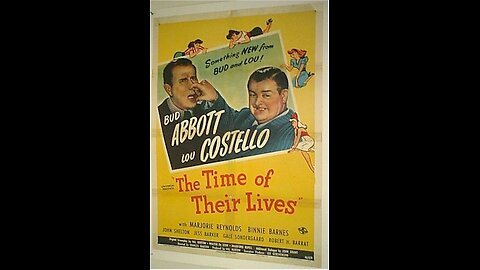
The Time of Their Lives (1946) | Directed by Charles Barton
Classic Films & Movies ArchiveIn Revolutionary-era America, a proud butler and his easygoing friend are caught in a mess of misunderstandings, romance, and accusations that end in tragedy. Years later, their spirits remain trapped in an old mansion, unable to rest until the truth about what happened is finally uncovered. When new people arrive at the house in the modern day, the two ghosts seize their chance to solve the mystery, clear a ruined name, and settle unfinished business from the past. Genre: Comedy / Fantasy / Supernatural Period Comedy Director: Charles Barton Charles Barton (1902–1981) was an American director best known for brisk, audience-friendly comedies and for shaping the pace and timing of studio-era humor. He worked across film and later television, directing a range of popular series and feature comedies. Barton became closely associated with Abbott and Costello in the 1940s, steering some of their most memorable productions and helping balance slapstick with story-driven set pieces. Star Cast: Bud Abbott as Cuthbert Twillie Lou Costello as Horatio Prim Marjorie Reynolds as Nora (and her modern-day descendant) Binnie Barnes as Melody John Shelton as Dr. Ralph Greenway Gale Sondergaard as Mrs. Greenway Dennis Hoey as the lawyer/estate figure involved in the mystery Audiences welcomed it as a fresh change of pace: still funny, but with a stronger story, more atmosphere, and an unusually “warm” emotional core for an Abbott and Costello picture. Some viewers missed the non-stop gag style of their broadest comedies, but many appreciated seeing them in a more plot-heavy fantasy with period costumes, ghostly tricks, and a mystery to unravel. Over the years it’s often been singled out as one of their most distinctive films because it mixes comedy with genuine melancholy and a satisfying wrap-up. Fun Facts: It’s one of the rare Abbott and Costello films that leans heavily into fantasy and sentiment rather than being built mainly around sketch-style routines. Bud Abbott gets more room than usual for dramatic frustration and indignation, while Costello carries much of the “comic engine,” creating a different balance from many of their other movies. The film uses clever “ghost” staging and effects for its time, including invisible interaction gags and spooky musical moments in the mansion. Charles Barton later directed Abbott and Costello Meet Frankenstein (1948), one of the team’s most famous genre-mashup hits. Marjorie Reynolds plays dual roles across time, helping the story connect its Revolutionary-era tragedy to the modern-day resolution. * This Rumble Movie Channel is comprehensively indexed on https://kinoquick.com - find you favourite movies fast & free! * Follow this channel to be notified of daily movie updates.253 views 1 comment -
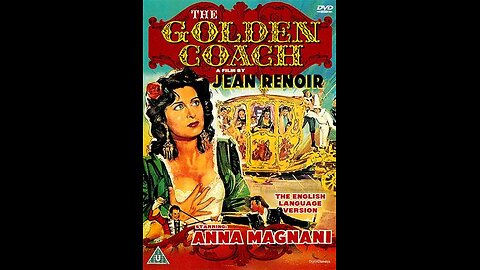
The Golden Coach (aka Le Carrosse d'or) (1952) | Directed by Jean Renoir
Classic Films & Movies ArchiveSet in 18th-century Spanish-ruled Peru, an Italian commedia dell’arte troupe arrives in a colonial city and wins the crowd’s heart. Their star performer, Camilla, becomes entangled with powerful men when the Viceroy presents her with a lavish golden coach. As love, jealousy, politics, and performance collide, Camilla is forced to choose between private happiness and devotion to her craft. Genre: Period comedy-drama / romantic drama / theatrical satire Director: Jean Renoir Jean Renoir (1894–1979) was one of cinema’s most influential French directors, celebrated for humanistic storytelling, fluid camera work, and a deep interest in how society “stages” itself. The son of painter Pierre-Auguste Renoir, he became a key figure of poetic realism and later international art cinema, directing landmarks such as La Grande Illusion (1937) and The Rules of the Game (1939). After working in the United States during the 1940s, he returned to Europe and made a run of richly colored, theatrical late works; The Golden Coach is often seen as the opening statement of that luminous final period. Star Cast: Anna Magnani Duncan Lamont Paul Campbell Odoardo Spadaro Nada Fiorelli On initial release, the film’s stylized, theatrical approach didn’t land with everyone, and it was often treated as a “special taste” Renoir picture rather than a crowd-pleaser. Over time, critical opinion rose dramatically: it became widely admired for its vibrant color design, its witty (but tender) look at power and desire, and Magnani’s performance, which is frequently cited as the film’s emotional engine. Today it’s commonly regarded as one of Renoir’s great late-career achievements. Fun Facts: The story is inspired by Prosper Mérimée’s play about an actress and a ceremonial coach, blending historical flavor with theatrical invention. It’s famous for treating life and theatre as mirrors: scenes are staged with a deliberate “onstage” feel, constantly reminding you that everyone is performing roles in public life. Anna Magnani’s Camilla is often praised as a rare lead character who’s both magnetic and stubbornly principled: she refuses to be owned, even by gifts or status. The film is frequently grouped with Renoir’s later color-saturated films as part of his celebrated late period, where he leaned into spectacle, music, and staged pageantry. Multiple-language versions and dubbing were part of its international life, which helped it travel widely but also contributed to mixed early reactions in some markets. * This Rumble Movie Channel is comprehensively indexed on https://kinoquick.com - find you favourite movies fast & free! * Follow this channel to be notified of daily movie updates.173 views -
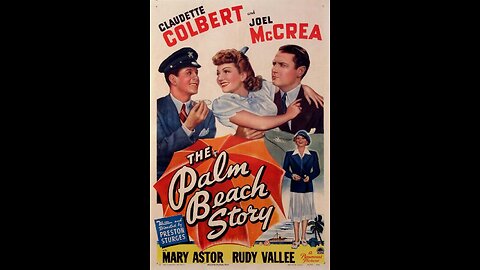
The Palm Beach Story (1942) | Directed by Preston Sturges
Classic Films & Movies ArchiveA young married couple struggling financially decides on an unconventional plan to secure their future. Gerry Jeffers travels alone to Palm Beach, intending to obtain a divorce and remarry a wealthy suitor in order to fund her husband Tom’s ambitions. Once there, she becomes entangled with eccentric millionaires, flirtatious admirers, and a wildly unpredictable social circle. Meanwhile, Tom follows her, leading to a chain of misunderstandings, mistaken identities, and rapid-fire romantic reversals. The story unfolds as a sophisticated screwball comedy that playfully questions marriage, money, and romantic loyalty. Genre: Comedy, Romantic comedy, Screwball comedy Director: Preston Sturges Preston Sturges was an American writer-director and one of the most influential comic filmmakers of Hollywood’s Golden Age. He was among the first screenwriters to gain the power to direct his own scripts, allowing his distinctive voice to flourish on screen. Known for fast-paced dialogue, absurd situations, and sharp social satire, Sturges created a string of acclaimed comedies in the early 1940s. His work often explored class, marriage, and American ambition with wit and irreverence, leaving a lasting impact on film comedy. Star Cast Claudette Colbert as Gerry Jeffers Joel McCrea as Tom Jeffers Mary Astor as Princess Centimillia Rudy Vallee as John D. Hackensacker III Franklin Pangborn as The Wienie King Sig Arno as Toto At the time of its release, the film was warmly received by both audiences and critics, who praised its inventive structure, sophisticated humor, and performances. Some viewers were initially puzzled by its unconventional narrative logic, but many embraced its playful disregard for realism. Over the years, the film has grown in reputation and is now widely regarded as one of the finest examples of American screwball comedy. Fun Facts The opening and closing scenes mirror each other in a deliberately ambiguous way, suggesting multiple interpretations of the story’s outcome. The Ale and Quail Club, a group of wealthy, gun-toting sportsmen, was inspired by Sturges’ satirical view of American upper-class leisure culture. Rudy Vallee’s casting played against his usual romantic image, emphasizing awkward charm rather than glamour. The rapid-fire dialogue and overlapping conversations became a hallmark of Preston Sturges’ directing style. The film’s playful attitude toward divorce and remarriage pushed the boundaries of Hollywood comedy during the early 1940s. * This Rumble Movie Channel is comprehensively indexed on https://kinoquick.com - find you favourite movies fast & free! * Follow this channel to be notified of daily movie updates.161 views -
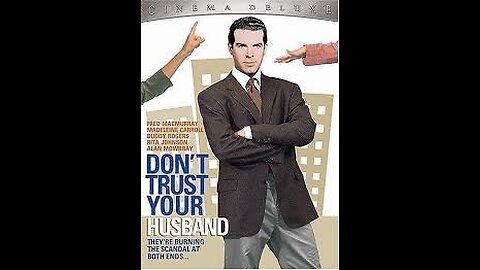
Don't Trust Your Husband (1948) | Directed by Llewellyn M. Reed
Classic Films & Movies ArchiveA domestic comedy of errors about a husband whose small lie spirals far beyond his control. When a well-meaning deception leads to a tangle of suspicions, jealousies, and miscommunications, the couple finds themselves navigating a chaotic chain of humorous situations that test — and ultimately reaffirm — the resilience of their marriage. Genre: Comedy / Romantic Comedy Director: Llewellyn M. Reed Llewellyn M. Reed contributed to mid-century Hollywood as a director and assistant director, working within the studio system’s tightly managed production schedules. His work leaned toward light features, domestic comedies, and character-focused storytelling. Though not a high-profile director, he earned a reputation for dependable craftsmanship and smooth pacing in smaller studio pictures. Star Cast: Fred MacMurray as William A. “Bill” Weldon Madeleine Carroll as Nan Weldon Charles “Buddy” Rogers as Gerald Baxter Rita Johnson as Ina Baxter Roland Culver as Dr. George Wren Raymond Walburn as Mr. Franklin Moviegoers appreciated the pairing of Fred MacMurray and Madeleine Carroll, both already well-established screen personalities. Their chemistry and timing helped elevate the film’s humorous look at marital misunderstandings. Critics generally saw it as a pleasant, modest studio comedy—nothing grand, but well acted, neatly timed, and enjoyable for those who liked light postwar entertainment. Fun Facts: This film marked one of Madeleine Carroll’s final screen appearances before she shifted away from Hollywood. Fred MacMurray, known for both dramatic roles and comedic charm, often excelled in “domestic confusion” comedies like this one. The screenplay follows a trend common in late-1940s comedies: exploring shifting marital roles in the postwar years. Although not a major box-office hit, the film maintained popularity in later television syndication due to MacMurray’s enduring appeal. * This Rumble Movie Channel is comprehensively indexed on https://kinoquick.com - find you favourite movies fast & free! * Follow this channel to be notified of daily movie updates.198 views -
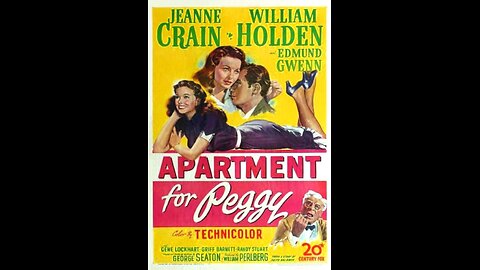
Apartment for Peggy (1948) | Directed by George Seaton
Classic Films & Movies ArchiveA gentle and warm-hearted postwar drama about a young pregnant woman who, together with her optimistic husband, finds refuge in the attic of a retired philosophy professor who has lost his desire to live. As the couple brings new energy and purpose into his quiet life, the film explores themes of hope, generational connection, and the search for meaning in a recovering postwar America. Genre: Drama / Comedy-drama Director: George Seaton George Seaton (1911–1979) was an American screenwriter, playwright, and director known for his skill in blending heartfelt drama with subtle humor. Beginning his career as a writer for radio and then for MGM, he became a respected filmmaker whose works often reflected humanistic values and emotional intelligence. His filmography includes Miracle on 34th Street (as screenwriter), The Country Girl, and Airport, the latter earning him an Academy Award nomination for direction. Star Cast: Jeanne Crain as Peggy O’Malley William Holden as Jason O’Malley Edmund Gwenn as Professor Henry Barnes Gene Lockhart as Mr. Clifford Randy Stuart as Helen Griff Barnett as Reverend Watterson Apartment for Peggy was well received by audiences for its gentle, life-affirming message during a period when many families were adjusting to the realities of postwar life. Critics appreciated the blend of warmth and humor, especially praising Edmund Gwenn’s performance as the melancholy professor whose life is unexpectedly rejuvenated. The film became a modest hit and remained appreciated as one of Fox’s thoughtful domestic dramas of the era. Fun Facts: Director George Seaton had recently won an Academy Award for writing Miracle on 34th Street before making this film. The movie was adapted from the short story An Apartment for Jenny by Faith Baldwin. Edmund Gwenn, known for playing Santa Claus in Miracle on 34th Street, delivers one of his most respected non-comedic roles here. The film reflects real postwar housing shortages faced by returning veterans and their young families, a social issue widely discussed in the late 1940s. * This Rumble Movie Channel is comprehensively indexed on https://kinoquick.com - find you favourite movies fast & free! * Follow this channel to be notified of daily movie updates.397 views 1 comment -
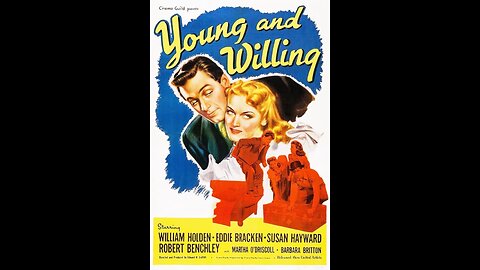
Young and Willing (1943) | Directed by Edward H. Griffith
Classic Films & Movies ArchiveA lighthearted comedy about a group of ambitious young actors struggling to launch their theatrical careers while sharing a cramped New York apartment. Their plans unravel when a visiting producer stumbles into their chaotic living situation, triggering misunderstandings, romantic mishaps, and a frantic effort to appear respectable. The story blends fast-moving dialogue with classic stage-theatre humor, capturing the energy of young performers desperate for a break. Genre: Comedy / Romantic Comedy Director: Edward H. Griffith Edward H. Griffith was an American director active from the silent era through the 1940s. Known for graceful storytelling and an eye for stage-influenced comedy, he frequently adapted theatrical material for the screen. Griffith’s films often emphasized character interactions and polished timing rather than spectacle, placing him among the reliable studio directors of his generation. Star Cast: William Holden as the earnest aspiring actor Susan Hayward as a determined young actress Eddie Bracken as the nervous roommate caught in every mishap Robert Benchley as the exasperated producer who becomes entangled in their troubles Martha O'Driscoll in a supporting role that adds romantic tension Audiences of the early 1940s received the film as light entertainment at a time when upbeat stories were in demand. Critics noted its playful ensemble chemistry and appreciated the youthful performances of stars who would later become major Hollywood figures. While not considered a major studio classic, it was praised for its breezy comedic pacing and for providing welcome escapism. Fun Facts: The film was adapted from the successful stage play Out of the Frying Pan, retaining much of its theatrical rhythm and ensemble humor. William Holden and Susan Hayward were both rising stars at the time, and this film helped strengthen their screen personas. Robert Benchley, well known for his witty essays and stage appearances, brought his trademark deadpan humor to the role. The film offers an authentic look at early-1940s theatrical life in New York, reflecting the eclectic living arrangements common among struggling actors. * This Rumble Movie Channel is comprehensively indexed on https://kinoquick.com - find you favourite movies fast & free! * Follow this channel to be notified of daily movie updates.275 views -
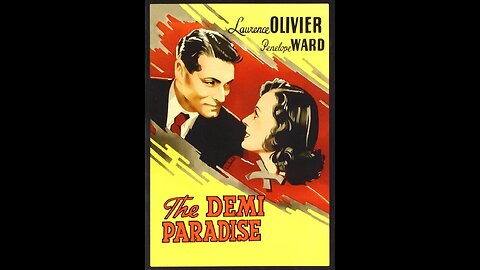
The Demi-Paradise (1943) | Directed by Anthony Asquith
Classic Films & Movies ArchiveSet in the early years of the Second World War, The Demi-Paradise tells the story of a Russian engineer who visits England to introduce a new type of propeller and becomes deeply involved with the eccentric family of the shipyard’s owner. Through humour and gentle social observation, the film explores cultural misunderstandings, personal growth, and the strengthening of British-Soviet relations during a time of political alliance. Genre: Comedy / Drama / Wartime Social Commentary Director: Anthony Asquith Anthony Asquith was a prominent British filmmaker known for his refined style and literary sensibility. The son of former Prime Minister H. H. Asquith, he built a respected directing career throughout the 1930s, 1940s, and 1950s. His work often combined craftsmanship with a strong sense of character, and he collaborated on several notable adaptations, including Pygmalion and The Winslow Boy. Asquith’s films were widely appreciated for their intelligent storytelling and high production standards. Star Cast: Laurence Olivier as Ivan Kouznetsoff Penelope Dudley-Ward as Anne Tisdall Finlay Currie as Mr. Tisdall Eliot Makeham as Jenkins Margaret Rutherford as Rowena Ventnor George Thorpe as Sir Henry Bostock John Laurie as Vassily The film was warmly received in wartime Britain for its upbeat tone and diplomatic spirit. Audiences enjoyed Laurence Olivier's charming performance and the film’s portrayal of Anglo-Soviet friendship at a moment when such themes were politically important. Critics praised its gentle humour and optimistic message, noting it as one of the more thoughtful morale-boosting productions of the period. Fun Facts: The film was created partly to reinforce British-Soviet alliance sentiments during the war. Laurence Olivier appears in a rare light comedy role just before his major Shakespearean adaptations. Margaret Rutherford delivers one of the film’s most memorable comedic performances, adding warmth and eccentricity. The title refers to a phrase from Shakespeare describing England as a near-paradise. * This Rumble Movie Channel is comprehensively indexed on https://kinoquick.com - find you favourite movies fast & free! * Follow this channel to be notified of daily movie updates.336 views -
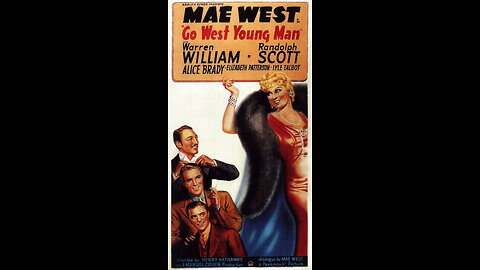
Go West Young Man (1936) | Directed by Henry Hathaway
Classic Films & Movies ArchiveThis romantic comedy follows glamorous movie star Mavis Arden, who finds herself stranded in a small rural town when her car breaks down during a publicity tour. Forced to stay at a local farmhouse, she encounters humble country doctor Robert James ‘Bob’ Harley. The clash between her sophisticated Hollywood attitude and the down-to-earth charm of small-town life leads to a series of humorous and romantic misadventures as Mavis begins to question her lifestyle and career ambitions. Genre: Comedy / Romance Director: Henry Hathaway Henry Hathaway (1898–1985) was an American film director celebrated for his versatility across genres, from adventure epics to crime dramas and Westerns. Beginning as an assistant director during the silent era, he built a long career directing stars such as Gary Cooper, John Wayne, and Marilyn Monroe. Known for his disciplined production style and emphasis on realism, Hathaway directed classics like The Lives of a Bengal Lancer (1935), Kiss of Death (1947), and True Grit (1969). His skill in balancing humor and human drama is evident in Go West Young Man. Star Cast: Mae West as Mavis Arden Warren William as Dr. Robert James ‘Bob’ Harley Randolph Scott as Bud Norton Lyle Talbot as Morgan Isabel Jewell as Gladys Elizabeth Patterson as Aunt Kate Barnaby Margaret Perry as Joyce Barnaby Alice Brady as Mrs. Struthers Audiences in 1936 were drawn by Mae West’s star power and witty dialogue, though some critics felt the film’s rural setting restricted her trademark urban sass. Still, her comedic timing and confident persona earned praise. The movie performed moderately well at the box office and appealed to fans of her earlier hits, though it did not reach the sensational success of She Done Him Wrong (1933) or I’m No Angel (1933). Fun Facts: The film was adapted from Mae West’s own stage play, Personal Appearance, which she had written and starred in on Broadway. Mae West personally reworked much of the dialogue to suit her sharp, suggestive humor. The title plays on the famous 19th-century phrase encouraging American expansion, though the story itself is a tongue-in-cheek take on modern celebrity culture. Randolph Scott, who appears in a supporting role, would later become one of Hollywood’s best-known Western stars. The film was among the last Mae West features produced under the looser pre-Code spirit before the stricter enforcement of the Production Code began shaping her later career. Mae West insisted on having her own wardrobe designer and lighting control, ensuring her trademark look of glamour even in rustic settings. The movie’s satirical view of Hollywood vanity mirrored West’s real-life experiences with fame and press publicity. * This Rumble Movie Channel is comprehensively indexed on https://kinoquick.com - find you favourite movies fast & free! * Follow this channel to be notified of daily movie updates.491 views -
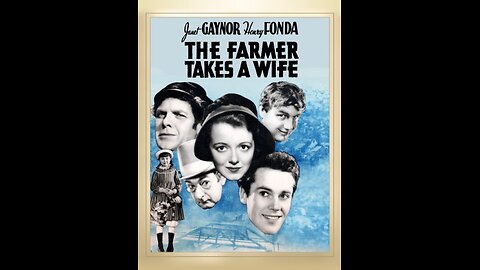
The Farmer Takes a Wife (1935) | Directed by Victor Fleming
Classic Films & Movies ArchiveSet along the Erie Canal in the mid-19th century, this romantic drama follows Dan Harrow, a young farmer-to-be, who works on the canal long enough to earn money for his farm. He falls in love with Molly Larkins, a spirited canal boat cook who loves the lively, rough-and-tumble life on the water. Their romance is challenged by their differing dreams — his for quiet rural life and hers for the adventure of canal living. Genre: Romantic Drama / Comedy Director: Victor Fleming Victor Fleming (1889–1949) was an American filmmaker best known for directing two of Hollywood’s greatest classics — The Wizard of Oz (1939) and Gone with the Wind (1939). Before achieving legendary status, he built a solid career directing action, adventure, and romantic films in the 1920s and 1930s. Known for his robust storytelling style and technical mastery, Fleming worked with many of the era’s top stars and was instrumental in shaping the golden age of Hollywood cinema. Star Cast: Janet Gaynor as Molly Larkins Henry Fonda as Dan Harrow Charles Bickford as Jotham Klore Slim Summerville as Fortune Friendly Andy Devine as Noah Roger Imhof as Deacon Hudson Margaret Hamilton as Widow Hudspeth The film was warmly received as a charming period romance and marked Henry Fonda’s feature film debut, establishing him as a promising new actor in Hollywood. Audiences appreciated the nostalgic portrayal of life along the Erie Canal and the chemistry between Gaynor and Fonda. Critics praised Victor Fleming’s direction and the film’s authentic atmosphere, though some found the pacing gentle compared to the more dramatic features of the time. Fun Facts: The movie was adapted from the successful 1934 Broadway play of the same name, in which Henry Fonda also starred opposite June Walker. This was Henry Fonda’s first film role, launching a screen career that would last over five decades. Janet Gaynor was already an Academy Award winner when she made this film, bringing prestige to the production. The Erie Canal setting was recreated with detailed authenticity to capture the mid-1800s American frontier spirit. Margaret Hamilton, who played the Widow Hudspeth, would later become world-famous as the Wicked Witch of the West in The Wizard of Oz (1939), also directed by Victor Fleming. The story was later remade in 1953 as a musical starring Betty Grable and Dale Robertson. * This Rumble Movie Channel is comprehensively indexed on https://kinoquick.com - find you favourite movies fast & free! * Follow this channel to be notified of daily movie updates.502 views -
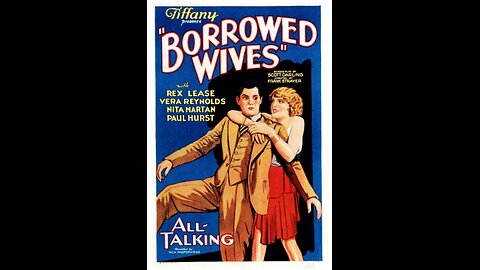
Borrowed Wives (1930) | Directed by Frank R. Strayer
Classic Films & Movies ArchiveA pre-Code comedy about a man who must marry in order to inherit his wealthy uncle’s fortune. When complications arise, he persuades a friend’s wife to pose as his bride, leading to mistaken identities, comic entanglements, and romantic confusion. Genre: Comedy Director: Frank R. Strayer Frank R. Strayer (1891–1964) was an American director and screenwriter known for his prolific work in low-budget films during the 1920s–1940s. He directed numerous features across genres, including mysteries, comedies, and melodramas. Strayer is perhaps best remembered today for directing several entries in the Blondie film series as well as various early sound features. Star Cast: Rex Lease as Peter Foley Vera Reynolds as Alice Blake Nita Martan as Julia Thorndyke Paul Hurst as Harry Robert Livingston as Tom Sam Hardy as John Blake Maude Turner Gordon as Aunt Sarah Borrowed Wives was a modest release typical of early sound comedies. While not a major critical or commercial success, it provided light entertainment at a time when audiences were still adjusting to talking pictures. Its farcical plot and comedic mix-ups appealed to viewers who enjoyed stage-style humor on screen. Fun Facts: The film is considered part of the “pre-Code” era, produced before strict enforcement of Hollywood’s Production Code in 1934. Borrowed Wives is sometimes screened by classic film enthusiasts as an example of early 1930s low-budget comedy. Rex Lease, the star, appeared in over 200 films, often in westerns and supporting roles. The movie is relatively rare today, though some prints survive and circulate among collectors. * This Rumble Movie Channel is comprehensively indexed on https://kinoquick.com - find you favourite movies fast & free! * Follow this channel to be notified of daily movie updates.340 views