-
Feasting lions show the savage beauty of nature
WildCreaturesNature is undeniably beautiful. We see the beauty in the mountain views, the galloping horses, and the flight of a graceful and solitary bird against a blue sky. But nature is equally harsh and savage. The balance between predator and prey illustrates this dichotomy. These lions have taken down a wildebeest on a game preserve in Kenya, Africa. While it is a dark moment for the wildebeest, it is the continuance of life for the pride of lions that would not survive without the kill. To watch the lions in pursuit of their prey is an unforgettable experience. Torn between cheering for the animal to escape, and wanting the lions to have a well-deserved meal, we are witnessing the simultaneous beauty and violence that occurs every day on the African plain. When the sun rises here each morning, the gazelles and wildebeest get ready to run for their survival. Failing to do so means the end of life. The lions are equally ready, and failing to outrun the prey will also mean the end of their life. Nature is cruel and unforgiving. It is also breathtakingly beautiful. We must understand that balance requires both.2.92K views 4 comments -
Curious spotted eagle ray slows to make eye contact with scuba diver
WildCreaturesSpotted eagle rays are beautiful stingrays with very distinctive heads and ornate markings. For any scuba diver or snorkeler, they are a treat to see in the ocean. Usually shy and reclusive, watching one close up is a rare sight. This eagle ray seemed to be unconcerned as it drifted close to a scuba diver perched on a rocky ledge, staying out of the current. The eagle ray slowed and turned to closely inspect him with great curiosity. Having a highly intelligent wild animal look into your eyes is something that can stir your soul. Eagle rays use their electro sensory organs in their snout to detect crustaceans and mollusks buried beneath the sand. They inhale the animals and the sand and then expel the sand out through their gills. They are capable of crushing thick shells in their mouth in order to get at the creature within. Eagle rays are highly intelligent, and occasionally curious about humans who approach slowly or who remain still when they swim close. The ocean is full of amazing and complex animals that we are only beginning to understand.3.85K views 2 comments -
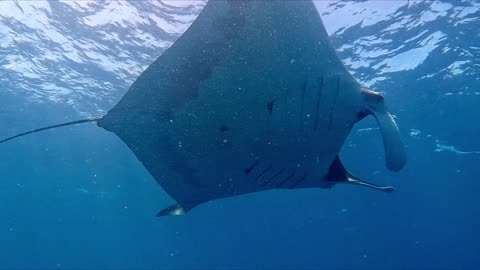
Gigantic manta rolls majestically in front of awed scuba diver
WildCreaturesThe Galapagos Islands are renowned for their incredible biodiversity, including various species of manta rays. Giant manta rays, can often be spotted in the warm waters surrounding these islands. These majestic creatures are known for their impressive wingspan, which can reach up to 29 feet (8.8 meters), and their graceful movements as they glide through the water. Manta rays are filter feeders, consuming plankton and small fish by swimming with their mouths open to capture food. In the Galapagos, they are often seen performing acrobatic jumps or rolling in the water, which may help them dislodge parasites or interact with other mantas. The Galapagos Marine Reserve is an excellent location for diving and snorkeling, offering opportunities to encounter manta rays, along with other marine life such as sea turtles, sharks, and thousands of fish species. Conservation efforts in the area aim to protect these magnificent creatures and their habitats, as they are vulnerable to threats such as overfishing and climate change. These lucky scuba divers found themselves in the middle of a huge congregation of these massive beasts as the circled around them curiously.3.17K views 5 comments -
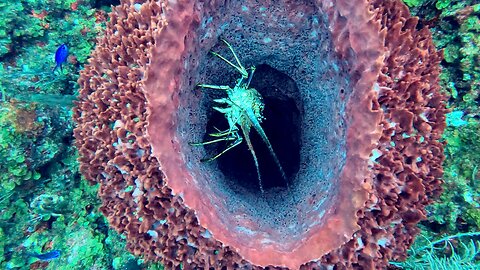
Lobster in Mexico finds a barrel sponge is a perfect place to hide
WildCreaturesThis spiny lobster has found an unusual, but perfect place to hide from predators. Unlike Atlantic lobsters, spiny lobsters lack claws for defence. They also have very long antennae, which they use to sense animals and objects around them. The barrel sponge that is providing shelter here is actually an animal. Sponges are among the longest-living animals on earth. The oldest known sponge lived for almost 2500 years. They are stationary filter feeders that draw in water, ingesting the nutrients and expelling water and waste. Spiny lobsters are opportunistic feeders, cleaning up carrion and other debris on the ocean floor. They also eat crustaceans, mollusks, sea urchins, worms, and vegetable matter. Colourful and fascinating, spiny lobsters are a delight for scuba divers to observe.3.69K views 1 comment