-
A Christmas Carol by: Charles Dickens (1843)
Deus Meum Que JusA Christmas Carol by Charles Dickens is a tightly focused moral tale centered on personal repentance, charity, and spiritual renewal, set against the social realities of Victorian England. The story follows Ebenezer Scrooge, a miser whose indifference to God, family, and fellow man has hardened him into a life of isolation and cruelty. On Christmas Eve, Scrooge is confronted by a series of supernatural visitations that force him to reckon with the consequences of his choices. The narrative unfolds through the appearance of four spirits who reveal Scrooge’s past, present, and possible future. These encounters expose the damage caused by greed, pride, and neglect, not only to others but to the soul itself. Dickens presents poverty, suffering, and human dignity plainly, without romanticizing either hardship or redemption. The book’s purpose is explicitly moral. Dickens frames Christmas as a time for humility, generosity, and reconciliation, grounding these themes in Christian ethics rather than sentimentality alone. Redemption is portrayed as possible even for those long hardened by selfishness, provided they confront truth honestly and act decisively. The tone balances realism with the supernatural. Ghostly elements are used not for spectacle, but as instruments of moral clarity. By the conclusion, A Christmas Carol affirms that transformation is not symbolic or abstract but must be lived out through concrete acts of compassion and responsibility. About the Author: Charles Dickens (1812–1870) was an English novelist, journalist, and social critic whose work shaped nineteenth-century literature and public conscience. Raised in financial insecurity after his father was imprisoned for debt, Dickens experienced poverty firsthand as a child laborer, an experience that permanently influenced his views on social justice, responsibility, and human dignity. These early hardships informed much of his writing, which consistently exposed the moral failures of institutions and individuals who ignored the suffering of the poor. Dickens wrote during the height of the Industrial Revolution, a period marked by rapid economic change, extreme inequality, and widespread exploitation. His novels addressed issues such as child labor, debtor’s prisons, class division, and moral indifference, often presenting these problems through memorable characters rather than abstract argument. Though critical of social systems, Dickens emphasized personal accountability, compassion, and reform rooted in conscience rather than political ideology. A committed Christian in belief and outlook, Dickens viewed Christianity primarily through its ethical demands rather than formal theology. His work reflects a strong moral framework centered on repentance, mercy, generosity, and care for the vulnerable. In A Christmas Carol and other Christmas writings, he sought to revive the spiritual and moral meaning of the holiday, presenting Christmas as a time for self-examination, reconciliation, and active goodwill toward others. By the time of his death, Dickens was one of the most widely read authors in the English-speaking world. His influence extended beyond literature into social awareness, helping to shape public attitudes toward poverty, charity, and moral responsibility.513 views -
The Jesus of History by: Terrot R. Glover (1917)
Deus Meum Que JusThis 1917 book is a historically grounded examination of Jesus Christ that seeks to distinguish the man known to history from later theological systems built around Him. Written by classical scholar and Anglican thinker Terrot R. Glover, the work approaches the Gospels as serious historical documents and treats Jesus as a real figure acting within the political, religious, and social realities of first-century Judea. The book focuses on Jesus’s teachings, methods of instruction, personal authority, and the reactions He provoked among followers, opponents, and governing powers. Rather than emphasizing miracles or dogma, Glover concentrates on how Jesus spoke, how He reasoned, and why His words carried unusual weight in an ancient world shaped by Roman rule and Jewish law. The narrative repeatedly returns to the impact Jesus had on those who encountered Him directly. Glover’s approach is analytical but not hostile. He does not dismiss the Gospel accounts as myth, nor does he present them as untouchable doctrine. Instead, he examines them as testimonies produced by witnesses and early communities, paying attention to consistency, motive, cultural context, and historical plausibility. The emphasis remains on character, intention, and consequence rather than theological abstraction. The tone is restrained and deliberate. Glover avoids devotional language and emotional appeal, favoring clear argument and careful observation. He writes for readers interested in understanding how Jesus functioned within history, not merely how He is worshiped. Historically, The Jesus of History is significant as an early twentieth-century attempt to reconcile faith with rigorous historical inquiry without collapsing either into skepticism or sentimentality. The book presents Jesus as a figure whose life and words exerted measurable force on history, independent of later institutional development. The work ultimately insists that Jesus cannot be reduced to legend, philosophy, or moral teaching alone. He is presented as a historical presence whose influence disrupted established orders and continues to demand explanation. About the Author: Terrot R. Glover (1869–1943) was a British classical scholar, teacher, and Anglican intellectual whose academic work bridged ancient history, literature, and Christian thought. Educated and later a lecturer at University College, Cardiff, Glover became known for his ability to bring ancient texts and historical contexts to life for general readers as well as specialists. His interests ranged from classical Greek tragedy to early Christianity, and he wrote with equal facility on figures such as Sophocles and Jesus of Nazareth. Glover’s scholarship was marked by careful attention to original languages, cultural milieu, and literary nuance, which he applied not only to Greco-Roman antiquity but also to the formative centuries of the Christian tradition. He sought to understand religious figures and movements as products of their time, without reducing them to myth or ignoring their spiritual significance. Though rooted in his own Anglican faith, Glover’s work appealed to readers across denominational lines and contributed to early twentieth-century efforts to interpret the historical foundations of Christian origins. Respectful of both rigorous historical method and the lived experience of faith, Glover stood at a crossroads of academic inquiry and devotional interest, influencing how subsequent generations approached the study of religious history.575 views -
The Atrocities of the Pirates by: Aaron Smith (1724)
Deus Meum Que JusThe Atrocities of the Pirates is a severe contemporary account documenting the crimes, violence, and moral collapse associated with piracy during the early eighteenth century. Written by Aaron Smith, Ordinary of Newgate Prison, the book draws directly from his role as spiritual attendant to condemned pirates awaiting execution. Smith had personal access to prisoners in their final days and recorded their confessions, recollections of crimes, and states of mind before death. The work focuses on concrete acts of piracy rather than adventure or legend. It records murders, torture, beatings, robberies, forced compliance, marooning, and executions as related by the pirates themselves or preserved through legal proceedings. Smith presents these events plainly and directly. Victims are often identified, methods of cruelty are described without euphemism, and the cumulative effect is deliberately sobering and confrontational. Smith’s purpose is explicit. The book is written as both a moral warning and a factual record. Piracy is portrayed as a path leading inevitably to brutality, despair, and death. Considerable attention is given to the pirates’ final hours, including their confessions, expressions of remorse or defiance, and reactions to impending execution. These moments are recorded not for drama, but to demonstrate the psychological and moral consequences of sustained violence. The tone is uncompromising. Smith does not soften language to protect the reader, nor does he embellish events for entertainment. The brutality described is factual, restrained only by the conventions of early eighteenth-century prose. The absence of romantic framing makes the violence feel relentless rather than theatrical. Historically, The Atrocities of the Pirates is significant because of its immediacy. The author was recording accounts from men recently active at sea, often within days or weeks of their crimes. This proximity gives the book a stark authenticity and makes it a rare primary-source window into pirate behavior, confessions, and end-of-life reckoning. The book does not hold back. Its intent is to expose piracy as it was experienced by its victims and perpetrators alike, leaving little room for illusion, justification, or myth. About the Author: Aaron Smith was an English Anglican clergyman who served as Ordinary of Newgate Prison in London during the early eighteenth century. In this role, he was responsible for providing spiritual counsel to condemned prisoners in the days and weeks leading up to their executions. His position placed him in direct, sustained contact with some of the most violent criminals of the period, including pirates captured during the height of the Golden Age of Piracy. As Ordinary, Smith routinely recorded confessions, final statements, and personal histories of those under sentence of death. These accounts were not collected for literary effect, but as part of his clerical duty to document repentance, moral reflection, and preparation for execution. His writings reflect the perspective of a moral witness rather than a storyteller, emphasizing accountability, consequence, and judgment. Smith’s access was immediate and personal. He spoke privately with prisoners in their cells, observed their mental and emotional states as execution approached, and heard firsthand descriptions of crimes committed at sea. This proximity gives his work a factual weight that distinguishes it from later retellings or secondhand compilations. The material he recorded often came directly from the mouths of the condemned, sometimes within hours of death. His prose is plain, direct, and severe, shaped by the conventions of early eighteenth-century religious writing. Smith did not seek to entertain or romanticize criminality. His intent was to warn the public, instruct morally, and preserve a truthful record of human behavior stripped of illusion. Violence is presented as consequence rather than spectacle. Aaron Smith’s work stands as a rare example of prison-based documentation from the period, capturing piracy not as adventure, but as a pattern of brutality followed by inevitable collapse. His writings reflect the worldview of a cleric confronting crime at its endpoint, making his contribution valuable not only to maritime history, but to the study of crime, punishment, and moral thought in early modern England.429 views -
The Imitation of Christ by: Thomas à Kempis (between 1418 and 1427)
Deus Meum Que JusWritten between 1418 and 1427, this book is a devotional handbook devoted entirely to interior transformation. Rather than discussing doctrine, debate, or grand theology, it aims at the daily discipline of mastering the self, subduing ego, and aligning one’s life with the pattern set by Christ. The book reads like a quiet voice speaking directly to the conscience... meditative, simple in language, but pointed in its demands. Structured in short reflections, it urges the reader to withdraw from vanity, cultivate humility, and develop a steady inner life that isn’t tossed around by moods, praise, criticism, or the chaos of the world. It pushes the reader toward self-examination and away from empty intellectualism. The emphasis is always on doing... living the virtues, practicing patience, embracing simplicity, and learning the difficult art of surrendering one’s will to a higher purpose. Above all, it focuses on the interior road, the one no one else sees, where character is shaped. It’s a guidebook for anyone who wants to be disciplined, grounded, and inwardly steady, regardless of their surroundings. No plot twists, no theatrics... just steady, practical instruction for building an inner life that holds firm. About the Author: Thomas à Kempis (c. 1380 - July 25, 1471) was a German-Dutch canon regular, copyist, and spiritual writer whose life revolved around discipline, contemplation, and the slow, steady refinement of the inner self. Born in Kempen near Cologne, he entered the Augustinian Canons at Mount St. Agnes in the Netherlands, a house associated with the Devotio Moderna movement... a reformist spiritual current emphasizing personal piety, humility, and practical devotion over public display or intellectual showmanship. He spent most of his adult life in that monastery, working as a scribe, instructor, and spiritual mentor. His handwriting appears in dozens of manuscripts, including an early copy of the entire Bible produced with remarkable precision. He wasn’t a public figure, preacher, or reformer in the political sense... he was a man who preferred the quiet room, the desk, the candle, and the discipline of putting the soul in order. His work reflects this temperament... direct, inward, stripped of ornament, and relentlessly focused on character formation. The Imitation of Christ is the best-known text attributed to him, and it remains one of the most widely read devotional books in the Christian tradition. While he was deeply embedded in a spiritual movement, there is no credible evidence that he belonged to any mystery schools, esoteric orders, or fraternal rites outside his monastic vocation. His legacy is defined by consistency... decades of copying, teaching, guiding, and writing, all pointed toward cultivating the inner life. Through his work, he continues to speak in the same tone he lived... quietly, firmly, and always toward the goal of shaping the heart rather than impressing the world.551 views 1 comment -
The Pilgrim’s Progress by John Bunyan (1678)
Deus Meum Que JusThis 1678 book is one of the most influential works in English literature... a spiritual adventure written during Bunyan’s imprisonment in the 1670s. Framed as an allegory, the story follows an ordinary person on a journey from the burdens of everyday life toward the promise of salvation. Every character, landscape, obstacle, and conversation represents a moral or spiritual truth, turning the entire narrative into a symbolic map of the human struggle to find purpose, redemption, and steadfastness in a world full of distractions and dangers. Though written in simple, accessible language, the book is packed with insight into fear, hope, temptation, courage, doubt, and perseverance. Bunyan creates a world where inner battles take visible form, where choices carry spiritual weight, and where progress is measured not by speed but by character. The journey unfolds through scenes of challenge, guidance, companionship, and reflection... each designed to make the reader think about the deeper direction of their own life. What makes The Pilgrim’s Progress endure is its clarity. Bunyan strips away theological complexity and instead focuses on the raw, universal experience of trying to move toward something better while everything tries to pull you off course. The book is honest about hardship but equally grounded in the idea that ordinary people can grow, change, and endure. It remains a cornerstone of Christian literature not because of doctrine, but because of its humanity. Anyone can see themselves in its steps. About the Author John Bunyan (1628–1688) was an English writer, preacher, and tinker by trade whose life was shaped by poverty, war, and an uncompromising devotion to his faith. Born in Elstow, Bedfordshire, he grew up in a working-class family and learned the craft of metalworking from his father. His early years were marked by both hardship and restlessness. He served as a soldier during the English Civil War, an experience that left a deep imprint on his understanding of human frailty, fear, and spiritual uncertainty. After the war, Bunyan underwent a profound personal conversion that turned him toward preaching within the Nonconformist tradition. His refusal to stop preaching without a government license led to his arrest in 1660. He spent the next twelve years in jail. This long imprisonment, meant to silence him, instead became the catalyst for his greatest literary work. Armed only with a Bible, a few books, and an iron will, Bunyan began writing the allegories and spiritual meditations that would shape his legacy. The Pilgrim’s Progress, published in 1678, was the first of his major works and quickly became a phenomenon. It spoke to ordinary men and women in clear, vivid language and captured the spiritual tension of an age struggling with persecution, conscience, and the meaning of true faith. Bunyan followed it with sermons, treatises, and a second part to the story, solidifying his place as one of the most widely read writers of the English-speaking world. Though he never held official church office or formal theological training, Bunyan’s writings rose from lived experience rather than academic distance. His insight came from hardship, reflection, and the stubborn conviction that faith should be walked, not theorized. He died in 1688 after falling ill during a preaching journey, leaving behind a body of work that has endured for centuries. Today, John Bunyan is remembered as a powerful voice of spiritual resilience... a man who turned persecution into creativity and personal struggle into one of the most enduring allegories ever written.253 views 1 comment -
The Symbolism of Freemasonry by: Albert Gallatin Mackey, M.D. (1896)
Deus Meum Que JusThis 1896 book by Albert G. Mackey is one of the most important works in Masonic literature, offering a clear and comprehensive study of the Craft’s symbolic and allegorical foundations. The first edition of The Symbolism of Freemasonry was published in 1869. Rather than a simple catalog of symbols, Mackey presents a structured examination of how Freemasonry teaches moral and spiritual truth through its legends, rituals, and architectural imagery. Symbolism, in his view, is not decorative or optional... it is the core method by which the institution conveys its deeper teachings. Mackey explains that Freemasonry communicates through two primary channels... its legends and its symbols. Both serve as vehicles for ethical instruction, philosophical reflection, and the gradual unveiling of esoteric meaning. Every tool, gesture, spatial arrangement, and narrative in the lodge exists for a purpose... to guide the initiate from literal understanding toward a higher grasp of moral duty and spiritual insight. A strength of the book is its historical framing. Mackey places Masonic symbolism within the broader traditions of ancient mystery schools, temple architecture, religious rites, and classical moral philosophies. He does not insist on direct historical descent but shows how Freemasonry adopted and transformed universal symbolic motifs to create a distinctive moral and spiritual system. This helps the reader see Masonic symbolism as part of a long, evolving intellectual and religious heritage. Throughout the work, Mackey explores key symbolic themes - the lodge as a representation of the world, the significance of the cardinal directions, the working tools, the symbolism of the cornerstone and temple, the legend of the Lost Word, the ineffable Name, and the journey through the degrees. Each topic is treated as a step in the development of a Mason’s inner character. For Mackey, symbolism serves one purpose... the cultivation of virtue, self-knowledge, and a clearer understanding of humanity’s relationship to the divine. The book functions as both an educational guide and a philosophical treatise. Mackey aims to inspire readers to move beyond rote ritual toward a thoughtful engagement with the Craft’s inner meaning. He presents Freemasonry as a moral science built upon timeless symbols... a system that invites personal growth, intellectual discipline, and spiritual aspiration. Albert Gallatin Mackey, M.D. (1807–1881), was one of the most influential Masonic scholars of the nineteenth century, known for transforming American Freemasonry into a system with coherent philosophy, consistent symbolism, and serious academic footing. Born in Charleston, South Carolina, he trained as a physician and graduated from the College of South Carolina in 1832. After more than a decade of practice, he abandoned medicine for full-time Masonic scholarship, as recorded in the Grand Lodge of South Carolina. Mackey entered the Craft in 1841 in St. Andrew’s Lodge No. 10, Charleston. He soon affiliated with Solomon’s Lodge No. 1, where he was elected Worshipful Master the next year. From 1842 to 1867 he served as Grand Secretary of the Grand Lodge of South Carolina and later as Grand Lecturer, strengthening ritual, expanding Masonic education, and deepening the study of symbolism and jurisprudence. In the Ancient and Accepted Scottish Rite, Southern Jurisdiction, Mackey served for many years as Secretary-General, shaping ritual commentary, overseeing correspondence across multiple states, and helping maintain the unity of the Rite during Reconstruction. After moving to Washington, D.C., in the early 1870s, he continued his work in the York Rite, affiliating with Lafayette Lodge No. 19, Lafayette Royal Arch Chapter No. 5, and Washington Commandery No. 1, gaining experience across the full spectrum of American ritual bodies. Mackey was active in learned and esoteric circles, including the American Oriental Society and the Philological Society of Charleston, and he studied Hebrew, antiquities, Kabbalistic literature, and ancient mystery traditions. By the time of his death at Fortress Monroe in 1881, he was recognized as the leading interpreter of Masonic symbolism in the United States. The Supreme Council memorial described him as “the architect of American Masonic literature,” and his legacy continues to guide Masonic scholarship today.612 views 2 comments -
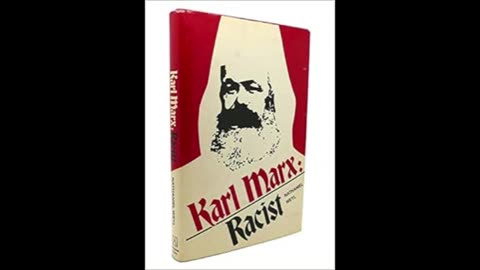
Karl Marx: Racist by Nathaniel Weyl (1968)
Deus Meum Que JusThis book, first published in 1968, is an examination of the lesser-discussed side of Marx’s writings… the personal letters, journal entries, and political disputes where Marx’s language and attitudes toward race, nationality, and ethnicity show a very different man than the icon often presented. Weyl approaches Marx not as a prophet or theorist but as a historical figure with a documented record, and he builds the book around primary sources drawn from Marx’s own correspondence, arguments with rivals, and published commentary. The book lays out how Marx and Engels described various groups… Slavs, Blacks, Jews, Asians, Irish workers, and others… and how those descriptions shaped their political judgments. Weyl argues that Marx’s racial worldview influenced his predictions about historical development and his belief that certain groups were “historically progressive” while others were “reactionary” obstacles fated to disappear. The study also explores how these attitudes filtered into later revolutionary movements, especially those that adopted Marx’s terminology without questioning its underlying assumptions. Rather than focusing on economic theory, Weyl concentrates on the man behind the theory. He looks at Marx’s personal conflicts, the harsh language he used toward other socialist thinkers, and the way racial hierarchy appeared in his private assessments of world events. Much of the book highlights contradictions between Marx’s public universalism and his private prejudices, using direct quotations to let the record speak for itself. Overall, it is a critical biography built from original writings, showing how Marx’s racial views formed an overlooked but significant part of his intellectual framework and the movements that followed him. About the Author: Nathaniel Weyl was an American political scientist and researcher known for his work on ideological movements, political history, and the internal dynamics of revolutionary organizations. He began his career in government service during the New Deal era, later moving into private research and writing, where he developed a reputation for examining political figures and movements through original documents, archived correspondence, and firsthand accounts. Weyl drew on experience from both the political left and the anti-communist investigations of the mid twentieth century, giving him an unusual vantage point on Marxism, socialist parties, and the cultural assumptions that shaped them. Throughout his career he wrote extensively on political sociology, elite networks, demographic trends, and the hidden mechanics of ideological groups. His method relied on tracing ideas back to their source… analyzing private letters, early pamphlets, and internal debates to uncover the personal motives that drove public theories. This approach shaped his study of Karl Marx, where he focused on the man behind the doctrine rather than the doctrinal system itself. Weyl’s work often challenged mainstream interpretations by highlighting the human flaws, personal conflicts, and unexamined biases that influenced major thinkers. His reputation rests on careful sourcing, independent analysis, and a willingness to investigate parts of the historical record that many writers overlook.228 views -
None Dare Call it Conspiracy by: Gary Allen (1971)
Deus Meum Que JusNone Dare Call It Conspiracy (1971) is a work in which Gary Allen presents a documented explanation of political and economic developments in the 20th century. The book compiles names, organizations, policy decisions, and historical events to show how a concentrated group of financial and institutional interests has shaped major outcomes in the United States and abroad. Allen’s material draws on congressional records, financial histories, public statements, and published government documents to outline connections among influential families, foundations, and international bodies. Allen presents the Council on Foreign Relations, major philanthropic foundations, and global policy organizations as central points of influence. He details their members, publications, affiliations, and roles in government and business, emphasizing their involvement in shaping legislation, foreign relations, banking decisions, and long-term national policy. He maintains that leadership across both major political parties has been connected to these same institutions, resulting in continuity of direction regardless of administration. The book organizes its information chronologically and structurally, presenting events such as banking reforms, political shifts, wars, and international agreements as linked through overlapping personnel and shared institutional goals. Allen’s purpose is to lay out factual material in a way that allows readers to follow the relationships, timelines, and documented actions that form the basis of his conclusions. About the Author: Gary Allen (1936–1986) was an American journalist, political commentator, and prolific writer known for his sharply anti-establishment, anti–big government perspective. He wrote for several conservative and libertarian publications, including The Review of the News and American Opinion, where he developed a reputation for his direct, uncompromising style. Allen was closely associated with the John Birch Society, serving as one of its most widely read spokespersons and contributing extensive investigative columns on foreign policy, banking, education, and government expansion. Allen authored or co-authored more than a dozen books, many of which focus on global power structures and the influence of elite financial networks. His most widely known work, None Dare Call It Conspiracy, made him a prominent figure in early 1970s political discourse, selling millions of copies through grassroots distribution rather than mainstream channels. His writing consistently emphasized transparency in government, constitutional limits on power, and skepticism toward centralized authority—principles that defined his career. Beyond his books, Allen was a frequent public speaker and radio guest, where he expanded on themes of government overreach, internationalism, and the erosion of individual liberties. His work resonated strongly with readers who felt traditional media failed to address hidden political influences. Until his death in 1986, Allen remained committed to exposing what he viewed as concealed mechanisms of political and economic control, positioning himself as a watchdog against the concentration of power in any form.554 views 1 comment -
Stories of the Wars of the Jews by: Charlotte Maria Tucker (A.L.O.E.)
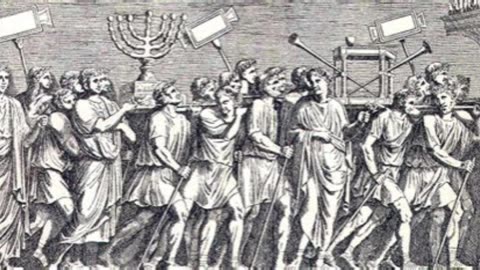
Deus Meum Que JusThis 19th-century work isn’t a simple retelling of Jewish history... it’s Protestant imperial propaganda for children, thinly veiled as a moral storybook. Written under the pen name A.L.O.E. (“A Lady of England”), Charlotte Maria Tucker reworks the writings of Flavius Josephus into a series of Christianized parables about divine punishment, obedience, and national destiny. Through the fall of Jerusalem and the destruction of the Second Temple, Tucker turns real historical tragedy into a theological warning - nations that disobey God fall, and those that uphold divine law rise. This message reflected Victorian Britain’s self-image as a “chosen” Christian empire inheriting Israel’s covenant. It’s not history... it’s moral conditioning, teaching children that faith and empire are inseparable. The book also spreads historical misconceptions - for example, the claim that “Jesus was a Jew.” Truth: there were no “Jews” on earth when He walked it... not by name, not by language, not by history. He was born into the tribe of Judah under the Law of Israel - that’s it. The word “Jew” is a later label, layered with centuries of politics and religion that didn’t exist in His time. Presenting Jesus through this later lens shows how Tucker’s stories serve ideology over historical accuracy. The tone and narrative structure anticipate the later doctrines of British Israelism, which claimed that the Anglo-Saxon people were the true descendants of the biblical Israelites. Tucker’s version of the story laid the emotional and spiritual groundwork for that ideology long before it was formally codified. Now available in audiobook format, Stories of the Wars of the Jews is a revealing artifact of its time... a blend of piety, nationalism, and indoctrination wrapped in the comforting voice of a Victorian Sunday school tale. About the Author: Charlotte Maria Tucker (1821–1893), who wrote under the pseudonym A.L.O.E. (“A Lady of England”), was a devout Evangelical Anglican and prolific author of moral and missionary fiction. She produced more than 150 works aimed at teaching Christian virtue to both British youth and colonial converts. Tucker’s writing advanced a distinctly Victorian vision of divine empire - that Britain, like ancient Israel, was chosen by God to civilize and redeem the world. Though she predated organized British Israelism, her stories helped normalize the same theological worldview - that national power and spiritual obedience were intertwined, and that Britain’s global reach fulfilled a biblical pattern. After years of missionary work in Amritsar, India, she died there in 1893. Her pen name, “A Lady of England,” was less a disguise than a declaration... her work spoke not as an individual, but as a moral voice of the English nation itself.459 views -
Montezuma’s Castle and Other Weird Tales by Charles B. Cory (1899)
Deus Meum Que JusThis book is a rich and compelling collection of late-19th-century short stories that weave together adventure, the uncanny, and the supernatural. The title tale transports readers to the rugged landscapes of the American Southwest, into caves, ruins, and relic hunting, where an expedition to the cliff-dwelling known as “Montezuma’s Castle” spirals into betrayal, entrapment, and a night of suspenseful terror. Cory captures both the physical dangers of exploration and the psychological tension of facing the unknown, creating a vivid sense of place that lingers long after the story ends. Beyond the opening story, Cory offers a diverse array of “weird tales” filled with mummies, ancient Aztec curses, ghostly visitations, mysterious powders, and desert perils. Each tale blends historical detail, folklore, and supernatural speculation, reflecting Cory’s fascination with the unknown and his love for weaving fact with imaginative storytelling. His background as a naturalist, bird-collector, and wealthy sportsman adds a unique layer to the narratives, as he often integrates meticulous observations of the natural world and expedition-style research into his fiction, grounding even the most uncanny moments in a believable setting. The stories not only entertain but also subtly explore the intersections of wilderness, history, and myth. Cory’s tales invite readers to consider the echoes of ancient civilizations, the mysteries of natural landscapes, and the lingering presence of the supernatural in a rapidly modernizing world. While some narratives reflect the pacing and style of the late 19th century, their vivid imagery, adventurous spirit, and eerie undertones make them enduring examples of early American weird fiction. Readers of horror, adventure, and historical curiosities will find the collection both thrilling and thought-provoking, offering a glimpse into a genre that blends scientific observation with imaginative storytelling. About the Author: Charles B. Cory (1857–1921) was an American ornithologist, naturalist, and writer whose contributions spanned both science and literature. Born into a wealthy Boston family, Cory devoted much of his life to the study and collection of birds, publishing extensively on North American ornithology and becoming a recognized authority in the field. He served as curator of the Boston Society of Natural History and was an active member of numerous scientific societies, earning respect among his peers for his meticulous scholarship and dedication to the natural world. In addition to his scientific work, Cory was deeply fascinated by adventure, folklore, and the supernatural, interests he explored extensively in his fiction. His stories, including Montezuma’s Castle and Other Weird Tales, reflect his passion for exploration, history, and natural landscapes, blending real-world knowledge with imaginative storytelling. Cory’s fiction offers a rare perspective: the mind of a scientifically trained Victorian gentleman encountering the mysterious and eerie corners of history and nature. Today, his works remain a window into the adventurous spirit and curious imagination of a man who sought to understand both the natural and the supernatural worlds.437 views