-
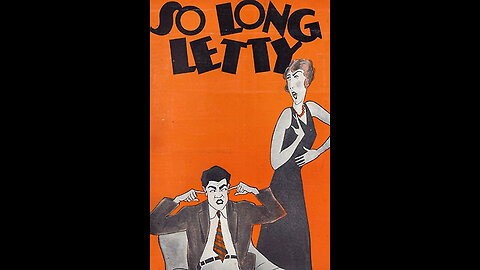
So Long Letty (1929) | Directed by Lloyd Bacon
Classic Films & Movies ArchiveAt a beach hotel, a wealthy, grumpy uncle meets the loud, wisecracking Letty and immediately dislikes her. When he later encounters Letty’s husband, he mistakenly assumes the man is married to a more “proper” woman. To secure the uncle’s approval (and his money), the couples engineer a one-week spouse swap that spirals into misunderstandings, jealousy, and comic chaos. Genre: Musical comedy; early sound (all-talking) pre-Code comedy. Director: Lloyd Bacon Lloyd Bacon (December 4, 1889 – November 15, 1955) was a prolific American director and former stage/vaudeville performer who worked across many genres at Hollywood studios, especially Warner Bros. He was known for speed and efficiency, and his better-known credits include 42nd Street (1933). Star Cast: Charlotte Greenwood as Letty Robbins Claude Gillingwater as Uncle Claude Davis Grant Withers as Harry Miller Patsy Ruth Miller as Grace Miller Bert Roach as Tommy Robbins Marion Byron as Ruth Davis Helen Foster as Sally Davis Hallam Cooley as Clarence de Brie Harry Gribbon as Joe Casey Lloyd Ingraham as Judge The film arrived at the peak of the early-talkie musical boom. Later film historians have described it as part of a flood of 1929 musicals and noted it performed modestly financially (often described as barely breaking even). In modern write-ups, Charlotte Greenwood is frequently singled out as the main reason to watch thanks to her physical comedy and high-kicking persona, while the film itself is usually treated as a light, era-specific vehicle rather than a major classic. Fun Facts: Charlotte Greenwood reprises the Letty role she originated on Broadway in the 1916 stage version. It was marketed as an “all-talking” early sound feature from Warner Bros. and was also issued in a silent version. There was an earlier silent film adaptation titled So Long Letty released in 1920. Production is recorded as beginning in late May 1929, with a copyright filing dated November 4, 1929. Because it was released in 1929, it entered the public domain in the United States on January 1, 2025. * This Rumble Movie Channel is comprehensively indexed on https://kinoquick.com - find you favourite movies fast & free! * Follow this channel to be notified of daily movie updates.152 views -
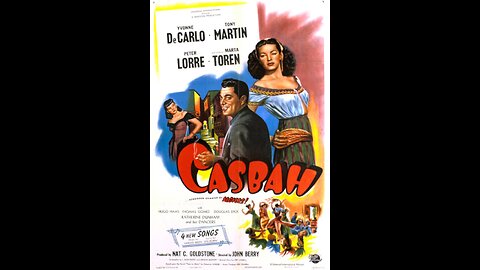
Casbah (1948) | Directed by John Berry
Classic Films & Movies ArchiveCasbah is a musical crime drama set in the mysterious backstreets of Algiers. It follows the notorious thief Pépé le Moko, who hides in the Casbah — a labyrinthine quarter where he is both protected and trapped. When he falls in love with a beautiful Parisian woman, his yearning for freedom and romance leads to betrayal and tragedy. The film is a remake of the 1938 French classic Pépé le Moko and its 1937 American adaptation Algiers. Genre: Musical / Crime / Romance Director: John Berry John Berry (1917–1999) was an American film director, actor, and screenwriter known for his work during Hollywood’s Golden Age. He began his career as an actor in New York before moving into directing at Warner Bros. and later Universal. His promising career was interrupted when he was blacklisted during the McCarthy era for alleged communist sympathies. Despite this, Berry continued to work internationally and later returned to Hollywood, earning respect for his craftsmanship and social conscience. Star Cast: Yvonne De Carlo as Inez Tony Martin as Pépé le Moko Peter Lorre as Slimane Märta Torén as Gaby Thomas Gomez as Grandpere Hugo Haas as Omar Douglas Dick as Carlo Casbah was received with moderate enthusiasm by audiences who appreciated its music and visual flair but found it less gripping than the earlier versions. Critics praised Yvonne De Carlo’s sultry performance and Tony Martin’s singing voice, while noting that the film leaned more toward musical entertainment than noir tension. The lush Technicolor photography and lively score gave the story a new atmosphere, but purists of the original films considered it too glamorous and Americanized. Fun Facts: The film was produced by Tony Martin’s own company, Marston Productions, making it a personal project for the singer. It featured several original songs, including “For Every Man There’s a Woman” by Harold Arlen and Leo Robin, which was nominated for an Academy Award for Best Original Song. Yvonne De Carlo’s role as Inez cemented her reputation as an exotic screen beauty and helped her transition into leading roles. Peter Lorre’s portrayal of Slimane added a touch of dark humor and menace, echoing his earlier roles in European cinema. * This Rumble Movie Channel is comprehensively indexed on https://kinoquick.com - find you favourite movies fast & free! * Follow this channel to be notified of daily movie updates.330 views -
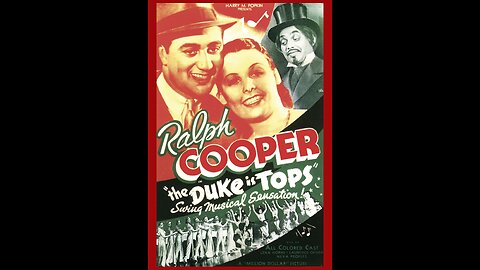
The Duke Is Tops (1938) | Directed by William Nolte
Classic Films & Movies ArchiveThe Duke Is Tops is an all-Black-cast musical drama that tells the story of Duke Davis, a talented but struggling stage producer who helps launch the career of a rising singer, Ethel Andrews. When Ethel finds fame and leaves for bigger opportunities, Duke sacrifices his own career for her success. Later, fate reunites them in a triumphant finale that celebrates loyalty, love, and the power of show business. The film is a lively showcase of African-American music, dance, and performance during the Harlem Renaissance era. Genre: Musical, Drama, Romance Director: William Nolte William Nolte was an American director active in the 1930s and 1940s, primarily known for his work on low-budget productions made for independent studios. Though his career was brief and not widely documented, Nolte contributed to several race films—motion pictures made by Black filmmakers and actors for African-American audiences during segregation. The Duke Is Tops stands as his best-known work due to its historical significance and the breakout performance it gave to Lena Horne. Star Cast: Ralph Cooper as Duke Davis Lena Horne as Ethel Andrews Laurence Criner as Doc Dorando Monte Hawley as Mr. Marshall Edward Thompson as Doc Harley Woods as Tommy George Wiltshire as Sam Nina Mae McKinney (uncredited cameo in some prints) When released, The Duke Is Tops was well received in African-American theatres and communities, appreciated for its strong musical performances and all-Black cast at a time when Hollywood offered few such roles. The film gained particular attention for introducing audiences to a young Lena Horne, whose poise and voice made a lasting impression. Though production values were modest, audiences celebrated its energy, humor, and optimism. In later years, it became a historically important example of “race cinema,” showing the vibrancy of Black entertainment in pre-war America. Fun Facts: The film marked the first screen appearance of Lena Horne, who later became one of Hollywood’s first major African-American stars. When reissued in 1943 after Horne achieved fame, the film was retitled The Bronze Venus to capitalize on her success. Ralph Cooper, who wrote and co-produced the film, was also the founder and emcee of the legendary Amateur Night at the Apollo Theater in Harlem. The movie featured original songs and musical numbers by leading African-American artists of the time. It was produced by Million Dollar Productions, a pioneering company specializing in films for Black audiences. Despite its low budget, the film’s story of ambition, romance, and redemption helped pave the way for greater visibility of Black performers in American cinema. Surviving prints of the film have since entered the public domain and are frequently shown in retrospectives of early African-American cinema. * This Rumble Movie Channel is comprehensively indexed on https://kinoquick.com - find you favourite movies fast & free! * Follow this channel to be notified of daily movie updates.325 views -
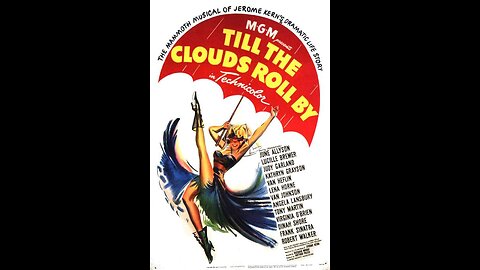
Till the Clouds Roll By (1946) | Directed by Richard Whorf
Classic Films & Movies ArchiveTill the Clouds Roll By is a Technicolor musical film that serves as a lavish biographical tribute to composer Jerome Kern. Rather than being a strict biography, the film uses Kern’s life as a framework for presenting a series of musical performances from his most famous works. Packed with dazzling numbers, elaborate set pieces, and appearances by some of MGM’s biggest stars, the movie is more spectacle than history. Genre: Musical / Biographical Director: Richard Whorf (credited as director), with additional contributions by Vincente Minnelli, George Sidney, and Busby Berkeley for various musical sequences. Richard Whorf (1906–1966) was an American actor, director, and producer who began his career in theatre and moved to Hollywood in the 1930s. While he directed several films, he is best remembered for his work as a director on television series in the 1950s and 1960s, such as The Beverly Hillbillies and Gunsmoke. The musical sequences in Till the Clouds Roll By were staged by some of MGM’s most celebrated directors, highlighting the studio’s collaborative approach. Star Cast: Robert Walker as Jerome Kern June Allyson as herself Lucille Bremer as Sally Hessler Judy Garland as Marilyn Miller Kathryn Grayson as Magnolia Hawks Van Heflin as James Hessler Lena Horne as Julie LaVerne Frank Sinatra as himself Tony Martin as himself Angela Lansbury as Jerry’s childhood friend (singing “How’d You Like to Spoon with Me?”) Dinah Shore as herself Virginia O’Brien as herself Cyd Charisse in a featured dance sequence The film was a box-office success and a showcase for MGM’s star roster. Audiences were dazzled by the colorful production numbers and the parade of popular performers. Critics noted that the storyline was weak and only loosely tied to Kern’s real life, but audiences forgave its historical liberties in favor of its entertainment value. It has since become a classic example of the Hollywood “all-star musical.” Fun Facts: The film opens with a spectacular recreation of the “Show Boat” musical sequence, staged by Vincente Minnelli, with a massive rotating stage and cast of hundreds. Although billed as a biography, the film was heavily fictionalized; for instance, Kern’s actual wife, Eva, is omitted, and several events are invented. Judy Garland was pregnant during filming, though she still delivered a powerful performance in her musical numbers. Lena Horne’s appearance was one of her last at MGM before leaving the studio due to typecasting and limited roles offered to Black performers. Frank Sinatra sings “Ol’ Man River” in a dramatic close-up finale, even though in Show Boat the song was originally sung by a Black character. * This Rumble Movie Channel is comprehensively indexed on https://kinoquick.com - find you favourite movies fast & free! * Follow this channel to be notified of daily movie updates.365 views -
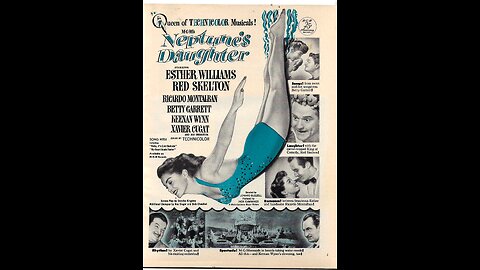
Neptune's Daughter (1949) | Directed by Edward Buzzell
Classic Films & Movies ArchiveThis lighthearted MGM musical comedy follows a case of mistaken identity mixed with romance and humor, set against the backdrop of synchronized swimming, fashion, and a touch of Latin flair. The story involves a swimwear designer who mistakenly believes her sister is being courted by a notorious womanizer, only to find herself falling for his charming brother. Genre: Musical Comedy / Romance Director: Edward Buzzell Edward Buzzell was an American director, actor, and screenwriter active mainly in the 1930s and 1940s. He directed several musicals and comedies for MGM, known for light, entertaining fare. His filmography includes At the Circus (1939) with the Marx Brothers and Best Foot Forward (1943). Star Cast: Esther Williams as Eve Barrett Red Skelton as Jack Spratt Ricardo Montalbán as José O’Rourke Betty Garrett as Betty Barrett Keenan Wynn as Joe Backett Xavier Cugat as Himself The film was a commercial success for MGM, riding on the popularity of Esther Williams and her aquatic musicals. Audiences enjoyed the vibrant Technicolor, catchy musical numbers, and comedic performances, especially Red Skelton’s antics. Ricardo Montalbán’s suave charm and Xavier Cugat’s musical interludes added to its appeal. The film also won the Academy Award for Best Original Song with "Baby, It’s Cold Outside," which later became a standard. Fun Facts: "Baby, It’s Cold Outside" was introduced in this film and went on to win the Oscar for Best Original Song. Esther Williams, a competitive swimmer turned actress, was at the peak of her fame and was often called the “Million Dollar Mermaid.” The film paired Ricardo Montalbán and Esther Williams again after their success in Fiesta (1947). Red Skelton’s role added a heavy comedic layer, making this one of MGM’s most successful musicals of the late 1940s. Xavier Cugat’s real-life orchestra added authentic Latin musical flavor to the movie. * This Rumble Movie Channel is comprehensively indexed on https://kinoquick.com - find you favourite movies fast & free! * Follow this channel to be notified of daily movie updates.345 views -
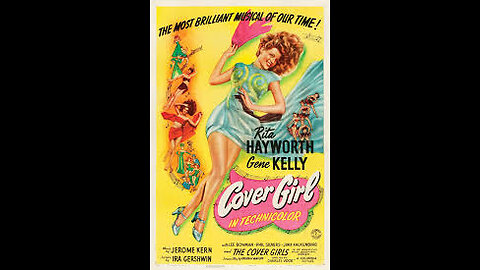
Cover Girl (1944) | Directed by Charles Vidor
Classic Films & Movies ArchiveCover Girl is a Technicolor musical that follows the story of Rusty Parker, a Brooklyn nightclub dancer whose life changes when she wins a contest to become a magazine cover girl. As she rises to fame, she is torn between the glamour and opportunities of show business and her love for her humble employer. The film explores themes of ambition, romance, and the cost of success, all set against lavish musical numbers and dazzling dance routines. Genre: Musical / Romance Director: Charles Vidor Charles Vidor (1900–1959) was a Hungarian-American director known for his stylish and visually sophisticated films. He started in Hollywood as an editor before transitioning to directing in the 1930s. Vidor became best known for musicals and dramas, particularly for Gilda (1946) starring Rita Hayworth, which cemented her as a Hollywood icon. His career included a wide range of genres, from musicals like Cover Girl to romances and thrillers, often marked by strong visual flair and careful attention to performance. Star Cast: * Rita Hayworth as Rusty Parker * Gene Kelly as Danny McGuire * Lee Bowman as Noel Wheaton * Eve Arden as Cornelia Jackson * Leslie Brooks as Maurine * Otto Kruger as John Coudair * Phil Silvers as Genius Cover Girl was a critical and commercial success, celebrated for its vibrant Technicolor cinematography, dazzling costumes, and star power. Rita Hayworth’s charm and beauty, combined with Gene Kelly’s groundbreaking choreography, won over audiences. The film won the Academy Award for Best Musical Score and was nominated for four others, including Best Cinematography and Best Art Direction. It played a major role in solidifying Hayworth as one of Hollywood’s top stars of the 1940s. Fun Facts: * Cover Girl was the first major Technicolor musical for both Rita Hayworth and Gene Kelly, boosting their careers significantly. * Gene Kelly was given unusual creative freedom, which allowed him to choreograph sequences that would influence the future of Hollywood musicals. * One of the most famous numbers is “Alter-Ego Dance,” in which Kelly dances alongside a double of himself created through visual effects. * Rita Hayworth’s performance in this film was a turning point, transforming her from a rising actress into a true Hollywood star. * The film was one of the highest-grossing musicals of the 1940s and helped establish Columbia Pictures as a competitor to MGM in the musical genre. * Cover Girl later inspired the name of the popular cosmetics brand “CoverGirl,” launched in 1961. * This Rumble Movie Channel is comprehensively indexed on https://kinoquick.com - find you favourite movies fast & free! * Follow this channel to be notified of daily movie updates.465 views -
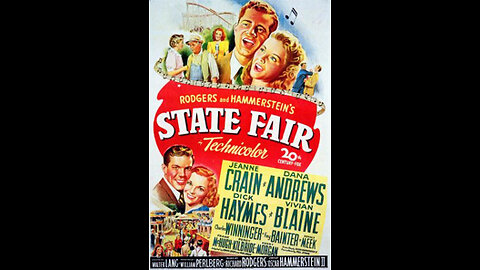
State Fair (1945) | Directed by Walter Lang
Classic Films & Movies ArchiveState Fair is a musical romantic comedy that follows the Frake family as they attend the Iowa State Fair, each hoping for success and romance. The father is determined to win a prize for his prize hog, the mother competes in the mincemeat contest, and the children, Margy and Wayne, each find unexpected love at the fairgrounds. The story captures the charm of small-town life, the excitement of the fair, and the bittersweet nature of fleeting romance. Genre: Musical, romantic comedy Director: Walter Lang Walter Lang (1896–1972) was an American film director best known for his polished and colorful musicals during Hollywood’s Golden Age. Working primarily for 20th Century Fox, Lang brought to life several of the studio’s biggest musical hits, including The King and I and Desk Set. His style was marked by meticulous staging, visual elegance, and a light comedic touch. Star cast: * Jeanne Crain as Margy Frake * Dana Andrews as Pat Gilbert * Dick Haymes as Wayne Frake * Vivian Blaine as Emily Edwards * Charles Winninger as Abel Frake * Fay Bainter as Melissa Frake Upon release, State Fair was warmly received as a charming and wholesome musical, appealing to audiences during the final months of World War II. Critics praised its lighthearted story, strong cast performances, and catchy Rodgers and Hammerstein songs. It went on to win the Academy Award for Best Original Song for “It Might as Well Be Spring.” Fun facts: * This was the only Rodgers and Hammerstein musical written directly for the screen rather than adapted from a stage production. * Jeanne Crain’s singing voice was dubbed by Louanne Hogan, though Crain’s acting was widely praised. * The film was a Technicolor remake of the 1933 non-musical version directed by Henry King. * Songs such as “It Might as Well Be Spring” and “It’s a Grand Night for Singing” became popular standards. * A later remake was released in 1962, also featuring the Rodgers and Hammerstein score. * This Rumble Movie Channel is comprehensively indexed on https://kinoquick.com - find you favourite movies fast & free! * Follow this channel to be notified of daily movie updates.378 views 1 comment -
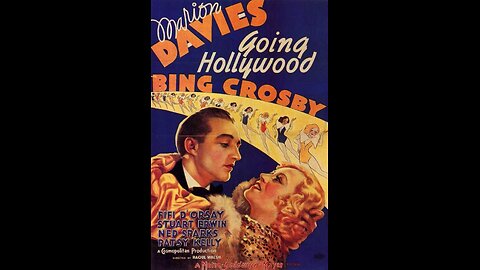
Going Hollywood (1933) | Directed by Raoul Walsh
Classic Films & Movies ArchiveGoing Hollywood is a romantic musical comedy that blends glamour, fantasy, and music in the early days of the talkie era. The film follows a star-struck schoolteacher who impulsively quits her job and boards a train to Hollywood in pursuit of a famous crooner she has fallen for from afar. As she navigates the eccentric world of filmmaking, she finds herself both in front of the camera and tangled in romantic misadventures behind the scenes. Genre: Musical, Comedy, Romance Director: Raoul Walsh Raoul Walsh was a prolific American director whose career spanned from the silent era to the 1960s. Known for his work in action, adventure, and crime dramas, Walsh had a strong visual sense and a flair for energetic storytelling. He directed landmark films such as *The Big Trail* (1930) and *White Heat* (1949), and was admired for his versatility across genres, including occasional forays into musical comedies like *Going Hollywood*. Star Cast: * Marion Davies as Sylvia Bruce * Bing Crosby as Bill Williams * Fifi D'Orsay as Lili Yvonne * Stuart Erwin as Ernest Pratt * Ned Sparks as Conroy At the time of its release, *Going Hollywood* was well-received for its musical numbers and star power, particularly the performance of Bing Crosby, who was rising in popularity as a radio and screen singer. Marion Davies’s comedic charm also earned praise, although some critics felt the plot was thin. Over time, the film has become appreciated as a breezy showcase of early 1930s Hollywood glamour and musical style. Fun Facts: * The film features several musical numbers composed by Nacio Herb Brown and Arthur Freed, including "Temptation" and "Beautiful Girl." * Bing Crosby’s performance of "Temptation" became one of his signature hits. * The movie contains a dream sequence with surreal imagery, reflecting the experimental style of early musicals. * This was one of the last films produced by William Randolph Hearst’s Cosmopolitan Pictures in collaboration with MGM, serving as a vehicle for Marion Davies. * This Rumble Movie Channel is comprehensively indexed on https://kinoquick.com - find you favourite movies fast & free! * Follow this channel to be notified of daily movie updates.370 views -
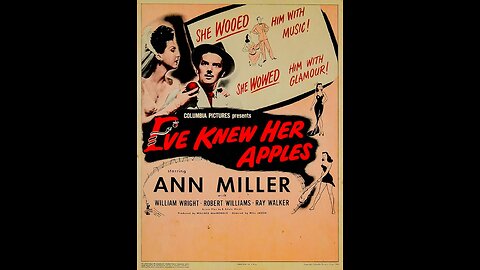
Eve Knew Her Apples (1945) | Directed by Will Jason
Classic Films & Movies ArchiveEve Knew Her Apples is a musical comedy centered on a glamorous nightclub singer who becomes romantically involved with a soldier during World War II. The plot unfolds through a series of light-hearted misunderstandings, romantic entanglements, and lively musical numbers. The story follows Eve as she navigates love, fame, and wartime complications with charm and wit. Genre: Musical, Comedy, Romance Director: Will Jason Will Jason was an American film director who worked primarily during the 1940s. He specialized in low-budget musicals and comedies for Columbia Pictures, often infusing his films with upbeat pacing and accessible storytelling. Though not widely known today, his work contributed to the popular wartime musical comedies that provided escapism during the final years of World War II. Star Cast: * Ann Miller as Eve Porter * William Wright as Ward Williams * Robert Williams as Gus * Ray Walker as Al * Minta Durfee in a supporting role Eve Knew Her Apples was received as a pleasant and entertaining musical typical of its time. It appealed to wartime audiences looking for light diversion, especially with the charismatic Ann Miller in the lead. While the film did not garner significant critical acclaim, it solidified Miller’s reputation as a talented dancer and screen presence. It was essentially a musical remake of the earlier hit It Happened One Night, adjusted for a mid-1940s audience. Fun Facts: * The film is a musical reworking of Frank Capra’s classic romantic comedy It Happened One Night (1934), but with a greater emphasis on singing and dancing. * This was one of Ann Miller’s early leading roles, and it showcased her famous tap-dancing abilities that would later become her trademark at MGM. * Produced by Columbia Pictures, it was part of a series of modest-budget musicals designed to keep audiences entertained during wartime. * Although the film itself is largely forgotten today, it remains notable as a stepping stone in Ann Miller’s Hollywood career. * The film’s title plays on the biblical reference to Eve and the apple, aligning with the film’s themes of temptation, romance, and mischief. * This Rumble Movie Channel is comprehensively indexed on https://kinoquick.com - find you favourite movies fast & free! * Follow this channel to be notified of daily movie updates.647 views