-
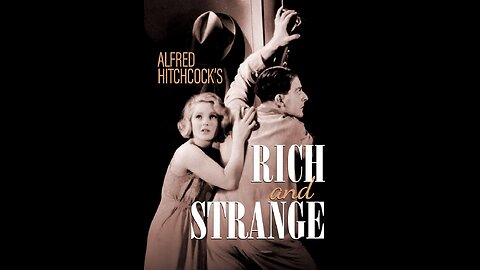
Rich and Strange (aka East of Shanghai) (1931) | Directed by Alfred Hitchcock
Classic Films & Movies ArchiveA comfortable, middle-class London couple suddenly come into money and decide to take a long sea voyage to “see the world.” What begins as a holiday of champagne optimism turns into a stress test of identity and marriage. Away from routines and social rules, each is tempted by new attention and new possibilities, and small resentments grow teeth. The trip becomes less about exotic ports and more about how easily desire, pride, and boredom can rewrite a relationship—especially when the money that made it all possible starts to look less secure. Genre: Romantic drama / comedy-drama (early sound-era relationship drama with satirical edge) Director: Alfred Hitchcock Alfred Hitchcock (1899–1980) was an English director who helped define suspense cinema, later becoming one of the most influential filmmakers in world history. Before his Hollywood period, he made a long run of British films that experimented with visual storytelling, tone, and psychology. Even outside pure thrillers, he was drawn to moral pressure-cookers: ordinary people, sudden disruptions, and the way small choices snowball. Rich and Strange sits in his early sound years, showing his interest in human frailty and social observation as much as plot mechanics. Star Cast: Henry Kendall as Fred Hill Joan Barry as Emily Hill Betty Amann as the Princess (a fellow traveller and temptation) Percy Marmont as Colonel Gordon (another traveller and romantic distraction) Elsie Randolph as a fellow passenger (comic presence among the shipboard characters) At the time, the film was seen as an unusual Hitchcock project: more worldly and relationship-focused than straightforward suspense, with a tone that shifts between comedy, discomfort, and emotional bruising. Some viewers enjoyed its sophisticated, modern look at marriage and temptation, while others found it morally awkward or tonally uneven. In later years it gained appreciation as a sharp, early sound-era character study—often praised for its observation of class aspirations and the way travel strips people down—while remaining a lesser-known Hitchcock compared with his thrillers. Fun Facts: It was released in some markets under the alternate title East of Shanghai. The film comes from a novel by Dale Collins, shaped into a screenplay that leans into irony and marital psychology rather than big melodrama. Hitchcock uses the voyage structure almost like a lab experiment: remove routine, add freedom and temptation, then watch the marriage react. There are moments of playful visual invention that hint at Hitchcock’s silent-film instincts, even though it’s an early talkie. The shipboard setting lets the film skewer social performance: people reinvent themselves quickly when surrounded by strangers. It’s often discussed as an “in-between” Hitchcock work: not a thriller, but still full of tension—just emotional and social tension rather than crime-and-chase suspense. * This Rumble Movie Channel is comprehensively indexed on https://kinoquick.com - find you favourite movies fast & free! * Follow this channel to be notified of daily movie updates.263 views -
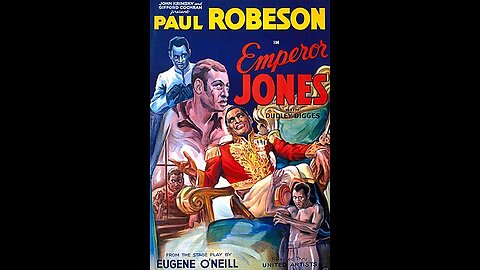
The Emperor Jones (1933) | Directed by Dudley Murphy
Classic Films & Movies ArchiveBrutus Jones, an American drifter and fugitive, escapes to a Caribbean island and reinvents himself with ruthless confidence. By exploiting local fears and superstition, he crowns himself “Emperor” and rules through intimidation and myth-making. When a rebellion finally rises against him, Jones flees into the jungle, where the night turns into a psychological descent: memories, guilt, and hallucination-like visions strip away his swagger, forcing him to confront what he’s become. Genre: Drama / psychological drama Director: Dudley Murphy Dudley Murphy (1897–1968) was an American director whose career moved between Hollywood features, experimental work, and music-based films. He was known for visual flair and for taking on unusual projects for the era, including stage-to-screen adaptations and films built around performance, rhythm, and atmosphere. His filmography ranges from dramatic features to later music-focused titles, showing a director comfortable working across styles rather than staying in one studio lane. Star Cast: Paul Robeson as Brutus Jones Dudley Digges as Smithers Frank H. Wilson as Lem Juanita Hall in a supporting role (often credited among key players in later listings) The film was widely discussed for Paul Robeson’s commanding presence and for putting a Black lead at the centre of a major dramatic production in an era when Hollywood rarely allowed it. Audiences and critics often singled out Robeson’s performance as the film’s core achievement, while reactions to the film’s stylised “jungle nightmare” structure were more divided—some admired its expressionistic ambition, while others found it strange or uneven. Over time, it has been remembered as a significant early sound-era screen showcase for Robeson and as an unusual, psychologically driven adaptation that doesn’t play like a conventional studio drama of its period. Fun Facts: It is adapted from Eugene O’Neill’s acclaimed stage play, which was famous for its intense, symbolic structure and the way it externalises a man’s inner collapse. Paul Robeson was already an international star on stage and in concert; this film is often treated as one of his most important screen performances. The story is structured like a pressure chamber: as Jones runs, the “outside” chase becomes an “inside” reckoning, with scenes designed to feel like escalating mental breakdown rather than straightforward realism. The movie is frequently cited in film history discussions because it centres a Black protagonist in a serious, tragic role at a time when such casting was rare in American cinema. Its atmosphere leans toward expressionism: heavy shadows, drumming motifs, and dreamlike episodes are used to make psychology feel physical and cinematic. * This Rumble Movie Channel is comprehensively indexed on https://kinoquick.com - find you favourite movies fast & free! * Follow this channel to be notified of daily movie updates.216 views -
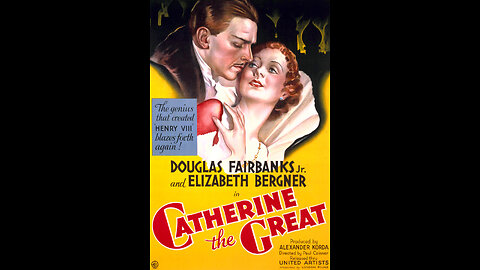
The Rise of Catherine the Great (1934) | Directed by Paul Czinner
Classic Films & Movies ArchiveA young German princess arrives at the Russian court to marry the unstable heir, Grand Duke Peter. Surrounded by intrigue, shifting alliances, and a dangerous royal household, she learns how power really works. As Peter’s behaviour and rule grow more reckless, she becomes the centre of a political turning point that elevates her from pawn to ruler. Genre: Historical biography / period drama Director: Paul Czinner Paul Czinner (1890–1972) was a Central European-born director who built a reputation in theatre-influenced, performance-driven filmmaking. He worked closely for many years with actress Elisabeth Bergner (his frequent collaborator and wife). After the rise of the Nazi regime, Czinner and Bergner relocated to Britain, where he directed several high-profile films and later moved into filmed stage and opera productions. Star Cast: Elisabeth Bergner as Catherine Douglas Fairbanks Jr. as Grand Duke Peter Flora Robson as Empress Elizabeth Gerald du Maurier as Lecocq Irene Vanbrugh as Princess Anhalt-Zerbst Dorothy Hale as Countess Olga Diana Napier as Countess Vorontsova Griffith Jones as Grigory Orlov Positioned as a prestige royal biopic with lavish court settings and prominent British-based talent, the film drew attention for its performances and pageantry. Its impact was softened by the timing: it arrived in the same general period as another major Catherine film, inviting comparisons and splitting audience interest. In hindsight, it is often remembered as an engaging, relatively grounded take on Catherine’s ascent, with particular praise for strong supporting performances and the volatile energy of its Peter. Fun Facts: The film was also released under the shorter title Catherine the Great. The story traces back to a stage source, commonly linked to the play The Czarina by Lajos Bíró and Melchior Lengyel. It was banned in Germany in the 1930s, becoming notable enough to be discussed publicly in Britain. This is widely cited as Elisabeth Bergner’s English-language film debut. Producer Alexander Korda was reported to have overseen substantial reshoots, influencing parts of the final on-screen direction. The film’s polished, high-contrast period look is strongly associated with the era’s leading studio craftsmanship and cinematography style. * This Rumble Movie Channel is comprehensively indexed on https://kinoquick.com - find you favourite movies fast & free! * Follow this channel to be notified of daily movie updates.275 views -
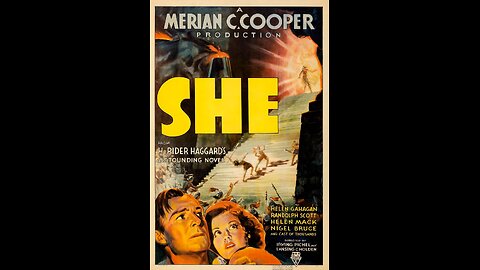
She (1935) | Directed by Lansing C. Holden and Irving Pichel
Classic Films & Movies ArchiveAn Arctic expedition follows a centuries-old clue to a hidden kingdom locked in ice. There they encounter an immortal queen known as “She Who Must Be Obeyed,” who believes one of the explorers is the reincarnation of her long-dead lover. Romance, jealousy, ritual spectacle, and the dangerous promise of eternal life drive the story toward a fatal choice. Genre: Adventure / fantasy (lost-world romance) Director: Lansing C. Holden and Irving Pichel Irving Pichel (1891–1954) was an American stage-and-screen performer who transitioned into directing during Hollywood’s studio era. He worked across multiple genres and became known for balancing actor-focused storytelling with solid, classical craftsmanship. His career included both acting roles and a substantial run as a director through the 1930s and 1940s. Lansing C. Holden (1896–1938) was a filmmaker with a strong visual/design background, associated with art direction and effects-driven production work as well as directing. On She, his contribution is often linked to the film’s emphasis on atmosphere, sets, and large-scale fantasy imagery. Star Cast: Helen Gahagan as She (She Who Must Be Obeyed) Randolph Scott as Leo Vincey Nigel Bruce as Professor Horace Holly Helen Mack as Tanya Dugmore Gustav von Seyffertitz as Billali Marketed as a prestige fantasy spectacle, the film drew attention for its elaborate sets, art direction, and dreamlike “lost world” atmosphere. Many viewers and reviewers admired the visuals and scale, but reactions to the pacing and melodramatic plot were mixed. Despite its ambition, it did not become a major first-run box-office success, and over time it gained more appreciation as a lavish studio-era fantasy and a notable adaptation of H. Rider Haggard’s classic novel. Fun Facts: It received an Academy Award nomination for Best Dance Direction for the “Hall of Kings” sequence. The film exists in multiple versions: later reissues shortened it, and subsequent releases aimed to restore missing footage. For years it was widely believed to be lost; a surviving print was later discovered and became central to preservation. Some production elements were reportedly repurposed from earlier RKO fantasy/adventure productions, reflecting the studio’s reuse of major set pieces. It’s often remembered less for realism and more for its stylized, theatrical imagery—one reason it has had a long afterlife among classic fantasy fans. * This Rumble Movie Channel is comprehensively indexed on https://kinoquick.com - find you favourite movies fast & free! * Follow this channel to be notified of daily movie updates.284 views -
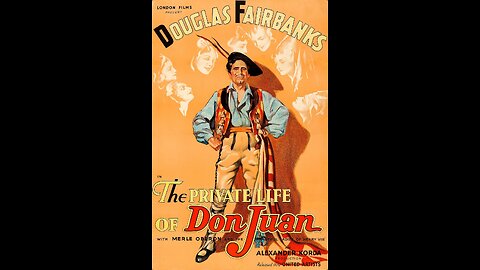
The Private Life of Don Juan (1934) | Directed by Alexander Korda
Classic Films & Movies ArchiveAn older, worn-down Don Juan slips back into Seville after years away, hoping to trade on a legend that once made the whole city tremble. Instead, he discovers the myth has started living on without him: admirers, gossips, jealous husbands, and even an eager impostor keep the Don Juan story in circulation. When a case of mistaken identity gives him a chance to “retire” from his own reputation, Juan learns that disappearing is easy—but returning as yourself is much harder. Genre: Romantic comedy-drama (period comedy-drama) Director: Alexander Korda Alexander Korda (born Sándor László Kellner, 1893–1956) was a Hungarian-born filmmaker who became one of the key architects of Britain’s 1930s film boom. After building experience across European cinema and working in Hollywood, he settled in the UK and created London Films, helping raise the ambition and international profile of British productions. Known as both a producer and director with a flair for prestige storytelling and star-driven entertainment, he later received a knighthood (the first filmmaker to do so), cementing his status as a major industry figure. Star Cast: Douglas Fairbanks as Don Juan Merle Oberon as Antonita Benita Hume as Dona Dolores Melville Cooper as Leporello Binnie Barnes as Rosita Owen Nares as Antonio Martinez Heather Thatcher as Anna Dora Gina Malo as Pepita Barry MacKay as Rodrigo (the “Don Juan” admirer/impostor figure) The film attracted attention as a late-career vehicle for Douglas Fairbanks, whose silent-era swagger was being knowingly re-framed through an aging Don Juan. Contemporary reactions tended to be mixed: many enjoyed the self-aware angle and Fairbanks’ screen presence, while some critics felt the premise leaned too hard on a legend that no longer fit the star’s moment. Commercially it underperformed compared to expectations for a Fairbanks “comeback,” but its reputation has improved over time as viewers came to see it as a reflective, slightly bittersweet swan song for one of cinema’s early icons. Fun Facts: It was Douglas Fairbanks’ final film role. One of Fairbanks’ rare leading “talkie” performances, playing with (and gently puncturing) his own heroic screen image. The story was adapted from Henry Bataille’s 1920 play L’homme à la Rose. Early/working titles included Exit Don Juan and The Return of Don Juan. The film was made by London Film Productions at the British & Dominion Studios in Elstree/Borehamwood and distributed by United Artists. Merle Oberon later became Alexander Korda’s wife (they married a few years after this film). A young James Mason was reportedly cast and worked briefly on the production before his material was removed. Trivia linked to the Don Juan legend often notes a “real-life” Don Juan figure associated with the name Miguel de Mañara, a detail echoed in some film lore. * This Rumble Movie Channel is comprehensively indexed on https://kinoquick.com - find you favourite movies fast & free! * Follow this channel to be notified of daily movie updates.217 views -
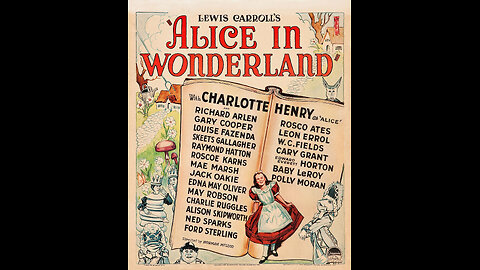
Alice in Wonderland (1933) | Directed by Norman Z. McLeod
Classic Films & Movies ArchiveA live-action adaptation of Lewis Carroll’s classic tales, the film follows young Alice as she tumbles down a rabbit hole into a world filled with eccentric creatures and surreal encounters. Presented as a series of vignettes, the story moves through Wonderland’s strange landscapes as Alice meets talking animals, quarrelsome royals, and puzzling characters who challenge her understanding of logic and reality. Genre: Fantasy, adventure Director: Norman Z. McLeod Norman Z. McLeod (1898–1964) was an American film director known for his work in comedy and fantasy during Hollywood’s golden era. He directed major stars such as the Marx Brothers, W. C. Fields, and Danny Kaye, with notable credits including Monkey Business, Horse Feathers, It’s a Gift, and The Secret Life of Walter Mitty. McLeod’s direction often blended whimsical humor with imaginative visual storytelling, making him a natural fit for Carroll’s fantastical material. Star Cast: Charlotte Henry as Alice W. C. Fields as Humpty Dumpty Cary Grant as the Mock Turtle Gary Cooper as the White Knight Edna May Oliver as the Red Queen Richard Arlen as the Cheshire Cat Louise Fazenda as the White Queen Roscoe Karns as Tweedledum Jack Oakie as Tweedledee Edward Everett Horton as the Mad Hatter Charlie Ruggles as the March Hare Sterling Holloway as the Frog Upon release, the film drew attention for its ambitious makeup effects and its all-star cast playing heavily costumed Wonderland characters. Reception was mixed: some critics admired its imaginative visuals and unusual atmosphere, while others found the heavy makeup and episodic structure distracting. Over time it has become a curious artifact of early Hollywood fantasy filmmaking, appreciated for its daring interpretation of Carroll’s surreal world and its assortment of legendary actors in unusual roles. Fun Facts: Nearly the entire Paramount roster of stars at the time took roles, many of them unrecognizable under extensive makeup and prosthetics. The film combined elements from both Alice’s Adventures in Wonderland and Through the Looking-Glass. Cary Grant reportedly accepted the role of the Mock Turtle enthusiastically, despite it being a small and heavily costumed part. W. C. Fields’ performance as Humpty Dumpty is one of the film’s most celebrated for its perfect blend of his comic persona and Carroll’s wordplay. The makeup designs were inspired by John Tenniel’s original book illustrations, giving the movie a distinctive stylized look unusual for films of the era. * This Rumble Movie Channel is comprehensively indexed on https://kinoquick.com - find you favourite movies fast & free! * Follow this channel to be notified of daily movie updates.209 views -
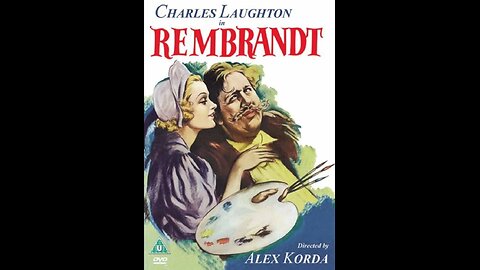
Rembrandt (1936) | Directed by Alexander Korda
Classic Films & Movies ArchiveThis biographical drama follows the turbulent later years of the Dutch master painter Rembrandt van Rijn. After the death of his beloved wife and the loss of his fortune, Rembrandt battles personal hardship, public scandal, and artistic rejection while remaining devoted to painting with honesty and emotional depth. Genre: Historical Drama, Biography Director: Alexander Korda Alexander Korda was a Hungarian-born British filmmaker and one of the most influential figures in early British cinema. As a director and producer, he helped establish London Films and played a major role in elevating the British film industry during the 1930s and 1940s. He is best known for lavish historical productions and for nurturing top-tier talent in British filmmaking. Star Cast: Charles Laughton as Rembrandt van Rijn Gertrude Lawrence as Geertje Dircx Elsa Lanchester as Hendrickje Stoffels Edward Chapman as Nicolaes Bruyningh Walter Hudd as Fabrizius Roger Livesey as Beggar Saul The film received considerable praise for Charles Laughton’s powerful and nuanced performance, widely regarded as one of the most authentic portrayals of the painter on screen. Critics admired the film’s visual composition, which echoed Rembrandt’s own chiaroscuro style. Some audiences found the film somber, but it has endured as a thoughtful, artistically ambitious biographical work. Fun Facts: Charles Laughton immersed himself deeply in the role, studying Rembrandt’s paintings and handwriting to capture his essence. Elsa Lanchester, who plays Hendrickje, was Laughton’s real-life wife, adding emotional depth to their scenes. Korda and his team intentionally lit scenes to resemble Rembrandt’s signature use of shadow and light. The film was not a major commercial success at the time but grew in esteem among art and film historians for its visual fidelity and character study. * This Rumble Movie Channel is comprehensively indexed on https://kinoquick.com - find you favourite movies fast & free! * Follow this channel to be notified of daily movie updates.215 views 1 comment -
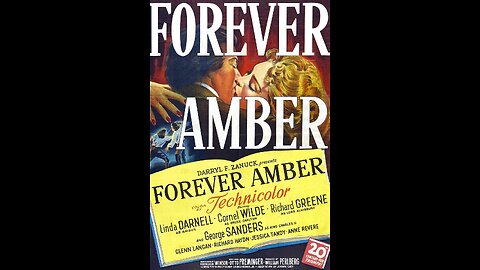
Forever Amber (1947) | Directed by Otto Preminger
Classic Films & Movies ArchiveA lavish historical drama set in 17th-century England, following the rise of Amber St. Clare, an ambitious young woman who escapes poverty and uses her beauty, charm, and cunning to ascend through society. Against the backdrop of plague, political intrigue, and the Great Fire of London, Amber’s turbulent romantic pursuit of the man she truly loves shapes her dramatic journey. Genre: Historical drama / Romance Director: Otto Preminger Otto Preminger was an Austrian-American filmmaker known for his bold storytelling, interest in controversial themes, and polished visual style. After emigrating from Europe, he became a prominent director in Hollywood’s studio era, earning acclaim for films that challenged censorship and tackled complex psychological and social issues. His career spanned several decades, producing notable classics across drama, noir, and romance. Star Cast: Linda Darnell as Amber St. Clare Cornel Wilde as Bruce Carlton Richard Greene as Lord Rex Morgan George Sanders as King Charles II Glenn Langan as Sir Thomas Dudley Jessica Tandy as Nan Anne Revere as Mrs. Spong John Russell as Black Jack Mallard Natalie Schafer as Madame Sophie Margaret Wycherly as Mrs. Abbott The film drew widespread attention for its extravagant production values, lush Technicolor photography, and glamorous depiction of Restoration England. It was a major box-office success despite facing criticism from some reviewers who felt it softened or sanitized the more provocative elements of the bestselling novel. Audiences embraced Linda Darnell’s performance and the film’s sweeping sense of spectacle, even as moral guardians of the period objected to its themes of ambition, seduction, and scandal. Fun Facts: The film was adapted from Kathleen Winsor’s bestselling novel, which had been controversial and heavily censored upon release. Vincent Price was originally cast in a major role but withdrew after disagreements over production delays and recasting. Peggy Cummins was initially chosen to play Amber but was replaced after extensive footage had already been shot, leading to costly reshoots. The production involved massive sets, elaborate period costumes, and large crowd scenes, making it one of Fox’s most expensive films of the 1940s. The Great Fire of London sequence became one of the standout visual highlights of the studio’s Technicolor work at the time. * This Rumble Movie Channel is comprehensively indexed on https://kinoquick.com - find you favourite movies fast & free! * Follow this channel to be notified of daily movie updates.371 views -
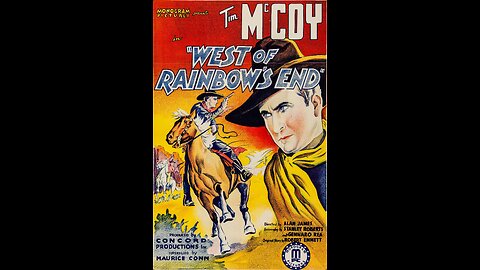
West of Rainbow's End (1938) | Directed by Alan James
Classic Films & Movies ArchiveA former Texas Ranger, Tim Hart, comes out of retirement when his foster father, Lightning Ed, is murdered while investigating a string of train robberies near the settlement of Rainbow’s End. Tracking the gang, Tim discovers that a seemingly respectable local figure, George Johnson, and his henchman Speck are behind the crimes. As he digs deeper, Tim must protect the Carter family ranch, expose the bandits, and bring justice back to a troubled frontier town. Genre: Western / Action Director: Alan James Alan James was an American film director and writer whose career stretched from the silent era into the sound period. Working largely in low-budget Westerns and action pictures, he became a familiar name in the B-movie world, turning out tightly paced, modestly budgeted films for studios such as Monogram and related independents. His work often featured rugged locations, fast-moving plots, and dependable cowboy leads, helping to define the look and feel of 1930s programmer Westerns. Star Cast: Tim McCoy as Tim Hart Kathleen Eliot as Joan Carter Walter McGrail as George Reynolds / Johnson George Cooper as Happy Mary Carr as Mrs. Martha Carter Bob Kortman as Speck Hank Bell as Joe Frank LaRue as Lightning Ed Reed Howes as Ted Crane Edward Coxen as Joel Carter Jimmy Aubrey as Postmaster Jed George Chang as Elmer the Cook At the time of its release, West of Rainbow’s End played mainly in the B-Western circuit, where audiences looked for straightforward stories, clear heroes and villains, and plenty of action. Tim McCoy’s presence as a seasoned cowboy star gave the film extra appeal to fans familiar with his earlier work. While it did not attract major critical attention and was not positioned as an “A” picture, it served its purpose as a solid, one-hour frontier adventure on double bills and Saturday matinees, particularly in small-town and rural cinemas. Fun Facts: The film runs just under an hour (about 57 minutes), which was typical for Monogram’s Western programmers of the late 1930s. West of Rainbow’s End was released in January 1938, during a particularly busy period for Tim McCoy, who was starring in a run of low-budget Westerns aimed at the matinee market. The story centers on train robberies and a ranch land grab, themes that were popular in 1930s Westerns because they allowed for both action set pieces and local-town intrigue. Several supporting players, such as Bob Kortman, Hank Bell, and Frank LaRue, were regular faces in Westerns of the era, often appearing uncredited or in character roles across many similar productions. Although some modern references list Conn Pictures Corporation in association with the film, contemporary documentation and later databases also credit Concord Productions and Monogram Pictures as key companies involved, reflecting the often tangled nature of small studio arrangements in the 1930s.220 views -
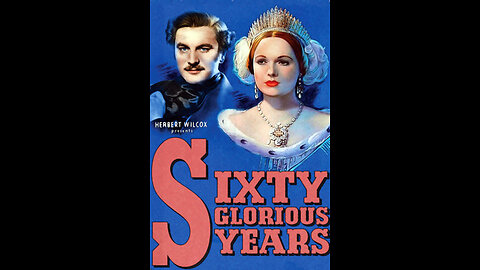
Sixty Glorious Years (1938) | Directed by Herbert Wilcox
Classic Films & Movies ArchiveSixty Glorious Years is a British historical drama that celebrates the reign of Queen Victoria, following her life from her accession to the throne through her marriage to Prince Albert and their years together until his untimely death. The film provides a sweeping and romanticized portrayal of the Victorian era, capturing the monarch’s devotion to duty, family, and her people, while also reflecting the social and political milestones of her reign. It was made as a companion piece to the earlier film Victoria the Great (1937), with much of the same cast and style, using vibrant Technicolor to heighten its grandeur. Genre: Historical drama / Biographical Director: Herbert Wilcox Herbert Wilcox (1890–1977) was a prolific English film producer and director known for his contributions to British cinema from the 1920s through the 1950s. He was one of the most successful filmmakers of his era, particularly noted for his collaborations with actress Anna Neagle, who also became his wife. Wilcox specialized in historical dramas and patriotic films that celebrated British heritage and identity, helping shape the tone of British cinema before and during World War II. Star Cast: Anna Neagle as Queen Victoria Anton Walbrook as Prince Albert C. Aubrey Smith as Duke of Wellington Walter Rilla as Prince Ernest Felix Aylmer as Lord Palmerston Lewis Casson as Lord Melbourne Fay Compton as Lady Jocelyn Charles Carson as Sir Robert Peel The film was well received in Britain, particularly for its respectful and grand depiction of Queen Victoria’s reign. Critics praised the use of Technicolor, which was still relatively rare at the time, for bringing an added sense of spectacle and pageantry. Anna Neagle’s performance as Victoria was widely acclaimed for its grace and emotional sincerity. Although the film was seen primarily as a patriotic tribute rather than a daring drama, it resonated strongly with audiences in the pre-war period, reinforcing a sense of national pride. Fun Facts: The film was shot entirely in Technicolor, one of the earliest British productions to do so. It served as a sequel to Victoria the Great (1937), continuing the story with the same lead actors. Anna Neagle spent months studying portraits and historical documents to accurately portray Queen Victoria’s mannerisms. The film premiered at London’s Leicester Square Theatre, attended by members of the royal family. Herbert Wilcox and Anna Neagle married a few years later, becoming one of British cinema’s most successful creative partnerships. Some costumes and props were authentic Victorian-era items borrowed from museums and private collections. * This Rumble Movie Channel is comprehensively indexed on https://kinoquick.com - find you favourite movies fast & free! * Follow this channel to be notified of daily movie updates.262 views