-
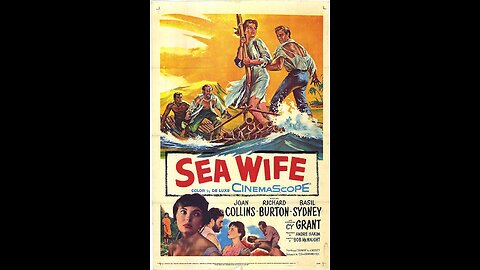
Sea Wife (1957) | Directed by Bob McNaught
Classic Films & Movies ArchiveFramed by a postwar search for a woman known only as “Sea Wife,” the story flashes back to 1942, when a refugee ship fleeing Singapore is torpedoed and four very different survivors are cast adrift together. On a lifeboat under brutal conditions, their hidden identities, prejudices, loyalties, and faith collide as they struggle to stay alive. Genre: War drama, adventure, thriller Director: Bob McNaught Bob McNaught (1915–1976) was a British director and producer who worked across several production roles in UK cinema before taking on feature directing. His best-known directing credit is Sea Wife, and he also directed films such as Grand National Night (1953) and A Story of David (1960). He served in production and associate-producer capacities on a number of British features in the 1950s, reflecting a career rooted in practical filmmaking craft rather than auteur branding. Star Cast: Joan Collins as Sister Therese (“Sea Wife”) Richard Burton as Michael Cannon (“Biscuit”) Basil Sydney as Roddie (“Bulldog”) Cy Grant as the black purser (“Number Four”) Ronald Squire as Clubman Harold Goodwin as Daily Telegraph clerk Lloyd Lamble as Captain “San Felix” Ronald Adam as Army padre The film generally landed as a serious, unusual wartime survival drama with a heavy moral and psychological angle. Reviewers and audiences often responded to the strong central pairing (Burton and Collins) and the tense lifeboat dynamic, while some felt the framing device and tonal shifts could make the story feel uneven. Over time it’s become one of those “interesting, imperfect” mid-century wartime dramas that fans of Burton, Collins, and survival-at-sea thrillers tend to seek out. Fun Facts: It is based on the 1955 novel Sea-Wyf and Biscuit by James Maurice Scott. The film was shot in CinemaScope and DeLuxe Color, with prominent location photography in Jamaica standing in for the South-East Asian wartime setting. The four survivors are largely identified by nicknames tied to events on the lifeboat: “Biscuit,” “Bulldog,” “Number Four,” and “Sea Wife.” A notable behind-the-scenes twist: an early plan involved Roberto Rossellini directing, but the film ultimately went ahead under Bob McNaught. André Hakim produced the film, and it was distributed by 20th Century Fox, giving it a polished, international-studio finish despite being a British production. * This Rumble Movie Channel is comprehensively indexed on https://kinoquick.com - find you favourite movies fast & free! * Follow this channel to be notified of daily movie updates.172 views -
The Proud and Profane (1956) | Directed by George Seaton
Classic Films & Movies ArchiveOn a U.S. military base in the Pacific after World War II, two women arrive for deeply personal reasons: one to visit the grave of the fiancé she lost, the other to claim the body of her husband. Their shared grief turns into an uneasy friendship, and the arrival of a charismatic officer complicates everything, pushing them to confront memory, desire, and what it means to start living again after loss. Genre: War drama; romantic melodrama Director: George Seaton George Seaton (1911–1979) was an American screenwriter, director, and producer known for smooth, audience-friendly storytelling and a knack for balancing sentiment with sharp character moments. He began as a writer (including for comedy teams and major studios), then moved into directing and producing. His best-known work includes Miracle on 34th Street (as writer/director), The Country Girl (director), and The Bridges at Toko-Ri (director). Across his career he worked comfortably in comedy, drama, and wartime stories, often focusing on humane, emotionally accessible themes. Star Cast: William Holden as Lt. Col. Colin Black Deborah Kerr as Lee Ashley Silvana Mangano as Maria “Midge” Fornari Lee J. Cobb as Lt. Col. R. F. “Kettle” Kettlecamp Richard Anderson as Sgt. Eddie David Brian as Capt. (supporting role) The film was generally received as a polished, adult-oriented drama with strong star power. Viewers and critics often highlighted the emotional weight of the two women’s stories and the melancholic postwar atmosphere, while some reactions noted a melodramatic edge typical of mid-1950s romantic wartime films. Performances—especially the leads—were widely seen as the main draw, with the Pacific setting lending the story a reflective, end-of-war mood rather than battlefield intensity. Fun Facts: It is based on a novel by Lucilla Andrews, an author known for writing emotionally driven stories shaped by wartime experience and its aftermath. Although set on a postwar Pacific base, the movie’s focus is less on combat and more on the emotional “aftershocks” of war—grief, displacement, and rebuilding a sense of self. Silvana Mangano’s casting gave the film a distinct international flavor alongside two major Hollywood stars. The title captures the film’s central contrast: pride as a mask for pain, and the “profane” messiness of real human longing and survival after tragedy. The supporting cast includes several familiar mid-century character actors, helping the base feel like a lived-in community rather than a simple backdrop. * This Rumble Movie Channel is comprehensively indexed on https://kinoquick.com - find you favourite movies fast & free! * Follow this channel to be notified of daily movie updates.317 views -
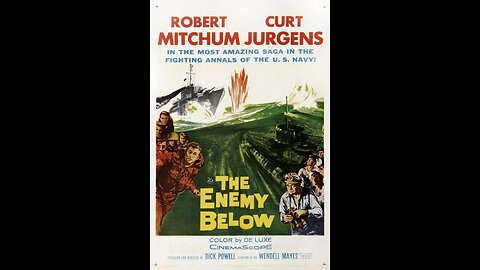
The Enemy Below (1957) | Directed by Dick Powell
Classic Films & Movies ArchiveA tense World War II naval drama in which an American destroyer escort hunts a German U-boat across the Atlantic. As the cat-and-mouse pursuit intensifies, the story shifts between both commanders, revealing their tactics, nerves, and mutual professional respect—turning the battle into a duel of skill as much as firepower. Genre: War film; naval drama; thriller Director: Dick Powell Dick Powell (1904–1963) was an American actor, singer, producer, and director whose career evolved dramatically from early musical-comedy leading man to serious dramatic work and influential behind-the-camera roles. In the 1950s he became a key figure in film and television production, known for tight pacing and strong story craft. As a director, he handled action and suspense with clarity and restraint, and as a producer he helped shape popular screen crime drama, including work connected to Dragnet. Star Cast: Robert Mitchum as Cmdr. Murrell Curt Jürgens as Capt. von Stolberg David Hedison as Lt. Ware Theodore Bikel as Lt. Herbst Russell Collins as Captain of the USS Haynes Kurt Kreuger as U-boat officer Well received for its suspense and unusually balanced portrayal of both sides, The Enemy Below was praised for avoiding cartoonish villainy and focusing on the psychology of command under pressure. It performed strongly with audiences who enjoyed wartime action with brains, and it remains a frequently recommended submarine-and-destroyer thriller, admired for its tight duel structure and strong lead performances. Fun Facts: The film is based on the novel The Enemy Below by D. A. Rayner. It’s often singled out for treating the German commander as a capable professional rather than a stereotype, which was not always common in earlier wartime cinema. Director Dick Powell was also a major star/producer in screen and TV crime drama; this film shows his knack for procedural tension, just applied to naval warfare. Much of the excitement comes from tactics, sonar games, and endurance rather than big battle scenes, making it feel like a pure chess match at sea. The story’s “dual POV” approach—spending substantial time with both hunter and hunted—helped set a template for later naval and submarine thrillers. * This Rumble Movie Channel is comprehensively indexed on https://kinoquick.com - find you favourite movies fast & free! * Follow this channel to be notified of daily movie updates.166 views 1 comment -
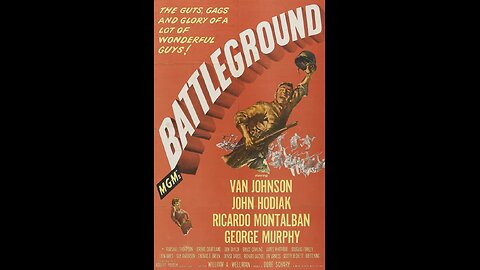
Battleground (1949) | Directed by William A. Wellman
Classic Films & Movies ArchiveBattleground is a World War II combat drama depicting the experiences of American infantry soldiers during the Battle of the Bulge. The film focuses on an isolated platoon surrounded by German forces in freezing winter conditions, capturing the physical exhaustion, fear and quiet camaraderie of men under siege. Rather than emphasizing heroic spectacle, the story concentrates on endurance, routine and the psychological strain of prolonged combat. Genre: War, Combat drama Director: William A. Wellman William A. Wellman was an American director known for his realism, technical skill and firsthand understanding of combat, having served as a fighter pilot during World War I. His films often emphasized authenticity and human resilience, including Wings, The Public Enemy and Ox-Bow Incident. Wellman was respected for his disciplined storytelling and refusal to romanticize violence, making him a natural fit for serious war narratives. Star Cast: Van Johnson as Holley Ricardo Montalbán as Roderigues John Hodiak as Jarvess George Murphy as Kinnie Marshall Thompson as Johnson Don Taylor as Standiferd James Whitmore as Kipp Battleground was both a critical and commercial success upon release. Audiences, many of whom had direct wartime experience, responded strongly to its realistic portrayal of soldier life. Critics praised its authenticity, ensemble cast and restrained emotional tone. The film received several Academy Award nominations and won for its screenplay, solidifying its reputation as one of the most respected American war films of the era. Fun Facts: The film was shot primarily on location in Oregon, where snow and forest conditions stood in for the Ardennes. Many of the actors underwent military-style training to enhance realism. The screenplay was based on extensive interviews with veterans of the Battle of the Bulge. William A. Wellman insisted on avoiding overt heroics in favor of depicting everyday survival. Battleground influenced later war films by focusing on the collective experience of soldiers rather than a single protagonist. * This Rumble Movie Channel is comprehensively indexed on https://kinoquick.com - find you favourite movies fast & free! * Follow this channel to be notified of daily movie updates.255 views 2 comments -
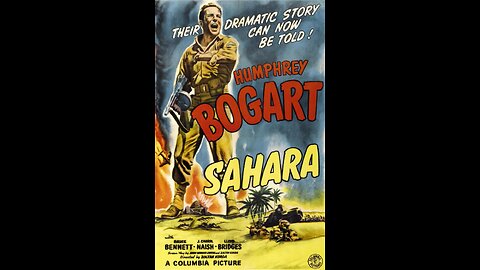
Sahara (1943) | Directed by Zoltan Korda
Classic Films & Movies ArchiveSet during World War II, the story follows Sgt. Joe Gunn and his crew as they navigate a damaged American tank across the deserts of North Africa. After joining a group of Allied stragglers, they discover an isolated desert well that becomes the focal point of a desperate stand against advancing German forces. Outnumbered and cut off, the men must hold their position to protect the scarce water and delay the enemy. Genre: War, drama, action Director: Zoltan Korda Zoltan Korda (1895–1961) was a Hungarian-born film director known for his energetic adventure films and politically conscious storytelling. Working closely with his brothers, producer Alexander Korda and designer Vincent Korda, he developed a distinctive style centered on strong character dynamics and sweeping settings. His notable works include The Four Feathers (1939), Jungle Book (1942), and Cry, the Beloved Country (1951). Korda’s direction often blended realism with a keen sense of dramatic tension. Star Cast: Humphrey Bogart as Sgt. Joe Gunn Bruce Bennett as Waco Hoyt J. Carrol Naish as Giuseppe Lloyd Bridges as Fred Clarkson Dan Duryea as Jimmy Doyle Rex Ingram as Sgt. Major Tambul Richard Nugent as Capt. Jason Halliday Louis Mercier as Leroux Sahara was widely praised upon release for its gripping wartime narrative, strong performances, and tense, character-driven drama. Humphrey Bogart’s role as a battle-hardened tank commander was singled out as one of his finest wartime performances. Critics admired the film’s realistic portrayal of desert warfare and its ability to blend action with moral complexity. It became a commercial success and remains regarded as one of the standout World War II films of the era. Fun Facts: The film was inspired by the 1936 Soviet movie The Thirteen, which also depicted defenders at an isolated desert outpost. J. Carrol Naish received an Academy Award nomination for Best Supporting Actor for his portrayal of Giuseppe. Rex Ingram’s character, Sgt. Major Tambul, added a rare early example of a strong African ally role in wartime Hollywood films. Humphrey Bogart considered this one of his personal favorite roles. The tank used in the film, a real M3 Lee, was modified by the studio to appear more battle-worn for realism. * This Rumble Movie Channel is comprehensively indexed on https://kinoquick.com - find you favourite movies fast & free! * Follow this channel to be notified of daily movie updates.217 views 2 comments -
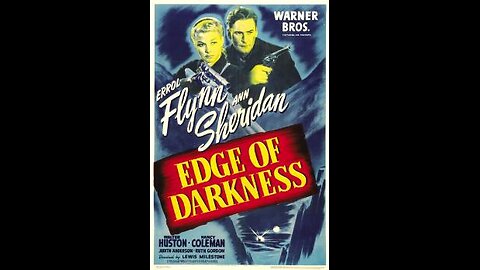
Edge of Darkness (1943) | Directed by Lewis Milestone
Classic Films & Movies ArchiveA wartime resistance drama set in a Norwegian coastal village under Nazi occupation. The story follows the townspeople as they secretly organize a revolt, revealing the growing tension, sacrifice, and courage that ultimately drive them toward an armed uprising. The film builds toward the moment when ordinary citizens choose to risk everything for freedom. Genre: War drama / Resistance drama Director: Lewis Milestone Lewis Milestone was a Moldovan-born American director celebrated for his craftsmanship and versatility. He won two Academy Awards for Best Director, becoming one of Hollywood’s most respected filmmakers of the 1920s through the 1950s. Known for All Quiet on the Western Front, The Front Page, Of Mice and Men, and several influential war and social dramas, Milestone brought dynamic realism, strong ensemble direction, and emotional depth to his films. Star Cast: Errol Flynn as Gunnar Brogge Ann Sheridan as Karen Stensgard Walter Huston as Dr. Martin Stensgard Nancy Coleman as Anna Stensgard Judith Anderson as Gerd Bjarnesen Ruth Gordon as Katja Ruth Gordon as Johann Helmut Dantine as Captain Koenig Richard Friske as German Lieutenant Morris Carnovsky as Sixtus Andresen Public Reaction: The film was praised for its powerful portrayal of resistance against tyranny and for capturing the emotional intensity of occupied Europe during World War II. Critics noted its strong ensemble cast and Lewis Milestone’s confident direction. Errol Flynn’s dramatic performance, different from his usual swashbuckling roles, was well received. The film resonated with wartime audiences, offering both patriotic encouragement and a serious reflection on the costs of occupation and rebellion. Fun Facts: The story was adapted from a play by Lillian Hellman, known for her politically charged and socially conscious writing. Warner Bros. promoted the film as a tribute to underground resistance movements fighting Axis powers across Europe. Errol Flynn was eager to take on a more serious role, making this one of his notable departures from adventure films. Unlike many Hollywood war films of its time, the film centers on civilians rather than soldiers, emphasizing collective resistance. Production included carefully constructed sets replicating a Norwegian fishing village, enabling controlled staging of large-scale revolt scenes. * This Rumble Movie Channel is comprehensively indexed on https://kinoquick.com - find you favourite movies fast & free! * Follow this channel to be notified of daily movie updates.390 views -
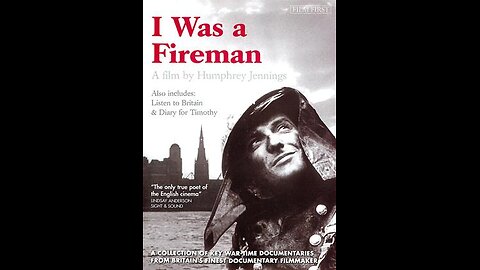
I Was a Fireman (aka Fires Were Started) (1943) | Directed by Humphrey Jennings
Classic Films & Movies ArchiveI Was a Fireman, later released commercially as Fires Were Started, is a British wartime docudrama depicting the heroic work of the Auxiliary Fire Service (AFS) during the Blitz in World War II. The film follows a group of London firefighters as they battle relentless blazes caused by German bombing raids, focusing on their camaraderie, courage, and quiet endurance in the face of nightly destruction. It combines documentary realism with dramatic reconstruction to pay tribute to the civilian men and women who fought fires on the home front. Genre: War, Documentary, Drama Director: Humphrey Jennings Humphrey Jennings (1907–1950) was a British filmmaker, poet, and painter celebrated for his documentary work during World War II. A leading member of the British Documentary Movement, Jennings was renowned for his lyrical and humanistic approach to realism. His films, including Listen to Britain and A Diary for Timothy, combined art, patriotism, and poetry to portray ordinary people with dignity and grace. Fires Were Started is often regarded as his masterpiece, praised for its authenticity and emotional depth. Jennings died tragically young in a climbing accident in Greece in 1950. Star Cast: Actual members of the Auxiliary Fire Service (AFS) rather than professional actors Philip Friend as Sub-Officer Fred Griffiths as Fireman George Gravett as Fireman Tom Mitchell as Fireman Cyril Demain as Fireman Upon release, I Was a Fireman was praised for its realism and sincerity, though some wartime audiences found its subdued tone unusual compared to typical propaganda films. Critics admired its poetic documentary style and its ability to capture the spirit of collective resilience without sentimentality. In later decades, film historians hailed it as one of the greatest British wartime films, emblematic of Jennings’s unique gift for merging art and documentary truth. It remains a benchmark for realist cinema and an invaluable historical record of life during the Blitz. Fun Facts: The film was originally titled I Was a Fireman but shortened and re-edited to Fires Were Started for its theatrical release. All performers were real firefighters who had served during the Blitz, lending remarkable authenticity to the scenes. Jennings reconstructed the fire sequences using actual bombed-out London locations rather than sets. The film’s dialogue was largely improvised, based on how the firefighters would naturally speak. Fires Were Started was produced by the Crown Film Unit, part of the Ministry of Information, to boost morale and honour civilian service. The film’s lyrical use of sound and montage has been compared to the works of Soviet filmmaker Dziga Vertov and American documentarian Pare Lorentz. It continues to be studied in film schools for its innovative blend of realism and poetry. * This Rumble Movie Channel is comprehensively indexed on https://kinoquick.com - find you favourite movies fast & free! * Follow this channel to be notified of daily movie updates.422 views 2 comments -
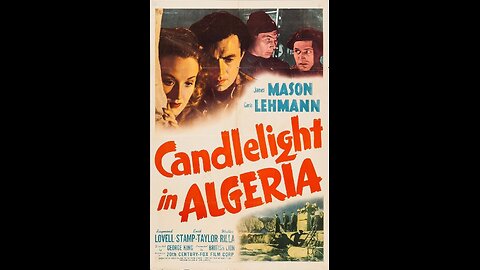
Candlelight in Algeria (1944) | Directed by George King
Classic Films & Movies ArchiveThis wartime spy thriller follows a courageous British woman who becomes entangled in espionage while in Algiers during World War II. She is recruited to help retrieve vital information from a Nazi agent, becoming deeply involved in the dangerous world of secret missions, coded messages, and double-crosses. The film blends suspense, romance, and patriotic duty, set against the exotic backdrop of North Africa during the Allied campaign. Genre: War / Spy Thriller Director: George King George King (1899–1966) was a British film director and producer best remembered for his crime and melodrama pictures of the 1930s and 1940s. He gained early recognition for his Edgar Wallace crime adaptations and later turned to war-related films during WWII, contributing to British cinema’s patriotic output. Known for his efficient storytelling and ability to make the most of limited budgets, King’s works were staples of British wartime entertainment. Star Cast: James Mason as Alan Thurston Carla Lehmann as Susan Foster Walter Rilla as Dr. Müller Brefni O’Rorke as Yates Julien Mitchell as Captain Elliott Sybille Binder as Madame Kleber Upon release, the film was well received in Britain as both an exciting thriller and morale booster during wartime. James Mason’s performance was praised, continuing his rise to stardom in the 1940s. Audiences appreciated the blend of intrigue and patriotic themes, while critics acknowledged it as a solid example of British wartime cinema. Fun Facts: The film helped solidify James Mason’s reputation as one of Britain’s leading actors of the 1940s before his transition to Hollywood fame. Candlelight in Algeria was released in the United States in 1944 to positive reception, capitalizing on the Allied victory in North Africa. The movie was notable for its use of espionage themes combined with romance, making it accessible to both male and female wartime audiences. Carla Lehmann, a Canadian actress working in Britain, became particularly associated with wartime thrillers of this kind. The film is sometimes compared to contemporary Hollywood spy dramas, though its British production values and understated style set it apart. * This Rumble Movie Channel is comprehensively indexed on https://kinoquick.com - find you favourite movies fast & free! * Follow this channel to be notified of daily movie updates.421 views -
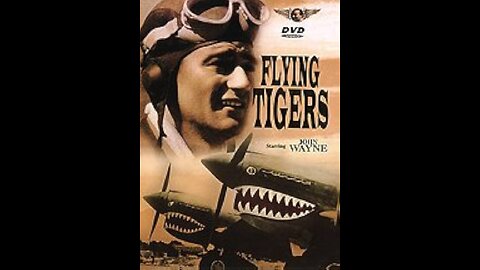
Flying Tigers (1940) | Directed by David Miller
Classic Films & Movies ArchiveA World War II action drama about the American Volunteer Group (AVG), popularly known as the Flying Tigers, who fought against Japanese forces in China before the United States officially entered the war. The story follows their daring missions, personal rivalries, and the sacrifices made by the pilots. Genre: War / Action / Drama Director: David Miller David Miller (1904–1992) was an American film director whose career spanned from the 1930s through the 1970s. He directed a wide range of genres including dramas, thrillers, and war films. Best remembered for movies like “Sudden Fear” (1952) starring Joan Crawford and “Lonely Are the Brave” (1962) with Kirk Douglas, Miller brought a sharp dramatic touch and strong character focus to his films. Flying Tigers was among his earliest major directorial successes. Star Cast: John Wayne as Jim Gordon John Carroll as Woody Jason Anna Lee as Brooke Elliott Paul Kelly as Hap Smith Gordon Jones as Big Mike Harrigan Mae Clarke as Verna Bales Addison Richards as General Chung Edmund MacDonald as Blackie Bales Tom Neal as Lieutenant Barton Flying Tigers was well received upon release, capitalizing on wartime patriotism. Audiences praised John Wayne’s strong performance as a tough but fair leader. The film was popular at the box office and contributed to Wayne’s rise as a patriotic war hero figure in Hollywood. Its action scenes, though staged with models and studio effects, were considered thrilling for the time. Fun Facts: This was John Wayne’s first war film. It cemented his image as a heroic American figure, which he carried through many later war movies. The real Flying Tigers were led by Claire Lee Chennault, and though the film took liberties with events, it helped publicize their role to American audiences. The movie received three Academy Award nominations, including Best Original Score, Best Sound Recording, and Best Special Effects. Republic Pictures invested more in this production than usual, making it one of their most ambitious projects. * This Rumble Movie Channel is comprehensively indexed on https://kinoquick.com - find you favourite movies fast & free! * Follow this channel to be notified of daily movie updates.317 views 4 comments -
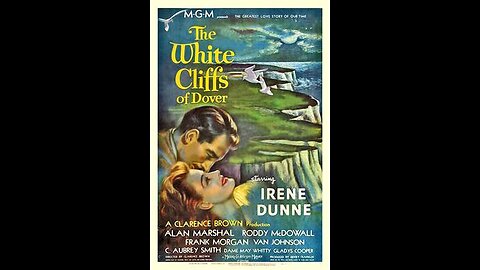
The White Cliffs of Dover (1944) | Directed by Clarence Brown
Classic Films & Movies ArchiveThe White Cliffs of Dover is a romantic wartime drama that tells the story of Susan Dunn, a young American woman who falls in love with and marries an Englishman just before World War I. After her husband is killed in the war, she remains in England to raise their son. As World War II looms, Susan faces the pain of seeing her grown son go off to fight, reflecting on love, loss, and her enduring connection to Britain. The film is a tribute to Anglo-American unity during wartime. Genre: Romantic drama, war drama Director: Clarence Brown Clarence Brown (1890–1987) was an American director renowned for his ability to blend sentiment, elegance, and visual storytelling. Beginning his career as an assistant to director Maurice Tourneur, Brown became known for guiding nuanced performances from stars such as Greta Garbo and Joan Crawford. His films often combined emotional depth with technical precision, making him a respected figure of Hollywood’s Golden Age. Star cast: * Irene Dunne as Susan Dunn Ashwood * Alan Marshal as Sir John Ashwood * Roddy McDowall as John Ashwood Jr. (young) * Peter Lawford as John Ashwood Jr. (adult) * C. Aubrey Smith as The Earl of Waverly * Dame May Whitty as Lady Jean Ashwood * Frank Morgan as Hiram Dunn Released during the height of World War II, the film was well received for its heartfelt portrayal of love and sacrifice, as well as its patriotic message promoting solidarity between the United States and the United Kingdom. Critics praised Irene Dunne’s sensitive performance and Clarence Brown’s restrained direction. Fun facts: * The story was adapted from Alice Duer Miller’s narrative poem “The White Cliffs,” which had been popular in both the United States and Britain. * Irene Dunne’s portrayal of Susan was lauded for its emotional authenticity, earning her praise as one of Hollywood’s most versatile leading ladies. * The film served as wartime propaganda, encouraging American audiences to empathize with Britain’s struggles. * Many supporting actors, including C. Aubrey Smith and Dame May Whitty, were well-known for playing distinguished British characters, adding to the film’s sense of authenticity. * The title references the famous chalk cliffs along the English coast, a symbol of Britain’s resilience and hope during war.485 views 1 comment