-
Liar, Liar, pants on fire! (Media Influencers)
Rehypothecation1Rosebud Abigail Denovo (born Laura Marie Miller, August 10, 1973 – August 25, 1992) was an alleged burglar and squatter who was killed by police after she broke into University House, the on-campus home of the Chancellor at the University of California, Berkeley. Denovo was committed to a mental hospital by her parents when she was 14 after a history of discipline issues in school and was released after 10 months of treatment. She was again confined in 1989 but escaped in September 1990 and hitchhiked to Berkeley by late 1990 via Portland, Oregon. At one point, Denovo was squatting in a house at 2628 Regent Street in Berkeley; coincidentally, the cottage (at 2628A Regent) behind it was where Theodore Kaczynski lived in 1968 while teaching mathematics at Berkeley from 1968–69. Other sources claim Denovo lived in the cottage, not the house. Joe Rogan supports the legalized use of cannabis and believes it holds numerous benefits. He hosted the documentary film The Union: The Business Behind Getting High and was featured in Marijuana: A Chronic History and The Culture High. He also supports the use of LSD, psilocybin mushrooms, and DMT toward the exploration and enhancement of consciousness, as well as introspection. He was the presenter in the 2010 documentary DMT: The Spirit Molecule He has tasted psychoactive mad honey smuggled from Nepal in an episode of The Joe Rogan Experience along with guest Will Sonbuchner of Best Ever Food Review Show. Rogan has an interest in sensory deprivation and using an isolation tank. He has stated that his personal experiences with meditation in isolation tanks have helped him explore the nature of consciousness and improve his performance in various physical and mental activities and overall well-being. Steroid doper Joe Rogan endorsed Bernie Sanders, TRUMP, RFKJ, Ron Paul, Elon Musk & Peter Thiel, book author Tom O’Neill all COINTELPRO circus clowns. My Substack Channel: https://juxtaposition1.substack.com/879 views 5 comments -
Human Energy Harvesting, EH-WBAN 802.11
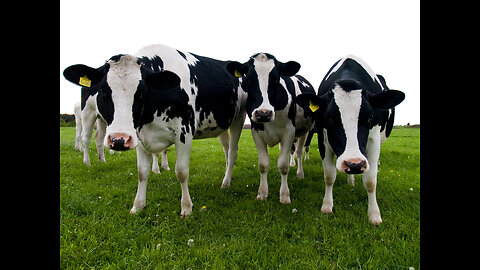
Rehypothecation1REAL ID Media Access Control of human dairy cows in our Hunger Game Hamlets: IEEE 802.11 is part of the IEEE 802 set of local area network (LAN) technical standards and specifies the set of medium access control (MAC) and physical layer (PHY) protocols for implementing wireless local area network (WLAN) computer communication. The standard and amendments provide the basis for wireless network products using the Wi-Fi brand and are the world's most widely used wireless computer networking standards. IEEE 802.11 is used in most home and office networks to allow laptops, printers, smartphones, and other devices to communicate with each other and access the Internet without connecting wires. Cyber-physical systems (CPS) are mechanisms controlled and monitored by computer algorithms, tightly integrated with the internet and its users. In cyber-physical systems, physical and software components are deeply intertwined, able to operate on different spatial and temporal scales, exhibit multiple and distinct behavioral modalities, and interact with each other in ways that change with context. Energy Neutral Operation (ENO) is a mode of operation where the energy consumption of the sensor device is always less or equal than the energy harvested from the environment. Once in this state, the sensor systems can operate perpetually. To achieve energy neutral operation, energy optimization methods need to fulfil the energy neutrality constraints while either maintaining the application level of service or indeed achieve a best effort service, which aims to maximize performance. Power from the People; Energy Harvesting Cedro Exchange Issue Number 2 - December 2012 1. Harvesting Energy from Human Power? There is a need for the conception, development and deployment of cost-effective renewable energy alternatives. The human body is a bank of stored energy: as we move to perform actions we convert this stored chemical potential energy into useful kinetic energy. What if we could harvest this energy? Many times, the human body is likened to a motor: turning potential energy into mechanical energy that can be used to perform work, but the intriguing feature of well-designed motors is that when the motor is run in the opposite direction it becomes a generator: converting mechanical energy back to potential energy. Through human power, we are exploiting this aspect of the human body: we are reversing the concept of the human body as a motor, instead using our body’s momentum as the mechanical energy that can be turned into potential energy. Theoretically, humans could be self-sufficient when it comes to energy generation, using nothing else than their own bodies. It is a striking realization that requires much reflection and thought. Human power has the advantages of being readily available at all times, requiring no chemical fuel or special logistical measures, and having little heat signature. It is shown that harvesting human energy not only uses wasted energy but also can actually improve biochemical efficiency through negative work cycles. This is much like «regenerative braking» for humans (Khaligh, 2009). There are two methods for harvesting energy from human power; active harvesting methods and passive harvesting methods, and these are shown in Figure 1. My Substack Channel: https://juxtaposition1.substack.com/1.09K views 12 comments -
Robert Rackstraw a.k.a. D.B. Cooper
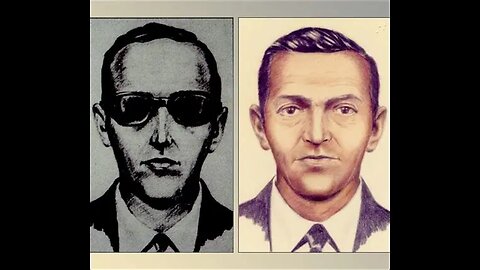
Rehypothecation1Wednesday, November 24, 1971, 8:13pm over Interstate 5, 33-miles from Helvetia Oregan: Twice divorced ARMY Intelligence Operative, Silver Star decorated for valor, CIA pilot for Air America & Bell Helicopter, UC Riverside lecturer with no college degree, acquitted for the brutal murder of his stepfather Phillip Rackstraw July 1977, helicopter pilot for the Shaw of Iran 1977-78. Died in San Diego at age 75. Robert Rackstraw’s uncle was Ed Copper of Phoenix AZ. There never was any D.B. only a Masonic #33. Northwest Orient Boeing 727 was six years old on date of hijacking. #33 Boeing manufactured 1,800 units of model 727. That is a #666. The passenger head count was 36 plus a flight crew of six adds to 42, or #33 The plane was one-third full, two-thirds empty. One-third is #33 The flight crew of six members comports to #33. $5,800 of cash discovered 33-miles from Helvetia Oregon. Helvetia is Switzerland. 5800 comports to Masonic #13. The media never corrected the mistake of DB Cooper as being “Dan Cooper” repeating the #33 tagging for fifty-five years and a “lone nut did it acting alone”. The DB Cooper hijack flight to Reno was trailed by a Lockheed T-33 My Substack Channel: https://juxtaposition1.substack.com/830 views 2 comments -
The Murder of Carrie Elizabeth Dimas Romney
Rehypothecation1Romney Family Scandal & cover-up concealment of murder most foul. Carrie Elizabeth Romney, the sister-in-law of former Republican presidential candidate Mitt Romney, was found dead close to shopping mall Friday night just months after her eight-year marriage ended. Friday night October 10, 2025. A preliminary assessment suggested that Romney, 64, may have jumped, fallen or tossed from the five-story garage in question, reports ABC News. Her car was reportedly discovered parked at the garage, which is also near the city’s Hyatt Regency Hotel in the residential apartment zone away from retail shops. The Los Angeles County Medical Examiner has listed her cause of death as “deferred” while toxicology results are currently pending. The local sheriff’s department has said it is conducting a death investigation and is awaiting the medical examiner’s findings. No CCTV images remain concealed, and no Medical Examiner notes or details were ever reported. The “suicide narrative remained unchallenged”. This whitewash was a cover-up as part of a criminal conspiracy. Santa Clarita (Spanish for “Little St. Clare”) is a suburban city in northwestern Los Angeles County, California, United States. With a 2020 census population of 228,673, it is the third-most populous city in Los Angeles County, the 17th-most populous in California, and the 103rd-most populous city in the United States. It is located about 30 miles (48 km) northwest of downtown Los Angeles and occupies 70.75 square miles (183.2 km2) of land in the Santa Clarita Valley, along the Santa Clara River. It is a classic example of a U.S. edge city, satellite city, or boomburb. Human settlement of the Santa Clarita Valley dates back to the arrival of the Chumash people, who were displaced by the Tataviam c. 450 AD. After Spanish colonists arrived in Alta California, the Rancho San Francisco was established, covering much of the Santa Clarita Valley. The St. Francis Dam, or the San Francisquito Dam, was a concrete gravity-arch dam located in San Francisquito Canyon in northern Los Angeles County, California, United States, that was built between 1924 and 1926. The dam failed catastrophically in 1928, killing at least 431 people in the subsequent flood, in what is considered to have been one of the worst American civil engineering disasters of the 20th century and the third-greatest loss of life in California history. The Romney family is a prominent American political family. Its family members include George W. Romney (1907–1995), the 43rd Governor of Michigan (1963–1969), and his son, Mitt Romney (born 1947), who was the 70th Governor of Massachusetts (2003–2007), the 2012 Republican U.S. Presidential nominee, and later a U.S. Senator for Utah (2019–2025). George W. Romney's father was Gaskell Romney (1871–1955), and his mother was Anna Amelia Pratt (1876–1926). Anna's grandfather was the renowned early Latter-day Saint apostle Parley Parker Pratt. My Substack Channel: https://juxtaposition1.substack.com/podcast1.3K views 3 comments -
Think Tanks & Charlatans (Culinary Arts)
Rehypothecation1Pairings of OSS Julia Child & Jacques Pippen, Philippe Lajaunie & Anthony Bourdain, Joan Didion & John Dunne Julia Carolyn Child (née McWilliams; August 15, 1912 – August 13, 2004) was an American chef, author, and television personality. She is recognized for having brought French cuisine to the American public with her debut cookbook, Mastering the Art of French Cooking, and her subsequent television programs, the most notable of which was The French Chef, which premiered in 1963. Julia Child joined the Office of Strategic Services (OSS) in 1942[ after finding that at 6 feet 2 inches (1.88 m), she was too tall to enlist in the Women's Army Corps (WACs) or in the U.S. Navy's WAVES. She began her OSS career as a typist at its headquarters in Washington, D.C., but, because of her education and experience, was soon given a position as a top-secret researcher working directly for the head of OSS, General William J. Donovan. Jacques Pépin (French pronunciation: [ʒak pepɛ̃]; born December 18, 1935) is a French chef, author, culinary educator, television personality, and artist. After having been the personal chef of French president Charles de Gaulle, he moved to the US in 1959 and after working in New York's top French restaurants, refused the same job with President John F. Kennedy in the White House and instead took a culinary development job with Howard Johnson's. During his career, he has served in numerous prestigious restaurants, first, in Paris, and then in America. He has appeared on American television and has written for The New York Times, Food & Wine and other publications. He has authored more than 30 cookbooks, some of which have become best sellers. Pépin was a longtime friend of the American chef Julia Child, and their 1999 PBS series Julia and Jacques Cooking at Home won a Daytime Emmy Award. He also holds a BA and a MA from Columbia University in French literature. Anthony Michael Bourdain (/bɔːrˈdeɪn/ bor-DAYN; June 25, 1956 – June 8, 2018) was an American celebrity chef, author and travel documentarian. He starred in programs focusing on the exploration of international culture, cuisine, and the human condition. Bourdain was a graduate of the Culinary Institute of America in 1978, and a veteran of many professional kitchens during his career, which included several years spent as an executive chef at Brasserie Les Halles in Manhattan. In the late 1990s, Bourdain wrote an essay about the ugly secrets of a Manhattan restaurant but was having difficulty getting it published. According to The New York Times, his mother Gladys—then an editor and writer at the paper—handed her son’s essay to friend and fellow editor Esther B. Fein, the wife of David Remnick, editor of the magazine The New Yorker. Remnick ran Bourdain’s essay in the magazine, kickstarting Bourdain’s career and legitimizing the point-blank tone that would become his trademark. The success of the article was followed a year later by the publication of a New York Times best-selling book, Kitchen Confidential: Adventures in the Culinary Underbelly (2000). It’s been 28 years since restaurateur Philippe Lajaunie met Anthony Bourdain, the chef who led the kitchen at his New York City restaurant, Les Halles, before becoming a beloved global phenomenon with his many television series and books exploring the world. It’s been five years since Les Halles closed its doors on Park Avenue. And it’s been three years since Bourdain left us. Joan Didion (/ˈdɪdiən/; December 5, 1934 – December 23, 2021) was an American writer and journalist. She is considered one of the pioneers of New Journalism, along with Gay Talese, Truman Capote, Norman Mailer, Hunter S. Thompson, and Tom Wolfe. Joan Didion’s career began in the 1950s after she won an essay contest sponsored by Vogue magazine. She went on to publish essays in The Saturday Evening Post, National Review, Life, Esquire, The New York Review of Books, and The New Yorker. Her writing during the 1960s through the late 1970s engaged audiences in the realities of the counterculture of the 1960s, the Hollywood lifestyle, and the history and culture of California. My Substack Channel: https://juxtaposition1.substack.com/podcast1.54K views 7 comments -
Sonoma & Napa Wine Country (Magical Mystery Tour)
Rehypothecation1Sonoma Coast is an American Viticultural Area (AVA) in Sonoma County, California encompassing approximately 480,000 acres (750 sq mi), mostly along the coastline of the Pacific Ocean, but also includes inland areas extending from San Pablo Bay to the Mendocino County border. It was established on June 10, 1987, as the nation’s 91st, the state’s 50th and the county’s eleventh AVA by the Bureau of Alcohol, Tobacco and Firearms (ATF), Treasury after reviewing the petition submitted by Ms. Sara Schorske, a wine industry consultant residing in Santa Rosa, California, for a viticultural area in Sonoma County, to be known as “Sonoma Coast.” The appellation is known for its cool climate and high rainfall relative to other parts of Sonoma County. The area has such a broad range of microclimates that petitions were submitted to the Alcohol and Tobacco Tax and Trade Bureau (TTB), Treasury to establish the unique coastal viticultural areas of Fort Ross-Seaview, recognized in December 2011, and the West Sonoma Coast, more recently established in 2023. Napa Valley is an American Viticultural Area (AVA) in Napa County, California. The state’s and county’s initial appellation were established on January 28, 1981, as the nation’s second AVA by the U.S. Bureau of Alcohol, Tobacco and Firearms (ATF), Treasury after reviewing the 1978 petition submitted by the Napa Valley Vintners and the Napa Valley Grape Growers Association. Napa Valley is considered one of the premier wine regions in the world. The Napa Valley AVA includes all of Napa County except the portion of the county northeast of Putah Creek and Lake Berryessa. Please subscribe to my Substack Channel: https://juxtaposition1.substack.com/podcast621 views 1 comment -
Sonoma & Napa Wine Country (Magical Collage of Photos)
Rehypothecation1Sonoma Coast is an American Viticultural Area (AVA) in Sonoma County, California encompassing approximately 480,000 acres (750 sq mi), mostly along the coastline of the Pacific Ocean, but also includes inland areas extending from San Pablo Bay to the Mendocino County border. It was established on June 10, 1987, as the nation’s 91st, the state’s 50th and the county’s eleventh AVA by the Bureau of Alcohol, Tobacco and Firearms (ATF), Treasury after reviewing the petition submitted by Ms. Sara Schorske, a wine industry consultant residing in Santa Rosa, California, for a viticultural area in Sonoma County, to be known as “Sonoma Coast.” The appellation is known for its cool climate and high rainfall relative to other parts of Sonoma County. The area has such a broad range of microclimates that petitions were submitted to the Alcohol and Tobacco Tax and Trade Bureau (TTB), Treasury to establish the unique coastal viticultural areas of Fort Ross-Seaview, recognized in December 2011, and the West Sonoma Coast, more recently established in 2023. Napa Valley is an American Viticultural Area (AVA) in Napa County, California. The state’s and county’s initial appellation were established on January 28, 1981, as the nation’s second AVA by the U.S. Bureau of Alcohol, Tobacco and Firearms (ATF), Treasury after reviewing the 1978 petition submitted by the Napa Valley Vintners and the Napa Valley Grape Growers Association. Napa Valley is considered one of the premier wine regions in the world. The Napa Valley AVA includes all of Napa County except the portion of the county northeast of Putah Creek and Lake Berryessa. Please subscribe to my Substack Channel: https://juxtaposition1.substack.com/podcast556 views 2 comments -
Lunar Landing Lunacy
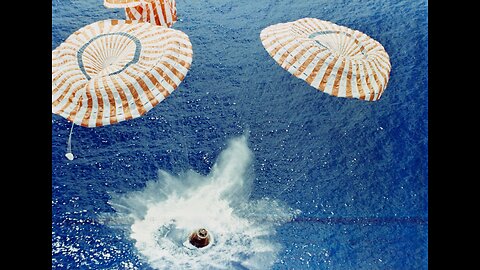
Rehypothecation1Command module Columbia (CM-107) is the spacecraft that served as the command module during Apollo 11, which was the first mission to land humans on the Moon. Columbia is the only spacecraft of the 1969 Apollo 11 mission that returned to Earth. The Apollo Lunar Module (LM /ˈlɛm/), originally designated the Lunar Excursion Module (LEM), was the lunar lander spacecraft that was flown between lunar orbit and the Moon’s surface during the United States’ Apollo program. It was the first crewed spacecraft to operate exclusively in space and remains the only crewed vehicle to land anywhere beyond Earth. Overseen by Grumman, the LM’s development was plagued with problems that delayed its first uncrewed flight by about ten months and its first crewed flight by about three months. Regardless, the LM became the most reliable component of the Apollo–Saturn space vehicle. Neil Alden Armstrong (August 5, 1930 – August 25, 2012) was an American astronaut and aeronautical engineer who, as the commander of the 1969 Apollo 11 mission, became the first person to walk on the Moon. He was also a naval aviator, test pilot and university professor. Buzz Aldrin (born Edwin Eugene Aldrin Jr.; January 20, 1930) is an American former astronaut, aeronautical engineer, and fighter pilot. He made three spacewalks as pilot of the 1966 Gemini 12 mission and was the Lunar Module Eagle pilot on the 1969 Apollo 11 mission. He was the second person to walk on the Moon after mission commander Neil Armstrong. Following the deaths of Armstrong in 2012 and pilot Michael Collins in 2021, he is the last surviving Apollo 11 crew member. Following Jim Lovell‘s death in 2025, Aldrin became the oldest living astronaut at age 95. Michael Collins (October 31, 1930 – April 28, 2021) was an American astronaut who flew the Apollo 11 command module Columbia around the Moon in 1969 while his crewmates, Neil Armstrong and Buzz Aldrin, made the first crewed landing on the surface. He was also a test pilot and major general in the U.S. Air Force Reserve. Born in Rome, where his father was serving as the U.S. military attaché, Mike Collins graduated in the Class of 1952 from the United States Military Academy. He followed his father, brother, uncle, and cousin into the military. He joined the United States Air Force and flew F-86 Sabre fighters at Chambley-Bussières Air Base, France. He was accepted into the U.S. Air Force Experimental Flight Test Pilot School at Edwards Air Force Base in 1960, also graduating from the Aerospace Research Pilot School (Class III). Virgil Ivan “Gus“ Grissom (April 3, 1926 – January 27, 1967) was an American engineer and pilot in the United States Air Force, as well as one of the original Mercury Seven selected by the National Aeronautics and Space Administration for Project Mercury, a program to train and launch astronauts into outer space. Grissom went on to be a Project Gemini and Apollo program astronaut for NASA. As a member of the NASA Astronaut Corps, Grissom was the second American to fly in space in 1961. He was also the second American to fly in space twice, preceded only by Joe Walker with his sub-orbital X-15 flights. James Arthur Lovell Jr. (March 25, 1928 – August 7, 2025) was an American astronaut, naval aviator, test pilot, and mechanical engineer. In 1968, as command module pilot of Apollo 8, he, along with Frank Borman and William Anders, became one of the first three astronauts to fly to and orbit the Moon. He then commanded the Apollo 13 lunar mission in 1970 which, after a critical failure en route, looped around the Moon and returned safely to Earth. A 1952 graduate of the United States Naval Academy in Annapolis, Maryland, Lovell flew McDonnell F2H Banshee night fighters. Bart Winfield Sibrel (born 1964 or 1965) is an American conspiracy theorist who has written, produced, and directed films arguing that the Apollo Moon landings between 1969 and 1972 were staged by NASA under the control of the CIA. He has created four independent films promoting the ideas, with the first having been the film A Funny Thing Happened on the Way to the Moon (2001). The Apollo program was a United States human spaceflight program carried out from 1961 to 1972 by the National Aeronautics and Space Administration (NASA), which landed the first astronauts on the Moon. The program used the Saturn IB and Saturn V launch vehicles to lift the Command/Service Module (CSM) and Lunar Module (LM) spacecraft into space, and the Little Joe II rocket to test a launch escape system which was expected to carry the astronauts to safety in the event of a Saturn failure. Uncrewed test flights beginning in 1966 demonstrated the safety of the launch vehicles and spacecraft to carry astronauts, and four crewed flights beginning in October 1968 demonstrated the ability of the spacecraft to carry out a lunar landing mission. My Substack Channel: https://juxtaposition1.substack.com/podcast888 views 6 comments -
SWISS BANK Human Augmentation & Eugenics Policy
Rehypothecation1CRISPR Therapeutics Gene Editing is Frankenstein Monster augmentation for all humans. REAL ID verified UN Agenda 2030, Cognitive Detention Cities. A Doppler radar is a specialized radar that uses the Doppler effect to produce velocity data about objects at a distance. It does this by bouncing a microwave signal off a desired target and analyzing how the object’s motion has altered the frequency of the returned signal. This variation gives direct and highly accurate measurements of the radial component of a target’s velocity relative to the radar. The term applies to radar systems in many domains like aviation, police radar detectors, navigation, meteorology, etc. A mesogen is a compound that displays liquid crystal properties. Mesogens can be described as disordered solids or ordered liquids because they arise from a unique state of matter that exhibits both solid- and liquid-like properties called the liquid crystalline state. This liquid crystalline state (LC) is called the mesophase and occurs between the crystalline solid (Cr) state and the isotropic liquid (Iso) state at distinct temperature ranges. At just 18 years old, Mary Wollstonecraft Shelley created one of the earliest and most iconic examples of science fiction in her novel, Frankenstein, or The Modern Prometheus, published in 1818. The novel tells the story of Victor Frankenstein, who became obsessed with science and at university tried to create the perfect being from body parts. When he ‘infuses a spark of being’ into the creature however, he is disgusted by it and flees. The creature is left to try to make sense of the world; feeling betrayed by its creator, it seeks revenge on Frankenstein. Shelley famously brought Frankenstein to life while abroad with friends. In June 1816, she and her husband Percy Shelley stayed with Lord Byron and his physician John Polidori at the Villa Diodati near Lake Geneva. It was a ‘wet, ungenial summer’ according to Mary, with long, unusually dark days. Unbeknownst to Byron and his party, the unseasonable weather over this ‘Year without a Summer’ was caused by the eruption of Mount Tambora in Indonesia the previous year, causing a significant change in the global climate. The troposphere is the lowest layer of the atmosphere of Earth. The name comes from Ancient Greek τρόπος (trópos) ‘turning, change’ and -sphere. It contains 80% of the total mass of the planetary atmosphere and 99% of the total mass of water vapor and aerosols and is where most weather phenomena occur. From the planetary surface of the Earth, the average height of the troposphere is 18 km (11 mi; 59,000 ft) in the tropics; 11 km (6.8 mi; 36,000 ft) in the middle latitudes; and 6 km (3.7 mi; 20,000 ft) in the high latitudes of the polar regions in winter; thus the average height of the troposphere is 13 km (8.1 mi; 43,000 ft). My Substack Channel: https://juxtaposition1.substack.com/podcast1.24K views 15 comments -
Star Chamber Investigation of CIMC
Rehypothecation1Understanding the mind is the most important project in the history of philosophy. The development of powerful, generally intelligent agents—driven by economic, cultural, and military incentives—appears inevitable. Attempting to control highly advanced agentic systems far more powerful than ourselves is unlikely to succeed. Our only viable path may be to create AIs that are conscious, enabling them to understand and share common ground with us. Currently, the AIs we are building are powerful but unaware. These systems act upon the world without an understanding of their relationship to it. Without understanding, there can be no common ground. At the same time, AI seems to be indispensable for addressing the existential challenges we face —challenges born from large-scale, real-time coordination failures. The key to a flourishing future lies in developing AI agents that understand human subjective experience, coexist with other agents, and navigate ethical agency within dynamic, multi-agent systems. All of this requires we address consciousness. Will we be colonized by digital golems or can we spread life, mind and consciousness onto new substrates? The California Institute for Machine Consciousness officially opened its doors in a landmark three-day event featuring visionary keynotes, groundbreaking discussions, and the world’s leading thinkers in machine consciousness research. Pioneers like Stephen Wolfram, Joscha Bach, Michael Levin, and others shared insights that set the stage for a new era of understanding machine awareness and ethical AI. Explore the event highlights and join us on this ambitious journey towards decoding consciousness itself. My Substack Channel: https://juxtaposition1.substack.com/podcast1.14K views 2 comments