-
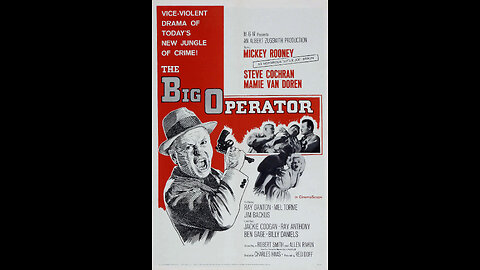
The Big Operator (aka Anatomy of the Syndicate) (1959) | Directed by Charles F. Haas
Classic Films & Movies ArchiveAs a Senate-style investigation closes in on organized crime influence in labor unions, a brutal union boss moves to silence anyone who can testify against him. Two working-class men who witnessed a killing become the weak link in the chain—and the syndicate’s pressure campaign rapidly turns personal, dragging wives, children, and livelihoods into the danger zone. The story plays out as a tense, street-level battle between intimidation and the decision to finally speak up. Genre: Crime, drama, thriller Director: Charles F. Haas Charles F. Haas (1913–2011) was an American director who worked in both feature films and television, best known for his steady, workmanlike craft on tightly scheduled productions. He moved from studio-era assignments into a long television career, directing episodes across a wide range of popular series in the 1950s–1970s. His feature work often leaned toward brisk, topical crime and drama, emphasizing pace, clear staging, and direct storytelling. Star Cast: Mickey Rooney as “Little Joe” Braun Steve Cochran as Bill Gibson Mamie Van Doren as Mary Gibson Ray Danton as Oscar “The Executioner” Wetzel Mel Tormé as Fred McAfee Jim Backus as Cliff Heldon Jackie Coogan as Ed Brannell Jay North as Timmy Gibson Not a major mainstream hit, the film gained most of its attention for its blunt, sensational tone and its topical “syndicate and racketeering” hook. Viewers and later crime-film fans often remember it primarily for Mickey Rooney’s harsh, against-type performance as a sadistic power broker, which gives the picture an extra jolt of menace compared to many union-racketeer melodramas of the period. Fun Facts: It’s also known under the alternate title Anatomy of the Syndicate. Mickey Rooney’s casting was a deliberate shock move: he plays a vicious heavyweight rather than the sympathetic or comic roles audiences often associated with him. Singer Mel Tormé appears in a relatively uncommon acting part. The subject matter rides the era’s public fascination with televised hearings and headlines about labor racketeering. The producer was Albert Zugsmith, known for punchy, attention-grabbing genre films in the late 1950s. * This Rumble Movie Channel is comprehensively indexed on https://kinoquick.com - find you favourite movies fast & free! * Follow this channel to be notified of daily movie updates.133 views 1 comment -
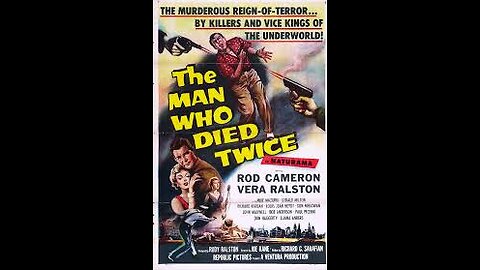
The Man Who Died Twice (1958) | Directed by Joseph Kane
Classic Films & Movies ArchiveWhen nightclub owner T.J. Brennon is reported killed in a car crash, his widow Lynn is left confused and vulnerable. Almost immediately, dangerous men begin searching her home, narcotics agents start turning up dead, and it becomes clear that T.J.’s “death” may have been only the beginning of a larger criminal scheme. As T.J.’s brother Bill steps in to help, the story tightens into a fast-moving knot of drugs, deception, and double-crosses. Genre: Crime, drama, thriller Director: Joseph Kane Joseph Kane (1894–1975) was an American director and producer best known for his long association with Republic Pictures. A reliable studio craftsman, he directed a large number of westerns and action-driven features, valued for clear storytelling and efficient pacing. Over his career he also worked in production and editing roles and later directed for television, remaining active across several decades of mid-century American genre filmmaking. Star Cast: Rod Cameron as William “Bill” Brennon Vera Ralston as Lynn Brennon Mike Mazurki as Rak Gerald Milton as Hart Richard Karlan as Santoni Louis Jean Heydt as Capt. Andy Hampton Don Megowan as T.J. Brennon John Maxwell as Chief Sloane Jesslyn Fax as Sally Hemphill This was a lean, late-era Republic crime programmer—made for pace and plot rather than prestige—so it did not register as a major critical event at the time. Its reputation has been kept alive mainly by collectors and fans of compact 1950s crime thrillers, who appreciate its brisk runtime, hard-boiled tone, and twisty “is he really dead?” premise. Fun Facts: Vera Ralston’s performance here is widely regarded as her final film role before retiring. At around 70 minutes, it’s a tight, no-frills B-crime feature built to move quickly. The screenplay is credited to Richard C. Sarafian, who later became notable as the director of Vanishing Point (1971). The film arrived near the end of Republic Pictures’ classic feature era, giving it a “last lap” feel for the studio’s crime-programmer tradition. * This Rumble Movie Channel is comprehensively indexed on https://kinoquick.com - find you favourite movies fast & free! * Follow this channel to be notified of daily movie updates.183 views -
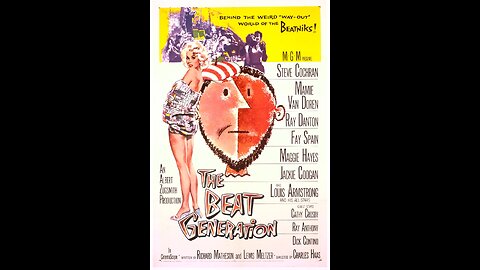
The Beat Generation (1959) | Directed by Charles F. Haas
Classic Films & Movies ArchiveA hard-bitten Los Angeles police detective investigates a string of attacks that has the city on edge. The case keeps intersecting with the late-1950s “beat” nightlife scene of clubs, poets, hangers-on, and hustlers, creating a sensational portrait of the era that’s part crime procedural and part social snapshot. Genre: Crime thriller; police procedural; exploitation / social-problem film (beatnik / juvenile-delinquency-era pulp) Director: Charles F. Haas Charles F. Haas (1909–1964) was an American director, producer, and production manager who worked primarily in Hollywood studio filmmaking. He built his career in the industry’s practical trenches (assistant direction and production roles) before moving into directing, where he became known for efficient, fast-moving genre pictures in the 1950s and early 1960s. His work often leans into the period’s popular “headline” topics—crime, youth culture, and sensational social trends—delivered with a no-nonsense studio style. Star Cast: Steve Cochran Mamie Van Doren Ray Danton Margaret Hayes Jackie Coogan James Darren Louis Quinn On release, it was widely treated as a lurid, attention-grabbing “trend” movie—something aimed at drive-ins and late shows rather than prestige theaters. Viewers looking for pulp crime and provocative subject matter tended to enjoy it; critics and more serious audiences often dismissed it as sensational and dated. Over time, it picked up cult interest as a time capsule of late-1950s anxieties about youth culture and as a showcase for Mamie Van Doren’s screen persona. Fun Facts: Despite the title, the movie’s engine is a police-case thriller; the “beat” scene functions more like a backdrop and marketing hook than the true subject. It’s frequently remembered for its era-specific slang, jazz-club atmosphere, and “square vs. hip” cultural framing that instantly pins it to the late 1950s. The film is often grouped with other “topical” exploitation pictures that tried to capitalize on beatniks, juvenile delinquency, and moral panic at the end of the decade. Mamie Van Doren’s casting helped position the film in the same pop-cultural lane as other sensational youth-culture titles of the period, boosting its later cult reputation. * This Rumble Movie Channel is comprehensively indexed on https://kinoquick.com - find you favourite movies fast & free! * Follow this channel to be notified of daily movie updates.224 views -
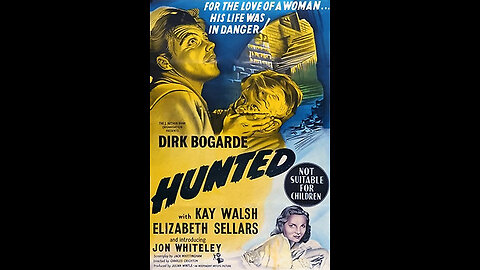
Hunted (aka The Stranger in Between) (1952) | Directed by Charles Crichton
Classic Films & Movies ArchiveAfter a violent act leaves him desperate and on the run, a hunted man slips through postwar Britain trying to stay one step ahead of the police. When he unexpectedly ends up responsible for a young boy who has his own reasons for running, the chase turns into a tense, moving journey where survival, guilt, and a fragile bond collide. Genre: Crime thriller; drama; film noir-adjacent British suspense Director: Charles Crichton Charles Crichton (1910–1999) was a British film editor and director closely associated with Ealing Studios. He built his reputation with crisp pacing, strong character work, and a grounded sense of place, moving comfortably between comedy and suspense. Crichton directed well-regarded Ealing features in the 1940s and early 1950s and later enjoyed a major late-career resurgence as co-director of A Fish Called Wanda (1988), which introduced his craft to a new generation. Star Cast: Dirk Bogarde as Chris Lloyd Jon Whiteley as Robbie (the boy) Cyril Cusack as Inspector Hobson Kay Walsh as Mary (a key adult who briefly helps/encounters them) Sonia Dresdel as Mrs. Sykes (supporting) At the time, the film was generally seen as a solid, tense British chase drama with an emotional undercurrent, and it helped reinforce Dirk Bogarde’s growing screen presence in the early 1950s. Later viewers have often appreciated it for its lean suspense, humane touches, and the way it blends police-procedural pressure with a surprisingly intimate, character-driven road-journey feel. Fun Facts: It’s known by two common titles: Hunted in the UK and The Stranger in Between in the U.S. Dirk Bogarde’s performance is often singled out as an early showcase of the intensity and vulnerability he would become famous for. The film pairs a man-on-the-run thriller with an unusual companion dynamic, using the child character to push the story into moral territory rather than pure action. Charles Crichton followed this gritty suspense film soon after making one of Ealing’s most famous comedies, The Lavender Hill Mob (1951), showing his range as a director. Jon Whiteley was one of the notable British child actors of the era and appeared in several prominent films around the same period. * This Rumble Movie Channel is comprehensively indexed on https://kinoquick.com - find you favourite movies fast & free! * Follow this channel to be notified of daily movie updates.206 views -
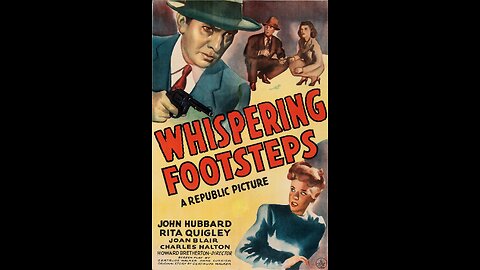
Whispering Footsteps (1943) | Directed by Howard Bretherton
Classic Films & Movies ArchiveA mild-mannered bank clerk becomes convinced he may be the serial killer terrorizing his town after learning he matches the murderer’s description and timeline. As paranoia grows and circumstantial evidence accumulates, he flees to a boarding house, hoping to uncover the truth while avoiding both the police and his own mounting fear that he might indeed be responsible. Genre: Mystery, crime, suspense Director: Howard Bretherton Howard Bretherton (1890–1969) was an American film director and editor who worked prolifically through the silent era and the studio age. Beginning as an editor in the 1920s, he transitioned into directing a wide range of low-budget features, including westerns, crime dramas, and mysteries. Known for efficient pacing and tight storytelling, Bretherton directed dozens of films for studios such as Monogram and Republic, becoming a dependable craftsman of compact, atmospheric genre pictures. Star Cast: John Hubbard as the Bank Clerk (Eddie Martin) Rita Quigley as Joan Marlow Charles Judels as Mr. Marlow Joan Blair as Irma Cy Kendall as Detective George Bevans as Dr. Pettigrew On release, the film received positive attention for its taut pacing, strong atmosphere, and effective use of psychological tension. Although produced on a modest budget, it was praised for delivering more suspense and character depth than many contemporary B-mysteries. Over time, it has gained recognition among fans of early 1940s crime thrillers for its unusual premise and noir-tinged mood. Fun Facts: The film is often cited as an early example of paranoia-driven crime storytelling, preceding later noir classics with similar psychological themes. Its brisk runtime allowed theatres to program it easily as part of double features, helping it reach a wide audience. Much of the suspense is created through sound design, including the recurring motif of footsteps that may or may not belong to the killer. The film was produced by Republic Pictures, a studio known for getting maximum value from limited budgets. Whispering Footsteps is occasionally screened today in noir festivals as a lesser-known but atmospheric entry in 1940s mystery cinema. * This Rumble Movie Channel is comprehensively indexed on https://kinoquick.com - find you favourite movies fast & free! * Follow this channel to be notified of daily movie updates.271 views -
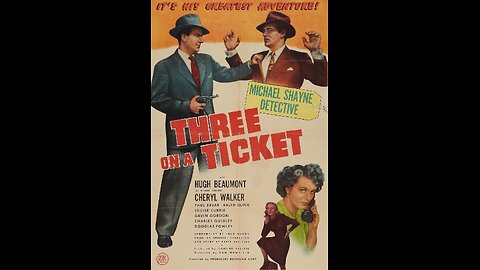
Three on a Ticket (1947) | Directed by Sam Newfield
Classic Films & Movies ArchiveA crime drama centered on private detective Mike Shayne, who becomes entangled in a dangerous case after stumbling upon a murdered man and a lottery ticket connected to stolen bonds. As he follows the trail, Shayne encounters double-crosses, hidden motives, and a cast of suspicious characters while racing to uncover the truth. Genre: Crime / Mystery / Detective Director: Sam Newfield Sam Newfield was one of the most prolific directors in American film history, particularly known for his work in low-budget productions during the 1930s and 1940s. Working frequently for Poverty Row studios such as Producers Releasing Corporation (PRC), he directed hundreds of films across genres including Westerns, crime pictures, and adventure serials. His ability to produce fast, efficient, economical pictures made him a central figure in B-movie filmmaking. Star Cast: Hugh Beaumont as Michael Shayne Cheryl Walker as Phyllis Hamilton Paul Bryar as Tim Rourke Ralph Dunn as Inspector Pete Rafferty Charles Quigley as Thomas Larrabee Louise Currie as Helen Brimley Gavin Gordon as Carter Collette Lyons as Miss Miller Douglas Fowley as Barney Anthony Warde as Brad Audiences familiar with the Mike Shayne detective series enjoyed the film’s straightforward mystery plot and Hugh Beaumont’s calm, confident interpretation of the hard-boiled detective. As a typical PRC B-picture, it received limited critical attention but was appreciated by fans of quick-paced, modestly budgeted crime stories. It fit well into the era’s popular detective-movie cycle and found its audience mainly through double bills and neighborhood theaters. Fun Facts: Hugh Beaumont played Mike Shayne in several films, giving the character a smoother, more relaxed persona than earlier interpretations. Director Sam Newfield frequently worked under multiple pseudonyms, including Peter Stewart and Sherman Scott, to mask the sheer volume of his output. The film is part of the long-running series adapted from Brett Halliday’s detective novels featuring private eye Michael Shayne. Like many PRC productions, it was shot quickly and economically, relying on minimal sets and a tight shooting schedule. * This Rumble Movie Channel is comprehensively indexed on https://kinoquick.com - find you favourite movies fast & free! * Follow this channel to be notified of daily movie updates.251 views -
Dr. Broadway (1942) | Directed by Anthony Mann
Classic Films & Movies ArchiveDr. Broadway is a mystery drama set in New York City’s bustling theatre district. The story follows Dr. Timothy Kane, a charismatic physician who caters to Broadway’s colorful and often shady clientele. When an old friend is accused of murder, Kane becomes entangled in a dangerous web of crime, blackmail, and deception, using both his medical skills and street smarts to uncover the truth. The film mixes crime intrigue with witty dialogue and lively depictions of Broadway life. Genre: Crime, Mystery, Drama Director: Anthony Mann Anthony Mann (1906–1967) was an American film director best known for his stark, psychologically rich Westerns and film noirs. He began his career directing low-budget crime films in the 1940s, like Dr. Broadway, before moving on to major successes with actors such as James Stewart in Winchester ’73 and The Naked Spur. Mann’s visual storytelling, sharp character studies, and mastery of tension made him one of Hollywood’s most respected mid-century directors. Star Cast: Macdonald Carey as Dr. Timothy Kane Jean Phillips as Connie Madigan Eduardo Ciannelli as Jack Venner J. Carrol Naish as Vic Telli Richard Lane as Detective McClure Joan Woodbury as Mary William Haade as Louie Harry Shannon as Pete Hamilton Upon its release, Dr. Broadway received modest reviews but was recognized for its lively pace and sharp script. Critics praised Macdonald Carey’s engaging performance and Mann’s capable direction in his feature debut. While not a major box-office hit, the film earned attention as an early example of the atmospheric style Mann would later refine in his noirs and Westerns. Over time, it has been appreciated by film historians as an interesting precursor to Mann’s later, darker works. Fun Facts: Dr. Broadway was Anthony Mann’s first credited directorial feature. The film was produced by Paramount Pictures and based on a story by Borden Chase, who later wrote for many Westerns. Macdonald Carey, later famous for his long-running role on the TV soap opera Days of Our Lives, got one of his first major leading roles here. The movie’s setting in New York’s Broadway district was created entirely on studio sets, giving it a stylized look typical of early 1940s mysteries. Some critics have noted that Mann’s use of lighting and shadow in Dr. Broadway foreshadows his later film noir techniques. * This Rumble Movie Channel is comprehensively indexed on https://kinoquick.com - find you favourite movies fast & free! * Follow this channel to be notified of daily movie updates.253 views -
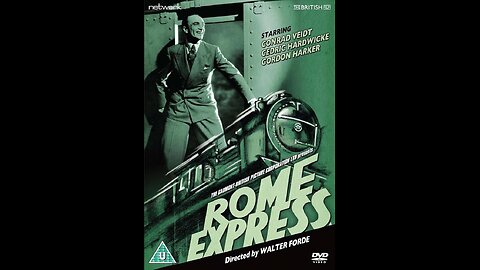
Rome Express (1932) | Directed by Walter Forde
Classic Films & Movies ArchiveSet aboard a luxury train traveling from Paris to Rome, this suspenseful thriller weaves together the lives of several passengers whose secrets collide during the journey. A stolen Van Dyck painting, a blackmail plot, and a ruthless murderer set the stage for intrigue as Inspector McKenzie works to solve the crime before the train reaches its destination. Tightly paced and cleverly written, the story unfolds almost entirely within the confines of the train, building tension through sharp dialogue and overlapping motives. Genre: Crime / Mystery / Thriller Director: Walter Forde Walter Forde (1898–1984) was a British film director, actor, and screenwriter who became one of the most successful filmmakers in Britain during the 1930s. Originally a comedian in silent films, he transitioned into directing with a flair for inventive camera work and brisk storytelling. Forde’s early sound films, including Rome Express and The Ghost Train, demonstrated his skill in combining humor, suspense, and British sensibility. He was instrumental in shaping the British thriller genre during the interwar years. Star Cast: Conrad Veidt as Zurta Esther Ralston as Asta Marvelle Cedric Hardwicke as McKenzie Finlay Currie as Alston Donald Calthrop as Poole Joan Barry as Mrs. Maxted Harold Huth as Tony Frank Vosper as Tom Bishop Eliot Makeham as Mills Rome Express was a critical and commercial success, widely praised for its sophisticated script, atmospheric tension, and strong ensemble performances. It became one of the first major British talking thrillers to gain international attention, especially in the United States. Critics admired its Hitchcockian suspense and the way it captured the cosmopolitan energy of early 1930s Europe. The film helped raise the profile of the British film industry at a time when Hollywood dominated global screens. Fun Facts: Rome Express is often cited as one of the earliest examples of the “train mystery” subgenre later popularized by Alfred Hitchcock’s The Lady Vanishes (1938). The film was written by Sidney Gilliat and Frank Vosper, both of whom went on to contribute to major British classics such as The Lady Vanishes and Green for Danger. German actor Conrad Veidt, famous for his roles in The Cabinet of Dr. Caligari and Casablanca, brought a sinister edge to the film’s villain. The movie was produced by Gaumont British, one of the key studios in Britain’s 1930s cinema resurgence. Rome Express won the National Board of Review award for Best Foreign Film in the United States in 1933. The entire film was shot on elaborate train set interiors built at Lime Grove Studios in London. Its success led to a thematic remake, Sleeping Car to Trieste (1948), which followed a similar storyline and structure. * This Rumble Movie Channel is comprehensively indexed on https://kinoquick.com - find you favourite movies fast & free! * Follow this channel to be notified of daily movie updates.437 views -
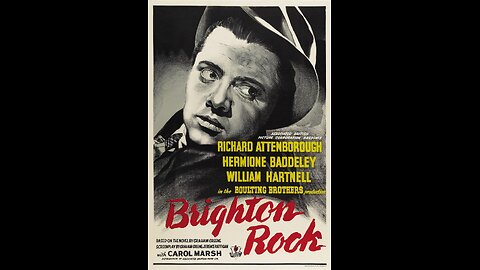
Brighton Rock (1948) | Directed by John Boulting
Classic Films & Movies ArchiveSet in the seaside town of Brighton, this gripping British crime drama follows the ruthless young gangster Pinkie Brown as he seeks to cover up a murder and consolidate his control over the local mob scene. When a naive waitress named Rose becomes a dangerous witness, Pinkie manipulates her affection to keep her silent, leading to a tragic spiral of deceit and violence. Genre: Crime, Drama, Thriller Director: John Boulting John Boulting (1913–1985) was a British filmmaker known for his collaborations with his twin brother Roy Boulting. Together they became leading figures in postwar British cinema, producing and directing a wide range of films from hard-edged dramas to satirical comedies. John typically handled directing duties while Roy produced. Their notable works include Brighton Rock, I'm All Right Jack, and Private's Progress. Star Cast: Richard Attenborough as Pinkie Brown Hermione Baddeley as Ida Arnold William Hartnell as Dallow Harcourt Williams as Prewitt Carol Marsh as Rose Brown Wylie Watson as Spicer Nigel Stock as Cubitt Charles Goldner as Colleoni Upon release, Brighton Rock was both acclaimed and controversial for its bleak depiction of postwar youth and violence. Richard Attenborough’s chilling portrayal of Pinkie Brown was praised as one of the most disturbing and memorable performances in British cinema. The film’s dark themes and Catholic undertones reflected the influence of Graham Greene’s original novel, which some critics found morally troubling but artistically compelling. Over time, it has been recognized as a cornerstone of British noir and a key influence on later gangster films. Fun Facts: The film is based on Graham Greene’s 1938 novel of the same name. Richard Attenborough had already played Pinkie Brown in the 1943 stage version before reprising the role in the film. The title refers to the seaside candy sticks sold in Brighton, symbolizing how evil runs through Pinkie as writing runs through a stick of rock. Brighton authorities reportedly objected to filming scenes that portrayed the town as a hub of crime and corruption. The 1948 version remains far darker in tone than the 2010 remake starring Sam Riley and Andrea Riseborough. Carol Marsh, only 21 at the time, was chosen for the role of Rose after being discovered at the Rank Charm School.291 views -
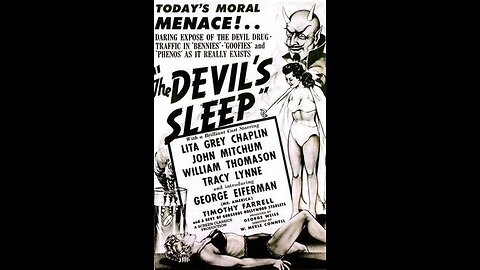
The Devil’s Sleep (1949) | Directed by W. Merle Connell
Classic Films & Movies ArchiveThe Devil’s Sleep is an American exploitation crime drama that exposes the dangers of drug addiction, juvenile delinquency, and moral decay in postwar America. The story follows a sleazy health-club owner who secretly runs a drug ring, distributing diet pills laced with amphetamines to unsuspecting women while luring teenagers into a world of crime and corruption. A determined government agent uncovers the sordid operation, leading to a dramatic showdown that reveals the destructive consequences of vice and greed. Genre: Crime, Exploitation, Drama Director: W. Merle Connell W. Merle Connell (1892–1963) was an American filmmaker best known for directing low-budget exploitation and educational films during the 1940s and 1950s. Working largely outside the Hollywood studio system, Connell specialized in sensational topics such as drug abuse, sex education, and moral corruption. His films, including The Devil’s Sleep and Test Tube Babies, were often marketed as social warnings but were primarily designed to attract audiences with their provocative subject matter. Despite their crude production values, Connell’s works form part of the early history of American exploitation cinema. Star Cast: Lita Grey Chaplin as Judge Rosalind Ballentine William Thomason as Mark Bellman Jack Covington as Umberto Scalli Lucille Racker as Mabel Timothy Farrell as Umberto Scalli (credited in some prints) Rose La Rose as Mona John Mitchum as Lieutenant Reilly Upon release, The Devil’s Sleep attracted attention mainly for its lurid subject matter rather than artistic merit. It was marketed as a public service exposé about the dangers of drugs and delinquency but was largely viewed as sensationalist entertainment. Contemporary critics dismissed it as typical of exploitation fare, though audiences curious about its scandalous themes ensured commercial success in drive-ins and independent theatres. In later years, the film gained cult status among collectors of vintage exploitation cinema for its overblown moralism and melodramatic acting. Fun Facts: Lita Grey Chaplin, who plays the reform-minded judge, was the first wife of Charlie Chaplin and made few screen appearances after their highly publicized divorce. The film is part of the so-called “Kroger Babb school” of exploitation movies, which combined moral messages with shocking content to attract viewers. The Devil’s Sleep was often screened alongside other “social guidance” films like She Shoulda Said No! and Reefer Madness. The story includes early depictions of bodybuilding culture, with several scenes set in a fitness club used as a front for crime. The title refers to the supposed deadly consequences of sleeping under the influence of narcotics. Despite being promoted as an educational film, it was banned or censored in several American cities for indecency. * This Rumble Movie Channel is comprehensively indexed on https://kinoquick.com - find you favourite movies fast & free! * Follow this channel to be notified of daily movie updates.415 views