-
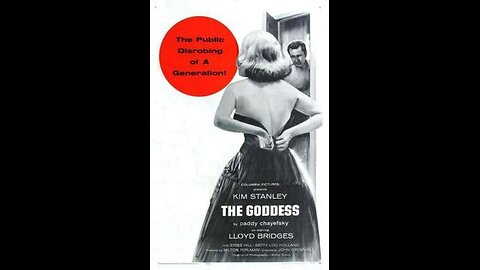
The Goddess (1958) | Directed by John Cromwell
Classic Films & Movies ArchiveA lonely, emotionally neglected girl grows up chasing the dream of Hollywood glamour. She changes her name, remakes her image, and becomes a major movie star adored by millions. But fame doesn’t fix what’s broken inside, and her private life spirals through damaging relationships, isolation, and a mounting psychological crisis. Genre: Drama (Hollywood stardom character study; often discussed alongside film noir-era “fallen idol” dramas) Director: John Cromwell John Cromwell (1886–1979) was an American stage-trained director who became a respected Hollywood craftsman from the early sound era onward. He directed acclaimed dramas and literary adaptations and was known for actor-focused storytelling and emotional realism. His credits span decades, with notable films including Of Human Bondage (1934) and The Prisoner of Zenda (1937). The Goddess is one of his later films and reflects a more modern, psychologically driven style of late-1950s drama. Star Cast: Kim Stanley as Emily Ann Faulkner / Rita Shawn Lloyd Bridges as Dutch Seymour Steven Hill as John Tower Betty Lou Holland as Laureen Faulkner Bert Freed as Lester Brackman Elizabeth Wilson as Harding Joan Copeland as Alice Marie Joyce Van Patten as Hillary Joanne Linville as Joanna Patty Duke as Emily Ann (age 8) At the time, it drew attention for its serious, unsparing look at the machinery of celebrity and the inner costs of stardom, with particular praise for Kim Stanley’s intense performance and Paddy Chayefsky’s writing. In later years, reactions have stayed divided: some viewers admire its ambition and rawness, while others find it heavy, solemn, and uneven in pacing. It remains a “talked-about” drama rather than a universally loved classic. Fun Facts: Screenplay by Paddy Chayefsky, and it received an Academy Award nomination for Best Original Screenplay. Kim Stanley’s performance is often singled out as the film’s powerhouse element; the movie is built around her in a near-total character focus. Patty Duke appears as the lead character in childhood, years before her best-known starring roles. The film is structured in distinct sections (often described as three “portraits”) tracing the character’s evolution from girlhood to celebrity. Music is by Virgil Thomson, a notable American composer whose involvement is a little unexpected for a Hollywood “star-system critique” drama. The story has long been compared to real-life Hollywood biographies; different critics have linked it to multiple mid-century star narratives rather than a single exact model. * This Rumble Movie Channel is comprehensively indexed on https://kinoquick.com - find you favourite movies fast & free! * Follow this channel to be notified of daily movie updates.209 views 1 comment -
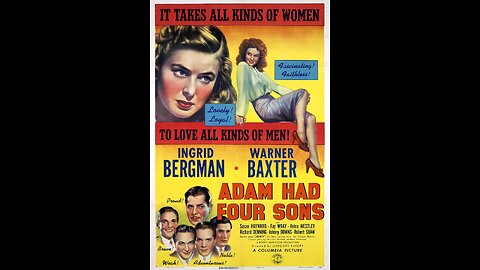
Adam Had Four Sons (1941) | Directed by Gregory Ratoff
Classic Films & Movies ArchiveAfter marrying a wealthy widower with four sons, a kind new wife tries to hold the family together through tragedy, resentment, and bitter fights over money and inheritance. What starts as an attempt to build a home turns into a long emotional battle for dignity, stability, and belonging. Genre: Drama / Family melodrama Director: Gregory Ratoff Gregory Ratoff was a Russian-born actor and director who worked across stage and film before becoming a familiar Hollywood figure. As a director, he often leaned into character-driven drama and high-emotion storytelling, shaping performances around moral conflict, family pressure, and social tension. He also had a parallel career acting in many films, which informed his performance-focused style behind the camera. Star Cast: Ingrid Bergman as Emilie Warner Baxter as Adam Stoddard Susan Hayward as Hester Stoddard Fay Bainter as Missy Stoddard A solid, mid-era Hollywood melodrama that played well with audiences who liked emotional, family-centered dramas. It wasn’t treated as a landmark film of its decade, but it drew attention for its strong central performance and the escalating domestic tension that keeps the story moving. Fun Facts: It’s an early Hollywood starring vehicle for Ingrid Bergman, released around the period when she was rapidly becoming a major name in American films. The story leans heavily on classic studio-era themes: inheritance pressure, family loyalty, and how money can turn private grief into open conflict. Gregory Ratoff was also a working actor, and his direction tends to spotlight performance and interpersonal friction more than action or spectacle. The film’s structure has an almost “novel-like” sweep, following emotional consequences over years rather than focusing on a single short crisis. * This Rumble Movie Channel is comprehensively indexed on https://kinoquick.com - find you favourite movies fast & free! * Follow this channel to be notified of daily movie updates.217 views -
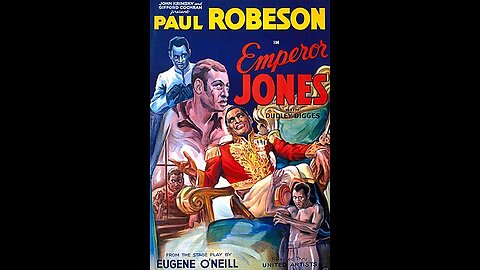
The Emperor Jones (1933) | Directed by Dudley Murphy
Classic Films & Movies ArchiveBrutus Jones, an American drifter and fugitive, escapes to a Caribbean island and reinvents himself with ruthless confidence. By exploiting local fears and superstition, he crowns himself “Emperor” and rules through intimidation and myth-making. When a rebellion finally rises against him, Jones flees into the jungle, where the night turns into a psychological descent: memories, guilt, and hallucination-like visions strip away his swagger, forcing him to confront what he’s become. Genre: Drama / psychological drama Director: Dudley Murphy Dudley Murphy (1897–1968) was an American director whose career moved between Hollywood features, experimental work, and music-based films. He was known for visual flair and for taking on unusual projects for the era, including stage-to-screen adaptations and films built around performance, rhythm, and atmosphere. His filmography ranges from dramatic features to later music-focused titles, showing a director comfortable working across styles rather than staying in one studio lane. Star Cast: Paul Robeson as Brutus Jones Dudley Digges as Smithers Frank H. Wilson as Lem Juanita Hall in a supporting role (often credited among key players in later listings) The film was widely discussed for Paul Robeson’s commanding presence and for putting a Black lead at the centre of a major dramatic production in an era when Hollywood rarely allowed it. Audiences and critics often singled out Robeson’s performance as the film’s core achievement, while reactions to the film’s stylised “jungle nightmare” structure were more divided—some admired its expressionistic ambition, while others found it strange or uneven. Over time, it has been remembered as a significant early sound-era screen showcase for Robeson and as an unusual, psychologically driven adaptation that doesn’t play like a conventional studio drama of its period. Fun Facts: It is adapted from Eugene O’Neill’s acclaimed stage play, which was famous for its intense, symbolic structure and the way it externalises a man’s inner collapse. Paul Robeson was already an international star on stage and in concert; this film is often treated as one of his most important screen performances. The story is structured like a pressure chamber: as Jones runs, the “outside” chase becomes an “inside” reckoning, with scenes designed to feel like escalating mental breakdown rather than straightforward realism. The movie is frequently cited in film history discussions because it centres a Black protagonist in a serious, tragic role at a time when such casting was rare in American cinema. Its atmosphere leans toward expressionism: heavy shadows, drumming motifs, and dreamlike episodes are used to make psychology feel physical and cinematic. * This Rumble Movie Channel is comprehensively indexed on https://kinoquick.com - find you favourite movies fast & free! * Follow this channel to be notified of daily movie updates.214 views -
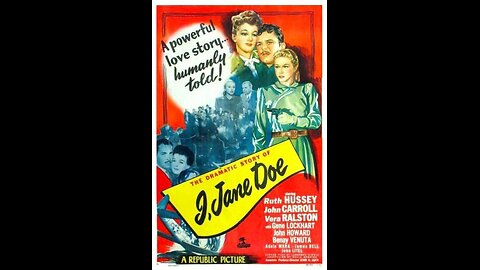
I, Jane Doe (1948) | Directed by John H. Auer
Classic Films & Movies ArchiveA gripping courtroom drama centered on a mysterious woman accused of murdering an American pilot who abandoned her during the war. As the trial unfolds, hidden pasts, personal betrayals, and unexpected moral dilemmas surface, revealing a story that challenges the boundaries between justice, loyalty, and compassion. Genre: Drama / Crime / Courtroom Director: John H. Auer John H. Auer was a Hungarian-born filmmaker who carved out a distinctive career in Hollywood as a director and producer. After arriving in the United States in the 1920s, he became known for working efficiently within modest budgets, often elevating his films with stylish visuals and strong pacing. His productions for Republic Pictures stood out for their polished look, unusually high for the studio at the time. Star Cast: Ruth Hussey as Eve Meredith John Carroll as Stephen Curtis Vera Ralston as the accused Jane Doe Sidney Blackmer as Arnold Anderson Ben Wright as Henri Adele Mara as Gaby Madeleine Taylor Holmes as Madame Cherbourg The film drew praise for its emotional depth, striking courtroom tension, and the interplay between its three main characters. Ruth Hussey’s performance was particularly noted for its poise and complexity. While some critics felt the plot leaned into melodrama, many admired its moral seriousness and atmospheric direction. It became one of Republic Pictures’ more respected dramas of the era. Fun Facts: The story explores wartime relationships and postwar disillusionment, themes still raw for audiences in 1948. Vera Ralston, often cast in Republic Pictures productions, had one of her more nuanced roles here. The film was promoted as a prestige production for Republic, which was better known for westerns and serials. Scenes set in France were recreated on studio backlots with detailed effort to evoke European wartime settings. * This Rumble Movie Channel is comprehensively indexed on https://kinoquick.com - find you favourite movies fast & free! * Follow this channel to be notified of daily movie updates.170 views -
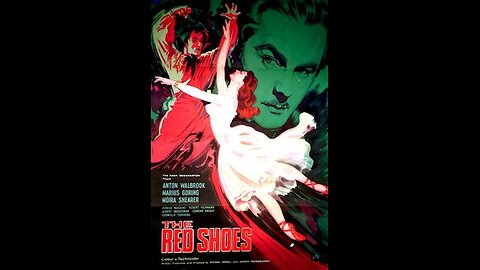
The Red Shoes (1948) | Directed by Michael Powell & Emeric Pressburger
Classic Films & Movies ArchiveA visually striking and emotionally charged drama centered on a rising young ballerina who becomes torn between her dedication to dance and her love for a composer. Inspired by Hans Christian Andersen’s fairy tale, the story explores obsession, artistic sacrifice, and the dangerous allure of perfection, culminating in one of cinema’s most powerful and tragic finales. Genre: Drama / Ballet / Romance Director: Michael Powell and Emeric Pressburger Michael Powell (1905–1990) and Emeric Pressburger (1902–1988), known collectively as The Archers, were a celebrated British filmmaking duo whose creative partnership produced some of the most imaginative and visually bold films in British cinema. Powell brought daring visual storytelling and innovative technique, while Pressburger provided literary depth and thematic richness. Together, they created classics such as A Matter of Life and Death, Black Narcissus, and The Life and Death of Colonel Blimp, establishing a legacy defined by artistic ambition and emotional intensity. Star Cast: Moira Shearer as Victoria Page Anton Walbrook as Boris Lermontov Marius Goring as Julian Craster Léonide Massine as Grischa Ljubov Robert Helpmann as Ivan Boleslawsky Ludmilla Tchérina as Irina Boronskaya Esmond Knight as Livy Albert Bassermann as Dr. Nicholson Upon release, The Red Shoes was praised for its extraordinary visual style, groundbreaking use of color, and the iconic extended ballet sequence that remains influential in dance and film. Audiences were captivated by its emotional depth and artistry, while critics hailed it as a landmark achievement in Technicolor filmmaking. Its reputation has grown steadily over the decades, and it is now widely regarded as one of the greatest British films ever made and a pinnacle of dance cinema. Fun Facts: The film’s famous 15-minute ballet sequence required weeks of planning and was revolutionary for its time, integrating cinematic techniques impossible in a stage performance. Moira Shearer initially resisted taking the role, preferring to focus on her stage career with the Sadler’s Wells Ballet. Jack Cardiff, the cinematographer, became legendary for his mastery of Technicolor, with this film standing as one of his crowning achievements. Many of the dance roles were performed by real ballet stars, lending authenticity to the production and elevating its status in the dance world. * This Rumble Movie Channel is comprehensively indexed on https://kinoquick.com - find you favourite movies fast & free! * Follow this channel to be notified of daily movie updates.350 views -
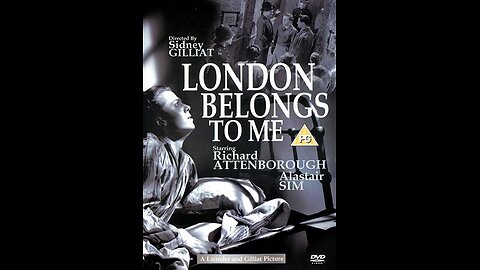
London Belongs to Me (1948) | Directed by Sidney Gilliat
Classic Films & Movies ArchiveA warm, character-driven British drama set in 1938, following the lives of the eccentric tenants of a boarding house in London’s Kennington district. Their everyday routines, hopes, romances, and troubles unfold against the uneasy backdrop of a nation on the brink of war. At the center is Mrs. Vizzard’s lodging house and the misadventures of Percival "Percy" Boon, whose poor decisions entangle the whole household in an unexpected brush with crime. The film blends gentle humor, pathos, and social observation in a distinctly British style. Genre: Drama / Comedy-Drama Director: Sidney Gilliat Sidney Gilliat was a prominent British screenwriter, producer, and director known for his collaborations with Frank Launder. His work frequently combined strong characterisation with dry wit and an eye for social nuance. Gilliat co-wrote major British classics including The Lady Vanishes and Night Train to Munich before moving into directing, where he continued to shape mid-century British cinema with intelligent, humanistic storytelling. Star Cast: Richard Attenborough as Percy Boon Alastair Sim as Mr. Squales Fay Compton as Mrs. Vizzard Stephen Murray as Mr. Josser Susan Shaw as Doris Josser Wylie Watson as Mr. Justice Eleanor Summerfield as Connie The film was warmly received in Britain, where audiences recognised the characters as familiarly London in spirit and temperament. Its mixture of cosy domestic life and darker undertones resonated with post-war viewers who had lived through upheaval and valued stories about shared community. Critics found it an affectionate and faithful adaptation of Norman Collins’s popular novel, praising both performances and atmosphere, particularly the contribution of Alastair Sim. Fun Facts: Adapted from the widely read 1945 novel London Belongs to Me by Norman Collins, which captured London life just before World War II. Although set in 1938, the production’s tone reflects post-war optimism mixed with nostalgia for pre-war London. Richard Attenborough was still early in his career but already gaining recognition, and this role became one of his notable early portrayals. Alastair Sim’s mysterious spiritualist character added a distinctive comedic-puzzling charm that became one of the film’s most-remembered elements. * This Rumble Movie Channel is comprehensively indexed on https://kinoquick.com - find you favourite movies fast & free! * Follow this channel to be notified of daily movie updates.251 views -
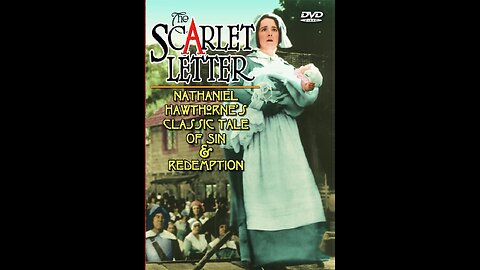
The Scarlet Letter (1934) | Directed by Robert G. Vignola
Classic Films & Movies ArchiveThis 1934 adaptation of Nathaniel Hawthorne’s classic 1850 novel tells the story of Hester Prynne, a woman in Puritan New England who bears an illegitimate child and is condemned by her community to wear a scarlet letter "A" as a symbol of her adultery. The film follows her struggle for dignity and redemption amid the oppressive moral codes of the time. Genre: Drama / Romance Director: Robert G. Vignola Robert G. Vignola (1882–1953) was an Italian-born American film director, actor, and screenwriter who began his career in the silent era. He directed numerous films for major studios such as Paramount and Warner Bros., often focusing on romantic and historical dramas. Known for his craftsmanship and sensitivity to literary adaptations, Vignola’s work spanned over three decades in the industry. Star Cast: Colleen Moore as Hester Prynne Hardie Albright as Arthur Dimmesdale Alan Hale as Bartholomew Hockings William Farnum as Governor Bellingham Virginia Howell as Mistress Hibbins Henry B. Walthall as Roger Chillingworth The 1934 version of The Scarlet Letter received mixed to positive reviews upon its release. Audiences appreciated Colleen Moore’s emotional and restrained performance in a role that contrasted sharply with her earlier flapper characters from the silent era. Critics noted the film’s somber tone and moral weight, though some found it lacking in the raw power of Victor Sjöström’s 1926 silent adaptation starring Lillian Gish. Nonetheless, it was respected for its fidelity to the novel and its attempt to address moral hypocrisy in a conservative Hollywood environment. Fun Facts: The film marked Colleen Moore’s final screen appearance before retiring from acting. MGM had previously released a more famous 1926 silent version, and comparisons between the two were inevitable. The 1934 adaptation was made during a transitional period before the strict enforcement of the Hays Code, allowing for slightly more mature themes than later films would permit. Robert G. Vignola had directed Colleen Moore in several earlier films, and she specifically requested him for this project. Because of its subject matter, promotional materials for the film were carefully worded to avoid controversy with religious groups. * This Rumble Movie Channel is comprehensively indexed on https://kinoquick.com - find you favourite movies fast & free! * Follow this channel to be notified of daily movie updates.291 views -
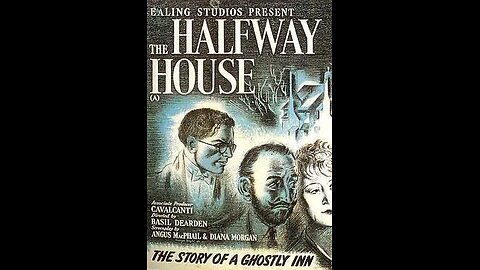
The Halfway House (1944) | Directed by Basil Dearden
Classic Films & Movies ArchiveThe Halfway House is a British supernatural drama set in wartime Wales, where a diverse group of strangers seeks refuge at a secluded country inn. As they spend time together, they begin to sense that something is not quite right—the inn’s owners seem untouched by time, and the guests are each haunted by guilt, grief, or moral conflict. Gradually, they discover that the inn exists in a mysterious limbo between life and death, offering them a chance at redemption before they return to the world transformed. Genre: Supernatural, Drama, Fantasy Director: Basil Dearden Basil Dearden (1911–1971) was an English film director and producer celebrated for his intelligent and socially conscious storytelling. Starting his career at Ealing Studios, he worked across genres but was best known for his sensitive handling of moral and social themes. His notable films include The Blue Lamp, Victim, and Sapphire, all of which explored contemporary British issues with humanity and insight. The Halfway House represents his early mastery of blending realism with the supernatural, a hallmark of his versatile style. Star Cast: Mervyn Johns as Rhys Glynis Johns as Gwyneth Tom Walls as Captain Meadows Françoise Rosay as Alice Meadows Esmond Knight as David Davies Guy Middleton as Fortescue Sally Ann Howes as Joanna Davies Valerie White as Jill French Richard Bird as Harry Meadows The Halfway House was warmly received by critics and audiences alike, praised for its atmospheric setting, moving performances, and blend of fantasy with moral reflection. Its themes of loss, reconciliation, and spiritual renewal resonated deeply with wartime viewers coping with uncertainty and grief. Critics admired Basil Dearden’s delicate direction and the film’s poetic tone, which balanced eerie mystery with emotional warmth. It has since been regarded as one of Ealing Studios’ most touching and quietly profound works. Fun Facts: The film was produced by Ealing Studios, better known for comedies, marking one of its early ventures into supernatural storytelling. Mervyn Johns and Glynis Johns, who play father and daughter in the film, were real-life father and daughter. The story was based on a play by Denis Ogden titled “The Peaceful Inn.” The Welsh setting and use of mist-shrouded landscapes add to the film’s haunting and dreamlike quality. Esmond Knight, who appears in the film, had been partially blinded during World War II but continued to act successfully. The Halfway House is often cited as a precursor to Ealing’s later anthology film Dead of Night (1945), sharing similar themes of the supernatural and moral awakening. The film was intended both as entertainment and as subtle wartime encouragement for unity, compassion, and moral reflection. * This Rumble Movie Channel is comprehensively indexed on https://kinoquick.com - find you favourite movies fast & free! * Follow this channel to be notified of daily movie updates.406 views -
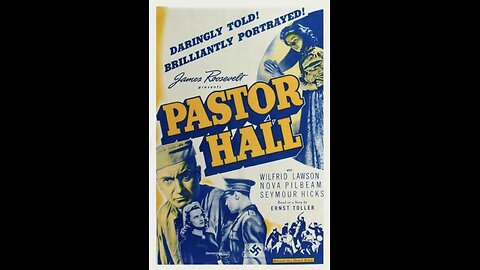
Pastor Hall (1940) | Directed by Roy Boulting
Classic Films & Movies ArchivePastor Hall is a British drama inspired by the true story of Martin Niemöller, a German Protestant minister who defied Adolf Hitler’s regime. The film portrays Pastor Hall, a clergyman in a small German town, who courageously speaks out against Nazi oppression and the persecution of innocents. His moral conviction and refusal to conform lead to his arrest and imprisonment in a concentration camp. The story is a stirring depiction of individual conscience and resistance in the face of tyranny. Genre: Drama, War, Biography Director: Roy Boulting Roy Boulting (1913–2001) was one half of the celebrated British filmmaking duo known as the Boulting Brothers, alongside his twin John. The pair became major figures in mid-20th-century British cinema, producing a wide range of films from social dramas to sharp satires. Roy often took on producing and directing duties, noted for his craftsmanship and commitment to politically aware storytelling. His other notable works include Brighton Rock, Seven Days to Noon, and I'm All Right Jack. Star Cast: Wilfrid Lawson as Pastor Hall Nova Pilbeam as Christine Hall Seymour Hicks as Bishop Marius Goring as Captain Ehrlich Geoffrey Toone as Frederick Hall Bernard Miles as Inspector Valerie Hobson as Mrs. Hall George Merritt as Muller Gibson Gowland as Elder When Pastor Hall was released in 1940, it was seen as a bold and timely anti-Nazi statement during the early years of World War II. British audiences admired its moral courage and realism, though its grim tone and depiction of brutality made it a somber experience. Critics praised Wilfrid Lawson’s powerful performance as the defiant pastor and the film’s unflinching portrayal of conscience versus authoritarianism. It later gained historical importance as one of the first British films to openly criticize the Nazi regime and highlight the persecution of religious dissenters. Fun Facts: The film was adapted from a play by Ernst Toller, a German dramatist and anti-Nazi activist who fled Germany after Hitler’s rise to power. The story was directly inspired by the real-life pastor Martin Niemöller, who was imprisoned in concentration camps from 1937 to 1945 for opposing the Nazis. Roy Boulting’s direction was noted for its realism and restraint, avoiding melodrama despite the film’s intense subject matter. Wilfrid Lawson’s performance was widely acclaimed and became one of his defining screen roles. Pastor Hall was produced independently by the Boulting Brothers and later distributed by Warner Bros., which admired its political courage. Parts of the film were censored in some countries at the time due to its strong anti-fascist message. The film’s release coincided with the Blitz, giving its themes of moral resistance particular resonance for wartime British audiences. * This Rumble Movie Channel is comprehensively indexed on https://kinoquick.com - find you favourite movies fast & free! * Follow this channel to be notified of daily movie updates.408 views -
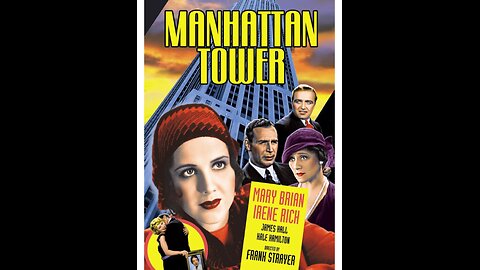
Manhattan Tower (1932) | Directed by Frank R. Strayer
Classic Films & Movies ArchiveManhattan Tower is a pre-Code American drama set in the bustling environment of a New York City skyscraper. The film follows the intersecting lives of various workers and tenants in the towering office building, focusing on a young couple whose dreams and love are tested by the corruption and greed surrounding them. Through its ensemble of characters, the film paints a vivid picture of ambition, romance, and moral compromise in Depression-era Manhattan. Genre: Drama Director: Frank R. Strayer Frank R. Strayer (1891–1964) was an American film director, writer, and producer who worked extensively in Hollywood from the silent era through the 1950s. Known for his efficiency and versatility, Strayer directed over 80 films across a variety of genres, including comedies, dramas, and mysteries. He is perhaps best remembered for directing several entries in the popular “Blondie” series and for his pre-Code social dramas that captured the spirit of the times. Star Cast: Mary Brian as Mary Harper Irene Rich as Georgia Drake James Hall as Jimmy Duncan Hale Hamilton as Kenneth Burns Nydia Westman as Miss Norton Noel Francis as Marge Ellison Clay Clement as Arthur Hall Manhattan Tower received modest but positive reviews upon its release. Audiences appreciated its sharp depiction of urban life and its realistic portrayal of the struggles faced by ordinary office workers during the Great Depression. Critics noted the film’s ensemble storytelling and strong performances, especially Mary Brian’s role as a sympathetic working woman. While not a major box office success, it gained recognition later among classic film enthusiasts for its authentic snapshot of early 1930s New York society. Fun Facts: The skyscraper in the film was modeled after the Empire State Building, which had opened only a year earlier in 1931. Many interior scenes used real New York locations to heighten the sense of authenticity. Mary Brian, a former silent film star, successfully transitioned to talking pictures and was praised for her natural dialogue delivery. The film’s depiction of stock market speculation reflected the lingering cultural anxiety following the 1929 crash. Manhattan Tower has been preserved and is now considered an interesting example of early 1930s ensemble dramas set in modern urban spaces. * This Rumble Movie Channel is comprehensively indexed on https://kinoquick.com - find you favourite movies fast & free! * Follow this channel to be notified of daily movie updates.250 views