-
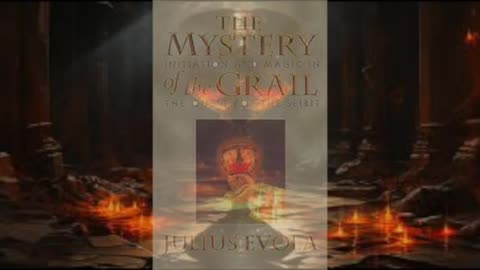
"The Mystery of the Grail" by Julius Evola [FULL AUDIOBOOK]
benwehrmanJulius Evola – The Mystery of the Grail is a dense, symbolic study of the Holy Grail legend interpreted through Traditionalist, metaphysical, and initiatic lenses rather than Christian devotion or literary history alone. Here’s a clear, grounded overview: Core Thesis Evola argues that the Grail is not merely a Christian relic (the cup of Christ) but a primordial, pre-Christian symbol of a sacred, royal, and spiritual tradition rooted in Indo-European and hyperborean myths. For him, the Grail represents a lost transcendent order—a union of spiritual authority and warrior kingship—that once governed an elite, heroic civilization. Full AUDIOBOOKS playlist 👇 https://rumble.com/playlists/RgUcHLiie64 ALL PLAYLISTS page, where you can find deep-dives on ALL of the most important topics facing our world today 👇 https://rumble.com/user/benwehrman/playlists 🌐 My website, where you can find my blog, podcast, and all other projects focused on bringing awakening content to as many truth-seeking souls as possible: https://benwehrman.com/ 📢⚡️ Join the free speech revolution on NOSTR, the decentralized social media network of the future: https://rumble.com/playlists/IKTigOwaaQ4 👕🔥 Shop Red Pill Merch - conversation-starting shirts: https://www.redpillthreads.com/ben241 views -
"Race Of The Spirit" by Julius Evola [FULL AUDIOBOOK]
benwehrmanRace of the Spirit (often associated with Synthesis of the Doctrine of the Race and Evola’s writings on race) presents Evola’s idea that race is not merely a biological or physical concept, but fundamentally spiritual and metaphysical. For Evola, the true essence of race resides in the spirit, not in genes or outward appearance. He attempts to establish a doctrine of race grounded in traditional, sacred, and spiritual principles rather than scientific biology. Full AUDIOBOOKS playlist 👇 https://rumble.com/playlists/RgUcHLiie64 ALL PLAYLISTS page, where you can find deep-dives on ALL of the most important topics facing our world today 👇 https://rumble.com/user/benwehrman/playlists 🌐 My website, where you can find my blog, podcast, and all other projects focused on bringing awakening content to as many truth-seeking souls as possible: https://benwehrman.com/ 📢⚡️ Join the free speech revolution on NOSTR, the decentralized social media network of the future: https://rumble.com/playlists/IKTigOwaaQ4 👕🔥 Shop Red Pill Merch - conversation-starting shirts: https://www.redpillthreads.com/ben174 views -
"The Path Of Enlightenment" by Julius Evola [FULL AUDIOBOOK]
benwehrmanThis book is Evola’s interpretation of Tantric spirituality, filtered through his broader Traditionalist worldview. It is not a practical “how-to” manual so much as a philosophical and metaphysical exposition of what Evola sees as the most “active” and aristocratic path to spiritual liberation. Core idea Evola contrasts passive, world-renouncing mysticism with what he calls an active path of transcendence. In his view, Tantra represents a disciplined way of achieving enlightenment without fleeing the world, instead using bodily energies, desire, ritual, and will as instruments for self-overcoming. Main themes 1. Active vs. passive spirituality Evola criticizes devotional, emotional, or purely contemplative religious paths. He praises Tantra for demanding mastery, control, and inner sovereignty, rather than surrender or faith alone. 2. Power, discipline, and self-transcendence Spiritual realization is framed as a conquest, not a gift. The practitioner must dominate instincts, fear, pleasure, and even the ego itself. Enlightenment is portrayed as a state of absolute inner freedom. 3. Use of desire and the body Unlike ascetic traditions that suppress desire, Evola argues that Tantra transforms desire into fuel for awakening. Sexual and vital energies are not indulged but rigorously controlled and redirected. 4. Initiation and hierarchy The path is presented as elitist and initiatory, meant only for those with exceptional inner strength. Evola insists that misuse or misunderstanding Tantra leads to degeneration rather than liberation. 5. Transcendence of morality and dualism Evola emphasizes going beyond conventional moral categories of good and evil, sacred and profane. Enlightenment means standing above oppositions, not oscillating between them. Full SPIRITUALITY playlist 👇 https://rumble.com/playlists/LinGyWXAQV0 Full PHILOSOPHY playlist 👇 https://rumble.com/playlists/fw_SQAW736w Full AUDIOBOOKS playlist 👇 https://rumble.com/playlists/RgUcHLiie64 ALL PLAYLISTS page, where you can find deep-dives on ALL of the most important topics facing our world today 👇 https://rumble.com/user/benwehrman/playlists 🌐 My website, where you can find my blog, podcast, and all other projects focused on bringing awakening content to as many truth-seeking souls as possible: https://benwehrman.com/ 📢⚡️ Join the free speech revolution on NOSTR, the decentralized social media network of the future: https://rumble.com/playlists/IKTigOwaaQ4 👕🔥 Shop Red Pill Merch - conversation-starting shirts: https://www.redpillthreads.com/ben184 views -
"Spiritual Virility" by Julius Evola [FULL AUDIOBOOK]
benwehrmanSpiritual Virility (Italian: La virilità spirituale) by Julius Evola is a short but dense work that lays out his views on sexuality, gender polarity, and the role of eros within what he calls a “Traditional” metaphysical order. It’s less a sex manual than a philosophical polemic against modern attitudes toward sex and relationships. Evola argues that sexuality has a spiritual and metaphysical dimension, not merely a biological or emotional one. For him, true “virility” is not machismo or physical dominance, but inner mastery, transcendence, and spiritual authority—especially in erotic relations. Full AUDIOBOOKS playlist 👇 https://rumble.com/playlists/RgUcHLiie64 ALL PLAYLISTS page, where you can find deep-dives on ALL of the most important topics facing our world today 👇 https://rumble.com/user/benwehrman/playlists 🌐 My website, where you can find my blog, podcast, and all other projects focused on bringing awakening content to as many truth-seeking souls as possible: https://benwehrman.com/ 📢⚡️ Join the free speech revolution on NOSTR, the decentralized social media network of the future: https://rumble.com/playlists/IKTigOwaaQ4 👕🔥 Shop Red Pill Merch - conversation-starting shirts: https://www.redpillthreads.com/ben172 views -
Invisible Helpers (1896) by C. W. Leadbeater [FULL AUDIOBOOK]
benwehrmanThe book’s central thesis is that the world is populated by "Invisible Helpers"—conscious beings who reside on the astral plane and dedicate themselves to assisting humanity. Leadbeater argues that these entities are not just mythological figures or divine miracles, but often living human beings who have learned to function consciously in their "astral bodies" while their physical bodies are asleep. Full AUDIOBOOKS playlist 👇 https://rumble.com/playlists/RgUcHLiie64 ALL PLAYLISTS page, where you can find deep-dives on ALL of the most important topics facing our world today 👇 https://rumble.com/user/benwehrman/playlists 🌐 My website, where you can find my blog, podcast, and all other projects focused on bringing awakening content to as many truth-seeking souls as possible: https://benwehrman.com/ 📢⚡️ Join the free speech revolution on NOSTR, the decentralized social media network of the future: https://rumble.com/playlists/IKTigOwaaQ4 👕🔥 Shop Red Pill Merch - conversation-starting shirts: https://www.redpillthreads.com/ben126 views -
"Practical Mysticism: A Little Book for Normal People" (1914) by Evelyn Underhill [FULL AUDIOBOOK]
benwehrmanIn "Practical Mysticism: A Little Book for Normal People," published in 1914, Evelyn Underhill attempts to demystify the "mystic" and prove that spiritual transcendence is not reserved for monks or hermits, but is accessible to anyone—from the office worker to the housewife. Executive Summary Writing against the backdrop of the start of World War I, Underhill argues that mysticism is simply the "art of union with Reality." She posits that our "normal" life is lived in a filtered, utilitarian version of the world, and mysticism is the training required to see things as they truly are. The Methodology of "The Normal Person" Underhill breaks down the mystical path into a practical discipline of the mind and senses: The Discipline of Attention: She teaches the reader to move away from "selfish" observation (how can I use this object?) to "disinterested" observation (what is this object in its own essence?). The Education of the Senses: Mysticism begins by heightening your awareness of the beauty and vitality of the physical world. Underhill suggests that by truly looking at a flower or a landscape, we begin to break the "crust" of our habitual thinking. Meditation vs. Contemplation: She distinguishes between "meditation" (active thinking about spiritual truths) and "contemplation" (a quiet, receptive state where the mind stops "talking" and starts "listening"). The Active Life Crucially, Underhill insists that mysticism does not lead to a withdrawal from the world. Instead, it provides a "spiritual fuel" that makes a person more effective, compassionate, and grounded in their daily duties. The "practical" mystic is someone who acts in the world while their soul remains anchored in the "Eternal." Full AUDIOBOOKS playlist 👇 https://rumble.com/playlists/RgUcHLiie64 ALL PLAYLISTS page, where you can find deep-dives on ALL of the most important topics facing our world today 👇 https://rumble.com/user/benwehrman/playlists 🌐 My website, where you can find my blog, podcast, and all other projects focused on bringing awakening content to as many truth-seeking souls as possible: https://benwehrman.com/ 📢⚡️ Join the free speech revolution on NOSTR, the decentralized social media network of the future: https://rumble.com/playlists/IKTigOwaaQ4 👕🔥 Shop Red Pill Merch - conversation-starting shirts: https://www.redpillthreads.com/ben85 views -
"Out From The Heart" by James Allen [FULL AUDIOBOOK]
benwehrmanAs the heart, so is the life. The within is ceaselessly becoming the without. Nothing remains unrevealed. That which is hidden is but for a time; it ripens and comes forth at last. Seed, tree, blossom, and fruit are the fourfold order of the universe. From the state of a man's heart proceed the conditions of his life. His thoughts blossom into deeds; and his deeds bear the fruitage of character and destiny. Life is ever unfolding from within, and revealing itself to the light, and thoughts engendered in the heart at last reveal themselves in words, actions, and things accomplished. Full PHILOSOPHY playlist 👇 https://rumble.com/playlists/fw_SQAW736w Full SPIRITUALITY playlist 👇 https://rumble.com/playlists/LinGyWXAQV0 Full AUDIOBOOKS playlist 👇 https://rumble.com/playlists/RgUcHLiie64 ALL PLAYLISTS page, where you can find deep-dives on ALL of the most important topics facing our world today 👇 https://rumble.com/user/benwehrman/playlists 🌐 My website, where you can find my blog, podcast, and all other projects focused on bringing awakening content to as many truth-seeking souls as possible: https://benwehrman.com/ 📢⚡️ Join the free speech revolution on NOSTR, the decentralized social media network of the future: https://rumble.com/playlists/IKTigOwaaQ4 👕🔥 Shop Red Pill Merch - conversation-starting shirts: https://www.redpillthreads.com/ben120 views -
"Walden" by Henry David Thoreau [AUDIOBOOK Part 4/4]
benwehrmanWalden by Henry David Thoreau is one of the best-known non-fiction books written by an American. Published in 1854, it details Thoreau’s life for two years, two months, and two days around the shores of Walden Pond. Walden is neither a novel nor a true autobiography, but a social critique of the Western World, with each chapter heralding some aspect of humanity that needed to be either renounced or praised. Along with his critique of the civilized world, Thoreau examines other issues afflicting man in society, ranging from economy and reading to solitude and higher laws. He also takes time to talk about the experience at Walden Pond itself, commenting on the animals and the way people treated him for living there, using those experiences to bring out his philosophical positions. This extended commentary on nature has often been interpreted as a strong statement to the natural religion that transcendentalists like Thoreau and Emerson were preaching. FURTHER SUMMARY 👇 Walden is a philosophical and autobiographical work in which Henry David Thoreau reflects on living simply, deliberately, and in close relationship with nature. Based on his two years (1845–1847) living in a small cabin near Walden Pond, the book explores how individuals might live more meaningful, self-directed lives. Central Idea Thoreau argues that most people live unnecessarily complicated lives, trapped by materialism, social expectations, and unexamined habits. By simplifying life and focusing on what truly matters, a person can gain freedom, clarity, and spiritual depth. Major Themes 1. Simplicity and Self-Reliance Thoreau advocates reducing material needs to the essentials: Shelter, food, clothing, and fuel Independence from excessive labor and debt Freedom from social conformity He believes simplicity allows time for reflection, creativity, and moral growth. 2. Deliberate Living One of the book’s most famous ideas is to “live deliberately”: To confront life honestly To avoid drifting into routines imposed by others To examine one’s values rather than inherit them uncritically Life should be consciously chosen, not passively accepted. 3. Nature as Teacher Nature is not merely scenery but a source of wisdom: Observing seasons reveals order and renewal Solitude in nature sharpens perception The natural world mirrors moral and spiritual truths Thoreau sees harmony with nature as essential to human flourishing. 4. Critique of Work and Wealth Thoreau criticizes economic life that: Requires people to trade freedom for comfort Encourages endless accumulation Measures success in money rather than virtue He argues that poverty of spirit is worse than material poverty. 5. Solitude and Society Thoreau distinguishes solitude from loneliness: Solitude enables self-knowledge Society is valuable but often excessive One can be connected to humanity while living apart True independence includes choosing when and how to engage with others. 6. Time, Attention, and Awakening Thoreau urges readers to be fully awake to life: To notice small details To resist distraction and mental sleep To cultivate mindfulness long before the term existed Awareness itself is a moral act. Style and Structure A mix of memoir, philosophy, natural observation, and social criticism Organized by seasons rather than chronology Reflective, poetic, and occasionally satirical Overall Message Walden teaches that a good life comes not from accumulation or conformity, but from simplicity, awareness, and integrity. Thoreau invites readers to reclaim their time, attention, and conscience in order to live freely and meaningfully. Full PHILOSOPHY playlist 👇 https://rumble.com/playlists/fw_SQAW736w Full AUDIOBOOKS playlist 👇 https://rumble.com/playlists/RgUcHLiie64 ALL PLAYLISTS page, where you can find deep-dives on ALL of the most important topics facing our world today 👇 https://rumble.com/user/benwehrman/playlists 🌐 My website, where you can find my blog, podcast, and all other projects focused on bringing awakening content to as many truth-seeking souls as possible: https://benwehrman.com/ 📢⚡️ Join the free speech revolution on NOSTR, the decentralized social media network of the future: https://rumble.com/playlists/IKTigOwaaQ4 👕🔥 Shop Red Pill Merch - conversation-starting shirts: https://www.redpillthreads.com/ben91 views -
"Walden" by Henry David Thoreau [AUDIOBOOK Part 3/4]
benwehrmanWalden by Henry David Thoreau is one of the best-known non-fiction books written by an American. Published in 1854, it details Thoreau’s life for two years, two months, and two days around the shores of Walden Pond. Walden is neither a novel nor a true autobiography, but a social critique of the Western World, with each chapter heralding some aspect of humanity that needed to be either renounced or praised. Along with his critique of the civilized world, Thoreau examines other issues afflicting man in society, ranging from economy and reading to solitude and higher laws. He also takes time to talk about the experience at Walden Pond itself, commenting on the animals and the way people treated him for living there, using those experiences to bring out his philosophical positions. This extended commentary on nature has often been interpreted as a strong statement to the natural religion that transcendentalists like Thoreau and Emerson were preaching. FURTHER SUMMARY 👇 Walden is a philosophical and autobiographical work in which Henry David Thoreau reflects on living simply, deliberately, and in close relationship with nature. Based on his two years (1845–1847) living in a small cabin near Walden Pond, the book explores how individuals might live more meaningful, self-directed lives. Central Idea Thoreau argues that most people live unnecessarily complicated lives, trapped by materialism, social expectations, and unexamined habits. By simplifying life and focusing on what truly matters, a person can gain freedom, clarity, and spiritual depth. Major Themes 1. Simplicity and Self-Reliance Thoreau advocates reducing material needs to the essentials: Shelter, food, clothing, and fuel Independence from excessive labor and debt Freedom from social conformity He believes simplicity allows time for reflection, creativity, and moral growth. 2. Deliberate Living One of the book’s most famous ideas is to “live deliberately”: To confront life honestly To avoid drifting into routines imposed by others To examine one’s values rather than inherit them uncritically Life should be consciously chosen, not passively accepted. 3. Nature as Teacher Nature is not merely scenery but a source of wisdom: Observing seasons reveals order and renewal Solitude in nature sharpens perception The natural world mirrors moral and spiritual truths Thoreau sees harmony with nature as essential to human flourishing. 4. Critique of Work and Wealth Thoreau criticizes economic life that: Requires people to trade freedom for comfort Encourages endless accumulation Measures success in money rather than virtue He argues that poverty of spirit is worse than material poverty. 5. Solitude and Society Thoreau distinguishes solitude from loneliness: Solitude enables self-knowledge Society is valuable but often excessive One can be connected to humanity while living apart True independence includes choosing when and how to engage with others. 6. Time, Attention, and Awakening Thoreau urges readers to be fully awake to life: To notice small details To resist distraction and mental sleep To cultivate mindfulness long before the term existed Awareness itself is a moral act. Style and Structure A mix of memoir, philosophy, natural observation, and social criticism Organized by seasons rather than chronology Reflective, poetic, and occasionally satirical Overall Message Walden teaches that a good life comes not from accumulation or conformity, but from simplicity, awareness, and integrity. Thoreau invites readers to reclaim their time, attention, and conscience in order to live freely and meaningfully. Full PHILOSOPHY playlist 👇 https://rumble.com/playlists/fw_SQAW736w Full AUDIOBOOKS playlist 👇 https://rumble.com/playlists/RgUcHLiie64 ALL PLAYLISTS page, where you can find deep-dives on ALL of the most important topics facing our world today 👇 https://rumble.com/user/benwehrman/playlists 🌐 My website, where you can find my blog, podcast, and all other projects focused on bringing awakening content to as many truth-seeking souls as possible: https://benwehrman.com/ 📢⚡️ Join the free speech revolution on NOSTR, the decentralized social media network of the future: https://rumble.com/playlists/IKTigOwaaQ4 👕🔥 Shop Red Pill Merch - conversation-starting shirts: https://www.redpillthreads.com/ben93 views -
"Walden" by Henry David Thoreau [AUDIOBOOK Part 2/4]
benwehrmanWalden by Henry David Thoreau is one of the best-known non-fiction books written by an American. Published in 1854, it details Thoreau’s life for two years, two months, and two days around the shores of Walden Pond. Walden is neither a novel nor a true autobiography, but a social critique of the Western World, with each chapter heralding some aspect of humanity that needed to be either renounced or praised. Along with his critique of the civilized world, Thoreau examines other issues afflicting man in society, ranging from economy and reading to solitude and higher laws. He also takes time to talk about the experience at Walden Pond itself, commenting on the animals and the way people treated him for living there, using those experiences to bring out his philosophical positions. This extended commentary on nature has often been interpreted as a strong statement to the natural religion that transcendentalists like Thoreau and Emerson were preaching. FURTHER SUMMARY 👇 Walden is a philosophical and autobiographical work in which Henry David Thoreau reflects on living simply, deliberately, and in close relationship with nature. Based on his two years (1845–1847) living in a small cabin near Walden Pond, the book explores how individuals might live more meaningful, self-directed lives. Central Idea Thoreau argues that most people live unnecessarily complicated lives, trapped by materialism, social expectations, and unexamined habits. By simplifying life and focusing on what truly matters, a person can gain freedom, clarity, and spiritual depth. Major Themes 1. Simplicity and Self-Reliance Thoreau advocates reducing material needs to the essentials: Shelter, food, clothing, and fuel Independence from excessive labor and debt Freedom from social conformity He believes simplicity allows time for reflection, creativity, and moral growth. 2. Deliberate Living One of the book’s most famous ideas is to “live deliberately”: To confront life honestly To avoid drifting into routines imposed by others To examine one’s values rather than inherit them uncritically Life should be consciously chosen, not passively accepted. 3. Nature as Teacher Nature is not merely scenery but a source of wisdom: Observing seasons reveals order and renewal Solitude in nature sharpens perception The natural world mirrors moral and spiritual truths Thoreau sees harmony with nature as essential to human flourishing. 4. Critique of Work and Wealth Thoreau criticizes economic life that: Requires people to trade freedom for comfort Encourages endless accumulation Measures success in money rather than virtue He argues that poverty of spirit is worse than material poverty. 5. Solitude and Society Thoreau distinguishes solitude from loneliness: Solitude enables self-knowledge Society is valuable but often excessive One can be connected to humanity while living apart True independence includes choosing when and how to engage with others. 6. Time, Attention, and Awakening Thoreau urges readers to be fully awake to life: To notice small details To resist distraction and mental sleep To cultivate mindfulness long before the term existed Awareness itself is a moral act. Style and Structure A mix of memoir, philosophy, natural observation, and social criticism Organized by seasons rather than chronology Reflective, poetic, and occasionally satirical Overall Message Walden teaches that a good life comes not from accumulation or conformity, but from simplicity, awareness, and integrity. Thoreau invites readers to reclaim their time, attention, and conscience in order to live freely and meaningfully. Full PHILOSOPHY playlist 👇 https://rumble.com/playlists/fw_SQAW736w Full AUDIOBOOKS playlist 👇 https://rumble.com/playlists/RgUcHLiie64 ALL PLAYLISTS page, where you can find deep-dives on ALL of the most important topics facing our world today 👇 https://rumble.com/user/benwehrman/playlists 🌐 My website, where you can find my blog, podcast, and all other projects focused on bringing awakening content to as many truth-seeking souls as possible: https://benwehrman.com/ 📢⚡️ Join the free speech revolution on NOSTR, the decentralized social media network of the future: https://rumble.com/playlists/IKTigOwaaQ4 👕🔥 Shop Red Pill Merch - conversation-starting shirts: https://www.redpillthreads.com/ben98 views

!["Race Of The Spirit" by Julius Evola [FULL AUDIOBOOK]](https://1a-1791.com/video/fwe2/45/s8/6/o/l/Z/V/olZVz.oq1b.jpg)
!["The Path Of Enlightenment" by Julius Evola [FULL AUDIOBOOK]](https://1a-1791.com/video/fww1/ec/s8/6/M/i/Z/V/MiZVz.oq1b.jpg)
!["Spiritual Virility" by Julius Evola [FULL AUDIOBOOK]](https://1a-1791.com/video/fwe2/71/s8/6/u/i/Z/V/uiZVz.oq1b.jpg)
![Invisible Helpers (1896) by C. W. Leadbeater [FULL AUDIOBOOK]](https://1a-1791.com/video/fww1/d7/s8/6/8/i/9/U/8i9Uz.oq1b.jpg)
!["Practical Mysticism: A Little Book for Normal People" (1914) by Evelyn Underhill [FULL AUDIOBOOK]](https://1a-1791.com/video/fww1/40/s8/6/U/Y/O/U/UYOUz.oq1b.jpg)
!["Out From The Heart" by James Allen [FULL AUDIOBOOK]](https://1a-1791.com/video/fww1/10/s8/6/U/m/b/U/UmbUz.oq1b.jpg)
!["Walden" by Henry David Thoreau [AUDIOBOOK Part 4/4]](https://1a-1791.com/video/fww1/1f/s8/6/K/7/-/T/K7-Tz.oq1b.jpg)
!["Walden" by Henry David Thoreau [AUDIOBOOK Part 3/4]](https://1a-1791.com/video/fwe2/50/s8/6/U/7/-/T/U7-Tz.oq1b.jpg)
!["Walden" by Henry David Thoreau [AUDIOBOOK Part 2/4]](https://1a-1791.com/video/fww1/22/s8/6/Y/7/-/T/Y7-Tz.oq1b.jpg)