-
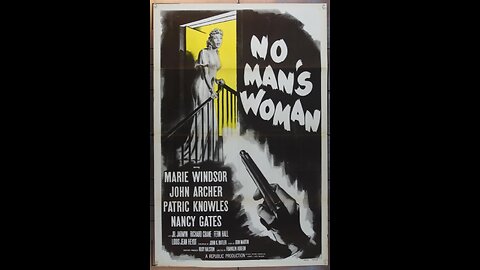
No Man’s Woman (1955) | Directed by Franklin Adreon
Classic Films & Movies ArchiveA wealthy, estranged wife is found murdered in her art-world orbit, and the case becomes a tight, suspects-everywhere whodunit. Her husband, her lover, and several associates all have credible motives, forcing investigators to untangle a web of jealousy, money, and resentment. Genre: Film noir; crime mystery / thriller Director: Franklin Adreon Franklin “Pete” Adreon (1902–1979) was an American filmmaker strongly associated with Republic Pictures. He built a career on briskly paced serials and second features, moving between production and directing duties during the studio era. As the industry shifted, he became a prolific television director, working across many mid-century series and remaining active into the 1960s. Star Cast: Marie Windsor as Carolyn Ellenson Grant John Archer as Harlow Grant Patric Knowles as Wayne Vincent Nancy Gates as Louise Nelson Jil Jarmyn as Betty Allen Richard Crane as Dick Sawyer Louis Jean Heydt as Det. Lt. Colton John Gallaudet as Det. Sgt. Wells Percy Helton as Otto Peterson Morris Ankrum as Capt. Hostedder On release, the film played as a compact Republic B-picture noir: fast-moving, dialogue-driven, and built around the hook that the victim had enough enemies for almost anyone to be guilty. In later reassessments, it’s often described as a solid, workmanlike murder mystery, with Marie Windsor frequently singled out as the main draw for noir fans. Fun Facts: The runtime is around 70 minutes, typical of mid-1950s B-noirs. It was produced and released by Republic Pictures and photographed in black-and-white. The story leans into a classic noir setup: the victim’s relationships are so poisoned that motive is everywhere, not just in one “obvious” suspect. It’s one of those films that gained extra visibility later through TV showings and home-video releases, becoming a discovery title for noir collectors. * This Rumble Movie Channel is comprehensively indexed on https://kinoquick.com - find you favourite movies fast & free! * Follow this channel to be notified of daily movie updates.189 views -
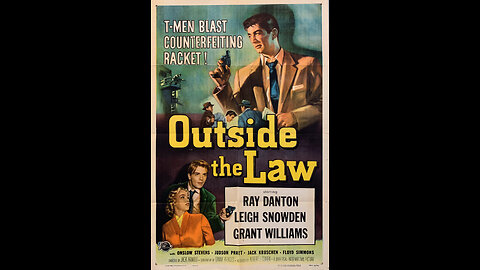
Outside the Law (1956) | Directed by Jack Arnold
Classic Films & Movies ArchiveA WWII veteran and ex-juvenile delinquent, recently out of prison, is offered a chance to wipe his record clean. The deal: help the U.S. Treasury crack an international counterfeiting ring tied to the murder of his old army buddy in Germany. The job forces him into undercover work, uneasy family tensions (the case is run by his own father), and a dangerous relationship with the dead man’s widow. Genre: Film noir crime drama / procedural thriller Director: Jack Arnold Jack Arnold (born John Arnold Waks, 1916–1992) was an American director best known for shaping 1950s genre cinema with a sharp, efficient style. He moved from documentary work (including the Oscar-nominated labor documentary With These Hands) into studio features, and became a standout name in science fiction and suspense at Universal-International. His best-remembered films include It Came from Outer Space (1953), Creature from the Black Lagoon (1954), Tarantula (1955), and The Incredible Shrinking Man (1957). Outside the Law is one of his lean, tough crime entries from the same period. Star Cast: Ray Danton as John Conrad / “Johnny Salvo” Leigh Snowden as Maria Craven Grant Williams as Don Kastner Onslow Stevens as Chief Agent Alec Conrad Raymond Bailey as Philip Bormann Judson Pratt as Agent Saxon Jack Kruschen as Agent Pill Schwartz Mel Welles as Milo On release, it played more as a compact “programmer” crime film than a major event picture—tight, functional, and plot-forward. Over time, it’s been rediscovered by noir and Jack Arnold fans who enjoy its procedural detail, the father-son tension, and its brisk pacing, even if it’s not usually ranked among the era’s top-tier noir classics. Fun Facts: Runs a quick 81 minutes, with a very “no wasted motion” studio-era pace. Shot in black-and-white, leaning into a sober procedural look rather than flashy noir stylization. The screenplay is by Danny Arnold, who soon became far more famous in television (notably for creating/producing Barney Miller and producing Bewitched and That Girl). Jack Arnold made this in the same mid-1950s window as his most celebrated sci-fi films, making it an interesting detour into straight crime drama. Ray Danton later became strongly associated with gangster roles, especially as Legs Diamond in The Rise and Fall of Legs Diamond (1960). * This Rumble Movie Channel is comprehensively indexed on https://kinoquick.com - find you favourite movies fast & free! * Follow this channel to be notified of daily movie updates.183 views -
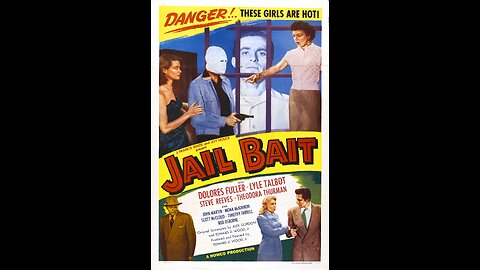
Jail Bait (aka The Hidden Face) (1954) | Directed by Ed Wood
Classic Films & Movies ArchiveAfter young delinquent Don Gregor becomes entangled with gangster Vic Brady, a payroll robbery goes wrong and turns deadly. With police closing in, Brady forces Don’s respected plastic-surgeon father to change Brady’s face to help him evade capture. The operation doesn’t end the danger—it intensifies it—pushing the story toward betrayal, panic, and an increasingly desperate endgame. Genre: Film noir; crime thriller / gangster drama Director: Ed Wood (credited as Edward D. Wood Jr.) Ed Wood (1924–1978) was an American low-budget filmmaker, writer, and occasional actor who worked largely outside the studio system. In the 1950s he made a run of micro-budget crime, sci-fi, and horror features that later developed a sizable cult following. His films are often discussed for their DIY ingenuity, oddball sincerity, and shoestring production methods, and he became one of the most widely recognized cult directors of mid-century American exploitation cinema. Star Cast: Lyle Talbot (Inspector Johns) Dolores Fuller (Marilyn Gregor) Herbert Rawlinson (Dr. Boris Gregor) Steve Reeves (Lieutenant Bob Lawrence) Clancy Malone (Don Gregor) Timothy Farrell (Vic Brady) Theodora Thurman (Loretta) On release, it generally played as a modest, rough-edged programmer: a fast, pulpy crime story with a sensational hook (the face-change plot device) but limited polish. Over time, its reputation has been shaped less by mainstream noir canon and more by Ed Wood’s cult status—making it a frequent curiosity-watch for fans of offbeat, low-budget 1950s crime cinema and early appearances by later-famous performers. Fun Facts: The project’s original/working title was The Hidden Face; it was retitled Jail Bait for release. Steve Reeves (later famous for Hercules films) appears early in his screen career and is notably not dubbed in the way he often was in later Italian productions. Veteran actor Herbert Rawlinson died immediately after completing his work on the film, making it his final released feature. The music score was reused from another Howco production, a common cost-saving practice in very low-budget filmmaking. Some circulating versions over the years have included an added “performance interlude” sequence that wasn’t part of the core crime narrative, reflecting how distributors sometimes modified inexpensive films for different releases. * This Rumble Movie Channel is comprehensively indexed on https://kinoquick.com - find you favourite movies fast & free! * Follow this channel to be notified of daily movie updates.174 views -
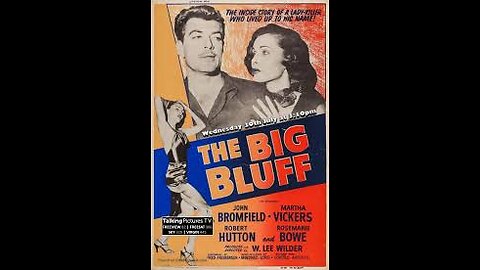
The Big Bluff (1955) | Directed by W. Lee Wilder
Classic Films & Movies ArchiveRicardo “Rick” De Villa is a smooth, cash-strapped womanizer who dreams of running away with his lover, nightclub performer Fritzi Darvel. When he meets Valerie Bancroft, a wealthy young socialite who is believed to be terminally ill, he sees an easy path to money: romance, marriage, inheritance. But as Valerie’s circle grows suspicious and Valerie’s situation shifts in ways Rick didn’t plan for, his scheme escalates into a noir spiral of deception, pressure, and consequences. Genre: Film noir; crime drama / thriller Director: W. Lee Wilder W. Lee Wilder (1904–1982), born Wilhelm Wilder, was an Austrian-born American producer-director and screenwriter who carved out a career in lean, low-budget Hollywood features—especially crime and noir titles—often working through his own production setups. He was the older brother of Billy Wilder and later became known as well for modestly budgeted 1950s genre pictures (including crime and science fiction), emphasizing brisk storytelling and efficient production. Star Cast: John Bromfield (Ricardo “Rick” De Villa) Martha Vickers (Valerie Bancroft) Robert Hutton (Dr. Peter Kirk) Rosemarie Stack (Fritzi Darvel) Eve Miller (Marsha Jordan) Max Palmer (Detective Sgt. John Fullmer) Trade response in its day leaned toward “solid for a programmer”: familiar, stock noir types, but played competently, with the lead performances doing much of the heavy lifting. The direction was generally viewed as serviceable and the technical work (notably the black-and-white photography and pace) helped keep the mood on track. In later noir-watching circles, it’s often treated as an obscure B-noir that’s valued more for its twisty plot mechanics and moral comeuppance than for polish. Fun Facts: Produced by W. Lee Wilder through his Planet Filmplays banner and distributed by United Artists. Screenplay by Fred Freiberger (a prolific mid-century screenwriter who later worked extensively in television). Running time is a tight 71 minutes, very typical of 1950s second-feature crime films. Sometimes circulated under the alternate title The Great Deceiver. Part of Wilder’s run of compact, low-budget noirs and crime pictures before he pivoted more heavily into 1950s genre filmmaking. * This Rumble Movie Channel is comprehensively indexed on https://kinoquick.com - find you favourite movies fast & free! * Follow this channel to be notified of daily movie updates.136 views -
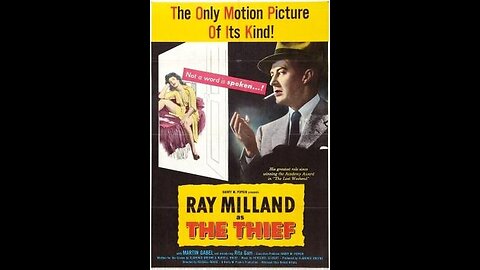
The Thief (1952) | Directed by Russell Rouse
Classic Films & Movies ArchiveA respected Washington, D.C. scientist leads a double life, secretly passing vital information to a foreign handler. When an investigation tightens and surveillance closes in, the routine of covert drops and coded signals turns into a nerve-wracking race to stay ahead of exposure. Genre: Film noir; crime thriller; Cold War espionage drama Director: Russell Rouse Russell Rouse (1913–1987) was an American screenwriter, director, and producer best known for lean, high-concept thrillers and a run of hard-edged film noirs he developed with producer-writer Clarence Greene. He directed and co-wrote multiple noirs in the early 1950s (including The Well, The Thief, and Wicked Woman) and later co-created the story behind Pillow Talk (1959), which won the Academy Award for Writing (Story and Screenplay—written directly for the screen). Star Cast: Ray Milland as Allan Fields Martin Gabel as Mr. Bleek Rita Gam as The Girl Harry Bronson as Harris Rita Vale as Miss Philips Rex O’Malley as Beal John McKutcheon as Dr. Linstrum Joe Conlin as Walters On release, the film drew attention for its daring “no spoken dialogue” approach, leaning on visuals, music, and city sound to create tension. Many critics highlighted its suspenseful pacing and Ray Milland’s controlled, anxious performance, while some later reviewers found it more of an intriguing stylistic experiment than a deeply character-driven thriller. It also picked up awards attention for its craft, especially music and cinematography. Fun Facts: The movie is famous for having no spoken dialogue; the only on-screen “words” come via telegrams. It plays like a sound-driven “silent thriller,” using telephones, footsteps, traffic, and a persistent score to replace dialogue beats. Much of it was shot in real locations in Washington, D.C. and New York City, giving it a semi-documentary city texture. It received an Academy Award nomination for its dramatic score. It earned multiple Golden Globe nominations, including recognition for the film, Ray Milland, and the black-and-white cinematography. * This Rumble Movie Channel is comprehensively indexed on https://kinoquick.com - find you favourite movies fast & free! * Follow this channel to be notified of daily movie updates.170 views -
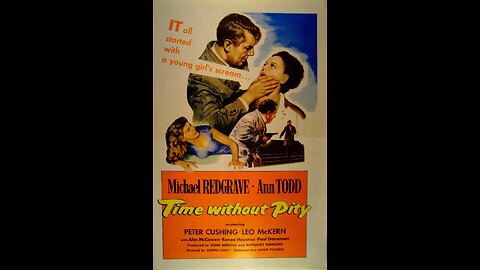
Time Without Pity (1957) | Directed by Joseph Losey
Classic Films & Movies ArchiveA disgraced, alcoholic novelist races against the clock to save his estranged son, who is due to be executed within hours for a murder he insists he didn’t commit. As the deadline closes in, the father pushes through lawyers, witnesses, and secrets that powerful people would rather keep buried—turning the case into a ruthless test of truth, guilt, and redemption. Genre: Film noir thriller / crime drama Director: Joseph Losey Joseph Losey (1909–1984) was an American-born director who built a major part of his career in Britain after being swept up in the anti-Communist blacklisting era in the United States. Known for tense moral dramas and psychologically sharp character work, he became celebrated for films that probe power, class, guilt, and manipulation. His later British collaborations (especially in the 1960s) cemented his reputation as a distinctive, incisive filmmaker. Star Cast: Michael Redgrave Ann Todd Leo McKern Peter Cushing Alec McCowen On release, the film was widely noted for its sustained tension and strong lead performance, with audiences drawn to its urgent “race against time” structure. Some viewers found its outlook bleak and emotionally punishing, but over time it has earned a stronger reputation among noir and thriller fans for its atmosphere, moral bite, and the way it turns a ticking-clock plot into a broader critique of justice and consequence. Fun Facts: The whole story is engineered like a countdown, squeezing its suspense out of procedure and pressure rather than action spectacle. It’s often discussed as an explicitly anti-capital-punishment thriller, using the deadline to force uncomfortable questions about certainty and error in the justice system. Michael Redgrave’s performance is frequently singled out because the character’s flaws (shame, addiction, regret) are not softened—his urgency feels earned, not heroic. The film’s noir feel comes as much from mood and moral shadow as from visuals: almost everyone the father meets has something to hide, sell, or protect. * This Rumble Movie Channel is comprehensively indexed on https://kinoquick.com - find you favourite movies fast & free! * Follow this channel to be notified of daily movie updates.264 views -
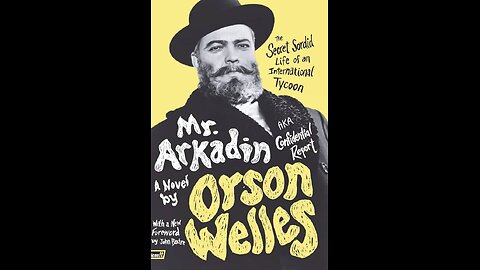
Mr Arkadin (aka Confidential Report) (1955) | Directed by Orson Welles
Classic Films & Movies ArchiveA small-time American smuggler living in Europe is hired by the mysterious millionaire Gregory Arkadin to investigate Arkadin’s own past. The assignment turns into a globe-hopping puzzle: every person the investigator interviews seems to vanish soon after, and the deeper he digs, the more he realizes Arkadin’s “lost memory” may be a carefully engineered trap. Genre: Film noir; mystery thriller; crime drama Director: Orson Welles Orson Welles (1915–1985) was an American director, actor, writer, and producer celebrated for his bold storytelling and technical experimentation. He rose to fame in theater and radio (including the famous 1938 radio adaptation of War of the Worlds) before making his landmark debut feature Citizen Kane (1941). Across a career split between Hollywood and extensive work in Europe, Welles became known for moody noir atmospheres, inventive camera work, and stories about power, deception, and identity, often acting in his own films and wrestling with studio re-editing and financing constraints. Star Cast: Orson Welles as Gregory Arkadin Robert Arden as Guy Van Stratten Paola Mori as Raina Arkadin Akim Tamiroff as Jakob Zouk Patricia Medina as Mily (sometimes credited as the Baroness Nagel) Michael Redgrave as Burgomaster (credited role varies by version) Katina Paxinou as Sophie (credited role varies by version) Mischa Auer as a member of Arkadin’s circle (credited role varies by version) On release, the movie’s reception was mixed and often confused, largely because it circulated in different edits and versions in different countries. Some viewers and critics found it disorienting, with abrupt transitions and a puzzle-box plot that felt intentionally slippery. Over time, it gained a stronger reputation among film noir fans and Welles enthusiasts, who admired its atmosphere, eccentric characters, and paranoid momentum, while still debating which version best represents Welles’s intentions. Fun Facts: The film is famous for existing in multiple substantially different cuts, with scenes reordered and altered depending on the country and distributor. It’s often linked to Welles’s long-running struggle to keep final control over his films; re-editing after production shaped how audiences first saw it. The story plays like a noir travelogue, moving through a string of European locations that add to the film’s restless, investigative feel. Welles both directed and starred, crafting Arkadin as a larger-than-life figure whose charm and menace are inseparable. The movie’s “search for a past” theme echoes across several Welles projects, where identity, reputation, and hidden histories drive the drama. * This Rumble Movie Channel is comprehensively indexed on https://kinoquick.com - find you favourite movies fast & free! * Follow this channel to be notified of daily movie updates.141 views -
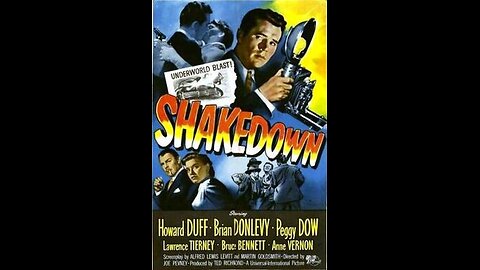
Shakedown (1950) | Directed by Joseph Pevney
Classic Films & Movies ArchiveA hard-edged film noir about Jack Early, an ambitious San Francisco newspaper photographer who treats crime like a career ladder. He cuts deals with gangsters, double-crosses allies, and uses incriminating pictures as leverage—until the underworld turns the camera back on him and his hunger for the “perfect shot” becomes his downfall. Genre: Film noir; crime drama Director: Joseph Pevney Joseph Pevney (1911–2008) was an American actor-turned-director who moved from stage and film acting into a long, prolific directing career. He became a reliable studio craftsman in the 1950s (notably for Universal-International) and later shifted heavily into television, directing many well-known episodes across major series. He is especially remembered by TV audiences for directing a large number of episodes of the original Star Trek, including several fan favorites. Star Cast: Howard Duff as Jack Early Brian Donlevy as Nick Palmer Peggy Dow as Ellen Bennett Lawrence Tierney as Harry Colton Bruce Bennett as David Glover Anne Vernon as Nita Palmer Often viewed as a brisk, punchy “programmer” noir on release, Shakedown earned attention for its fast pace and its unusually unsympathetic lead character. Over time it has been reappraised by noir fans as a sharp journalism-and-corruption thriller, with Howard Duff’s performance singled out for making the anti-hero watchable even at his worst. Fun Facts: The film’s working/alternate title was The Magnificent Heel. The original screen story was titled “The Red Carpet,” and story contributor Nat Dallinger had real-world experience as a news cameraman, helping ground the newsroom/photography angle. Shakedown was Joseph Pevney’s first assignment as a feature-film director. Pevney also appears briefly in the film (uncredited), and it marked his last acting role. Rock Hudson has an uncredited early appearance as a nightclub doorman. It runs a lean 80 minutes, a big reason it feels so quick and relentless. * This Rumble Movie Channel is comprehensively indexed on https://kinoquick.com - find you favourite movies fast & free! * Follow this channel to be notified of daily movie updates.140 views -
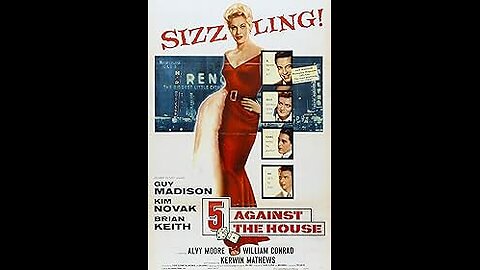
5 Against the House (1955) | Directed by Phil Karlson
Classic Films & Movies ArchiveA group of college friends pull off a “harmless” prank by planning a casino robbery in Reno, but the joke turns serious when greed, jealousy, and hidden motives start cracking their friendship. What begins as a clever caper becomes a tense spiral toward betrayal and danger. Genre: Crime drama / Film noir-leaning thriller Director: Phil Karlson Phil Karlson was an American director known for tough, street-level crime films and punchy, hard-edged storytelling. He built a reputation in the 1950s for gritty noirs and thrillers that focused on pressure-cooker moral choices, simmering violence, and characters pushed to the edge. His best-known work often treats crime less like glamour and more like a corrosive force that exposes what people are really made of. Star Cast: Guy Madison as Al Mercer Kim Novak as Kay Greig Brian Keith as Brick Pollitt Kerwin Mathews as Ronnie Alvy Moore as Roy William Conrad as Dr. Marx (casino security) A modestly received mid-1950s crime picture that didn’t become a major box-office sensation, but gradually earned interest with noir fans for its lean setup, youthful-caper premise, and the way it pivots from playful planning into serious consequences. Kim Novak’s presence also helped keep it visible for audiences tracking her rise in the era. Fun Facts: The story taps into a very 1950s anxiety: bright, “respectable” young men flirting with crime as a thrill, then realizing they can’t control what they set in motion. Kim Novak appears early in her rise to stardom, bringing extra heat and glamour to an otherwise male-dominated “planning a job” storyline. Director Phil Karlson was especially associated with tough crime films, and here he applies that intensity to a scenario that starts like a prank and ends with real stakes. The setting leans on Reno’s casino atmosphere to give the film a slick, neon-lit backdrop that suits its noir tension. * This Rumble Movie Channel is comprehensively indexed on https://kinoquick.com - find you favourite movies fast & free! * Follow this channel to be notified of daily movie updates.230 views -
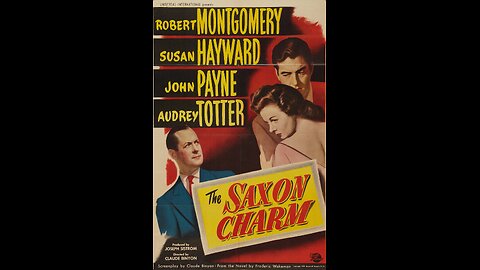
The Saxon Charm (1948) | Directed by Claude Binyon
Classic Films & Movies ArchiveA powerful Broadway producer, Matt Saxon, uses his reputation and “charm” to pull a promising writer and the writer’s wife into his orbit—then meddles in their work, relationships, and careers until everything starts to fracture around him. Genre: Film noir drama Director: Claude Binyon Claude Binyon (1905–1978) was an American screenwriter-director who started in journalism, worked at Variety, then moved into Hollywood screenwriting in the early 1930s and later directed a run of studio features in the late 1940s and early 1950s. Star Cast: Robert Montgomery as Matt Saxon Susan Hayward as Janet Busch John Payne as Eric Busch Audrey Totter as Alma Wragge Harry Morgan as Hermy Harry von Zell as Zack Humber Cara Williams as Dolly Humber Chill Wills as Captain Chatham Heather Angel as Vivian Saxon Some contemporary reviewers found the central idea a tough sell: the story needs the audience to believe an openly manipulative, damaging producer can still be irresistibly “charming,” and not everyone bought it. Even so, the performances—especially the lead and several supporting turns—were commonly noted as the film’s main strength. Later viewers tend to enjoy it as a sharp, cynical character study about power, vanity, and the quiet destruction a charismatic operator can cause. Fun Facts: The film is based on Frederic Wakeman’s 1947 novel The Saxon Charm. The title is built around the producer character’s name (Matt Saxon) and his supposed “Saxon charm.” It’s frequently mis-titled on listings and uploads as “The Saxton Charm,” even though the official title is The Saxon Charm. Because it’s set in the Broadway ecosystem and revolves around influence, reputation, and career leverage, it’s often compared in theme (not style) to later, more famous backstage theatre dramas. * This Rumble Movie Channel is comprehensively indexed on https://kinoquick.com - find you favourite movies fast & free! * Follow this channel to be notified of daily movie updates.293 views 1 comment