-
Proverbs: Lust of the Flesh, Part 2 - Sexual Immorality - Steve Gregg
The Narrow Pathhttps://thenarrowpath.com | Steve Gregg discusses the theme of sexual immorality in Proverbs and advises men and women to avoid being trapped by their desires. He emphasizes the importance of avoiding temptation and the dangers of engaging in illicit sexual behavior. Gregg also highlights the role of faithfulness, trustworthiness, and integrity in resisting temptation and maintaining a healthy relationship with God. Additionally, he discusses the issue of immodesty in clothing and the potential negative impact it can have on others. | Transcript: https://opentheo.org/i/5683542729742041442/proverbs-sexual-immorality Outline of Lecture: Sexual Immorality in Proverbs by Steve Gregg 1 Introduction • Theme: Escaping the world’s traps, focusing on sexual immorality as discussed in Proverbs. • Biblical context: The world as a trap comprises lusts of the flesh, lusts of the eyes, and pride of life (New Testament reference). • Desires of the body are God-given but must be governed by discernment to avoid destruction. • Solomon, a ”lusty” character, provides extensive counsel on sexual temptation. 2 The Nature of Sexual Temptation 2.1 Lusts of the Flesh • Desires (e.g., for food, drink, sex) are natural but require discernment to avoid sinful indulgence. • Ungoverned impulses lead to destructive behavior (Proverbs). 2.2 Character and Faithfulness • Righteous character delivers from temptation; unfaithful individuals are ensnared by lust (Proverbs 11:6). • Faithfulness, trustworthiness, and integrity prevent succumbing to impulses (Proverbs 5:22). • Compromised character leads to further sin (Proverbs 5:22, 11:6). 2.3 Allure of the Illicit • Forbidden actions become attractive due to rebellious human nature (Proverbs 7:11, 9:17). • Stolen water is sweet; secret bread is pleasant, reflecting the appeal of breaking rules (Proverbs 9:17). • Curiosity about the forbidden drives temptation (e.g., Eve’s attraction to the forbidden tree). 2.4 Motivations Beyond Lust • Anger or desire to punish (e.g., betraying a spouse) can drive sexual immorality (Proverbs 2:17, 7:19). • Emotional alienation or grudges may lead to betrayal (Proverbs 2:17). 1 3 Dangers of Toying with Temptation 3.1 Flirtatious Behavior • Warning against lusting after beauty or being allured by flirtatious gestures (Proverbs 6:25). • Job’s covenant with his eyes to avoid looking at other women (Job 31:1). • Men are particularly susceptible to visual stimuli, necessitating caution (Proverbs 6:25). 3.2 Risky Environments • Proximity to temptation (e.g., walking near the seductress’s house) increases risk (Proverbs 7:8). • Curiosity or careless exposure to tempting situations (e.g., visiting inappropriate websites) leads to sin. • Dating culture can foster recreational romance, encouraging dangerous chemistry (Proverbs 7). 3.3 Secrecy and Overconfidence • Seeking secrecy (e.g., acting in the dark of night) emboldens sin (Proverbs 7:9). • Overconfidence in resisting temptation leads to failure (Proverbs 5:12–13, 7:26). • Strong men have fallen, highlighting the danger of self-reliance (Proverbs 7:26). 3.4 Seductress’s Tactics • Enticing speech and flattery appeal to ego (Proverbs 7:21, 2:16, 6:24, 7:5). • Immodest behavior or attire draws attention (Proverbs 7:10–13). • False assurances of safety (e.g., “my husband is away,” “I’ve paid my vows”) lower defenses (Proverbs 7:14, 19–20). 3.5 Immodesty in Society • Immodesty extends beyond clothing to behavior seeking attention (Proverbs 6:25, 7:10–13). • Modern styles, even among well-meaning individuals, can distract and tempt (Proverbs 7:10). • Christians should avoid causing others to stumble through their actions or attire (1 Corinthians, Romans). 4 Consequences of Sexual Sin • Leads to death, destruction, and hell (Proverbs 2:18–19, 5:3–5, 6:27–29). 2 • Adultery brings wounds, dishonor, and unrelenting jealousy from a spouse (Proverbs 6:32–35). • Delayed punishment emboldens sin, but consequences are inevitable (Ecclesiastes 8:11). 5 Strategies to Avoid Sexual Sin 5.1 Fear of God • Awareness that God watches all actions deters sin (Proverbs 5:20–21, 23:17–18). 5.2 Guard Your Heart • Wisdom and understanding in the heart protect against temptation (Proverbs 2:10–16, 4:23, 7:25). • Treasure godly commands to resist seduction (Proverbs 7:1–5). • Unruled hearts are vulnerable to enslavement by sin (Proverbs 25:28, Hosea 4:11). 5.3 Be Satisfied with Your Spouse • Satisfaction with one’s spouse reduces temptation (Proverbs 5:15–19, 27:7). • Paul’s advice: Marry to avoid burning with lust; spouses should not deprive each other (1 Corinthians 7). ... #lust #immorality #relationships #adultery #shackingup #dating #marriage #proverbs #family #std #homosexuality #perversion #fornication #seduction #temptation #christianlife #knowledge #wisdom #understanding #biblestudy #bibleteaching #wise #wisequotes #wisewords #christianlife #wiseliving #stevegregg #thenarrowpath90 views 1 comment -
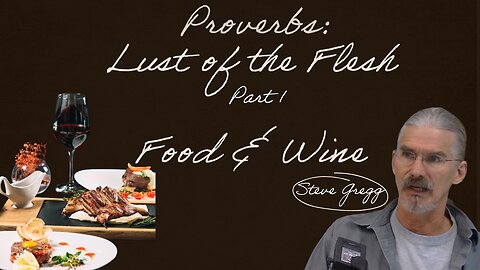
Proverbs: Lust of the Flesh, Part 1 - Food & Wine - Steve Gregg
The Narrow Pathhttps://thenarrowpath.com | In this talk by Steve Gregg, he discusses the contrast between the things of the world and the things of God as described in Proverbs. He reminds us that while God gives us things to enjoy, we must exercise restraint in indulging our cravings at inappropriate times and in inappropriate ways. Gregg also offers caution when it comes to alcohol and warns against the dangers of excess and inappropriate use. Ultimately, he encourages following God's laws and avoiding anything that hinders us from making correct judgments and bringing glory to God. | Transcript: https://opentheo.org/i/5683542729742041441/proverbs-food-and-wine Outline by Grok 3: Outline of Lecture: Proverbs: Food and Wine by Steve Gregg 1 Introduction • Context: Nearing the end of a Proverbs series, focusing on frequent topics. • Theme: Avoiding the worlds traps, specifically the lust of the flesh (1 John 2:1517). • Biblical contrast: Worldly desires (lust of the flesh, eyes, pride of life) versus Gods will (James 4:4). 2 Understanding the Lust of the Flesh • Definition: – Flesh can mean the body or fallen nature; here, it refers to bodily cravings (1 John 2:16). – Bodily desires: Food, drink, sleep, and sex, designed by God for survival and enjoyment. • Gods design: – Desires are not corrupt; God gives things to enjoy (1 Timothy 4:4, 6:17). – Example: Adam and Eves paradise, pleasurable to the senses. • Need for governance: – Bodily desires are undiscerning, requiring restraint (1 Corinthians 9:27). – Unbelievers follow fleshly desires without conflict; Christians face a mind-flesh conflict (Romans 7:1923; Ephesians 2:23). 3 Proper Enjoyment of Food • Biblical perspective: – Food is a gift to be enjoyed with thanksgiving (1 Timothy 4:34). – Honey as a symbol of pleasure: Good in moderation, harmful in excess (Proverbs 25:16, 27). • Warnings against gluttony: 1 – Proverbs 21:17: Loving pleasure (e.g., rich food, oil) leads to poverty. – Proverbs 23:13, 6: Restrain appetite when dining with rulers or misers to avoid manipulation. – Proverbs 30:2122: A fool filled with food becomes proud and disruptive. • Practical restraint: – Example: Daniels refusal of the kings delicacies to honor God (Daniel 1). – Health considerations: Avoid foods that harm health or overeating during fasting. 4 Proper Use and Dangers of Alcohol • Biblical view of alcohol: – Not inherently evil; has medicinal and heart-gladdening value (1 Timothy 5:23; Proverbs 31:67). – Used in ancient times to purify water, consumed diluted at meals. • Dangers of excess: – Proverbs 20:1: Wine mocks, leads to brawling and poor judgment. – Proverbs 21:17: Loving wine impoverishes. – Proverbs 23:2935: Describes alcoholismwoe, sorrow, hallucinations, and addiction. – Proverbs 31:45: Kings (and Christians) must avoid intoxication to maintain clear judgment. • Personal reflection: – Greggs experiences: Unpleasant effects of slight overconsumption; no desire to alter consciousness. – Cultural note: Addiction to alcohol or drugs can ruin finances and lives. 5 Temptation, Lust, and Sin • Distinction: – Lust (desire) is not sin until it conceives through approval (James 1:1315). – Temptation is not sin; sin occurs when one chooses to indulge (Matthew 5:28). • Christian responsibility: – Resist temptation, governing desires to avoid sins consequences (death). – Solomons advice: Govern appetites to live virtuously. 2 6 Conclusion • Summary: Food and wine are Gods gifts but require restraint to avoid worldly entrapment. • Call to action: Eat and drink to Gods glory, exercising moderation (1 Corinthians 10:31). • Final note: Prioritize spiritual interests over bodily pleasures to maintain sound judgment and honor God. #lust #food #wine #drink #proverbs #alcohol #desire #gluttony #obesity #overeating #diet #christianlife #knowledge #wisdom #understanding #biblestudy #bibleteaching #wise #wisequotes #wisewords #christianlife #wiseliving #stevegregg #thenarrowpath119 views 1 comment -
Proverbs: Neighbors - Steve Gregg
The Narrow Pathhttps://thenarrowpath.com | In this presentation, Steve Gregg explores the value of neighbors as highlighted in the biblical book of Proverbs. Drawing from various verses in the book, Gregg emphasizes the importance of being a good neighbor and treating others with honesty and respect. He also provides practical advice, such as avoiding frivolous lawsuits and settling disputes amicably. Overall, the presentation offers insights on building strong and positive relationships with those around us. | Transcript: https://opentheo.org/i/5683542729742041440/proverbs-neighbors #proverbs #neighbors #respect #honesty #loveyourneighbour #brothers #relationship #authority #christianlife #knowledge #wisdom #understanding #biblestudy #bibleteaching #wise #wisequotes #wisewords #christianlife #wiseliving #stevegregg #thenarrowpath83 views 1 comment -
Proverbs: Friends, Brothers & Enemies - Steve Gregg
The Narrow Pathhttps://thenarrowpath.com | Steve Gregg explores the different types of human relationships in the book of Proverbs, addressing friends, siblings, enemies, and neighbors. The verses caution against choosing companions who lead one into crime, whispering rumors that undermine a friendship, and going surety for a friend. The speaker emphasizes the importance of earning trust and loving enemies, encouraging listeners to do good to their adversaries and leave vengeance to God. Overall, the message stresses the value of maintaining virtuous and intentional relationships. | Transcript: https://opentheo.org/i/5683542729742041439/proverbs-friends-and-enemies Outline by Grok 3: Outline of Steve Gregg’s Lecture on Proverbs: Friends and Enemies Introduction • Context: Steve Gregg’s examination of human relationships in the Book of Proverbs, focusing on friends, siblings, enemies, and neighbors. • Relationship Types: Distinction between hierarchical (e.g., parent-child, rulersubject) and egalitarian relationships (friends, siblings, neighbors). • Cultural Perspective: Modern aversion to hierarchy due to emphasis on individual rights contrasts with biblical principles where hierarchy can resolve disputes. I. The Nature of Egalitarian Relationships • Egalitarian vs. Hierarchical: Unlike hierarchical relationships, egalitarian ones (friends, siblings, neighbors) lack a defined authority structure, requiring mutual cooperation. • Challenges: Without a hierarchy, resolving disagreements can be complex as no party has final decision-making authority. • Wisdom as Common Sense: Proverbs offers practical, sometimes obvious, guidance on maintaining these relationships, akin to “common sense” or “uncommon sense.” II. Friends and Siblings • Characteristics of True Friends and Siblings: – Proverbs 17:17: A true friend loves at all times, even in adversity; a sibling is born to support during hardship. – Proverbs 18:24: To have friends, one must be friendly; some friends are closer than siblings. – Proverbs 27:6: Faithful friends may wound (e.g., through rebuke) for one’s good, unlike deceitful enemies. 1 – Proverbs 27:9: Heartfelt counsel from a friend is valuable, like ointment or perfume. – Proverbs 27:17: Friends sharpen each other, like iron sharpening iron, through constructive criticism or counsel. • Sibling Bonds: Siblings are a divine gift meant to provide lifelong support, though rivalry or neglect can undermine this purpose. • Christian Application: Obligation to support both natural and spiritual siblings (Galatians 6:10). III. Choosing and Maintaining Friendships • Choosing Friends Wisely: – Proverbs 12:26: The righteous choose friends carefully to avoid being led astray by wicked companions. – Proverbs 1: Warns against associating with those who lead into crime. • False Friends: – Proverbs 14:20, 19:4, 19:6-7: False friends seek personal gain, abandoning the poor or those in adversity. • Actions that Endanger Friendships: – Proverbs 6:1-3, 17:18: Going surety (co-signing) for a friend risks financial loss and strains relationships. – Proverbs 16:28: Gossip or whispering can undermine friendships by sowing distrust. – Proverbs 17:9: Repeating a friend’s transgression damages relationships, while covering it preserves love. – Proverbs 27:10: Neglecting longstanding friendships (e.g., a father’s friend) in favor of unreliable siblings can be unwise. – Proverbs 27:14: Insensitive “blessings” (e.g., annoying gestures) can harm relationships. IV. Dealing with Enemies • Enemies as Relationships: Enemies are a type of relationship requiring management, often as neighbors (per Jesus’ teaching in the Good Samaritan parable). • Biblical Guidance on Enemies: – Proverbs 16:7: Pleasing God can lead to reconciliation with enemies. – Proverbs 27:6: Do not trust enemies’ deceitful gestures (e.g., “kisses”). 2 – Proverbs 24:17-18: Do not rejoice in an enemy’s downfall, as it displeases God and may shift His judgment to you. – Proverbs 25:21-22 (quoted in Romans 12:19-21): Do good to enemies (e.g., feed them when hungry), leaving vengeance to God, which “heaps coals of fire” on their heads (symbolizing impending divine judgment). • Love vs. Trust: Loving enemies is virtuous, but trusting them is not required; trust must be earned, and gullibility is discouraged (e.g., Proverbs warns against trusting man over God). V. Theological and Practical Applications • Pleasing God Over Men: Focus on pleasing God rather than fearing or pleasing enemies, trusting Him to handle reconciliation or judgment. • Overcoming Evil with Good: Doing good to enemies (e.g., Elisha’s kindness to Assyrian soldiers) can defuse hostility and aligns with Jesus’ teachings (Matthew 5, Luke 6). #proverbs #friends #enemies #brothers #relationship #authority #christianlife #knowledge #wisdom #understanding #biblestudy #bibleteaching #wise #wisequotes #wisewords #christianlife #wiseliving #stevegregg #thenarrowpath77 views -
Proverbs: Rulers & Subjects - Steve Gregg
The Narrow Pathhttps://thenarrowpath.com | In this discussion, Steve Gregg examines the biblical principles regarding the relationship between rulers and subjects. According to Gregg, a sovereign is answerable to no one and is responsible for executing orders that benefit the people. He emphasizes the importance of displaying respect towards persons of higher authority and remaining patient in communication. Gregg also discusses the limitations of a ruler's authority and the need for truthfulness in influencing those in power. | Transcript: https://opentheo.org/i/5683542729742041438/proverbs-rulers-and-subjects Outline by Grok 3: Outline of Steve Gregg’s Lecture on Proverbs: Rulers and Subjects Introduction • Context: Examination of the Book of Proverbs by Steve Gregg, focusing on interpersonal relationships. • Current Topic: Hierarchical relationships, specifically the ruler-subject dynamic. • Solomon’s Perspective: As a king, Solomon provides insights on rulers and subjects, informed by his own experience and wisdom. I. The Nature of Rulers and Subjects • Hierarchical Relationships: Ruler-subject relationship is hierarchical, unlike egalitarian relationships (e.g., friendships). • Solomon’s Context: As a king, Solomon sought wisdom to rule wisely (reference to his prayer for wisdom after David’s death). • Sovereignty in Israel: Kings were answerable to God in a theocratic system, unlike pagan monarchs who held absolute power. II. Responsibilities and Behavior of Subjects • Seeking the King’s Favor: – Proverbs 23:1-3: Exercise restraint and proper etiquette when dining with a ruler to avoid appearing selfish. – Proverbs 25:15: Use patience and gentle persuasion to influence a ruler effectively. – Proverbs 14:35: A wise servant gains the king’s favor, while shameful behavior incurs wrath. – Proverbs 16:14: A wise subject can appease a king’s wrath to avoid severe consequences. 1 – Proverbs 22:11: Purity of heart and graceful speech make a subject a trusted friend of the king. – Proverbs 25:6-7: Avoid self-exaltation in the king’s presence; humility may lead to honor. • Application to Modern Context: While modern societies lack monarchs, these principles apply to respecting authority and to the Christian’s relationship with Jesus as King. III. The Role and Character of a Good Ruler • Positive Attributes of a Good King: – Proverbs 20:8: A just king scatters evil through righteous judgment. – Proverbs 20:28: Mercy and truth preserve a king’s throne. – Proverbs 21:1: God directs the king’s heart, ensuring divine control over rulers. – Proverbs 25:5: Removing wicked counselors establishes a king’s throne in righteousness. – Proverbs 29:14: Judging the poor with truth ensures a king’s lasting rule. • God’s Ordained Role for Rulers: – Romans 13:1-4: Rulers are God’s servants to punish evil and promote good. – 1 Peter 2:13-14: Rulers are ordained to punish evildoers and praise the righteous. • Limits of Authority: Rulers’ authority is delegated by God and limited to their ordained sphere; actions outside this sphere lack divine authority. IV. The Impact of Bad Rulers • Consequences of Wicked Rule: – Proverbs 28:15-16: A wicked ruler is like a roaring lion or charging bear, oppressing the poor and lacking understanding. – Proverbs 28:28: Wicked rulers cause the righteous to hide, while their downfall allows righteousness to flourish. – Proverbs 29:2: Wicked rulers cause people to groan, while righteous rulers bring joy. • Solomon’s Example: Initially wise, Solomon became oppressive when he turned from God, illustrating the dangers of unrighteous rule. 2 V. The Importance of Truth and Righteousness in Governance • Impact of a Ruler’s Standards: – Proverbs 29:12: A ruler who listens to lies fosters wickedness among subordinates. – Proverbs 29:4: A king who takes bribes destabilizes the land, while justice strengthens it. • Trickle-Down Effect: A ruler’s moral standards shape the behavior of their administration and society. VI. Theological Application: Jesus as King • Jesus as the Ideal King: Unlike earthly rulers, Jesus is a just and righteous king who scatters evil and upholds righteousness. • Modern Relevance: In a democratic society, understanding Jesus as King requires recognizing His absolute authority, distinct from elected officials. • Encouragement: Believers serve a benevolent King whose rule ensures the ultimate banishment of evil. #proverbs #king #kingdom #servants #master #servantsofchrist #authority #president #trump #government #governor #christianlife #knowledge #wisdom #understanding #biblestudy #bibleteaching #wise #wisequotes #wisewords #christianlife #wiseliving #stevegregg #thenarrowpath63 views -
Proverbs: Servants and Masters - Steve Gregg
The Narrow Pathhttps://thenarrowpath.com | In this discourse, Steve Gregg touches upon various human relationships as espoused in the book of Proverbs. He notes that relationships between brothers and friends are not straightforward, and that the government has historically played a role in defining various relationships, including those between masters and servants. Gregg emphasizes that the practice of slavery, while prevalent throughout history, was often immoral and abusive, with enslaved individuals often having abusive owners, against their will. Despite this, he notes that it was also possible for masters to show genuine care for their servants and that the complex nature of human relationships has been a perennial theme in Proverbs. | Transcript: https://opentheo.org/i/5683542729742041437/proverbs-servants-and-masters Outline by Grok 3: 1. Introduction to Human Relationships in Proverbs • Proverbs discusses various relationships, including parent-child, husband-wife, and servantmaster. • Two broad categories of relationships: egalitarian (e.g., friends, brothers) and hierarchical (e.g., parent-child, master-servant). • Egalitarian relationships lack inherent authority; hierarchical relationships involve authority and subordination. 2. Hierarchical Relationships in Society • Examples include parent-child, husband-wife, master-servant, and ruler-subject. • Modern society trends toward eliminating hierarchical relationships, except for government authority, which is seen as a move toward tyranny. • Biblical perspective assigns authority to parents, husbands, and masters, contrasting with modern egalitarian preferences. 3. Master-Servant Relationship and Slavery • Master-servant relationship is offensive to modern sensibilities due to associations with slavery. • Historical slavery in the U.S. involved immoral practices like kidnapping and racism, punishable by death under biblical law. • In ancient Israel, slavery was often voluntary (indentured servitude) due to economic necessity, not always abusive. • Israelite slaves were released after seven years, with the option to remain voluntarily. 4. Economic Context of Slavery • Ancient societies lacked a middle class; people were either very rich or very poor. • Poor individuals often sold themselves into slavery to avoid starvation, gaining security in exchange for labor. • Slaves had no financial obligations; masters provided food, shelter, and clothing. • Comparison to modern employment: employees ”sell” their time but retain more freedom than slaves. 5. Moral and Biblical Perspective on Slavery • Slavery itself was not inherently immoral in the Bible; abuse and kidnapping were condemned. • Some slaves loved their masters and chose to remain, indicating varied experiences. • Biblical law limited abuse; killing a slave was punishable by death, unlike in other societies. • Slavery in Israel was not racial but economic or war-related (e.g., prisoners of war). 6. Modern Misunderstandings of Slavery • Modern views, shaped by the Enlightenment, emphasize human freedom and dignity, making slavery unthinkable. 1 • U.S. history associates slavery with racism and oppression, unlike the broader historical context. • Slavery persists in some non-Christian countries, often unrelated to race but tied to economics or power. 7. Proverbs on Servants and Masters • Proverbs 17: A wise servant can rise to authority, even over a shameful son, and share in inheritance (e.g., Eliezer in Genesis). • Proverbs 29:19: Some servants require discipline beyond words, similar to children. • Proverbs 29:21: Pampering a servant from childhood may result in a weakling, not a son, due to lack of work ethic. • Proverbs 25:13: A faithful messenger (servant) is refreshing and rare, like snow in harvest. • Proverbs 13:17 and 26:6: An unfaithful messenger brings trouble to himself and his master. • Proverbs 30:10: Do not slander a servant to his master, as it may bring unjust harm and guilt. 8. Biblical Instructions for Servants • Colossians 3:22: Servants should obey masters sincerely, as unto God, not just when watched. • Christian slaves in the Roman Empire (50% of the population) were encouraged to serve God through their work. • 1 Peter 2:18–21: Servants should submit to harsh masters patiently, following Christ’s example of enduring unjust suffering. • 1 Peter 4:19: All Christians suffering unjustly should commit their souls to God by doing good. ... #proverbs #relationship #servants #master #servantsofchrist #authority #slavery #slaveryhistory #christianlife #knowledge #wisdom #understanding #biblestudy #bibleteaching #wise #wisequotes #wisewords #christianlife #wiseliving #stevegregg #thenarrowpath76 views -
Proverbs: Husbands and Strife - Steve Gregg
The Narrow Pathhttps://thenarrowpath.com | In this discussion, Steve Gregg offers insights on marital relationships based on the book of Proverbs. He notes that jealousy is natural but should be avoided, and that mutual trust is essential for a healthy marriage. Gregg emphasizes the importance of praising one's spouse and dealing with conflicts calmly, while also warning against contentious behavior and pride. He emphasizes that forgiveness and grace are critical for maintaining peace in relationships. | Transcript: https://opentheo.org/i/5683542729742041436/proverbs-husbands-and-strife #husband #marriage #family #husbandwife #strife #anger #forgiveness #husband_wife #mom #proverbs #father #mother #christianlife #knowledge #wisdom #understanding #biblestudy #fathersday #mothersday #bibleteaching #wise #wisequotes #wisewords #christianlife #wiseliving #stevegregg #thenarrowpath98 views 1 comment -
Proverbs: Wives - Steve Gregg
The Narrow Pathhttps://thenarrowpath.com | Steve Gregg discusses the role of wives and husbands according to the book of Proverbs. While wives are often seen as the weaker party in the relationship, they are capable of wielding significant power, particularly in managing the household. According to Proverbs, a virtuous woman who fears the Lord is praised above all; charm and beauty are deemed deceitful and vain, and a woman without discretion is seen as empty. Gregg emphasizes the importance of mutual respect and submission in a marriage, noting that a wife who refuses to submit can be a serious detriment to the relationship. | Transcript: https://opentheo.org/i/5683542729742041435/proverbs-wives #wives #marriage #family #tradwife #husbandwife #husband #husband_wife #mom #proverbs #father #mother #christianlife #knowledge #wisdom #understanding #biblestudy #fathersday #mothersday #bibleteaching #wise #wisequotes #wisewords #christianlife #wiseliving #stevegregg #thenarrowpath57 views -
Proverbs: Parent - Child Relationship - Steve Gregg
The Narrow Pathhttps://thenarrowpath.com | Steve Gregg’s discussion on parent-child relationships, based on the book of Proverbs, emphasizes the vital role of parenting in shaping a child's values and future. Gregg begins by highlighting that human relationships—particularly those within families—are central to God's concerns, second only to our relationship with Him. He stresses that our love for God is demonstrated through how we love others, making our interactions with people especially significant. Among human relationships, the parent-child dynamic holds a unique place, requiring both discipline and nurturing that are not applicable to other relationships, like those with neighbors or spouses. Gregg underscores that parents bear the primary responsibility for transmitting values, culture, and faith to their children. However, in modern society, this role has been increasingly displaced by peer influence, especially through public schooling and daycare. Children, who naturally seek the approval of those they spend the most time with, are often more shaped by peers than by their parents. This shift results in a generation that is more likely to absorb foolishness—what Proverbs says is bound up in the heart of a child—than wisdom. Gregg draws heavily from scriptures such as *Deuteronomy 6* and *Ephesians 6*, which mandate that parents teach God’s truths throughout daily life, emphasizing consistent reinforcement through conversation and example. The discussion also addresses the long-term impact of parenting. A godly parent leaves behind not only material possessions but also a spiritual and cultural legacy. Proverbs 13:22 and 17:6 frame this as a blessing extending to one's grandchildren, with Gregg arguing that a parent’s true success is often seen not just in their children, but in the generations that follow. He illustrates this by noting how children often unintentionally absorb their parents' traits, even if they initially strive to be different. Gregg further explains that children are not a burden, but a divine reward and a source of joy and significance. Psalm 127 refers to children as a heritage from the Lord and likens them to arrows in the hand of a warrior—tools that can reach places the parent never will. He connects this to God’s purpose for marriage as outlined in Malachi 2:15: to produce godly offspring, emphasizing that companionship in marriage is secondary to its role in shaping future generations. This lecture concludes with a personal reflection. Gregg shares how his early ministry was influenced by apocalyptic expectations, which discouraged him from having children. However, a transformative moment during a church service caused him to rethink this stance. He realized that children extend a parent’s spiritual impact into the world, beyond their own reach. From that point on, he saw children not as obstacles to ministry, but as essential to it. Gregg urges parents to have a long-term vision, seeing their children and grandchildren as both a blessing and a means to perpetuate godliness across generations. | Transcript: https://opentheo.org/i/5683542729742041434/proverbs-parent-child #parenting #children #family #dad #mom #proverbs #father #mother #christianlife #knowledge #wisdom #understanding #biblestudy #fathersday #mothersday #bibleteaching #wise #wisequotes #wisewords #christianlife #wiseliving #stevegregg #thenarrowpath52 views -
Proverbs: Matters of Heart (Part 4) - Managing Your Heart, Anger & Emotions - Steve Gregg
The Narrow Pathhttps://thenarrowpath.com | In this talk, Steve Gregg discusses the importance of managing one's heart, mind, and emotions. He emphasizes the need for discretion, slow anger, and the ability to overlook offenses in maintaining healthy relationships with others. Gregg argues that while emotions are not self-validating, they should still be examined and controlled in order to avoid irrational reactions. Ultimately, he encourages listeners to trust in God to handle even the smallest things in life. | Transcript: https://opentheo.org/i/5683542729742041433/proverbs-matters-of-heart-part-4 #emotions #anger #emotionalintelligence #heart #attitude #control #mood #proverbs #christianlife #knowledge #wisdom #understanding #biblestudy #bibleteaching #wise #wisequotes #wisewords #christianlife #wiseliving #stevegregg #thenarrowpath55 views 1 comment