-
"Hard to Be a God" ( Aleksei German, 2013 )
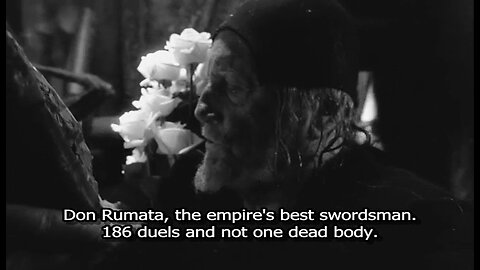
laststudio"Hard to Be a God" ( "Trudno byt bogom", 2013 ) Director: Aleksei German In the distant future, a space traveler from Earth breaks a special law and interferes with the history of another, Medieval-like planet. https://www.imdb.com/title/ _ _ _ Hard to Be a God (Russian: Трудно быть богом, romanized: Trudno byt' bogom) is a 2013 Russian epic medieval science fiction film directed by Aleksei German who co-wrote the screenplay with Svetlana Karmalita. It was his last film and it is based on the 1964 novel of the same name by Arkady and Boris Strugatsky. A team of scientists travels from Earth to the planet Arkanar, which is inhabited by a race of humans identical to those of Earth. Their civilization has not progressed beyond a civilization that is culturally and technologically nearly identical to medieval Europe. One reason may be the militantly anti-intellectual attitude of Arkanar: Anyone whom the inhabitants of the planet consider to be an "intellectual" is instantly executed. The Earth scientists are ordered not to interfere and to conceal their identities; but one of them, Rumata, wishes to stop the senseless murders of brilliant minds and is forced at last to pick a side. https://en.wikipedia.org/wiki/Hard_to_Be_a_God_(2013_film) _ _ _87 views -
"Trains of Thoughts" ( Dir: Timo Novotny, 2012 )
laststudio"Trains of Thoughts" (2012) Director: Timo Novotny An audio-visual essay, which reflects upon & compares metro systems around the world. It is an exploration of a world inside the world as well as feelings, fascination, obsession, fear and themes - of survival, control & silence. For the majority of people, the subway merely represents a reliable means of transportation that quickly and safely transports them to their destination. Timo Novotny’s audio-visual essay, however, reveals that the underground railway is much more. It is quite literally the seedbed of a wide variety of human stories (New York), a centre of diverse musical production (Los Angeles), a favoured locale of suicide and sexual deviance (Tokyo), a glitzy tourist attraction (Moscow), or an ideal place for study or relaxation. Set to the excellent, uninterrupted soundtrack by Sofa Surfers (rightfully dubbed the Austrian Massive Attack), the filmmakers accompany us through the underground railways of several world metropolises, discovering what makes them unique. Sometimes visually reminiscent of a classy music video, this whimsical movie stands out for its original visual treatment and effective interplay of music and image. KVIFF https://www.imdb.com/title/tt1667875/ https://trainsofthoughts.com/ https://dafilms.com/film/10182-trains-of-thoughts https://www.kviff.com/.../film/25/6932-trains-of-thoughts _ _ _ Sofa Surfers - http://www.sofasurfers.info/ https://en.wikipedia.org/wiki/Sofa_Surfers_(band) _ _ _ See less66 views -
"Melody for a Street-organ" ( Kira Muratova, 2009 )
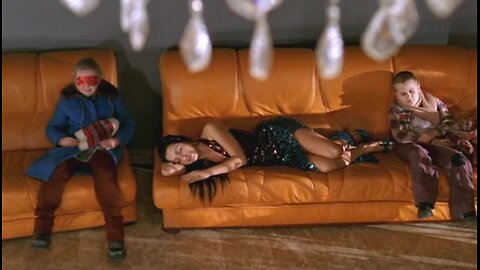
laststudio"Melody for a Street-organ" ( "Melodiya dlya sharmanki", 2009 ) Director: Kira Muratova Two young orphan siblings travel to Kyiv in search of their missing father. Scared of being separated and sent to orphanages, they hope to reunite with the last link of their shattered family. https://www.imdb.com/title/tt1482194/ _ _ _ "Melody for a Street Organ" A young brother and sister, half-siblings who have recently lost their mother, are about to be separated to different orphanages. Unable to bear the thought of being apart, they escape into Kyiv in search of their long-lost fathers. It’s Christmas Eve, and the city has been transformed into a festive fairground full of caroling, sweet scents, and the prospect of possible miracles. As the children wander through the city, ignored by adults absorbed in their own affairs, they encounter a parade of eccentrics. Departing loosely from Hans Christian Andersen’s A Little Match Girl, Melody for a Street Organ recalls Kira Muratova’s 1983 film Among the Grey Stones in its approach to children, laying bare the director’s deep misanthropy toward a world in which only children and animals might be worthy of compassion. Rights courtesy of Janus Films. https://www.filmlinc.org/films/melody-for-a-street-organ/ _ _ _ "Melody for a Street Organ" [Мелодия для шарманки] Ukraine, 2009 Color, 153 minutes Russian with English subtitles Director: Kira Muratova Screenplay: Vladimir Zuev and Kira Muratova Cinematography: Vladimir Pankov Art Director: Evgenii Golubenko Cast: Olena Kostiuk and Roma Burlaka, with cameoes by Zhan Daniel', Georgii Deliev, Renata Litvinova, Nina Ruslanova, Oleg Tabakov Producer: Oleg Kokhan Production: Sota Cinema Group Stories of orphans have long been a staple of Russo-Soviet cinema, going as far back as The Road to Life (Nikolai Ekk, 1931), one of the first sound films made in the USSR. Orphans have returned to constitute a mini-boom in the post-Soviet period—they are featured literally in such films as Bastards (Aleksandr Atanes'ian, 2006) and The Italian (Andrei Kravchuk, 2005). If we understand the category of orphanness to include the larger crisis of the missing or inadequate father or (much less commonly) mother, the list of examples can be extended almost without end. Some of the most vivid examples from the last decade would include A Driver for Vera (Pavel Chukhrai, 2004), Russian (Aleksandr Veledinskii, 2004), Vanished Empire (Karen Shakhnazarov, 2008), Once Upon a Time in the Provinces (Katia Shagalova, 2008), and The Fly (Vladimir Kott, 2008). The parental bond is sometimes restored, sometimes replaced, sometimes abandoned, but all of these films share a faith in the power of redemption and the need for the reestablishment of the social bond between parent and child or between individual and society. Cruelty, suffering, and loneliness serve to highlight by contrast the enduring value of human compassion and the strength of the social bond. Kira Muratova will have none of this. Her signature style, one of the most immediately recognizable in 21st-century Russian cinema, forecloses any kind of redemption based on human values or social cohesion. People in Muratova’s cinematic world are unsuited for any kind of social bond. Indeed, the problem of communication is a commonplace in all of Muratova’s films and Melody for a Street Organ gives us ample opportunity to experience both the flood of verbiage emanating from the film’s characters and the utter lack of any real communication between or among them. It would be almost a relief for the viewer if Alena and Nikita, the two small heroes of the film, were simply treated with cruelty. Their appeals to the world around them are most often met not with rejection, but with a maddening refusal to acknowledge their needs at all. By extension, the film is also very unwilling to acknowledge the viewers’ need to make sense of the film’s meaning. It tantalizes us with details that suggest a social or symbolic message. The fact that the children have a common mother but two different fathers cries out for a symbolic interpretation, but the film refuses to give us enough information with which to construct such a meaning. There is no lost identity to be constructed, no place in society (or any kind of symbolic network) to be taken up. As with any film by Muratova, the central question is the director’s attitude toward humanity itself—what is often held to be her misanthropic view of the human condition. The camera work itself lays bare Muratova’s approach to the human material of her film. In one of the visually most striking shots of the work, we see the waiting room of a train station from above: the sleeping passengers are sprawled about the furniture as so many human dolls, twisted into bizarre contortions. Humanity is indeed simply material for Muratova, props that she sets into bizarre positions and inscrutable configurations. She denies her puppets any real human dignity and puts them on display as if to force us, the viewers, to contemplate how little dignity humanity itself deserves. Although the film is beautifully shot and constructed, it denies us any real visual pleasure as the camera compulsively dwells upon the very scenes from which we automatically and naturally wish to look away. Psychotic religious seers, street children turned gangsters, the rotting dregs of society all become fascinating objects of contemplation for Vladimir Pankov’s camera eye. And yet, as Nancy Condee notes in her review of the film, it must also be granted that Alena and Nikita are themselves “vulnerable and wholly intelligible children” (Kinokultura 26). Although the film does not cohere as a search for love, or shelter, or family, the viewer is called to feel sympathy for them as victims of their circumstances. While the children are presented in the opening shots of the film as just two more ridiculous playthings in Muratova’s cruel puppet theater, they emerge as figures for whom we feel pity. It is this that distinguishes this work from many of Muratova’s earlier films. Although Melody for a Street Organ is as merciless as any of her films in its disdain for human dignity, it does not ridicule us, the viewers, for our feelings of human compassion. The film is also notable for the veritable showcase of acting talent that Muratova has gathered into her films over the years. Oleg Tabakov, Renata Litvinova, and Nina Ruslanova are just three of the many well-known actors with whom Muratova has worked over the years and who give short but memorable performances in this film. Melody for a Street Organ was awarded the top prize for Best Film at the 2009 Kinoshock festival of films from the post-Soviet region, as well as the FIPRESCI prize at the 31st Moscow International Film Festival. Kira Muratova (1934- ): Muratova was born in Soroca (in present-day Moldova) and completed her studies at the State Institute for Filmmaking (VGIK) in Moscow in 1962. After directing two films together with her husband, Aleksandr Muratov, she began her solo directing career in 1967 with Brief Encounters, the first of her many films to be banned and/or severely censored by the authorities during the Soviet era. Since the collapse of the Soviet Union, Muratova has emerged as one of the most important cinematic auteurs of her age. Her late-perestroika film Asthenic Syndrome marked the peak of so-called chernukha filmmaking, and her post-Soviet work continues to challenge both ethical and aesthetic sensibilities. Despite her long association with Odessa Film Studios, all of her films to date have been in Russian. Filmography: 2009 Melody for a Street Organ 2007 Two in One 2004 The Tuner 2002 Chekhovian Motifs 2001 Minor People 1999 Letter to America 1997 Three Stories 1994 Passions 1992 The Sentimental Policeman 1989 Asthenic Syndrome 1987 A Change of Fortune 1983 Among the Grey Stones 1978 Getting to Know the Big Wide World 1971 The Long Farewell 1967 Brief Encounters https://www.neweastcinema.pitt.edu/melody-for-a-street-organ/ _ _ _42 views -
"Shangri-La" ( Takashi Miike - "Japan Goes Bankrupt", 2002 )
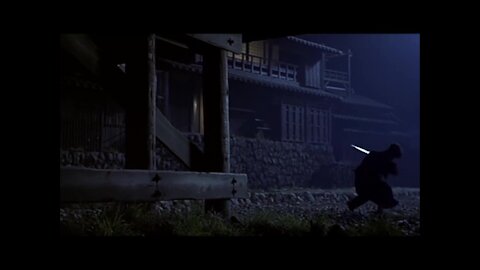
laststudio"Shangri-La" ( "Kinyû hametsu Nippon: Tôgenkyô no hitobito", 2002 ) Director: Takashi Miike Follows the lives of a group of homeless people in Japan who run into a man who nearly commits suicide and decide to help him out of his financial troubles. Using their various ingenious resources they embark on a complex scheme to blackmail a crooked businessman, whose bankruptcy claim has put people out of work. https://www.imdb.com/title/tt0316819/ _ _ _ Shangri-La (金融破滅ニッポン 桃源郷の人々, Kin'yū hametsu Nippon: Tōgenkyō no hito-bito) is a 2002 Japanese comedy film directed by Takashi Miike. It is based on the autobiographical novel Tōgenkyō no hito-bito by Yūji Aoki. Plot The wealthy businessman Korijima of Uwazoko-ya declares bankruptcy, leaving a 10-million-yen contract unpaid to Shosuke Umemoto's printing shop and thereby leaving Shosuke's brother Chusuke unable to repay a 9-million-yen loan to the loan shark Shoko. Shosuke plans to kill himself in his car through carbon monoxide poisoning but stops to assist a man from a nearby homeless village who has been injured by members of the Seiryu mob for threatening to tell the police about their illegal dumping of trash in the village. In return, the members of the village make use their various ingenious resources as they embark on a complex scheme to blackmail Korijima. The liquidator arrives and take everything in Shosuke's printing shop apart from Shosuke's father's prized Heidel printer. The liquidator leaves Shosuke 1.3 million yen and schedules the pickup of the office supplies on the evening of the 27th. The homeless village's Mayor borrows 600,000 yen from Shosuke. The village's Deputy Kuwata, a former postal worker, gives it to Mr. Okajima to buy 100 shares in Dango Construction, a company with close ties to the Department of Public Works. When Shoko demands the repayment of Chusuke's loan, the Mayor secretly reveals himself to Shoko as Kiyota the Hitman and convinces Shoko to forgive the debt and give him ten blank checks, which Shosuke uses to forge bank drafts using Dango's seal. They leave the drafts in a wallet at an ATM. When the wallet is discovered by a man, they suggest to the man that he should have the newspaper write a story about it in order to ensure that he gets a reward for finding the bank drafts, thereby ensuring uncertainty among investors and lowering the share price. Kiyota's former lover Mari, who is still struggling to make ends meet in the city, has become pregnant by her new lover yet still lends Kiyota money to accomplish his scheme. Seisuke and his wife leave his children and his elderly mother with his brother and run away to the homeless village before the liquidator comes. They use the Heidel printer to create four-color flyers advertising a fresh fish festival on the front but with pictures on the back of Korijima's 8.3-billion-yen private assets discovered by Ume, a former private detective now living in the village. They extort 20 million yen from Korijima in exchange for the flyers, plates, photos, and negatives. Dango's share price has dropped significantly in the meantime, allowing the men to buy stock cheaply. News reports that the CEO of Dango has a mistress who is 40 years younger than he is gives investors renewed confidence in his health, causing a rush on shares and driving up the share price. When the share price doubles, they sell all their shares and make a fortune, but the residents of the homeless village decide to give all of the money to Shosuke and his wife to enable them to pay their employees' salaries and return to their life in the city. https://en.wikipedia.org/wiki/Shangri-La_(film) _ _ _122 views -
"Russian Ark" ( Aleksandr Sokurov, 2002 )
laststudio"Russian Ark" ( "Russkiy Kovcheg", 2002 ) Director: Aleksandr Sokurov A 19th century French aristocrat, notorious for his scathing memoirs about life in Russia, travels through the Russian State Hermitage Museum and encounters historical figures from the last 200+ years. https://www.imdb.com/title/tt0318034/ _ _ _ Russian Ark (Russian: Русский ковчег, romanized: Russkij kovcheg) is a 2002 experimental historical drama film directed by Alexander Sokurov. The plot follows an unnamed narrator, who wanders through the Winter Palace in Saint Petersburg, and implies that he died in some horrible accident and is a ghost drifting through. In each room, he encounters various real and fictional people from various periods in the city's 300-year history. He is accompanied by "the European", who represents the Marquis de Custine, a 19th-century French traveler. An international co-production between Russia and Germany, Russian Ark was shot entirely in the Winter Palace of the Russian State Hermitage Museum on 23 December 2001, using a one-take single 87-minute Steadicam sequence shot. It extensively uses the fourth wall device, but repeatedly broken and re-erected. At times, the narrator and the companion interact with the other performers, while at other times they pass unnoticed. The film was entered into the 2002 Cannes Film Festival. https://en.wikipedia.org/wiki/Russian_Ark _ _ _ "The Remaining Second World: Sokurov and Russian Ark" Benjamin Halligan March 2003 Film in the Eye of History, Issue 25 https://www.sensesofcinema.com/2003/film-in-the-eye-of-history/russian_ark/ _ _ _100 views -
"Chekhov's Motifs" ( Kira Muratova, 2002 )
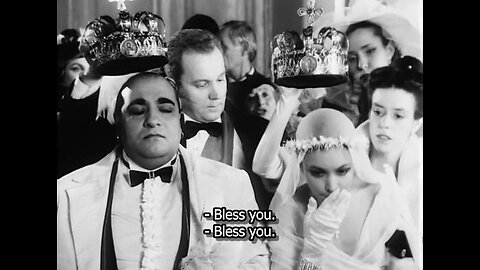
laststudio"Chekhov's Motifs" ( "Chekhovskie motivy", 2002 ) Director: Kira Muratova Kira Muratova's "Checkhovskie motivy", adapted from a couple of works by the famous writer, concerns a man who, in the middle of his wedding, notices that in the audience is his deceased ex-lover. https://www.imdb.com/title/tt0321641/ _ _ _ Chekhov's Motifs (Russian: Чеховские мотивы, translit. Chekhovskie motivy, since released in English as Chekhovian Motifs) is a 2002 Russian-Ukrainian comedy film directed by Kira Muratova. It was entered into the 24th Moscow International Film Festival. At the 2002 Russian Guild of Film Critics Awards Kira Muratova received the prize for Best Director. It is based on two works of Anton Chekhov: the short story Difficult People is divided to frame the one act play Tatyana Repina. In the large Shiryaev family, the eldest son, Pyotr, a university student, struggles to free himself from his domineering father. His meek mother tries to shield him, while his 13-year-old sister Varvara remains indifferent to the family's conflicts. As Pyotr leaves home to head to the city for his studies, he unexpectedly finds himself at a rural church where a wedding of visiting bohemians is taking place. During the lengthy church service, the guests, restless and bored, are suddenly distracted by a peculiar sight: a woman cloaked in black, moaning softly, appears within the church. Some guests, followed by the groom himself, begin to believe she is the ghost of his former lover, who had taken her own life. https://en.wikipedia.org/wiki/Chekhov%27s_Motifs _ _ _ "Chekhovian Motifs" As any other review will also tell you, the film is called Chekhovian Motifs because it is based on two of Anton Chekhov’s lesser-known texts, the short story “Difficult People” and the parody play Tat’iana Repina. The two proto-plots are attached to each other by means of a character from the first one, a young man (Filipp Panov) who gets involved in a row with his father over money, leaves the house, and meets, on his way to a station, a guest hurrying to the wedding from Tat’iana Repina. About 40 per cent of the screen time is then given to a “life-size” (and seemingly larger-than-life) reproduction of an Orthodox wedding ritual, interlaced, just as in Chekhov’s joke of a play, with inappropriately random conversations of the guests. That the film bears neither one of the titles nor a combination of them, academic paper-style (The Mystery of Tat’iana Repina: Difficult and Dead People in Chekhov, perhaps?) can be explained by the fact that Muratova and her writing partner and husband, Evgenii Golubenko, added things here and there to the point where the director herself could not remember where Chekhov’s texts ended and their script began. In preparation for the project, moreover, Muratova read more than just the two works by Chekhov, so it would indeed be fair to say that there is some extract of Chekhov’s characters, themes, or motifs present in the film. If one links the term “motif” back to music, it is easy to see Kira Muratova’s film as a “variations on a theme,” a musical development of one or two basic melodies, taking them through various repetitions and permutations. Muratova’s long-standing position as an auteur undoubtedly justified this reading in the eyes of many critics and festival audiences. Some even said that Muratova’s film related to nothing but Muratova, and Chekhov was only a pretext. It is easy, however, to attribute a number of elements or “motifs” in the film to Chekhov. In the formulaic and textbook-based tradition of Russian school curriculum and popular culture, classical writers for more than a century have been distilled into a handful of useful slogans. Pushkin is quite simply “our everything”; Gogol’ is “a rare bird that flies to the middle of the Dnieper”; Dostoevskii – “am I a trembling creature or do I have the right?;” Lev Tolstoi is “Count Andrei’s oak tree;” and Chekhov is “squeezing the slave out of you drop by drop.” In fact, perhaps due to his supreme mastery as a short story writer, a number of Chekhov’s turns of phrase and stock tricks have entered the common repository of knowledge. Almost anyone would be able to say that Chekhov is about tragedies that happen while people are simply having tea; he is about the slow death of the noble class and the intellectual bankruptcy of the intelligentsia; he’s about suicides that happen off-stage; he is all about rifles that hang on wall and absolutely have to go off in the last act. This last was actually advice given to the writer by Nemirovich-Danchenko, but it is emblematic of Chekhov’s position in contemporary culture: it does not matter anymore if these “motifs” are facts or myths. If the rifle is missing in Chekhovian Motifs, at least the intelligentsia is most definitely still there; and it still struggles. In fact, with the appearance of Aleksandr Bashirov at the very beginning of the film, we are firmly in a Chekhovian world of nonsense, down the rabbit hole of provincial Russia. Its topoi remain the same: a yard, a dining room, a road, a church. It is even black-and-white, like something that Chekhov himself might have seen on the screen. It is hard to say what the black-and-white aesthetics of the film serves exactly. In its second half, of course, it turns the bride (Natal’ia Buz’ko) into a silent melodrama heroine, with her heavily made up eyes and a pout reminiscent of the two Veras: Karalli and Kholodnaia. The action loses a time stamp, a direct connection to any time, as words from the late 19th century clash with cars and clothes from the late 20th century. It presents a slice of time (especially in the wedding scene), and a unique take on the concept of “mummified time,” perhaps even a reflection on cinema and its history. There is also a sense of her own, “Muratovian,” motifs repeated, perhaps due to her trademark combination of established actors, typages, and former members of a farce TV program Maski Show, which was known for its slapstick and utterly silent lowbrow comedy, thus contributing to the dislocated silent cinema effect. Chekhovian Motifs is a silent film that struggles to speak. It is possible that the decision to shoot the film in black-and-white is directly related to the fact that Muratova strips the dialogue down to the language of children. They slowly acquire speech by mindlessly repeating the outer form of words and phrases used in their hearing—“It’s a barn! It’s a shop! It’s a barn! It’s a shop!” or “Porridge, porridge, television, porridge, porridge. Baits, baits, porridge, porridge, television…”—are equally valuable to their interactions with the world even if they are equally meaningless to grown-ups. Meanwhile, Muratova’s grown-up characters also have difficulty expressing their emotions and thoughts, especially in the heat of the moment (and there are many such moments). They talk incessantly about being silent; they beseech their interlocutors to listen to them but don’t say anything beyond the repetition of this appeal. The dialogue is a hay-stack of unrelated words that might contain a needle of meaning. Chekhov himself was attuned to the discrepancy between sincere feelings and stilted words: his three sisters repeat “To Moscow! To Moscow!” until the words lose their meaning completely. The “much-esteemed bookcase” of The Cherry Orchard, the “people, lions, eagles, and partridges” of The Seagull, not to mention snippets of songs and billiards terminology used as fillers are also “Chekhovian motifs.” “Murderous repetition” (Jose Alaniz) is not only Muratova’s trademark, it is Chekhov’s as well. The difference is only in degree. Chekhov’s theater is more than anything else the comedy of repetitions. In Muratova, the verbal repetitions rise to the level of trans-sense poetry, together with pauses that provide counterpoint to the sound fragments and add to the feeling of a mad silent movie that suddenly burst into speech. In a way, Woody Allen in his mishmash parody of Russian literary classics, Love and Death (1975), comes surprisingly close to this Chekhovian combination of the outrageously absurd, the poignantly ironic, and the underlying sense of resignation, evident in Muratova’s film as well. Some critics maintained that the dominant mood of Chekhov that Muratova had been able to reproduce in the film was his sense of being tired of people. However, Chekhov himself famously insisted that his Cherry Orchard, despite all the heartbreak and melodrama on and off the stage, was in fact a comedy and had to be performed as such. And, just like Chekhov, Muratova asserts that if not all then many of her films contain elements of comedy, with Chekhovian Motifs being essentially a dramedy. Natalie Ryabchikova https://neweastcinema.pitt.edu/2017/04/17/ch/ _ _ _96 views -
"Second Class Citizens" ( Kira Muratova - "Vtorostepennye lyudi", 2001 )
laststudio"Second Class Citizens" ( "Vtorostepennye lyudi", 2001 ) Director: Kira Muratova https://www.imdb.com/title/tt0281357/ _ _ _58 views -
"Taboo" ( Nagisa Ôshima - "Gohatto", 1999 )
laststudio"Taboo" ( "Gohatto", 1999 ) Director: Nagisa Ôshima The new member of a samurai militia unit causes disruption as several of his colleagues fall in love with him, threatening to disturb the rigid code of their squad. https://www.imdb.com/title/tt0213682/ _ _ _ Gohatto (御法度), also known as Taboo, is a 1999 Japanese film directed by Nagisa Ōshima. Its subject is homosexuality in the Shinsengumi during the bakumatsu period, the end of the samurai era in the mid-19th century. The production was Õshima's final film before his death, thirteen years after Gohatto's premiere. Plot At the start of the movie, the young and handsome Kanō Sōzaburō (Ryuhei Matsuda) is admitted to the Shinsengumi, an elite samurai group led by Kondō Isami (Yoichi Sai) that seeks to defend the Tokugawa shogunate against reformist forces. He is a very skilled swordsman, but it is his appearance that makes many of the others in the (strictly male) group, both students and superiors, attracted to him, creating tension within the group of people vying for Kanō's affections. Production The Japanese title of the film, Gohatto, is an old-fashioned term that can be translated as "against the law". Nowadays, "gohatto" can be translated as "strictly forbidden" or "taboo" ("tabu").[citation needed] During the filming of Taboo, actor Ryuhei Matsuda was sixteen years old.[citation needed] It was Nagisa Ōshima's final directorial effort. Reception Roger Ebert wrote that "Taboo is not an entirely successful film, but it isn't boring." Peter Bradshaw of The Guardian said that it was "a film which for some will be dismayingly impenetrable, but it is unmistakably the work of a master film-maker and a work of enormous strangeness and charm." On the review aggregator website Rotten Tomatoes, 71% of 21 critics' reviews are positive. The film was a financial success in Japan, grossing ¥1.01 billion and becoming one of the highest-grossing films of the year. The film was also given a limited theatrical release in North America where it grossed $114,425. https://en.wikipedia.org/wiki/Gohatto _ _ _75 views -
Nagisa Oshima - Gohatto - fight scene, 1999
laststudioNagisa Oshima - Gohatto, 1999 http://www.imdb.com/title/tt0213682/ _ _ _ Karl-Kristjan Nagel - https://nagelid.ee/ http://erztria.blogspot.com/ _ _ _31 views -
"Three Stories" ( Kira Muratova, 1997 )
laststudio"Three Stories" ( "Tri istorii", 1997 ) Director: Kira Muratova A man goes to see his former schoolmate working at a boiler house and persuades him to burn in the furnace the corpse of his communal flat neighbor whom he has just murdered after a quarrel. An orphaned girl gets a job in the archives of the maternity home to find out the identity of her mother who abandoned her years earlier. She finds her, befriends her and takes the first opportunity to throw her into the sea. An old intellectual tries to explain to the neighbor's five-year-old daughter "all the abomination of her lumpen existence". The girl feeling hurt for her mother decides to poison the old man with arsenic.—NTV-PROFIT <[email protected]> https://www.imdb.com/title/tt0120372/ _ _ _ Three Stories (Russian: Три истории, romanized: Tri istorii) is a 1997 Russian-Ukrainian crime comedy film directed by Kira Muratova. It was entered into the 47th Berlin International Film Festival. The picture won the Special Jury Prize at Kinotavr. The film is dedicated to the memory of Sergei Apollinarievich Gerasimov. Among seven other films by Muratova, it is included in the list of List of the 100 best films in the history of Ukrainian cinema. The film is an anthology film, featuring three different stories. In Boiler Room No. 6, two friends converse in a boiler room. One of them keeps complaining about an unbearable neighbor who is stalking him both at home and at work. What he is not mentioning in the conversation is that he has already killed her and hidden her body. Ophelia focuses on a misanthropic hospital archivist, who is particularly resentful of mothers who abandon their children. So, she proceeds to murder one these uncaring mothers. In A Girl and Death, an old man reluctantly befriends a little girl from his neighborhood, though she irritates him. The girl poisons his water, with the expectation that she and her mother will take over his room after his death. The film consists of three novellas the plot of which is based on criminal stories that do not have usual logical motives. The people who become killers in all these episodes are the ones who at first glance seem to be completely incapable of murder. The First Story "Boiler Room No. 6" A modest employee brings a cupboard to the boiler room for his friend, Tikhomirov. He works as a stoker, writes poetry in his spare time and rents out a place for intimate pleasure to local homosexuals. During a normal conversation between old acquaintances, Tikhomirov time after time returns to the story of his unbearable neighbor who does not let him live in peace and even comes to his workplace in order to compromise him... Tikhomirov gets interrupted and is not able to get to the point of his request by frequenters of the depraved corner, who by the way also see him as an object for pleasure and even offer money to him... In the closet lies the naked corpse of Tikhomirov's neighbor (she walked around the house like this), which he intends to burn in the boiler room. The Second Story "Ophelia" Ofa works in a hospital archive. She does not like men, women, or children: "I would rate this planet as zero." Her attention is especially directed towards those mothers who abandon their children in a maternity hospital. A gynecologist makes advances towards Ofa, whom she uses for an alibi at the moment she commits the murder of a disowning mother. Her literary ideal is Shakespeare's Ophelia, whose fate Ofa arranges for a single woman – her own mother, Alexandra Ivanovna Ivanova, who many years ago gave her up. The Third Story "A Girl and Death" An elderly man in a wheelchair operates a coffee grinder. A little girl who lives nearby plays with him, irritating and annoying the old man from time to time. From the mouth of the baby resonates the neighbor's expectation, that after his death she together with her mother will get his room. The old man teaches the girl how to play chess, reads a book to her, and she in turn brings a glass of water containing rat poison. After drinking a cup of water, the old man dies. https://en.wikipedia.org/wiki/Three_Stories_(1997_film) _ _ _ Ukrainian filmmaker Kira Muratova offers a darkly comical look at everyday cruelty in these three savage tales. The first, “Boiler Room No. 6” is based on a story by Yevgeny Golubenko and takes place with in a blue-tinted boiler room where a panic-stricken resident of a communal apartment has dragged the body of his neighbor, a young woman he killed over an argument about a bar of soap. The nearly surreal “Ophelia,” the second story, centers on the vengeance of the title woman, a blonde beauty who works in a maternity hospital. The third vignette, “The Maiden and Death” follows a winsome little girl who tires of being constantly admonished by her well-meaning, but wearisome, paralyzed grandfather. https://rarefilmm.com/2018/06/tri-istorii-1997/ _ _ _151 views