-
🔥⚠️⚠️🔥 Our grand parents who have confidence in mainstream media - This isn't real
EXPOSE & SHARE EVERYTHINGOur grand parents who have confidence in mainstream media are on the verge of having problems, this isn't real... This will get out of hand when they fake an Alien attack...238 views 2 comments -
The Century of the Self (2002) - Part 3 - There Is a Policeman Inside All Our Heads He Must Be Destroyed
InnerLightThe Century of the Self is a 2002 British television documentary series by filmmaker Adam Curtis. It focuses on the work of psychoanalysts Sigmund Freud and Anna Freud, and PR consultant Edward Bernays. In episode one, Curtis says, “This series is about how those in power have used Freud’s theories to try and control the dangerous crowd in an age of mass democracy.” Episodes: “Happiness Machines” (originally broadcast 17 March 2002) “The Engineering of Consent” (originally broadcast 24 March 2002) “There is a Policeman Inside All Our Heads; He Must Be Destroyed” (originally broadcast 31 March 2002) “Eight People Sipping Wine in Kettering” (originally broadcast 7 April 2002) Sigmund Freud, the founder of psychoanalysis, changed our perception of the mind and its workings. The documentary explores the various ways that governments and corporations have used Freud’s theories. Freud and his nephew Edward Bernays, who was the first to use psychological techniques in public relations, are discussed in part one. His daughter Anna Freud, a pioneer of child psychology, is mentioned in part two. Wilhelm Reich, an opponent of Freud’s theories, is discussed in part three. Along these lines, The Century of the Self asks deeper questions about the roots and methods of consumerism and commodification and their implications. It also questions the modern way people see themselves, the attitudes to fashion, and superficiality. The business and political worlds use psychological techniques to read, create and fulfill the desires of the public, and to make their products and speeches as pleasing as possible to consumers and voters. Curtis questions the intentions and origins of this relatively new approach to engaging the public. Where once the political process was about engaging people’s rational, conscious minds, as well as facilitating their needs as a group, Stuart Ewen, a historian of public relations, argues that politicians now appeal to primitive impulses that have little bearing on issues outside the narrow self-interests of a consumer society. The words of Paul Mazur, a leading Wall Street banker working for Lehman Brothers in 1927, are cited: “We must shift America from a needs- to a desires-culture. People must be trained to desire, to want new things, even before the old have been entirely consumed… Man’s desires must overshadow his needs.” In part four the main subjects are Philip Gould, a political strategist, and Matthew Freud, a PR consultant and the great-grandson of Sigmund Freud. In the 1990s, they were instrumental to bringing the Democratic Party in the US and New Labour in the United Kingdom back into power through use of the focus group, originally invented by psychoanalysts employed by US corporations to allow consumers to express their feelings and needs, just as patients do in psychotherapy. Curtis ends by saying that, “Although we feel we are free, in reality, we—like the politicians—have become the slaves of our own desires,” and compares Britain and America to ‘Democracy’, an exhibit at the 1939 New York World’s Fair created by Edward Bernays. https://consciousnessminded.com/the-century-of-the-self-full-documentary/518 views -
The Century of the Self (2002) - Part 4 - Eight People Sipping Wine in Kettering
InnerLightThe Century of the Self is a 2002 British television documentary series by filmmaker Adam Curtis. It focuses on the work of psychoanalysts Sigmund Freud and Anna Freud, and PR consultant Edward Bernays. In episode one, Curtis says, “This series is about how those in power have used Freud’s theories to try and control the dangerous crowd in an age of mass democracy.” Episodes: “Happiness Machines” (originally broadcast 17 March 2002) “The Engineering of Consent” (originally broadcast 24 March 2002) “There is a Policeman Inside All Our Heads; He Must Be Destroyed” (originally broadcast 31 March 2002) “Eight People Sipping Wine in Kettering” (originally broadcast 7 April 2002) Sigmund Freud, the founder of psychoanalysis, changed our perception of the mind and its workings. The documentary explores the various ways that governments and corporations have used Freud’s theories. Freud and his nephew Edward Bernays, who was the first to use psychological techniques in public relations, are discussed in part one. His daughter Anna Freud, a pioneer of child psychology, is mentioned in part two. Wilhelm Reich, an opponent of Freud’s theories, is discussed in part three. Along these lines, The Century of the Self asks deeper questions about the roots and methods of consumerism and commodification and their implications. It also questions the modern way people see themselves, the attitudes to fashion, and superficiality. The business and political worlds use psychological techniques to read, create and fulfill the desires of the public, and to make their products and speeches as pleasing as possible to consumers and voters. Curtis questions the intentions and origins of this relatively new approach to engaging the public. Where once the political process was about engaging people’s rational, conscious minds, as well as facilitating their needs as a group, Stuart Ewen, a historian of public relations, argues that politicians now appeal to primitive impulses that have little bearing on issues outside the narrow self-interests of a consumer society. The words of Paul Mazur, a leading Wall Street banker working for Lehman Brothers in 1927, are cited: “We must shift America from a needs- to a desires-culture. People must be trained to desire, to want new things, even before the old have been entirely consumed… Man’s desires must overshadow his needs.” In part four the main subjects are Philip Gould, a political strategist, and Matthew Freud, a PR consultant and the great-grandson of Sigmund Freud. In the 1990s, they were instrumental to bringing the Democratic Party in the US and New Labour in the United Kingdom back into power through use of the focus group, originally invented by psychoanalysts employed by US corporations to allow consumers to express their feelings and needs, just as patients do in psychotherapy. Curtis ends by saying that, “Although we feel we are free, in reality, we—like the politicians—have become the slaves of our own desires,” and compares Britain and America to ‘Democracy’, an exhibit at the 1939 New York World’s Fair created by Edward Bernays. https://consciousnessminded.com/the-century-of-the-self-full-documentary/611 views -
The Century of the Self (2002) - Part 1 - Happiness Machines
InnerLightThe Century of the Self is a 2002 British television documentary series by filmmaker Adam Curtis. It focuses on the work of psychoanalysts Sigmund Freud and Anna Freud, and PR consultant Edward Bernays. In episode one, Curtis says, “This series is about how those in power have used Freud’s theories to try and control the dangerous crowd in an age of mass democracy.” Episodes: “Happiness Machines” (originally broadcast 17 March 2002) “The Engineering of Consent” (originally broadcast 24 March 2002) “There is a Policeman Inside All Our Heads; He Must Be Destroyed” (originally broadcast 31 March 2002) “Eight People Sipping Wine in Kettering” (originally broadcast 7 April 2002) Sigmund Freud, the founder of psychoanalysis, changed our perception of the mind and its workings. The documentary explores the various ways that governments and corporations have used Freud’s theories. Freud and his nephew Edward Bernays, who was the first to use psychological techniques in public relations, are discussed in part one. His daughter Anna Freud, a pioneer of child psychology, is mentioned in part two. Wilhelm Reich, an opponent of Freud’s theories, is discussed in part three. Along these lines, The Century of the Self asks deeper questions about the roots and methods of consumerism and commodification and their implications. It also questions the modern way people see themselves, the attitudes to fashion, and superficiality. The business and political worlds use psychological techniques to read, create and fulfill the desires of the public, and to make their products and speeches as pleasing as possible to consumers and voters. Curtis questions the intentions and origins of this relatively new approach to engaging the public. Where once the political process was about engaging people’s rational, conscious minds, as well as facilitating their needs as a group, Stuart Ewen, a historian of public relations, argues that politicians now appeal to primitive impulses that have little bearing on issues outside the narrow self-interests of a consumer society. The words of Paul Mazur, a leading Wall Street banker working for Lehman Brothers in 1927, are cited: “We must shift America from a needs- to a desires-culture. People must be trained to desire, to want new things, even before the old have been entirely consumed… Man’s desires must overshadow his needs.” In part four the main subjects are Philip Gould, a political strategist, and Matthew Freud, a PR consultant and the great-grandson of Sigmund Freud. In the 1990s, they were instrumental to bringing the Democratic Party in the US and New Labour in the United Kingdom back into power through use of the focus group, originally invented by psychoanalysts employed by US corporations to allow consumers to express their feelings and needs, just as patients do in psychotherapy. Curtis ends by saying that, “Although we feel we are free, in reality, we—like the politicians—have become the slaves of our own desires,” and compares Britain and America to ‘Democracy’, an exhibit at the 1939 New York World’s Fair created by Edward Bernays. https://consciousnessminded.com/the-century-of-the-self-full-documentary/1.04K views -
Adam Curtis - Oh Dearism II & Non-Linear War (2014)
InnerLightA look back on the news events from 2014 reveals a confusing, muddled mess. Things are increasingly chaotic, along with the reporting of the events in the culture of 24-7 rolling news, sound-byte feeds and the Internet. The result, as we see, is not a coherent public understanding of these complex events, but more a profound mass-confusion, with discourse destroyed, which in-turn broods disengagement from the world and further atomizes an already divided-and-conquered public. It is this response that is a powerful form of social control, and is by design… https://thoughtmaybe.com/oh-dearism-2/ Transcript So much of the news this year has been hopeless, depressing and above all confusing. To which the only response is 'Oh Dear' But what this film is going to suggest is that defeatist response has become a central part of a new system of political control and to understand how this is happening you have to look to Russia and to a man called Vladislav Surkov who is a hero of our time. Surkov is one of President Putin's advisors and has helped him maintain his power for fifteen years, but he has done it in a very new way. He came originally from the avant-garde art world and those who have studied his career say that what Surkov has done is import ideas from conceptual art into the very heart of politics. His aim is to undermine people’s perception of the world so they never know what is really happening. Surkov turned Russian politics into a bewildering constantly changing piece of theatre, he sponsored all kinds of groups, from Neo-Nazi skin-heads to liberal human rights groups, he even backed parties that were opposed to President Putin, but the key thing was that Surkov then let it be known that this was what he was doing which meant that no one was sure what was real or fake. As one journalist put it 'It’s a strategy of power that keeps any opposition constantly confused, a ceaseless shape-shifting that is unstoppable because its indefinable.' which is exactly what Surkov is alleged to have done in the Ukraine this year. In typical fashion as the war began Surkov published a short story about something he called Non-Linear War. A war where you never know what the enemy are really up to or even who they are. The underlying aim Surkov says is not to win the war but to use the conflict to create a constant state of destabilized perception in order to manage and control. But maybe we have something similar emerging here in Britain, everything were told by journalists and politicians is confusing and contradictory, of course there is no Mr. Surkov in charge but it’s an odd non-linear world that plays into the hands of those in power. British troops have come home from Afghanistan but nobody seems to know whether it was a victory or whether it was a defeat. Aging disk-jockeys are prosecuted for crimes they committed decades ago, while practically no one in the city of London is prosecuted for the endless financial crimes that are being revealed there. In Syria we are told that President Assad is the evil enemy, but then his enemies turn out to be even more evil than him, so we bomb them and by doing that we help keep Assad in power. But the real epicenter of this non-linear world is the economy and the closest we have to our own shape-shifting post-modern politician is George Osbourne. He tells us proudly that the economy is growing but at the same time wages are going down, he says he is cutting the deficit but then its revealed that the deficit is going up. But the dark heart of this shape-shifting world is quantitative-easing, the government is insisting on taking billions of pounds out of the economy through its austerity program, yet at the very same time it is pumping billions of pounds in to the economy through quantitative-easing, the equivalent of £24,000 for every family in Britain. But it gets even more confusing because the Bank of England have admitted that those billions of pounds have not gone where they have supposed to, a vast amount of the money has actually found its way in to the hands of the wealthiest 5% in Britain, it has been described as the biggest transfer of wealth to the rich in recent documented history. It could be a huge scandal comparable to the greedy oligarchs in Russia. A ruthless elite siphoning off billions of public money. But nobody seems to know. It sums up the strange mood of our time where nothing really makes any coherent sense. We live with a constant vaudeville of contradictory stories that makes it impossible for any real opposition to emerge, because they can't counter it with a coherent narrative of their own and it means that we as individuals become ever more powerless, unable to challenge anything because we live in a state of confusion and uncertainty. To which the response is 'Oh Dear' But that’s what they want you to say.944 views -
The Century of the Self (2002) - Part 2 - The Engineering of Consent
InnerLightThe Century of the Self is a 2002 British television documentary series by filmmaker Adam Curtis. It focuses on the work of psychoanalysts Sigmund Freud and Anna Freud, and PR consultant Edward Bernays. In episode one, Curtis says, “This series is about how those in power have used Freud’s theories to try and control the dangerous crowd in an age of mass democracy.” Episodes: “Happiness Machines” (originally broadcast 17 March 2002) “The Engineering of Consent” (originally broadcast 24 March 2002) “There is a Policeman Inside All Our Heads; He Must Be Destroyed” (originally broadcast 31 March 2002) “Eight People Sipping Wine in Kettering” (originally broadcast 7 April 2002) Sigmund Freud, the founder of psychoanalysis, changed our perception of the mind and its workings. The documentary explores the various ways that governments and corporations have used Freud’s theories. Freud and his nephew Edward Bernays, who was the first to use psychological techniques in public relations, are discussed in part one. His daughter Anna Freud, a pioneer of child psychology, is mentioned in part two. Wilhelm Reich, an opponent of Freud’s theories, is discussed in part three. Along these lines, The Century of the Self asks deeper questions about the roots and methods of consumerism and commodification and their implications. It also questions the modern way people see themselves, the attitudes to fashion, and superficiality. The business and political worlds use psychological techniques to read, create and fulfill the desires of the public, and to make their products and speeches as pleasing as possible to consumers and voters. Curtis questions the intentions and origins of this relatively new approach to engaging the public. Where once the political process was about engaging people’s rational, conscious minds, as well as facilitating their needs as a group, Stuart Ewen, a historian of public relations, argues that politicians now appeal to primitive impulses that have little bearing on issues outside the narrow self-interests of a consumer society. The words of Paul Mazur, a leading Wall Street banker working for Lehman Brothers in 1927, are cited: “We must shift America from a needs- to a desires-culture. People must be trained to desire, to want new things, even before the old have been entirely consumed… Man’s desires must overshadow his needs.” In part four the main subjects are Philip Gould, a political strategist, and Matthew Freud, a PR consultant and the great-grandson of Sigmund Freud. In the 1990s, they were instrumental to bringing the Democratic Party in the US and New Labour in the United Kingdom back into power through use of the focus group, originally invented by psychoanalysts employed by US corporations to allow consumers to express their feelings and needs, just as patients do in psychotherapy. Curtis ends by saying that, “Although we feel we are free, in reality, we—like the politicians—have become the slaves of our own desires,” and compares Britain and America to ‘Democracy’, an exhibit at the 1939 New York World’s Fair created by Edward Bernays. https://consciousnessminded.com/the-century-of-the-self-full-documentary/621 views -
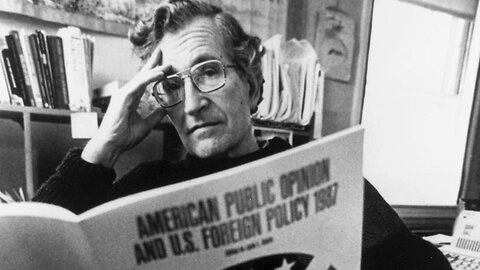
Manufacturing Consent (1992)
InnerLightAn in-depth study into how western propaganda became so effective, and so profitable. This seminal documentary film explores the analysis of political economy and mass media presented in the 1988 book, Manufacturing Consent, written by scholars Noam Chomsky and Edward S. Herman. Noam Chomsky. Here Canadian filmmakers Mark Achbar and Peter Wintonick expand on Chomsky and Herman’s propaganda model thesis that corporate media, as profit-driven institutions, tend to serve and further the agendas and interests of dominant, elite groups in the society. Incredibly informative and an essential building block to any study and understanding of modern propaganda in the West. Run time: 2 hrs 47 min Directed and Written By: Mark Achbar and Peter Wintonick Production: Zeitgeist Films (Australia) _________________________________ Manufacturing Consent [The Political Economy Of The Mass Media] by Chomsky, Noam https://archive.org/details/pdfy-NekqfnoWIEuYgdZl https://files.libcom.org/files/2022-04/manufacturing_consent.pdf - Public Opinion by Lippmann, Walter https://archive.org/details/in.ernet.dli.2015.126489/ https://d1lexza0zk46za.cloudfront.net/history/american-documents/documents/wlippmann-public-opinion-1922.pdf458 views 2 comments -
The W.H.O. Changed The Definition of Pandemic in 2009 So Big Pharma Would Benefit
GPL220The WHO changed the definition of the word "Pandemic" to allow pharma companies to make more profit.5 views -
New Zealand Whistleblowers Are Being Arrested For Exposing Deadly Pfizer Vaxes!
GPL220All eyes on New Zealand as the Vax pushers in the government are exposed. Will they lock up all the whistleblowers? New Zealand Whistleblowers Who Exposed Pfizer Last Week Were Just Raided12 views 1 comment