-
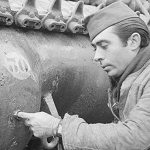
French-made Canon d'Infanterie de 37 modèle 1916 TRP deployed by US troops circa 1918
hw97karbineThe Canon d'Infanterie de 37 modèle 1916 TRP (37mm mle.1916) was a French infantry support gun, first used during World War I. TRP stands for tir rapide, Puteaux ("fast-firing", designed by the Puteaux arsenal). The modèle 1916 gun's 37mm caliber was the smallest allowed for explosive shells under the 1899 Hague Convention and hence was used by many nations for small guns. In U.S. service, each gun was assigned an ammunition limber, which carried 14 boxes containing 16 rounds of ammunition each as well as tools and accessories. The gun and its limber were normally together towed by a single horse or mule, but were manhandled forward if contact with the enemy was expected. During the First World War, the guns saw widespread use with both French and United States forces and were designated the 37mm M1916 in U.S. service. In combat they were found to be wanting, and it was found their intended task of destroying gun emplacements was better done by mortars. As well as infantry use, the guns were also fitted to the M1917 light tank, the first mass-produced U.S. tank. These tanks entered service too late for World War I, and none ever saw action.57 views 1 comment -
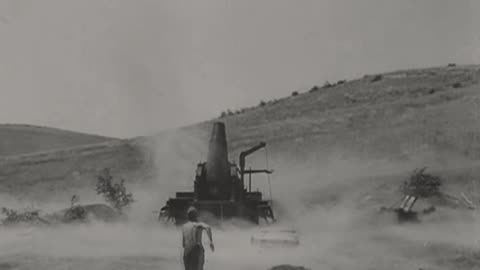
WWI-vintage 28cm Haubitze L/12 siege howitzer engages Soviet fortifications in Sevastopol in 1942
hw97karbineThe 28cm Haubitze L/12 in Mittelpivotlafette C/92 was a design of the late 19th century initially intended for coastal defense. The theory of operation was a low-velocity howitzer firing a large shell at a high-angle was more likely to destroy an enemy ship by penetrating its thin deck armor than a high-velocity low-angle gun attempting to penetrate its thicker belt armor. The downside was that high-angle fire was harder to aim correctly so more howitzers would be needed to defend an area from attack. However, if the area was constrained by geography like a port at the mouth of a river the navigation channels could be measured ahead of time and firing ranges calculated. In the coastal defense role it was mounted on a large geared circular base that was set in concrete. There was also a 60 mm thick armored dome to protect the gun crew. Recoil forces were absorbed by a combination of the gun cradle moving up an inclined plane and two hydro-pneumatic or hydro-spring recuperator cylinders, one on each side of the carriage. It fired a 215-345kg high-explosive shell to a range of 10.4km and was capable of penetrating 100mm of deck armor at an angle of 63° at 9.9km. The guns had an early form of the Krupp sliding block breech and used separate loading bagged charge and projectiles. In the siege howitzer role it could be broken down into four loads, the barrel, cradle, turntable and firing platform, each carried by a three-axle trailer. It was mounted on a turntable which was fixed to a wooden firing platform and required three to four days to emplace for firing. An ammunition crane was fixed to the carriage for ease of loading. If you would like to support the channel consider visiting https://www.buymeacoffee.com/hw97karbine655 views 1 comment