-
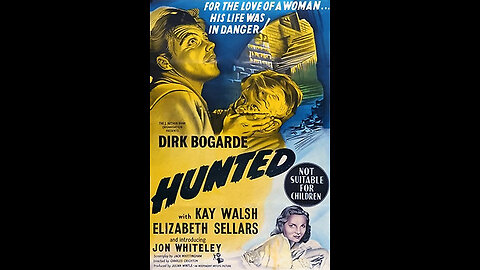
Hunted (aka The Stranger in Between) (1952) | Directed by Charles Crichton
Classic Films & Movies ArchiveAfter a violent act leaves him desperate and on the run, a hunted man slips through postwar Britain trying to stay one step ahead of the police. When he unexpectedly ends up responsible for a young boy who has his own reasons for running, the chase turns into a tense, moving journey where survival, guilt, and a fragile bond collide. Genre: Crime thriller; drama; film noir-adjacent British suspense Director: Charles Crichton Charles Crichton (1910–1999) was a British film editor and director closely associated with Ealing Studios. He built his reputation with crisp pacing, strong character work, and a grounded sense of place, moving comfortably between comedy and suspense. Crichton directed well-regarded Ealing features in the 1940s and early 1950s and later enjoyed a major late-career resurgence as co-director of A Fish Called Wanda (1988), which introduced his craft to a new generation. Star Cast: Dirk Bogarde as Chris Lloyd Jon Whiteley as Robbie (the boy) Cyril Cusack as Inspector Hobson Kay Walsh as Mary (a key adult who briefly helps/encounters them) Sonia Dresdel as Mrs. Sykes (supporting) At the time, the film was generally seen as a solid, tense British chase drama with an emotional undercurrent, and it helped reinforce Dirk Bogarde’s growing screen presence in the early 1950s. Later viewers have often appreciated it for its lean suspense, humane touches, and the way it blends police-procedural pressure with a surprisingly intimate, character-driven road-journey feel. Fun Facts: It’s known by two common titles: Hunted in the UK and The Stranger in Between in the U.S. Dirk Bogarde’s performance is often singled out as an early showcase of the intensity and vulnerability he would become famous for. The film pairs a man-on-the-run thriller with an unusual companion dynamic, using the child character to push the story into moral territory rather than pure action. Charles Crichton followed this gritty suspense film soon after making one of Ealing’s most famous comedies, The Lavender Hill Mob (1951), showing his range as a director. Jon Whiteley was one of the notable British child actors of the era and appeared in several prominent films around the same period. * This Rumble Movie Channel is comprehensively indexed on https://kinoquick.com - find you favourite movies fast & free! * Follow this channel to be notified of daily movie updates.206 views -
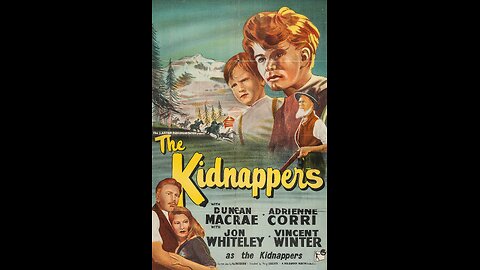
The Kidnappers (1953) | Directed by Philip Leacock
Classic Films & Movies ArchiveThe Kidnappers is a heartwarming British drama set in Nova Scotia, Canada, during the early 20th century. The story follows two young orphaned Scottish boys, Harry and Davy MacKenzie, who come to live with their stern grandfather after the death of their parents. Lonely and longing for companionship, the boys find a baby abandoned in the woods and decide to secretly care for it, believing it to be the solution to their yearning. The film sensitively explores themes of family, loss, cultural clash, and redemption. Genre: Drama / Family Director: Philip Leacock Philip Leacock was a British film and television director known for his sensitive handling of social issues and children’s stories. Born in London in 1917, Leacock began his career in documentaries before transitioning to feature films in the 1950s. He developed a reputation for realism and emotional depth, often drawing from real-life situations or portraying children with authenticity and compassion. He later moved to the United States and directed numerous episodes for American television series, including *The Waltons* and *Gunsmoke*. Star Cast: * Duncan Macrae as Jim MacKenzie (the grandfather) * Jon Whiteley as Harry MacKenzie * Vincent Winter as Davy MacKenzie * Adrienne Corri as Kirsty * Jean Anderson as Mrs. MacKenzie * Theodore Bikel as Jan Hooft The Kidnappers received widespread acclaim for its touching story, naturalistic performances by its young leads, and evocative depiction of rural life in Nova Scotia. Critics praised the film’s emotional sincerity and Leacock’s sensitive direction. The performances of Jon Whiteley and Vincent Winter were especially lauded, with both boys receiving honorary juvenile Academy Awards for their work—a rare distinction at the time. The film also resonated with audiences internationally and remains a cherished classic in British cinema history. Fun Facts: * The film was released in the United States under the title *The Little Kidnappers*. * Vincent Winter and Jon Whiteley, both non-professional actors at the time, were selected for their authentic performances and went on to appear in other films during their childhoods. * The famous line "I want a baby to keep!" spoken by one of the boys became iconic and is often remembered by fans of the film. * The film was shot on location in Scotland, despite being set in Canada, due to production budget constraints. * The movie inspired a television remake in 1990 starring Charlton Heston. * This Rumble Movie Channel is comprehensively indexed on https://kinoquick.com - find you favourite movies fast & free! * Follow this channel to be notified of daily movie updates.357 views -
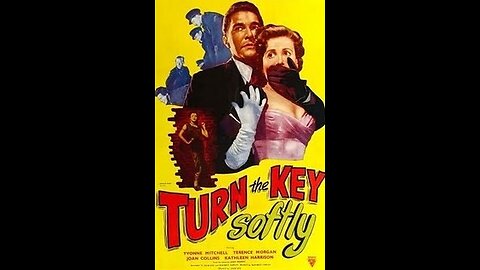
Turn the Key Softly (1953) | Directed by Jack Lee
Classic Films & Movies ArchiveTurn the Key Softly is a British drama that follows the first 24 hours of freedom for three women released from prison. Each woman faces her own emotional and practical challenges as she attempts to reintegrate into society. Monica, an upper-class woman jailed for aiding her criminal lover; Stella, a shoplifter trying to reconnect with her fiancé; and Mrs. Quilliam, an elderly woman with no support, each embark on personal journeys of redemption and resilience. The film offers a compassionate exploration of post-prison life and the social forces that shape it. Genre: Drama Director: Jack Lee Jack Lee was a British film director and screenwriter known for his socially aware storytelling. Born in 1913, he began his career as a documentary filmmaker and became associated with the post-war British realist tradition. Lee had a knack for sensitive, character-driven narratives, often depicting ordinary people in extraordinary circumstances. His work on *Turn the Key Softly* highlighted his ability to bring emotional nuance and understated direction to a compelling ensemble story. Star Cast: * Yvonne Mitchell as Monica Marsden * Joan Collins as Stella Jarvis * Kathleen Harrison as Mrs. Quilliam * Terence Morgan as Bob * Geoffrey Keen as David * Dora Bryan as prison inmate (uncredited role) The film received strong critical acclaim in the UK for its honest portrayal of women struggling to reclaim their lives. Reviewers praised the film’s humanistic tone and the powerful performances of the three leading actresses, particularly Yvonne Mitchell and Kathleen Harrison. It was considered a significant contribution to British postwar cinema, particularly for its focus on female perspectives and social reintegration, themes rarely addressed at the time. Fun Facts: * The movie was adapted from the novel of the same name by John Brophy, who co-wrote the screenplay. * Joan Collins, still early in her career, gained considerable attention for her role as the spirited Stella. * The film was shot on location in London, giving it a strong sense of place and authenticity. * Yvonne Mitchell, who played Monica, won the British Film Academy Award (precursor to the BAFTA) for Best Actress in 1954 for her performance. * The title refers metaphorically to the fragile hope and caution with which the women must re-enter society—"softly" turning the key to a new chapter in life. * This Rumble Movie Channel is comprehensively indexed on https://kinoquick.com - find you favourite movies fast & free! * Follow this channel to be notified of daily movie updates.389 views 1 comment -
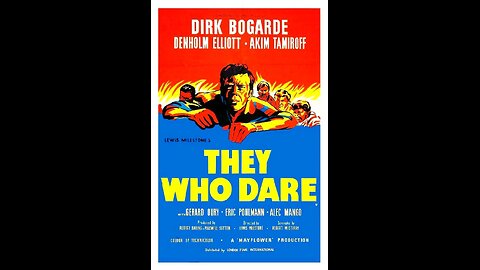
They Who Dare (1954) | Directed by Lewis Milestone
Classic Films & Movies Archive"They Who Dare" is a British World War II action-adventure film based on a real-life commando raid. The story follows a small team of British Special Boat Service commandos and Greek resistance fighters who are tasked with infiltrating the German-occupied island of Rhodes in the Aegean Sea. Their mission is to destroy two vital German airfields to cripple Axis operations in the region. The film depicts the physical hardships and moral pressures of covert warfare behind enemy lines. Genre: War, Action, Adventure Director: Lewis Milestone Lewis Milestone was a Moldovan-born American film director best known for his war films and dramatic realism. Born in 1895 in what is now Moldova, he emigrated to the United States and became a prominent Hollywood director during the silent and early sound eras. He won two Academy Awards for Best Director, including one for "All Quiet on the Western Front" (1930), a landmark anti-war film. Milestone had a versatile career and was recognized for his ability to depict the human cost of war with stark authenticity. Star Cast: * Dirk Bogarde as Lieutenant Graham * Denholm Elliott as Sergeant Corcoran * Akim Tamiroff as Captain Andros * Harold Siddons as Lieutenant Poole * Eric Pohlmann as German Commander * Gérard Oury as Andreas * Sam Kydd as Private Griggs "They Who Dare" received mixed reviews upon its release. While some praised its gritty action and the performance of Dirk Bogarde, others found the pacing slow and the storytelling conventional. British audiences were moderately receptive, appreciating the patriotic and heroic subject matter, though the film never reached the critical acclaim of other World War II epics of the period. It has since gained interest as a representative mid-century British war film with a strong sense of realism and location shooting. Fun Facts: * The film was inspired by actual wartime operations carried out by the British Special Boat Service (SBS) in the Dodecanese islands. * Shot on location in Cyprus and Malta, the film benefits from authentic Mediterranean landscapes, adding realism to the commando mission. * It was one of Dirk Bogarde’s early roles as a leading man in a military setting, foreshadowing his later success in war and espionage films. * The original title was "The Wind Cannot Read", but it was changed before production began. * Although not widely known today, the film remains of interest to war film enthusiasts for its depiction of special operations behind enemy lines during WWII. * This Rumble Movie Channel is comprehensively indexed on https://kinoquick.com - find you favourite movies fast & free! * Follow this channel to be notified of daily movie updates.414 views -
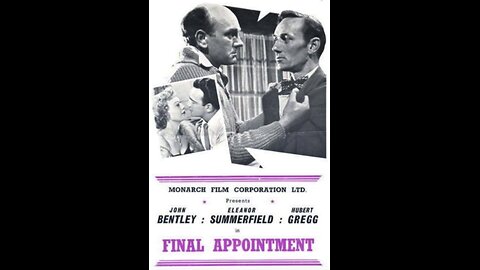
Final Appointment (1954) | Directed by Terence Fisher
Classic Films & Movies ArchiveFinal Appointment is a British crime thriller that follows an intrepid journalist and his photographer fiancée as they attempt to unravel a series of mysterious murders. The killer appears to be targeting ex-army officers connected to a wartime court martial, and the pair's investigation leads them deep into a web of military secrets, revenge, and danger. Genre: Crime, Thriller, Mystery Director: Terence Fisher Terence Fisher was an English film director known especially for his work with Hammer Film Productions during the 1950s and 1960s. Born in 1904, he became renowned for revitalising the horror genre with a distinctively Gothic style. Fisher is best remembered for classics such as The Curse of Frankenstein (1957) and Horror of Dracula (1958), though he directed in multiple genres including crime thrillers and sci-fi. Star Cast: * John Bentley as Mike Billings * Eleanor Summerfield as Jenny Drew * Hubert Gregg as Inspector Corcoran * Meredith Edwards as Inspector Lane * Peter Bathurst as Major Osborne * Arthur Lovegrove as Fred * Liam Redmond as John Harvey Final Appointment was generally well-received as a solid low-budget British thriller. Viewers appreciated its tight pacing and the chemistry between Bentley and Summerfield, who would reprise their roles in a follow-up film. Though not a blockbuster, it found a steady audience among fans of mid-century British mystery cinema. Fun Facts: * The film was successful enough to spawn a sequel titled Stolen Assignment in 1955, featuring the same lead characters. * Final Appointment is notable for being one of Terence Fisher’s early directorial efforts before he became a major figure in British horror. * The storyline incorporates post-war themes, reflecting British society's lingering concerns about wartime justice and military conduct. * This Rumble Movie Channel is comprehensively indexed on https://kinoquick.com - find you favourite movies fast & free! * Follow this channel to be notified of daily movie updates.618 views -
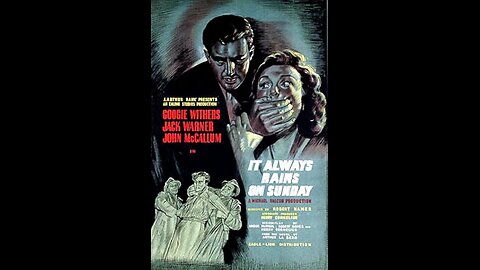
It Always Rains on Sundays (1947) | Directed by Robert Hamer
Classic Films & Movies ArchiveIt Always Rains on Sundays is a British realist drama set in postwar London, focusing on a single rain-soaked day in the life of a working-class family in the East End. The story centers on Rose Sandigate, a former barmaid turned housewife, whose mundane domestic life is disrupted when her ex-lover, an escaped convict, hides out in her home. As the hours pass, tensions rise, secrets surface, and the ordinary day becomes a crucible of desire, guilt, and social pressure. Genre: Drama, Crime, Social Realism Director: Robert Hamer Robert Hamer was a British film director and screenwriter known for his work with Ealing Studios during the 1940s and early 1950s. Though his career was relatively short due to personal struggles, Hamer left a lasting impact with his sharp character studies and sophisticated handling of everyday British life. His best-known film is *Kind Hearts and Coronets* (1949), a dark comedy classic. He was known for combining wit, nuance, and bleak realism in his films. Star Cast * Googie Withers as Rose Sandigate * Edward Chapman as George Sandigate * Susan Shaw as Doris Sandigate * John Slater as Morry Hyams * Jack Warner as Detective Sergeant Fothergill * John McCallum as Tommy Swann * Patricia Plunkett as Vi Sandigate Upon release, It Always Rains on Sundays was a critical and commercial success in Britain. Audiences appreciated its unflinching portrayal of postwar hardships, as well as its emotionally complex female lead. Googie Withers’ performance received widespread acclaim. The film stood out for its honest depiction of domestic and emotional frustration in a working-class setting and has since been recognized as an important precursor to British kitchen-sink realism. Fun Facts * Much of the film was shot on location in London’s Bethnal Green, lending authenticity to its depiction of East End life. * Googie Withers and John McCallum, who played ex-lovers in the film, later married in real life and remained together until McCallum’s death in 2010. * The film was produced by Ealing Studios, best known for their comedies, but this darker, moodier entry showcased the studio’s range and ambition. * The screenplay was adapted from the novel by Arthur La Bern, who later wrote *Goodbye Piccadilly, Farewell Leicester Square*, which became the basis for Hitchcock’s *Frenzy*. * Its interweaving of multiple subplots and characters influenced later ensemble dramas and contributed to the evolution of British cinematic realism. * This Rumble Movie Channel is comprehensively indexed on https://kinoquick.com - find you favourite movies fast & free! * Follow this channel to be notified of daily movie updates.641 views -
The Clouded Yellow (1950) | British film noir thriller directed by Ralph Thomas
Classic Films & Movies Archive"The Clouded Yellow" is a British film noir thriller released in 1950, directed by Ralph Thomas. The film stars Trevor Howard, Jean Simmons, and Sonia Dresdel. Director: Ralph Thomas Cast: - Trevor Howard as Maj. David Somers - Jean Simmons as Sophie Malraux - Sonia Dresdel as Mrs. Maud Rogarno - Barry Jones as Willy Shepley - Kenneth More as Rev. John Foster - André Morell as Superintendent Jesson Plot Summary: The Clouded Yellow is a gripping thriller that unfolds against the backdrop of post-war Britain. The story begins with Major David Somers (Trevor Howard), who, after witnessing a traumatic incident during the war, resigns from his intelligence post. Seeking solace, he takes a job as a lecturer. His life takes an unexpected turn when he becomes entangled with a mysterious and troubled woman named Sophie Malraux (Jean Simmons). Sophie is accused of murder, and Somers, harboring doubts about her guilt, decides to help her evade the authorities. The two go on the run, pursued by both the police and sinister figures from Sophie's past. As they travel across the picturesque landscapes of England, the duo encounters various challenges, deepening the mystery surrounding Sophie's background. The film skillfully blends elements of psychological drama, suspense, and romance. Themes: The Clouded Yellow explores themes of post-war trauma, guilt, and the consequences of one's actions. The plot is rich with suspense, as the characters navigate a web of intrigue and danger. Production and Reception: Released in 1950, The Clouded Yellow received positive reviews for its atmospheric cinematography, strong performances, and intricate plot. Trevor Howard and Jean Simmons deliver compelling portrayals, adding depth to the film's characters. The Clouded Yellow stands as a classic British thriller, showcasing the talent of its cast and the artistry of its filmmakers. With its captivating narrative and noir-inspired visuals, the film remains a noteworthy entry in the post-war film landscape.241 views -
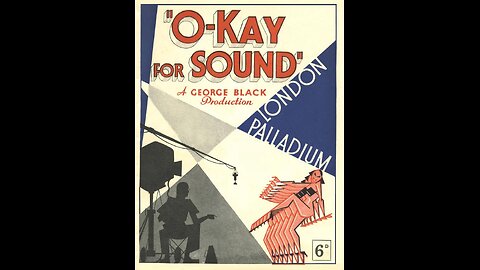
O-Kay for Sound (1937) | British musical comedy directed by Marcel Varnel
Classic Films & Movies Archive"O-Kay for Sound" is a British musical comedy film released in 1937, directed by Marcel Varnel. The movie is part of the "O-Kay for Sound" series produced by Associated Talking Pictures. It features the popular British comedy duo, Flanagan and Allen, consisting of Bud Flanagan and Chesney Allen. The film revolves around the misadventures of Bud and Ches, two hapless individuals who inadvertently become involved in the film industry. The plot begins with the duo mistakenly being hired as film extras, leading to a series of comical situations as they navigate the challenges of the movie business. Bud Flanagan and Chesney Allen's comedic talents are showcased through their interactions with the eccentric characters on set and their attempts to navigate the often chaotic world of filmmaking. The film incorporates musical numbers, reflecting the duo's background as a musical comedy act. The musical sequences feature lively performances and catchy tunes, adding to the overall entertainment value of the film. As Bud and Ches find themselves in increasingly absurd situations on the film set, "O-Kay for Sound" satirizes various aspects of the movie industry, poking fun at the filmmaking process, studio politics, and the glamorous image of Hollywood. The title "O-Kay for Sound" is a nod to the transition from silent films to "talkies," reflecting the era's excitement and challenges associated with the advent of sound in cinema. Directed by Marcel Varnel, known for his work on British comedy films, the movie combines physical comedy, witty dialogue, and musical performances to create a lighthearted and entertaining cinematic experience. It's worth noting that Flanagan and Allen were popular entertainers in the UK during the 1930s, and their films, including "O-Kay for Sound," contributed to their success and popularity. While "O-Kay for Sound" may not be as widely remembered today, it provides a snapshot of British comedy during the interwar period, capturing the humor and style of its time. The film's charm lies in the comedic chemistry of Flanagan and Allen, the satirical take on the film industry, and the inclusion of lively musical numbers.94 views 1 comment -
Oliver Twist (1948) | Directed by David Lean
Classic Films & Movies Archive"Oliver Twist" is a classic British film adaptation of Charles Dickens' famous novel of the same name. Directed by David Lean and released in 1948, the film is a faithful representation of Dickens' Victorian-era tale of an orphan's struggles and adventures. The screenplay was written by Lean, Stanley Haynes, and Ronald Neame. The story follows the titular character, Oliver Twist (John Howard Davies), an orphan born in a workhouse. After daring to ask for more food, Oliver is sold to an undertaker, Mr. Sowerberry (Francis L. Sullivan). Unhappy with his situation, Oliver runs away and eventually finds himself in London, where he encounters a group of juvenile delinquents led by the Artful Dodger (Anthony Newley). Dodger introduces Oliver to Fagin (Alec Guinness), a cunning and manipulative criminal who runs a den of young pickpockets. Oliver's life takes a series of twists and turns as he becomes entangled with Fagin's gang, led by the sinister Bill Sikes (Robert Newton) and his girlfriend Nancy (Kay Walsh). The film explores themes of poverty, exploitation, and the search for identity in a harsh and unforgiving society. John Howard Davies delivers a compelling performance as the innocent and kind-hearted Oliver, while Alec Guinness brings complexity to the character of Fagin, portraying him as both a villain and a victim of circumstances. Robert Newton's portrayal of the menacing Bill Sikes and Kay Walsh's nuanced performance as Nancy add depth to the narrative. David Lean's direction captures the gritty and atmospheric setting of Victorian London, showcasing both the squalor of the slums and the opulence of upper-class society. The film's cinematography, by Guy Green, emphasizes the contrasts between light and shadow, enhancing the visual storytelling. The musical score, composed by Arnold Bax, complements the film's emotional beats and underscores the tension and drama throughout the narrative. "Oliver Twist" is recognized not only for its faithful adaptation of Dickens' novel but also for its memorable performances, atmospheric cinematography, and its ability to evoke the social issues prevalent in 19th-century England. The film remains a classic in the genre of literary adaptations, offering a timeless and impactful portrayal of one of Dickens' most beloved works.157 views -
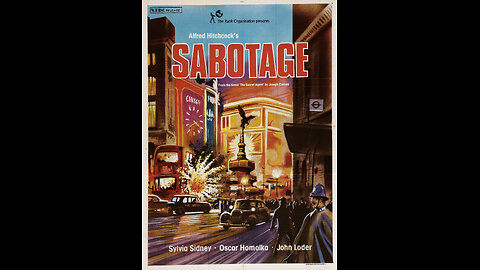
Sabotage (1936) | Alfred Hitchcock's thriller based on Joseph Conrad's novel "The Secret Agent"
Classic Films & Movies ArchiveAlfred Hitchcock's "Sabotage" is a British thriller released in 1936, based on Joseph Conrad's novel "The Secret Agent." The film is often considered one of Hitchcock's early masterpieces and showcases his adeptness at building suspense and tension. While it shares a title with Conrad's novel, the plot diverges significantly. The story is set in London and follows Sylvia Verloc (Sylvia Sidney), the wife of a cinema owner and secret saboteur, Karl Verloc (Oskar Homolka). Unbeknownst to Sylvia, her husband is involved in a terrorist plot to sabotage the city. Verloc is coerced by a foreign embassy to carry out the act, and his contact in the embassy is a mysterious figure known as the Professor (played by Peter Lorre). As Verloc becomes entangled in the dangerous world of espionage and terrorism, tensions rise. The suspense intensifies when Verloc's plan goes awry, leading to unintended consequences. Hitchcock skillfully employs his trademark techniques, including the use of everyday settings for suspenseful scenarios and manipulating the audience's emotions through character development and plot twists. One of the most memorable sequences in the film involves Sylvia carrying a package, unaware that it contains a bomb set to detonate. Hitchcock's meticulous pacing and tension-building techniques during this scene have been praised for their effectiveness. The film explores themes of deception, betrayal, and the moral dilemmas faced by individuals caught in the web of espionage. Hitchcock's ability to create suspense is evident throughout, and the film culminates in a climactic and morally complex finale. "Sabotage" is notable for its atmospheric cinematography, which captures the mood of pre-war London. The performances, particularly those of Sylvia Sidney and Oskar Homolka, contribute to the film's impact. Hitchcock's collaboration with cinematographer Bernard Knowles resulted in visually striking sequences that added to the overall tension and mood. While Hitchcock took creative liberties with Conrad's source material, "Sabotage" stands as a testament to his early mastery of the thriller genre. The film's exploration of terrorism, moral ambiguity, and the psychological toll of espionage contributes to its status as a classic in Hitchcock's filmography.206 views