-
Legend of the Trailing Arbutus: An Iroquois Tale of Winter and Spring
FFolklore and LegendsIn this Iroquois legend, an old man representing Winter lives alone in a desolate lodge during an eternal winter, struggling to maintain a fire due to scarce wood. One day, a beautiful maiden enters, embodying Spring, bringing warmth and the scent of flowers. They share their attributes: Winter describes his powerful grip on nature, while the maiden speaks of her ability to rejuvenate life, coaxing flowers to bloom and birds to return. As Winter sleeps, the maiden diminishes his presence, restoring life to the land. She plants delicate flowers, promising that humans will honor them, and from that moment on, wherever she wanders in Spring, the Trailing Arbutus blooms, symbolizing her victory over Winter and the arrival of life.34 views -
Enchanting Tales of "The Fairy Spinning Wheel": Discover the Magic!
FFairytalesthe enchanting world of mythical realms and fairies, noting the charm and deeper significance often found in fairy tales. The stories revolve around themes of love, ambition, and the quest for happiness. The central tale, "The Sleeping Beauty," presents a twist on the classic narrative, where the titular character, after being awakened by a prince, considers her life in a dream versus the reality of royal duties. The story explores the conflict between desires for freedom and obligations that come with power. "The Three Sowers" follows three young friends who sow their dreams into an enchanted furrow, resulting in varied outcomes—one achieving riches, another power, and the last finding love through song. "The Princess Birdie" tells the story of a princess enamored with a nightingale, who proves to be a hero against three giants. The collection showcases the whimsical yet moral dimensions of fairy tales, emphasizing that dreams can lead to diverse paths in life, shaped by individual desires and choices. These tales celebrate imagination and the rich tapestry of human experience intertwined with magical realism. The Sleeping Beauty, The Three Sowers, The Princess Birdie, The Mirror, Snowheart, The Fatal Wish, A Poor Diet, The Money-box, A Wonderful Attraction, The Lame Angel, The Two Daisies, The Dear Departed, Lord Roland’s Grief, The Last of the Fairies.20 views -
Layla and MAJNUN, legendary love story
FFolklore and LegendsThe Story of Layla and Majnun Long ago, in Arabia, there lived a young poet named Qays ibn al-Mulawwah. When he was still a boy, his heart was captured by the beauty and grace of a girl from his tribe, Layla al-Aamiriya. The two grew up together, and their bond blossomed into a love so deep and consuming that it seemed to defy the world around them. But their passion was not welcomed. Layla’s parents, concerned with family honor and social standing, forbade her from marrying Qays. Their refusal only deepened his longing. His love for Layla grew so fierce and all-encompassing that people began to call him Majnun—the madman, the one possessed by love. Though Layla was given in marriage to another man, her heart never left Majnun. In some tellings, her marriage remained a hollow union, untouched by love. For her, every glance, every sigh, every whispered word belonged still to the poet who had stolen her soul. Majnun, unable to bear the chains of society, withdrew from the world. He wandered the wilderness in ragged clothes, speaking to the stars, composing verses on the wind, and living among wild animals as if they were his kin. His poetry carried his longing across the desert, his madness becoming both his torment and his gift. Yet fate showed them no mercy. The lovers were never united in life. Layla, worn down by sorrow, died with Majnun’s name on her lips. When news reached him, he journeyed to her grave. There, his spirit finally gave way, and he collapsed upon the earth where she rested. Death, which denied them in life, joined them at last. ⸻ Meaning and Themes Their tale became more than just a story of two lovers. It came to symbolize the pain and beauty of unattainable love. Majnun’s madness was seen not merely as obsession but as a form of divine devotion, stripping away all worldly ties. In the eyes of mystics, Layla became a symbol of the Divine Beloved, and Majnun the seeker, wandering through suffering and madness toward the eternal. ⸻ Legacy The story of Layla and Majnun spread far beyond its Arabian roots. In the 12th century, the Persian poet Nizami Ganjavi gave it immortal form in his great poem Layli o Majnun, inspiring countless poets after him, from Rumi to Jami to Amir Khusrow. Its echoes can be heard in Persian, Urdu, and Turkish verse, and even in European literature. Across centuries and cultures, the tale has endured as the ultimate symbol of tragic love — a love so profound that it transcends reason, time, and even death.72 views -
Rozinde's Epic Fantasy Adventure: A Heroic Battle Against a Dragon in an Enchanted Realm
FFantasy and Enchantments"The Legend of Rozinde" presents a compelling tale of resilience and courage set in ancient times beneath the earth, where a girl named Rozinde serves a fearsome dragon. After being captured, she endures a life of toil, forced to hunt rare beasts and cook for the insatiable creature. Her suffering continues until a brave prince, having heard tales of her plight, manages to wound the dragon and rescue her. Though he takes her to his sunlit castle, the dragon’s curse lingers, requiring Rozinde to bathe daily in a pool of milk, surrounded by wildflowers, to protect her from the dragon’s wrath. The two eventually marry and enjoy a temporary peace, but Rozinde’s failure to maintain her protective bath leads the vengeful dragon to reclaim her. The prince endeavors to follow, but is captured, leaving Rozinde in despair once more as she faces relentless demands from the dragon. In a moment of unexpected hope, Rozinde encounters a gentle deer who offers her milk in exchange for its life. Remembering the dragon's aversion to milk, she accepts and learns of a secret grove where wildflowers grow. With the milk and flowers in hand, Rozinde returns to the dragon’s lair and uses the enchanted mixture to dissolve the bars trapping her prince. They escape back to the protective bath, but the dragon soon appears, furious yet powerless against the milk's magic. The legend culminates in a standoff between Rozinde and the dragon, which continues to loom in the shadows, waiting for a moment of neglect. However, Rozinde’s vigilance, supported by her husband’s love, becomes a testament to their resilience against the lurking dangers. Ultimately, the narrative explores themes of courage, love, and the unwavering determination of a girl who resisted the terror of a powerful beast, ensuring that the legend of Rozinde remains a symbol of strength and hope amidst adversity.24 views 1 comment -
Discover the Epic Hero Stories of Makoma and Gopani-Kufa in Mozambican Folklore and African Myths
FFolklore and LegendsExplore the fascinating world of hero stories featuring characters like Makoma in Mozambican folklore, where oral tradition breathes life into rich narratives and ancient legends. Journey along the Zambezi River as we uncover African myths that celebrate bravery and strength, showcasing epic battles against legendary giants and mythical creatures. Dive deeper into the story of Gopani-Kufa, who encounters Insato the python and seeks the magical Sipao mirror, a powerful artifact of wish-granting magic. Each tale reflects the themes of betrayal and downfall, emphasizing the cultural values and wisdom in folklore that are passed down through generations. Join us in this celebration of community and leadership as we delve into these captivating stories that embody the spirit of traditional storytelling and the enduring significance of Mozambican folklore.18 views -
The eternal maiden, part 2, Inuit Eskimo legends
FFolklore and LegendsThe Eternal Maiden: Themes and Lessons Central Idea: The story explores love, sacrifice, responsibility, and survival within the harsh realities of Arctic life, framed by Inuit myth and spirituality. 1. The Creation Myth • A tale of the first man’s pursuit of the maiden, symbolizing love versus fear. • Their transformation into the sun and moon represents eternal desire. • Introduces the story’s themes of longing, struggle, and fate. 2. Life in the Arctic • The Inuit face extreme hardship, emphasizing resilience and community. • Women, especially Annadoah, face societal expectations alongside personal desires. 3. The Love Triangle • Ootah: A devoted hunter who sacrifices for love. • Annadoah: Torn between tradition and the lure of outsiders. • Olafaksoah: A white trader symbolizing colonial influence and temptation. 4. The Struggle for Survival • Harsh winters threaten the tribe with starvation. • Ootah’s dangerous journey for food highlights sacrifice and human endurance. • Survival depends on both individual heroism and communal unity. 5. The Consequences of Choices • Annadoah’s attraction to Olafaksoah leads to suffering for her and the tribe. • Ootah’s devotion shows the costs of love and responsibility. • Individual actions ripple outward, shaping community fate. 6. The Role of the Spirits • Spirits embody both protection and danger. • The Great Spirit symbolizes interconnection of life. • Spiritual leaders like Sipsu influence choices and destiny. Conclusion “The Eternal Maiden” portrays the fragile balance between love, survival, and fate. It reflects how personal desires clash with communal needs, how choices carry consequences, and how spiritual belief sustains people in adversity. Ultimately, the story teaches that love, though difficult and sometimes tragic, is the force that defines human existence.3 views -
Enchanting Fairy Tales: A Collection of Folk Tales of diverse cultures ,Timeless lessons & Wisdom
FFairytalesEmbark on a captivating journey through our enchanting collection of stories, where timeless fairy tales and folk tales intertwine to reveal the rich tapestry of human experience. This collection offers a unique blend of adventure and morality, featuring cultural tales that celebrate the magic mirror, cleverness, and the triumphs of heroes against giants. With a focus on virtue and wisdom, these traditional stories showcase unforgettable animal characters and magical elements that span diverse cultures. Each tale is a testament to the art of storytelling, designed to entertain while imparting timeless lessons about life, heroism, and clever tricks. Dive into this collection of stories to explore epic journeys and enchanting tales that inspire readers of all ages.19 views -
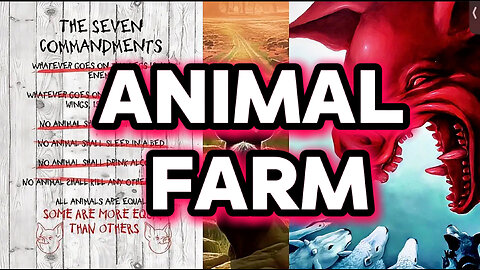
Animal Farm: The Rise and Fall of an Animal Utopia - A Cautionary Tale of Power and Corruption
FFolklore and Legends"Animal Farm," a novel by George Orwell, begins with Mr. Jones, the negligent owner of Manor Farm, neglecting his animals due to his drunken state. The animals gather in the barn to hear the wise old pig, Major, who shares a prophetic dream about a future free from human oppression. Major explains that their lives are miserable and laborious under human rule, and emphasizes that humans are the true enemies of the animals. He advocates for rebellion, urging them to unite against their common oppressor and pass on this message to future generations. Major’s speech ignites a sense of camaraderie and purpose among the animals, culminating in their enthusiastic rendition of the song "Beasts of England." Three days after Major’s speech, he dies peacefully, and the animals, inspired by his vision, begin to prepare for a rebellion against Jones. The pigs, recognized as the smartest animals, lead the effort, with Snowball and Napoleon emerging as key figures. They establish a new ideology called Animalism based on Major's teachings, although they face challenges in spreading their ideas due to the apathy and ignorance of the other animals. Some remain loyal to Mr. Jones, questioning why they should change their ways if the Rebellion is predestined. As conditions worsen on the farm due to Jones's neglect, the animals finally rebel after finding themselves unfed. In a spontaneous uprising, they drive Jones and his men away, claiming the farm for themselves. The animals are filled with joy, celebrating their newfound freedom. They destroy the remnants of Jones's control, including whips and other tools of oppression. The pigs then declare that the farm will now be called Animal Farm and put forth a set of principles known as the Seven Commandments to govern their new society. The Seven Commandments, which embody the core tenets of Animalism, are inscribed prominently for all to see. They emphasize equality and denounce human traits. However, as the story progresses, the animals immerse themselves in labor, harvesting crops more efficiently than Jones ever did. The pigs, taking on leadership roles, manage the farm with superior intellect, despite doing little physical work themselves. The other animals are dedicated to their labor, feeling a sense of fulfillment in their contributions. Despite the initial success and happiness on Animal Farm, underlying tensions begin to surface, particularly regarding the distribution and management of resources. As they work the fields, the pigs start to consume the milk and apples amongst themselves, justifying their actions by claiming that they require nourishment to fulfill their leadership roles. The other animals are led to believe that these privileges are necessary for their collective well-being, marking the beginning of a subtle power struggle that threatens the ideals of equality. The animals enjoy a summer of abundant harvests, contrasting sharply with their previous lives. They experience true pleasure from the fruits of their labor and revel in the sense of community that has blossomed after the overthrow of their human master. However, the animals remain dependent on the pigs for guidance, with characters like Boxer, the strong cart-horse, embodying the spirit of hard work and loyalty. Boxer believes in the maxim "I will work harder" to drive the farm’s progress, demonstrating the unwavering dedication of the working class despite growing disparities. Meanwhile, the pigs, particularly Napoleon and Snowball, engage in increasing rivalry over control of the farm and the direction it should take. Snowball’s innovative ideas, such as constructing a windmill to enhance productivity and reduce labor, face fierce opposition from Napoleon, who seeks to consolidate his power. Tensions rise until Snowball is expelled from the farm, leaving Napoleon to take over and implement his vision without dissent. Under Napoleon’s regime, the principles of Animalism begin to erode. The pigs indulge in behaviors previously denounced, gradually adopting traits akin to their former human oppressors. The Seven Commandments are subtly manipulated, and the original ideals of equality and fraternity fade amidst the pursuit of power. Eventually, they alter the commandments to justify their actions, showcasing the inherent corruption that arises when power is concentrated. In the final moments of the narrative, the animals, unable to distinguish between the pigs and humans, reflect the grim reality of their revolution. The story serves as a powerful allegory, critiquing totalitarianism and the cyclical nature of oppression, emphasizing that without vigilance and accountability, the pursuit of equality can devolve into tyranny. It warns against the betrayal of ideals and the dangers inherent in the corrupting influence of power, reminding readers of the necessity for constant awareness and action to uphold justice and equity.45 views 1 comment