-
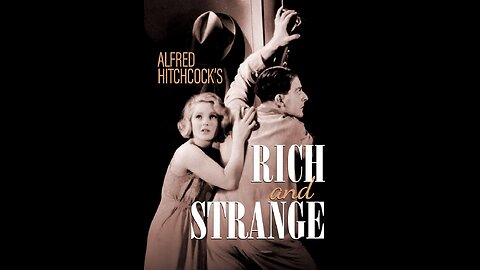
Rich and Strange (aka East of Shanghai) (1931) | Directed by Alfred Hitchcock
Classic Films & Movies ArchiveA comfortable, middle-class London couple suddenly come into money and decide to take a long sea voyage to “see the world.” What begins as a holiday of champagne optimism turns into a stress test of identity and marriage. Away from routines and social rules, each is tempted by new attention and new possibilities, and small resentments grow teeth. The trip becomes less about exotic ports and more about how easily desire, pride, and boredom can rewrite a relationship—especially when the money that made it all possible starts to look less secure. Genre: Romantic drama / comedy-drama (early sound-era relationship drama with satirical edge) Director: Alfred Hitchcock Alfred Hitchcock (1899–1980) was an English director who helped define suspense cinema, later becoming one of the most influential filmmakers in world history. Before his Hollywood period, he made a long run of British films that experimented with visual storytelling, tone, and psychology. Even outside pure thrillers, he was drawn to moral pressure-cookers: ordinary people, sudden disruptions, and the way small choices snowball. Rich and Strange sits in his early sound years, showing his interest in human frailty and social observation as much as plot mechanics. Star Cast: Henry Kendall as Fred Hill Joan Barry as Emily Hill Betty Amann as the Princess (a fellow traveller and temptation) Percy Marmont as Colonel Gordon (another traveller and romantic distraction) Elsie Randolph as a fellow passenger (comic presence among the shipboard characters) At the time, the film was seen as an unusual Hitchcock project: more worldly and relationship-focused than straightforward suspense, with a tone that shifts between comedy, discomfort, and emotional bruising. Some viewers enjoyed its sophisticated, modern look at marriage and temptation, while others found it morally awkward or tonally uneven. In later years it gained appreciation as a sharp, early sound-era character study—often praised for its observation of class aspirations and the way travel strips people down—while remaining a lesser-known Hitchcock compared with his thrillers. Fun Facts: It was released in some markets under the alternate title East of Shanghai. The film comes from a novel by Dale Collins, shaped into a screenplay that leans into irony and marital psychology rather than big melodrama. Hitchcock uses the voyage structure almost like a lab experiment: remove routine, add freedom and temptation, then watch the marriage react. There are moments of playful visual invention that hint at Hitchcock’s silent-film instincts, even though it’s an early talkie. The shipboard setting lets the film skewer social performance: people reinvent themselves quickly when surrounded by strangers. It’s often discussed as an “in-between” Hitchcock work: not a thriller, but still full of tension—just emotional and social tension rather than crime-and-chase suspense. * This Rumble Movie Channel is comprehensively indexed on https://kinoquick.com - find you favourite movies fast & free! * Follow this channel to be notified of daily movie updates.261 views -
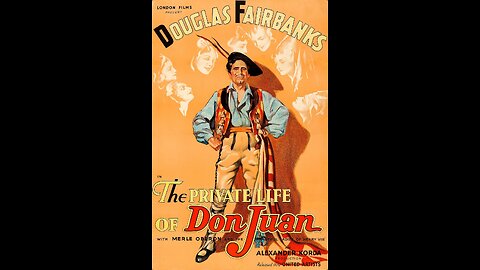
The Private Life of Don Juan (1934) | Directed by Alexander Korda
Classic Films & Movies ArchiveAn older, worn-down Don Juan slips back into Seville after years away, hoping to trade on a legend that once made the whole city tremble. Instead, he discovers the myth has started living on without him: admirers, gossips, jealous husbands, and even an eager impostor keep the Don Juan story in circulation. When a case of mistaken identity gives him a chance to “retire” from his own reputation, Juan learns that disappearing is easy—but returning as yourself is much harder. Genre: Romantic comedy-drama (period comedy-drama) Director: Alexander Korda Alexander Korda (born Sándor László Kellner, 1893–1956) was a Hungarian-born filmmaker who became one of the key architects of Britain’s 1930s film boom. After building experience across European cinema and working in Hollywood, he settled in the UK and created London Films, helping raise the ambition and international profile of British productions. Known as both a producer and director with a flair for prestige storytelling and star-driven entertainment, he later received a knighthood (the first filmmaker to do so), cementing his status as a major industry figure. Star Cast: Douglas Fairbanks as Don Juan Merle Oberon as Antonita Benita Hume as Dona Dolores Melville Cooper as Leporello Binnie Barnes as Rosita Owen Nares as Antonio Martinez Heather Thatcher as Anna Dora Gina Malo as Pepita Barry MacKay as Rodrigo (the “Don Juan” admirer/impostor figure) The film attracted attention as a late-career vehicle for Douglas Fairbanks, whose silent-era swagger was being knowingly re-framed through an aging Don Juan. Contemporary reactions tended to be mixed: many enjoyed the self-aware angle and Fairbanks’ screen presence, while some critics felt the premise leaned too hard on a legend that no longer fit the star’s moment. Commercially it underperformed compared to expectations for a Fairbanks “comeback,” but its reputation has improved over time as viewers came to see it as a reflective, slightly bittersweet swan song for one of cinema’s early icons. Fun Facts: It was Douglas Fairbanks’ final film role. One of Fairbanks’ rare leading “talkie” performances, playing with (and gently puncturing) his own heroic screen image. The story was adapted from Henry Bataille’s 1920 play L’homme à la Rose. Early/working titles included Exit Don Juan and The Return of Don Juan. The film was made by London Film Productions at the British & Dominion Studios in Elstree/Borehamwood and distributed by United Artists. Merle Oberon later became Alexander Korda’s wife (they married a few years after this film). A young James Mason was reportedly cast and worked briefly on the production before his material was removed. Trivia linked to the Don Juan legend often notes a “real-life” Don Juan figure associated with the name Miguel de Mañara, a detail echoed in some film lore. * This Rumble Movie Channel is comprehensively indexed on https://kinoquick.com - find you favourite movies fast & free! * Follow this channel to be notified of daily movie updates.215 views -
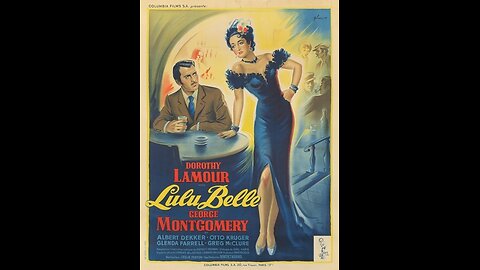
Lulu Belle (1948) | Directed by Leslie Fenton
Classic Films & Movies ArchiveA dramatic tale of ambition, desire, and the magnetic pull of a woman whose charms reshape the lives of the men around her. The story follows a seductive nightclub singer whose rise to prominence leaves turmoil in her wake, exploring themes of obsession, betrayal, and the emotional cost of fame. Genre: Drama / Romance Director: Leslie Fenton Leslie Fenton was an American actor-turned-director who began his career in silent films before transitioning behind the camera. During the 1930s and 1940s he directed several features across genres, often showing a sharp eye for character-driven storytelling. Known for crafting atmospheric scenes and drawing strong performances from actors, he developed a solid, if understated, reputation in Hollywood’s studio era. Star Cast: Dorothy Lamour as Lulu Belle George Montgomery as George Davis Otto Kruger as Mark Brady Glenda Farrell as Molly Benson Albert Dekker as Harry Randolph Gregory Gaye as Baron Anatole Audiences were drawn to the film’s sultry atmosphere and Dorothy Lamour’s commanding presence, although reactions were mixed. While some appreciated the dramatic intensity and musical sequences, others felt the film strayed from the realism of its stage origins. Critics often described it as stylish but melodramatic, yet it maintained a steady following thanks to Lamour's performance and the film’s lush production values. Fun Facts: The film was adapted from the 1926 Broadway play of the same name, though with substantial changes to tone and plot. Dorothy Lamour, well known for her musical and adventure roles, took on a more dramatic part here, showcasing her range beyond the famous "sarong" roles. The production incorporated several lavish nightclub sequences that capitalized on Lamour’s vocal talents. Some contemporary reviewers compared Lulu Belle to earlier femme fatale characters, noting its thematic similarity to classic 1930s melodramas. * This Rumble Movie Channel is comprehensively indexed on https://kinoquick.com - find you favourite movies fast & free! * Follow this channel to be notified of daily movie updates.256 views -
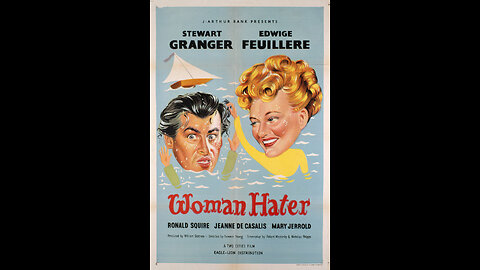
Woman Hater (1948) | Directed by Terence Young
Classic Films & Movies ArchiveWoman Hater is a British romantic comedy about a self-assured aristocrat who prides himself on being immune to love. Determined to prove his theory that women are manipulative by nature, he sets out to entrap a glamorous film star at his French château. His scheme backfires spectacularly when genuine feelings begin to emerge, leading to a light, witty battle of wills between two strong personalities. Genre: Romantic comedy Director: Terence Young Terence Young was a British filmmaker who later became widely known for directing several early James Bond films, including Dr. No, From Russia with Love and Thunderball. Early in his career he worked across genres, developing a reputation for polished direction and strong character handling. Woman Hater is one of his earlier works, showing the comedic and romantic flair he could achieve before his shift into action-oriented cinema. Star Cast: Stewart Granger as Lord Terence Edwige Feuillère as Colette Marly Ronald Squire as Sir Humphrey Ada Reeve as Mrs. Peel Martita Hunt as Lady Denison Jeanne De Casalis as Madame Vernay The film was received as a pleasant, light-hearted comedy of manners, admired for its charm and the chemistry between Stewart Granger and French star Edwige Feuillère. Audiences enjoyed its playful tone, while critics noted the film’s elegant settings and glossy production values. It was not a major blockbuster but achieved solid popularity, particularly among fans of romantic comedies of the period. Fun Facts: Stewart Granger reportedly took the role to broaden his range beyond adventure characters, using this film to demonstrate his comedic ability. Edwige Feuillère was a major French cinema star, and this film helped introduce her to more English-speaking audiences. Terence Young would go on to become one of the defining directors of the 1960s through his work on the James Bond franchise. * This Rumble Movie Channel is comprehensively indexed on https://kinoquick.com - find you favourite movies fast & free! * Follow this channel to be notified of daily movie updates.325 views -
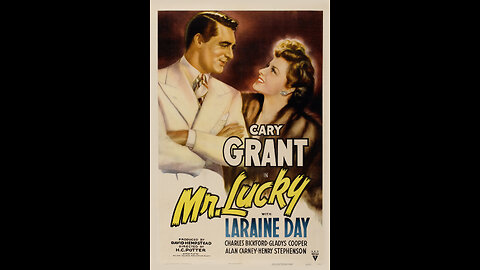
Mr. Lucky (1943) | Directed by H.C. Potter
Classic Films & Movies ArchiveA charming but morally ambiguous gambler schemes to use a war-relief charity as a front for his own profit, only to fall in love with one of its idealistic volunteers. His shifting loyalties place him between criminal obligations and a growing sense of conscience. Genre: Romantic drama / Crime Director: H.C. Potter H.C. Potter was an American film director active from the 1930s through the 1950s, known for light comedies, character-driven dramas, and films with understated wit. Before entering Hollywood he worked in theatre, co-founding the Hampton Players, and later directed a wide range of features for major studios, including MGM and RKO. Star Cast: Cary Grant as Joe Adams / Joe Bascopolous Laraine Day as Dorothy Bryant Charles Bickford as Captain Paul Rexton Gladys Cooper as Mrs. Van Every Paul Stewart as Zepp Alan Carney as Crunk Henry Stephenson as Mr. Haroldson Florence Bates as Mrs. Haroldson Audiences appreciated the blend of romance, wartime sentiment, and Cary Grant’s effortless charm. Critics noted the film’s stylish direction and the strong chemistry between Grant and Laraine Day. It became a solid wartime success, well-liked for its mix of light comedy and darker undercurrents involving gambling and racketeering. Fun Facts: The film uses a framing device set during wartime blackout conditions, adding atmosphere and tension. Cary Grant reportedly enjoyed playing a character with a slightly shady edge, contrasting his more polished roles. The popularity of the film helped inspire radio adaptations, including a notable Lux Radio Theatre broadcast. As with many wartime films, the themes were shaped by contemporary morale-boosting efforts, weaving charity work into the storyline. * This Rumble Movie Channel is comprehensively indexed on https://kinoquick.com - find you favourite movies fast & free! * Follow this channel to be notified of daily movie updates.284 views -
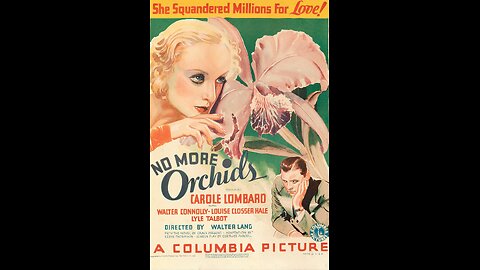
No More Orchids (1932) | Directed by Walter Lang
Classic Films & Movies ArchiveNo More Orchids is a romantic drama about the conflict between love and social obligation. The story centers on Anne Holt, a wealthy young woman who falls deeply in love with a kind but modest man, Tony Gage. However, Anne’s controlling grandfather insists she marry a European prince to save the family’s fortune. Torn between her heart and her duty, Anne faces the painful realities of privilege, family manipulation, and personal sacrifice. Genre: Romance, Drama Director: Walter Lang Walter Lang (1896–1972) was an American film director whose career spanned from the silent era to the 1950s. Known for his elegant, polished style and ability to handle musicals and dramas with equal skill, Lang directed several major Hollywood productions including State Fair (1945), The King and I (1956), and Desk Set (1957). His films were marked by strong performances and visual sophistication, and he became one of 20th Century Fox’s most reliable directors. Star Cast: Carole Lombard as Anne Holt Lyle Talbot as Tony Gage Walter Connolly as John B. Holt Louise Closser Hale as Mrs. Holt C. Aubrey Smith as Prince Carlos Ruthelma Stevens as Grace Allen Vincent as Franklin David Newell as Eddie Upon release, No More Orchids was well received for its heartfelt performances, especially Carole Lombard’s emotionally layered portrayal of Anne Holt. Critics praised the film’s blend of romance and realism, which stood out during the early 1930s Depression years. While it did not become a major hit, it solidified Lombard’s reputation as a rising dramatic actress before she transitioned into comedy. The film’s poignant ending left a lasting impression on audiences of the time. Fun Facts: No More Orchids was one of Carole Lombard’s early sound films, showcasing her ability to handle serious, emotional roles before becoming a screwball comedy icon. The film’s script was based on a story by William Hurlbut, who later co-wrote The Bride of Frankenstein (1935). It was released by Columbia Pictures at a time when the studio was expanding its reputation for quality dramas. Walter Connolly, playing the wealthy grandfather, became known throughout the 1930s for portraying authoritarian but ultimately sympathetic patriarchs. The film’s theme of love versus social duty reflected Depression-era anxieties about wealth, security, and personal freedom. * This Rumble Movie Channel is comprehensively indexed on https://kinoquick.com - find you favourite movies fast & free! * Follow this channel to be notified of daily movie updates.202 views -
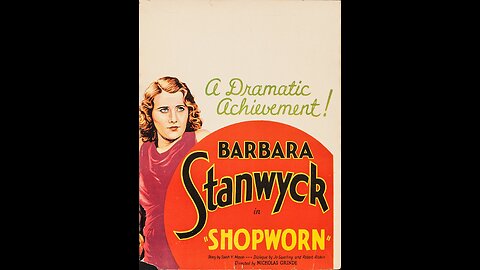
Shopworn (1932) | Directed by Nick Grinde
Classic Films & Movies ArchiveShopworn is a pre-Code romantic drama that tells the story of a young woman from the wrong side of the tracks who falls in love with a wealthy college student, only to face class prejudice and social opposition from his snobbish family. The film explores themes of love, morality, and social hypocrisy, capturing the struggles of class differences in early 1930s America. Genre: Romantic Drama Director: Nick Grinde Nick Grinde was an American film director born on May 12, 1893, in Madison, Wisconsin. After studying at the University of Wisconsin, he began his career as a screenwriter and eventually moved into directing during the late silent and early sound eras. Grinde became known for his efficient direction of low-budget and mid-level studio pictures across various genres, including dramas, comedies, and horror films. He worked for several major studios, including MGM and Columbia, and directed notable titles such as The Man They Could Not Hang (1939) and The Crime Doctor’s Strangest Case (1943). He was known for his ability to deliver solid, well-paced storytelling within modest budgets. Star Cast: Barbara Stanwyck as Kitty Lane Regis Toomey as David Livingston Zasu Pitts as Aunt Dot Clara Blandick as Mrs. Livingston Lucien Littlefield as Dr. J. B. Buler Cecil Cunningham as Mrs. Maguire Shopworn received generally positive reviews from audiences and critics upon release, largely for Barbara Stanwyck’s spirited and emotional performance. It was recognized as a solid example of pre-Code Hollywood storytelling, tackling class barriers and social morality with a directness that would later be constrained by the Production Code. Critics noted the film’s strong emotional core and its sensitive portrayal of love struggling against societal norms. Stanwyck’s performance helped cement her status as one of the most versatile actresses of the early 1930s. Fun Facts: The film was released during the pre-Code era, allowing it to address themes of sexuality and class in a more candid way than later films of the decade. Barbara Stanwyck was already gaining attention for portraying strong, independent women, and this role furthered her reputation as a leading actress capable of depth and resilience. The title “Shopworn” refers to something old or used, symbolizing how society unfairly labels women who fall from grace or challenge its norms. Columbia Pictures positioned the film as a vehicle to showcase Stanwyck’s range, helping solidify her transition from supporting actress to major star. The film’s social commentary on class divisions and moral hypocrisy resonated strongly with audiences during the Great Depression. * This Rumble Movie Channel is comprehensively indexed on https://kinoquick.com - find you favourite movies fast & free! * Follow this channel to be notified of daily movie updates.227 views -
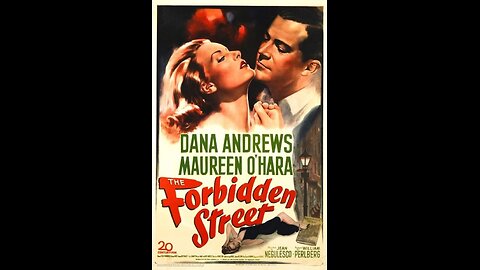
The Forbidden Street (1949) | Directed by Jean Negulesco
Classic Films & Movies ArchiveThe Forbidden Street, also known as Britannia Mews, is a romantic drama set in Victorian London. It follows Adelaide Culver, a young woman from a wealthy family who defies social expectations by marrying an artist. Her life takes a tragic turn after a fatal accident, forcing her into a life of hardship in the seedy district of Britannia Mews. Over time, she struggles for redemption and finds unexpected love while trying to rebuild her life. Genre: Romantic Drama / Melodrama Director: Jean Negulesco Jean Negulesco was a Romanian-born American film director and screenwriter, known for his strong visual style and ability to blend romance with deep emotional themes. Born in 1900 in Craiova, Romania, Negulesco began his career as a painter before moving into filmmaking. He directed a number of acclaimed films, including Johnny Belinda (1948), How to Marry a Millionaire (1953), and Three Coins in the Fountain (1954). His background in art influenced his visual compositions and use of atmosphere in storytelling. Star Cast: Dana Andrews as Gilbert Lauderdale Maureen O’Hara as Adelaide Culver Sybil Thorndike as Mrs. Mounsey Fay Compton as Mrs. Mounsey (elder) Ethel Griffies as Granny Rudd Diana Cortland as Henrietta Lauderdale Patricia Medina as Avice Crichton The film received moderate praise upon release, particularly for its atmospheric cinematography and Maureen O’Hara’s strong performance. Some critics found the story overly melodramatic, but audiences appreciated its rich period setting and themes of redemption and perseverance. Over time, it gained recognition for its moody depiction of Victorian London and Negulesco’s direction. Fun Facts: The movie is based on Margery Sharp’s 1946 novel “Britannia Mews.” It was produced by 20th Century Fox and released under its alternate title for U.S. audiences. Maureen O’Hara considered the film one of her more emotionally demanding roles due to the character’s transformation from privilege to poverty. Jean Negulesco’s painterly background is evident in the film’s attention to visual detail, with sets designed to resemble 19th-century paintings. The film was shot largely on elaborate studio sets replicating the narrow streets and gloomy atmosphere of old London rather than on location. * This Rumble Movie Channel is comprehensively indexed on https://kinoquick.com - find you favourite movies fast & free! * Follow this channel to be notified of daily movie updates.337 views 1 comment -
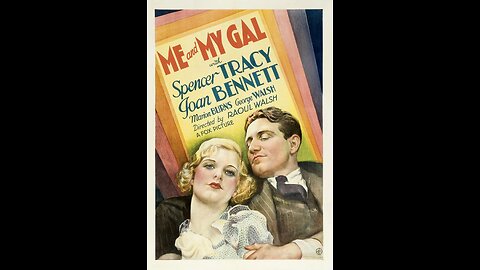
Me and My Gal (1932) | Directed by Raoul Walsh
Classic Films & Movies ArchiveMe and My Gal is a lively romantic comedy-drama set along New York’s waterfront. It tells the story of Danny Dolan, a good-natured policeman who falls in love with Helen Riley, a sharp-tongued waitress. Their playful romance takes a darker turn when Helen’s sister becomes involved with gangsters. Blending humor, realism, and streetwise dialogue, the film captures both the charm and grit of Depression-era life. Genre: Romantic Comedy / Crime Drama Director: Raoul Walsh Raoul Walsh (1887–1980) was one of Hollywood’s most dynamic and versatile directors, known for his robust storytelling and energetic style. Beginning his career as an actor and assistant to D. W. Griffith, he soon moved behind the camera, directing silent epics and later hard-boiled sound dramas. Walsh’s career spanned over fifty years, and he became renowned for his work on films such as High Sierra (1941), They Died with Their Boots On (1941), and White Heat (1949). His trademark was a blend of masculine vitality, fast pacing, and emotional depth. Star Cast: Spencer Tracy as Danny Dolan Joan Bennett as Helen Riley Marion Burns as Kate Riley George Walsh as Duke Henry B. Walthall as Pop Riley Adrian Morris as Mack J. Farrell MacDonald as Policeman Audiences and critics in 1932 responded warmly to Me and My Gal for its quick wit, spirited performances, and naturalistic dialogue. Spencer Tracy’s easygoing charm and Joan Bennett’s lively presence were praised for their chemistry and timing. The film stood out as one of the early examples of pre-Code Hollywood realism, with its tough-talking characters and hints of social commentary. Critics noted its sharp script and believable portrayal of working-class life, which contrasted with the more polished studio romances of the time. Fun Facts: Me and My Gal was one of the earliest sound films to showcase Spencer Tracy’s knack for natural, conversational acting. Joan Bennett’s wisecracking waitress role helped redefine her early career, shifting her from ingénue to strong, modern woman roles. The film is notable for its pre-Code dialogue, which includes suggestive humor and slang considered racy for its time. Director Raoul Walsh cast his own brother, George Walsh, in the film. The movie’s waterfront setting and overlapping dialogue style influenced later romantic dramas and screwball comedies of the 1930s. * This Rumble Movie Channel is comprehensively indexed on https://kinoquick.com - find you favourite movies fast & free! * Follow this channel to be notified of daily movie updates.517 views 1 comment -
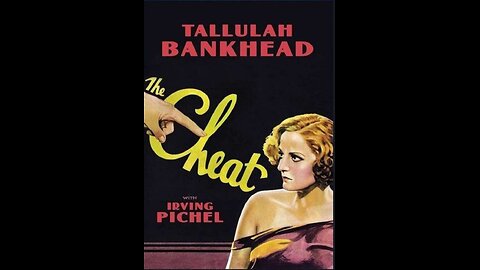
The Cheat (1931) | Directed by George Abbott
Classic Films & Movies ArchiveThis pre-Code drama tells the story of Elsa Carlyle, a society woman trapped in a loveless marriage who becomes entangled with a wealthy, exotic art collector, Hardy Livingstone. When financial trouble and passion collide, Elsa accepts his money under compromising terms, leading to jealousy, violence, and scandal. The situation erupts when her husband discovers the affair, resulting in a courtroom climax that tests love, loyalty, and justice. Genre: Drama / Romance Director: George Abbott George Abbott (1887–1995) was a prolific American playwright, producer, and director known primarily for his work on Broadway, though he also ventured into film. His sharp sense of timing and understanding of human relationships made him a master of stage direction. Abbott’s influence extended across theatre and cinema, and his work helped launch many Hollywood careers. While his film output was smaller than his stage legacy, his directorial work in The Cheat reflected his ability to handle tense emotional drama and moral conflict. Star Cast: Tallulah Bankhead as Elsa Carlyle Harvey Stephens as Jeffrey Carlyle Irving Pichel as Hardy Livingstone Reginald Sheffield as Dr. Leonard Jane Darwell as Mrs. Griggs Charles Middleton as District Attorney The film drew attention for its daring subject matter and sensual undertones typical of the pre-Code era. Audiences were fascinated by Tallulah Bankhead’s intense performance, which marked one of her earliest and most striking Hollywood roles. Critics praised the film’s tension and bold treatment of themes like sexual dominance and social hypocrisy, though censorship concerns limited its distribution in later years. Fun Facts: The film is a remake of Cecil B. DeMille’s 1915 silent classic of the same name, which starred Fannie Ward and Sessue Hayakawa. Tallulah Bankhead’s sultry portrayal of Elsa Carlyle was considered controversial and helped establish her reputation as a fearless actress unafraid of provocative roles. The 1931 version altered the racial themes of the 1915 film, replacing the Japanese character with an “Orientalist” art collector to align with Hollywood’s shifting cultural sensibilities. This was one of the first American sound films to explore the themes of obsession and possession within a romantic relationship. The film’s courtroom scenes were praised for their realism and emotional intensity, a hallmark of Abbott’s theatrical training. Though not a major box office hit, The Cheat (1931) remains an important example of early 1930s pre-Code Hollywood daring to confront taboo subjects. * This Rumble Movie Channel is comprehensively indexed on https://kinoquick.com - find you favourite movies fast & free! * Follow this channel to be notified of daily movie updates.413 views