-
Kamchatka Buried by Snow: Russia’s City Trapped for Days
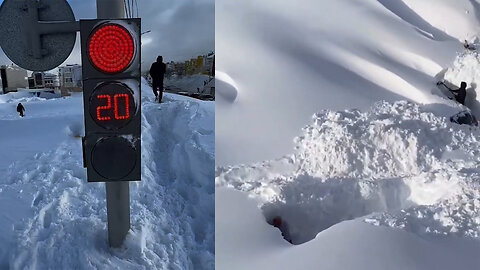
ALLATRAThe winter of 2025 through 2026 became one of the harshest for Russia’s Kamchatka in recent decades and effectively turned into a prolonged snow blockade. As early as December 2025, the situation began to move beyond normal conditions. In southern Kamchatka, three episodes of extremely heavy precipitation were recorded and classified as hazardous meteorological events. In Petropavlovsk-Kamchatsky, about 14.6 inches of precipitation fell in a single month — more than three monthly averages. In January 2026, the snowfall not only failed to stop but intensified. During just the first half of the month, an additional 6.4 inches of precipitation fell in the regional capital. The snow cover depth at the Petropavlovsk-Kamchatsky weather station reached about 5 feet 7 inches, while in some districts of the city and surrounding suburbs, snowdrifts exceeded 8 feet. According to the Kamchatka Department of Hydrometeorology, such conditions had not been observed in the region for more than fifty years — the last comparable winter occurred in the early 1970s. Beginning on January 13, the regional capital was hit with more than a full month’s worth of snowfall in just four days — about 5.1 inches of precipitation. The storm was accompanied by extremely strong winds, with gusts in some areas exceeding 62 miles per hour, causing snow not merely to accumulate but to form dense snow “dunes” several stories high near buildings. Building entrances were blocked, and snow pressure forced in doors and first-floor windows. Residents escaped their homes through windows, jumping directly into the snowdrifts. Many residents compared the situation to a blockade, noting that by the fifth day of the storm, snow removal had affected only the main highways. Even satellite imagery showed the capital of Kamchatka Krai almost completely concealed beneath a dense layer of snow. Roads were closed, schools were shut down, public transportation was suspended, and the city’s infrastructure entered a state of collapse. Stores were rapidly emptied, with only cereals and instant noodles remaining on shelves. Local residents reported that weather forecasts had in no way prepared them for what occurred. Expecting to wait out the storm for just a few hours or, at most, miss a day of work, many found themselves trapped in their homes for five days without sufficient food supplies. The disaster resulted in loss of life. On January 15, in the Seroglazka district, a sixty-two-year-old man was killed when a mass of snow collapsed from the roof of a private house. The following day, January 16, another elderly man in Petropavlovsk-Kamchatsky was struck by a falling snow mass from the roof of a residential building. Witnesses managed to dig him out while he was still alive, but due to completely uncleared streets, an ambulance arrived only several hours later — the victim died from injuries. Following these tragedies, city authorities declared a state of emergency, announced avalanche danger, and urged residents to remain indoors and avoid walking beneath sloped roofs. At Kamchatka’s main airport, dozens of flights were canceled, including routes to remote settlements in the northern part of the peninsula. Power outages were recorded in some areas, posing a particular danger to the private housing sector, where most homes rely on electric heating — buildings cooled down within just a few hours. Emergency services were physically unable to respond to all calls, and people began to unite to dig out homes on their own, help elderly neighbors, and transport them to doctors. According to residents, only after the city is fully cleared will it become clear how many elderly people living alone did not survive that snowbound week. Experts explained the extreme precipitation in Kamchatka by an anomalous configuration of atmospheric circulation. Over the northern Pacific Ocean and the Sea of Okhotsk, a multi-center low-pressure system formed — the Aleutian Low, displaced farther west than usual. This configuration created a persistent mechanism for pumping moist oceanic air toward Kamchatka, where it collided with icy air intrusions from Yakutia. Each new influx of warm, moisture-laden air led to intense precipitation: rain fell over the sea, while heavy, wet snow accumulated along the coast and deep within the peninsula. But what caused this anomaly to form in the first place? Scientists from ALLATRA have already provided a preliminary answer to this question in the scientific report “Nanoplastics in the Biosphere: From Molecular Impact to Planetary Crisis.” Their findings shed light on many previously unexplained climatic processes. #Kamchatka #ExtremeWeather #RecordSnowfall #WinterStorm #ClimateCrisis #NaturalDisasters #SevereWeather #Snowstorm #WeatherNews #GlobalClimate3 views -
Chile on Fire: Toxic Smoke, Mass Evacuations, and a Growing Climate Threat
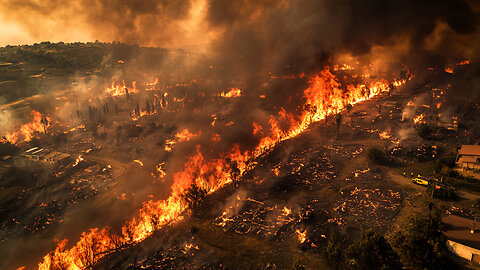
ALLATRAOn January 16, large-scale wildfires broke out in the Biobío and Ñuble regions of Chile. A decade-long drought, strong gusty winds, and high temperatures contributed to the rapid spread of the fire. Within just a few hours, a mass evacuation of the population began. The most tragic situation unfolded in the commune of Penco. At around half past two in the morning, the fire spiraled out of control. A fire vortex formed, literally swallowing entire residential neighborhoods. Local residents reported that the flames reached unprecedented proportions and advanced all the way to the sea — something that had never happened there before. More than fifty thousand people were evacuated, and over one thousand were placed in temporary shelters. One eyewitness said that the smoke was extremely toxic, forcing people to flee in the clothes they were wearing, without time to take anything with them. According to him, if they had delayed by another twenty minutes, they would not have been able to escape. However, there were also those who refused to leave their homes, attempting to protect their property. For some, this decision proved fatal — twenty people lost their lives. The mayor of Penco emphasized that the suffering of residents goes far beyond material damage. According to him, this is a close-knit community where everyone knows one another, and therefore every loss is felt especially deeply. The fire destroyed more than one hundred twenty-three thousand five hundred fifty-three acres of forests, agricultural land, and plantations. Around two thousand buildings were fully or partially destroyed. The wildfire affected a strategically important area of the region. One of Biobío’s key ports is located in Lirquén, playing a major role in the export of forest products and serving as the main transportation hub connecting the region with the rest of Greater Concepción via Route One Hundred Fifty. According to Miguel Castillo, Director of the Wildfire Engineering Laboratory at the University of Chile, the defining feature of the current fire season is the unprecedented extent of burned areas. The burned territory has increased by nearly threefold, despite the fact that the total number of fires remains within normal limits and is even below average. This means that a smaller number of fires is causing significantly greater damage, and this trend is becoming increasingly characteristic of wildfire seasons worldwide. Why natural disasters are becoming more and more catastrophic in nature — and, most importantly, what we as humanity can do to change this trend — can be learned from the video reports by Doctor Egon Cholakian. #ChileWildfires #WildfireDisaster #BreakingNews #ClimateCrisis #ExtremeWeather #NaturalDisaster #Firestorm #ClimateChange #EmergencyAlert #GlobalCrisis38 views -
From Floods to Mega Waves: Cyclone Harry Hits Europe Hard
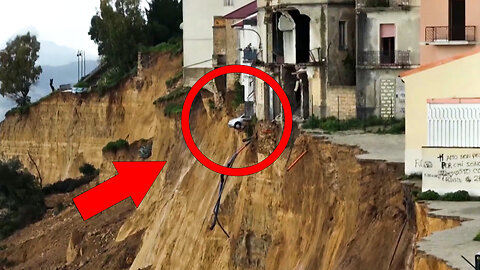
ALLATRABeginning on January 20th, Europe was struck by the Mediterranean cyclone “Harry.” The storm hit southern Italy, affecting mainland Calabria as well as the islands of Sicily and Sardinia. The cyclone was accompanied by extreme and anomalous precipitation. In the Calabrian town of San Sostene, nearly 22 inches of rain fell over 72 hours, which is almost equal to the annual average precipitation for this region. Such an extraordinary volume of rainfall triggered sudden flash floods and landslides, paralyzed ferry connections with smaller islands, and left several communities completely isolated. The most severe situation developed in Catania, a major city on the eastern coast of Sicily, as well as in Catanzaro, the administrative center of Calabria. In these areas, flood damage reached its maximum extent: roads and utility networks were destroyed, and schools and government institutions were closed. Emergency services responded to more than 1600 incidents. Floodwaters submerged streets, vehicles, and the ground floors of buildings. People were evacuated by boat, and dozens of families were forced to leave their homes. Along the Ionian coastline, the storm generated waves reaching heights of up to approximately 33 feet. These waves destroyed promenades, damaged ports, and sank fishing vessels. In Santa Teresa di Riva, the sea completely destroyed a section of the coastal road. In open waters, the power of the cyclone was even more extreme. In the Strait of Sicily, between Sicily and Malta, an oceanographic buoy operated by the Italian National Institute for Environmental Protection and Research (ISPRA) recorded a wave height of approximately 52 feet, the highest wave ever documented in the Mediterranean Sea. Preliminary estimates place the damage in Sicily alone at one billion euros. In Malta, the storm caused serious disruptions to transportation and extensive damage to coastal areas, particularly in the southern part of the island. Europe has experienced winter storms in the past, but over the last several years — and especially in 2025 and 2026 — these events have become exceptionally large in scale, while the intervals between such extreme weather impacts have shortened to a minimum. Humanity must comprehensively study these changes, understand their underlying mechanisms, and unite global efforts to find solutions. The international scientific community of ALLATRA has been researching the causes of increasing climatic and geodynamic catastrophes on Earth for a long time and is already proposing concrete, scientifically grounded practical measures to reduce their intensity and scale. More information on this topic can be found in the documentary film “Nanoplastics: Threat to Life | ALLATRA Documentary.” - https://youtu.be/BVap0MdbCZg #CycloneHarry #MediterraneanStorm #EuropeFloods #ExtremeWeather #ClimateCrisis #NaturalDisaster #ItalyFloods #RecordRainfall #StormDamage #ClimateChange27 views 1 comment -
From France to the UK: Storm Goretti Triggers Power Failures, Floods, and Tragedy
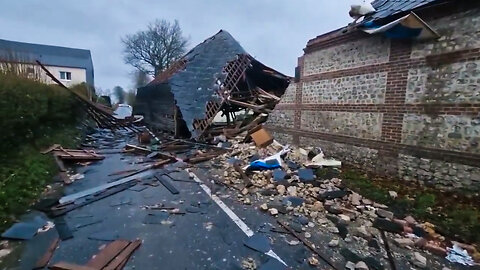
ALLATRAOn January 8, Storm Goretti struck Europe. It brought severe weather conditions, with temperatures dropping to minus 4 degrees Fahrenheit, blizzards, and winds reaching up to 124 miles per hour. In the United Kingdom, local media described the storm as a “weather bomb.” On the Isles of Scilly and in Cornwall, the highest — red — level of danger was declared. Wind gusts reached nearly 99 miles per hour. On St Michael’s Mount, the wind knocked down approximately eighty percent of all trees. Fifty-seven thousand households were left without power. All rail services in Cornwall were suspended, and about 70 flights were canceled at Heathrow Airport. On January tenth, a deceased man was found in the county after a tree, toppled by gale-force winds, fell onto his van. In Germany, the storm was accompanied by heavy snowfall and blizzards. In the northern part of the country, long-distance rail service came to a complete halt, and the Hanover transport hub was blocked. Multi-mile traffic jams formed on highways due to stranded trucks. The storm forced the closure of the Volkswagen plant in Emden, where approximately eight thousand people are employed. Hospitals, particularly in Hamburg, reported a sharp influx of patients with injuries. In Bavaria, three people were killed in traffic accidents on icy roads. In the Netherlands, blizzards and snowdrifts in the north of the country, in the province of Groningen, led to the closure of several key highways, including Route N thirty-three and Route N forty-six. In Belgium, the storm triggered hundreds of emergency calls due to fallen trees. Wind speeds reached up to sixty-two miles per hour. In the city of Waterloo, a motorcyclist sustained severe injuries after being struck by a falling branch. In Serbia, some areas remained without electricity for several days. In Hungary, temperatures in one mountain valley dropped to approximately minus twenty-seven degrees Fahrenheit, while disruptions to rail service continued for the fifth consecutive day. In the Czech Republic, snowfall paralyzed traffic in Prague. In Romania, around four thousand homes were left without power, and in Moldova, approximately six hundred schools were forced to postpone the start of classes. France suffered the most severe impact from the storm. During the night from January 8 to January 9, record-breaking winds were recorded along the English Channel coast. In the town of Barfleur, in the Manche department, wind gusts reached approximately 132 miles per hour. The storm left around three hundred eighty thousand homes without electricity, primarily in Normandy. Thousands of trees were uprooted, roads were blocked, and flooding was recorded in coastal towns, including Étretat and Fécamp. The Port of Dieppe was closed due to storm-driven water surges. One person sustained serious injuries. Mass casualties were avoided only because the storm struck in the middle of the night, when most people were sheltering indoors. The year 2025 demonstrated new records of climatic disasters to the world, and unfortunately, the current year, 2026, has fully inherited this trend, further intensifying the abnormality and power of the elements. Doctor Egon Cholakian explained in great detail why this is happening in his video addresses, which can be viewed on his channel. The most important question remains: how can the escalating climate crisis be stopped? The answer to this question is presented in the film “Nanoplastics. Threat to Life | ALLATRA Documentary” - https://youtu.be/BVap0MdbCZg #StormGoretti #EuropeStorm #ExtremeWeather #ClimateCrisis #WinterStorm #PowerOutages #SevereWeather #NaturalDisaster #ClimateChange #weathernews94 views 1 comment -
Seismic Surge 2026: Powerful Earthquakes Hit Japan, Peru, and Taiwan
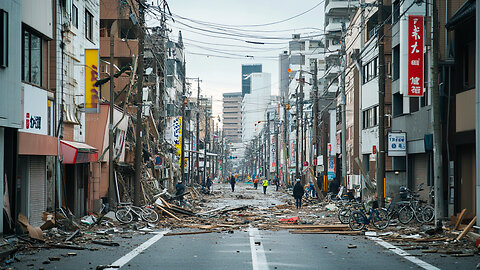
ALLATRAThe end of 2025 and the beginning of 2026 were marked by increased seismic activity. Over just three weeks, there were 95 seismic events with magnitudes of 5 and above, nine of which were extremely strong, with magnitudes of 6 and above. Here are just a few of them. On January 6, 2026, at around 10:18 in the morning local time, an earthquake with a magnitude of 6.2 occurred in the eastern part of Shimane Prefecture, Japan, with a focal depth of approximately 6 miles. The maximum seismic intensity of 5+ was recorded in the cities of Matsue and Yasugi (Shimane Prefecture) and in Sakai Minato, as well as the towns of Hino and Kofu (Tottori Prefecture), with shaking felt over a wide area from northern Kyushu to the Kinki region. User reports indicate falling objects and halted elevators, especially near the epicenter, while there was no threat of a tsunami. An earthquake with an intensity of 5+ or higher, whose epicenter is located in the eastern part of Shimane Prefecture, has been recorded for the first time since 1919, that is, since systematic observations began by the Japan Meteorological Agency. On January 9, at 4:36 in the afternoon local time, Peru experienced an earthquake with a magnitude of 5.3 in the Ica region, with the epicenter twenty-seven kilometers (approximately seventeen miles) south of Palpa. The focal depth was thirty miles. The tremors were mostly felt in the southern districts of Lima — Chorrillos, Villa El Salvador, and Villa María del Triunfo — as well as in the Nazca province. Two weeks earlier, the country experienced a stronger earthquake. On December 27, 2025, at 9:51 in the evening Eastern Time, an earthquake with a magnitude of 6.2 occurred. The epicenter was twenty-two miles east of Puerto Santa, and the seismic focus was at a depth of forty-one miles. It resulted in 25 injuries, twelve of which required hospitalization, and caused material damage, including damage to the main hospital, schools, and residential buildings. Later that same day, at 11:05 in the evening local time, a strong earthquake with a magnitude of 7.0 struck off the northeast coast of Taiwan. The epicenter was located in the sea approximately twenty-one miles east of Yilan County, near the city of Toucheng, with a focal depth of about forty-five miles. The shaking was felt across nearly the entire island for a duration of ten to twenty-one seconds. A national earthquake warning was issued fifteen point two seconds after the quake began; the delay was attributed to the great focal depth and the offshore location of the epicenter. No reports of casualties or injuries were received. In some areas, there were gas and water leaks, cracks in pedestrian crossings, and localized structural damage; goods fell off shelves in stores. Taiwan Railways temporarily suspended service on the Jiaoxi — Suao-Xin section, six high-speed rail trains were delayed, and the Taipei Metro operated at reduced speed for about twenty minutes. Unfortunately, what Allatra scientists have been warning about for many years is unfolding before our eyes. The global community has not yet responded with sufficient responsibility and action to the forecasts of the exponential increase in earthquakes worldwide. Apparently, this is because neither the scientific community nor the governments of countries currently have effective measures to counter such a planetary threat. Therefore, it is crucial that everyone becomes aware that even at this stage, there are solutions that can be applied in the fight against the climate crisis. We encourage you to familiarize yourself with them and share this information with everyone around you. #Earthquake #BreakingNews #SeismicActivity #NaturalDisaster #GlobalWarning #JapanEarthquake #TaiwanEarthquake #PeruEarthquake #ClimateCrisis #ClimateDisasters82 views -
California Under Water: Atmospheric River Triggers Severe Flooding
ALLATRAFrom December 20 through December 23, Northern California in the United States was affected by a powerful atmospheric river known as the Pineapple Express. The Pineapple Express is a stream of warm, moisture-laden air that moves across the Pacific Ocean toward California, bringing intense rainfall and heavy snowfall. It is called “pineapple” because the flow often originates near Hawaii, which is well known for its pineapple plantations. The anomaly delivered up to nearly six inches of rain in low-lying areas, far exceeding seasonal averages and causing rivers to overflow as well as overwhelming urban drainage systems. An evacuation center was opened for residents whose homes were located in flooded areas, and emergency services carried out numerous rescue operations, helping people safely leave hazardous zones. The most difficult situation developed in Redding, where underpasses and transportation interchanges were rapidly submerged. A sudden rise in water levels led to a fatality: a driver became trapped in a vehicle on a flooded roadway, and despite the efforts of a police officer and emergency responders, the person could not be saved. In Placer County, firefighters rescued a family with an infant, guiding them through a fast-moving current after rising river water surrounded their home. The natural disaster also affected the state’s transportation infrastructure. At San Francisco International Airport, flights were temporarily suspended, while delays were reported at the airports in Los Angeles and Sacramento. Several roads, including U.S. Highway One-Zero-One, one of the main highways along the U.S. West Coast, were closed due to flooding. Many experts note that atmospheric rivers forming over the United States have become exceptionally powerful and long-lasting. In addition to increased atmospheric moisture, there is another significant factor behind this trend: the presence of micro- and nanoplastic particles in the atmosphere, which have already become active participants in climate processes. More about this — and about the effects of plastic on the human body — can be seen in the film “Nanoplastics. Threat to Life | ALLATRA Documentary.” https://youtu.be/BVap0MdbCZg #AtmosphericRiver #PineappleExpress #CaliforniaFloods #ExtremeWeather #FloodDisaster #ClimateCrisis #NaturalDisaster #EmergencyRescue #WeatherAlert #ClimateChange165 views -
Powerful Extratropical Cyclone Triggers Floods and Tornado in Brazil
ALLATRASince December 8, Brazil has been hit by a powerful extratropical cyclone. Due to its slow and unpredictable movement, hazardous weather conditions persisted for several days. In the state of Rio Grande do Sul, a tornado was recorded, with meteorologists estimating its strength at the lower threshold of an F2 category. On the evening of December 8, it passed through the rural area of Travesan-Alfredo-Chavis in the municipality of Flores da Cunha. Thousands of residents were left without electricity. Roofs of approximately sixty houses were partially or completely destroyed, and severe damage was reported to the local church, school, medical center, and several wineries. The following day, the cyclone caused heavy rainfall. The coastal city of Osório experienced one of the most severe floods in its history: water levels rose unusually quickly, inundating areas that had never previously been affected by flooding. In several cities in the state, two to three times the monthly rainfall fell within thirty-six hours. For instance, in the municipality of Amaral Ferrador, 317 millimeters of rain fell during this period. In the state of Santa Catarina, the city of Santa Amaro da Imperatriz, located in the Greater Florianópolis region, received 156 millimeters of rain in a single day. In the São Sebastião area of the municipality of Palhoça, a sudden flash flood swept away a car with a couple and their one-year-old child; unfortunately, all three perished. The downpours paralyzed traffic: major highways in the state experienced multi-mile traffic jams due to flooding. On December 10, the cyclone moved toward the Atlantic coast, bringing squally winds to the southern and southeastern states. In five of these states, gusts exceeded 62 miles per hour. In the state of Paraná, in the Serra do Mar mountains, wind gusts reached 82 miles per hour, an extreme value for the region. In the state capital, São Paulo, the wind toppled around five hundred trees and injured four people. More than six million residents of Greater São Paulo were left without electricity, causing water supply disruptions. Chaos at Congonhas and Guarulhos airports led to the cancellation of hundreds of flights. Meteorologists noted that such an event was rare for São Paulo: the city is accustomed to brief squalls during storms, but not to prolonged strong gusts lasting several hours. As of December 13, a total of six people had died nationwide due to heavy rains, strong winds, and landslides. Neither experts nor local residents expected such a powerful cyclone in December, during the Southern Hemisphere summer. Usually, such systems strengthen over the ocean and weaken over land; however, in this case, the cyclone reached its maximum intensity already over the continent. Pressure at its center dropped to 992 hectopascals, one of the lowest values in recent decades; this record low was observed in Porto Alegre. Before the affected regions could recover, on December 12, a new wave of severe weather struck, bringing strong winds and torrential rains. The climax occurred on December 15, when a cold front encountered intensely heated air, generating squalls with speeds of up to 81 miles per hour. In the city of Bom Princípio, Rio Grande do Sul, the air temperature reached 97 degrees Fahrenheit. The disaster affected more than 54 municipalities, leaving thousands of residents without electricity and water once again. In Porto Alegre, falling branches injured people, while in Cruz Alta, the wind tore off roofs and toppled trees. In the city of Guaíba, a twenty-four-meter-tall statue resembling the Statue of Liberty collapsed. Cyclones and other atmospheric phenomena have increasingly been behaving in completely atypical ways. Scientists associate such abnormal manifestations with a fundamental disruption of energy exchange and circulation in the Earth’s atmosphere. One of the underlying causes of this pathological process is the presence of enormous quantities of microplastic and nanoplastic particles in the atmosphere. How this was discovered, what consequences it has, and whether science has a solution can be explored in the new investigative documentary “Nanoplastics. Threat to Life | ALLATRA Documentary.” https://youtu.be/BVap0MdbCZg #BrazilWeather #ExtremeWeather #SevereStorm #Cyclone #Flooding #ClimateEvents #NaturalDisaster #WeatherUpdate #StormImpact #ClimateReality102 views -
Severe Floods in Washington: Atmospheric River Causes Widespread Damage
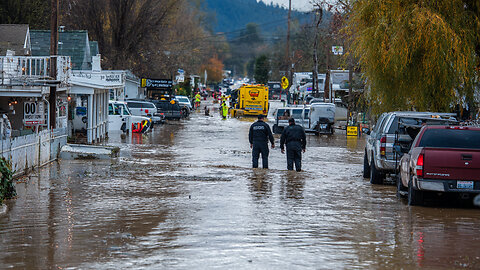
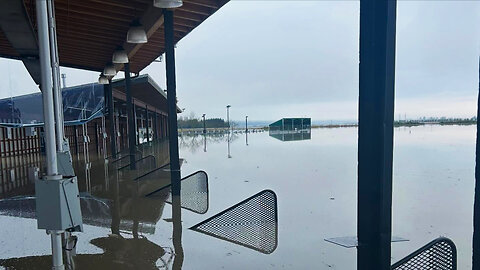
ALLATRAFrom December 8 to 12, the U.S. state of Washington was hit by a powerful “atmospheric river." In the Cascade and Olympic Mountains, more than 17 inches of precipitation fell in some areas over 3 days, and several consecutive atmospheric flows intensified the flooding, causing dozens of rivers to overflow simultaneously and triggering one of the heaviest floods in recent decades. At the same time, the warm air characteristic of atmospheric rivers melted the snowpack in the mountains, further increasing the flow of water into already overflowing rivers and streams. As a result, in the western part of the state, especially in the counties of Skagit, Whatcom, King, and Snohomish, water levels reached heights that meteorologists classify as once-in-a-century. A state of emergency was declared across the entire state. Nearly one hundred thousand people living along the rivers were at risk. Residents were urged to evacuate to higher ground, where temporary shelters were opened for them. The hardest hit were areas that are still recovering from the devastating flood of 2021. In the city of Sumas, water levels reached fourteen and a half feet. Rescuers worked from inflatable boats to evacuate people from flooded homes, and several families had to be airlifted from rooftops by helicopters. Dam breaches in King County along the Green River in Tukwila and Pacific caused sudden flooding in the surrounding areas. Landslides and rockfalls blocked mountain passes and roads, including sections of Interstate 90. Strong winds with gusts exceeding 105 miles per hour knocked down trees and power lines, damaging homes and blocking access. The National Guard was involved in the rescue operations: hundreds of servicemembers went door to door in dangerous areas, assisting residents with evacuation. Federal and state agencies, including FEMA, were activated to provide aid to those affected. According to official data, one fatality was confirmed: a man drowned while attempting to drive on a flooded road, ignoring warnings. Floods like this are becoming part of a new climate reality. Scientists are increasingly pointing to nanoplastic as one of the factors capable of affecting climate processes and more. Its particles have already been detected everywhere: in soil, water, the atmosphere, and even the human body. The scale of this threat is explored in the film “Nanoplastic: A Threat to Life”. https://youtu.be/BVap0MdbCZg #WashingtonFloods #AtmosphericRiver #SevereWeather #Flooding #ClimateEvents #NaturalDisasters #EmergencyResponse #ExtremeRain #WeatherUpdate #USWeather109 views -
Morocco Under Water: How Storm Emilia Turned Rain Into Disaster
ALLATRAIn mid-December 2025, the powerful storm Emilia swept across large parts of Northwest Africa and southern Europe, causing severe consequences, most notably in Morocco. The nationwide death toll from the deadly natural disaster reached 41 people. On December 13, intense downpours struck Tetouan and nearby areas in the north of the country. In a short period of time, more than 1.18 inches of rainfall fell, a critical volume for the city’s drainage system. Water rapidly accumulated on streets and in low-lying areas, leading to localized flooding, inundation of narrow streets, and serious disruptions to traffic. The situation was further aggravated by strong winds with gusts of 37 to 47 miles per hour, which worsened conditions along the coast and caused heavy sea swell. The most tragic events unfolded on December 14 in the Atlantic coastal province of Safi, about 205 miles south of Rabat, where exceptionally intense thunderstorm rainfall fell within nearly an hour, triggering a sudden flash flood. According to official data, at least thirty-seven people were killed, and dozens more were injured. In the city of Safi and its surroundings, residential neighborhoods, the old town, shops, and industrial zones were flooded. Powerful torrents of water swept away vehicles, destroyed roads, and isolated entire districts. Morocco’s prime minister reported that 1.6 inches of rain fell over a short period in the historic Bab-Chaaba district, through which a river runs, a factor that led to numerous casualties among traders and workers. Tragic incidents were also reported in other regions of the country. In the southern province of Tinghir, four people died when a vehicle was carried away by a violent current and overturned into a river between Fezou and El-Hafira. Authorities warned of continued rainfall, closed schools in four provinces, and launched large-scale rescue and recovery operations. According to experts, the scale of the devastation in Morocco is linked to a seven-year drought, after which over-dried soils and depleted reservoirs sharply intensified surface runoff during short-lived but extreme rainfall events, turning them into destructive floods. However, the root cause lies in the unimaginable intensity of precipitation, which continues to increase year after year. Scientists have found that the formation of such extreme rainfall is being facilitated by a human-made factor. More details are presented in the new film: “Nanoplastics. Threat to Life | ALLATRA Documentary” - https://youtu.be/BVap0MdbCZg #StormEmilia #MoroccoFloods #ExtremeWeather #FlashFloods #ClimateCrisis #NaturalDisasters #HeavyRain #FloodAlert #WeatherNews #GlobalClimate94 views -
Magnitude 7+ Earthquakes Hit Alaska and Japan — Aftershocks Continue
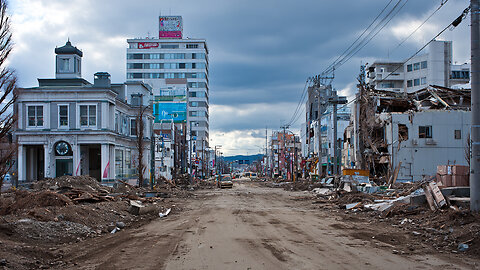
ALLATRAOn December 6, a spike in seismic activity was recorded beneath the Hubbard Glacier. The main shock, with a magnitude of 7.0, occurred at 11:41 a.m. Alaska time. Its epicenter was located approximately 56 miles to the northeast of the city of Yakutat in the state of Alaska, United States, and about 155 miles to the west of Whitehorse, Yukon Territory, Canada. The hypocenter lay at a depth of only 6.2 miles. Despite the strength of the quake, no tsunami warning was issued; nor were there any reports of serious destruction or casualties. The tremors from this seismic event were felt over a considerable distance: residents of cities in southeastern Alaska — including Juneau and Anchorage — as well as in Canada’s Yukon, felt the shaking. Following the main shock, an intense series of aftershocks began. Over the next four days, at least 230 repeated events with magnitudes of 3.0 and higher were recorded, including five strong ones with magnitudes up to 5.8. Already on the evening of December 8 at 11:15 p.m. local time, another powerful seismic event occurred — an earthquake with a magnitude of 7.6 — about 50 miles off the eastern coast of Japan’s Aomori Prefecture. The focal depth was 31 miles. The strongest shaking was observed in the city of Hachinohe. The earthquake generated a tsunami: in the port of Kuji in Iwate Prefecture, wave heights reached 28 inches, and in the town of Urakawa in Hokkaido — up to 20 inches. The consequences in Aomori Prefecture were significant. 45 schools were damaged, and classes were canceled in 318 educational institutions. In the port of Hachinohe, soil liquefaction occurred — fountains of sand and water erupted from cracked ground in a parking area. In the city hospital, three floors were flooded due to the activation of the fire-extinguishing system. Hundreds of households in the cities of Shichinohe and Mutsu were left without water and electricity. A total of 50 people in the prefectures of Aomori, Iwate, and Hokkaido were injured, mostly due to falls and being struck by objects. The seismic event also hit the region’s transportation system: service on the Tohoku Shinkansen high-speed rail line between Fukushima and Shin-Aomori was suspended, and three trains were stranded on the tracks. Service was halted on several subway lines, including in Sapporo. Hokkaido expressways were temporarily closed, and ferry service across the Tsugaru Strait was also suspended. About two hundred passengers spent the night in the terminal of New Chitose Airport, the largest in Hokkaido, due to safety inspections of the runways. Critical infrastructure was also put at risk: at the Tomato-Atsuma thermal power plant in Hokkaido Prefecture, one of the power units shut down automatically. At the nuclear-waste reprocessing plant in the village of Rokkasho, Aomori Prefecture, about 172 gallons of water containing radioactive substances spilled from the spent fuel storage pool. The leak was promptly contained. Within two days after the main shock with a magnitude of 7.6, at least seven powerful aftershocks occurred, with magnitudes reaching 6.6. It must be acknowledged that seismic activity on our planet is steadily increasing, and earthquakes with high magnitudes have already become more frequent. At the same time, there is a factor that is still hardly considered by anyone in the scientific community. It exacerbates the geodynamic crisis and intensifies natural disasters by hindering the release of heat from the planet’s interior. This concerns micro- and nanoplastics. This process is described in detail in the report “NANOPLASTICS IN THE BIOSPHERE. FROM MOLECULAR IMPACT TO PLANETARY CRISIS.” #Earthquake #SeismicActivity #BreakingNews #NaturalDisaster #TsunamiAlert #Aftershocks #AlaskaEarthquake #JapanEarthquake #ClimateAnomalies #climatecrisis #climatedisasters117 views