-
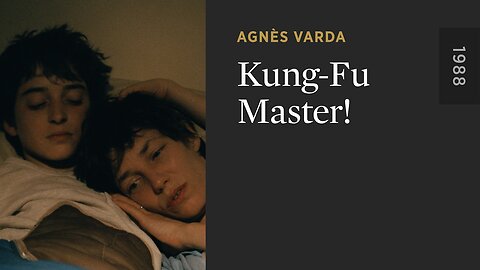
Kung-Fu Master! (Agnes Varda, 1988) France
thecinesexualDONATE to watch thousands of gay-themed movies for free. https://ko-fi.com/genetsbastard/shop Kung-fu Master! (Agnes Varda, 1988) France **Kung-Fu Master!** (1988), directed by Agnès Varda, centers on Mary-Lise (Jane Birkin), a divorced woman in her forties who falls in love with 14-year-old Julien (Mathieu Demy), a friend of her daughter's. The film explores taboo romance, middle-age longing, and the era's AIDS anxieties through a semi-autobiographical lens, with much of the cast drawn from Varda and Birkin's real families.[1][5] ## Plot Overview Mary-Lise navigates her passion for Julien amid family tensions, including her daughters' disapproval and societal scrutiny. Varda weaves in video game obsessions—hence the title, referencing a game Julien plays—and late-1980s fears of HIV transmission. The story culminates in a poignant reflection on fleeting desire and peer pressure on youth.[1][3][6] ## Key Cast and Crew - Jane Birkin stars as Mary-Lise, with her real daughters Charlotte Gainsbourg and Lou Doillon playing her onscreen children. - Mathieu Demy, Varda's son with Jacques Demy, portrays Julien. - Written by Varda and Birkin, it originated during Varda's documentary *Jane B. par Agnès V.* (1988).[1][3][5] ## Production Notes Filmed concurrently with the Birkin documentary, it competed for the Golden Bear at the 38th Berlin International Film Festival. Shooting took place partly in Knokke-Heist, Belgium, blending fiction with documentary elements typical of Varda's style. Birkin later conceived the premise as a "reverse Lolita."[1][3][5] ## Critical Context Reviews praise its witty take on unconventional love and period-specific issues like safe sex, though some note the title misled audiences expecting martial arts action. It holds a 6.9/10 on IMDb and resonates in queer cinema discussions for challenging age and gender norms, aligning with Varda's feminist oeuvre.[3][9] Citations: [1] Kung Fu Master (film) https://en.wikipedia.org/wiki/Kung_Fu_Master_(film) [2] KUNG-FU MASTER! - OFFICIAL TRAILER https://www.youtube.com/watch?v=ADXW_ml4Vf4 [3] Kung-Fu Master! (1988) https://www.imdb.com/es/title/tt0093371/ [4] Kung-fu Master (película) - Wikipedia, la enciclopedia libre https://es.wikipedia.org/wiki/Kung-fu_Master_(pel%C3%ADcula) [5] Kung-Fu Master! (1988) https://www.imdb.com/title/tt0093371/ [6] Kung-Fu Master! (1988) - Agnès Varda https://letterboxd.com/film/kung-fu-master/ [7] Kung-Fu Master! - The Criterion Channel https://www.criterionchannel.com/kung-fu-master [8] Kung-Fu Master! (1988) https://www.criterion.com/films/30570-kung-fu-master [9] Kung-Fu Master https://reverseshot.org/archive/entry/2273/kung_fu_master [10] Kung-Fu Master! (1988) https://mubi.com/en/us/films/le-petit-amour -
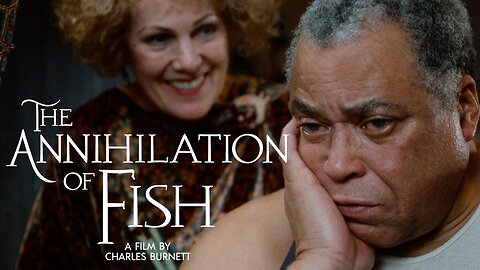
The Annihilation of Fish (Charles Burnett, 1999) USA
thecinesexualThe Annihilation of Fish (Charles Burnett, 1999) USA "The Annihilation of Fish" is a 1999 American romance film directed by Charles Burnett, featuring standout performances by James Earl Jones, Lynn Redgrave, and Margot Kidder.[1] ## Plot Overview The story centers on Obadiah "Fish" Johnson, a Jamaican immigrant haunted by an invisible demon he physically wrestles, and Flower "Poinsettia" Cummings, an eccentric widow convinced she loved the late composer Giacomo Puccini.[2][4] These two lonely seniors become neighbors in a Los Angeles boardinghouse run by the enigmatic Mrs. Muldroone (Kidder), sparking an unlikely interracial romance amid their delusions and personal struggles.[1][6] Burnett adapts Anthony C. Winkler's short story with humor and compassion, exploring mental illness, aging, race, and the redemptive potential of love.[3][4] ## Key Cast and Crew - James Earl Jones as Fish, delivering a physically demanding role wrestling his unseen tormentor.[2] - Lynn Redgrave as Poinsettia, a brash Southern eccentric seeking connection.[5] - Margot Kidder as Mrs. Muldroone, the sharp-tongued landlady.[3] Charles Burnett directs this 108-minute feature, produced by Paul M. Heller and others, with a screenplay by Winkler.[3][5] ## Reception and Legacy Long overlooked after a limited 2000 release, the film gained renewed attention through a 2024-2025 4K restoration by Milestone Films and the Film Foundation, praised for its screwball comedy elements and incisive take on psychic survival mechanisms.[4][9][10] Critics highlight Burnett's delicate handling of asymmetry in relationships shaped by history and oppression.[4] Recent screenings at venues like BAM and Cornell Cinema underscore its timeless appeal.[8][9] Citations: [1] The Annihilation of Fish https://en.wikipedia.org/wiki/The_Annihilation_of_Fish [2] The Annihilation of Fish https://www.criterionchannel.com/the-annihilation-of-fish [3] The Annihilation of Fish https://vidiotsfoundation.org/movies/the-annihilation-of-fish/ [4] Charles Burnett's The Annihilation of Fish https://brooklynrail.org/2025/05/film/charles-burnett-the-annihilation-of-fish/ [5] The Annihilation of Fish (1999) https://www.imdb.com/title/tt0212772/ [6] The Annihilation of Fish https://www.film-foundation.org/the-annihilation-of-fish-film-threat [7] The Annihilation of Fish (1999) https://mubi.com/es/us/films/the-annihilation-of-fish [8] The Annihilation of Fish | Cornell Cinema https://cinema.cornell.edu/annihilation-fish [9] BAM | The Annihilation of Fish https://www.bam.org/film/2025/the-annihilation-of-fish [10] Film Review: Charles Burnett's The Annihilation of Fish https://seventh-row.com/2025/03/07/film-review-charles-burnett-the-annihilation-of-fish/ -
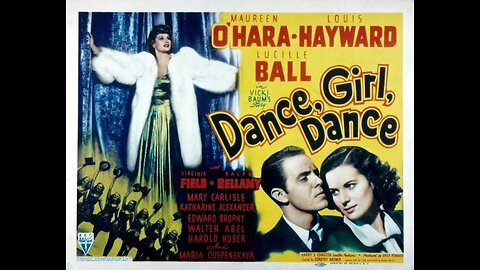
Dance, Girl, Dance (Dorothy Arzner, 1940) USA
thecinesexualDance, Girl, Dance (Dorothy Arzner) USA **Dance, Girl, Dance** (1940) is a pioneering Hollywood film directed by Dorothy Arzner, the only woman directing feature-length studio films during the 1930s. This backstage melodrama contrasts commercial burlesque with artistic ballet ambitions among chorus girls. [1][7] ## Plot Overview Judy O'Brien (Maureen O'Hara), a aspiring ballerina, and her friend Bubbles (Lucille Ball), a brassy burlesque performer, navigate rivalry, friendship, and exploitation in show business. After their troupe disbands, Bubbles rises as a "striptease queen" while pressuring Judy into similar work, leading to conflicts over art versus commerce. Judy eventually confronts her exploitation in a famous speech breaking the fourth wall. [1][3][5] ## Arzner's Direction Arzner infuses feminist themes, subverting stereotypes by blurring lines between "artistic" Judy and "exploitative" Bubbles, challenging male gaze and gender norms in classical Hollywood. As a trailblazer from editor to director at Paramount and RKO, she elevates both leads' careers in this RKO production. Produced by Erich Pommer, it ran 90 minutes in black-and-white. [1][4][6] ## Legacy and Themes The film critiques female objectification and self-actualization, gaining reassessment through feminist criticism despite Arzner's non-feminist self-identification. It features Louis Hayward and Ralph Bellamy, blending comedy-drama with backstage realism. Recent retrospectives highlight its role in women’s cinema history. [4][5][10] Citations: [1] Dance, Girl, Dance (1940) https://www.criterion.com/films/29633-dance-girl-dance [2] Dance, Girl, Dance | Glendale Library, Arts & Culture | BiblioCommons https://glac.bibliocommons.com/v2/record/S185C1919557 [3] Dance, Girl, Dance (1940) https://www.imdb.com/title/tt0032376/ [4] Dance, Girl, Dance https://www.encyclopedia.com/movies/dictionaries-thesauruses-pictures-and-press-releases/dance-girl-dance [5] Dorothy Arzner Double Feature: DANCE, GIRL ... https://www.blockmuseum.northwestern.edu/cinema/2024/dorothy-arzner-double-feature-dance-girl-dance-1940.html [6] Dorothy Arzner | Movies, Dance Girl Dance, Katharine Hepburn ... https://www.britannica.com/biography/Dorothy-Arzner [7] Dance, Girl, Dance https://en.wikipedia.org/wiki/Dance,_Girl,_Dance [8] Dorothy Arzner | Research Starters - EBSCO https://www.ebsco.com/research-starters/biography/dorothy-arzner [9] Dance, Girl, Dance https://thefridacinema.org/movies/dance-girl-dance/ [10] Dorothy Arzner - Wikipedia https://en.wikipedia.org/wiki/Dorothy_Arzner -
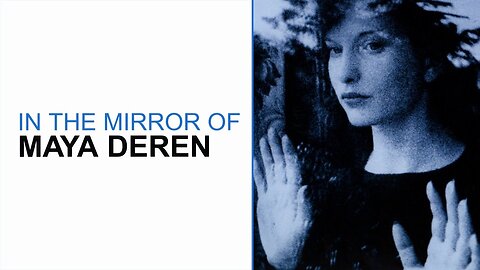
In the Mirror of Maya Deren (Martina Kudlacek, 2003)
thecinesexualIn the Mirror of Maya Deren (Martina Kudlacek, 2003) **In the Mirror of Maya Deren** is a 2002 documentary directed by Martina Kudláček that chronicles the life and work of avant-garde filmmaker Maya Deren (1917-1961). [1][9] Released in theaters in 2003, it runs 103 minutes and blends archival footage, Deren's own films, rare audio recordings, and interviews with contemporaries like Stan Brakhage and Jonas Mekas. [3][4][5] ## Key Focus Areas The film explores Deren's multifaceted career as a filmmaker, dancer, poet, theorist, and ethnographer, emphasizing her pioneering experimental shorts such as *Meshes of the Afternoon* (1943), *At Land*, and *Ritual in Transfigured Time*. [4][7] It delves into her transformative experiences in Haiti, where she documented Vodou rituals for *Divine Horsemen* (unfinished during her lifetime) and underwent initiation as a priestess, blending ritual, surrealism, and personal metamorphosis. [2][4] ## Production and Style Kudláček structures the documentary poetically, mirroring Deren's non-linear style by interweaving biography, film clips, and Deren's writings to portray her as both subject and protagonist. [2][4] Produced in Austria/Czech Republic with support from Arte and others, it highlights Deren's rejection of narrative conventions in favor of "interior documentaries" capturing dream, reality, and ritualistic transformation. [1][5] ## Reception and Legacy Critics praised it as an engaging introduction to Deren's mythic influence on American independent and feminist cinema, though it prioritizes her personal story over exhaustive film analysis. [5] With a limited U.S. box office of $6,000, it remains a vital resource for queer and avant-garde film scholars, available on DVD and streaming. [3][5] Citations: [1] In the Mirror of Maya Deren https://harvardfilmarchive.org/calendar/in-the-mirror-of-maya-deren-2003-02 [2] Martina Kudláček - BOMB Magazine https://bombmagazine.org/articles/2002/10/01/martina-kudl%C3%A1%C4%8Dek/ [3] In the Mirror of Maya Deren - McPherson & Company https://www.mcphersonco.com/store/p86/In_the_Mirror_of_Maya_Deren.html [4] In the Mirror of Maya Deren (2001) | A Portrait of the Avant-Garde Pioneer https://www.youtube.com/watch?v=OeMnk8pVH6I [5] In the Mirror of Maya Deren https://www.rottentomatoes.com/m/in_the_mirror_of_maya_deren [6] In the Mirror of Maya Deren - Chlotrudis Society for Independent Film https://chlotrudis.org/review/in/ [7] In the Mirror of Maya Deren (Martina Kudláček) official trailer https://www.youtube.com/watch?v=oXJrZhpqXUE [8] In the Mirror of Maya Deren https://www.tcm.com/tcmdb/title/440068/in-the-mirror-of-maya-deren/ [9] In the Mirror of Maya Deren https://en.wikipedia.org/wiki/In_the_Mirror_of_Maya_Deren [10] In the Mirror of Maya Deren - Movie Reviews https://www.rottentomatoes.com/m/in_the_mirror_of_maya_deren/reviews -
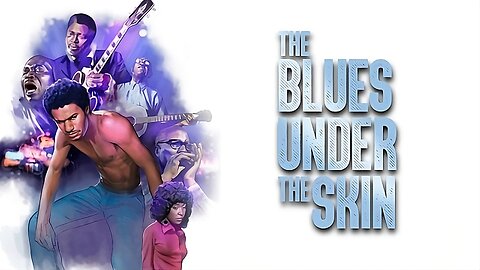
The Blues Under the Skin (Roviros Manthoulis, 1973) France | USA
thecinesexualThe Blues Under the Skin "The Blues Under the Skin" is a 1973 hybrid documentary-music film directed by Roviros Manthoulis. It blends raw performances and interviews with Delta blues legends alongside a fictional narrative about a struggling young couple in Harlem. [1][2] ## Film Overview The movie captures the essence of blues music during a 1970s revival, featuring intimate sessions in the rural South. Manthoulis explores the genre's emotional and sociopolitical roots through candid footage. Runtime stands at 88 minutes, originally titled "Le blues entre les dents" in French. [1][2] ## Key Artists Featured performers include B.B. King, Buddy Guy, Sonny Terry & Brownie McGhee, Mance Lipscomb, Bukka White, Roosevelt Sykes, Furry Lewis, Junior Wells, and Robert Pete Williams. These appearances offer rare glimpses of Black life and music in the Mississippi Delta and beyond. The film earned a 7.6/10 rating on IMDb from limited reviews. [2] ## Recent Availability A re-release trailer appeared in 2024, with theatrical screenings starting July 12, followed by Blu-ray from Kino Lorber. It screened at venues like The Colonial Theatre and streams on platforms like MUBI. This rediscovery highlights its status as an "untapped treasury" of vanishing blues traditions. [1][4][5] Citations: [1] The Blues Under the Skin – Official Re-Release Trailer https://www.youtube.com/watch?v=F7OiHt0cRWU [2] The Blues Under the Skin (1973) https://www.imdb.com/title/tt0292456/ [3] The Blues Under the Skin (1973) https://mubi.com/en/mx/films/blues-under-the-skin [4] The Blues Under the Skin (Blu-ray) - Kino Lorber https://kinolorber.com/product/the-blues-under-the-skin [5] The Blues Under the Skin https://thecolonialtheatre.com/films/documentaries/the-blues-under-the-skin/ [6] The Blues Under the Skin (1973) https://letterboxd.com/film/the-blues-under-the-skin/ [7] Blues Under the Skin (1973) Documental https://www.filmaffinity.com/es/film619479.html [8] The Blues Under the Skin https://www.rottentomatoes.com/m/the_blues_under_the_skin -
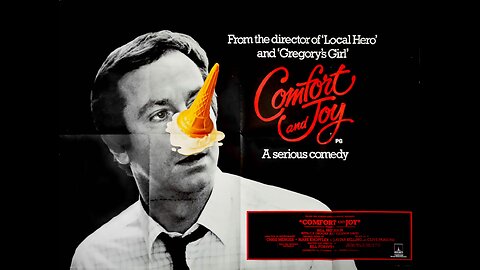
Comfort and Joy (Bill Forsyth, 1984) Scotland
thecinesexualComfort and Joy (Bill Forsyth, 1984) Scotland Comfort and Joy is a 1984 Scottish comedy directed by Bill Forsyth, set in Glasgow and centering on a radio DJ entangled in a whimsical "ice cream war." [1] ## Plot Overview Alan "Dicky" Bird, played by Bill Paterson, is a popular morning DJ whose life unravels when his girlfriend leaves him, taking his belongings. He stumbles into a rivalry between two Italian families, the Bernardis and the Rossis, fighting for control of Glasgow's ice cream van territories after witnessing an attack on a van. [1][6] The story blends absurdity with Forsyth's signature quirky humor, turning a mundane trade dispute into a metaphor for local identity and personal emptiness. [3] ## Key Themes The film explores melancholy beneath comedy, with Alan confronting emotional voids amid eccentric encounters, echoing Forsyth's prior work like Local Hero. [3][5] It satirizes local radio's "fluffiness" against Glasgow's real ice cream wars, which had darker undertones involving drugs, though Forsyth keeps it light and metaphorical. [1][6] Influences from American gangster films like The Godfather appear incongruously in Scottish settings. [5] ## Production Notes Bill Forsyth wrote and directed, drawing from Glasgow's local radio scene and ice cream rivalries for a soulful, city-specific vibe. [1] Filmed in Glasgow, Scotland, it earned a BAFTA nomination for Best Original Screenplay and marked a shift toward Forsyth's bleaker tone amid Thatcher-era ambivalence. [1][4] Stars include Eleanor David as the ex-girlfriend and Clare Grogan. [6] Citations: [1] Comfort and Joy (1984 film) https://en.wikipedia.org/wiki/Comfort_and_Joy_(1984_film) [2] Comfort and Joy (1984 film) - Universal Studios Wiki https://universalstudios.fandom.com/wiki/Comfort_and_Joy_(1984_film) [3] Comfort and Joy (1984) directed by Bill Forsyth https://letterboxd.com/film/comfort-and-joy/ [4] Comfort and Joy (1984) http://www.screenonline.org.uk/film/id/514458/index.html [5] Comfort and Joy: the anatomy of melancholy - Offscreen https://offscreen.com/view/comfort_and_joy [6] Comfort and Joy (1984) https://www.imdb.com/title/tt0087072/ [7] Comfort and Joy (1984) | MUBI https://mubi.com/es/us/films/comfort-and-joy [8] Comfort and Joy https://www.rottentomatoes.com/m/1004552-comfort_and_joy [9] Comfort and Joy - Films In Scotland - WordPress.com https://filmsinscotland.wordpress.com/2021/01/18/comfort-and-joy/ [10] Comfort and Joy movie review & film summary (1984) https://www.rogerebert.com/reviews/comfort-and-joy-1984 -
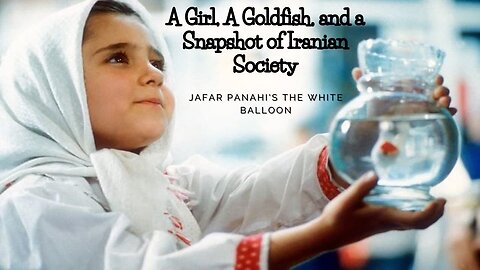
The White Balloon (Jafar Panahi, 1995) Iran
thecinesexualThe White Balloon (Jafar Panahi) **The White Balloon Overview** Jafar Panahi's 1995 feature debut, *The White Balloon* (Badkonake sefid), follows seven-year-old Razieh as she navigates Tehran streets on Nowruz eve to buy a plump goldfish for good luck, despite her family's skinny pond fish. With a screenplay by Abbas Kiarostami, the film captures her quest's mishaps, like losing her 500-toman note twice in grates, through encounters with shopkeepers, a soldier, and an Afghan balloon seller [1][3]. Clocking in at 85 minutes, it blends childlike wonder with subtle social observations on outsiders in Iranian society [5][7]. **Critical Reception and Awards** The film won the Caméra d'Or at the 1995 Cannes Film Festival, marking the first major Iranian win there and launching Panahi's career after assisting Kiarostami. Critics praise its ultra-realistic style, poetic details, and focus on a child's perspective amid adult indifference, echoing *The Red Balloon* while meditating on cinema and urban life in Tehran [2][4][9]. Aida Mohammadkhani's natural performance as Razieh stands out, with the ending lingering on the overlooked Afghan boy for poignant effect [5]. **Themes and Style** Panahi employs long takes and minimalism to immerse viewers in Razieh's detours, highlighting themes of transience, kindness among strangers, and marginalization—like the lonely soldier and refugee—without overt drama. Its fairy-tale-like simplicity reveals incidental cruelty and lost opportunities in adult worlds [2][5]. As a stoic viewer or film blogger, this film's quiet resilience in everyday setbacks aligns with endurance amid obstacles. Citations: [1] The White Balloon - Wikipedia https://en.wikipedia.org/wiki/The_White_Balloon [2] The White balloon | Jafar Panahi | 1995 | ACMI collection https://www.acmi.net.au/works/85485--the-white-balloon/ [3] The White Balloon | Screen Slate https://www.screenslate.com/articles/white-balloon [4] The White Balloon -- Review and Analysis (A Forgotten Classic: Episode 4) https://www.youtube.com/watch?v=lX-BfU2njOY [5] The White Balloon (Jafar Panahi, 1995) - Cinescope https://cine-scope.com/2025/09/07/the-white-balloon-jafar-panahi-1995/ [6] Criterion Film Club Discussion #218: The White Balloon https://www.reddit.com/r/criterionconversation/comments/1hdi1k5/criterion_film_club_discussion_218_the_white/ [7] The White Balloon (1995) https://www.imdb.com/title/tt0112445/ [8] The White Balloon (1995) | MUBI https://mubi.com/en/tr/films/the-white-balloon [9] Jafar Panahi - Wikipedia https://en.wikipedia.org/wiki/Jafar_Panahi [10] "The White Balloon" (1995). Beautiful Iranian film by Jafar Panahi. https://www.reddit.com/r/movies/comments/39eedv/the_white_balloon_1995_beautiful_iranian_film_by/ -
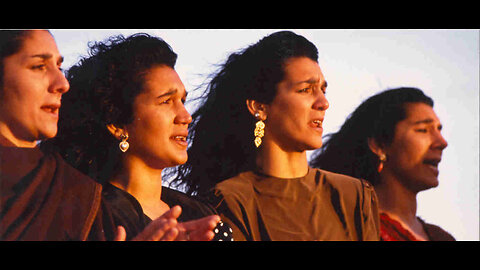
Latcho Drom (Tony Gatliff, 1993) France | Egypt
thecinesexualLatcho Drom (Tony Gatliff, 1993) France | Egypt **Latcho Drom** (1993), directed by Tony Gatlif, traces the migratory journey of Romani people from northwest India to Spain through music, dance, and visual vignettes, emphasizing their nomadic culture without a conventional narrative [1][3]. The title means "safe journey" in Romani, and the film screened in the Un Certain Regard section at the 1993 Cannes Film Festival [1][4]. ## Key Themes The film celebrates Romani music and traditions across stops in India, Egypt (featuring Ghawazi dancers), Turkey, Romania, Hungary, Slovakia, France, and Spain, blending historical elements like Holocaust references with vibrant performances [6][7][9]. Gatlif, of Romani descent, creates an aural and visual tapestry that highlights elemental aspects of Romani life—fire, water, carts, songs of exile, and rejection—while avoiding direct depictions of hardship found in his other works [5][7]. ## Production Details Shot in 35mm color with Dolby SR sound, the 103-minute French production involves non-professional Romani musicians and dancers, using multiple languages including Romani, Arabic, Turkish, and Spanish [4][6][9]. Filming locations include Egypt, and it forms the second part of Gatlif's Romani trilogy [6][9]. Citations: [1] Latcho Drom https://en.wikipedia.org/wiki/Latcho_Drom [2] Egypt's Dazzling Ghawazi Dancers in 1993 French Film ' ... https://www.facebook.com/SceneNoise/videos/watch-egypts-dazzling-ghawazi-dancers-in-1993-french-film-latcho-drombelieved-to/695508881023547/ [3] Latcho Drom (1993) - Plot https://www.imdb.com/title/tt0107376/plotsummary/ [4] Latcho Drom de Tony Gatlif (1993) https://es.unifrance.org/pelicula/11344/latcho-drom [5] Latcho Drom https://www.romarchive.eu/en/collection/latcho-drom-1/ [6] Latcho Drom (1993) https://www.imdb.com/es/title/tt0107376/ [7] Latcho Drom (1993) - Seldom Scene https://seldomscene.ca/latcho-drom-1993/ [8] Latcho Drom - Tony Gatlif https://www.youtube.com/watch?v=KnBZ_a0-Jsc [9] Latcho Drom (1993) https://www.imdb.com/title/tt0107376/ [10] Latcho Drom - gitanos de Egipto https://www.youtube.com/watch?v=sRGV2Hck9ok -
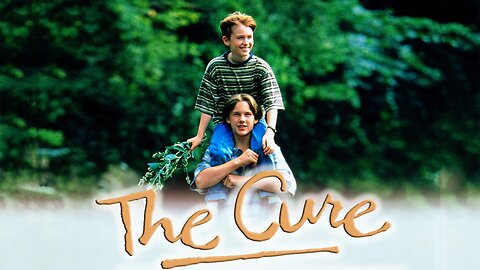
The Cure (Peter Horton, 1995) USA
thecinesexualThe Cure (1995) USA Though it loses some of its steam before the end, this is an uncommonly affecting and unhackneyed story about a friendship between two alienated 11-year-old boys from neighboring middle-class, single-parent homes, one of whom has AIDS. Working from an original script by Robert Kuhn that mixes comedy and tragedy as if they were kissing cousins, actor Peter Horton makes an impressive directorial debut. Though the story is provisionally about intolerance of and ignorance about AIDS, it focuses on the boys’ friendship and adventures–including a Huckleberry Finn-like escape down the river in search of the cure of the title–and the actors do an exceptional job with it, especially Brad Renfro (The Client) and Annabella Sciorra. With Joseph Mazzello, Diana Scarwid, and, in a part that seems to have been severely trimmed, Bruce Davison. - capsule review by Jonathan Rosenbaum *The Cure* is a 1995 American drama film directed by Peter Horton, starring Brad Renfro as Erik and Joseph Mazzello as Dexter, centering on their friendship as Dexter battles AIDS contracted from a blood transfusion.[1][2] Released theatrically by Universal Pictures on April 21, 1995, it runs 97 minutes and earned $2.57 million at the US and Canada box office, performing modestly despite acclaim for the young leads' performances.[1][2] ## Plot Overview Erik, a troubled boy in small-town Minnesota, befriends neighbor Dexter despite prejudice against Dexter's AIDS diagnosis; their bond deepens as Erik prefers Dexter's supportive mother over his own neglectful one.[1][3] Hearing of a rumored cure from a New Orleans doctor, the boys embark on a Mississippi River adventure, facing dangers and growing closer.[3][4] The story highlights themes of friendship, stigma, and resilience amid 1990s AIDS fears.[1] ## Cast and Crew - Brad Renfro as Erik (nominated for Young Artist Award).[1] - Joseph Mazzello as Dexter (nominated for Young Artist Award).[1] - Annabella Sciorra as Dexter's mother, Linda; Diana Scarwid as Erik's mother, Gail.[2] - Written by Robert Kuhn; score by Dave Grusin (Grammy-nominated).[1] ## Reception and Awards Critics gave mixed reviews but praised the child actors, with Roger Ebert noting moving passages despite narrative flaws.[1][4] Renfro won a YoungStar Award; the film took the Audience Award at Cinekid Festival.[1] It holds nostalgic appeal today, as seen in fan discussions.[9] Citations: [1] The Cure (1995 film) - Wikipedia https://en.wikipedia.org/wiki/The_Cure_(1995_film) [2] The Cure https://www.imdb.com/title/tt0112757/ [3] The Cure (1995) - Plot https://www.imdb.com/title/tt0112757/plotsummary/ [4] The Cure movie review & film summary (1995) https://www.rogerebert.com/reviews/the-cure-1995 [5] The Cure - Wikipedia https://en.wikipedia.org/wiki/The_Cure [6] The Cure (película de 1995) https://es.wikipedia.org/wiki/The_Cure_(pel%C3%ADcula_de_1995) [7] The Cure (1995) ⭐ 7.7 | Adventure, Drama https://www.imdb.com/title/tt0112757 [8] El poder de la amistad (1995) https://www.imdb.com/es/title/tt0112757/ [9] The Cure (1995) with Brad Renfro and Joseph Mazzello https://www.reddit.com/r/movies/comments/16nd32e/the_cure_1995_with_brad_renfro_and_joseph_mazzello/ [10] The Cure https://www.rottentomatoes.com/m/1061860-cure -
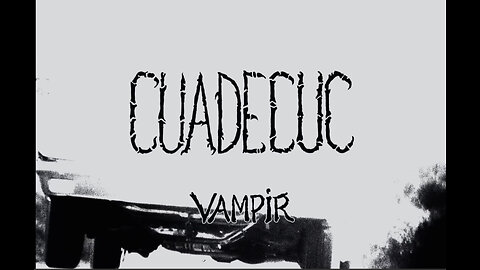
Cuadecuc, Vampir (Pere Portabella, 1971) Italy
The CinesexualsNote: THIS MOVIES IS SILENT except for a short reading by Christopher Lee toward the end. Cuadecuc, Vampir (Pere Portabella, 1971) Italy Cuadecuc, Vampir (1971) is an avant-garde experimental film directed by Pere Portabella. It is a Spanish production rather than Italian. The film is composed mostly of behind-the-scenes footage from Jesús Franco's 1970 commercial horror film Count Dracula, but Portabella transforms this source material into a dreamlike, non-linear, silent meditation on the Dracula myth. The film is noted for its grainy black-and-white aesthetic, sparse use of sound, and a haunting atmosphere created by original music and extracts from Wagner's Ring Cycle. It has been described as a primal and elemental adaptation of Bram Stoker’s Dracula and stands as a defining work of Spanish independent cinema rather than Italian cinema[1][3][5]. Key points about Vampir-Cuadecuc: - Directed and written by Pere Portabella, with Joan Brossa also credited as a writer. - Stars include Christopher Lee, Herbert Lom, and Soledad Miranda, mostly appearing in behind-the-scenes roles. - The film eschews conventional narrative, focusing instead on atmosphere, texture, and the process of horror filmmaking. - Running about 67 minutes, it features minimal dialogue, with Christopher Lee reading a Dracula death passage towards the end. - Despite being shot mostly without sound and using footage from another filmmaker, it is recognized for its visual and conceptual originality. - It is considered a significant work in the Spanish avant-garde and independent film movements of the early 1970s[1][3][5]. Though sometimes mistaken for Italian due to its production or style similarities, Cuadecuc, Vampir is a Spanish film associated with the Spanish director Pere Portabella and Spain’s indie film culture. Citations: [1] Cuadecuc, vampir - Wikipedia https://en.wikipedia.org/wiki/Cuadecuc,_vampir [2] Cuadecuc, vampir - Film 1971 https://movieplayer.it/film/cuadecuc-vampir_54189/ [3] Cuadecuc, vampir (1971) ⭐ 6.5 | Documentary, Horror https://www.imdb.com/title/tt0066517/ [4] Vampir – Cuadecuc https://bfmaf.org/programme/vampir-cuadecuc/ [5] Vampir-Cuadecuc (Pere Portabella, 1971) - Film Secession Teaser https://www.youtube.com/watch?v=KVG-O4N7b54 [6] Vampir Cuadecuc (1971) Blu-Ray Review, Second Run https://thegeekshow.co.uk/vampir-cuadecuc-1971-blu-ray-review/ [7] Vampir Cuadecuc (1971) ⭐ 6.5 | Documental, Terror https://www.imdb.com/es-es/title/tt0066517/ [8] Vampir - Cuadecuc (Pere Portabella, 1970) Trailer https://www.youtube.com/watch?v=LzMrKLrJx6c [9] Vampir-Cuadecuc https://grasshopperfilm.com/film/vampir-cuadecuc/ [10] Vampir Cuadecuc https://www.mondo-digital.com/cuaecuc.html