-
Judas Hangs Himself (Matthew 27:1-8) - Steve Gregg
The Narrow Pathhttps://thenarrowpath.com | In his lecture on Matthew 27:1-8, Steve Gregg explores the events following Jesus' arrest and trial, focusing on the Sanhedrin’s need for Roman approval to execute Jesus, leading to their consultation with Pontius Pilate. Gregg discusses the necessity of fabricating charges against Jesus, as the blasphemy accusation would not sway the Roman governor. He also examines the account of Judas Iscariot’s remorse and death, addressing apparent discrepancies between Matthew’s account—where Judas hangs himself and the priests buy a field with his returned silver—and Acts 1:18-19, where Judas is said to have purchased a field and died by falling. Gregg argues these accounts are complementary, not contradictory, suggesting both could be true through reasonable scenarios, such as Judas’ body falling after hanging. Additionally, he touches on the issue of a quotation attributed to Jeremiah in Matthew 27:9, which appears to come from Zechariah, promising further discussion on this potential error. | https://opentheo.org/i/765611936653040108/matthew-271-278 Matthew 27:1-8 (NKJV) 1 When morning came, all the chief priests and elders of the people plotted against Jesus to put Him to death. 2 And when they had bound Him, they led Him away and delivered Him to Pontius Pilate the governor. 3 Then Judas, His betrayer, seeing that He had been condemned, was remorseful and brought back the thirty pieces of silver to the chief priests and elders, 4 saying, “I have sinned by betraying innocent blood.” And they said, “What is that to us? You see to it!” 5 Then he threw down the pieces of silver in the temple and departed, and went and hanged himself. 6 But the chief priests took the silver pieces and said, “It is not lawful to put them into the treasury, because they are the price of blood.” 7 And they consulted together and bought with them the potter’s field, to bury strangers in. 8 Therefore that field has been called the Field of Blood to this day. Outline Introduction to Matthew 27:1-8 Context: Jesus’ arrest and trial by the Sanhedrin. Sanhedrin’s inability to execute without Roman approval due to their status as a puppet government under Roman rule. Jesus Taken to Pontius Pilate Sanhedrin condemned Jesus for blasphemy, but this charge was irrelevant to Romans. Morning meeting to devise new charges to convince Pilate to execute Jesus. Judas Iscariot’s Remorse and Death Judas, remorseful, returns the thirty pieces of silver to the priests and hangs himself (Matthew 27:3-5). Priests use the money to buy a potter’s field, called the Field of Blood (Matthew 27:6-8). Comparison with Acts 1:18-19 Acts describes Judas purchasing a field, falling headlong, and his entrails gushing out, with the field called the Field of Blood. Differences: Matthew: Judas hangs himself; priests buy the field with his money; Field of Blood due to blood money. Acts: Judas buys the field; dies by falling; Field of Blood due to his gruesome death. Reconciling Apparent Contradictions No contradiction if both accounts can be true: Judas could have hanged himself, and his body later fell and burst open (e.g., rope/branch broke or body was cut down). Field purchase attributed to Judas as it used his money, a common way of speaking (e.g., posthumous actions via agents). Field of Blood name could have multiple reasons (blood money and Judas’ death). Unlikelihood of error: Disciples, including Matthew and Peter, were close to Judas, making ignorance of his death improbable. Event was publicly known in Jerusalem, reducing chances of conflicting accounts. Quotation Issue in Matthew 27:9 Matthew attributes a prophecy about the thirty pieces of silver to Jeremiah, but it resembles Zechariah. This raises questions about potential error in Matthew’s attribution. Gregg promises to address this issue in the next session, noting it challenges views on biblical inspiration but is resolvable. #BibleStudy #Matthew27 #GospelOfMatthew #SteveGregg #JudasIscariot #FieldOfBlood #BiblicalContradictions #JesusTrial #PontiusPilate #ChristianTeaching #ScriptureAnalysis #NewTestament #BiblicalProphecy #ZechariahVsJeremiah #ChristianApologetics #jesus #jesuschrist #sin #failure #bibleteaching #biblestudy #sacrifice #thenarrowpath #stevegregg125 views -
Jesus on Trial (Matthew 26:57-75) - Steve Gregg
The Narrow Pathhttps://thenarrowpath.com | In Matthew 26:57-26:75, Steve Gregg discusses the trial of Jesus by the chief priests and false witnesses. He explains that the witnesses' claims were inconsistent and did not meet the Jewish law's regulations. Jesus was mocked and beaten by the high priest trial, and Peter denied Jesus three times. However, Jesus later restored Peter's salvation and position among the apostles. Steve Gregg emphasizes Jesus' prediction of his second coming and the importance of standing firm in faith during times of trial. Transcript: https://opentheo.org/i/765611936653040107/matthew-2657-2675 Outline of Steve Gregg’s Lecture on Matthew 26:57–75 Introduction • Context: Jesus’ arrest in the Garden of Gethsemane, betrayed by Judas, with Peter attempting to defend Him by cutting off Malchus’ ear (Matthew 26:47–56). • Jesus submits to arrest to fulfill Scripture, despite having the power to call twelve legions of angels. • Disciples forsake Jesus and flee, though Peter and John follow at a distance, with Peter acting cowardly (Matthew 26:56). Jesus’ Trial Before Caiaphas (Matthew 26:57–68) • Jesus is led to Caiaphas, the high priest, where scribes and elders are assembled (Matthew 26:57). • The Sanhedrin seeks false testimony to condemn Jesus to death but struggles to find consistent witnesses (Matthew 26:59–60). • Jewish law requires at least two witnesses for a conviction; many false witnesses come forward, but their testimonies do not agree (Mark 14:56). • Two witnesses eventually claim Jesus said, "I am able to destroy the temple of God and to build it in three days" (Matthew 26:61; cf. Mark 14:58). • Misquotation of Jesus’ actual statement: "Destroy this temple, and in three days I will raise it up," referring to His body, not the physical temple (John 2:19). • The charge is insufficient for a death penalty, as it is not inherently blasphemous or unlawful. • Caiaphas, frustrated, breaks Jewish legal protocol by directly questioning Jesus, adjuring Him to declare if He is the Christ, the Son of God (Matthew 26:62–63). • Jesus responds, affirming He is the Christ and Son of God, and predicts they will see the Son of Man "sitting at the right hand of the Power, and coming on the clouds of heaven" (Matthew 26:64). • Interpretation of Jesus’ prediction: – Likely refers to His coming in judgment in 70 AD, not the Second Coming, as Caiaphas and others would see it in their lifetime (cf. Matthew 16:28, 24:34). – Old Testament imagery of God’s judgment (e.g., Roman destruction of Jerusalem) supports this view. • Caiaphas tears his clothes, claiming blasphemy, though Jesus’ statements do not meet the legal definition of blasphemy (Matthew 26:65–66). • The Sanhedrin declares Jesus deserving of death, a foregone conclusion, and He is mocked, spat upon, and beaten (Matthew 26:66–68). Peter’s Denial (Matthew 26:69–75) • Peter, following at a distance, sits in the courtyard and is recognized as a follower of Jesus (Matthew 26:69). • Three denials: – A servant girl identifies Peter as being with Jesus; he denies knowing Him (Matthew 26:70). – Another girl says Peter was with Jesus of Nazareth; he denies it with an oath (Matthew 26:71–72). – Bystanders note Peter’s Galilean accent, indicating he is a disciple; he curses and swears, denying Jesus again (Matthew 26:73–74). • After the third denial, a rooster crows, fulfilling Jesus’ prediction (Matthew 26:34); Jesus looks at Peter, who remembers and weeps bitterly (Matthew 26:74–75; cf. Luke 22:61). • Peter’s cowardice contrasts with Jesus’ warning: denying Him before men risks being denied before the Father (Matthew 10:33). • Jesus later restores Peter’s salvation and position among the apostles after His resurrection (John 21). Conclusion • The trial reveals the injustice of the Sanhedrin, who sought to condemn Jesus despite lacking valid evidence, resorting to a questionable blasphemy charge. • Peter’s denials highlight human weakness and cowardice, a warning against failing to stand for Christ under pressure. • Jesus’ submission to His fate fulfills Scripture, and His prediction of coming in judgment underscores His divine authority. • Encouragement to boldly proclaim Christ, learning from Peter’s mistake, even in the face of persecution. #jesus #jesuschrist #trial #gospel #injustice #innocent #persecution #falseaccusations #gospelofmatthew #matthew26 #peter #faithless #sin #failure #repentance #israel #bibleteaching #biblestudy #sacrifice #thenarrowpath #stevegregg #miracle106 views -
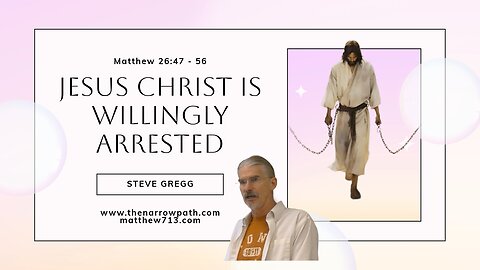
Jesus is Willingly Arrested (Matthew 26:47-56) - Steve Gregg
The Narrow Pathhttps://thenarrowpath.com | In Steve Gregg’s lecture on Matthew 26:47–56, he explores the betrayal and arrest of Jesus in the Garden of Gethsemane, focusing on Judas’ deceitful kiss, Peter’s violent reaction, and Jesus’ nonviolent response. Gregg highlights Judas’ treachery in identifying Jesus with a kiss, a gesture of false friendship, and examines Peter’s impulsive act of cutting off Malchus’ ear, noting variations in Gospel accounts and the likely protection of Peter’s identity in earlier Gospels. Jesus rebukes Peter’s violence, stating that those who live by the sword risk dying by it, and emphasizes his ability to call upon divine protection (twelve legions of angels) but chooses to fulfill Scripture through submission to arrest. Jesus’ healing of Malchus and acceptance of his “cup” of suffering reflect his teachings on nonresistance and trust in God’s will, challenging modern Christians to prioritize divine protection over self-defense, as exemplified by early Christian martyrs like the Anabaptists and Polycarp. Transcript: https://opentheo.org/i/765611936653040106/matthew-2647-2656 Lecture Outline: Matthew 26:47–56 • Context of the Passage – Jesus is in the Garden of Gethsemane, having prayed three times while the disciples slept. – The passage (Matthew 26:47–56) describes Judas Iscariot’s betrayal and Jesus’ arrest. • Judas’ Betrayal – Judas betrays Jesus with a kiss, a deceitful act despite being a common Middle Eastern greeting. – Jesus calls Judas “Friend” (Matthew 26:50), showing goodwill despite Judas’ treachery. – In Luke 22:48, Jesus questions Judas: “Are you betraying the Son of Man with a kiss?” to highlight the betrayal’s gravity. – The kiss was a prearranged signal to identify Jesus, possibly due to poor lighting or unfamiliarity of the soldiers with Jesus’ appearance. – Judas’ motives are unclear; some view him as always wicked, others as a disillusioned follower. • Peter’s Reaction – One disciple (identified as Peter in John 18:10) draws a sword and cuts off the ear of Malchus, the high priest’s servant. – Matthew, Mark, and Luke omit Peter’s name, possibly to protect him from legal consequences while he was alive. – John, written later (likely after Peter’s death), names both Peter and Malchus, indicating eyewitness detail. • Jesus’ Response to Peter – Jesus rebukes Peter, saying, “For all who take the sword will perish by the sword” (Matthew 26:52). – Possible interpretations of this statement: * Specific to the situation: The disciples were outnumbered, and violence would lead to their death. * General principle: Using violence invites violent retaliation, escalating conflict. * Prophetic: Those attacking Jesus (with swords) would later face judgment (e.g., Roman destruction of Jerusalem in 70 AD). – Jesus emphasizes he could call “more than twelve legions of angels” (72,000) for protection if needed, but chooses not to, to fulfill Scripture (Matthew 26:53–54). – In Luke 22:51, Jesus says, “Permit even this,” and heals Malchus’ ear, demonstrating grace toward an enemy. – In John 18:11, Jesus tells Peter to sheath his sword, accepting the “cup” (his arrest and crucifixion) as God’s will. • Jesus’ Interaction with the Crowd – Jesus questions the crowd: “Have you come out as against a robber with swords and clubs to take me?” (Matthew 26:55), noting he taught openly in the temple without resistance. – He affirms that his arrest fulfills the Scriptures of the prophets (Matthew 26:56). • Disciples’ Response – All disciples abandon Jesus and flee (Matthew 26:56), highlighting their fear and human frailty. • Theological Implications – Jesus’ nonviolent response reflects his teaching to do good to enemies, exemplified by healing Malchus. – Comparison to early Christians (e.g., Anabaptists, Polycarp) who embraced nonresistance and martyrdom. – Jesus’ acceptance of the “cup” reflects submission to God’s will, even in suffering. – Challenges modern Christians’ reliance on self-defense and weapons, emphasizing trust in God’s protection (e.g., “safety is from the Lord”). • Conclusion – The passage underscores Jesus’ commitment to fulfilling God’s plan through nonviolence and submission. – Encourages reflection on trust in God’s provision over human efforts at self-defense. #jesus #jesuschrist #arrest #gospel #gospelofmatthew #matthew26 #bibleteaching #biblestudy #sacrifice #thenarrowpath #stevegregg #miracle89 views 1 comment -
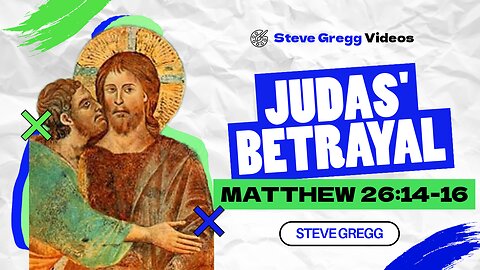
Judas' Betrayal of Jesus (Matthew 26:14-16) - Steve Gregg
The Narrow Pathhttps://thenarrowpath.com | In this session, Steve Gregg provides a detailed analysis of Matthew 26:14-16, focusing on Judas' betrayal of Jesus. He examines the nature of Judas' possession and discusses whether Judas was a true believer in Jesus and ultimately saved or not. Gregg also delves into the possible reasons behind Judas' betrayal, including his disappointment at Jesus' failure to bring about Israel's liberation from the Romans. Overall, this in-depth examination of Judas' betrayal provides insight into the complexities of human nature and the challenges faced by believers in their journey of faith. | Transcript: https://opentheo.org/i/5683542729742041440/proverbs-neighbors Outline of Steve Gregg’s Lecture on Matthew 26:14-16: Judas’ Betrayal Introduction • Context: Steve Gregg’s analysis of Matthew 26:14-16, focusing on Judas Iscariot’s betrayal of Jesus. • Key Themes: Examines Judas’ motives, spiritual state, and the implications of his actions for understanding human nature and faith. • Text Overview: Judas negotiates with the chief priests to betray Jesus for thirty pieces of silver and seeks an opportunity to deliver Him. I. The Enigma of Judas Iscariot • Background: Judas, one of the twelve disciples, followed Jesus for approximately 2.5–3 years, witnessed His miracles, and likely performed miracles himself (e.g., casting out demons, healing the sick). • Spiritual Decline: Despite his initial involvement, Judas becomes possessed by the devil, who inspires him to betray Jesus. • Jesus’ Condemnation: Jesus declares, “Woe unto that man by whom the Son of Man is betrayed,” suggesting Judas’ ultimate loss (Matthew 26:24). • Regret vs. Repentance: Judas’ remorse (Matthew 27) leads to suicide, indicating worldly sorrow rather than righteous repentance (2 Corinthians 7:10). II. Was Judas Ever a True Believer? • Theological Debate: – Some argue Judas was never saved, citing his betrayal as evidence of an insincere faith from the beginning. – Others suggest he was a true believer who fell away, challenging the “once saved, always saved” doctrine. • Evidence for Judas’ Initial Sincerity: 1 – Jesus’ Selection: Jesus prayed all night before choosing the twelve, including Judas, to preach and perform miracles (Luke 6:12-16). – Disciples’ Trust: The other disciples did not suspect Judas as the betrayer, even after Jesus’ prediction (John 13:21-29), indicating his convincing discipleship. – Jesus’ Promise: Jesus promised the twelve thrones to judge Israel (Matthew 19:28), including Judas before his defection. – John 17:6, 12: Jesus states the disciples, including Judas, were given by the Father, implying they were part of Israel’s believing remnant before following Jesus. • Counterarguments: – John 6:70: Jesus identifies Judas as “a devil” a year before the betrayal, suggesting early awareness of his disloyalty. – Judas’ forfeiture of his apostolic role (replaced by Matthias in Acts 1) indicates he lost his promised position. • Conclusion: Judas likely began as a sincere believer but fell away, retaining free will to choose betrayal. III. Possible Motives for Judas’ Betrayal • Disillusionment Theory: – Common View: Judas hoped Jesus would be a political/military Messiah to liberate Israel from Roman rule. – Disappointment: Jesus’ refusal to overthrow the Romans may have embittered Judas, leading to disillusionment (cf. Proverbs 13:12, “hope deferred makes the heart sick”). – Comparison: John the Baptist’s doubts (Matthew 11:2-6) show similar expectations, but he overcame them, unlike Judas. – Perception of Jesus: Judas may have viewed Jesus as a false Messiah, dangerous for attracting Roman reprisals. • Forced Hand Theory: – Speculation: Judas, as a loyal disciple, betrayed Jesus to force Him to manifest His power and overthrow the Romans. – Weakness: Lacks scriptural support; Judas’ actions align more with devilish influence than loyalty. • Covetousness: – John 12:6: Judas, the treasurer, was a thief, pilfering from the disciples’ funds, indicating material idolatry. 2 – Matthew 26:15: Judas initiates the betrayal by asking, “What are you willing to give me?” showing monetary motivation. – Thirty Pieces of Silver: Equivalent to a month’s wages ( $1,600 today), a small sum for betraying Jesus, highlighting the tawdry nature of his act. • Devil’s Influence: – John 13:27: The devil enters Judas’ heart, inspiring the betrayal. – Ephesians 4:26-27: Anger and unresolved bitterness (possibly from disillusionment) gave the devil a foothold. IV. Prophetic Fulfillment and the Thirty Pieces of Silver • Zechariah 11:12-13: ... #betrayal #judas #jesus #bibleteaching #matthew26 #prophecy #thenarrowpath #stevegregg #gospel #gospelofmatthew89 views 1 comment -
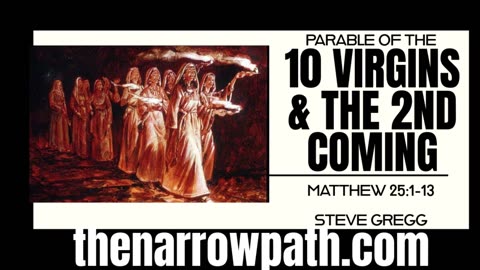
The 10 Virgins & The Second Coming of Jesus Christ (Matthew 25:1-13) - Steve Gregg
The Narrow Pathhttps://thenarrowpath.com | Steve Gregg explains the parable of the ten virgins in Matthew 25 and its relevance to Jewish wedding customs. He points out that the wise and foolish virgins represent those who are prepared and unprepared for the arrival of the bridegroom, likened to the return of Christ. He emphasizes that being a part of the church does not guarantee readiness for His return, and that believers must faithfully follow Christ and be ready at all times. Finally, he warns against the danger of being unfaithful like the wicked servant and facing the same fate of being cut off and cast away. | Transcript: https://opentheo.org/i/765611936653040098/matthew-251-2513 Matthew 25:1-13 New King James Version The Parable of the Wise and Foolish Virgins 25 “Then the kingdom of heaven shall be likened to ten virgins who took their lamps and went out to meet the bridegroom. 2 Now five of them were wise, and five were foolish. 3 Those who were foolish took their lamps and took no oil with them, 4 but the wise took oil in their vessels with their lamps. 5 But while the bridegroom was delayed, they all slumbered and slept. 6 “And at midnight a cry was heard: ‘Behold, the bridegroom [a]is coming; go out to meet him!’ 7 Then all those virgins arose and trimmed their lamps. 8 And the foolish said to the wise, ‘Give us some of your oil, for our lamps are going out.’ 9 But the wise answered, saying, ‘No, lest there should not be enough for us and you; but go rather to those who sell, and buy for yourselves.’ 10 And while they went to buy, the bridegroom came, and those who were ready went in with him to the wedding; and the door was shut. 11 “Afterward the other virgins came also, saying, ‘Lord, Lord, open to us!’ 12 But he answered and said, ‘Assuredly, I say to you, I do not know you.’ 13 “Watch therefore, for you know neither the day nor the hour [b]in which the Son of Man is coming. Footnotes Matthew 25:6 NU omits is coming Matthew 25:13 NU omits the rest of v. 13. Matthew 25:1-13 Legacy Standard Bible Parable of Ten Virgins 25 “Then the kingdom of heaven may be compared to ten virgins, who took their lamps and went out to meet the bridegroom. 2 Now five of them were foolish, and five were prudent. 3 For when the foolish took their lamps, they took no oil with them, 4 but the prudent took oil in flasks along with their lamps. 5 Now while the bridegroom was delaying, they all got drowsy and began to sleep. 6 But at midnight there was a shout, ‘Behold, the bridegroom! Come out to meet him.’ 7 Then all those virgins rose and trimmed their lamps. 8 And the foolish said to the prudent, ‘Give us some of your oil, for our lamps are going out.’ 9 But the prudent answered, saying, ‘No, there will not be enough for us and you too; go instead to the dealers and buy some for yourselves.’ 10 And while they were going away to make the purchase, the bridegroom came, and those who were ready went in with him to the wedding feast; and the door was shut. 11 And later the other virgins also *came, saying, ‘Lord, lord, open up for us.’ 12 But he answered and said, ‘Truly I say to you, I do not know you.’ 13 Therefore, stay awake, for you do not know the day nor the hour. #secondcoming #jesus #prophecy #parables #parableofjesus #parableoftenvirgins #virgin #dispensationalism #bible #israel #gospel #sonofman #matthew25 #olivetdiscourse #partialpreterism #preterism #endtimes #eschatology #lastdays #70ad #ad70 #newheavennewearth #thenarrowpath #stevegregg112 views 1 comment -
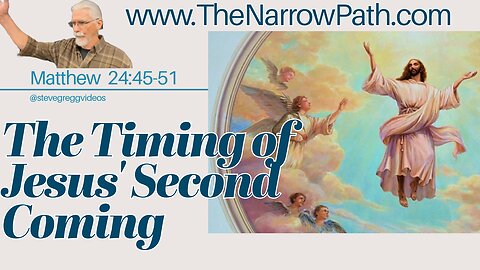
Timing of Jesus' Second Coming (Matthew 24:45-51) - Steve Gregg
The Narrow Pathhttps://thenarrowpath.com | In this message, Steve Gregg discusses the last few verses of Matthew 24, where Jesus speaks about his Second Coming. Jesus uses the illustration of a thief in the night to emphasize the importance of being ready and faithful. He warns that no one knows when the Second Coming will occur, so it is important to always be prepared by living a life of faith and obedience to God. Gregg encourages listeners to focus on their daily relationship with God rather than obsessing over signs of the end times. He also highlights the importance of being faithful in our responsibilities and privileges, as we will be held accountable upon Jesus' return. | Transcript: https://opentheo.org/i/765611936653040097/matthew-2445-2451 Matthew 24:45-51 New King James Version The Faithful Servant and the Evil Servant 45 “Who then is a faithful and wise servant, whom his master made ruler over his household, to give them food [a]in due season? 46 Blessed is that servant whom his master, when he comes, will find so doing. 47 Assuredly, I say to you that he will make him ruler over all his goods. 48 But if that evil servant says in his heart, ‘My master is delaying [b]his coming,’ 49 and begins to beat his fellow servants, and to eat and drink with the drunkards, 50 the master of that servant will come on a day when he is not looking for him and at an hour that he is not aware of, 51 and will cut him in two and appoint him his portion with the hypocrites. There shall be weeping and gnashing of teeth. Footnotes Matthew 24:45 at the right time Matthew 24:48 NU omits his coming Matthew 24:45-51 English Standard Version 45 “Who then is the faithful and wise servant,[a] whom his master has set over his household, to give them their food at the proper time? 46 Blessed is that servant whom his master will find so doing when he comes. 47 Truly, I say to you, he will set him over all his possessions. 48 But if that wicked servant says to himself, ‘My master is delayed,’ 49 and begins to beat his fellow servants[b] and eats and drinks with drunkards, 50 the master of that servant will come on a day when he does not expect him and at an hour he does not know 51 and will cut him in pieces and put him with the hypocrites. In that place there will be weeping and gnashing of teeth. Footnotes Matthew 24:45 Or bondservant; also verses 46, 48, 50 Matthew 24:49 Or bondservants #secondcoming #jesus #prophecy #falseteaching #dispensationalism #bible #israel #gospel #sonofman #matthew24 #olivetdiscourse #partialpreterism #preterism #endtimes #eschatology #lastdays #70ad #ad70 #jerusalem #newheavennewearth #thenarrowpath #stevegregg70 views 2 comments -
The Future Second Coming of Christ (Matthew 24:35-44) - Steve Gregg
The Narrow Pathhttps://thenarrowpath.com | In this discourse, Steve Gregg discusses Matthew chapter 24, emphasizing the difference between the signs of destruction of Jerusalem in 70 A.D. and the actual Second Coming of Christ. He explains that there are indicators that foretell the former, but no signs for the latter. Gregg warns against fatalism and encourages listeners to pay attention to what Jesus actually says, pointing out that mundane activities such as eating, drinking, and getting married are not inherently sinful and that people make plans for the future. Ultimately, Gregg underscores that the Second Coming will be unexpected and judgmental, catching everyone by surprise.| Transcript: https://opentheo.org/i/765611936653040096/matthew-2435-2444 Matthew 24:35-44 New King James Version 35 Heaven and earth will pass away, but My words will by no means pass away. No One Knows the Day or Hour 36 “But of that day and hour no one knows, not even the angels of [a]heaven, but My Father only. 37 But as the days of Noah were, so also will the coming of the Son of Man be. 38 For as in the days before the flood, they were eating and drinking, marrying and giving in marriage, until the day that Noah entered the ark, 39 and did not know until the flood came and took them all away, so also will the coming of the Son of Man be. 40 Then two men will be in the field: one will be taken and the other left. 41 Two women will be grinding at the mill: one will be taken and the other left. 42 Watch therefore, for you do not know what [b]hour your Lord is coming. 43 But know this, that if the master of the house had known what [c]hour the thief would come, he would have watched and not allowed his house to be broken into. 44 Therefore you also be ready, for the Son of Man is coming at an hour you do not expect. Footnotes Matthew 24:36 NU adds nor the Son Matthew 24:42 NU day Matthew 24:43 Lit. watch of the night Matthew 24:35-44 Legacy Standard Bible 35 Heaven and earth will pass away, but My words will not pass away. 36 “But of that day and hour no one knows, not even the angels of heaven, nor the Son, but the Father alone. 37 For just as the days of Noah were, so the coming of the Son of Man will be. 38 For as in those days before the flood they were eating and drinking, marrying and giving in marriage, until the day that Noah entered the ark, 39 and they did not [a]understand until the flood came and took them all away; so will the coming of the Son of Man be. 40 Then there will be two in the field; one [b]will be taken, and one [c]will be left. 41 Two women will be grinding grain at the [d]mill; one [e]will be taken and one [f]will be left. Be Ready for His Coming 42 “Therefore stay awake, for you do not know which day your Lord is coming. 43 But [g]be sure of this, that if the head of the house had known at what time of the night the thief was coming, he would have stayed awake and would not have allowed his house to be [h]broken into. 44 For this reason you also must be ready; for the Son of Man is coming at an hour when you do not think He will. Footnotes Matthew 24:39 Lit know Matthew 24:40 Lit is Matthew 24:40 Lit is Matthew 24:41 Handmill Matthew 24:41 Lit is Matthew 24:41 Lit is Matthew 24:43 Lit know this Matthew 24:43 Lit dug through #secondcoming #jesus #bible #prophecy #israel #gospel #sonofman #matthew24 #olivetdiscourse #dispensationalism #partialpreterism #preterism #endtimes #eschatology #lastdays #70ad #ad70 #jerusalem #newheavennewearth #thenarrowpath #stevegregg78 views -
Jesus Generation Didn't Pass Before All These Things Took Place - MAT 24:32-34 The Fig Tree - Gregg
The Narrow Pathhttps://thenarrowpath.com | In this lecture on Matthew 24:32-34, Steve Gregg discusses the Olivet Discourse, focusing on Jesus’ parable of the fig tree and the phrase “this generation will not pass away till all these things are fulfilled.” He challenges the common interpretation that the fig tree symbolizes Israel’s rebirth as a nation in 1948, noting there is no Old Testament precedent for identifying Israel as a fig tree. Instead, Gregg argues the fig tree is a general analogy for recognizing signs, like new shoots indicating summer, to signal the impending judgment of Jerusalem in 70 AD. He emphasizes that Jesus was addressing his contemporaries—specifically the disciples James, John, Peter, and Andrew—about the destruction of the temple, not the second coming of Christ or end times. Gregg supports this by referencing Luke 21, where Jesus mentions “all the trees” alongside the fig tree, and James 5:9, where James applies Jesus’ imagery of the judge “at the door” to the imminent fall of Jerusalem. The phrase “this generation” refers to Jesus’ own generation, not a future one or a race, as evidenced by Jesus’ consistent use of the term in Matthew to describe his contemporaries. Gregg concludes that the passage addresses the 70 AD destruction of Jerusalem, fulfilling the disciples’ question about when the temple would be destroyed, rather than predicting Israel’s modern statehood or the second coming. | Transcript: https://opentheo.org/i/765611936653040095/matthew-2432-2434 Matthew 24:32-34 New King James Version The Parable of the Fig Tree 32 “Now learn this parable from the fig tree: When its branch has already become tender and puts forth leaves, you know that summer is near. 33 So you also, when you see all these things, know that [a]it is near—at the doors! 34 Assuredly, I say to you, this generation will by no means pass away till all these things take place. Footnotes Matthew 24:33 Or He Matthew 24:32-34 English Standard Version The Lesson of the Fig Tree 32 “From the fig tree learn its lesson: as soon as its branch becomes tender and puts out its leaves, you know that summer is near. 33 So also, when you see all these things, you know that he is near, at the very gates. 34 Truly, I say to you, this generation will not pass away until all these things take place. #bible #prophecy #israel #secondcoming #figtree #lastgeneration #gospel #sonofman #matthew24 #olivetdiscourse #jesus #preterism #partialpreterism #endtimes #eschatology #lastdays #70ad #ad70 #jerusalem #dispensationalism #biblequestions #bibleanswers #thenarrowpath #stevegregg126 views 1 comment -
Angels Gathering the Elect are Christians Spreading the Gospel - Matt. 24:29-31 Part 2 - Steve Gregg
The Narrow Pathhttps://thenarrowpath.com | In this talk, Steve Gregg discusses Matthew 24:29-31 and its relation to other Biblical passages. He notes that the language used in this passage is similar to that used in Jeremiah 4:27-28, where the Lord is seen as acting through armies. The phrase "this generation will not pass" is repeated twice, possibly referring to the armies of Rome. Gregg also explores the definition of the word "angels" and how it is used in the Bible, suggesting that in some instances, it may refer to human messengers. Overall, Gregg's talk provides a thoughtful analysis of the symbolism and meaning behind this often-debated passage in the Bible. | Transcript: https://opentheo.org/i/765611936653040094/matthew-2429-2431-part-2 Matthew 24:29-31 New King James Version The Coming of the Son of Man 29 “Immediately after the tribulation of those days the sun will be darkened, and the moon will not give its light; the stars will fall from heaven, and the powers of the heavens will be shaken. 30 Then the sign of the Son of Man will appear in heaven, and then all the tribes of the earth will mourn, and they will see the Son of Man coming on the clouds of heaven with power and great glory. 31 And He will send His angels with a great sound of a trumpet, and they will gather together His [a]elect from the four winds, from one end of heaven to the other. Footnotes Matthew 24:31 chosen ones #bible #prophecy #elect #gospel #messenger #angel #evangelism #sonofman #secondcoming #matthew24 #olivetdiscourse #tribulation #jesus #preterism #partialpreterism #endtimes #eschatology #lastdays #70ad #ad70 #jerusalem #israel #jerusalem #covenanttheology #dispensationalism #biblequestions #bibleanswers #thenarrowpath #stevegregg85 views 2 comments -
Apocalyptic Judgment on Jerusalem - Matthew 24:29-31 Part 1 - Steve Gregg
The Narrow Pathhttps://thenarrowpath.com | In this study, Steve Gregg continues his analysis of the Olivet Discourse delivered by Jesus in Matthew 24. Gregg notes that the destruction of the Jewish temple system in 70 A.D., led by the Roman general Titus and the subsequent rebuilding, are well-documented historical events that align with Jesus’ prophecies. He further examines the context and timing of the events mentioned in the passage, such as the mourning of all tribes on earth, and interprets them as a societal end and coming judgment of God, rather than the literal end of the world. | Transcript: https://opentheo.org/i/765611936653040093/matthew-2429-2431-part-1 Matthew 24:29-31 New King James Version The Coming of the Son of Man 29 “Immediately after the tribulation of those days the sun will be darkened, and the moon will not give its light; the stars will fall from heaven, and the powers of the heavens will be shaken. 30 Then the sign of the Son of Man will appear in heaven, and then all the tribes of the earth will mourn, and they will see the Son of Man coming on the clouds of heaven with power and great glory. 31 And He will send His angels with a great sound of a trumpet, and they will gather together His [a]elect from the four winds, from one end of heaven to the other. Footnotes Matthew 24:31 chosen ones #bible #prophecy #apocalypse #judgment #sonofman #coming #judgmentday #matthew24 #olivetdiscourse #tribulation #abominationofdesolation #jesus #preterism #partialpreterism #endtimes #eschatology #lastdays #70ad #ad70 #jerusalem #israel #jerusalem #covenanttheology #dispensationalism #biblequestions #bibleanswers #thenarrowpath #stevegregg #secondcoming72 views 1 comment