-
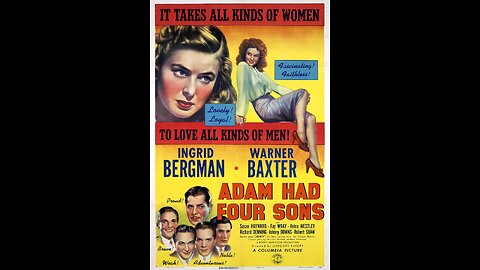
Adam Had Four Sons (1941) | Directed by Gregory Ratoff
Classic Films & Movies ArchiveAfter marrying a wealthy widower with four sons, a kind new wife tries to hold the family together through tragedy, resentment, and bitter fights over money and inheritance. What starts as an attempt to build a home turns into a long emotional battle for dignity, stability, and belonging. Genre: Drama / Family melodrama Director: Gregory Ratoff Gregory Ratoff was a Russian-born actor and director who worked across stage and film before becoming a familiar Hollywood figure. As a director, he often leaned into character-driven drama and high-emotion storytelling, shaping performances around moral conflict, family pressure, and social tension. He also had a parallel career acting in many films, which informed his performance-focused style behind the camera. Star Cast: Ingrid Bergman as Emilie Warner Baxter as Adam Stoddard Susan Hayward as Hester Stoddard Fay Bainter as Missy Stoddard A solid, mid-era Hollywood melodrama that played well with audiences who liked emotional, family-centered dramas. It wasn’t treated as a landmark film of its decade, but it drew attention for its strong central performance and the escalating domestic tension that keeps the story moving. Fun Facts: It’s an early Hollywood starring vehicle for Ingrid Bergman, released around the period when she was rapidly becoming a major name in American films. The story leans heavily on classic studio-era themes: inheritance pressure, family loyalty, and how money can turn private grief into open conflict. Gregory Ratoff was also a working actor, and his direction tends to spotlight performance and interpersonal friction more than action or spectacle. The film’s structure has an almost “novel-like” sweep, following emotional consequences over years rather than focusing on a single short crisis. * This Rumble Movie Channel is comprehensively indexed on https://kinoquick.com - find you favourite movies fast & free! * Follow this channel to be notified of daily movie updates.219 views -
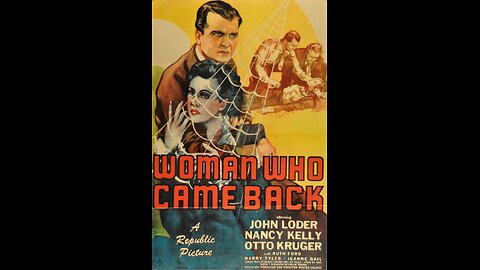
The Woman Who Came Back (1945) | Directed by Walter Colmes
Classic Films & Movies ArchiveAfter surviving a bus crash on the way back to her New England hometown, Lorna Webster finds herself at the center of unsettling coincidences and growing local suspicion. As strange “signs” mount, she becomes convinced she’s been marked by witchcraft tied to her family history. What begins as personal fear quickly spreads into rumor, accusation, and town-wide hysteria—until the real cause of the terror is forced into the open. Genre: Horror / Mystery / Psychological Thriller Director: Walter Colmes Walter Colmes (1917–1988) was an American producer-director who worked mainly in the mid-1940s, turning out compact, fast-moving features for smaller studios. Often billed as Walter S. Colmes, he directed a handful of films between 1945 and 1947, including this eerie witchcraft tale as well as crime and thriller titles like Identity Unknown and The French Key. His work is typically defined by efficient storytelling, tight runtimes, and a knack for squeezing atmosphere out of modest budgets. Star Cast: John Loder as Dr. Matt Adams Nancy Kelly as Lorna Webster Otto Kruger as Rev. Jim Stevens Ruth Ford as Ruth Gibson Harry Tyler as Noah Jeanne Gail as Peggy Gibson Almira Sessions as Bessie J. Farrell MacDonald as Sheriff Emmett Vogan as Dr. Peters Released as a brisk, low-budget chiller, the film didn’t make a huge splash at the time, but it stood out for its moody tone and the way it turns fear and gossip into a dangerous social force. In later years it’s often rediscovered by classic-horror fans as a solid “under-the-radar” entry: part supernatural tease, part small-town paranoia story, with a memorable setup and an old-fashioned Halloween-season vibe. Fun Facts: The film was made and released by Republic Pictures, a studio better known for westerns and serials than for horror. It was shot at Chaplin Studios in April 1945. The working title during development was The Web. A major theme isn’t just “witchcraft,” but how quickly a community can spiral into suspicion and mob behavior once superstition takes hold. At only about 68 minutes, it’s built like a tight B-movie: quick setup, steady escalation, and a fast sprint to the finish. * This Rumble Movie Channel is comprehensively indexed on https://kinoquick.com - find you favourite movies fast & free! * Follow this channel to be notified of daily movie updates.246 views -
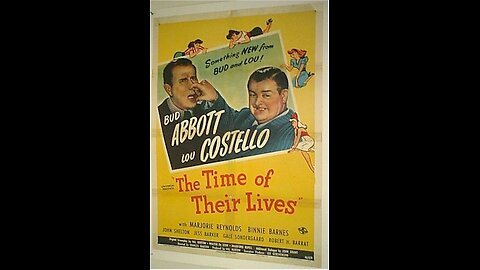
The Time of Their Lives (1946) | Directed by Charles Barton
Classic Films & Movies ArchiveIn Revolutionary-era America, a proud butler and his easygoing friend are caught in a mess of misunderstandings, romance, and accusations that end in tragedy. Years later, their spirits remain trapped in an old mansion, unable to rest until the truth about what happened is finally uncovered. When new people arrive at the house in the modern day, the two ghosts seize their chance to solve the mystery, clear a ruined name, and settle unfinished business from the past. Genre: Comedy / Fantasy / Supernatural Period Comedy Director: Charles Barton Charles Barton (1902–1981) was an American director best known for brisk, audience-friendly comedies and for shaping the pace and timing of studio-era humor. He worked across film and later television, directing a range of popular series and feature comedies. Barton became closely associated with Abbott and Costello in the 1940s, steering some of their most memorable productions and helping balance slapstick with story-driven set pieces. Star Cast: Bud Abbott as Cuthbert Twillie Lou Costello as Horatio Prim Marjorie Reynolds as Nora (and her modern-day descendant) Binnie Barnes as Melody John Shelton as Dr. Ralph Greenway Gale Sondergaard as Mrs. Greenway Dennis Hoey as the lawyer/estate figure involved in the mystery Audiences welcomed it as a fresh change of pace: still funny, but with a stronger story, more atmosphere, and an unusually “warm” emotional core for an Abbott and Costello picture. Some viewers missed the non-stop gag style of their broadest comedies, but many appreciated seeing them in a more plot-heavy fantasy with period costumes, ghostly tricks, and a mystery to unravel. Over the years it’s often been singled out as one of their most distinctive films because it mixes comedy with genuine melancholy and a satisfying wrap-up. Fun Facts: It’s one of the rare Abbott and Costello films that leans heavily into fantasy and sentiment rather than being built mainly around sketch-style routines. Bud Abbott gets more room than usual for dramatic frustration and indignation, while Costello carries much of the “comic engine,” creating a different balance from many of their other movies. The film uses clever “ghost” staging and effects for its time, including invisible interaction gags and spooky musical moments in the mansion. Charles Barton later directed Abbott and Costello Meet Frankenstein (1948), one of the team’s most famous genre-mashup hits. Marjorie Reynolds plays dual roles across time, helping the story connect its Revolutionary-era tragedy to the modern-day resolution. * This Rumble Movie Channel is comprehensively indexed on https://kinoquick.com - find you favourite movies fast & free! * Follow this channel to be notified of daily movie updates.255 views 1 comment -
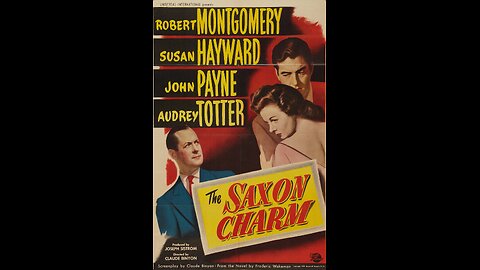
The Saxon Charm (1948) | Directed by Claude Binyon
Classic Films & Movies ArchiveA powerful Broadway producer, Matt Saxon, uses his reputation and “charm” to pull a promising writer and the writer’s wife into his orbit—then meddles in their work, relationships, and careers until everything starts to fracture around him. Genre: Film noir drama Director: Claude Binyon Claude Binyon (1905–1978) was an American screenwriter-director who started in journalism, worked at Variety, then moved into Hollywood screenwriting in the early 1930s and later directed a run of studio features in the late 1940s and early 1950s. Star Cast: Robert Montgomery as Matt Saxon Susan Hayward as Janet Busch John Payne as Eric Busch Audrey Totter as Alma Wragge Harry Morgan as Hermy Harry von Zell as Zack Humber Cara Williams as Dolly Humber Chill Wills as Captain Chatham Heather Angel as Vivian Saxon Some contemporary reviewers found the central idea a tough sell: the story needs the audience to believe an openly manipulative, damaging producer can still be irresistibly “charming,” and not everyone bought it. Even so, the performances—especially the lead and several supporting turns—were commonly noted as the film’s main strength. Later viewers tend to enjoy it as a sharp, cynical character study about power, vanity, and the quiet destruction a charismatic operator can cause. Fun Facts: The film is based on Frederic Wakeman’s 1947 novel The Saxon Charm. The title is built around the producer character’s name (Matt Saxon) and his supposed “Saxon charm.” It’s frequently mis-titled on listings and uploads as “The Saxton Charm,” even though the official title is The Saxon Charm. Because it’s set in the Broadway ecosystem and revolves around influence, reputation, and career leverage, it’s often compared in theme (not style) to later, more famous backstage theatre dramas. * This Rumble Movie Channel is comprehensively indexed on https://kinoquick.com - find you favourite movies fast & free! * Follow this channel to be notified of daily movie updates.295 views 1 comment -
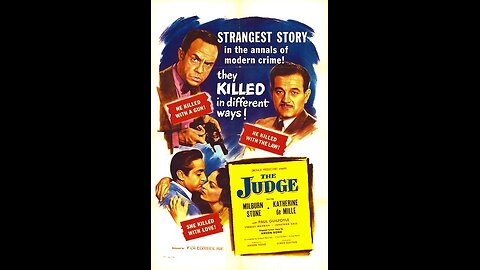
The Judge (1949) | Directed by Elmer Clifton
Classic Films & Movies ArchiveA grim little crime thriller about Martin Strang, a slick defense lawyer who’s made a career out of bending the truth. When he becomes convinced his wife is cheating, his jealousy and ego collide with his professional cynicism. He manipulates a violent client and tries to turn the law itself into a weapon, only to discover that courtroom control doesn’t translate into control of real life. Genre: Crime; drama; film noir (B-noir / low-budget noir) Director: Elmer Clifton Elmer Clifton (1890–1949) was a Canadian-born American filmmaker who worked from the silent era into the late 1940s as an actor, screenwriter, and director. He collaborated early on in the industry with major silent-era figures (including D.W. Griffith projects), then focused on directing a long run of independently produced features. The Judge was among his final films, completed shortly before his death in 1949. Star Cast: Milburn Stone as Martin Strang Katherine DeMille as Lucille Strang Paul Guilfoyle as William Jackson Stanley Waxman as Dr. James Anderson Norman Budd as James Tilton Jonathan Hale as Judge Allan J. Brooks John Hamilton as Lt. Edwards Joseph Forte as District Attorney On release, it played as a modest, low-budget crime programmer rather than a prestige courtroom picture. Later reception has been mixed: noir completists and public-domain movie fans value it as a lean, nasty “lawyer noir,” while many reviewers point out its cheap production values and uneven staging. One element that is often singled out positively is Milburn Stone’s hard, cynical lead performance. Fun Facts: Runtime is a tight 69 minutes, typical of late-1940s B-features. Made by Emerald Productions and distributed by Film Classics, a company known for handling and reissuing older and independent titles. Milburn Stone later became widely famous as “Doc” Adams on the long-running TV western Gunsmoke, making this starring role an interesting contrast. The film has circulated widely for decades in budget releases and online because it is commonly treated as a public-domain title in the United States. Despite the title, the story is less about legal procedure and more about a noir moral trap: a lawyer trying to “win” real life the way he wins cases. * This Rumble Movie Channel is comprehensively indexed on https://kinoquick.com - find you favourite movies fast & free! * Follow this channel to be notified of daily movie updates.201 views -
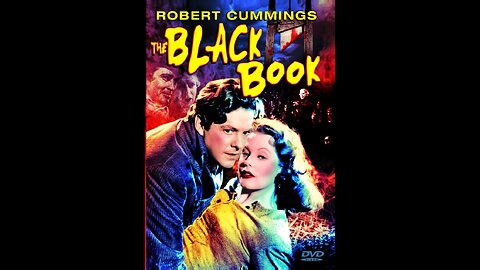
The Black Book (also known as Reign of Terror) (1949) | Directed by Anthony Mann
Classic Films & Movies ArchiveA French Revolution cloak-and-dagger thriller shot with a film-noir edge. An undercover agent infiltrates Robespierre’s inner circle to uncover a “black book” listing the regime’s next targets, racing to stop another wave of political executions before the dictatorship becomes permanent. Genre: Historical thriller; political suspense; film noir-styled period drama Director: Anthony Mann Anthony Mann (1906–1967) was an American director who moved from theatre into Hollywood features and became a key figure in 1940s crime thrillers and noir. He later reshaped the Western with a run of psychologically intense, visually dynamic films in the 1950s, noted for hard moral conflicts, tense pacing, and expressive, high-contrast visual storytelling. Star Cast: Robert Cummings as Charles D’Aubigny Richard Basehart as Maximilien Robespierre Arlene Dahl as Madelon Richard Hart as François Barras Arnold Moss as Fouché Norman Lloyd as Tallien Charles McGraw as the Sergeant Beulah Bondi as Grandma Blanchard At release, reviewers and trade coverage tended to emphasize the film’s speed, tension, and striking shadow-heavy look, praising its atmosphere more than its historical detail. Over time it has built a strong cult reputation as a standout “period noir,” often cited for fusing Revolutionary-era intrigue with modern paranoia, and for its bold cinematography and dramatic staging. Fun Facts: The film was released under two titles: Reign of Terror and The Black Book, with The Black Book used for later runs and reissues. It is frequently cited as a classic example of film noir style applied to a historical setting. The cinematography is strongly associated with John Alton, whose lighting style is often credited for the film’s distinctive, high-contrast mood. In the ending, Napoleon is shown from behind and the voice was provided by another actor, a deliberate choice to keep the focus on the Revolution’s internal power struggle rather than on Napoleon as a character. It is commonly circulated today because it is widely considered public domain in the United States, which helped it remain easily accessible on home video and online. * This Rumble Movie Channel is comprehensively indexed on https://kinoquick.com - find you favourite movies fast & free! * Follow this channel to be notified of daily movie updates.193 views -
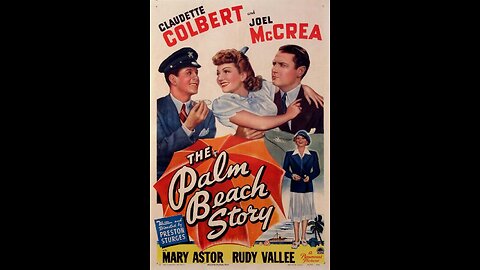
The Palm Beach Story (1942) | Directed by Preston Sturges
Classic Films & Movies ArchiveA young married couple struggling financially decides on an unconventional plan to secure their future. Gerry Jeffers travels alone to Palm Beach, intending to obtain a divorce and remarry a wealthy suitor in order to fund her husband Tom’s ambitions. Once there, she becomes entangled with eccentric millionaires, flirtatious admirers, and a wildly unpredictable social circle. Meanwhile, Tom follows her, leading to a chain of misunderstandings, mistaken identities, and rapid-fire romantic reversals. The story unfolds as a sophisticated screwball comedy that playfully questions marriage, money, and romantic loyalty. Genre: Comedy, Romantic comedy, Screwball comedy Director: Preston Sturges Preston Sturges was an American writer-director and one of the most influential comic filmmakers of Hollywood’s Golden Age. He was among the first screenwriters to gain the power to direct his own scripts, allowing his distinctive voice to flourish on screen. Known for fast-paced dialogue, absurd situations, and sharp social satire, Sturges created a string of acclaimed comedies in the early 1940s. His work often explored class, marriage, and American ambition with wit and irreverence, leaving a lasting impact on film comedy. Star Cast Claudette Colbert as Gerry Jeffers Joel McCrea as Tom Jeffers Mary Astor as Princess Centimillia Rudy Vallee as John D. Hackensacker III Franklin Pangborn as The Wienie King Sig Arno as Toto At the time of its release, the film was warmly received by both audiences and critics, who praised its inventive structure, sophisticated humor, and performances. Some viewers were initially puzzled by its unconventional narrative logic, but many embraced its playful disregard for realism. Over the years, the film has grown in reputation and is now widely regarded as one of the finest examples of American screwball comedy. Fun Facts The opening and closing scenes mirror each other in a deliberately ambiguous way, suggesting multiple interpretations of the story’s outcome. The Ale and Quail Club, a group of wealthy, gun-toting sportsmen, was inspired by Sturges’ satirical view of American upper-class leisure culture. Rudy Vallee’s casting played against his usual romantic image, emphasizing awkward charm rather than glamour. The rapid-fire dialogue and overlapping conversations became a hallmark of Preston Sturges’ directing style. The film’s playful attitude toward divorce and remarriage pushed the boundaries of Hollywood comedy during the early 1940s. * This Rumble Movie Channel is comprehensively indexed on https://kinoquick.com - find you favourite movies fast & free! * Follow this channel to be notified of daily movie updates.163 views -
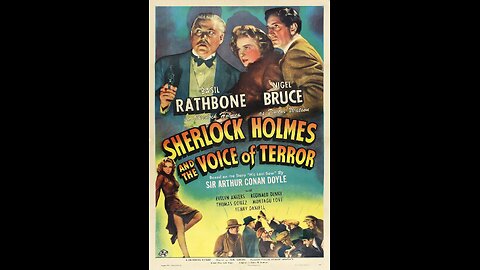
Sherlock Holmes and the Voice of Terror (1942) | Directed by John Rawlins
Classic Films & Movies ArchiveDuring the height of World War II, Sherlock Holmes and Dr. Watson are drawn into a dangerous case involving a mysterious radio broadcaster known as the Voice of Terror. This unseen figure transmits propaganda messages designed to undermine British morale and signal enemy attacks. As Holmes follows a trail of coded messages, sabotage, and apparent murders, the investigation reveals a complex espionage network operating within Britain itself. The case becomes a race against time to unmask the traitor before further damage is done to the war effort. Genre: Mystery, Crime, War thriller Director: John Rawlins John Rawlins was an American film director and editor active primarily in the 1930s and 1940s. He worked extensively at Universal Pictures, directing a variety of genres including mysteries, comedies, and war-related films. Rawlins is best remembered for his contributions to the long-running Sherlock Holmes film series starring Basil Rathbone, where his steady, efficient direction helped maintain narrative clarity and pace during a period when the series shifted toward contemporary wartime themes. Star Cast Basil Rathbone as Sherlock Holmes Nigel Bruce as Dr. John Watson Lionel Atwill as Professor Meiries Evelyn Ankers as Kitty Reginald Denny as Captain James Donovan Thomas Gomez as Rudolph Meiries The film was well received by wartime audiences, who appreciated its blend of familiar detective fiction with contemporary political relevance. Viewers responded positively to the patriotic tone and suspenseful plot, while fans of the Holmes series enjoyed seeing the characters placed in modern settings. Critics generally regarded it as a solid and entertaining entry in the Universal Sherlock Holmes cycle, though some noted its overt propaganda elements. Fun Facts This was the first Sherlock Holmes film produced by Universal Pictures after the series moved from 20th Century Fox. The story was adapted from a section of Arthur Conan Doyle’s novel His Last Bow but heavily reworked to fit a World War II setting. The film was designed in part as a morale-boosting piece supporting the Allied war effort. Lionel Atwill, a frequent Universal villain, appears in one of his final major film roles. Radio broadcasting plays a central role in the plot, reflecting the importance of mass communication during wartime Britain. * This Rumble Movie Channel is comprehensively indexed on https://kinoquick.com - find you favourite movies fast & free! * Follow this channel to be notified of daily movie updates.359 views -
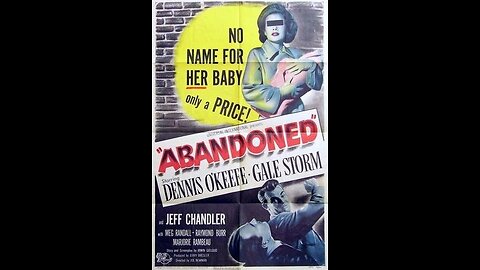
Abandoned (1949) | Directed by Joseph M. Newman
Classic Films & Movies ArchiveAbandoned is a hard-edged crime film noir centered on a woman searching for her missing sister after she arrives in Los Angeles. Her investigation leads her into a dangerous underworld of baby trafficking, corruption and organized crime operating behind respectable fronts. As the search intensifies, she uncovers a ruthless network that exploits vulnerable mothers, revealing a chilling portrait of post-war urban crime and moral decay. Genre: Film noir, Crime Thriller Director: Joseph M. Newman Joseph M. Newman was an American director who worked steadily in Hollywood from the 1940s through the 1960s, often specializing in crime films, thrillers and later science fiction. Known as a dependable studio director, he brought efficiency and tension to low- and mid-budget productions. Newman later directed films such as This Island Earth and several westerns and television episodes. Star Cast: Gail Russell as Paula Considine Dennis O’Keefe as Steve Ryan Jeff Chandler as Kerric Marjorie Rambeau as Mrs. Donner Raymond Burr as Sergeant Costa Upon its release, Abandoned drew attention for its grim subject matter and documentary-style realism. Critics noted its social relevance and tense pacing, while audiences found the story disturbing but compelling. Over time, the film has gained recognition among noir scholars for tackling an unusually dark theme and for its stark portrayal of institutional corruption. Fun Facts: The film addresses the real post-war problem of illegal adoption and baby trafficking in the United States. Much of Abandoned was shot on location in Los Angeles, enhancing its gritty, realistic atmosphere. Jeff Chandler was cast against his usual heroic image in a more menacing role. Raymond Burr appears in an early noir-era supporting role before becoming widely known for later screen and television work. The film is often cited as an example of socially conscious film noir. * This Rumble Movie Channel is comprehensively indexed on https://kinoquick.com - find you favourite movies fast & free! * Follow this channel to be notified of daily movie updates.338 views -
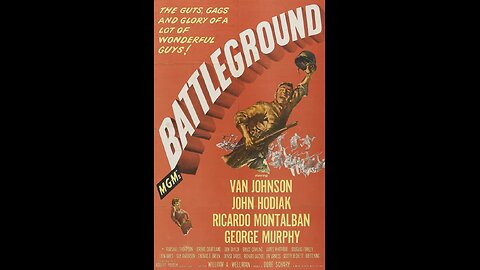
Battleground (1949) | Directed by William A. Wellman
Classic Films & Movies ArchiveBattleground is a World War II combat drama depicting the experiences of American infantry soldiers during the Battle of the Bulge. The film focuses on an isolated platoon surrounded by German forces in freezing winter conditions, capturing the physical exhaustion, fear and quiet camaraderie of men under siege. Rather than emphasizing heroic spectacle, the story concentrates on endurance, routine and the psychological strain of prolonged combat. Genre: War, Combat drama Director: William A. Wellman William A. Wellman was an American director known for his realism, technical skill and firsthand understanding of combat, having served as a fighter pilot during World War I. His films often emphasized authenticity and human resilience, including Wings, The Public Enemy and Ox-Bow Incident. Wellman was respected for his disciplined storytelling and refusal to romanticize violence, making him a natural fit for serious war narratives. Star Cast: Van Johnson as Holley Ricardo Montalbán as Roderigues John Hodiak as Jarvess George Murphy as Kinnie Marshall Thompson as Johnson Don Taylor as Standiferd James Whitmore as Kipp Battleground was both a critical and commercial success upon release. Audiences, many of whom had direct wartime experience, responded strongly to its realistic portrayal of soldier life. Critics praised its authenticity, ensemble cast and restrained emotional tone. The film received several Academy Award nominations and won for its screenplay, solidifying its reputation as one of the most respected American war films of the era. Fun Facts: The film was shot primarily on location in Oregon, where snow and forest conditions stood in for the Ardennes. Many of the actors underwent military-style training to enhance realism. The screenplay was based on extensive interviews with veterans of the Battle of the Bulge. William A. Wellman insisted on avoiding overt heroics in favor of depicting everyday survival. Battleground influenced later war films by focusing on the collective experience of soldiers rather than a single protagonist. * This Rumble Movie Channel is comprehensively indexed on https://kinoquick.com - find you favourite movies fast & free! * Follow this channel to be notified of daily movie updates.255 views 2 comments