-
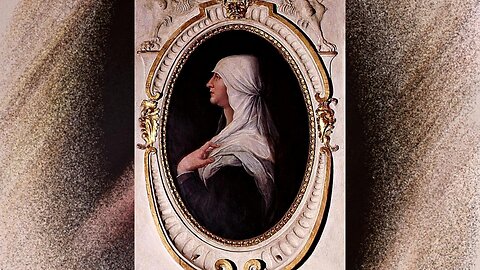
Caterina Sforza: Il cuore e la spada
Adaneth - History&PoliticsTra le grandi donne del Rinascimento italiano, Caterina Sforza Riario ha più di un motivo per primeggiare: esercitò anche lei un’influenza politica ma, a differenza delle altre, lo fece anche con le armi, riuscendo in più occasioni a conseguire importanti risultati. Come, ad esempio, quando volle vendicare la morte dei suoi primi due mariti o quando si impossessò di Castel Sant’Angelo, nell’agosto 1484, alla morte di Papa Sisto IV. Caterina aveva solo 21 anni in quei giorni ed era la moglie del signore di Imola e Forlì. Di anni ne vivrà complessivamente solo 46 ma li fece “fruttare” al massimo: tre matrimoni, sette figli, scontri e battaglie e un “hobby” : l’erboristeria, la medicina naturale e i trattamenti di bellezza. Le oltre 400 sue ricette, frutto di ricerche personali anche di alchimia, sono arrivate fino a noi. Insomma, una donna che seppe unire doti “virili” ad un indole molto femminile. Del resto la sua proverbiale bellezza contribuì al suo mito mentre era ancora in vita. Ma, in almeno in un’occasione, fu causa della più brutta delle esperienze: alcuni giorni in balia del feroce duca Valentino, Cesare Borgia, all’indomani della caduta della sua Forlì. Nella sua vicenda si intrecciano i protagonisti della fine del ‘400: gli Sforza (era figlia illegittima del duca di Milano Galeazzo Maria e Ludovico Il Moro era suo zio paterno), i Riario (la famiglia di Sisto IV), i Borgia (con cui fu sempre in frizione, sia con il Papa Alessandro VI che col figlio Cesare) e i Medici (il suo terzo marito fu Giovanni Il Popolano, cugino del Magnifico: dalla coppia sarebbe nato Giovanni dalle Bande nere, il maggior capitano di ventura del Cinquecento e capostipite del ramo dei duchi e granduchi di Toscana). Nota: Il documentario completo è di 47’ circa. Ho dovuto tagliare in 3 posti (giusto qualche secondo)per via di alcuni glitch.32 views -
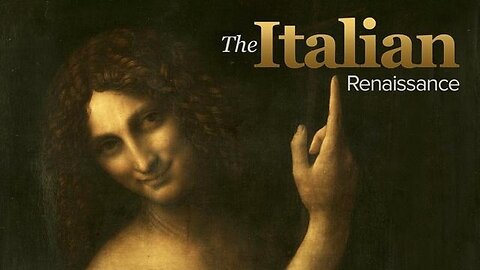
The Italian Renaissance | The Study of the Italian Renaissance (Lecture 1)
Adaneth - History&Politics36 lectures, 30 minutes/lecture Taught by Kenneth Bartlett, Ph.D. Professor of History and Renaissance Studies University of Toronto Lecture 2: https://rumble.com/v4wj8z0-the-italian-renaissance-the-renaissance-changing-interpretations-lecture-2.html This course on the Italian Renaissance will attempt to answer the question: Why was there such an explosion of creative culture, human ingenuity, economic development, and social experimentation in Italy beginning in the 14th century? It will also address the question of why the Renaissance ended in the middle years of the 16th century. In order to investigate the phenomenon of the Renaissance in Italy, it is necessary to look at every facet of human endeavor. Thus, this series will not be a discussion of major political, military, or economic events, although these will appear, as appropriate. Rather, the course will follow the model of writing Renaissance history designed by its first great practitioner, Jacob Burckhardt, whose 1860 book-length “essay,” The Civilization of the Renaissance in Italy, initiated the model of cultural history, that is, looking at a period in the past from several perspectives simultaneously to produce a sophisticated, multidimensional image. Just as each tessera in a mosaic contributes to the whole, so each element in social, political, economic, cultural, intellectual, and religious history contributes to the composite picture of life in Italy in the years between the birth of Petrarch in 1304 and the terrible events of the 1520s–1540s that extinguished the flame that the poet first lit. Lecture 1: There are many ways of approaching the study of the Italian Renaissance. My method in this course is to provide a wide perspective based on a fusion of many disciplines. This form of interdisciplinary analysis is generally described as cultural history, following the method employed by Jacob Burckhardt in his pioneering The Civilization of the Renaissance in Italy (1860). This approach is similar to the creation of a mosaic, in which each separate tessera contributes to the wider image, providing for a complex and subtle understanding of a historical epoch. I have also imposed a rough chronological structure to ensure that the information progresses logically. However, given that the engagement with Renaissance values took place at different times in different places in Italy, each major center requires its own context. You will find, then, that lectures on specific city-states are interspersed with those on general currents in philosophy, education, and other cultural elements that can be seen to apply broadly to the peninsula as a whole. The aim of this series is to provide you with a multifaceted and complex image of Renaissance Italy that explains why that period remains fundamental to modern Western culture. We begin our study of the Renaissance with Petrarch, although it is important to put his career and work into context. Consequently, we will review the general condition of Italy during the late Middle Ages and discuss why Dante (who died when Petrarch was 17) can be seen as essentially a medieval thinker. It is more difficult to identify a clear moment at which the Renaissance ends, even in Italy. I will argue that the Renaissance was, in essence, a set of attitudes and beliefs, founded on the application of ancient literature to the needs of Italians from the late 14th to the 16th centuries. For this reason, I suggest that it was the loss of confidence in those beliefs that eroded the Italians’ dedication to such principles as the dignity of man and the ability of the individual and community to determine their own history. After the French invasions and the peninsular wars, after the sack of Rome and the collapse of the Florentine Republic, and especially after the suppression of freedom of ideas occasioned by the Roman Inquisition and the Index of Prohibited Boo Primary Source Texts: Kenneth R. Bartlett, “Introduction,” pp. 1–7, in The Civilization of the Italian Renaissance. Secondary Sources: Jacob Burckhardt, The Civilization of the Renaissance in Italy, Vol. I: The State as a Work of Art, The Development of the Individual, The Revival of Antiquity. ———, The Civilization of the Renaissance in Italy, Vol. II: The Discovery of the World and of Man, Society and Festivals, Morality and Religion. Supplementary Reading: Margaret Aston, ed., The Panorama of the Renaissance: The Renaissance in the Perspective of History. C. F. Black, et al., Cultural Atlas of the Renaissance.286 views -
The Italian Renaissance | The Renaissance - Changing Interpretations (Lecture 2)
Adaneth - History&PoliticsLecture 2: The Renaissance cannot be easily defined either geographically or chronologically. Because the Renaissance represented a set of ideas and attitudes, it became visible at different times in different places, depending upon the social, economic, political, and cultural context of each region. Furthermore, the Renaissance was the first self-conscious period of European history. It was articulated by the Italian Humanist writer Giovanni Boccaccio (d. 1375), who recognized that a new world was being created, a world based partly on the experience of new groups with new aspirations and partly on the recovery of ancient models. Hence, we have come to know it as the period of rebirth, or in French, the period of the Renaissance. This lecture will define the phenomenon of the Renaissance and investigate its historiography from the 14th century to the present. Secondary Sources: Benjamin G. Kohl and Alison Andrews Smith, eds., Major Problems in the History of the Italian Renaissance. Supplementary Reading: Eric Cochrane, Historians and Historiography in the Italian Renaissance. Wallace K. Ferguson, The Renaissance in Historical Thought: Five Centuries of Interpretation. Denys Hay, ed., The Renaissance Debate. Lecture 3: https://rumble.com/v4wjjmb-the-italian-renaissance-italy-the-cradle-of-the-renaissance-lecture-3.html214 views -
The Italian Renaissance | Italy - The Cradle of the Renaissance (Lecture 3)
Adaneth - History&PoliticsLecture 3: The Renaissance first developed in Italy early in the 14th century because of the unique circumstances of the Italian peninsula. Unlike in northern Europe, long-distance trade in the Mediterranean had continued after the collapse of the Roman Empire, and urban life had remained strong in Italy. Because townsmen and merchants required secular learning, rather than clerical education, a powerful lay tradition of study and secular values had been sustained. In addition, the memories of the Roman Empire were everywhere to be seen. The inhabitants of the peninsula identified much more with the memories of ancient Rome or the sophisticated cities of the Byzantine Empire than with the rural, feudal culture of the north. A rich secular burgher class arose, and the division of the peninsula into a mosaic of small states allowed each to experiment with different social and political models and encouraged creative competition. Primary Source Texts: Kenneth R. Bartlett, “The Classical Heritage,” pp. 7–15, in The Civilization of the Italian Renaissance. Secondary Sources: Armando Sapori, The Italian Merchant in the Middle Ages. Supplementary Reading: Aziz S. Atiya, Crusade, Commerce and Culture. Robert S. Lopez and Irving W. Raymond, trans., Medieval Trade in the Mediterranean World. Lecture 4: https://rumble.com/v4wjls2-the-italian-renaissance-the-age-of-dante-guelfs-and-ghibellines-lecture-4.html249 views -
The Italian Renaissance | The Age of Dante - Guelfs and Ghibellines (Lecture 4)
Adaneth - History&PoliticsLecture 4: The Florentine poet Dante (1265–1321) defined the transition from a medieval to a Renaissance perspective. He was educated in medieval Scholasticism, the prevailing theological and educational view that defended Christian faith as a body of certainties, truths that could be analyzed and interpreted through a rigid application of logic. Dante was equally born into a period of factional dispute between those who supported the authority of the papacy—the Guelfs—and the adherents of the Holy Roman Emperor—the Ghibellines. This division was more than one of ideology; it reflected the growing tensions between the newly enriched merchant classes, usually Guelf, and the aristocratic, established magnate families of the Ghibellines. The Guelf victory in Florence provided the preconditions for the creation of the burgher republic in 1293 and, with it, the circumstances necessary for the institutionalization of Renaissance values. Dante’s great poem The Divine Comedy reflected the Scholastic structure of the medieval world, but he looked forward when he created individual characters seeking self-knowledge in a complex world. His own life, too, was one of engagement; an educated layman, husband, and father, his political activities led to his exile in 1301. Secondary Sources: George Holmes, Dante. Supplementary Reading: Marvin B. Becker, Medieval Italy: Constraints and Creativity. John Larner, Italy in the Age of Dante and Petrarch, 1216−1380. Giovanni Tabacco, The Struggle for Power in Medieval Italy: Structures of Political Rule. Lecture 5: https://rumble.com/v4wjmru-the-italian-renaissance-petrarch-and-the-foundations-of-humanism-lecture-5.html244 views -
The Italian Renaissance | Petrarch and the Foundations of Humanism (Lecture 5)
Adaneth - History&PoliticsLecture 5: Humanism was the new perspective of the Renaissance, both as an ideology and as a method of education. It was founded on the twin beliefs that recognition of the content and style of ancient literature could improve the human condition and that the experience of life on Earth could be valuable in itself. The conscious creation of the individual personality and the acquisition of the means to define one’s experience for the benefit of others were natural consequences of this perspective. Francesco Petrarca (Petrarch, 1304–1374) can justly be described as the father of Humanism. Petrarch was born of an exiled Florentine who sought employment at the papal court in Avignon. He studied law at the universities of Montpellier and Bologna, using as texts the precepts of Roman civil law compiled at the time of Justinian. Also, he read the Latin classics, especially Cicero, to develop rhetorical skill and knowledge of the past. Ultimately, Petrarch discovered his real vocation was poetry. His love of the Latin classics and of early Christian thinkers, such as Augustine, drove him to investigate his own motivations, feelings, and desires. His love poetry, the canzoniere, helped define modern romantic love, and his desire to know himself recovered the genre of autobiography. Primary Source Texts: Kenneth R. Bartlett, “Petrarch,” pp. 17–32, in The Civilization of the Italian Renaissance. Francesco Petrarch, The Secret. ———, Selected Sonnets, Odes and Letters. Secondary Sources: John Larner, Italy in the Age of Dante and Petrarch, 1216–1380. Ernest Hatch Wilkins, Life of Petrarch. Lecture 6: https://rumble.com/v4xengq-the-italian-renaissance-the-recovery-of-antiquity-lecture-6.html231 views -
The Italian Renaissance | The Recovery of Antiquity (Lecture 6)
Adaneth - History&PoliticsLecture 6: For Italians, the world of ancient Rome was their national history, one whose monuments, both physical and cultural, were everywhere to be seen. This rich tradition was increasingly regarded as an intellectual heritage to be mined for contemporary use, especially by lay rhetoricians and notaries who practiced the art of letter writing known as the ars dictaminis. The clear and elegant Latin of the ancients could be recovered to replace the corrupted medieval Latin then in use; the ideals of classical thought in politics and philosophy could inform the city-states of the peninsula; and the principles of art and architecture could create a more humane environment in which citizens might prosper. As a result, there was a desire to know the past and recover as much of the ancient world as possible. Libraries were searched for lost ancient authors, and the discoveries were copied and edited for modern readers. The glory of the ancient past was, then, a model to be emulated and a golden age to be recovered so that its wisdom could be applied to the circumstances of Italy in the second half of the 14th century. Primary Source Texts: Kenneth R. Bartlett, “Humanism,” pp. 84–95, and “Art and Architecture,” pp. 223–239, in The Civilization of the Italian Renaissance. Secondary Sources: Roberto Weiss, The Renaissance Discovery of Classical Antiquity. Supplementary Reading: Leonard Barkan, Unearthing the Past: Archaeology and Aesthetics in the Making of Renaissance Culture. Phyllis Gordan, Two Renaissance Book Hunters: The Letters of Poggius Bracciolini to Nicolaus de Niccolis. Lecture 7: https://rumble.com/v4xep82-the-italian-renaissance-florence-the-creation-of-the-republic-lecture-7.html257 views -
The Italian Renaissance | Florence - The Creation of the Republic (Lecture 7)
Adaneth - History&PoliticsLecture 7: Florence was the cradle of Humanism and the Renaissance. By the mid-13th century, the city had become a rich, expanding center for the production of high-quality woolen cloth and a growing international banking industry. Huge new fortunes were being made by men whose families had only recently emigrated from the countryside. Florence also witnessed a complete victory of the Guelf faction over the Ghibellines, making it a leading pro-papal city. However, despite their wealth and influence, these merchants were largely excluded from any role in the government of the commune, which was dominated by old aristocratic landed families (magnates) or old established mercantile families (grandi) who had earlier merged with the magnates. Moreover, the traditions of urban violence and family feuding made commerce difficult. The result was a bourgeois revolution in 1293, which established a republic founded on guild membership and shared responsibility. This republican constitution institutionalized mercantile ambitions and disenfranchised the magnate and grandi families and became the context for the Florentine Renaissance. Primary Source Texts: Kenneth R. Bartlett, “Florence in the Renaissance,” pp. 33–70, in The Civilization of the Italian Renaissance. Secondary Sources: Gene A. Brucker, Renaissance Florence. Supplementary Reading: John M. Najemy, Corporatism and Consensus in Florentine Electoral Politics, 1280–1400. Iris Origo, The Merchant of Prato. Lecture 8: https://rumble.com/v4xertl-the-italian-renaissance-florence-and-civic-humanism-lecture-8.html235 views -
The Italian Renaissance | Florence and Civic Humanism (Lecture 8)
Adaneth - History&PoliticsLecture 8: The newly enriched and politically dominant mercantile classes of Florence did not identify with the values and principles of the Middle Ages. Those were clerical, feudal, and rural, whereas their lives were secular, mercantile, and urban. Urban merchants required secular education to practice their professions; they required clearly formulated laws; they required knowledge of vernacular languages; they required tuition in arithmetic and accounting; and they required a value system that validated what they did rather than consigned the pursuit of profit and interest to the vices of the damned. These new men, the product of social mobility and secular education, found a set of ideals consonant with their own in the recovery of ancient Rome. Romans of the time of Cicero were, after all, like them: urban, cosmopolitan, secular, mercantile citizens of a republic. Therefore, the application of ancient principles and models already visible in the career of Petrarch had a special appeal to 14th- and 15th-century Florentines. Moreover, Petrarch had solved the old disjunction between classical pagan and later Christian values by proving that although ancient Romans might have lived before the Christian dispensation, that did not detract from their essential virtue or goodness as human beings. They enjoyed ethical principles that were not incompatible with sincere Catholic belief. This adaptation of classical learning to the demands of Italian life was called Humanism, and when applied to the Florentine Republic, it developed into Civic Humanism, in which the responsibility of the good citizen to the community took on a powerful ethical force and prepared one for service in this world rather than the next. Primary Source Texts: Kenneth R. Bartlett, “Humanism,” pp. 72–83, 95–108, in The Civilization of the Italian Renaissance. Leonardo Bruni, The Humanism of Leonardo Bruni: Selected Texts. Vespasiano da Bisticci, The Vespasiano Memoirs: Lives of Illustrious Men of the XVth Century. Supplementary Reading: Hans Baron, Crisis of the Early Italian Renaissance. Lecture 9: https://rumble.com/v4xeuth-the-italian-renaissance-florentine-culture-and-society-lecture-9.html256 views