-
Opera Explained | Turandot by Puccini (Audio)
Adaneth - Arts & Literature"An introduction to....Puccini - Madama Butterfly" written by Thomson Smillie, narrated by David Timson. Puccini’s swansong has a claim to being the last great popular opera. Its melodies have enchanted audiences since its posthumous premiere in 1926, two years after Puccini’s death. It involves a chilling story of love and cruelty, an intriguing cast of characters against the exotic backdrop of Imperial China, magnificent choruses and ensembles, and dazzling orchestration in an exotic score that comprises a string of remarkable arias – among which the great tenor aria ‘Nessun dorma’ is the jewel. It is more than Puccini’s last opera: it is the last word, in every sense, on Italian opera. The popularity of Puccini’s final great opera should not blind us to its strong musical and dramatic qualities. In addition to being arguably the last great popular opera – in effect the swansong of an entire art form: that of Italian grand opera as popular entertainment – it is also a finely crafted work by the last great master. Puccini had an unerring instinct for what would stir audiences and in this final work combined a good story with a rich cast of personalities in an exotic setting, clothing the whole work in music at once beautifully melodic and particularly complex. The title character is of course a woman – nearly all Puccini’s operas are named after their female leads, such was the importance and adoration he attached to women – and in Turandot he created one of the great enigmatic figures of opera. Much of the fascination of Turandot derives from the fact that Puccini died in 1924, leaving the work unfinished. A contemporaneous composer, Alfano, was given the awesome task of completing the opera from Puccini’s sketches, and while the ending has its detractors no one doubts its theatrical power. The finished work was posthumously produced in 1926. Turandot is a very proper finale to Puccini’s career, combining and distilling all that was great in his art and some that was not. He conceived one after another great tune, built massively effective ensembles − huge crowd scenes of real majesty – and orchestrated the work with a dazzling orientalism which employed the full symphonic resources plus an astonishing battery of exotic percussion. From its savage opening – orchestral stabs of pain offsetting the glorious outpourings of the chorus − through to the final majestic choral setting of ‘the big tune’, Turandot is an opera that serves as a worthy close to a great career and maybe to opera as an art form of the people. Tracklist: 1. Introducing Turandot 2. Opera in the 1800s 3. Puccini’s background 4. Puccini’s tenor arias 5. Background and plot 6. The opening: Peking 7. Enter Liù, Timur, Calaf and the executioners 8. Attempts to dissuade Calaf 9. Act II, Scene 1: Ping, Pang and Pong 10. Into the Riddle Scene (Act II, Scene 2) 11. Turandot 12. The three riddles 13. Turandot and Calaf: Act II Finale 14. Act III, Scene 1: Calaf 15. The death of Liù 16. Calaf ’s defrosting of the Ice Princess Performers: Princess Turandot - Giovanna Casolla, soprano Unknown Prince (Calaf), son of Timur - Lando Bartolini, tenor Liù, a young slave girl - Masako Deguci, soprano The Emperor Altoum - Francisco Heredia, tenor Timur, dispossessed foreign king - Felipe Bou, bass Ping, grand chancellor - Armando Ariostini, baritone Pang, grand provisioner - Javier Más, tenor Pong, grand cook - Vicenç Esteve, tenor Mandarin - José A. García-Quijada, baritone Prince of Persia - Gorka Gerrikabeitia, tenor Malaga Philharmonic Orchestra Choral Society of Bilbao Children’s Chorus: Escolanía Santa Maria de la Victoria Conductor: Alexander Rahbari33 views -
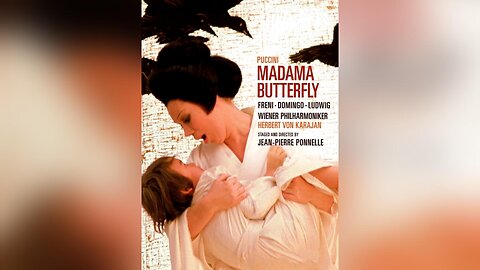
Puccini: Madama Butterfly | Freni, Domingo - Karajan, Ponnelle (Opera Film 1974 - MULTISUB)
Adaneth - Arts & LiteratureComposer: Giacomo Antonio Puccini Librettist: Giuseppe Giacosa, and Luigi Illica Premiere: 17 February 1904, Milan (La Scala) Language: Italian Subtitles: Italian, English, French, Spanish (click on CC for subtitles) Synopsis: https://www.opera-arias.com/puccini/madame-butterfly/synopsis/ Cast & Characters: Cio Cio San - Mirella Freni Pinkerton - Plácido Domingo Sharpless - Robert Kerns Suzuki - Christa Ludwig Kate Pinkerton - Elke Schary Goro - Michel Sénéchal Il principe Yamadori - Giorgio Stendoro Lo zio Bonzo - Marius Rintzler Wiener Staatsoper Chorus Chorus Master: Norbert Balatsch Wiener Philharmoniker Orchestra Conductor: Herbert von Karajan Stage, Directed and Designed by Jean-Pierre Ponnelle The pathos of this heart-rending story about a sweet-natured japanese girl and the caddish American naval lieutenant who marries then deserts her has seldom been conveyed with such emotional directness. In his sumptuous film filming of Puccini's opera, director Jean-Pierre Ponnelle uses an array of cinematic effects (including a memorable dream sequence) to evoke the protagonists' irreconcilably separate lives and worlds. As Butterfly, Mirella Freni is unbearably moving in one of the finest performances of her career, while Placido Domingo makes Lt. Pinkerton a more sympathetic figure than usual.33 views -
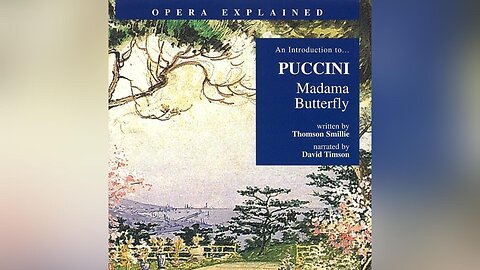
Opera Explained | Madama Butterfly by Puccini (Audio)
Adaneth - Arts & Literature"An introduction to....Puccini - Madama Butterfly" written by Thomson Smillie, narrated by David Timson. It is one of the enigmas of opera that some of today’s most popular, adored even, works in the repertoire were disasters at their premieres, The Barber of Seville, Carmen, and Madama Butterfly being the most notorious exemplars of the phenomenon. But it is axiomatic that they overcame their difficult deliveries to become healthy and robust specimens of the operatic race. Puccini loved women, in art and in life, and named many of his smash hits after his heroines: an oddly overlooked fact. Butterfly is not only the central character of the opera, she is the opera itself. From the moment of her intentionally delayed entrance – and what an entrance! – she is rarely off the stage. Other characters matter only insofar as they relate to her, and her astonishing combination of childish delicacy (she is allegedly fourteen years old, a real challenge to the singer-actress) and immense power of character and voice makes her one of the most compelling figures in opera. Puccini was, it cannot be said too often, a supreme master of theatre, and had an unerring sense of what ‘works’. So when he was taken to see David Belasco’s smash-hit play Madama Butterfly, despite not speaking a word of English, he sensed instinctively that it would make a brilliant opera. The theme of the brash young American who sows his wild oats and seeks to avoid the consequences was to fuel many later, including Vietnam-era, works, but at the time was a real shocker to late Victorians. But once again it is the combination of outstanding characters (or maybe just one particularly outstanding character), a deeply moving plot (if you don’t weep at the closing pages of the score ask for your money back!), and music of overwhelming power that guarantees the opera’s success. Even those with hearts of stone find themselves moved by the exquisite Entrance of Butterfly, stirred by the highly erotic love duet, thrilled by the great aria ‘One Fine Day’, and crushed by the mighty pentatonic chords that hammer out Butterfly’s death agony. Strong stuff! Tracklist: 1. Introduction 2. Act I 3. Sharpless counsels caution 4. Introduction and Entrance of Butterfly 5. The Wedding Ceremony 6. Butterfly and Pinkerton 7. End of Act I 8. Act II – Introduction and ‘Un bel di’ 9. Sharpless and Butterfly 10. Butterfly’s son 11. The return of Pinkerton 12. Waiting for Pinkerton – The Humming Chorus 13. Butterfly’s suicide Performance: Miriam Gauci, Yordy Ramiro, Gerog Tichy Slovak Philharmonic Chorus Slovak RSO / Alexander Rahbari32 views -
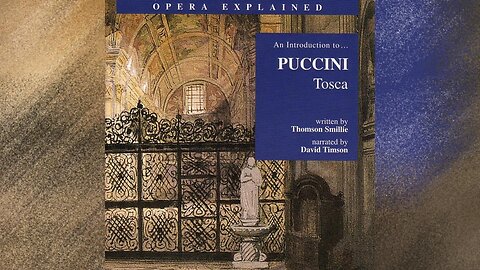
Opera Explained | Tosca by Puccini (Audio)
Adaneth - Arts & Literature"An introduction to....Puccini - Tosca" written by Thomson Smillie, narrated by David Timson. Tosca is Puccini at the peak of his theatrical power. The story of the jealous, impassioned opera singer Floria Tosca and her doomed love for the painter Mario Cavaradossi is played out against backgrounds both historically and geographically overwhelming. It is set in three great and historical locations of Rome during the Napoleonic era. Spectacle, sensuality and cruelty battle for our attention in one of the most truly ‘action-packed’ works of theatre. It centres of course on the title character, Floria Tosca, who was in real life an opera singer. She is a glamorous figure, variously kittenish yet tiger-like, warmly affectionate yet intensely jealous, devout yet murderous. In fact, everything one hopes for in a prima donna. It is no small wonder that the role became associated with Maria Callas, its greatest exponent, whose own passionate and scarred life mirrored Tosca’s tragedy. But Tosca is no one-woman show. Cavaradossi, the tenor hero, is a powerful character, and has wonderful music including two show-stopping arias, and in Baron Scarpia, chief of Rome’s secret police, Puccini orchestrated one of opera’s great villains. It is an irony that in some ways Scarpia is the most lifelike of the three principals, yet he is the only one who is a complete creation of the playwright Victorien Sardou, on whose play, La Tosca, Puccini based his opera. Tosca scores also in its historical and geographical setting. The action takes place in the year 1800 at the height of the Napoleonic era, when General Bonaparte, as he still was, favourite son of the French Revolution, was striking terror into the hearts of the reigning classes including, maybe especially, the Pope, whose vast temporal empire was still based, like the opera, in Rome. Any tourist to Rome can visit the actual settings of Tosca in a morning: the vast baroque church of St Andrew in the Valley, the Palazzo Farnese (then the Neapolitan, now the French Embassy) and that glorious antique pile, the Castle of the Holy Angel, from whose battlements Tosca makes her final, fatal exit. But it takes a master like Puccini to fashion from the politics and the topography such brilliant set pieces as the great ‘Te Deum’ which ends the first act, the intensely dramatic confrontation between Scarpia and Tosca which is at the heart of the opera’s second act, and the atmospheric and deeply touching last scene with the ‘mock execution’ of Cavaradossi atop the Castel Sant’Angelo. Love, jealousy, passion, politics, torture and executions, spectacle, duplicity and menace are woven together into a superb tapestry, and then coloured by a great Italian master of melody. Tracklist: 1. Introduction 2. Puccini's Operas 3. Historical background to Tosca 4. Opening bars 5. Act I 6. Entrance of Tosca 7. caravadossi and Angelotti – Scarpia’s entrance 8. End of Act I 9. Act II 10. Scarpia and Tosca – Caravadossi’s torture 11. Tosca’s response to Scarpia – ‘Vissi d’arte’ 12. Act III 13. Caravadossi writes to Tosca – ‘E lucevan le stelle’ 14. The firing squad – The tragic end29 views -
Opera Explained | La Bohème by Puccini (Audio)
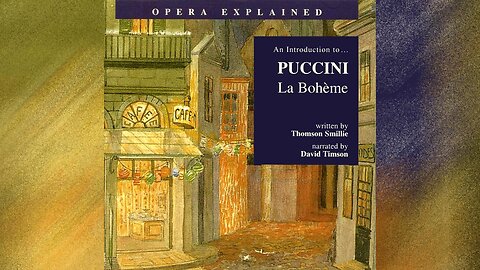
Adaneth - Arts & Literature"An introduction to....Puccini - La Bohème" written by Thomson Smillie, narrated by David Timson. La Bohème is one of three operas – the others are Carmen and Aida – believed to be the most popular ever written. In the case of La Bohème the reason is that it virtually defines the term ‘romantic’. The poignant story of Mimi and Rodolfo is told in music of such tender beauty, allied, as always, to Puccini’s intuition of what works in the theatre, resulting in an opera that readily appeals to our emotions and senses. Puccini was born in Lucca on the western side of Italy in 1858, was trained in the family tradition as a musician and, like most opera composers, fumbled his first opera, Le villi. But with his second, Manon Lescaut in 1893, he scored a smash hit and followed it with a string of operas which remain the backbone of the popular operatic repertory – and the box-office salvation of every opera company. Butterfly, Tosca and La Bohème head the list. Puccini was a master of theatrical craftsmanship (as was Verdi), and knew what would work as cannily as any later Broadway impresario. He made his librettists’ lives hell (as did Verdi) until they supplied him with exactly the verses he needed and the dramatic situations to create his sensations and spin his melodies. And the result is a series of operas which deliver an emotional wallop few other composers can match. Because deep down, all the opera lover wants is a good story and some great melodies. La Bohème delivers both. The story is extracted from Murger’s Scenes from Bohemian Life, a popular novel telling of the adventures of young and starving artists, in love and in Paris. Rodolfo meets Mimì; they have a variously tender, occasionally stormy, love affair. They split and they come together again. In the end both are doomed and defeated by the opera’s omnipresent villain – poverty. Puccini, who adored women, in life as in art, created the lovely heroine Mimì and invested her with some of his most glorious melodies. Master craftsman that he was, he provided moments of spectacle, a great deal of humour and what used to be called horseplay, some philosophy and much tenderness. The result is an opera that has enchanted the public for 100 years and even has occasionally, as in the superbly constructed third act – one of the perfect acts in opera – delighted the academics and earned the admiration of the grumpiest pundit. Tracklist: 1. La Bohème 2. ‘Donna non vidi mai’ from Manon Lescaut 3. ‘Un bel di’: One fine day from Madama Butterfly 4. The story… 5. Benoit is ejected 6. Mimì’s theme tune 7. ‘Sì. Mi chiamano Mimì’ – Yes. They call me Mimì 8. ‘O soave fanciulla’ – Oh beautiful maiden 9. Act II – The Café Momus 10. ‘Questa è Mimì’ – This is Mimì 11. The arrival of Musetta 12. ‘Quando m’en vo…’ – When I stroll out alone… 13. The closing minutes of Act II 14. Act III 15. Mimì sings of Rodolfo’s jealousy 16. Mimì è tanta malata! – Mimì is desperately ill! 17. ‘D’onde lieta uscì’ – Mimì. Mimì’s aria leading to the great quartet 18. Act IV 19. Musetta arrives 20. Colline’s farewell to his coat 21. Colline’s farewell to his coat 22. The death of Mimì30 views -
Opera Explained | The Flying Dutchman by Wagner (Audio)
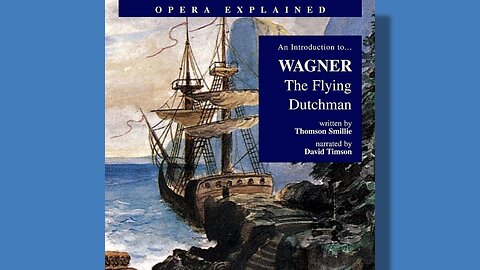
Adaneth - Arts & Literature"An Introduction to...Wagner - The Flying Dutchman" written by Thomson Smillie, narrated by David Timson. Wagner is the Everest of opera. Viewed from the foothills, his towering masterpieces, with their lofty themes and sometimes extraordinary length, can seem to test the endurance of all but the fanatic. But this image is only apt in part. His melodic gifts, the power and majesty of his orchestral writing, and his ability to relate excellent narratives, make him almost a figure of popular culture. Wagner’s first three operas were not particularly successful, but with The Flying Dutchman his career took off. The Flying Dutchman is the perfect opera with which to approach the operatic mountain that is Richard Wagner. It is short, has a great story – the legend of the Dutch captain doomed to sail forever unless redeemed through love – and the striking score has many pre-echoes of Wagner’s later music dramas. It contains wonderful tunes in its arias, ensembles, and big choruses, and the orchestral writing – from the gale that blows out of the Overture to the final theme of ‘Redemption through Love’ – will… well… ‘blow you away’. Performers: Alfred Muff, Ingrid Haubold, Peter Seiffert, Erich Knodt, Jörg Hering, Marga Schiml ORF Symphony Orchestra, conducted by Pinchas Steinberg. Tracklist: 1. Introduction 2. A short history 3. Extracts from other operas 4. The Ring 5. Leitmotifs, Norse, and Germanic myths and Love 6. The Overture and the plot 7. Act I 8. Daland and the Dutchman 9. Act II: Inside Daland’s house 10. Erik and Senta 11. Senta and the Dutchman 12. Act III 13. The dénouement107 views -
Opera Explained | Tristan und Isolde by Wagner (Audio)
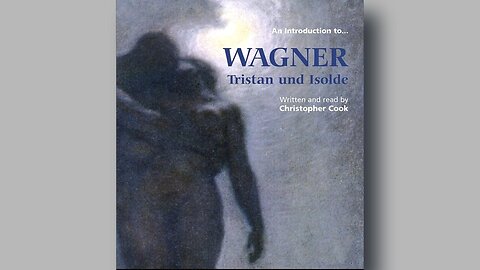
Adaneth - Arts & Literature"An Introduction to...Wagner - Tristan und Isolde" written and narrated by Christopher Cook. With Sean Barrett as Richard Wagner, Elaine Claxton as Minna Wagner and Laura Paton as Mathilde Wesendonck. Richard Wagner’s opera Tristan und Isolde is encrusted with myths, and like all myths there’s a grain of truth in each of them. To an extent, the direction of Western art music was changed by Tristan, which accelerated the collapse of traditional tonality; the opera does draw on the composer’s own life and his relationship with Mathilde Wesendonck; and while the premiere performances in Munich in 1865 didn’t, as is often assumed, actually kill the first Tristan, Ludwig Schnorr von Carolsfeld, this is still a work that makes enormous demands on its principal singers, psychologically as well as musically. When one great soprano was asked to name the essential ingredient for singing Wagner’s heroines, she’s supposed to have replied, ‘a pair of sensible shoes’! You need physical stamina as well as a voice in peak condition to tackle the roles of Isolde and Tristan. Tristan und Isolde centres around two lovers who dream of romantic love and yearn for oblivion. No composer had written such a work before. Turning his back on traditional tonality, Wagner changed the course of Western music with Tristan und Isolde. But there’s also fact behind the fiction: while he wrote his opera Wagner was in love with another’s man’s wife, Mathilde Wesendonck. So Tristan and Isolde are also Richard and Mathilde. Christopher Cook explores the making of a masterpiece, the story of lovers gripped by a passion that can only be consummated beyond the grave, a forbidden love that is blind to duty, honour and social obligation. Music from Tristan und Isolde: Tristan Wolfgang Millgram, tenor King Marke Lennart Forsén, bass Isolde Hedwig Fassbender, soprano Kurwenal Gunnar Lundberg, baritone Melot Magnus Kyhle, tenor Brangäne Martina Dike, mezzo-soprano Royal Swedish Opera Male Chorus (sailors, knights and squires) Royal Swedish Opera Orchestra Conducted by Leif Segerstam Tracklist: - Background 1. ‘Since I have never in my life...’ 2. When Richard Wagner began to compose Tristan und Isolde... 3. The music of Lohengrin... - Composition 4. Tristan’s sailor looks to the horizon for Cornwall... 5. The prose sketch for Tristan und Isolde... 6. For the first and only time... 7. Wagner’s most beautiful 7 of dreams... - The Opera 8. Tristan und Isolde was never intended to be... 9. Isolde, however, rails against Tristan... 10. Act II takes place at night... 11. Then, for a second time in the opera... 12. Before the start of the Third Act... 13. Tristan begins to rave again... 14. The shepherd boy pipes another...93 views -
Opera Explained | The Ring of the Nibelung by Wagner (Audio)
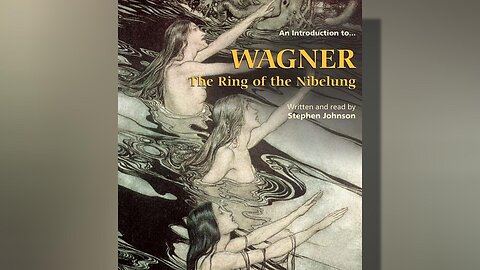
Adaneth - Arts & Literature"An Introduction to...Wagner - The Ring of the Nibelung" written and narrated by Stephen Johnson. Music performance by the Staatsoper Stuttgart. Staatsorchester Stuttgart, conducted by Lothar Zagrosek. Wagner’s Ring cycle is the most ambitious work in the history of music: four operas that combine to tell a single epic story. Based in legend, it has become a legend in its own right: a supreme challenge for conductors, singers, opera producers, and indeed for audiences. But for all its grandeur and complexity, The Ring is far more accessible than many music lovers think. This audio guide explains the basics of the plot, profiles the leading characters, and shows how Wagner’s revolutionary music adds fascinating layers of meaning and psychological insight, as well as providing some of the most stirring and intoxicating moments in the entire operatic repertoire. The Ring is a giant morality play, laden with symbolism from beginning to end. Its message is that love alone can redeem the world. In the first of the tetralogy, Das Rheingold (conceived as a Prologue) the Nibelung dwarf Alberich steals the Rhine gold from the Rhine maidens, fashioning from it a ring that confers mastery of the world – but at a terrible price: the total renunciation of love. The gods, headed by Wotan, steal both gold and ring, to ransom the goddess Freia, previously given to the giants as payment for their building of the gods’ palace, Valhalla. The cursed ring takes immediate effect. The giants Fasolt and Fafner quarrel over it, and Fafner kills Fasolt. The gods enter Valhalla. Thus ends the first opera without a single human character. Die Walküre marks the start of the drama proper. Wotan has nine daughters (the Valkyries) by the earth goddess Erda and two other children (Siegmund and Sieglinde) by a human mother. Wotan hopes Siegmund and Sieglinde will recover the ring (now guarded by Fafner, who has turned into a dragon). Unaware that they are brother and sister, Siegmund and Sieglinde fall in love. Brünnhilde, Wotan’s favourite Valkyrie, disobeys his commandment by protecting Siegmund against Hunding, Sieglinde’s husband; but Wotan intervenes and Hunding murders Siegmund. Brünnhilde rescues Sieglinde, prophesying that she will bear a son, Siegfried. Wotan punishes Brünnhilde by stripping her of her divinity. She falls into a trance, and lies immured by a circle of fire, awaiting rescue by a fearless hero. The next opera, Siegfried, is dominated by him. Siegfried, only child of Siegmund and Sieglinde (who died in childbirth), has been raised in the forest by Alberich’s brother, the dwarf Mime. With a sword forged from fragments of his father’s weapon (shattered in the battle with Hunding), Siegfried kills Fafner, acquiring both the ring and the magic helmet which Alberich had also made from the gold. A chance taste of the giant’s blood enables him to understand the language of the birds, one of which leads him to Brünnhilde’s rock. He duly penetrates the wall of fire and wins Brünnhilde’s heart. In Götterdämmerung, Hagen, son of Alberich, plots to recover the ring. Siegfried, his memory of Brünnhilde erased by a potion mixed by Hagen, falls in love with Gutrune. He captures Brünnhilde for Hagen’s half-brother, Gunther. Siegfried then marries Gunther’s sister, Gutrune. Brünnhilde, with Hagen and Gunther, plots Siegfried’s death. Siegfried and Gunther are both killed by Hagen. Aware of the truth at last, but alas too late, Brünnhilde builds a funeral pyre for Siegfried and rides into the flames with the ring on her finger. The Rhine breaks its banks, the ring, despite Hagen’s doomed pursuit, is recovered by the Rhine maidens, and Valhalla is consumed by flames. The curse is complete, the gods destroyed. A new age, illuminated by the power of redemptive love, is ready to dawn. Tracklist: 1. Introduction 2. The Stuff of Legends 3. Dark Power? 4. Revolution in Music 5. A New Kind of Song 6. The Role of the Orchestra 7. The Leitmotif - Das Rheingold 8. Prelude 9. Scene 1 10. Scene 2 11. Scene 3 12 Scene 4 - Die Walküre 13. Background 14. Act I 15. Act II 16. Act II cont. 17. Act III 18. The Final Scene: Wotan and Brünnhilde - Siegfried 19. Act I 20. Act II 21. Act III - Götterdämmerung 22. Background 23. Prologue 24. Act I 25. Act II 26. Act III 27. The Final Scene: The End of Everything?133 views -
Opera Explained | Il trovatore by Giuseppe Verdi (Audio)
Adaneth - Arts & LiteratureOpera Explained written by Thomson Smillie, narrated by David Timson. This audiobook series introduces, in words and music, the plot and background of major operas. Using the principal themes and arias, taken from the Naxos recordings of the complete works, the presentation is informative yet entertaining, enabling the listener to get more from this remarkable art form. Soon after its 1853 premiere, Il trovatore swept with astounding popularity across first Italy, then all of Europe, before crossing the Atlantic, creating among other things a minor industry in the forging of anvils for its famous ‘Anvil’ Chorus. Critics have divided over whether it is predominantly Verdi’s supreme melodic achievement or as improbable a tale of mayhem as ever graced the operatic stage. It is perhaps both; certainly the wider operatic public for whom ‘dramatic verisimilitude’ is never a major criterion has always adored it. Il trovatore occupies a lofty spot in the operatic pantheon, being one of a trilogy of works which for many virtually define opera as an art form. Three back-to-back masterpieces – Rigoletto, Il trovatore and La traviata –, in addition to cementing Verdi’s reputation as the supreme purveyor of great music dramas, confirmed his status as Italy’s most-loved composer. The story is improbable and the situations far-fetched. But the purpose of a libretto, surely, is to inspire the composer to write his best music. Judged by that standard, the libretto of Il trovatore is a triumph because Verdi responded to this Gothic horror story with possibly his most prodigally melodic score. Relish anew the power and beauty of the ‘Anvil’ Chorus, and the melodic fervour of the soldiers’ choruses. Di Luna is the baddie of Victorian melodrama, yet still has one of the most lyrical arias written for a baritone, ‘Il balen’. Manrico is a conventional operatic hero, yet his ‘Ah! Sì, ben mio’ is tender and introspective. Leonora’s often conventional sentiments are expressed in arias of depth and musical sophistication, and the ‘Miserere’ scene juxtaposes the Italian obsession with sin and sanctity, but with a rare beauty and grace. Track list: - Background 1. Italy’s history in the 19th century 2. Verdi’s popularity 3. The operas 4. Rigoletto 5. La traviata - Il trovatore 6. Genesis of Il trovatore 7. Principal characters and the story so far 8. The gypsy woman 9. Leonora’s entrance aria 10. The role of Inez 11. Count di Luna and his place as Manrico’s rival 12. Act II: the gypsies’ encampment; Azucena’s ‘Stride la vampa!’ 13. Azucena continues her story 14. Who is Manrico? 15. At the convent 16. Act II finale 17. Act III: Di Luna’s soldiers 18. Manrico: ‘Ah! Sì ben mio’; ‘Di quella pira’ 19. Act IV: Leonora’s ‘D’amor sull’ ali rosee’ 20. Leonora and Di Luna 21. Azucena and Manrico share a prison cell 22. Conclusion Performance: Leonora, Duchess – Daniela Longhi, soprano Azucena, a gypsy-woman – Irina Tschistiakova, mezzo-soprano Manrico, a troubador – Maurizio Frusoni, tenor Count di Luna – Roberto Servile, baritone Ferrando, a captain in the army – Franco de Grandis, bass Inez, Leonora’s confidante – Zsuzsa Csonka, soprano Ruiz, Manrico’s retainer – Jozsef Mukk, tenor Leonora’s attendants, the Count’s followers, soldiers, nuns, messengers, gypsies Budapest Festival Chorus Hungarian State Opera Orchestra Conducted by Will Humburg Thomson Smillie began his career in the early days of Scottish Opera and has been artistic director of the Wexford International Festival, general manager of the Opera Company of Boston and general director of Kentucky Opera. He now makes a career as a writer, speech-writer and public speaker. He has a strong belief that people mature into a love of opera and travels the world encouraging a love of the art form. He has written several other titles in the ‘Opera Explained’ series. David Timson studied acting and singing at the Guildhall School of Music and Drama. He has performed in modern and classic plays through the UK and abroad, including Wild Honey for Alan Ayckbourn, Hamlet, The Man of Mode and The Seagull. Among his many television appearances have been roles in Nelson’s Column and Swallows and Amazons. For Naxos AudioBooks he has recorded seven volumes of The Adventures of Sherlock Holmes, and directed Twelfth Night as well as playing Feste. He has narrated all other titles in the ‘Opera Explained’ series. Next: Rigoletto by Giuseppe Verdi https://rumble.com/v5qncft-opera-explained-rigoletto-by-giuseppe-verdi-audio.html236 views 1 comment