-
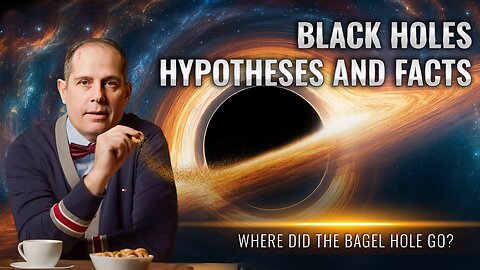
Black Holes. Hypotheses and Facts | Where Did the Bagel Hole Go? | Popular Science Film
ALLATRAIf information cannot be destroyed, what happens to the matter that falls into a black hole? This question brought two fundamental theories into conflict: Einstein's general theory of relativity and quantum mechanics. This confrontation became known as the “information paradox.” Our understanding of the structure of the Universe and of humanity itself depends on its resolution. This film is a journey through three centuries of scientific ideas. Together with scientists, we will go step by step and see how they uncovered the mystery of a phenomenon, long considered impossible, but which today holds the key to understanding the structure of the micro- and macrocosm. In this popular science film, we will: Trace the history of a great discovery: from John Michell's prediction of "Dark Stars" in 1784 to the triumphant confirmation of the existence of the first black hole candidate, Cygnus X-1. See what the invisible looks like. Find out who created the first image of a black hole and how, and compare it with real images from the Event Horizon Telescope. Attempt to find out what happens to information that enters the zone of a black hole, and how the quantum ideas of Bekenstein, 't Hooft, and Susskind led scientists to a revolutionary hypothesis: our world may be a hologram. Learn what the structure of the Universe and the structure of the human being have in common. You can touch upon the unresolved mystery of the cosmos. Watch to get the answers to the questions that the greatest minds have worked on for decades: Hawking, Einstein, Thorne, Susskind, and Rovelli. #blackhole #space #matter #universe #science181 views 1 comment -
Trailer | Black Holes. Hypotheses and Facts | Where Did the Bagel Hole Go?
ALLATRABlack holes. Objects from which everything that enters them disappears forever. For half a century, scientists have argued, made bold bets, and changed their theories. People built telescopes across the planet and created the most powerful particle accelerator in history — all to capture an image of something once believed to be invisible. • Where does the information go when matter collapses? • Is it even possible to fall into a black hole? • What is mass, really, and how is space itself structured? The answers could redefine reality. #blackhole #space #matter #universe220 views -
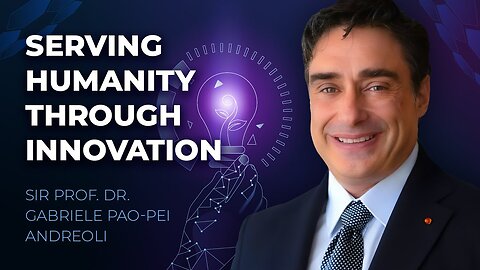
Science with Conscience: Professor Andreoli on Technology, Spiritual Diplomacy & Future of Humanity
ALLATRAIn this thoughtful and wide-ranging conversation, Sir Professor Dr. Gabriele Pao-Pei Andreoli, President of the Institute for Advanced Studies and Cooperation, shares insights as an internationally recognized advocate for ethical innovation, regenerative science, and global collaboration. This conversation took place in Washington, D.C., where Professor Andreoli joined ALLATRA participants during his visit from Italy and the Vatican, underscoring his ongoing dedication to international dialogue and the advancement of responsible scientific and humanitarian initiatives. Professor Andreoli shares clear and compelling insights on how rapidly developing technologies - especially artificial intelligence, quantum science, and digital platforms, are reshaping the world. He explains why responsible leadership, ethical guidance, and a deep sense of human connection are essential for ensuring these technologies serve humanity rather than harm it. Throughout the interview, Professor Andreoli touches on a number of important topics, including: • The idea of transcendence as a way for individuals and societies to grow beyond limitations. • Why he believes humanity is “anti-fragile” — capable of becoming stronger through challenges. • The creation of the “Multiverse of Trust”, a project designed to help young people navigate the digital world safely and confidently. • The future impact of AI, quantum technology, and regenerative medicine on global well-being. • The role of spiritual values, empathy, and human dignity in guiding modern science. • How spiritual diplomacy can bring nations, cultures, and communities closer together. • The importance of focusing on ethics, responsibility, and meaningful service in leadership. Professor Andreoli reminds us that while technology moves quickly, the strength of humanity lies in our ability to care, to cooperate, and to act with conscience. His message encourages viewers - from policymakers and academics to young leaders and families, to take an active role in shaping a peaceful and thriving future. #SpiritualDiplomacy #ALLATRA #IASC #MetaverseOfTrust #WorldChangers #EthicalInnovation #FutureOfHumanity124 views -
Nanoplastics. Threat to Life | ALLATRA Documentary
ALLATRAThis documentary is the result of a comprehensive scientific investigation that reveals one of the most urgent environmental and public health challenges of the 21st century: micro and nanoplastic pollution, and presents it in an accessible popular science format. Plastic symbolizes technological progress: lightweight, durable, and nearly everlasting. But humanity has overlooked something critically important – the very material created to improve our lives has begun to endanger them. Today, society vastly underestimates the real scale of the threat posed by plastic pollution. The plastic crisis is no longer limited to landfills or floating garbage patches in the world’s oceans. The true catastrophe is unfolding on a microscopic level: nanoplastics can penetrate biological barriers and accumulate within living organisms, including humans. This documentary brings together cutting-edge scientific data and insights from leading experts. It examines how micro- and nanoplastics disrupt ecosystems, impact human health, and why understanding the magnitude of this threat is essential for the future of our planet. Recent studies show that micro- and nanoplastics can accumulate and retain electrostatic charges for long periods of time. In this film, this property is examined as a key factor in their destructive effects – an angle rarely explored before. This perspective offers a new way to understand the dangers of plastics through the lens of their electrostatic activity. The film presents scientific findings on the scale and consequences of micro- and nanoplastic contamination, including: • Detection of plastic particles in air, water, food, and the human body – regardless of region. • Harmful effects of micro- and nanoplastics on human health, such as: – inflammation, DNA damage, and mutations, – endocrine disruption, – accelerated cellular aging, – cognitive impairment, – erectile dysfunction, infertility, – increased rates of cancer; – impacts on children beginning in the prenatal stage and continuing after birth. • The influence of micro- and nanoplastics on the climate. Plastic particles contribute to accelerated ocean warming, atmospheric anomalies, and disruptions to the hydrological cycle. It is crucial to understand that simply abandoning plastic today is no longer enough to solve this global problem, as micro- and nanoplastics have already become an integral part of the biosphere, and of the human body itself. Produced by: ALLATRA Global Research Center (ALLATRA GRC) #nanoplastic #microplastic #sciencefilm #health #ecology #environment #plastic #documentary #medicine #futureoftheplanet #science7.96K views 11 comments -
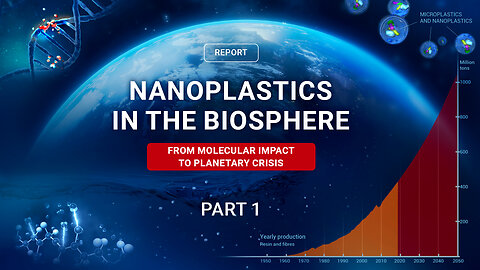
Nanoplastics: Invisible Threat That Already Affects Everyone | Excerpt #1 from a Scientific Report
ALLATRAToday, there is one threat that unites all people — regardless of religion, nationality, or social status — the contamination of the entire biosphere with micro- and nanoplastics (MNP). MNP are plastic particles measured in millionths of a meter. They have spread across the entire planet and are now found not only throughout the biosphere but also inside the human body itself. Microscopic plastic particles enter our bodies with every breath we take, every sip of water, and every bite of food. They have already been detected in human cells, tissues, and organs. This is the first episode in a series where we examine the latest scientific report, “Nanoplastics in the Biosphere: From Molecular Impact to Planetary Crisis.” You will learn shocking facts about: ✅ How plastic waste breaks down into particles smaller than a human cell ✅ Why the Great Pacific Garbage Patch has turned into the planet’s “seventh continent” ✅ How air currents carry plastic particles across the globe ✅ Where the zones of high micro- and nanoplastic concentration are located ✅ What hidden health consequences begin at the molecular level This is not just an environmental issue — it is a planetary crisis that will determine the future of humanity 00:00 – Introduction: Why nanoplastic is an invisible planetary crisis 00:24 – The Age of Plastic: How we created a global environmental disaster 09:29 – The Great Pacific Garbage Patch: A plastic continent covering 618,000 square miles 11:45 – The origins of nanoplastic: From visible waste to invisible nanoparticles 16:32 – Microplastics in the atmosphere: How air spreads plastic around the world 18:10 – How nanoparticles penetrate the human body 21:25 – The air in forests is more saturated with nanoplastics than in megacities 23:59 – Which foods contain the highest concentrations of micro- and nanoplastics The scientific report “Nanoplastics in the Biosphere: From Molecular Impact to Planetary Crisis” warns of a new global threat. Authors: “ALLATRA” International Public Movement In cooperation with: Bolivian Catholic University San Pablo, Juan Misael Saracho Autonomous University (UAJMS), and the Creative Society International Project. For the first time, a single document presents a comprehensive overview of data on the spread of micro- and nanoplastics in the biosphere, their entry into food chains, and their destructive effects on human health and ecosystems. Micro- and nanoplastics can accumulate electrostatic charge, which has a destructive effect on the body.. This property enables nanoplastic not only to penetrate biological defense barriers but also to remain in the cells of living beings forever.. The report is the result of a large-scale interdisciplinary analysis that integrates ecological, climatic, medical, physical, and chemical research on the devastating effects of micro- and nanoplastics on the biosphere and human health. Read the full version of the report “Nanoplastics in the Biosphere: From Molecular Impact to Planetary Crisis” at the link: https://allatra.org/storage/app/media/reports/en/Nanoplastics_in_the_Biosphere_Report.pdf Subscribe so you don’t miss the next important episode, and share this video. In upcoming episodes of this series, we will cover how micro- and nanoplastics affect living organisms, human health, and the climate — and reveal real solutions that can solve the problem. #Nanoplastics #PlasticPollution #ClimateChange #Microplastics #HumanHealth #OceanCleanup #EnvironmentalCrisis #ALLATRA #ScientificResearch #Sustainability169 views -
He Was the First to Show What a Black Hole Looks Like | Jean-Pierre Luminet
ALLATRA“‘Draw me a black hole!’ What did ‘Draw me a black hole’ mean? It meant making the first digital simulation that had never been done before,” says Jean-Pierre Luminet, the creator of the first image of a black hole, honored head of research at CNRS (Centre national de la recherche scientifique), France. Jean-Pierre Luminet considers it fundamentally important to bring unique, sometimes paradoxical scientific knowledge to a wide audience. He emphasizes that science occupies a fundamental place in the modern world, and its proper understanding is one of the main tasks. We invite you to immerse yourselves in the world of astrophysics and join us in studying extremely exotic objects ― black holes. In this interview, you will learn: ⚫️ What were the difficulties in creating the first visualization of a black hole, and what are its features consistent with recent observations? ⚫️ Are tidal disruption events always associated with black holes? ⚫️ In Mr. Luminet’s opinion, what happens to information that gets into black holes? ⚫️ What is the fundamental difference between supermassive black holes at the center of galaxies and stellar black holes? ⚫️ What is the future of black hole science? ⚫️ What benefits will a better understanding of the true nature of black holes bring to humanity? ✉️ [email protected] #BlackHole #Astrophysics #Science177 views -
Mysterious Black Holes | Interview With Astrophysicist Valeria Olivares
ALLATRAAt the summit of Cerro Calán in Santiago, Valeria Olivares, an expert in black holes and galactic structures, explains how these objects are studied using telescopes and computer simulations. The interview covers the nature of supermassive black holes, their interaction with galaxies, the role of magnetic fields and cosmic jets, as well as the differences between stellar and supermassive black holes. 📡 This is an attempt to approach an understanding of the most mysterious objects in the Universe — and to find out what discoveries may await us in the future.155 views -
Preparations for Production and Distribution of E-Cat Have Made Significant Progress | Andrea Rossi
ALLATRAAndrea Rossi, the person behind the E-Cat technology, shares important news: a global licensing agreement has been signed for the first time, and the process of transferring knowledge to new specialists is almost complete. In this interview, the CEO of Leonardo Corporation speaks about a key stage: preparations for the production of E-Cat have started. “The most difficult part is over. In fact, I’ve already passed on all my knowledge on everything related to quality. Now my role is more of an advisory one: I act as an adviser, sharing my specific expertise, primarily in the field of technology,” the inventor notes. We are talking about a decades-long journey, expectations, skepticism, and hope. When will mass production begin? What is yet to be completed? And what is Rossi’s attitude to criticism and doubts surrounding the project? An interview about a technology that can change the approach to energy. Are you ready for a change? ✉️ [email protected] #Science #Innovation #ECat #AndreaRossi #Technology #Energy #FFG213 views 2 comments -
Nuclear Reactor the Size of a Desktop Computer | Metatron N.R.G.
ALLATRAThe main and exciting achievement of Metatron N.R.G. is the creation of new types of stable plasmoids. This breakthrough is similar to the invention of transistors that replaced vacuum tubes in radio and electronic devices and has opened the door to a new kind of small nuclear reactor, comparable in size to a desktop computer. It’s a great honor for our team to present an interview with Dr. Yeshayahu Eisenberg, CEO and co-founder of Metatron N.R.G. In the interview, we will discuss the prospects of this nuclear fusion technology and hear answers to the following questions: 🔹 What are plasmoids? How did the idea of using them as an energy source first arise? 🔹 Where did the path of fundamental research and creation of a nuclear reactor begin? 🔹 How safe is a desktop nuclear reactor? What physical principles does it work on and for how long? 🔹 What interesting discoveries have researchers made while working on this technology? 🔹 When will Metatron N.R.G. be ready for mass production? 🔹 How can this technology help to cope with environmental and climate crises? You can discover more information about this technology on the website https://metatron-nrg.com/ ✉️ [email protected] #Technology #Energy #Science #FuelFreeGenerator174 views 2 comments