Look Up! Jupiter Is At Its Closest To Earth In 59 Years
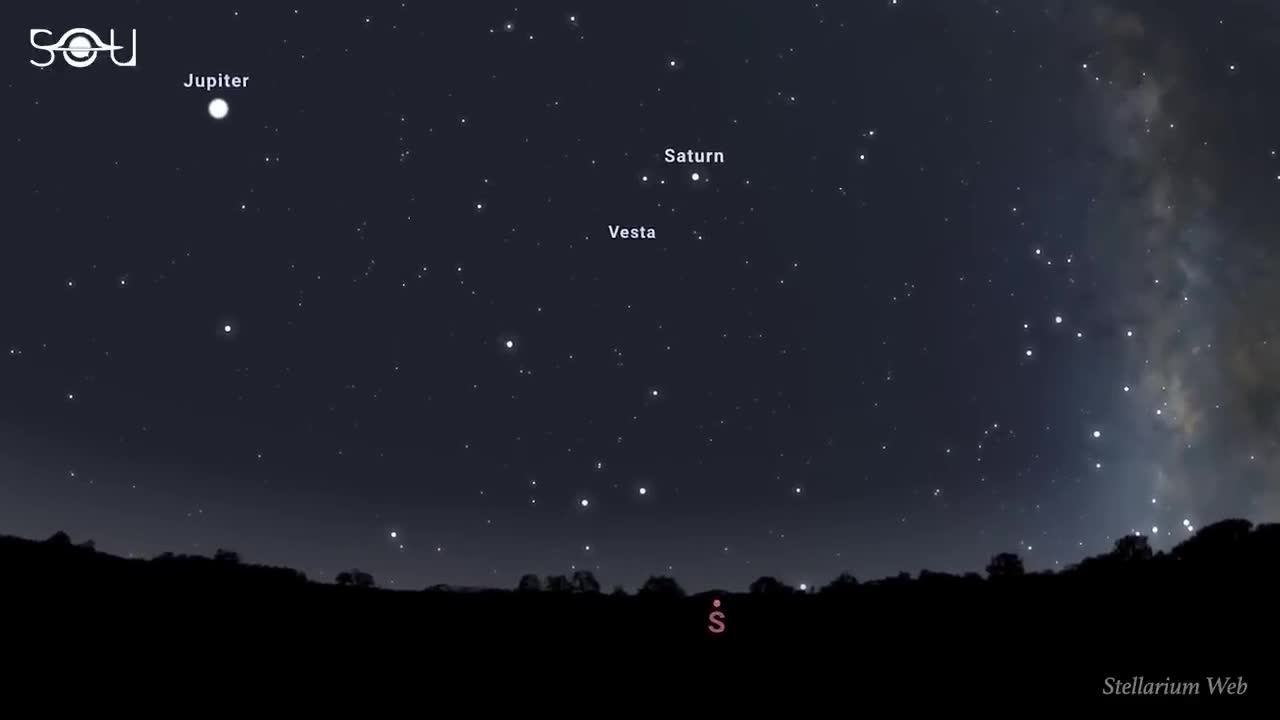
Jupiter is the largest it will be seen for a long, long time. It will be it's brightest as well because of being closer than other times. This will be Jupiter's closest approach since 1963! Jupiter comes to opposition about every 13 months. So opposition next year will be about a month later near the end of October. Jupiter also orbits the Sun, but of course at a much slower speed hence the progressive month difference. Then for a while, Jupiter will not be seen because it will be on the other side of the Sun. Although technically, Jupiter and the Sun (like all Planets) actually orbit a point called the center of gravity. It is the "balance point" between two object's gravitational pull. That balance point for Jupiter is farther from the Sun than the balance point for Earth. The Earth and Moon also orbit a center of gravity so technically we orbit each other. But the object with the longest distance from the center of gravity is "referred" to be the one orbiting the other more massive object with the stronger gravity.
Saturn rises a bit earlier, but is past it's closest point and getting more dim and smaller each night. Saturn is much farther away than Jupiter. Saturn "appears" more massive because of the rings. The planet itself is smaller than Jupiter, but not by a whole lot. The distance plays a part in it's smaller appearance.
Mars will be at opposition on December 8, 2022 and will appear it's largest for this orbital cycle. Currently Mars rises around midnight. But on December 8, it will reach Zenith (highest point in the sky) around midnight which will be the best time to view and photograph Mars.
The Orionid meteor shower will be active from 2 October to 7 November, producing its peak rate of meteors around 21 October. This year's peak will be with a new moon cycle so the skies will be dark around Friday October 21.. However because of the radiant position (where they seem to come from) the angle of approach will not be ideal. You can still expect to see many meteorites, but they won't seem to come "straight at you". Orionids appear to come from the Constellation Orion. If you can see Orion, you will see some "shoosting stars" (Lisa Douglass from Green Acres). LOL! More on the Orionids can be found at... https://in-the-sky.org/news.php?id=20221021_10_100
Keep Looking Up! -- Jack Horkheimer (RIP)
Full credit to:
https://www.youtube.com/watch?v=vJZGxESGQQ4
★ Copyright Disclaimer ★
Title 17, US Code (Sections 107-118 of the copyright law, Act 1976):
All media in this video is used for purpose of review & commentary under terms of fair use. All footage, & images used belong to their respective companies.
Fair use is a use permitted by copyright statute that might otherwise be infringing.
Use the information found in the videos as a starting point for conducting your own research and conduct your own due diligence.
-
 1:26:58
vivafrei
3 hours agoJan. 6 Suspect ADMITS to Planting Bombs, Claims to be Trump SUPPORTER? The Blaze RETRACTS? & MORE!
18.3K42 -
 22:00
22:00
Jasmin Laine
2 hours agoTrump’s Peace Medal Triggered the Biggest Liberal Meltdown of the Year
1259 -
 30:47
30:47
The HotSeat With Todd Spears
2 hours agoEP 221: Bonus Friday Episode! 2025 Spotify Recap
12K29 -
 LIVE
LIVE
LFA TV
18 hours agoLIVE & BREAKING NEWS! | FRIDAY 12/05/25
1,062 watching -
![MAHA News [12.5] Glyphosate Study Retracted (MONSANTO), Vaccine News (COVID), DMSO Chat](https://1a-1791.com/video/fwe2/02/s8/1/0/u/D/F/0uDFz.0kob-small-MAHA-News-12.5.jpg) DVR
DVR
Badlands Media
13 hours agoMAHA News [12.5] Glyphosate Study Retracted (MONSANTO), Vaccine News (COVID), DMSO Chat
22.3K -
 1:11:14
DeVory Darkins
4 hours agoJeffries SCRAMBLES After National Gas Prices hit record low amid AFFORDABILITY CRISIS
202K85 -
 56:44
56:44
The Quartering
4 hours agoSpam Calls Are Out Of Control, Candace Hits Rock Bottom & More Poison Food
48K82 -
 47:44
47:44
Tucker Carlson
4 hours agoRupert Lowe Warns of the Globalist Agenda Destroying the West and the Revolution Soon to Come
75.8K119 -
 1:16:03
Sean Unpaved
5 hours agoWill Miami Be "ODD MAN OUT" Of The College Football Playoff? | UNPAVED
30.9K1 -
 58:31
58:31
Jeff Ahern
3 hours ago $1.00 earnedFriday Freak out with Jeff Ahern
19.8K6