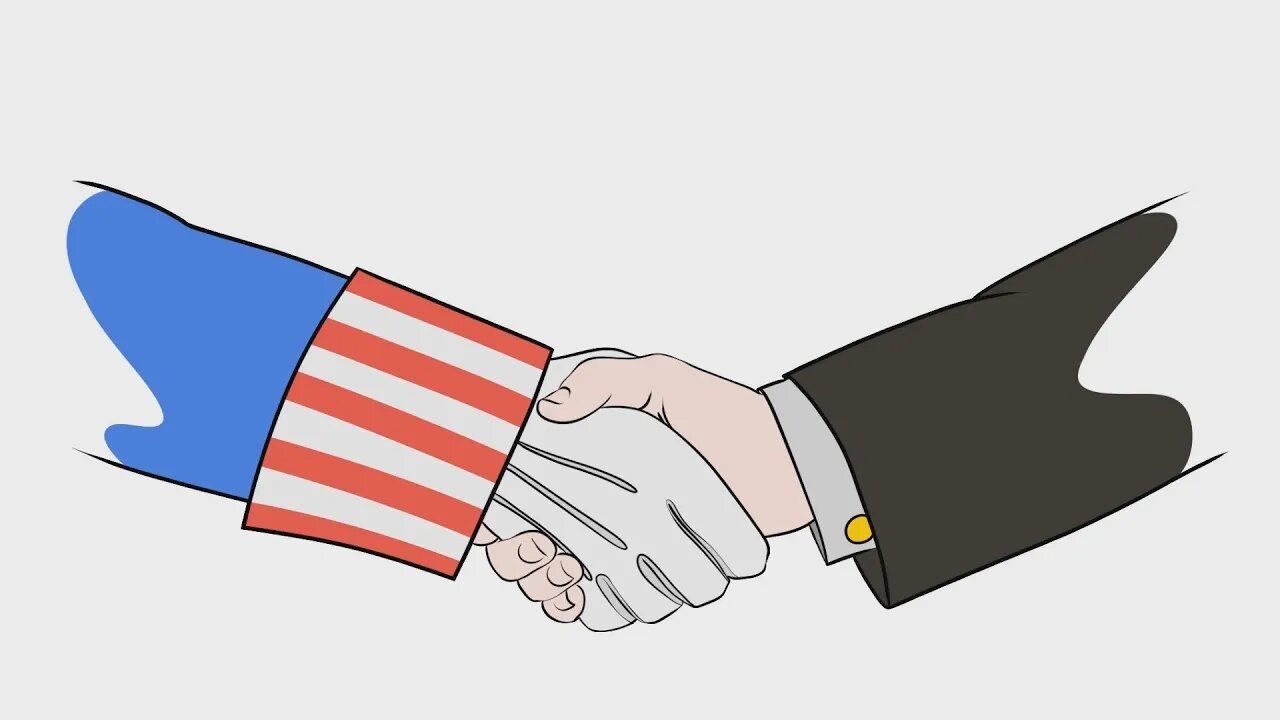
Nationalism
“I would welcome almost any war,” Teddy Roosevelt confided to a friend in 1897, “for I think this country needs one.”
Roosevelt believed Americans were becoming spoiled by peace and prosperity. “No triumph of peace is quite so great as the supreme triumphs of war,” he insisted. “The fight well fought [and] death bravely met count for more in building a fine type of temper in a nation than prosperity in commerce.”
Roosevelt celebrated the conquest of the West, but victory was bittersweet. Frontier warfare had shaped the national character, and Roosevelt worried it would be destroyed by modern luxuries. But when he read Alfred Mahan’s The Influence of Sea Power upon History, Roosevelt found a new frontier.
Mahan’s book argued that national wealth depended on overseas trade. Great nations, therefore, required vast navies with overseas supply stations. The US had traditionally docked ships in friendly ports, but in the event of war, the country would need to control strategic locations overseas.
When Spain’s colonies began revolting, Roosevelt convinced President William McKinley to station the USS Maine near Cuba to protect American interests. After an explosion left 268 sailors dead, Roosevelt blamed Spanish treachery. Sensationalist newspapers spread his narrative, spurring support for war until McKinley relented. The four-month conflict ended with America acquiring the Spain’s colonies, of Guam, Puerto Rico, and the Philippines, as spoils of victory.
The Spanish-American War was a contest between two empires and began with colonial uprisings. Yet in a way, all parties fought for the same cause.
The nineteenth century was shaped by the emergence of a new ideology known as nationalism. A nation is a group of people with a common cultural identity, usually based on shared language, beliefs, and heritage. Nationalism contends that the nation should correspond with the state—the centralized political organization of territory.
Nation-states began to gradually replace empires as colonies demanded independence. But political leaders often view independence movements as threats to national unity. Cuban and Spanish nationalism clashed over Cuban secession.
A similar sentiment motivated America’s involvement in the war. Proponents saw its potential in uniting a nation that had remained divided since the Civil War. They invoked cherished American values, promising liberty for Spain’s colonies—a promise they quickly broke.
Just as modern US maps reserve the left corner for Alaska and Hawaii, early twentieth-century maps depicted America’s overseas territories, such as Cuba, the Philippines, and Puerto Rico. One book of maps claimed, “The term ‘United States’ has ceased to be an accurate description of the countries over which the Stars and Stripes float. It applies merely to the central dominating body, the seat of empire.”
The Spanish-American War made the US an empire by any definition. And just as medieval empires allied with the corporate church, America’s national empire would ally with modern business corporations.
______________________________________
Want to learn more?
For more animated content, check out Economics for Beginners at https://BeginEconomics.org.
Check out the latest Mises Wire articles on foreign policy and war: https://mises.org/topics/war-and-foreign-policy
Anatomy of the State by Murray Rothbard is a great mini-book on the true nature of the state: https://mises.org/anatomy
The Betrayal of the American Right by Murray Rothbard focuses on the history of the modern conservative movement, and the role it played in aggressively escalating America's foreign policy in the 20th century: https://mises.org/betrayal
Wall Street, Banks, and American Foreign Policy by Murray Rothbard is a fiery monograph that employs "power elite" analysis to understand the relationship between money, power, and war: https://mises.org/library/wall-street-banks-and-american-foreign-policy-0
A Century of War: Lincoln, Wilson and Roosevelt by John V. Denson is an extensive look at how the twentieth century became the bloodiest in all history: https://mises.org/library/century-war-lincoln-wilson-and-roosevelt-0
A Foreign Policy of Freedom by Ron Paul offers a positive view for an American foreign policy would look like if it stayed true to its founding principles: https://mises.org/library/foreign-policy-freedom
-
 47:30
47:30
Mises Institute
4 months ago $0.24 earnedCompetition and Monopoly | Tom DiLorenzo
2504 -
 LIVE
LIVE
The Mel K Show
53 minutes agoMORNINGS WITH MEL K-The Lawfare Squad Takes a Victory Lap-Indefensible Idiocy is to Blame! 12-19-25
477 watching -
 UPCOMING
The Shannon Joy Show
1 hour ago🔥SJ LIVE Dec 19 - Friday Midday Matinee W/Shannon Joy! Featuring "American Experience: Jonestown"🔥
63 -
 LIVE
LIVE
Trumpet Daily
23 minutes agoTrumpet Daily LIVE | Dec. 19, 2025
273 watching -
 1:01:55
VINCE
3 hours agoIs This Why They Were Hiding The Evidence? | Episode 192 - 12/19/25 VINCE
170K124 -
 1:55:26
Badlands Media
7 hours agoBadlands Daily: 12/19/25
28.9K13 -
 14:45
14:45
Bearing
4 hours agoFROGAN Gets BODIED 💥 Caleb Hammer, Asmongold + the $20k Rejection 💰
10.7K11 -
 1:10:23
Graham Allen
3 hours agoTensions ERUPT At AMFEST, Is Our Party Too Far Gone?
118K545 -
 LIVE
LIVE
Caleb Hammer
3 hours agoThis Has Never Happened Before | Financial Audit
215 watching -
The Big Mig™
3 hours agoTrump Drops Bombshell: Weed Reclassified to Schedule III
4.75K9