The Future of Money: Political or Private?
In 2009, an anonymous individual using the name Satoshi Nakamoto unleashed the first version of bitcoin—a private, peer-to-peer digital currency. In creating bitcoin, Nakamoto tried to give his creation similarities to the old gold standard—it was mined using increasingly difficult mathematical formulas, like mining gold. Bitcoins were easily divisible, like weights of gold, and government couldn’t create more of it out of thin air, like with other commodity-backed currencies.
In the white paper announcing bitcoin, Nakamoto made it clear he was inspired to create bitcoin in reaction to the 2008 financial crisis, which highlighted the dangers of the Federal Reserve’s manipulation of money and the abuses of powerful Wall Street banks. With bitcoin, the hope was an alternative to politicized money and the privileges that it gave to tyrannical governments.
Since 2009, free exchanges on the market have seen bitcoin increasingly rise in value. In 2010, an individual purchased two large pizzas in exchange for ₿10,000. This was the first recorded transaction of bitcoin for a real economic good. The value of the pizza was $41. Eleven years later, the same amount of bitcoin was worth $365 million. All without any government support.
Concerns about the Federal Reserve have not only sparked interest in digital, private money. In recent years, US states have changed tax laws to make it easier to use gold and silver in exchanges. While the US Constitution always prevented states from printing their own paper money, the use of metal was always protected. The State of Texas even established its own gold bank in response to concerns about potential future inflation.
This rise of private money is a direct result of concerns about the Federal Reserve, foreign central banks, and large financial institutions. Since 2008, central banks around the world have engaged in historically unprecedented increases in the money supply and credit creation. While central bankers have regularly claimed that these powers will be short lived, and that they have the ability to return to “normal” monetary policy, every attempt to do so has risked starting a new financial crisis.
As governments take on more and more debt, new concerns arise. For example, if interest rates increase, it means the cost of government’s creating new debt goes up—meaning that more and more taxes will go to interest payments on past spending, and not toward new spending. Also, industries that are not profitable with higher interest rates may collapse. With Federal Reserve policy pushing more Americans to hold stocks, rather than save money in a traditional bank, the popping of an industry bubble could destroy the savings of countless US households.
As such, governments and central banks have looked to create new tools to increase their control over the financial system and attack private money it cannot control. For example, central banks are trying to create their own digital currencies while increasing regulation—or outright banning—private cryptocurrency in their financial systems. China, for example, has banned bitcoin—which can be used in ways it can’t control—and has pushed its own state digital currency, which can be used to track individual users.
Other central bankers have even discussed banning paper money, since using banknotes allows individuals to conduct transactions they cannot track. If they are able to force everyone to use central bank digital currency, central banks would have even more power to control interest rates, the money supply, and credit. This is good for those in power and bad for everyone else.
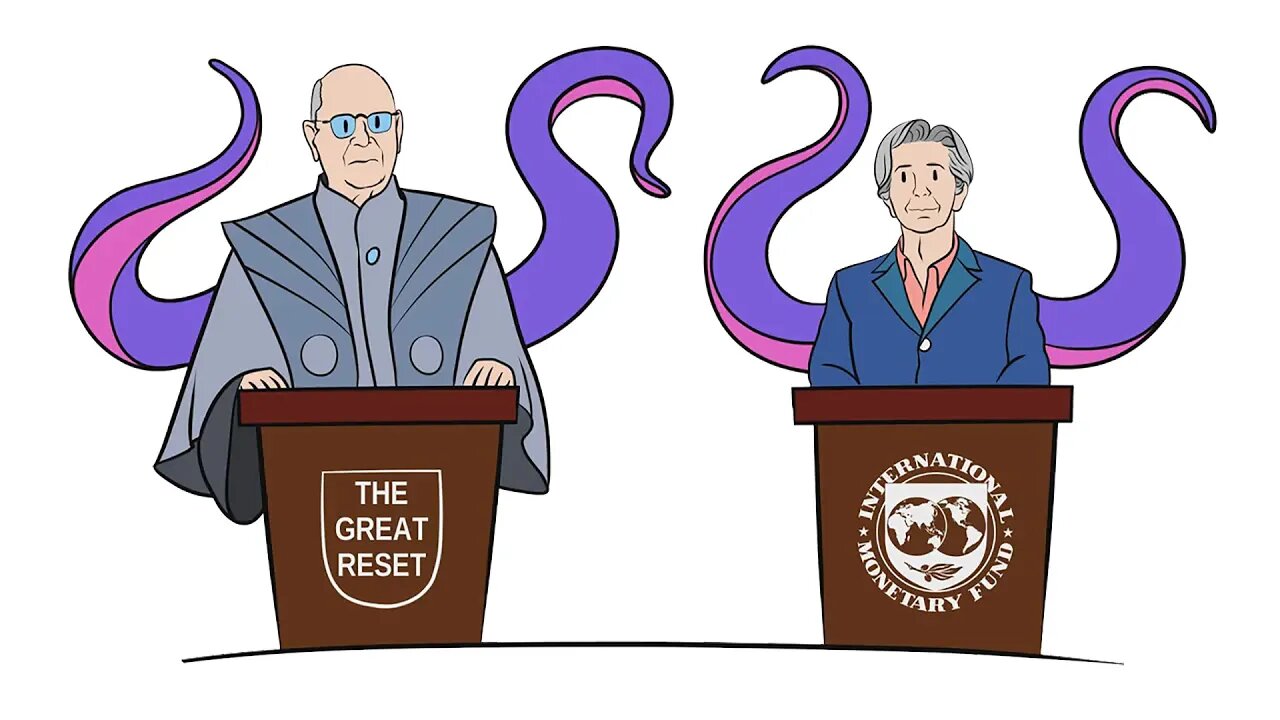
Multinational organizations—like the World Bank and International Monetary Fund—have also talked about using their own digital currency as an alternative to the dollar. Should this happen, the influence the US has over international finance will instead go to these powerful globalist institutions. For some, the ultimate goal is the creation of a global currency—such as when the European Union created a single currency for Europe.
As we saw in 1931, the response to the US government going off the gold standard was Washington confiscating the gold of average citizens—a major increase of the state’s power. In the future, we may see similar attempts to confiscate challenges to politicized money—like bitcoin or gold—in order to strengthen the power of globalist institutions, governments, and central banks.
For anyone interested in challenging the growth of the state and the abuse of power, one of the most important questions to ask is, "What has government done to our money?"
-
 9:49
9:49
Mises Institute
4 months ago $0.37 earnedThe Great Precious Metal Premium Conspiracy | Mark Thornton
5464 -
 2:58:12
Nerdrotic
6 hours ago $16.50 earnedSecrets, Lies, Cover-ups | Age of Disclosure REVIEW | Forbidden Frontier #125
89.5K6 -
 24:17
24:17
Robbi On The Record
3 days ago $4.40 earnedDating Apps and Period Apps Are Playing the Same Game | ft Cybersecurity Girl
32.4K12 -
 54:50
54:50
efenigson
13 days agoWhy Bitcoin Is a Lifeline for African Women - Lorraine Marcel | Ep. 109
6.01K5 -
 2:14:57
TheSaltyCracker
4 hours agoAsymmetrical Warfare is Here ReeEStream 12-14-25
205K161 -
 LIVE
LIVE
SpartakusLIVE
6 hours agoLAST DAY of AMPED Mode || Solo V Quad and RANDOS
496 watching -
 57:27
57:27
Sarah Westall
2 hours agoWhat Congress Isn’t Saying About UFO Disclosure — And 3I/ATLAS w/ Ron James
12K2 -
 LIVE
LIVE
GritsGG
3 hours ago#1 Warzone Victory Leaderboard! 203+ Ws !
81 watching -

VapinGamers
4 hours ago $0.96 earnedMegaBonk and Risk of Rain 2 - The Flu Cometh! - !rumbot !music
15.4K -
 5:03:59
Due Dissidence
13 hours agoBari Weiss SLAMMED For Erika Kirk Town Hall, MAGA World COMES FOR Candace, NEW EPSTEIN PHOTOS Drop
28.9K16