The $US Vs the Yuan: How Does The US Dollar Stack Up?
The $US Vs the Yuan: How Does The US Dollar Stack Up?
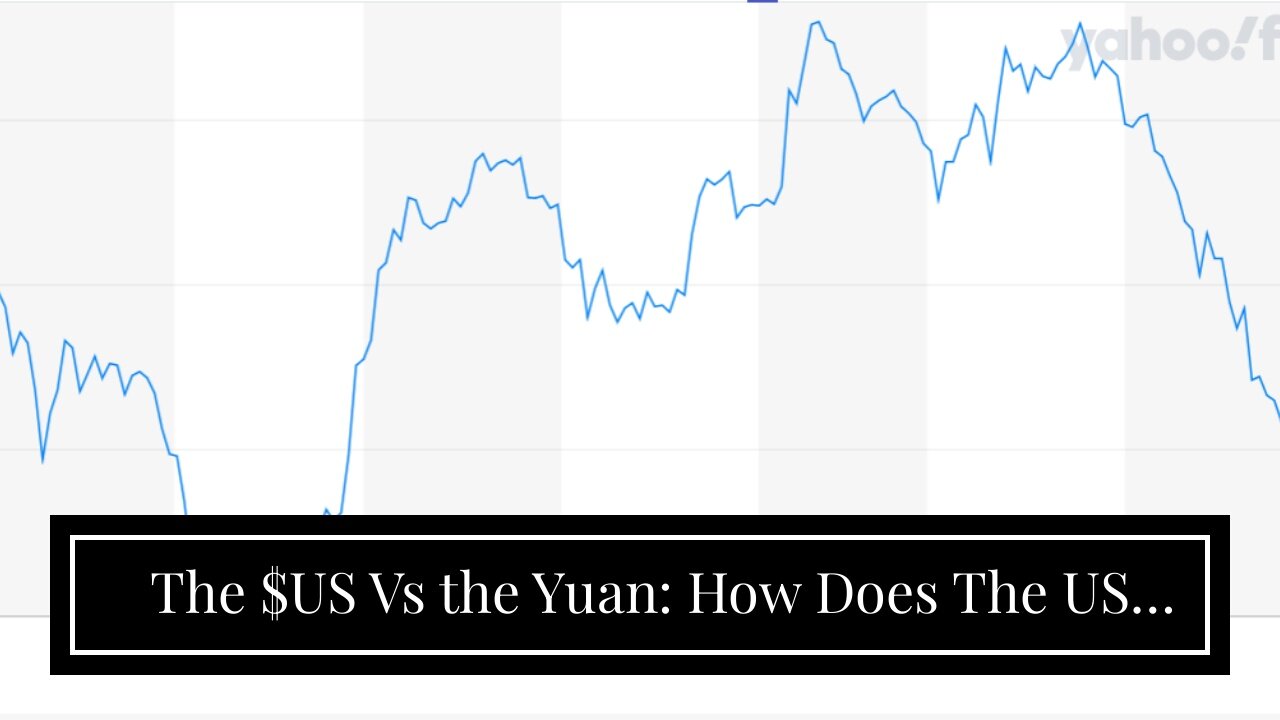
The US dollar and the Chinese yuan are two of the most important currencies in the world. They are both used extensively for international trade and investment, and their relative values have a big impact on the global economy. So, how does the US dollar stack up against the yuan?
In this blog post, we will take a brief look at the history and characteristics of both currencies, before comparing them in terms of purchasing power, stability, and economic growth. We will also discuss some of the factors that could influence their future value. Photo by Karolina Grabowska on Pexels...
https://finetimer.site/the-us-vs-the-yuan-how-does-the-us-dollar-stack-up/
The US dollar and the Chinese yuan are two of the most important currencies in the world. They are both used extensively for international trade and investment, and their relative values have a big impact on the global economy. So, how does the US dollar stack up against the yuan?
In this blog post, we will take a brief look at the history and characteristics of both currencies, before comparing them in terms of purchasing power, stability, and economic growth. We will also discuss some of the factors that could influence their future value. Photo by Karolina Grabowska on Pexels The $US vs the Yuan: How Does The US Dollar stack Up?
A Brief Overview of the US Dollar
The United States dollar, or the American dollar, is the official currency of the United States of America and its territories. It is also the currency most used in international transactions and is one of the world’s reserve currencies. The dollar is subdivided into 100 smaller units called cents.
The first American dollar was established by the Coinage Act of 1792, which created a decimal system for U.S. currency. The word “dollar” comes from the German word “Thaler,” which was shortened to “daler” and eventually became “dollar.” The symbol “$” comes from the Spanish peso, or pieces of eight.
The U.S. Mint produces four different types of circulating coinage: pennies (1 cent), nickels (5 cents), dimes (10 cents), and quarters (25 cents). There are also two types of circulating banknotes: Federal Reserve notes (issued by the Federal Reserve System) and Treasury notes (issued by the U.S. Department of the Treasury).
As of 2018, there were about 1.6 billion $1 bills in circulation, 8 billion $5 bills, 11 billion $10 bills, 18 billion $20 bills, 2 billion $50 bills, and 1 billion $100 bills.
A Brief Overview of the Yuan
The yuan (Chinese: 元; pinyin: yuán) is the base unit of a number of modern Chinese currencies. The yuan is also known as jiao in Mandarin Chinese (Chinese: 角; pinyin: jiǎo) and kuai in Cantonese Chinese (Chinese: 塊; Jyutping: faai3). One yuan equals 10 jiao or 100 fen.(1 fen = 1/1000 yuan) The character 元 originally referred to a round coin with a hole in its center dating back to ancient China.(source needed) Some old European sources referred to Japanese yen as “yuan”.(source needed) Yuan can be written with either one or two characters depending on context.(source needed) In Mandarin Chinese, use only one character when referring to money amounts less than 10 yuan such as 5元 50元,but always use 2 characters for anything equal to or greater than 10 yuan such as 88元 100元 500元 2000元 etc。In Cantonese Chinese ,use 2 characters for anything equal to or greater than 10塊 like 12塊 88塊,but always use 1 character when referring to money amounts less than 10塊 like 5塊 50塊 etc。(Cantonese doesn’t have a term corresponding to ‘jiao’, therefore all monetary values are referred using 元.) To avoid confusion between different regional pronunciations /terminologies , it is advisable that people outside Mainland China refer exclusively to ‘yuan’ when discussing RMB-denominated values ,and leave ‘jiao’and ‘kuai’ as they are used within Mainland China .(source needed)(non-primary source needed)
How Do They Compare?
In terms of purchasing power, the US dollar is stronger than the yuan. For example, according to CNBC, as of 2017 one US dollar could buy you 6.50 yuan while one yuan could only buy you 0.1546 dollars.(CNBC 2017) This means that goods priced in yuan will generally be cheaper for Americans travelling to China than vice versa . However ,it should be noted that since 2013 ,the purchasing power parity between these two currencies has been slowly evening out .(World Bank 2018)(non-primary source needed) In terms of stability ,...
-
 5:29
5:29
FineTimer
2 years agoThe Merit Circle: How to Join and Successfully Exist in this Competitive World
482 -
 UPCOMING
Game On!
11 hours agoNFL Wiseguy Roundtable: Rankings The Top 25 Super Bowls From This Century!
2671 -
 14:00
14:00
DeVory Darkins
18 hours agomayhem erupts with anti-ice agitators storming cities across the country
8.35K50 -
 11:59
11:59
stateofdaniel
1 day agoBreaking Bad's Gus Fring Actor Calls for Revolution: "They Can't Take Us All Down" – Epic Fail!
35010 -
 12:19
12:19
Clintonjaws
13 hours ago $0.03 earnedLA Mayor Has A Melt Down Live On-Air As She Crumbles Over Don Lemon
5.26K57 -
 9:59
9:59
Tactical Advisor
18 hours agoBest Gun of 2026 | Rideout Arsenal Dragon
2.53K7 -
 15:26
15:26
World2Briggs
11 hours ago10 States Where Natural Disasters Are Becoming the New Normal
1.9K2 -
 12:41
12:41
GBGunsRumble
13 hours agoGBGuns Range Report 31JAN26
1.71K1 -
 15:33
15:33
DeVory Darkins
14 hours agoMinnesota dealt LEGAL BLOW after District Court hands Trump MAJOR WIN
141K124 -
 2:02:52
Badlands Media
20 hours agoDevolution Power Hour Ep. 428: Process, Pressure, and the Illusion of Immediate Outcomes
169K36