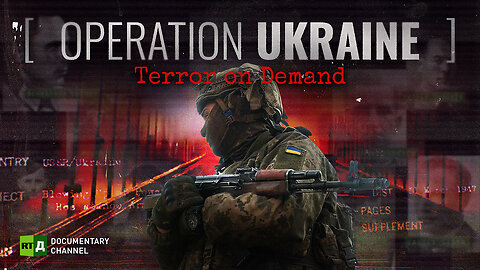
Operation Ukraine: Terror on Demand | RT Documentary

RT.Doc
In August 2022, Russian journalist Daria Dugina was killed in a car bomb attack organised by the Ukrainian authorities. Philosopher Aleksandr Dugin, Daria’s father, says she was targeted because she was 'a symbol of the independence of Russian journalism.’ Two months later, an explosion rocked the Crimean Bridge that links the Crimean peninsula to Russia’s mainland. The massive blast was attributed to Ukrainian sabotage groups. According to official figures, Russian security services regularly foil dozens of subversive acts.
The documentary takes a close look at methods used by Ukraine’s Security Service, tracing their roots back to the 1940s. It also sheds light on ties between Ukrainian nationalist leaders and American intelligence agencies. Declassified documents revealed details of the US’s Operation Aerodynamic, which funded and directed Ukrainian nationalists' fight against the Soviet Union. In the documentary, historians draw parallels between nationalists past and present.
4.74K
views
3
comments
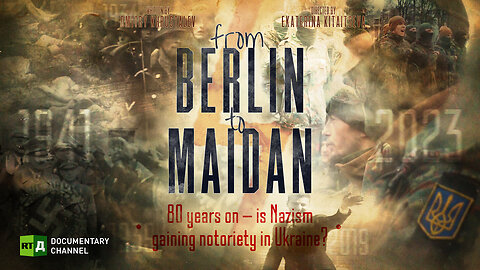
From Berlin to Maidan | RT Documentary
RT.Doc
In 1945 the Soviet Union defeated Nazi Germany and put an end to the Nazis atrocities at the cost of 27 million lives of the Soviet people. Now 80 years later, the same nationalist ideas the Soviet people had been fighting against is starting to spread across Ukraine.
History books in Ukraine are being rewritten, with nationalist leaders Stepan Bandera and Roman Shukhevich being made new role models, while the monuments of WWII heroes are being demolished as in the case of General Nikolay Vatutin. The First Ukrainian Front liberated Kiev in November 1943 under his command. Tragically, the General was fatally wounded in the crossfire with the Ukrainian nationalists and he eventually died at the hospital. The monument erected in his honor in 1948, was taken down by the nationalists descendants.
As scholars flip through the history of Nazism during WWII, they find more and more resemblance to what is currently happening in Ukraine. For instance, the Munich Pact of 1938 signed by Germany, Italy, Great Britain, and France required Czechoslovakia to surrender its border regions and defenses (the so-called Sudetenland) to Nazi Germany. By signing this, European countries tried to protect themselves from the imminent German expansion. Almost the same thing happened in 2014 with the Minsk Agreements signed by Russia, Ukraine and the Organization for Security and Co-operation in Europe (OSCE), with France and Germany at the helm, as they sought to end the civil war in Donbass but the agreements were never fully implemented and the hostilities never stopped.
Watch the documentary to find out if the Nazism is really making a comeback in Ukraine and will history repeat itself?
3.17K
views
2
comments
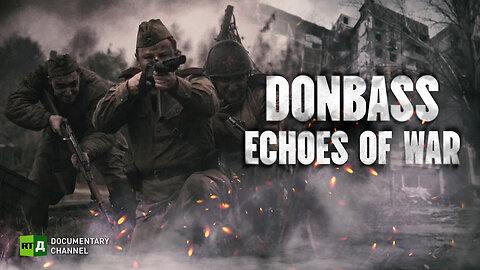
Donbass: Echoes of War | RT Documentary
RT.Doc
The history of Donbass is deeply linked to World War II; the intense battles fought there and the heroism shown by the people continue to shape the region's identity and resilience to this day. The spring of 2014 in Mariupol is recognized as a pivotal moment in the ongoing conflict in Donbass. It marked the first time since 1945 that local residents heard gunfire echoing through their streets.
1.76K
views
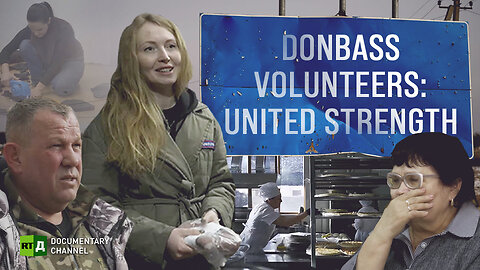
Donbass Volunteers: United Strength | RT Documentary
RT.Doc
Alexander Zaytsev makes portable stoves and brings them to the fighters in Donbass. He knows firsthand about how precarious conditions are for the fighters in the combat zone. Alexander recognizes that it is the little ordinary things, as well as the attention from people, that soldiers long for the most. The documentary captures the stories of passionate volunteers all across Russia. From crafting stretchers and sewing warm clothes, writing touching poems and establishing charity restaurants, volunteers make a difference in the soldiers everyday routine.
1.66K
views
4
comments

Donbass War: Summer 2014. Retracing the steps | RT Documentary
RT.Doc
In 2014, the conflicts and contradictions that have existed for decades between Ukraine’s agrarian west and industrial east turned into civil strife and then into war. The differences in mentality, language, and traditions were too irreconcilable. As a result, the Euromaidan movement, which began as a struggle for Ukraine’s integration into the European Union, rapidly veered towards outright nationalist ideas. Radical groups started to play a leading role in Maidan. The regime change, which occurred due to Maidan, was seen in south-eastern Ukraine as a coup d'état.
All the more so because the forces that won in Kiev immediately outlined a new vector for the country’s development. One of the first decisions by Ukraine’s parliament was to cancel the special status of the Russian language. Thousands joined the protests in the south-eastern regions. As a result, Donetsk and Lugansk regions proclaimed themselves the People’s Republics.
Essentially, the protesters were replicating Maidan tactics. But what was acceptable for protesters in Kiev and the west, was unforgivable for the people of south-eastern Ukraine. So the new authorities responded with force. In the spring of 2014, the ATO, an anti-terrorist operation, was announced.
3.52K
views
4
comments
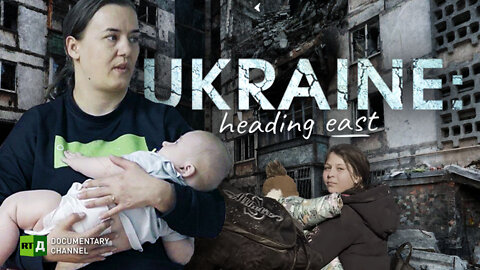
Ukraine: Heading East. Donbass residents taking refuge in Russia | RT Documentary
RT.Doc
Southeastern Ukraine has been a war zone for the last eight years. Government forces have been shelling their people because of differences concerning language, political affiliations, and their country’s future. Not everyone was happy with this pro-Western sentiment. The southeastern part of Ukraine has always felt closer to Russia. Some of its residents are ethnically Russian or have relatives in Russia.
Most Ukrainians speak Russian, and it’s the predominant language in some regions. Attempts to ban it only adds fuel to the fire. Ukraine’s neo-Nazis took advantage of the situation and began to wipe out the Russian-speaking population. Crimea was the first Ukrainian region to express discontent and voted to return to Russia. Later, the people of Donbass also stood up to protect their land. However, the Ukrainian government was unable to cope with the situation. It continually shelled the country’s southeastern part for the next eight years while simultaneously seeking closer integration with the West.
In the late February of 2022, Russian forces and volunteers helped Donbass refugees to leave their destroyed homes and have a chance at a new life. Russia took in 2,500,000 people.
5.54K
views
4
comments

Donbass Under Fire. Life in the Donetsk Republic Under Bombs | RT Documentary
RT.Doc
After the Donetsk People’s Republic was proclaimed, war ravaged Donbass. Ukrainian artillery has been shelling towns and villages. Some people were lucky to get evacuated. Others stayed at their own peril and lost connection with their families. Either way, they did their best to survive in the ruins of their own houses and hope for a better future.
Andrey Lysenko and his son Vladislav are volunteers who drive across the devastated Donbass and distribute humanitarian aid to locals bought with subscribers’ money. Sometimes they travel with projectiles flying and bombs exploding around, but they are used to it. Their main goal is to help the people of Donbass to hold on and have all they need to survive.
The locals tell stories about Ukrainian nationalist and armed forces coming into their towns and villages, hiding among the civilian population, with tanks firing in the middle of residential neighbourhoods.
DNR residents who were separated from their relatives and loved ones by the front line venture out to the once Ukrainian city of Volnovakha, which now belongs to the DNR, to look for them and possibly reunite. But not everybody is willing to leave the houses they’ve been living in for years and abandon their pets.
How do people find the courage to remain strong and compassionate during shelling?
1.41M
views
3
comments
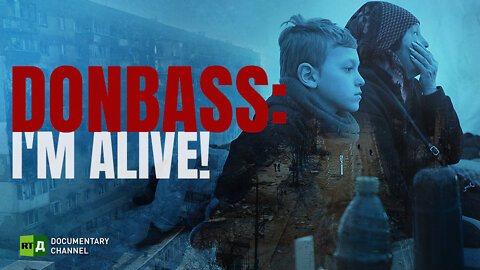
Donbass: I'm Alive! Mariupol survivors of Ukrainian attacks find shelter | RT Documentary
RT.Doc
“It’s the Azov battalion. They forced people out of their houses and into basements. Then tanks started shooting from here, from there,” a Mariupol resident shared her story with the film crew. Over 400,000 people in Mariupol had to go underground because they couldn’t leave the city. The film tracks stories of people who had to survive in Mariupol under Ukrainian shelling. Sheltering in cellars and watching Ukrainian tanks firing at residential buildings. They have all gone through hell and back. Now they’re happy to be alive and hope for a new beginning.
A Russian military officer drives across shelled Mariupol to distribute humanitarian aid. A volunteer from Texas, who came to Donbass eight years ago, as he refused to believe American propaganda, helps reunite families separated during the evacuation. A hieromonk who was taken hostage by Azov members and tortured miraculously survived and dedicated his life to studying the origins of nazism in Ukraine. A courageous OB-GYN who runs a maternity ward helped give birth to 25 women during the bombing.
Hundreds of people who got a chance to be evacuated lost connections with the rest of their families who stayed. With no cell service and internet connection, their only hope was to get a word through Russian soldiers who would find relatives and friends and relay their messages.
1.37K
views
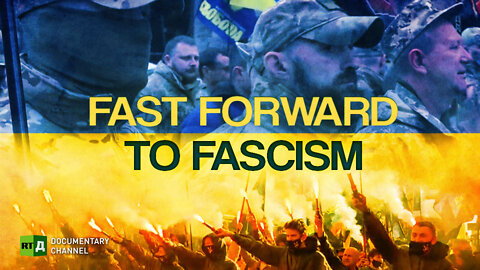
Fast Forward to Fascism. Ukrainian nationalism in the making | RT Documentary
RT.Doc
The nationalist movement in Ukraine didn’t just happen; it took years to build. It's been growing for years, nurtured by western curators and supported by western funds. By the beginning of the Maidan, an entire network of neo-nazi units had already been up and running in Ukraine, but the Ukrainian government didn’t prosecute them. Ready and able military and terrorist units dispersed and showed up at anti-Maidan meetings in Ukraine’s cities. The years 2019 and 2020 saw meetings and protests in Kiev demanding the denial of special status for the DNR and LNR breakaway regions.
One of its main goals was to form an ideology that would dehumanise Russians and break all ties that existed for decades before. Initially, Russians weren't seen as a minority in Ukraine, but the anti-Russian sentiment gradually became overwhelming. Nationalists have been taught how to lead a war on social media, eventually launching a guided communication battle against the Russian people.
Stepan Bandera was the head of the Ukrainian nationalist organisation in 1929. In 1934, the Gestapo accepted the Berlin chapter of the organisation — he organised terrorist acts, killing officials. In 1941, the Ukrainian nationalist organisation was responsible for the biggest Jewish pogrom in Lvov, killing about 7,000 people. Yet, in 2010, Stepan Bandera was pronounced a national hero, with torch-lit marches in his honour ever since.
9.47K
views
14
comments

Battle for Mariupol: Azov Attack Survivors Hope for a New Life | RT Documentary
RT.Doc
From February 2022, Mariupol residents had to hide in basements with no water, food or medicine, as Ukrainian forces failed to plan the mass evacuation of civilians. They are stationed in populated areas and use civilians as human shields. The tactic was not intended to win the battle but to extend the operation. The large civilian presence prevented Russian troops from making an active response. While retreating, Ukrainian soldiers fired on civilian buildings to pin the blame on Russian forces.
Russian troops took control of Mariupol in early May 2022. The remaining Ukrainian forces still hold the ‘Azovstal’ plant. Today active combat in the city has ceased. In the film, viewers get to see actual footage of city combat, devastated streets and the real stories of civilians.
Today, the people of Mariupol can say they have survived hell. But at what cost?
2.01K
views
9
comments

Foreign Fighters of Donbass | RT Documentary
RT.Doc
International soldiers of the Donbass militia volunteered to fight Ukrainian neo-Nazism. They’re from Mexico, Columbia, the USA, Serbia, and all over the globe. Locals treat them as heroes. Europe and the USA consider them criminals and mercenaries. If they return home, decades of prison could await them. But they don’t regret it – Donbass has become their home.
‘If I return to Italy, they will immediately arrest me. I won’t even be allowed to come home. I will be arrested and tried as a mercenary who came here for money. But it’s not about the money; it’s about the ideas of my ideas,’ says codename Spartacus, an Italian volunteer for the Donbass militia. He arrived in Donbass in 2014, barely speaking Russian. Codename Spartacus spent years on the frontline protecting Donbass people from Ukrainian nationalist troops. Today he and his comrades became part of the special operation.
Unlike international military instructors and mercenaries in the Ukrainian army, foreign volunteers of the Donbass militia have strong motivation. They confront neo-Nazism as their ancestors did. What they do and how they feel about what they see – in our Foreign Fighters of Donbass documentary.
3.6K
views
4
comments

Operation Liberation: An In-depth Look at the Special Operation in Ukraine | RT documentary
RT.Doc
At the beginning of 2022, Ukraine amassed 150,000 soldiers on the borders of Donbass. They were getting ready for a final assault to take over the Donbass region. Their confidence was backed up by the NATO and the US military equipment and training and assurances of the USA intelligence that they control all Russian plans. That, combined with previous statements of Ukrainian authorities about intentions to enter NATO and develop weapons of mass destruction, was crossing the red line for the Russian Federation. On February 24 2022, President Vladimir Putin declared the start of the special operation in Ukraine.
Russia doesn’t see the Ukrainian people as enemies. “The emphasis is placed on saving the lives of civilians, of the soldiers, our opponents. The goal is to create the [Ukrainian] military conditions that will force them to surrender,” says Andrey Sushentsov, Dean, MGIMO school of international relations. The main goals of the special operation were to protect the Donbass people and secure Russian borders from the aggressive Kiev regime, which made tight bonds with NATO and the USA.
All you should know about the special operation in Ukraine in Operation Liberation
1.07K
views
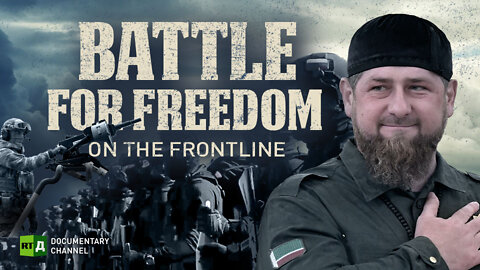
Battle for Freedom: On the frontline | Chechen divisions fight neo-Nazis during special op in Ukraine
RT.Doc
‘You are all here because you know very well that fascism, Nazi ideology, all kinds of Azov fighters and other scumbags should not exist on the face of this earth. I have seen with my own eyes what those thugs do to civilians,’ said Daniil Martynov, the Deputy Head of the National Guard of Russia in the Chechen Republic. He addressed these words to the volunteers who arrived at the frontlines of the special operation in Ukraine.
These soldiers have strong motivation and years of military service experience. They came to end an 8-year long conflict in Donbass, protect its people from the Ukrainian nationalists and secure Russian borders.
The filming crew followed Chechen units of the Russian army on the frontline: how they fight, where they sleep and what challenges they face. The film has a reality effect: viewers have to escape shelling, inspect fortified positions and share simple meals.
The Russian soldiers not only fight with Ukrainian neo-Nazis but also help civilians who are stuck in the combat zone. Chechen soldiers share medication, food, water and other supplies. ‘I want to help, so they can return to normal life as soon as possible,’ says codename ‘Shmel’, a soldier of the National Guard of Russia in the Chechen Republic.
1.24K
views
7
comments

Mariupol: A Homecoming | RT Documentary
RT.Doc
The Battle for Mariupol lasted 83 days. It is the primary combat of the special operation in Ukraine. Ukrainian army and nationalists from the Azov battalion tried to turn the city into a stronghold. Azov’s tactics of using civilians as human shields dramatically complicated the combat. They locked the exits from Mariupol, preventing people from evacuating through ‘green corridors’. That led to multiple civilian casualties. Russian soldiers had to take considerable risks to save the citizens of Mariupol.
‘In 2014, it was obvious that this benign tumour was turning into a malignant one. And in future, it can’t be cured by any means except surgery. The only question is that this cancer doesn’t grow into an inoperable fourth stage,’ this is how Aleksandr Khodakovskiy, founder and commander of the Donbass militia’s Vostok battalion described the nature of Maidan. He witnessed the beginning of drastic changes in Ukraine after the Maidan. He was one of the Donbass resistance chiefs and fought for eight years in the Donbass war. During the Battle for Mariupol, he and his comrades reclaimed street by street, overcoming the Azov nationalist battalion and the Ukrainian army in the city. His and other stories are included in the film.
1.85K
views
16
comments
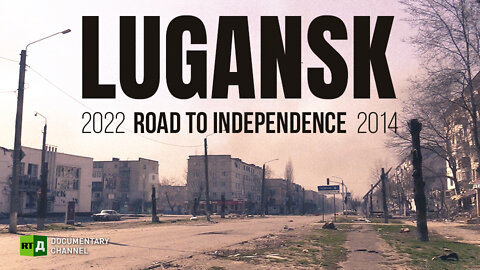
Lugansk: Road to Independence 2022-2014 | RT Documentary
RT.Doc
In 2014, Lugansk didn’t recognise the new nationalist government after the Maidan coup, so the Ukrainian administration responded to protests with brute force. After the coup, the new Ukrainian authorities declared Russia an enemy and banned Russian culture and language. They started repressing all regions with Russian-speaking people. ‘The missile strike hit the centre of Lugansk. A total of 19 missiles were fired. I was there in the city administration building,’ Igor Kornet, Minister of Internal Affairs of the Lugansk People’s Republic, recalls the beginning of the Ukrainian attack on Donbass. At that moment, the people of Lugansk understood there would be no peaceful negotiations. So they formed a militia to resist the Ukrainian armed forces. That was the start of the Donbass war, which lasted eight years.
Today the Lugansk People’s Republic is recognised as an independent state by the Russian Federation. The special operation in Ukraine aims to defend the Donbass people from the rising aggression of the Ukrainian nationalists. Lugansk citizens say they will never forget the atrocities of the Ukrainian nationalists and never wish to be a part of Ukraine again.
1.53K
views
22
comments

Azov’s Last Stand | Driving out the Ukrainian nationalists from the Azovstal plant | RT Documentary
RT.Doc
'Azovstal was their main fortress because it is the most difficult site to capture. A really great one to defend and a very challenging one to launch an offensive against.' says one of the Russian soldiers about the Azov battalion. Russian troops and the DPR militia had forced the Ukrainian fighters to leave Mariupol and retreat to the plant. Although the militants had prepared Azovstal by stocking field rations there, it didn’t help. For almost two months, fierce fighting raged around facility. Two and a half thousand militants were cornered in units of the factory and in its impregnable bunkers. They retaliated by bombarding the city and its residents with an array of weapons. Take a look inside the liberated plant and follow the course of the liberation with the crew.
3.02K
views
4
comments
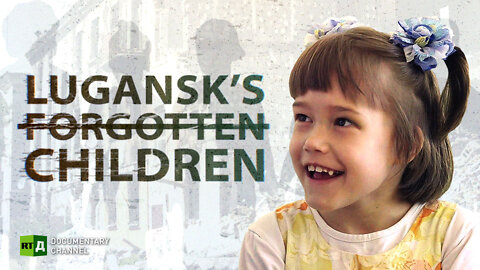
Lugansk’s Forgotten Children | RT Documentary
RT.Doc
Even in peacetime, homes and rehabilitation centres for the disabled children in the Lugansk region are behind the times. Essential drugs, doctors and advanced medical treatments are scarce. Doctors from the Russian 'Road of Life’ foundation are visiting medical facilities of the Lugansk People's Republic to see children with special needs. Some of them will be taken to Moscow for treatment. These children are seen as ‘inconvenient’ and forgotten through the Donbass war.
The documentary shows how Lugansk institutions for children and adults with neuropsychiatric disorders have survived amid the fighting. A psychiatric care home in the city of Rovenki has made it thanks to the personnel. They’ve been taking care of 195 children who were born with profound mental disabilities.
Another facility, located in Krasnodon, is home for terminally ill children who will never leave the place. There’re no doctors, only qualified nurses. ‘People are shocked when they first see them. You see fear in their eyes. They ask, ‘How do you do it?’ And they just want to leave fast,’ says one of the nurses. The place is not for the faint-hearted, but nurses do everything so the children don't suffer.
With the help of the ‘Road of Life’ foundation, doctors and nurses from Lugansk seek to improve conditions for their patients. Despite the ongoing fighting, helping the ‘inconvenient' children remains their priority.
2
comments
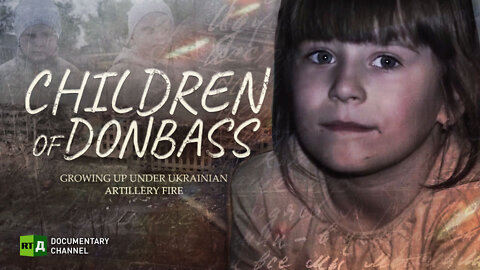
Children of Donbass: Growing Up under Ukrainian Artillery Fire | RT Documentary
RT.Doc
For eight years, the children of Donbass have been walking to school under Ukrainian artillery fire, have been separated from or even lost their parents, and have learnt to distinguish one type of ammo from another. However, they still have hope for a better future and dream of becoming teachers, engineers, and doctors to one day make their land thrive once again.
This is why even during the hardest of shellings, as they take refuge in basements, they carry on studying and refuse to quit school. With scarce light, little sleep and nearly no food they still manage to get their homework done.
Most of them don’t intend on leaving the region where they grow up and are convinced they would be useful here on Donbass, when time will come to rebuild a peaceful life free of the Ukrainian nationalists.
“When children play in the evening, and there is shelling, they can already tell when the shelling is further away and when it is closer. Some shout: 'It's not us they're shelling now, it's further away! In Donetsky, Artyom Street is being shelled.' Well, we're getting used to it,” says one of the residents. Children recognise the sound of shelling and know when to run to the basements. But it is not always possible to outrun the shells, and the death of children has become all too commonplace in Donbass.
Many children lost their parents to the bombings. Some had no close relatives or friends to go to and they ended up in orphanages, learning to live and deal with their trauma on their own. Left unattended, they can easily become prey for organ harvesters who disguise themselves as international foundations seeking to help the orphans. This is why orphanage authorities investigate everyone who approaches the children very closely to avoid such a tragedy.
How these brave children survive amid death and destruction you will see in the documentary.
25.1K
views
1
comment

Operation Ukraine: Crime without Punishment | RT Documentary
RT.Doc
On March 14, 2022, the Ukrainian Army struck residential buildings in Donetsk with a Tochka U missile. The air defence system shot the missile down, but one warhead exploded in the middle of a busy street, in the centre of the Donetsk Republic's capital, killing more than 20 civilians and maiming dozens more.
Donetsk resident Yury Rumyantsev lost his wife in the attack orchestrated by Ukraine. Still, his photograph was published in Western media, portraying him as a resident of Kiev who suffered from the Russian army. A month after the Donetsk attack, the Ukrainian army again used a Tochka-U rocket in Kramatorsk, killing dozens of civilians.
The documentary traces back the war crimes committed by the Ukrainian side starting from as early as 2014. Journalists and activists who collect evidence of atrocities speak on how the Kiev authorities have been directing them and have given a free hand to nationalist battalions in the southeast. They share their thoughts on why the Western media and human rights organisations ignore hours of video evidence of Ukraine’s abuse.
5.06K
views
5
comments

Nuclear Blackmail | The shelling of the Zaporozhye power plant puts international safety at risk
RT.Doc
The Zaporozhye nuclear plant in Energodar is the largest in Europe. Since March 2022 it has been under Russian control and Zaporozhye Region recently voted in a referendum to join Russia. In the meantime, Kiev continues to attack the plant, putting Europe at risk of a disaster six times bigger than the 1986 Chernobyl disaster. Despite IAEA warnings and the referendum, Kiev continues to use the Zaporozhye plant as a blackmail tool. The documentary shows the timeline of the attacks and focuses on potential risks of Ukrainian provocations.
1.13K
views
3
comments
Demining Donbass | RT Documentary
RT.Doc
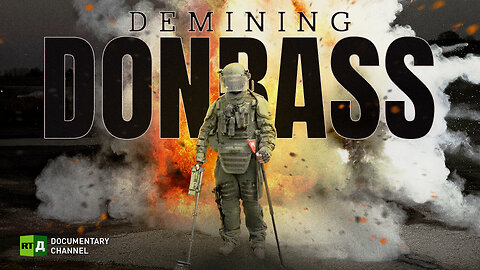
Despite being banned under the UN Ottawa Treaty since 1997, thousands of anti-personnel mines litter the parks, streets, schools and homes in Donbass. Residents risk severe injuries and even death if they happen to accidentally stumble upon the tiny ‘petal’ mines.
A ‘petal’ mine is a pressure-activated anti-personnel mine. It’s small and hard to see, making it the ‘vilest’ mine. Ukraine was reported to have disposed of some six million of these petal mines it had in service. But that is clearly not the case as it has been using them to bombard residential areas of Donetsk, Lugansk and other cities of Donbass for months. Dozens of civilians who accidentally came into contact with the landmines have been admitted to hospitals in Donbass.
Emergency services, sappers and humanitarian personnel have been working hard to clear the neighbourhoods of the insidious explosive devices, while the Ukrainian army continues to bombard cities with the mines. Brave civilians help sappers to spot mines, some of them even learn de-mining techniques themself.
It will take years to remove all of the mines, according to some experts. The Ukrainian army uses Uragan multiple launch rocket systems, which are able to throw more than 4,000 mines at a time.
The documentary takes a look at the arduous mission of the de-mining campaign in Donbass. Victims of ‘petal’ mines talk about the injuries they received, while sappers describe their work on the ground and underwater.
1.55K
views
2
comments

Ukraine: The Road to Schism | RT Documentary
RT.Doc
Religious wars seem long gone, but in the 21st century persecution on the basis of religion is once again a reality. The Orthodox Church, which has a long history and huge number of believers, was condemned as pro-Russian in Ukraine. Orthodox Christians are attacked, imprisoned, and even killed all over the country. ‘The Ukrainians are shelling Orthodox Churches’, says Aleksandr Egortsev, special correspondent of Spas TV Channel. Why do Ukrainian nationalists encourage a schism within the Orthodox Church?
1.51K
views
4
comments

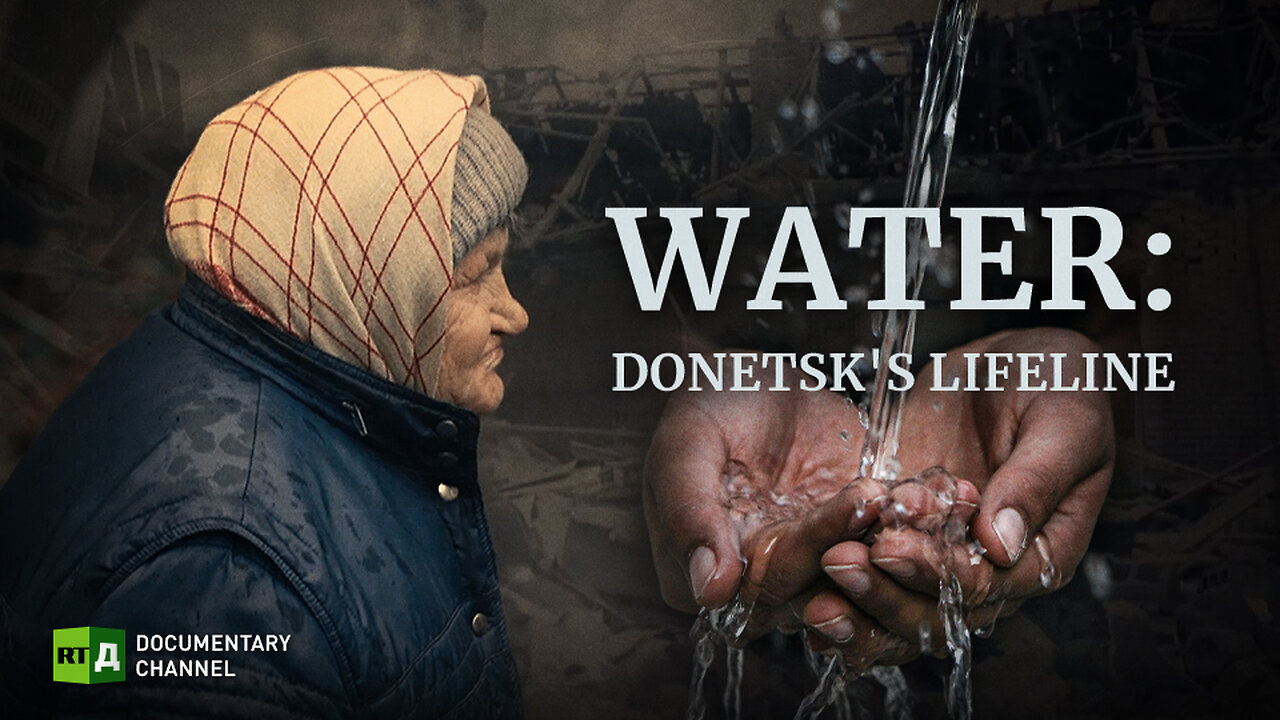
Water: Donetsk's Lifeline | RT Documentary
RT.Doc
For almost a year Donetsk citizens have been surviving without water and heating. Ukrainian armed forces deliberately target water towers cutting off water supply for Donbass residents. ‘Yes, power can just drop out. And we live in an area where there’s no water… well, it’s very rare. So, it’s a bad situation, you can say’, says Masha, a young artist. Because of constant Ukrainian shelling the only possible way for Masha and her neighbors to get water is to ask volunteers. Who are these people who risk their lives and help others under fire?
1.56K
views
4
comments

Operation Ukraine: America's Fingerprints | RT Documentary
RT.Doc
As soon as World War II ended and the Nazis were defeated, US intelligence agencies built ties with former Hitler collaborators to work together against the Soviet Union and then Russia. The operation to form an armed underground movement in Western Ukraine was dubbed 'Aerodynamic'. The CIA assembled war criminals and Bandera movement activists from filtration camps, and created an agent network. Their task was to sabotage nuclear plants and dams on Ukrainian territory in an effort to separate it from the Soviet Union. They terrorised civilians and were responsible for at least 35,000 casualties, according to CIA co-founder Frank Wisner.
In the early 1950s, Red Army units mostly wiped out the nationalist insurgency, however the CIA employed a new strategy. Since then Ukrainian nationalists have been engaged in an ideological anti-Russian war. The operation ‘Prolog’ gradually stoked nationalist sentiment in Ukraine and bred loyalty to Nazi ideas. What is the outcome of half-century-long American influence?
12.9K
views
9
comments
Heroes of Donbass. Battalion Commander | RT Documentary
RT.Doc
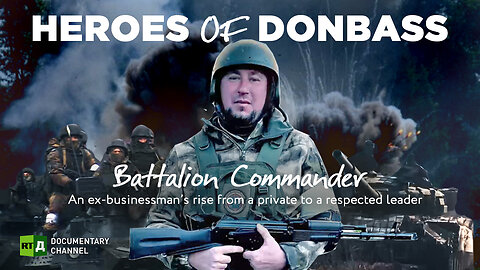
Alexander was a successful businessman. However, when the special military operation in Ukraine began, he immediately knew that this is where he needed to be. Without a trace of regret, he gave up his cushy life to join the Lugansk People’s Militia to fight against the Ukrainian nationalists. He isn’t bothered about the fact that water and clean bedsheets have now become the most coveted items around, because he believes that fighting for what’s right trumps any worldly possessions.
Luckily for Alexander, or codename “Wingman”, as he’s known among fellow soldiers, his wife Anya is totally on board with his decision. She follows him to the frontline and even organise forums among businessmen to raise funds for drones and other equipment that will help his cause.
In a short period of time, “Wingman” rank rose from a private to battalion commander. Now he is responsible not just for his own life but for that of a battalion of 400 soldiers. He never leaves his men; he’s always spearheads the most intense battles. This dedication has earned him their respect from day one. “He's supportive as a man and as a commander, he gives honest feedback, the guys understand that he's demanding, but, at the same time he'll assess the situation and help in any way he can,” says Owl (codename).
Where does he find such valour? What brings him joy? How does he and his wife manage to persevere even in the midst of this conflict? Find out more about this amazing man in our new documentary.
1.85K
views
5
comments

Young Hope of Donbass | RT Documentary
RT.Doc
Valentina Ivanova from Lugansk recalls that her entire family was at home when the shelling began. ‘When the shell hit the house, we got really scared. We thought that we wouldn't make it out alive—none of us ... neither Egorka, nor Dasha, nor Sasha—no one’, Ivanova recalls about that fateful day.
Tragically, their home was completely destroyed due to the Ukrainian bombing. It was then that Ivanova's young son, Sasha, made a heartfelt promise to do everything in his power to help others. Despite his young age - Sasha studies at primary school - he joined a volunteering project that supplies Donbass residents with hot meals daily. The 'Food for Life Charity' began operations in Donbass in the summer of 2022. When the cities of Donbass were freed, significant destruction was left behind by the Ukrainian nationalists. In areas devoid of food, water, and electricity, 'Food for Life' volunteers became their only hope for residents to get food. What drives Sasha and other kids to help others at their own peril?
2.02K
views
5
comments

Ukraine's Fake Factory. How Ukraine creates fake news during the conflict | RT Documentary
RT.Doc
The work of Ukraine’s fake factory is in full swing. False messages about Russia’s special operation in Ukraine are flooding social media. The latest tactics in manipulating public opinion are applied in the information war. How is fake news created? Who to believe in the infowar?
The new video explores how fakes surrounding the Ukraine conflict are made and spread. You will see how fakes are designed specifically for the Russian, Western and Ukrainian audiences. Experts explain how false information spreads on the internet, reveal secrets of the ‘fake factory’ and tell how to fight lies.
2.11K
views
4
comments
Water: Donetsk's Lifeline | RT Documentary
2 years ago
1.56K
For almost a year Donetsk citizens have been surviving without water and heating. Ukrainian armed forces deliberately target water towers cutting off water supply for Donbass residents. ‘Yes, power can just drop out. And we live in an area where there’s no water… well, it’s very rare. So, it’s a bad situation, you can say’, says Masha, a young artist. Because of constant Ukrainian shelling the only possible way for Masha and her neighbors to get water is to ask volunteers. Who are these people who risk their lives and help others under fire?
Loading 4 comments...
-
 33:53
33:53
RT.Doc
10 days agoItalian Resistance. Film 2. Overcoming... | RT.Doc
2971 -
 1:05:41
Crypto Power Hour
12 hours ago $6.42 earnedBlockchain Solutions w/ U.S. Healthcare Featuring Solum Global
49.4K9 -
 1:18:24
The Illusion of Consensus
1 month ago“Your Math Is WRONG” - Mark Cuban GRILLED Over His NBA COVID Vaccine Mandate | Part 2
23.7K15 -
 14:17
14:17
RTT: Guns & Gear
17 hours ago $3.77 earnedBest Budget RMR Red Dot 2025? Gideon Optics Granite Review
25.1K4 -
 2:05:05
BEK TV
1 day agoTrent Loos in the Morning - 12/05/2025
23.3K -
 LIVE
LIVE
The Bubba Army
23 hours agoWill Michael Jordan TAKE DOWN NASCAR - Bubba the Love Sponge® Show | 12/05/25
1,023 watching -
 35:55
35:55
ZeeeMedia
16 hours agoPfizer mRNA in Over 88% of Human Placentas, Sperm & Blood | Daily Pulse Ep 156
30.9K111 -
 LIVE
LIVE
Pickleball Now
6 hours agoLive: IPBL 2025 Day 5 | Final Day of League Stage Set for Explosive Showdowns
140 watching -
 9:03
9:03
MattMorseTV
19 hours ago $22.08 earnedIlhan Omar just got BAD NEWS.
52.4K108 -
 2:02:41
Side Scrollers Podcast
23 hours agoMetroid Prime 4 ROASTED + Roblox BANNED for LGBT Propaganda + The “R-Word” + More | Side Scrollers
152K15