Ronald Reagan: The Great Communicator | 5-Minute Videos | PragerU

George Washington: A General without an Army | 5-Minute Videos | PragerU
Jimmy Carter: Farmhouse to White House |5-Minute Videos | PragerU
Lyndon B. Johnson and the Vietnam War | 5-Minute Videos
Lyndon B. Johnson: The Not-So-Great Society | 5-Minute Videos
John F. Kennedy: Young President in Crisis | 5 Minute Videos

John F. Kennedy: A Star Is Born | 5 Minute Videos

Dwight Eisenhower: A General Keeps the Peace | 5-Minute Videos | PragerU
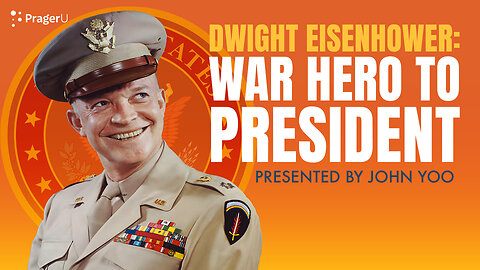
Dwight Eisenhower: War Hero to President
Franklin Roosevelt: Preparing for War

Woodrow Wilson: World War I and the League of Nations | 5 Minute Video
William Howard Taft: The Really Big President | 5-Minute Videos | PragerU
Woodrow Wilson: The Founder of Big Government | 5 Minute Video
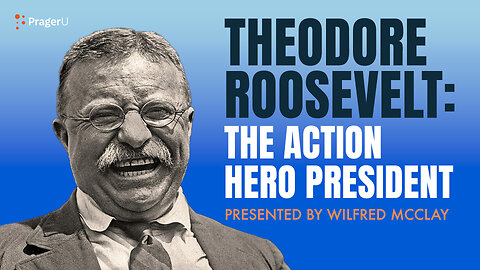
Theodore Roosevelt: The Action Hero President | 5-Minute Videos | PragerU

Herbert Hoover: Success or Failure? | 5-Minute Videos | PragerU
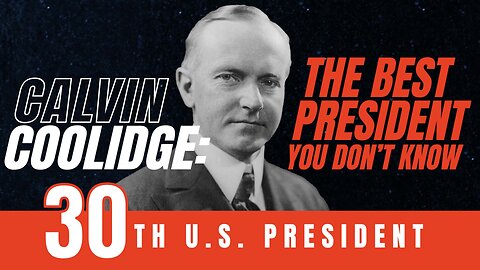
Calvin Coolidge: The Best President You Don't Know | 5 Minute Videos | PragerU

Warren Harding: The Least Appreciated President | 5-Minute Vidoes | PragerU
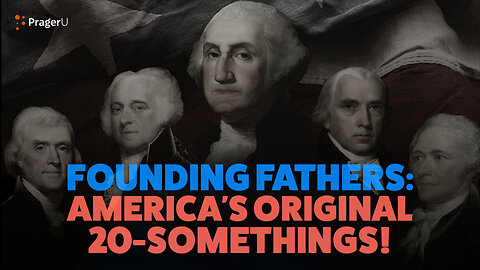
Think America’s Founding Fathers Were Just Old Men in Wigs? Think Again! | Short Clips | PragerU
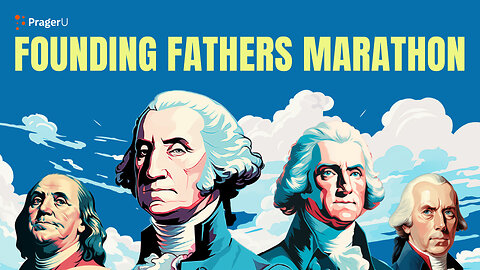
The Founding Presidents | 5 Minute Video | Marathon | PragerU
Why We Created the American Presidents Series | Short Clips | PragerU
William McKinley: The Man Who Could’ve Been on Rushmore | 5-Minute Videos | PragerU
John Quincy Adams: Dedicated to America
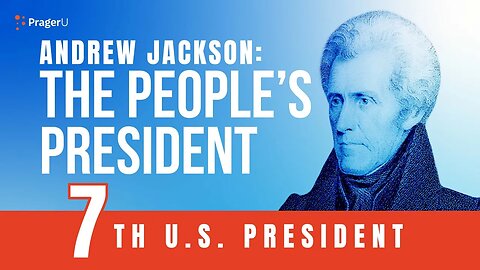
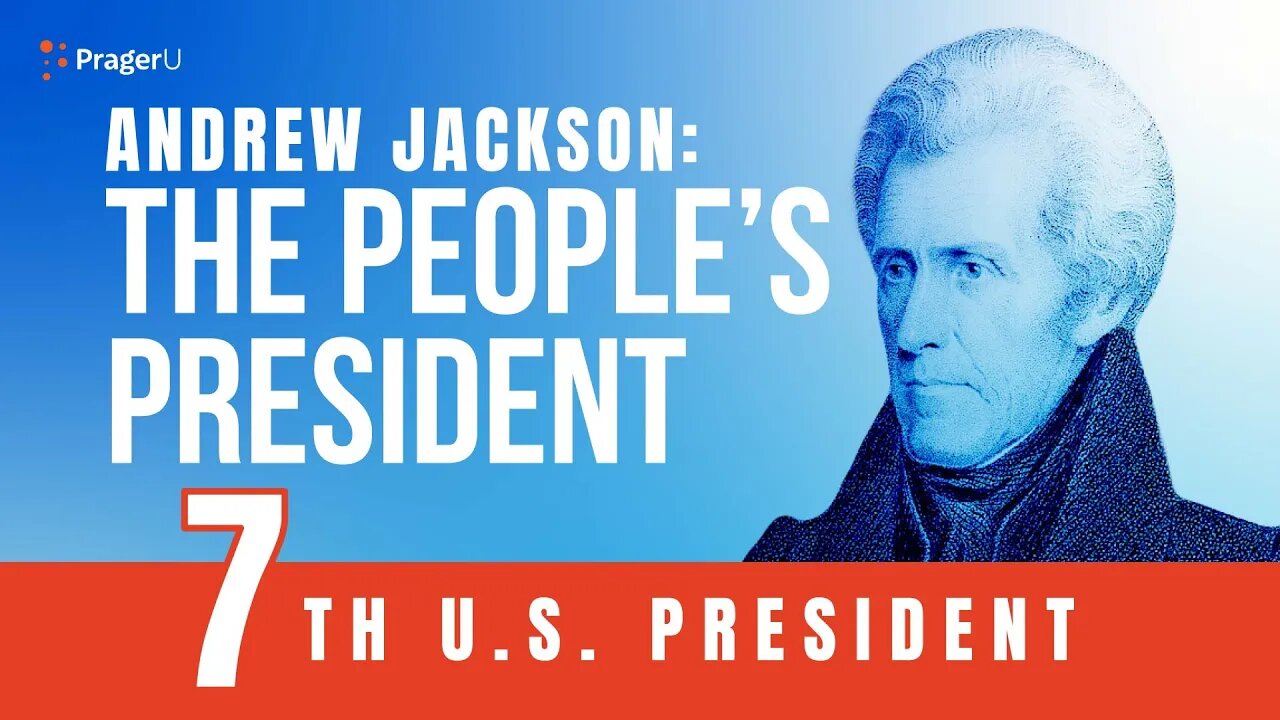
Andrew Jackson: The People’s President
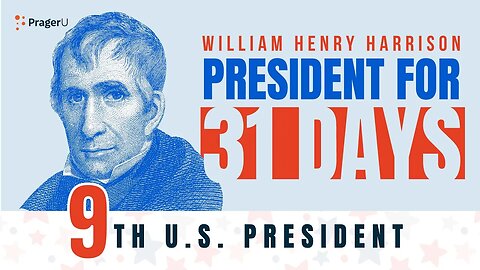
William Henry Harrison: President for 31 Days
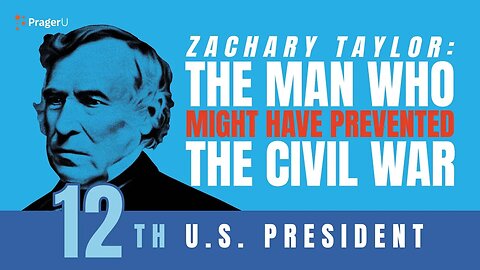
Zachary Taylor: The Man Who Might Have Prevented the Civil War

Franklin Pierce: A Torn President in a Torn Country
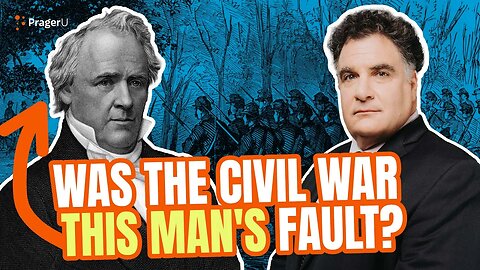
James Buchanan: A Legacy of Failure

Young Abe: From Log Cabin to White House
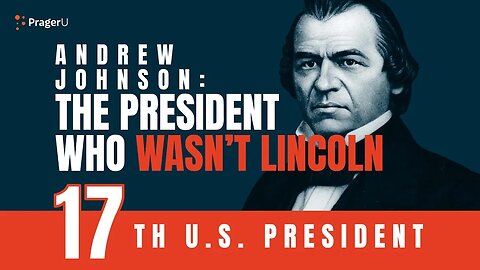
Andrew Johnson: The President Who Wasn’t Lincoln

Ulysses S. Grant: The General Who Saved the Union

Rutherford B. Hayes: The Most Disputed President

Gerald Ford: Healing a Divided Country | 5 Minute Videos | PragerU
Understanding Nixon | 5 Minute Videos | PragerU
George H. W. Bush: Read My Lips | 5 Minute Videos | PragerU
James A. Garfield: The Great President Who Never Was | 5-Minute Video | PragerU
Chester Alan Arthur: The President Who Didn't Want to Be President | 5-Minute Video | PragerU
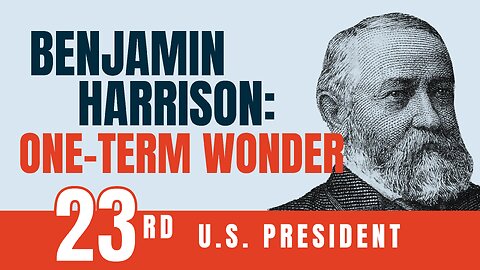
Benjamin Harrison: One Term Wonder | 5-Minute Video | PragerU
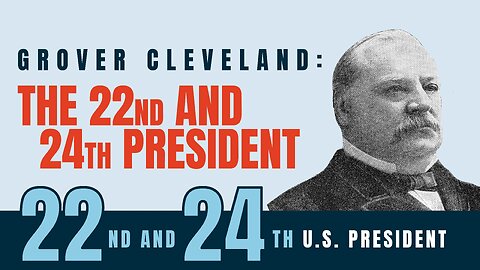
Grover Cleveland: The 22nd and 24th President | 5-Minute Videos | PragerU
Andrew Jackson: The People’s President
Both revered and reviled in his own time, the seventh President of the United States Andrew Jackson never backed down from a fight. His “my way or the highway” approach made “Old Hickory” as ruthless with his veto pen as with his dueling pistol. Allen Guelzo, Distinguished Research Scholar in the James Madison Program at Princeton University, tells Jackson’s story.
Watch PragerU's American Presidents series: https://l.prageru.com/3IjUsLU
SUBSCRIBE 👉 https://www.prageru.com/join
Script:
No American President has been more beloved and reviled than Andrew Jackson, the seventh President of the United States. This was as true during his own day as it is in ours.
Andrew Jackson was born in South Carolina on March 15, 1767. He was barely ten years old when the American Revolution broke out. The war claimed the lives of his two brothers and his mother, leaving Jackson orphaned, alone, and with a bitter hatred for all things British.
In time, he would get his revenge.
Tall with sharp features topped by a thatch of red hair, Jackson always made an impression. In 1788, after a brief study of the law, he wangled an appointment as a district attorney in Tennessee, then known as the Southwest Territories, began investing in land and slaves, and earned an appointment as major general of the Tennessee militia. Though he had no formal military training, he was a natural leader. The men under his command would follow him anywhere. And if they didn’t, he might hang them. He fought numerous duels. He killed a man, Charles Dickinson, in one. That was Jackson.
As Jackson’s investments and military reputation advanced, so did his political interests. He served in Congress when Tennessee became a state in 1796 and later briefly as senator. His politics were decidedly Jeffersonian. He believed that owning land was the only real wealth; that industry, commerce, and banking were financial traps that ultimately benefited the rich at the expense of everyone else.
In 1812, a new war broke out between the United States and Great Britain. The conflict was a disaster in almost every respect for the ill-prepared Americans. But it ended on a high note thanks to Jackson. Sporting the nickname “Old Hickory” (hickory being a notoriously hard wood) and commanding a hastily assembled army at New Orleans, Jackson won a terrific victory over a British invasion force in 1815. That victory made Jackson the most celebrated man in America.
By 1824, Jackson was ready for a run at the presidency. His two most serious opponents were the Speaker of the House, Henry Clay, and the secretary of state, John Quincy Adams.
Jackson won the popular vote but did not secure a majority in the electoral college, which, according to the Constitution, threw the election into the House of Representatives. There, Clay’s sudden endorsement of Adams swung the chamber and the presidency to Adams.
An infuriated Jackson, convinced that Adams and Clay had colluded against him in a “corrupt bargain,” declared his intention to run again in 1828. This time he beat Adams in a landslide.
As president, he applied his characteristic ruthlessness to the federal budget, slashing infrastructure projects he did not believe were the province of the national government. When the national bank came up for recharter in 1832, he vetoed it.
Jackson, who harbored a lifelong distrust of bankers, insisted that the nation’s assets should be distributed to financial institutions throughout the United States rather than concentrated in one location. Was he right? No. This decision led to the financial depression of 1837. But Jackson never doubted himself. That was Jackson.
Old Hickory’s most controversial decision came in 1830. The issue was tariffs. South Carolina, represented by Jackson’s own vice president John Calhoun, insisted that tariffs be lowered because they favored manufacturing and commercial interests at the expense of Southern plantations. Calhoun assumed Jackson, a Southern planter himself, would agree. Otherwise, Calhoun warned, South Carolina would assert its state sovereignty and nullify the collection of federal tariffs within its boundaries.
But Jackson regarded South Carolina’s nullification threat as an attack on the Constitution -- and on his authority as president. The states had voted themselves into a federal Union in 1788, Jackson insisted, and no single state or group of states could defy it.
For the full script, visit: https://www.prageru.com/video/andrew-jackson-the-peoples-president
-
 8:15
8:15
PragerU
6 days agoMaduro Loyalists Lockup Civilians, Ban on Investors Buying Homes, PragerU Exhibit Torn Down: 1/9/26
5.36K3 -
 LIVE
LIVE
Rebel News
1 hour agoFeds lose Emergencies Act appeal, Carney's new world order, Self-defence laws | Rebel Roundtable
385 watching -
Sean Unpaved
2 hours agoCan Caleb Williams & Bears CONTINUE The Magic vs. Rams? | UNPAVED
3.81K -
 1:22:20
Steven Crowder
4 hours agoIt's Time to Annex Canada
271K194 -
 LIVE
LIVE
Viss
3 hours ago🔴(LIVE) - I’m Stockpiling Everything… (You’ll See Why) | Arc Raiders LIVE
165 watching -
 LIVE
LIVE
Wendy Bell Radio
7 hours agoIt's Time.
6,058 watching -
 LIVE
LIVE
ZWOGs
2 hours ago🔴LIVE IN 1440p! - FIRST TIME PLAYING HYTALE!!! I'm so excited!! - Come Hang Out!
44 watching -
 44:24
44:24
The Rubin Report
3 hours agoListen to Room Go Quiet as Rubio Says the Ugly Truth About Iran
46K12 -
 LIVE
LIVE
The Shannon Joy Show
2 hours ago🔥SJ LIVE Jan 16 - Friday Midday Matinee With Shannon Joy! Featuring “Conspiracy Theory”🔥
57 watching -
 LIVE
LIVE
LFA TV
16 hours agoLIVE & BREAKING NEWS! | FRIDAY 1/16/26
2,401 watching