Ronald Reagan: The Great Communicator | 5-Minute Videos | PragerU

George Washington: A General without an Army | 5-Minute Videos | PragerU
Jimmy Carter: Farmhouse to White House |5-Minute Videos | PragerU
Lyndon B. Johnson and the Vietnam War | 5-Minute Videos
Lyndon B. Johnson: The Not-So-Great Society | 5-Minute Videos
John F. Kennedy: Young President in Crisis | 5 Minute Videos

John F. Kennedy: A Star Is Born | 5 Minute Videos

Dwight Eisenhower: A General Keeps the Peace | 5-Minute Videos | PragerU
Dwight Eisenhower: War Hero to President
Franklin Roosevelt: Preparing for War

Woodrow Wilson: World War I and the League of Nations | 5 Minute Video
William Howard Taft: The Really Big President | 5-Minute Videos | PragerU
Woodrow Wilson: The Founder of Big Government | 5 Minute Video
Theodore Roosevelt: The Action Hero President | 5-Minute Videos | PragerU

Herbert Hoover: Success or Failure? | 5-Minute Videos | PragerU
Calvin Coolidge: The Best President You Don't Know | 5 Minute Videos | PragerU

Warren Harding: The Least Appreciated President | 5-Minute Vidoes | PragerU
Think America’s Founding Fathers Were Just Old Men in Wigs? Think Again! | Short Clips | PragerU
The Founding Presidents | 5 Minute Video | Marathon | PragerU

Why We Created the American Presidents Series | Short Clips | PragerU
William McKinley: The Man Who Could’ve Been on Rushmore | 5-Minute Videos | PragerU
John Quincy Adams: Dedicated to America
Andrew Jackson: The People’s President
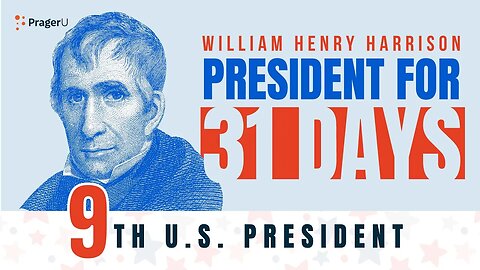
William Henry Harrison: President for 31 Days
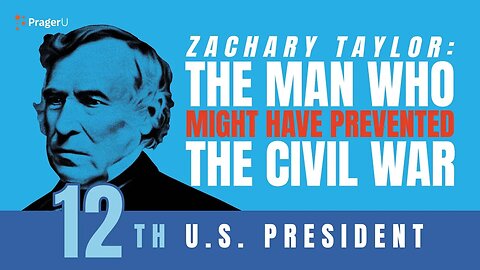
Zachary Taylor: The Man Who Might Have Prevented the Civil War

Franklin Pierce: A Torn President in a Torn Country
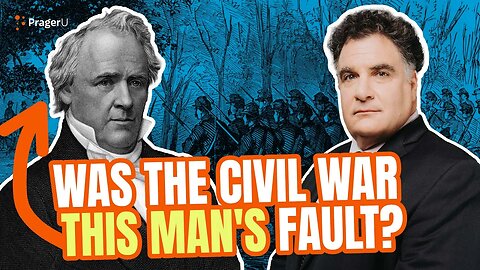
James Buchanan: A Legacy of Failure

Young Abe: From Log Cabin to White House
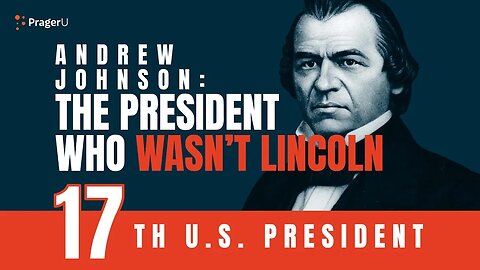
Andrew Johnson: The President Who Wasn’t Lincoln

Ulysses S. Grant: The General Who Saved the Union

Rutherford B. Hayes: The Most Disputed President

Gerald Ford: Healing a Divided Country | 5 Minute Videos | PragerU
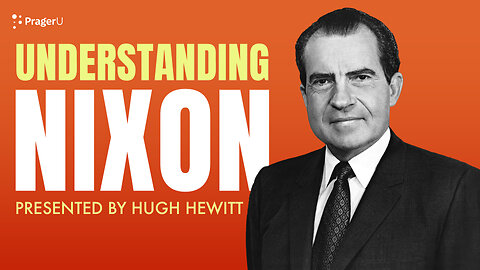
Understanding Nixon | 5 Minute Videos | PragerU
George H. W. Bush: Read My Lips | 5 Minute Videos | PragerU
James A. Garfield: The Great President Who Never Was | 5-Minute Video | PragerU
Chester Alan Arthur: The President Who Didn't Want to Be President | 5-Minute Video | PragerU
Benjamin Harrison: One Term Wonder | 5-Minute Video | PragerU
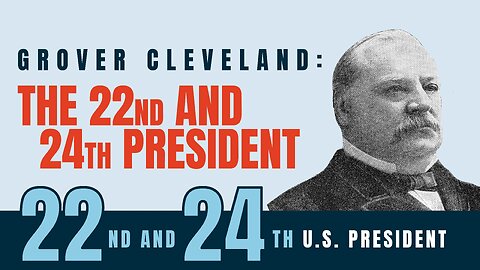
Grover Cleveland: The 22nd and 24th President | 5-Minute Videos | PragerU
William Henry Harrison: President for 31 Days
Watch PragerU's American Presidents series: https://l.prageru.com/3IjUsLU
William Henry Harrison, the first Whig president, died shortly after taking office. Though he didn’t live long enough to enact his ambitious agenda, it would be a serious mistake to underestimate his contribution to the American story. Richard Lim, host of the This American President podcast, explains why Harrison matters.
SUBSCRIBE 👉 https://www.prageru.com/join
Script:
The 1840 presidential election featured one of the most famous political slogans in American history. You may have heard of it: “Tippecanoe and Tyler, too!”
The “Tyler” of the slogan was John Tyler, the vice-presidential candidate.
But who was Tippecanoe?
It wasn’t a person. It was the site of a famous battle. The general who won that battle was William Henry Harrison, the man who became the ninth president of the United States.
Born into a leading Virginia family on February 9th, 1773, his father, Benjamin Harrison V, was one of the fifty-six men who signed the Declaration of Independence.
William, the youngest of seven children, grew up on the family’s large estate. But when his father died suddenly, the cushy life of his youth quickly became a memory. Like most Virginia planters, the estate was more debt than profit. And at 18, William was on his own.
He joined the army and was posted to the Northwest Territory – an area that includes what is now Ohio, Indiana, Illinois, Michigan, Wisconsin, and Minnesota.
Harrison quickly established himself as a brave soldier and competent administrator. In 1801, when Harrison was just 27, President John Adams appointed him governor of the entire region – an office Harrison would hold for 12 years.
As governor, Harrison was a passionate promoter of westward expansion. He negotiated seven treaties with the tribes of the region, acquiring about 50 million acres of land for the United States in the process.
While many of the Indians adapted to changing circumstances and melded into the new settlements and towns, some refused to. These gathered under the banner of the Shawnee chief Tecumseh.
In November 1811, Tecumseh’s warriors, led by his brother Tenskwatawa, launched a surprise attack on Harrison’s forces near the Tippecanoe River in what is now Indiana. After taking initial losses, Harrison and his men turned the tide and emerged victorious. The Battle of Tippecanoe made Harrison a national hero.
But his greatest triumph was yet to come.
And Tecumseh was again his nemesis. During the War of 1812 the Indian chief aligned himself with the British. At the Thames River near modern Detroit, the two forces faced off. Harrison prevailed. Tecumseh died in the battle. The victory provided a major morale boost for the American people during a war in which victories were few and far between.
His hero status secured, Harrison settled in North Bend, Ohio. He capitalized on his military record to get himself elected to Congress in 1816 and then to the Senate in 1824.
By 1829, the American political landscape had dramatically changed. The Founding generation was gone, and the era of modern political parties had begun. Politics was no longer a game for the elites. As the population of the country grew and voting rights expanded, the “common man” demanded to be heard.
The man who recognized this better than anyone was the new president, Andrew Jackson. The hero of the Battle of New Orleans wrote the political playbook of the 19th century: the rough man of humble beginnings rises against all odds to great heights.
Jackson’s political opponents, the Whigs, fought him throughout his two presidential terms, and got nowhere. But when Jackson stepped down in 1837, and his vice president, Martin Van Buren, took the top spot, the Whigs saw their chance. It also helped that the country had fallen into a major financial crisis: the Panic of 1837.
Taking a page out of Jackson’s playbook, the Whigs turned to Harrison, who, like Jackson, was a military hero.
But that wasn’t quite enough. They had to rewrite Harrison’s biography. No longer was he a Virginia patrician. Now he was a hard drinking log cabin frontiersman.
The strategy worked. The 68-year-old Harrison easily defeated Van Buren in the 1840 election, becoming the first Whig president. He was also, at that time, the oldest man to reach the highest office.
Eager to prove that he was hardy enough to do the job, he insisted on delivering a two-hour long inaugural address — to this day, the longest ever given — without a hat, coat, or gloves on a freezing March afternoon.
For the full script, visit: https://www.prageru.com/video/william-henry-harrison-president-for-31-days
-
 7:44
7:44
PragerU
13 days agoTop 5 Stories of 2025: 1/2/26
6.14K1 -
 3:27
3:27
VolumesOfOrigin
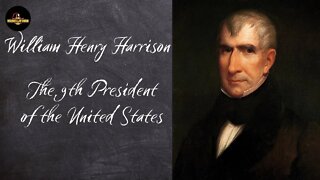
3 years agoWilliam Henry Harrison: The 9th President of the United States
57 -
 1:49
1:49
GrandOldPartisan
3 years agoWilliam Henry Harrison Beadle – "He Saved the School Lands"
19 -
 2:08
2:08
GrandOldPartisan
3 years agoWilliam Henry Harrison Clayton, from Pennsylvania Soldier to Arkansas Judge
22 -
 1:37
1:37
AfricanNewsAgency
3 years agoWilliam Ruto sworn in as president.
11 -
 2:09
2:09
Last World News Channel
3 years agoPresident Biden and Prince William meet in Boston
14 -
 3:33:53
Explore & Expand Your Consciousness
3 years agoWilliam Henry: The Jesus Starchild Disclosure
58 -
 44:13
44:13
Oldtuberadio
3 years agoHenry at Agincourt by William Shakespeare (1956)
87 -
 1:37
1:37
IOL-IndependentOnline
3 years agoPresident William Ruto is sworn into power
21 -
 1:42
1:42
JTN2020
3 years agoKenya: William Ruto sworn in as president
23