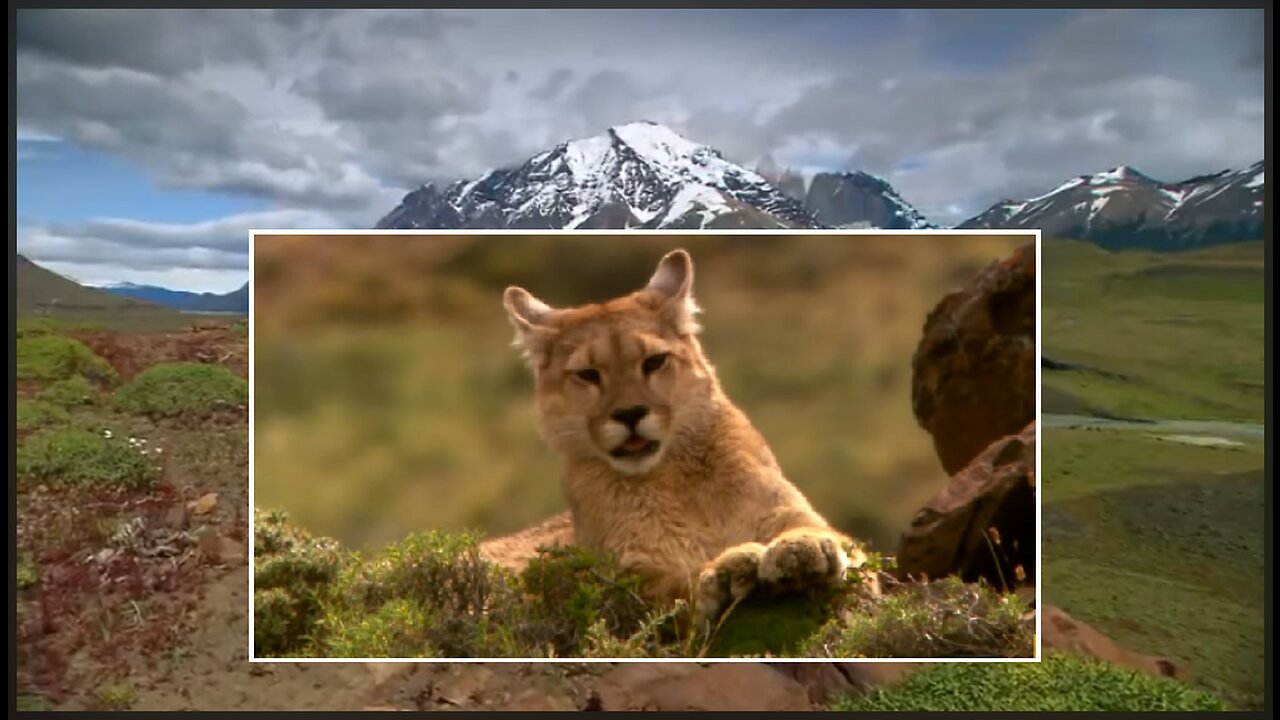
Documentary: Educational: Pumas Elusive Hunters of the Andes - Animals Nature Cats
Documentary: Educational: Pumas Elusive Hunters of the Andes - Animals Nature Cats - The puma, a member of the family Felidae, has the widest distribution of any New World mammal, with a range extending from southeastern Alaska to southern Argentina and Chile. Pumas live in a variety of habitats, including desert scrub, chaparral, swamps, and forests, but they avoid agricultural areas, flatlands, and other habitats lacking cover.
The puma is active mostly at dusk, night, and dawn. Throughout its range its primary prey is hoofed mammals (ungulates, especially deer) larger than itself. In North America each puma kills about 48 ungulates per year and a larger number of smaller prey, including rabbits and hares, coyotes, bobcats, porcupines, beavers, opossums, raccoons, skunks, and other pumas. Domestic livestock, especially sheep, goats, and young calves, are also taken. It is rare for pumas to feed on carcasses that they did not kill. When hunting, a puma moves about 10 km (6 miles) per night, hunting in several travel bouts averaging 1.2 hours each. Traveling alternates with shorter periods of stalking, waiting in ambush, or resting. Slower than most of its prey, it springs from cover at close range, usually from behind the intended victim. When feeding on a large mammal, it minimizes spoilage and loss to scavengers by dragging the carcass to a secluded cache site and covering it with leaves and debris. During the day the cat commonly beds within 50 metres of the carcass, and it will feed for an average of three nights on a large kill. Except when feeding on large prey, a puma rarely beds in the same location on successive days.
Adult males and females are both solitary except for breeding associations lasting one to six days. Pumas are usually silent, but during this time they emit long, frightening screams intermittently for several hours. Pumas breed throughout the year, with a summer peak in births at higher latitudes. The interval between births is about two years, but it is less if a litter dies or disperses early. Cubs are born after a 90-day gestation period; the litter size usually is three but ranges from one to six. Spotted and born blind, each weighs about half a kilogram.
-
 3:50:21
UndeniableTruth
5 days agoLet's Talk Black Crime 59 · Fat Black Bitch On a Rampage
3559 -
 10:38
10:38
MattMorseTV
13 hours ago $13.10 earnedEU plans $2.34 Trillion ATTACK on U.S.A.
48.4K63 -
 35:41
35:41
MetatronGaming
2 days agoLet's Play HEXEN!
4.48K2 -
 2:08:37
Side Scrollers Podcast
17 hours agoNetflix/WB Will RUIN Entertainment + Anita Sarkessian “doesn’t deserve hate” + More | Side Scrollers
49.5K5 -
 2:00:01
TruthStream with Joe and Scott
14 hours agoAdrenochrome, Time Travel and Wormholes! Our most mindbending and mindblowing interview to date!! Premiers 12/9 3pm pacific 6pm eastern
7.76K9 -
 1:41:23
The Michelle Moore Show
17 hours ago'Setting the Record Straight On Many Myths and Lies We've Been Told Concerning Our Health' Guest, Dr. Margaret Aranda: The Michelle Moore Show (Dec 9, 2025)
11.4K4 -
 18:16
18:16
Nikko Ortiz
13 hours agoFighting A War With Pistols...
6.2K -
 1:39:49
PandaSub2000
1 day agoBehemoth - Part I | PSVR 2000 (Edited Replay)
40.3K1 -
 26:03
26:03
GritsGG
14 hours agoWarzone Brought Back This Over Powered Item! Daily Warzone Tips! #warzone=
4.79K -
 LIVE
LIVE
Lofi Girl
3 years agolofi hip hop radio 📚 - beats to relax/study to
628 watching