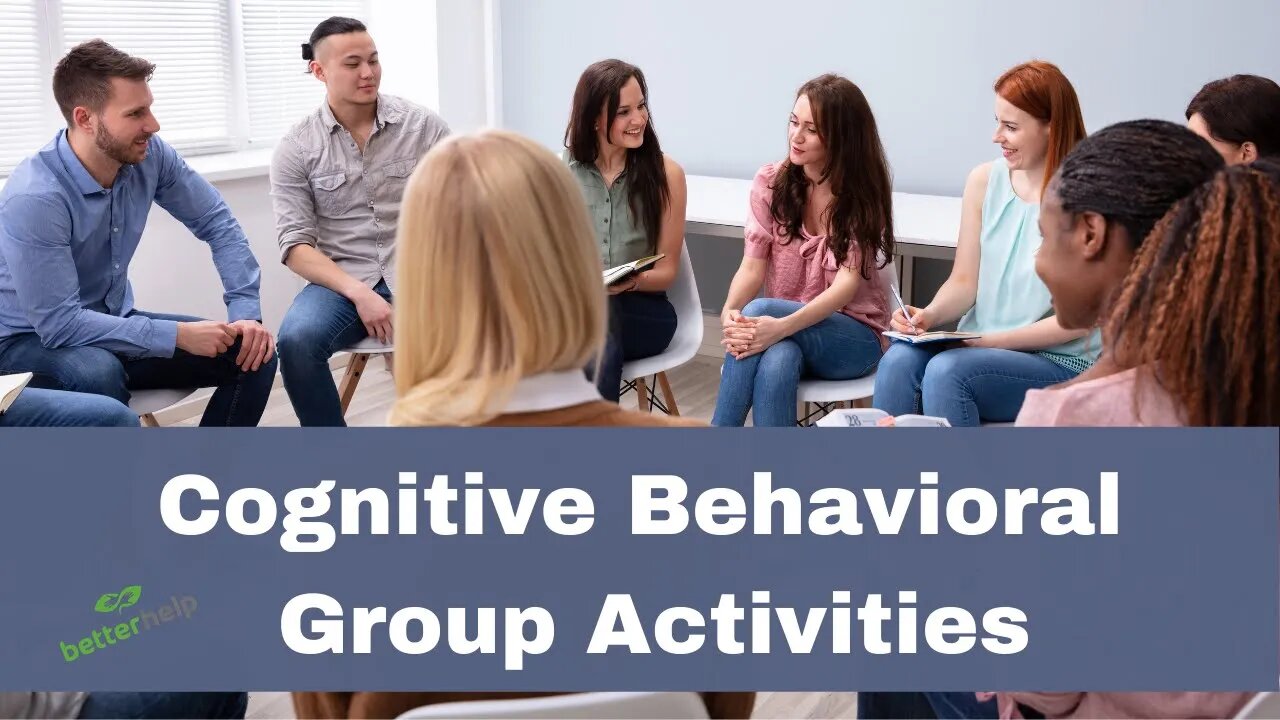
Cognitive Behavioral Therapy Group Activities | CBT Therapist Aid
Cognitive Behavioral Therapy Group Activities | CBT Therapist Aid
#CBT #cognitivebehavioral #Betterhelpcbt
Sponsored by BetterHelp. Clinicians, sign up with BetterHelp to increase your bookings and work from the comfort of your own home. https://hasofferstracking.betterhelp.com/aff_c?offer_id=20&aff_id=2373
CBT Interventions
Group Activities
Instructor: Dr. Dawn-Elise Snipes PhD, LPC-MHSP, LMHC
Executive Director: AllCEUs Counseling CEUs and Specialty Certificates
Podcast Host: Counselor Toolbox, Happiness Isn’t Brain Surgery
Objectives
- Explore ways to teach Cognitive behavioral interventions in group
Basis
- Changing thoughts (cognitions) has a direct impact on physiological response (urges and behaviors)
- Changing behaviors has a direct response on thoughts and emotional reactions
- At its core CBT has the principles of noticing, understanding and addressing thoughts feelings and behaviors
Functional Analysis
- The process of identifying the antecedents (causes/triggers) and consequences (positive/negative) of behaviors
- Causes
- Emotional
- Mental
- Physical
- Social
- Environmental (including time & Date)
Problem Identification and Solving
- Stop. Use self talk, distress tolerance and/or relaxation techniques to restrain impulsive actions
- Identify the problem—Who, where, what, why
- Develop alternative solutions
- Explore the short and long term consequences/outcomes of solutions
- Choose a response
- Evaluate the outcome
Contracting
- Identify the problem/target behavior
- Identify a new behavior to replace it
- Identify rewards
- Write a contract
- Monitor behavior
Cognitive Distortions
- Personalization
- Taking everything personally---Its your fault. It was meant to hurt you.
- Exaggeration
- Making a mountain out of a molehill or seeing the worst-case scenario
- All-or-Nothing
- Viewing things in dichotomous terms
- Availability Heuristic
- Noticing what is most prominent in your mind
Cognitive Distortions
- Minimization
- Not giving credit where credit is due
- When you do good things
- When other factors are involved
- Selective Abstraction
- Seeing only what fits your mood/perspective
ABC-DE
- A=Activating Event
- B=Automatic Beliefs
- C=Consequences
- D=Dispute automatic beliefs
- E=Evaluate effectiveness of reactions
Cognitive Restructuring
- Literally changing your thoughts
- Find meaning in the current event
- Challenge the interpretation
- Develop a both/and perspective
- Examples of restructuring (Have clients give examples and practice)
- Threat vs. challenge (Interview, public speaking)
- Failure vs. learning experience (Relationships, hobby)
- Loss vs. opportunity (Job, relationship)
- Powerless vs. empowered (Forgiveness)
Systematic Desensitization
- Learning to effectively use coping skills to reduce distress through gradual exposure
- Levels
- Level 1: Imagine and describe the distressing event
- Level 2: Expose yourself, at a safe distance, to the distressing event
- Level 3: Experience the distressing event
- Process
- For each level, rate distress on a scale from 1-5.
- Use skills of choice to reduce your distress until you are at a 1.
- Practice until you can think about the event without getting distressed.
Cognitive Processing Therapy
- Using analytical questions to help identify cognitive errors and make more effective choices
- Questions
- What is the evidence for and against?
- Is this based on facts or feelings?
- Are all aspects of the situation being considered?
- Are you using all or nothing terms?
- Are you confusing high and low probability events?
- What is the most logical course of action?
- Example: Anxiety about heart attack/dying
Acceptance and Commitment
- Accepting reality as it is and committing to choosing thoughts and behaviors which will help you move toward a rich and meaningful life
- Commitment
- Determination to improve the next moment
- Realization that there are multiple aspects to commit to in your rich and meaningful life
Summary
- There are a variety of ways to help people explore and address the thoughts which may be keeping them stuck.
- Some techniques will work better in certain situations
- Since cognition is based on prior experiences, teaching CBT in group can help clients explore alternate interpretations and information in similar situations
- By developing a broader understanding of situations people can explore the effectiveness of their thinking in terms of how it impacts their ability to live a rich and meaningful life.
Video by Dr. Dawn Elise Snipes on integrative behavioral health approaches including counseling techniques and skills for improving mental health and reducing mental illness.
-
 8:52
8:52
DocSnipes
2 years agoHow Cognitive Distortions Contribute to Violence
285 -
 44:52
44:52
Donald Trump Jr.
3 hours agoShip Outta Luck, Plus FBI Foils LA Terror Plot and Much More | Triggered Ep.300
135K77 -
 12:50
12:50
Dr. Nick Zyrowski
4 days agoThe AMAZING Health Benefits of NAC ( N-Acetyl Cysteine) - Must See!
4.01K8 -
 59:03
59:03
BonginoReport
3 hours agoEvil Terrorists Target Jewish Celebration - Nightly Scroll w/ Hayley Caronia (Ep.197)
23.4K34 -
 1:02:27
The Nick DiPaolo Show Channel
4 hours agoRob Reiner, Wife Slaughtered | The Nick Di Paolo Show #1828
19.3K16 -
 22:03
22:03
Jasmin Laine
7 hours agoCBC Host Left SPEECHLESS as Poilievre Uses Their OWN Words Against Them
4.64K21 -
 1:18:27
Kim Iversen
3 hours agoShould Muslims Be Allowed in the West? | Candace and Erika Kirk FACE OFF
80.3K143 -
 LIVE
LIVE
The Mike Schwartz Show
8 hours agoTHE MIKE SCHWARTZ SHOW Evening Edition 12-15-2025
730 watching -
 1:48:12
Redacted News
4 hours agoHIGH ALERT! BONDI BEACH FALSE FLAG ATTACK AS POLICE STOOD DOWN FOR 20 MINUTES, STRATEGY OF TENSION!
169K135 -
 2:51:00
Red Pill News
4 hours agoA Deep State Christmas Carol - The Ghosts of Mass Shootings Past on Red Pill News Live
39.7K26