The Atrocities of the Pirates by: Aaron Smith (1724)

The Imitation of Christ by: Thomas à Kempis (between 1418 and 1427)
The Pilgrim’s Progress by John Bunyan (1678)
The Symbolism of Freemasonry by: Albert Gallatin Mackey, M.D. (1896)

Karl Marx: Racist by Nathaniel Weyl (1968)

None Dare Call it Conspiracy by: Gary Allen (1971)
Stories of the Wars of the Jews by: Charlotte Maria Tucker (A.L.O.E.)
Montezuma’s Castle and Other Weird Tales by Charles B. Cory (1899)
Christianity in the Apostolic Age by: George T. Purves (1900)
Enchiridion Militis Christiani (English: Handbook of a Christian Knight, 1503)

The Thirty Years' War, 1618-1648 by: Samuel Rawson Gardiner
The Origins of Christianity by Thomas Whittaker (1856–1935)

The Historical Jesus: Lecture Series by Professor Bart D. Ehrman
The Camp of the Saints by: Jean Raspail
The Franklin Cover-up: Child Abuse, Satanism, and Murder in Nebraska by: John W. DeCamp
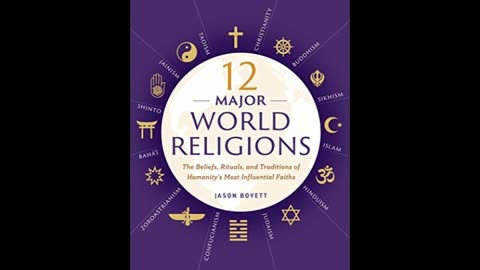
12 Major World Religions: The Beliefs, Rituals, and Traditions of Humanity’s Most Influential Faiths

The Fourth Turning: An American Prophecy by: William Strauss and Neil Howe
The Hill of Dreams by Arthur Machen (1907)
The Great God Pan by Arthur Machen (1894)
The White People by Arthur Machen (Written 1899, Published 1904)
The Republic by: Plato
Protagoras by: Plato
The Shining Pyramid: The Definitive Edition by: Arthur Machen
Paradise Lost by: Milton
A Modern Utopia by H. G. Wells (1905)

The World Set Free by H. G. Wells (1914)
The Revolutions of Civilization by William Matthew Flinders Petrie (1911)

The Discovery of the Future by H. G. Wells (1902)
Men Like Gods by H. G. Wells (1923)

The Psychology of Peoples: Its Influence on Their Evolution by Gustave Le Bon (1894)

Household Gods by: Aleister Crowley (1912)
Courts and Criminals by: Arthur Cheney Train (1914)

Hitler's Last Witness: The Memoirs of Hitler's Bodyguard by Rochus Misch (2008)
The Anti-Christ by Friedrich Nietzsche

The Manisis Chronicles: A Novel of Fantasy or Prophecy? by Dr. Eugene J. Bruington
Compendium of Occult Laws by: Dr. R. Swinburne Clymer
The Case Against the Fed by: Murray N. Rothbard
"Propaganda" by: Edward Bernays (1928)

Psychological Warfare by: Paul Linebarger
Dante's Inferno (Modern English Translation)
The Book of Luck by: Anonymous
Drugging a Nation: The Story of China & the Opium Curse by Samuel Merwin (1908)
Ghosts, A Message From The Illuminati (1906) by Alexander J. McIvor-Tyndall
Marx & Satan by: Richard Wurmbrand (1986)
1900 Or, The Last President by Ingersoll Lockwood
The Flying Eyes by J. Hunter Holly

The Shape of Things to Come by: H. G. Wells (1933)
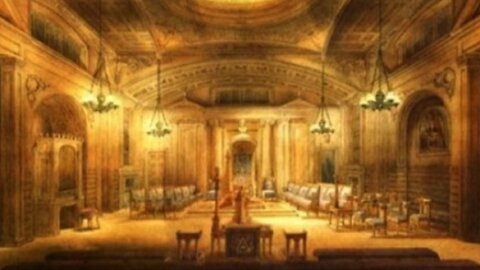
The Regius Manuscript - A Poem of Moral Duties (c. 1390)

The Matthew Cooke Manuscript (c. 1450)
Dowland's Manuscript (c. 1500)
The Charges of a Freemason (1723, Anderson's Constitution's 2/3)

The History of Freemasonry (1723, Anderson's Constitution's 1/3)
The General Regulations of Freemasonry (1723, Anderson's Constitution's 3/3)

Anderson's Constitutions (1723) FULL

Secret Societies: A Sinister Agenda Exposed by: William Cooper (1983)

Silent Weapons for Quiet Wars
Report From Iron Mountain on the Possibility and Desirability of Peace
A Proposed Constitutional Model for the Newstates of America

The Secret Teachings of All Ages by: Manly P. Hall
![The Official C.I.A. Manual of Trickery and Deception [DECLASSIFIED]](https://1a-1791.com/video/s8/1/K/R/T/v/KRTvm.oq1b-small-The-Official-C.I.A.-Manual-.jpg)
The Official C.I.A. Manual of Trickery and Deception [DECLASSIFIED]
Racing Toward Armageddon: The Three Great Religions and the Plot to End the World by Michael Baigent (audiobook)

The United Nations Charter

The Initiates of the Flame by Manly P. Hall (1922)

The Initiates of the Flame by Manly P. Hall, 1922 (just the illustrations)
Atlantis: An Interpretation by: Manly P. Hall (1976)

The Secret Destiny of America by: Manly P. Hall

The Lost Keys of Masonry: The Legend of Hiram Abiff by: Manly Hall (2nd Edition)

The Brotherhood: The Secret World of the Freemasons by: Stephen Knight

None Dare Call It Conspiracy by: Gary Allen, co-authored with Larry Abraham

The Ways Of The Lonely Ones: A Collection of Mystical Allegories by: Manly Hall
Masonry: Beyond the Light by William Schnoebelen
On the Origins of Free-Masonry by: Thomas Paine
The Club of Rome by Dr. John Coleman
The History of the Clergy During The French Revolution: A Work Dedicated to the English Nation
The Story of Freemasonry by: W. G. Sibley (1904)

The Mysticism of Freemasonry by: Swinburne Clymer (1924)

Brain-Washing: A Synthesis of the Russian Textbook on Psychopolitics

The Question of Freemasonry by: Ed Decker

Secret Societies: A Sinister Agenda Exposed by: Milton William Cooper (1999)
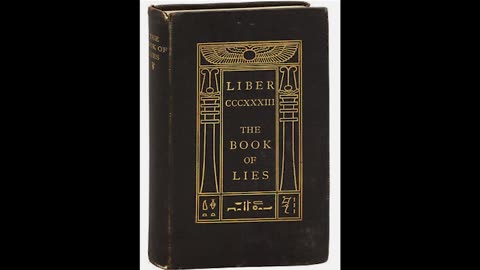
The Book of Lies by: Edward Alexander Crowley (Aleister Crowley)

Pawns in the Game by: William Guy Carr

Unrestricted Warfare by: Qiao Liang and Wang Xiangsui

The Ancient Arabic Order of the Nobles of the Mystic Shrine for North America

The Unanimous Declaration of the Thirteen United States of America

Mystic Masonry by: J.D. Buck
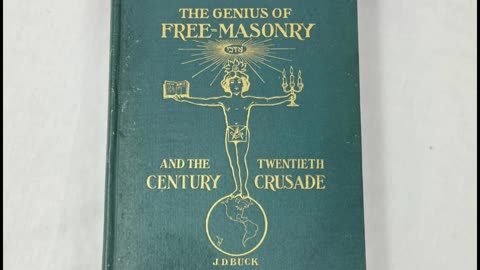
The Genius of Freemasonry and the Twentieth-Century Crusade by: J.D. Buck (1914)

Freemasonry its Hidden Meaning by George H. Steinmetz
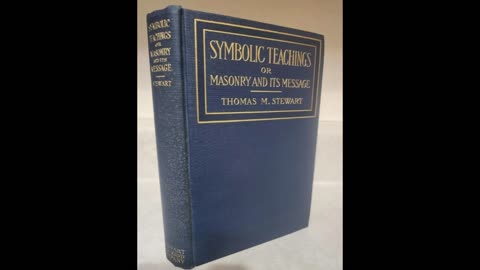
Symbolic Teachings or Masonry and its Message by: Thomas Milton Stewart
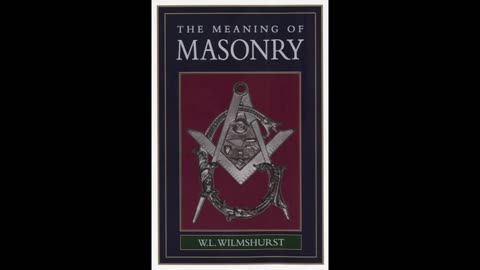
The Meaning of Masonry by W.L. Wilmshurst
Symbolism by: Milton A. Pottenger
The Pythagorean Triangle or The Science of Numbers by: Milton A. Pottenger
Hamlet by: Shakespeare

The War of Antichrist with the Church and Christian Civilization by: Monsignor George F. Dillon (1885)
Mormonism and Masonry by Samuel H. Goodwin (1920)
The Secret Rose and Rosa Alchemica by: William Butler Yeats (1897)
The Book of Mormon: Part 9 - Ether & Moroni
The Book of Mormon Part 8 - 4 Nephi & Mormon
The Book of Mormon Part 7 - 3 Nephi 1-30

The Book of Mormon: Part 6 - Helaman 1-16

The Book of Mormon: Part 5 - Alma 1-63
The Book of Mormon: Part 4 - Words of Mormon 1 & Mosiah 1-29
The Book of Mormon: Part 3 - Enos 1, Jarom 1, and Omni 1

The Book of Mormon: Part 2 - Jacob 1-7
The Book of Mormon: Part 1 - 1 Nephi, 2 Nephi
Chapter 1º - Apprentice - Morals & Dogma of the Ancient & Accepted Scottish Rite of Freemasonry
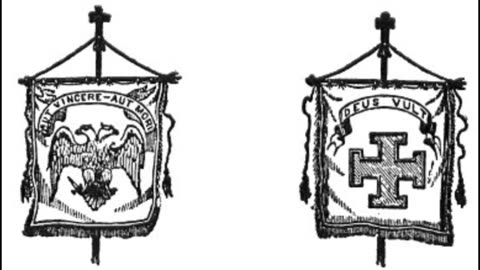
Chapter 30º - Knight Kadosh - Morals & Dogma of the Ancient & Accepted Scottish Rite of Freemasonry
The Mission of Masonry by: Joseph Fort Newton

Nox Niijosa by: Walter Leslie Wilmshurst (1917)
The Rosicrucian Mysteries: An Elementary Exposition of Their Secret Teachings by Max Heindel (1911)

Gleanings of a Mystic: A Series of Essays on Practical Mysticism by Max Heindel (1922)

The New Atlantis by Francis Bacon (1627)

The Wisdom of the Ancients, A Series of Mythological Fables by: Francis Bacon (1609)

Atlantis: The Antediluvian World by Ignatius Loyola Donnelly (1831 - 1901)

The Lost Island of Atlantis by: Edward Taylor Fletcher (1891)

The Coming Race by: Edward George Earle Lytton Bulwer-Lytton (1871)
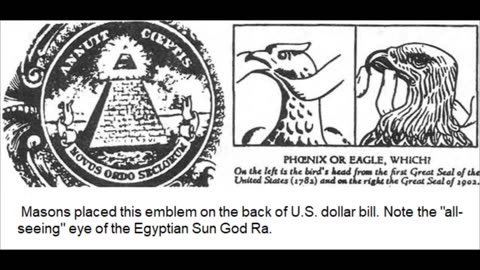
The Watchtower and the Masons by: Fritz Springmeier

The New World Order by: H.G. Wells

Programmed to Kill: The Politics of Serial Murder by David McGowan (2004)
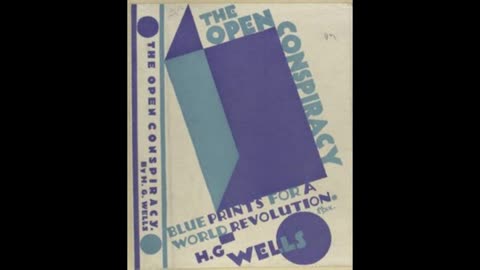
The Open Conspiracy: Blueprints for a World Revolution is a book by H.G. Wells (1928)

The History of the Fabian Society by Edward R. Pease (1916)

The New Machiavelli by: H.G. Wells (1911)

When the Sleeper Wakes by: H.G. Wells (1899)

The Chymical Wedding of Christian Rosenkreutz by: Johann Valentin (1616)

A Wonderful Visit by: H.G. Wells (1895)

The Treatise on Christ and Antichrist by Hippolytus of Rome (c. 200-220 AD)
Humanum Genus (On Freemasonry) April 20, 1884 by Pope Leo XIII - Part 4/4, Sections 51-58
Humanum Genus (On Freemasonry) April 20, 1884 PART 3/4, Sections 36-50

Humanum Genus (On Freemasonry) April 20, 1884 by Pope Leo XIII - Part 2/4, Sections 17-35
Humanum Genus (On Freemasonry) April 20, 1884 by Pope Leo XIII - Part 1/4, Sections 1-16
Dall'alto dell'Apostolico Seggio (On Freemasonry in Italy) by Pope Leo XIII Part 3/3: Sections 39-58
Dall'alto dell'Apostolico Seggio (On Freemasonry in Italy) by Pope Leo XIII Part 2/3: Sections 19-38

Dall'alto dell'Apostolico Seggio (On Freemasonry in Italy) by Pope Leo XIII, Part 1/3: Sections 1-18

The Wonderful Story of Ravalette by: Paschal Beverly Randolph (1863)

The Mystic Will by: Charles Godfrey Leland (1899)

Twenty Thousand Leagues Under the Sea by: Jules Vernes

The Symbolism of Freemasonry by: Albert G. Mackey
Freemasonry From A to Z by: Dr. John Coleman
Zanoni by Edward Bulwer Lytton (1842)

A Practical Guide to Self-Hypnosis by: Melvin Powers
Tom Clark and His Wife, the Rosicrucian's Story by Paschal Beverly Randolph (1863)

Doctor Ox's Experiment by Jules Vernes (1872)

The Secret Doctrine by Blavatsky Part 9/9 Sections 86-96
The Secret Doctrine by Blavatsky Part 8/9 Sections 77-85
The Secret Doctrine by Blavatsky Part 7/9 Sections 69-76

The Secret Doctrine by Blavatsky Part 6/9 Sections 59-68
The Secret Doctrine by Blavatsky Part 5/9 Sections 48-58
The Secret Doctrine by Blavatsky Part 4/9 Sections 37-47
The Secret Doctrine by Blavatsky Part 3/9 Sections 24-36
The Secret Doctrine by Blavatsky Part 2/9 Sections 13-23
The Secret Doctrine by Blavatsky Part 1/9 Sections 1-12
Shadow Forms: A Collection of Occult Stories by: Manly P. Hall (1930)
The Bohemian Club 1969 Little Red Book - By-Laws & Officers
The Bohemian Club 1973 Little Red Book - History, Former Officers, In Memorium, Rules
Annals of Bohemian Club Vol. IX - Music & Musicians in Bohemia The First One Hundred Years
The Annals of the Bohemian Club Volume VII: 1988-1996

Great Ghost Stories by: Various Authors
Baron Trump’s Marvellous Underground Journey (1893)
The Hidden Church of the Holy Graal 2/2 by: Edward Arthur Waite
The Hidden Church of the Holy Graal 1/2 by: Edward Arthur Waite

The Kybalion: A Study of the Hermetic Philosophy of Ancient Egypt and Greece By: The Three Initiates
Dowland's Manuscript (c. 1500)
Embark on an intriguing voyage through time as you delve into the captivating realm of "Dowland's Manuscript." This captivating video takes you on a mesmerizing journey, guiding you through the hallowed corridors of medieval knowledge and insights. Immerse yourself in the rich historical tapestry of this esteemed manuscript, believed to have been authored during a bygone era.
"Dowland's Manuscript," thought to have originated around a significant period, offers a mesmerizing window into the depths of Middle English literature. Revered as one of the notable Masonic documents, it holds the distinction of being the second-oldest known artifact within this esteemed tradition. Unveiling its secrets and hidden meanings, this cherished manuscript invites you to unravel the enigmatic teachings, chivalrous principles, and societal customs that permeated the Middle Ages.
This video blends modern technology & historical texts thanks to a collaboration between the language model ChatGPT-4, voicechanger.io, VoiceGenerator.io, and the timeless allure of "Greensleeves"; I wouldn't have been able to make this without all of them. It's a testament to the potential of technology in making ancient wisdom more accessible and engaging for everyone.
ORIGINAL TEXT:
In the Gentleman's Magazine published in the year 1815, a copy of a very valuable old manuscript was printed. We believe it's likely that this original manuscript can be matched to one of the existing manuscripts after a careful comparison. This manuscript was sent to the Editor by Mr. James Dowland with some notes. He said, "For the enjoyment of your readers, I'm sending you an interesting speech about Freemasonry that I recently acquired. It's written clearly on a long scroll of parchment, seemingly from the 17th century, and it was likely copied from an even older manuscript."
Brother Woodford, Mr. Wallbran, Mr. Sims, and other notable experts believe that the original manuscript, from which the Gentleman's Magazine copied its content, is from a scroll that's at least a hundred years older than the date given to Mr. Dowland's manuscript. As a result, they estimate its date around 1550, making it the second oldest, just after manuscript B.
The wording of this manuscript doesn't differ much from the "Grand Lodge" and "Edinburgh-Kilwinning" manuscripts. The recorded wages mentioned in this manuscript are also in agreement with those found in the "Grand Lodge" manuscript and some of the York manuscripts.
May the power of the Father of Kings, along with the wisdom of His glorious Son, through the grace and goodness of the Holy Spirit — three persons in one God — be with us at our beginning. May they give us the grace to live in this mortal life in such a way that we may enter His kingdom that will never end. Amen.
Dear Brothers and Fellows: Our aim is to tell you how and in what way this valuable craft of Masonry began. We'll also explain how it was favored by notable Kings, Princes, and many other respected men. Furthermore, for those who are interested, we will outline the responsibilities that every true Mason must uphold — and take note, they are indeed worth upholding for this esteemed craft and complex science.
There are seven liberal arts and sciences, and Masonry is one of them. The seven sciences are as follows: The first is Grammar, which teaches a man to speak and write correctly. The second is Rhetoric, teaching a man to speak eloquently and subtly. The third is Dialectic, which helps a man to discern or recognize truth from falsehood. The fourth is Arithmetic, instructing a man to calculate and account all kinds of numbers. The fifth is Geometry, which instructs on the measurement of the earth and all other things, and this science is what Masonry is called. The sixth is Music, teaching a man about songs, voices, tongues, organs, harps, and trumpets. The seventh is Astronomy, which educates a man about the course of the sun, moon, and stars.
These are the seven liberal arts and sciences, all of which are based on one science: Geometry. One can argue that the science of work is based on Geometry because it teaches a man about measurement, weight, and balance, of all kinds of things on earth. No person who practices any science does so without using some form of measurement, and no one buys or sells anything without using some form of measurement or weight; all of these involve Geometry.
And all these tradesmen, craftsmen, practitioners of the other seven sciences, especially the farmer and cultivators of all types of fields, grains, seeds, vines, and other produce, none of them can find their measurements without Geometry. So, in my opinion, the science of Geometry is the most honorable as it supports all others.
I'm going to tell you how these important sciences first began. Before Noah's flood, there was a man named Lamech, as it's written in the Bible, in the 4th chapter of Genesis. This Lamech had two wives, one named Ada, and the other named Sella. With his first wife Ada, he had two sons, Jahell and Tubal. With his second wife Sella, he had a son and a daughter. These four children discovered the beginning of all sciences in the world.
The eldest son, Jahell, discovered the science of Geometry. He separated flocks of sheep and lambs in the field and was the first to build houses from stone and wood, as noted in the said chapter. His brother Tubal discovered the science of Music, the art of song, harp, and organ. The third brother, Tubal Cain, discovered metalwork involving gold, silver, copper, iron, and steel, while the daughter discovered the craft of weaving.
These children knew that God would take revenge for sins either by fire or water. So, they wrote down their discoveries on two stone pillars so they could be found after Noah's flood. One of these stones was marble because it wouldn't burn with fire, and the other stone was called "laterns," which wouldn't sink in water.
We aim to tell you accurately how and in what way these stones, on which these sciences were written, were discovered. A great man named Hermaynes, who was the son of Cus, who was the son of Sem, who was the son of Noah, found one of the two pillars of stone. He read the sciences written on it and taught them to other people.
When the Tower of Babylon was being constructed, Masonry was greatly esteemed. The King of Babylon, named Nimrod, was a mason himself and greatly appreciated the craft, as said by historians. When the city of Nineveh and other Eastern cities were being built, Nimrod, the King of Babylon, sent sixty masons to assist at the request of his cousin, the King of Nineveh.
When he sent them, he gave them instructions to be honest with each other, to love each other truly, and to serve their lord honestly for their pay. In this way, the master may be honored, and all that belong to him. He gave them more rules to follow. This was the first time Masons were given any instructions or responsibilities related to their craft.
Furthermore, when Abraham and his wife Sara went to Egypt, he taught the Egyptians the seven sciences. He had an outstanding student named Euclid who was a master of all seven liberal arts.
During his time, it happened that the lord and the ruling class had many sons, some with their wives and some with other ladies of the realm. The land was abundant in offspring due to its warm climate, but they couldn't adequately support their children, which caused them great worry.
The king of the land convened a large council or parliament to discuss how they might provide for their children in a respectable way fitting for gentlemen, but they couldn't find a solution. So, they announced throughout the realm that anyone who could suggest a solution should come forward and would be rewarded generously.
Upon hearing this, the learned Euclid came forward and proposed to the king and his lords to take their children under his guidance and teach them one of the seven sciences, so they could lead respectable lives as gentlemen should. He made one condition - he should be granted authority to govern them as the science demands. The king and his council agreed to this, granting and sealing their permission.
Then, Euclid took these lord's sons and taught them the practical science of Geometry for working with stones and creating impressive work associated with constructing churches, temples, castles, towers, manors, and all other kinds of buildings. He gave them certain rules to follow.
The first rule was that they should be loyal to the king and the lords they served. They should love one another and be honest with each other, and refer to each other as fellows or brothers, not as servants or slaves or any other disrespectful name. They should earn their pay from the lord or master they served.
They should appoint the wisest among them to be the master of the work and not let love, noble lineage, wealth, or favoritism prevent a less skilled person from being the master, as it would result in poor service to the lord and shame for them. They should also address the person in charge of the work as Master during the time they work with him. He gave them many other instructions and made them swear a serious oath, common at that time, agreeing to these rules. He arranged reasonable wages for them so they could live decently.
Moreover, he also instructed them to assemble once a year to discuss how they could best serve their lord and bring honor to themselves, and to hold accountable anyone who had violated the science's rules. This is how the science was established there, and the distinguished Euclid named it Geometry. But now, it is called Masonry throughout the land.
Then, long after, when the Children of Israel came into the land of Beheast, now known among us as Jerusalem, King David began to build the temple they called "Templum D'ni," or what we call the Temple of Jerusalem. King David appreciated masons, treated them well, and paid them well. He passed on the instructions and customs he learned from Egypt given by Euclid and other instructions that you will hear about later.
After King David's death, his son Solomon completed the Temple his father started. He brought together masons from various countries and lands, amounting to eighty thousand stone workers, all referred to as masons. He selected three thousand from them to be masters and supervisors of his work.
Moreover, there was a king from another region named Hiram, who liked King Solomon and gave him timber for his construction. Hiram had a son named Aynon who was a master of Geometry and was the chief master of all his masons, handling all the carvings and masonry work related to the Temple. This is affirmed in the Bible, in the Book of Kings, the third chapter. Solomon confirmed the duties and customs his father had given to the masons. This is how masonry was established in Jerusalem and other kingdoms.
Craftsmen skilled in this work travelled far and wide to different countries, some to learn more skills and others to teach those who knew little. A skilled mason named Maymus Grecus, who had worked on Solomon's Temple, went to France and taught masonry there. There was a royal figure in France named Charles Martel who loved this craft. He learned the science from Maymus Grecus and also took up the responsibilities and customs. Later, he became the King of France by God's grace. When he came into power, he supported the masons, helped make more masons, and gave them the duties, customs, and good pay as he had learned from other masons. He also confirmed their right to hold annual meetings wherever they wished, treating them well. This is how masonry came to France.
England didn't have any organized masonry until the time of Saint Alban. During his time, the King of England, who was a pagan, built a wall around the town called Saint Alban. Saint Alban was a respected knight and steward in the king's household, overseeing the realm and the construction of the town walls. He liked masons and treated them well, improving their wages to two shillings and six pence a week and three pence for their meals. Before this, throughout the land, a mason would only receive a penny a day and food. Saint Alban enhanced this, granting them a charter from the King and his Council to hold a general council or assembly. Saint Alban himself attended these meetings, helped make masons, and gave them their duties.
Soon after Saint Alban's death, various wars came into England from different nations, disrupting the good order of masonry until King Athelstone's reign. He was a respected King of England who brought peace and built many great works like abbeys and towers. He liked masons and had a son named Edwin, who loved masonry even more than his father. Edwin was deeply interested in Geometry, liked to talk and learn about the craft from the masons, and even became a mason himself. He obtained a charter and commission from his father, the King, to hold an annual assembly anywhere within England to address any faults or transgressions within the craft.
He held a meeting in York, where he created Masons, gave them their duties, and taught them their customs. He ordered these rules to be followed ever since, and then kept the Charter and Commission, making a rule that it should be passed on from king to king.
When the assembly was gathered, he made a declaration asking all the old and young Masons, who had any written or understood instructions and customs from this land or any other, to bring them forward. When they were examined, they found some in French, Greek, English, and other languages, but all had the same intention. He made a book out of these and included the origins of the craft. He himself ordered that it should be read or recited whenever a new Mason is made, to give him his duties. Since that day, Masonic customs have been followed in that form as well as people could manage it. Also, several assemblies have established specific duties through the best advice of Masters and fellows. Then an elder holds the book, as they or he lay hands on the book, and then they should be ordered to do so by law.
Every man who is a Mason, pay close attention to these duties. If anyone finds themselves guilty of any of these, they should correct themselves in the eyes of God. Most importantly, those about to be given these responsibilities, make sure you can carry out these duties well, because it's very risky to lie on a book.
The first duty is, you should be a true servant to God and the Holy Church, not straying into error or heresy as per your understanding or as taught by wise men. Also, you should be a loyal subject to the King of England without committing treason or any falsehood. If you know of any treason or betrayal, try to fix it privately if possible, or else warn the King or his Council. Also, you should be true to each other, that is, to every Mason of the Masonry craft. You should treat them as you would want to be treated. Moreover, you should keep all the secrets of the Lodge and Chamber and all other secrets that a Mason should keep.
Also, no Mason should be involved in theft or thievery as far as he knows. You should also be loyal to the lord or master you serve, and genuinely seek his profit and advantage. You should call other Masons your brothers or your fellows, and not use any insulting names. Also, don't disgracefully pursue your fellow's wife, his daughter, or his servant, and don't disgrace him in any way. You should also pay fairly for your food and drink wherever you board. Also, don't do anything disgraceful in the place where you board, that might harm the reputation of the craft. These are the general responsibilities every true Mason should keep, both Masters and fellows.
Now, I will go over the specific responsibilities for Masters and Fellows. First, no Master should take on a lord's work or anyone else's work unless he knows himself to be capable and knowledgeable enough to complete the lord's work in a way that the craft won't be slandered or disgraced, and that the lord can be well and truly served. Also, no Master should take on work unless it's reasonable, so that the lord can be truly served with his own goods, and the Master can live honestly and pay his fellows fairly. No master or fellow should undercut each other's work. If you've taken on work or are in charge of a lord's work, you shouldn't push him out unless he's unable to finish the work. No Master or fellow should take an apprentice for less than seven years, and the apprentice should be able-bodied, freeborn, and sound of limbs as a man should be. Also, no Master or fellow should allow someone to be made a Mason without the agreement of at least six or seven experienced fellows. The person to be made a Mason should be free-born, of good kin, honest, and not a slave. Also, no Mason should take an apprentice unless he has enough work for at least two or three fellows. No master or fellow should put a lord's work out for bids that used to be paid by the day. Each Master should pay his fellows as they deserve, so you're not fooled by shoddy workers. None of you should slander another behind his back causing him to lose his good name or worldly goods. No fellow, either within the Lodge or outside, should answer disrespectfully without a reasonable cause. Every Mason should respect his elder and honor him. No Mason should gamble or play dice or any other unlawful games that might disgrace the craft. No Mason should indulge in promiscuity or act as a pimp, which could slander the craft. No fellow should go into town at night, where there's a lodge of fellows, unless he has a fellow with him who can vouch for his being in a respectable place. Every Master and fellow should attend the Assembly, if it's within fifty miles of him, if he has any written charges. If you've done something wrong against the craft, you should accept the decision of the Masters and Fellows, and try to make peace if possible. If you can't agree, go to the courts. Neither a master nor a fellow should make a mould, square or rule for a layman, nor allow a layman in the lodge, or outside, to cut mould stones. Every Mason should welcome and take care of fellow Masons when they travel through the country, give them work if they want, as is the custom. If he doesn't have work in his place, he should give him money to get to the next lodge. Every Mason should serve the lord faithfully for his pay, and every master should complete his work, be it by task or by the day, if you have your agreements and everything else you should have. These responsibilities that we've now gone over with you, and all that belong to Masons, you should uphold, may your God help you, as well as your faith, and according to what this book instructs, to the best of your abilities. Amen!
(Reprinted from Volume 85 of the Gentleman's Magazine, first printed in June 1815)
-
 7:37:26
Deus Meum Que Jus
4 days agoThe Imitation of Christ by: Thomas à Kempis (between 1418 and 1427)
450 -
 1:02:27
The Nick DiPaolo Show Channel
5 hours agoRob Reiner, Wife Slaughtered | The Nick Di Paolo Show #1828
19.3K17 -
 22:03
22:03
Jasmin Laine
8 hours agoCBC Host Left SPEECHLESS as Poilievre Uses Their OWN Words Against Them
4.64K23 -
 LIVE
LIVE
LFA TV
1 day agoLIVE & BREAKING NEWS! | MONDAY 12/15/25
643 watching -
 1:18:27
Kim Iversen
3 hours agoShould Muslims Be Allowed in the West? | Candace and Erika Kirk FACE OFF
80.3K164 -
 LIVE
LIVE
The Mike Schwartz Show
8 hours agoTHE MIKE SCHWARTZ SHOW Evening Edition 12-15-2025
718 watching -
 1:48:12
Redacted News
4 hours agoHIGH ALERT! BONDI BEACH FALSE FLAG ATTACK AS POLICE STOOD DOWN FOR 20 MINUTES, STRATEGY OF TENSION!
169K149 -
 2:51:00
Red Pill News
4 hours agoA Deep State Christmas Carol - The Ghosts of Mass Shootings Past on Red Pill News Live
39.7K35 -
 1:18:39
Russell Brand
6 hours agoThe Return of Control: From Lockdowns to Censorship to War - SF663
142K42 -
 1:10:01
vivafrei
7 hours agoRob Reiner & Wife Murdered! Son Arrested & Held on $4 Million Bond! And More! Viva Frei Live!
67.4K97