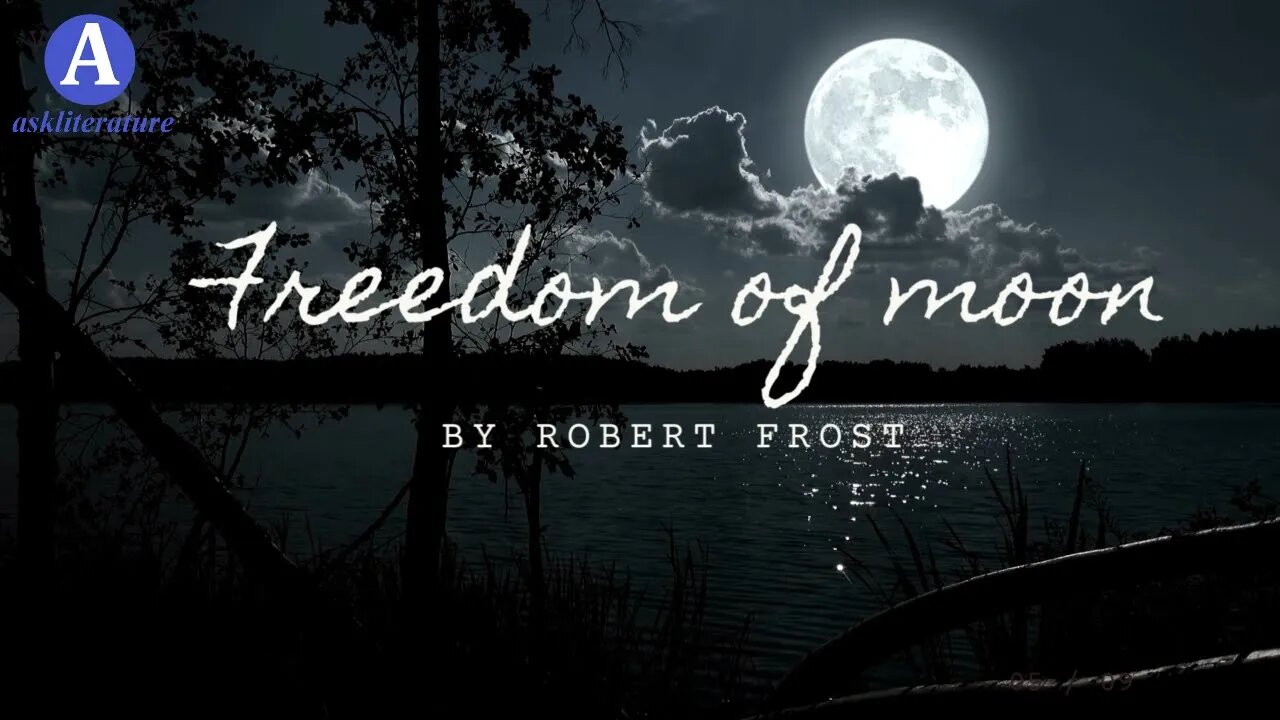
The Freedom of the Moon by Robert Frost Analysis
"The Freedom of the Moon" by Robert Frost is a short and contemplative poem that explores the contrast between two celestial bodies: the Earth and the Moon. The poem begins by describing the Moon as "immaculate," suggesting its purity and freedom from the turmoil and imperfections of earthly life. The Moon seems to be an ethereal being that can observe the Earth from a distance.
The speaker compares the Moon's tranquility to the Earth's state of chaos, where "the world has burned the wires." This line may allude to human technological advancements and their negative consequences. While the Moon appears to be free and untethered, the Earth is entangled in its own creations and desires.
In the final lines, the poem suggests that the Moon's freedom might be an illusion, as it is "full of our own emptiness." This paradoxical statement hints at the Moon's symbolic connection to human longing and desire, making it just as entangled as the Earth, albeit in a different way.
Themes.
Freedom and Confinement. The poem explores the idea of freedom, contrasting the perceived freedom of the Moon with the confinement and entanglement of the Earth. However, it also suggests that both entities are bound in some form of limitation, presenting a nuanced perspective on freedom.
Nature versus Civilization. The poem juxtaposes the natural purity of the Moon with the complexities of human civilization on Earth, highlighting the tensions between the pristine and the artificial.
Longing and Desire. The Moon symbolizes human longing and desire, suggesting that even the celestial body seemingly untethered by human struggles carries its own form of emptiness and attachment.
Symbols.
The Moon symbolizes freedom, purity, and distance from earthly concerns. It also represents human longing and desire.
The Earth symbolizes the world of human civilization, its chaos, and the consequences of human actions and advancements.
Wires represents the technological entanglements of the modern world, possibly symbolizing the negative impact of human inventions and industrialization.
Literary Devices.
Imagery. The poem employs vivid imagery to contrast the Moon's serenity with the chaos of the Earth and its technological consequences.
Metaphor. The Moon serves as a metaphor for various themes, including freedom, purity, and human longing.
Paradox. The line "full of our own emptiness" presents a paradox, suggesting that the Moon's freedom is an illusion and that it, too, is affected by human emotions and desires.
-
 LIVE
LIVE
MattMorseTV
4 hours ago $49.24 earned🔴THE STREAMER AWARDS🔴
8,529 watching -
 12:31
12:31
Robbi On The Record
2 days ago $7.27 earnedWhy Nothing Feels Real Anymore | The Science, Culture, and Spiritual War Behind the Fog
54.6K20 -
 25:21
25:21
Stephen Gardner
4 hours agoWait Until You Hear This UNEXPECTED Trump Story!
12K49 -
 LIVE
LIVE
Side Scrollers Podcast
9 hours agoSide Scrollers Presents: QUEEN OF THE Wii
1,465 watching -
 1:19:11
Squaring The Circle, A Randall Carlson Podcast
10 hours agoBreaking: New Evidence & Studies For Younger Dryas Impact Hypothesis
5.08K -
 38:57
38:57
TampaAerialMedia
11 hours ago $0.29 earnedKEY WEST & THE DRY TORTUGAS - Tours, Tips, Food, & Lodging
2.63K -
 37:48
37:48
The White House
7 hours agoPresident Trump Attends the State Department Kennedy Center Honors Medal Presentation Dinner
12.3K6 -
 20:52
20:52
Exploring With Nug
3 hours ago $11.72 earnedTwo Missing People, One Missing Truck — What’s in the River?
57K1 -
 1:43:05
vivafrei
6 hours agoBREAKING: Jan. 6 Pipe Bomber Prosecutor is the SAME ONE Who Prosecuted Enrique Tarrio?
128K50 -
 35:16
35:16
Tactical Advisor
4 hours agoNew Pivoting Rifle for Backpacks | Vault Room Live Stream 048
30.6K