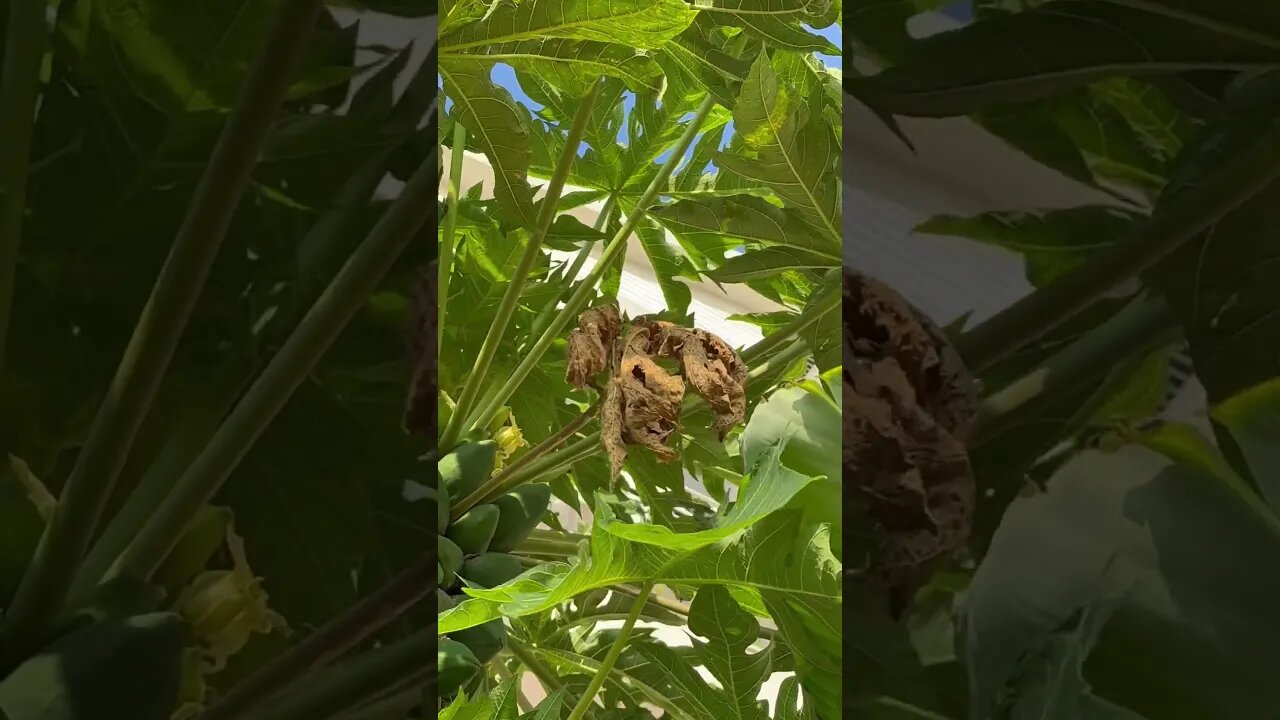
Everything about Papaya Trees
The papaya tree, scientifically known as Carica papaya, is a tropical plant that's best known for its sweet, melon-like fruit. The tree is native to Central America and northern South America, but it is now grown in many other parts of the world, including parts of Asia, Africa, and the Pacific Islands.
Here are some key features and facts about the papaya tree:
Size and Appearance: Papaya trees are relatively small compared to other tropical trees, usually reaching a height of 5 to 10 meters. They have a straight, unbranched stem with large, lobed leaves at the top. The bark is typically grey or brown. The tree's leaves are large, spanning around 20–28 inches, and grow from the top of the trunk directly.
Flowers and Fruit: Papaya trees produce white or yellowish flowers. There are three sexes: male, female, and hermaphrodite (both sexes in one flower). Most commercially grown papaya are from hermaphrodite trees as they produce the desirable fruit shape and size. The fruit grows directly on the trunk, typically in clusters. Papayas are oval or pear-shaped and can reach up to 20 inches in length. The skin is green when unripe, turning to a golden yellow or orange when ripe. Inside, the fruit has a soft, sweet, orange flesh and contains numerous small, black seeds in the center.
Growth and Care: Papaya trees love warm, tropical climates, and full sun exposure. They require well-drained soil and regular watering. Despite their love for heat, they can be sensitive to extreme temperatures and may not fare well in areas prone to frost. They are fast growers and can start producing fruit as soon as 6 to 9 months after planting.
Uses: The fruit is eaten fresh or used in cooking, often in desserts and salads, but also in some savory dishes. Green (unripe) papaya is also used in some cuisines, especially in South-East Asia, in salads like 'som tam'. The fruit is also used to make juices and jams. The papaya's enzymes are used in meat tenderizers and some cosmetic products. Even the seeds are edible, having a peppery taste and can be used as a substitute for black pepper.
Health Benefits: Papaya is a rich source of antioxidant nutrients such as carotenes, vitamin C, and flavonoids; the B vitamins, folate, and pantothenic acid; minerals like potassium and magnesium; and fiber. It is also known for its digestive benefits due to the presence of the enzyme papain, which can help break down tough protein chains found in muscle meat.
-
 3:09:43
Laura Loomer
3 hours agoEP169: Democrat Donors And Global Elites EXPOSED In Epstein Files
31.1K12 -
 53:39
53:39
Isabella Moody
2 hours agoNick Fuentes vs Sneako & Jake Shields: Epstein Drama Turns Allies into Enemies!
17.9K7 -
 2:12:20
TheSaltyCracker
5 hours ago$8K Wayfair Cabinets are Back ReeEStream 02-03-26
124K175 -
 2:29:28
Joker Effect
3 hours agoRUMBLESHORTS ARE COMING TOMORROW! Let's talk about it! Do NOT miss the boat!
28.4K -
 0:29
0:29
Gaming on Rumble
1 day ago $4.64 earnedRumble Shorts Teaser Trailer
151K21 -
 LIVE
LIVE
DLDAfterDark
3 hours ago $0.33 earnedDLD After Dark - Live Gun Talk! - What The Gov Doesn't Want You To Have!
307 watching -
 1:24:26
Flyover Conservatives
13 hours agoHow do Americans REALLY View Trump? Don’t Shoot the Pollster. - Mark Mitchell | FOC Show
23.2K3 -
 1:29:35
Anthony Rogers
2 days agoEpisode 401: Are We in the Matrix?
14.5K1 -
 LIVE
LIVE
SpartakusLIVE
6 hours ago#1 WZ Streamer NEVER Skips Leg Day, LEAPS Mountains in a SINGLE BOUND
166 watching -
 1:01:12
Sarah Westall
8 hours agoAI & Healthcare: Who Will It Serve — You or Power? | Arthur MacWaters
18.2K1