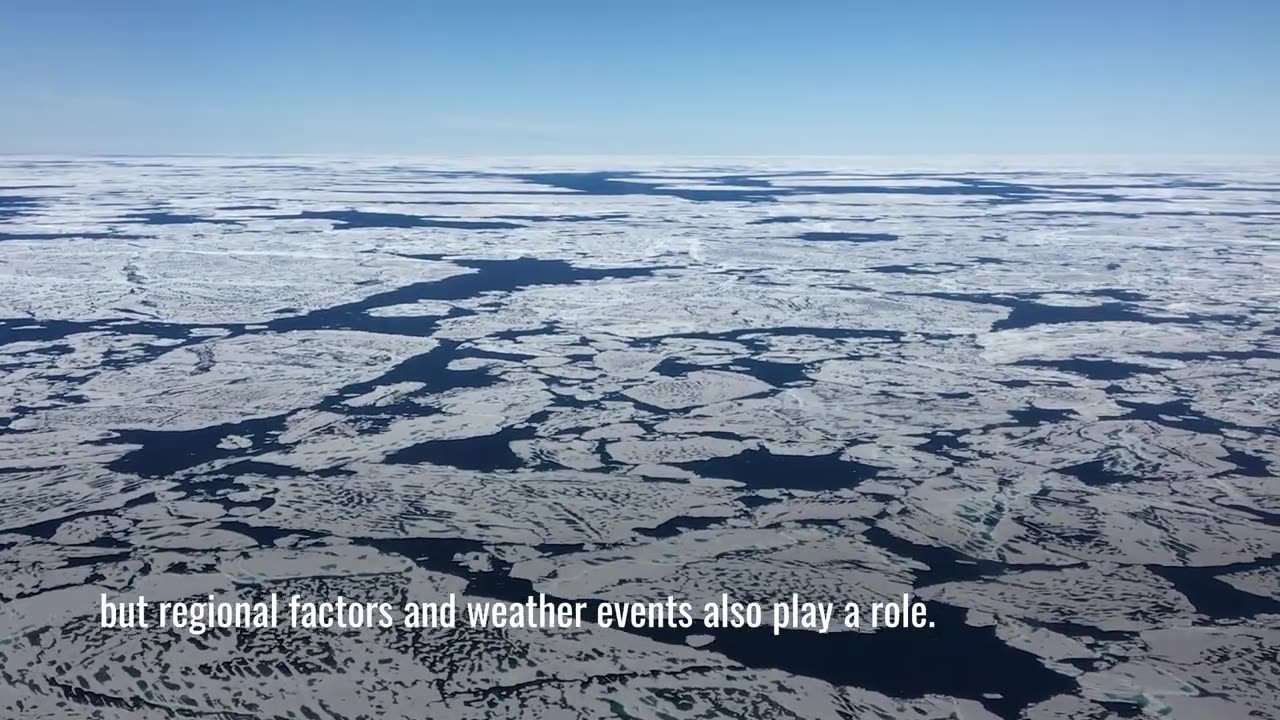
Arctic Sea Ice Hits 2023 Maximum
On March 6, 2023, the Arctic sea ice pack appeared to reach its maximum extent for this winter, at 14.62 million square kilometers, or 5.64 million square miles, according to the National Snow and Ice Data Center.
Fieldwork and satellites like NASA’s ICESat-2 satellite are monitoring the changing ice pack, and helping to predict how the ice will change in the future.
Sea ice is frozen seawater that floats on the ocean surface. It forms in both the Arctic and the Antarctic in each hemisphere’s winter; it retreats in the summer, but does not completely disappear. This floating ice has a profound influence on the polar environment, influencing ocean circulation, weather, and regional climate.
Since 1979, satellites have provided a consistent continuous record of sea ice. Through 2015, the average monthly September extent of Arctic sea ice has declined by 13.4 percent per decade relative to the average from 1981 to 2010. Declines are occurring in every geographic area, in every month, and every season. Natural variability and rising temperatures linked to global warming appear to have played a role in this decline. The Arctic may be ice-free in summer before the end of this century.On March 6, 2023, the Arctic sea ice pack appeared to reach its maximum extent for this winter, at 14.62 million square kilometers, or 5.64 million square miles, according to the National Snow and Ice Data Center.
Fieldwork and satellites like NASA’s ICESat-2 satellite are monitoring the changing ice pack, and helping to predict how the ice will change in the future.
Sea ice is frozen seawater that floats on the ocean surface. It forms in both the Arctic and the Antarctic in each hemisphere’s winter; it retreats in the summer, but does not completely disappear. This floating ice has a profound influence on the polar environment, influencing ocean circulation, weather, and regional climate.
Since 1979, satellites have provided a consistent continuous record of sea ice. Through 2015, the average monthly September extent of Arctic sea ice has declined by 13.4 percent per decade relative to the average from 1981 to 2010. Declines are occurring in every geographic area, in every month, and every season. Natural variability and rising temperatures linked to global warming appear to have played a role in this decline. The Arctic may be ice-free in summer before the end of this century.
-
 12:44
12:44
Dr. Nick Zyrowski
2 days agoThe REAL Benefits of One Meal A Day (OMAD) Intermittent Fasting
1.32K1 -
 2:30:50
Tucker Carlson
54 minutes agoWhy Are You Gay? Milo Yiannopoulos Explains.
4.38K52 -
 LIVE
LIVE
Barry Cunningham
15 hours agoLIVE BREAKING NEWS: President Trump Addresses The Nation | Marco Rubio | Kash Patel | News!
1,618 watching -
 59:34
59:34
Timcast
2 hours agoNarco Boat Double Strike Triggers MASSIVE Political Firestorm, Admiral To Be QUESTIONED By Congress
116K62 -
 LIVE
LIVE
Side Scrollers Podcast
3 hours agoKaceytron Publicly Humiliated by H3H3 + Sabrina Carpenter/White House FEUD + More | Side Scrollers
961 watching -
 5:58
5:58
Buddy Brown
4 hours ago $0.80 earnedAngel CAUGHT ON CAMERA Saves Street Preacher from ATTACK! | Buddy Brown
4.28K9 -
 UPCOMING
SternAmerican
23 hours agoELECTION INTEGRITY CALL – WED, DEC 3 AT 2 PM EST | FEATURING TEXAS
160 -
 2:01:57
Steven Crowder
4 hours agoVintage MAGA: Trump's Epic Somalia Rant Isn't Racist - It's Irrefutable
314K207 -
 12:23
12:23
The Illusion of Consensus
3 hours agoThe Moment Dave Smith was Accused of Being A Holocaust Denier by Alex Berenson
9.05K2 -
 1:06:14
The Rubin Report
3 hours ago‘The View’ Crowd Gets Confused as Whoopi Contradicts Facts
31.3K33