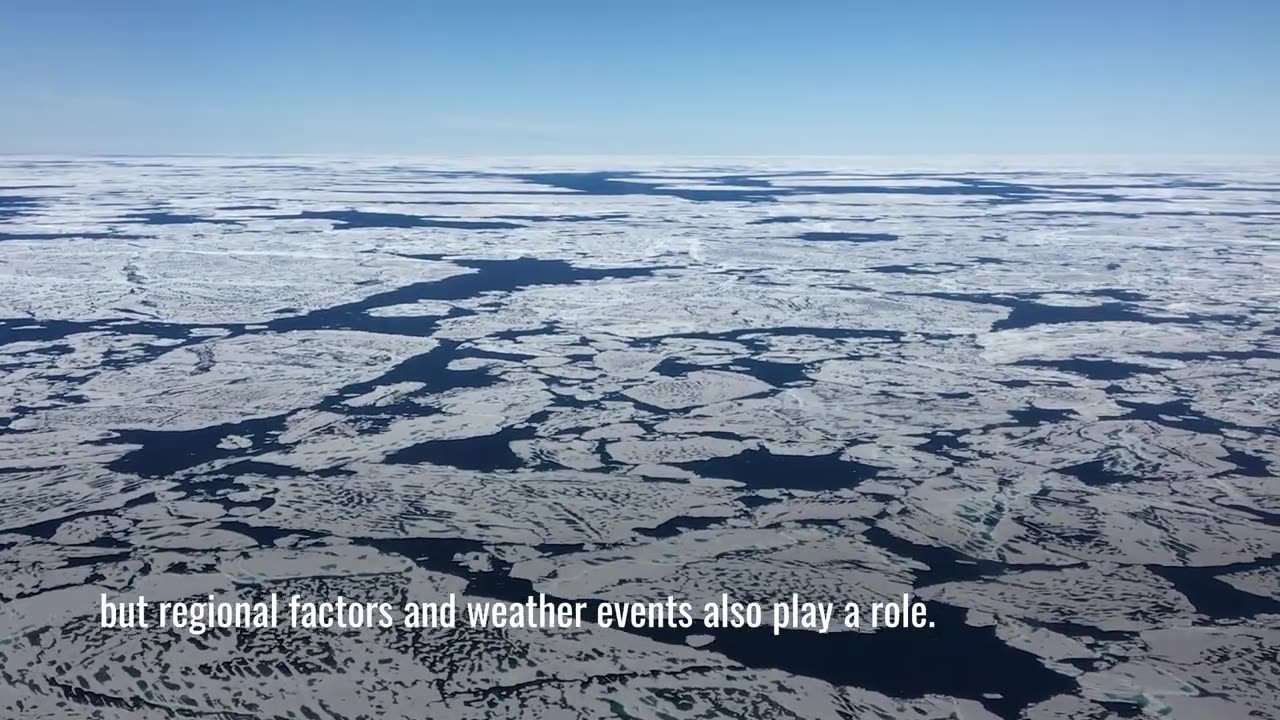
Arctic Sea Ice Hits 2023 Maximum
On March 6, 2023, the Arctic sea ice pack appeared to reach its maximum extent for this winter, at 14.62 million square kilometers, or 5.64 million square miles, according to the National Snow and Ice Data Center.
Fieldwork and satellites like NASA’s ICESat-2 satellite are monitoring the changing ice pack, and helping to predict how the ice will change in the future.
Sea ice is frozen seawater that floats on the ocean surface. It forms in both the Arctic and the Antarctic in each hemisphere’s winter; it retreats in the summer, but does not completely disappear. This floating ice has a profound influence on the polar environment, influencing ocean circulation, weather, and regional climate.
Since 1979, satellites have provided a consistent continuous record of sea ice. Through 2015, the average monthly September extent of Arctic sea ice has declined by 13.4 percent per decade relative to the average from 1981 to 2010. Declines are occurring in every geographic area, in every month, and every season. Natural variability and rising temperatures linked to global warming appear to have played a role in this decline. The Arctic may be ice-free in summer before the end of this century.On March 6, 2023, the Arctic sea ice pack appeared to reach its maximum extent for this winter, at 14.62 million square kilometers, or 5.64 million square miles, according to the National Snow and Ice Data Center.
Fieldwork and satellites like NASA’s ICESat-2 satellite are monitoring the changing ice pack, and helping to predict how the ice will change in the future.
Sea ice is frozen seawater that floats on the ocean surface. It forms in both the Arctic and the Antarctic in each hemisphere’s winter; it retreats in the summer, but does not completely disappear. This floating ice has a profound influence on the polar environment, influencing ocean circulation, weather, and regional climate.
Since 1979, satellites have provided a consistent continuous record of sea ice. Through 2015, the average monthly September extent of Arctic sea ice has declined by 13.4 percent per decade relative to the average from 1981 to 2010. Declines are occurring in every geographic area, in every month, and every season. Natural variability and rising temperatures linked to global warming appear to have played a role in this decline. The Arctic may be ice-free in summer before the end of this century.
-
 21:55
21:55
GritsGG
12 hours agoMega Win Streak On Warzone! Over 4100 Wins on BO6 WZ!
39 -
 20:22
20:22
The Pascal Show
1 day ago $2.61 earnedARE THEY IGNORING HER?! Is The White House & FBI Ignoring Candace Owens' A**assination Claims?!
23.8K14 -
 1:00:45
TruthStream with Joe and Scott
1 day agoMondays with Matt Geiger from Verity Metals: Gold, Silver, The Housing Market and more. Live 12/1 6pm pacific #519
2.57K -
 2:17:46
The Connect: With Johnny Mitchell
3 days ago $14.61 earnedA Sitdown With The Real Walter White: How An Honest Citizen Became A Synthetic Drug Kingpin
75.6K1 -
 2:40:08
PandaSub2000
8 hours agoDEATH BET | Solo Episode 01 (Edited Replay)
95 -
 LIVE
LIVE
Lofi Girl
3 years agolofi hip hop radio 📚 - beats to relax/study to
1,208 watching -
 2:03:38
Inverted World Live
7 hours agoSatanic Pedophile Network in Australia | Ep. 149
219K53 -
 3:34:45
TimcastIRL
7 hours agoCandace Owens Implies TPUSA KILLED Charlie Kirk, Claims Failed Bibi Deal Cost MILLIONS | Timcast IRL
220K159 -
 6:38:10
SpartakusLIVE
8 hours agoTrios w/ The BOYS on WZ and then we're teaching Jean ARC RAIDERS
75.8K7 -
 2:55:52
SOLTEKGG
6 hours agoLIVE - NOT LOSING A MATCH - NEW PC - !pc
35.6K2