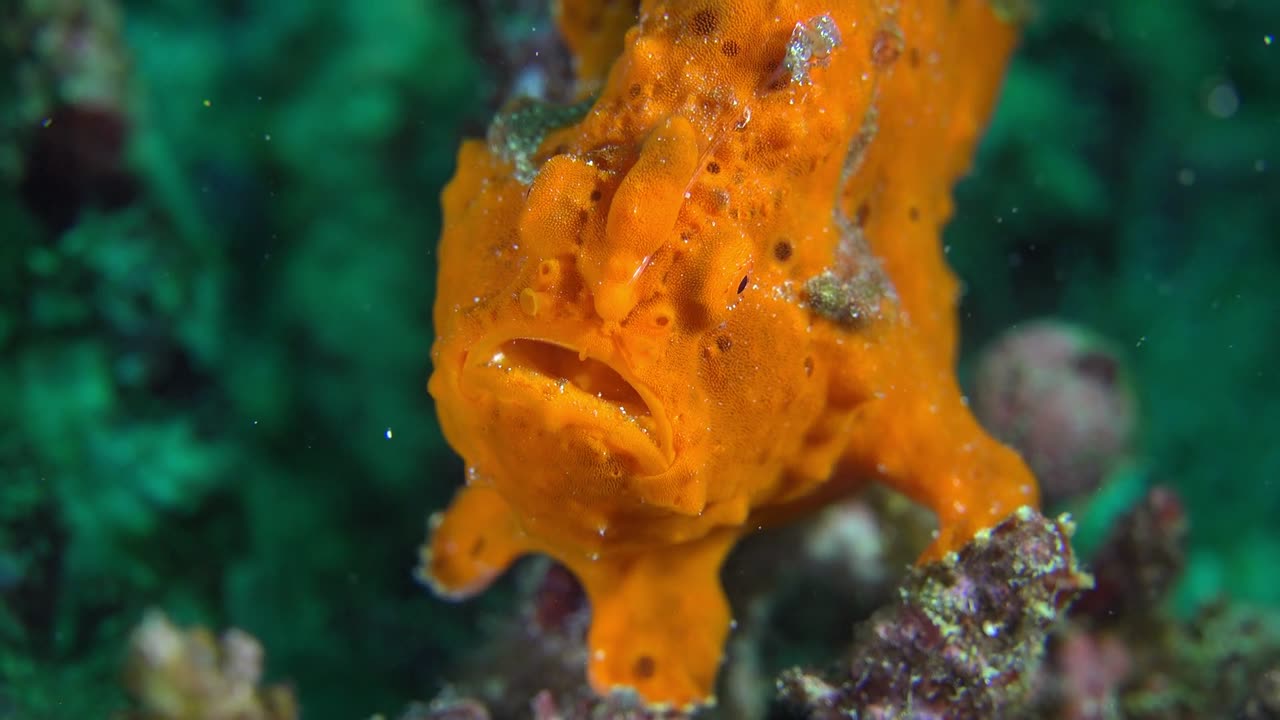
Upclose with the Bizarre Orange FrogFish
The orange frogfish, scientifically known as Antennarius pictus, is a fascinating and peculiar marine creature found in the warm waters of the Indo-Pacific region. It belongs to the family Antennariidae and is renowned for its extraordinary appearance and unique hunting techniques. Here are some intriguing facts about the orange frogfish:
Camouflage Masters: Orange frogfish are masters of camouflage. They have a warty, textured skin covered in small protuberances and can change their color to match their surroundings, making them nearly invisible to both prey and predators. This incredible mimicry allows them to patiently wait for their prey, often resembling sponges or pieces of coral.
Bizarre Shape: These fish sport an unusual body shape characterized by a stocky, somewhat spherical body, and they have modified dorsal fins that resemble tiny "fishing rods" with a lure at the end. This lure is an elongated appendage that dangles in front of their mouth, attracting unsuspecting prey.
Slow Movers: Orange frogfish are not fast swimmers. Instead, they use their pectoral fins like legs to slowly "walk" along the seafloor or crawl on corals and sponges. This slow movement helps them maintain their cover and sneak up on prey.
Ambush Predators: These fish are ambush predators and have a voracious appetite. They typically feed on smaller fish, shrimp, and other small marine organisms. When prey comes within striking distance, the orange frogfish can lunge forward with astonishing speed, engulfing the unsuspecting victim in its large mouth.
Incredible Diversity: Frogfish, in general, come in a wide variety of colors and patterns, and the orange frogfish is just one of many unique species. They can be found in shades ranging from bright orange to mottled browns and whites, adapting to the specific habitats in which they live.
Solitary Creatures: Orange frogfish are typically solitary and don't interact much with other members of their species. They are often found in sandy or rubble areas, coral reefs, or on rocky substrates, blending seamlessly into their environment.
Reproduction: Little is known about the reproduction of orange frogfish. They release their eggs in a gelatinous mass, which floats near the surface. Once hatched, the tiny frogfish larvae disperse in ocean currents, undergoing a remarkable transformation as they grow into adults.
The orange frogfish's remarkable adaptation and appearance make it a sought-after subject for underwater photographers and a captivating sight for divers who venture into its natural habitat, adding a touch of wonder and mystery to the vibrant world beneath the ocean's surface.
-
 LIVE
LIVE
LONEWOLFanCUB
4 hours ago $6.44 earned🎙 🎙 LONE WOLFS ROUNDTABLE SUNDAY 🎙 🎙 : Premium Creator : DAILY LIFE IRL
1,874 watching -
 51:12
51:12
hickok45
6 hours agoSunday Shoot-a-Round # 320
2.45K8 -
 38:42
38:42
Mike Krabal
6 days ago $2.03 earnedBuilding an Awesome Rocketship Mini Camper!
7.87K14 -
 10:57
10:57
Full Ahead
17 days ago $0.18 earnedToronto: A Love Letter
2.14K1 -
 16:00
16:00
Stammherz - Fine woodworking, end grain cutting boards & process-driven builds
5 days ago $0.35 earnedI used only 2 Woods to make this
4.13K4 -
 24:58
24:58
Athlete & Artist Show
21 hours agoOlympics Week 1 Review, Can CANADA Win GOLD?!
1.27K -
 2:16:05
Game On!
19 hours ago $10.34 earnedWiseguy Roundtable: Life AFTER Football! BEST BETS!
141K4 -
 11:40
11:40
Adam Does Movies
1 day ago $1.74 earnedGood Luck, Have Fun, Don't Die - Movie Review
21.8K4 -
 27:43
27:43
marcushouse
1 day ago $16.90 earnedSpaceX’s Starship Strategy Just Changed… Big Time!
32.6K22 -
 29:35
29:35
Connor Tomlinson
1 day agoRupert Lowe Rescues Britain's Crown From the Gutter
18.9K21