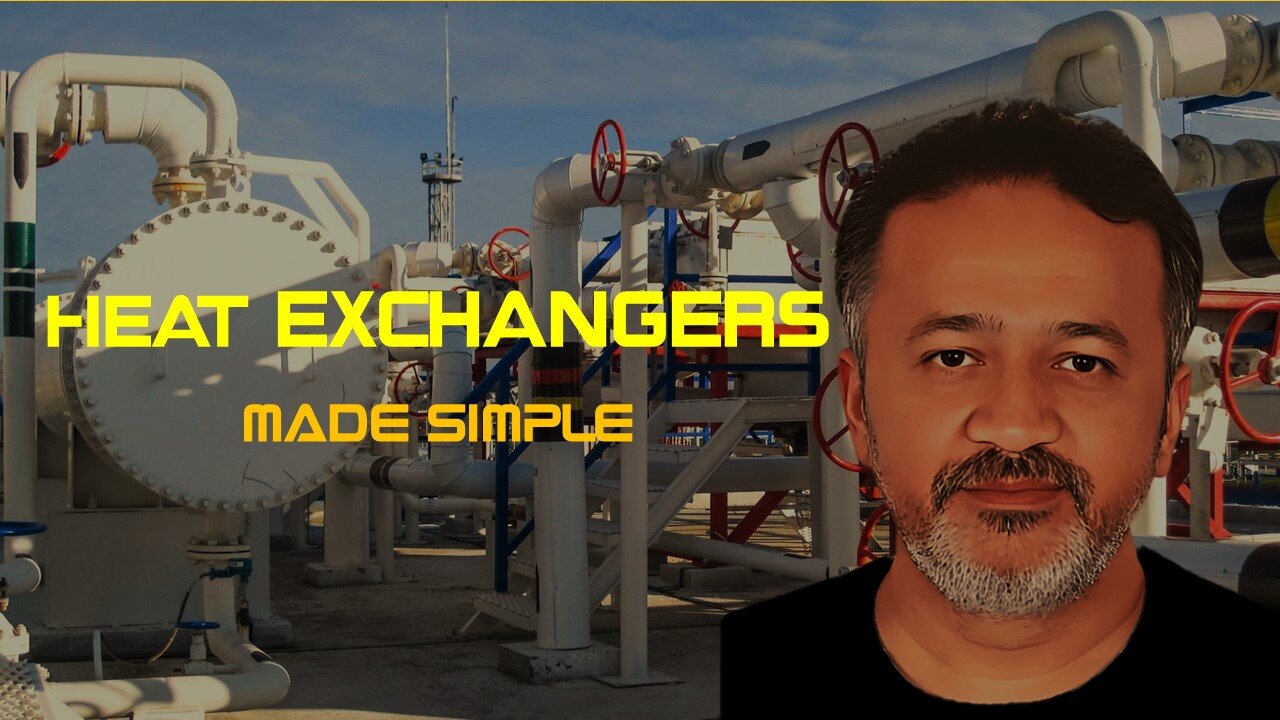
Heat Exchangers Demystified: Essential Concepts and Designs |Mastering the Art of Heat Transfer
Heat exchangers are crucial devices used in various industries to efficiently transfer heat from one fluid or gas stream to another. They are designed to maximize the exchange of thermal energy while minimizing energy loss.
The primary purpose of a heat exchanger is to facilitate the transfer of heat between two mediums that are at different temperatures. This can involve either heating or cooling one of the fluids or achieving a temperature exchange without a significant change in either fluid's temperature.
Heat exchangers come in different types and designs, but the fundamental principle remains the same: the fluids flow in separate paths, allowing heat to transfer from one fluid to the other. Some common types of heat exchangers include:
Shell and Tube Heat Exchangers: This is the most common type of heat exchanger, consisting of a shell (a large outer vessel) and multiple tubes within it. One fluid flows through the tubes, while the other flows outside the tubes within the shell. Heat is transferred through the tube walls from one fluid to the other.
Plate Heat Exchangers: These heat exchangers consist of a series of plates with alternating flow channels. The fluids flow through these channels in a counterflow or parallel flow configuration, allowing for efficient heat transfer. Plate heat exchangers are compact, lightweight, and have high heat transfer coefficients.
Finned Tube Heat Exchangers: In this type, tubes are equipped with extended surfaces or fins to increase the heat transfer area. The fins enhance the heat transfer by improving surface contact and increasing the convective heat transfer coefficient. Finned tube heat exchangers are commonly used in air conditioning and refrigeration systems.
Air-to-Air Heat Exchangers: These heat exchangers transfer heat between two separate air streams, often used in HVAC systems. They are designed to recover heat from the exhaust air and transfer it to the incoming fresh air, improving energy efficiency.
Heat exchangers find extensive applications in industries such as HVAC, power generation, chemical processing, petroleum refining, food and beverage production, and more. They are crucial for processes like heat recovery, thermal management, waste heat utilization, and temperature control.
Efficient operation and maintenance of heat exchangers are essential to ensure optimal heat transfer and prevent fouling or scaling that can hinder performance. Regular inspections, cleaning, and repair are necessary to maintain their efficiency and extend their lifespan.
In summary, heat exchangers play a vital role in facilitating the exchange of heat between fluids or gases in a wide range of applications. They enable energy conservation, process optimization, and improved system performance by efficiently transferring thermal energy from one medium to another.
-
 1:46:23
Simply Bitcoin
3 hours ago $2.11 earnedEXPOSED: BlackRock Revealed WHY the price of Bitcoin is stuck at $90k!! | EP 1398
6.41K11 -
 DVR
DVR
Nerdrotic
4 hours ago $2.70 earnedNerdrotic Nooner 543
48.2K3 -

Dr Disrespect
4 hours ago🔴LIVE - DR DISRESPECT - TERMINATOR 2D: NO FATE - FULL GAME
43.9K5 -
 6:59
6:59
Buddy Brown
1 hour agoSCARY Message about the 1930's Going viral now... | Buddy Brown
2.91K4 -
 LIVE
LIVE
Jeff Ahern
1 hour agoMonday Madness with Jeff Ahern
143 watching -
 59:48
59:48
Timcast
3 hours agoViolence ERUPTS Over the Weekend, TERROR ATTACK In Australia
204K56 -
 1:55:56
Steven Crowder
6 hours agoAustralia Shooting: It's not the Guns it's Islam
462K428 -
 1:14:04
Sean Unpaved
4 hours agoVikings ELIMINATE Cowboys From Playoff Contention | UNPAVED
22.6K3 -
 1:01:04
The Rubin Report
4 hours agoMSNOW Host Realizes Ilhan Omar Is a Monster After Her Australia Shooting Reaction
63.8K92 -
 3:03:41
The Bubba Army
3 days ago"ROB REINER MURDERED" By His Own Son? - Bubba the Love Sponge® Show | 12/15/25
32.3K9