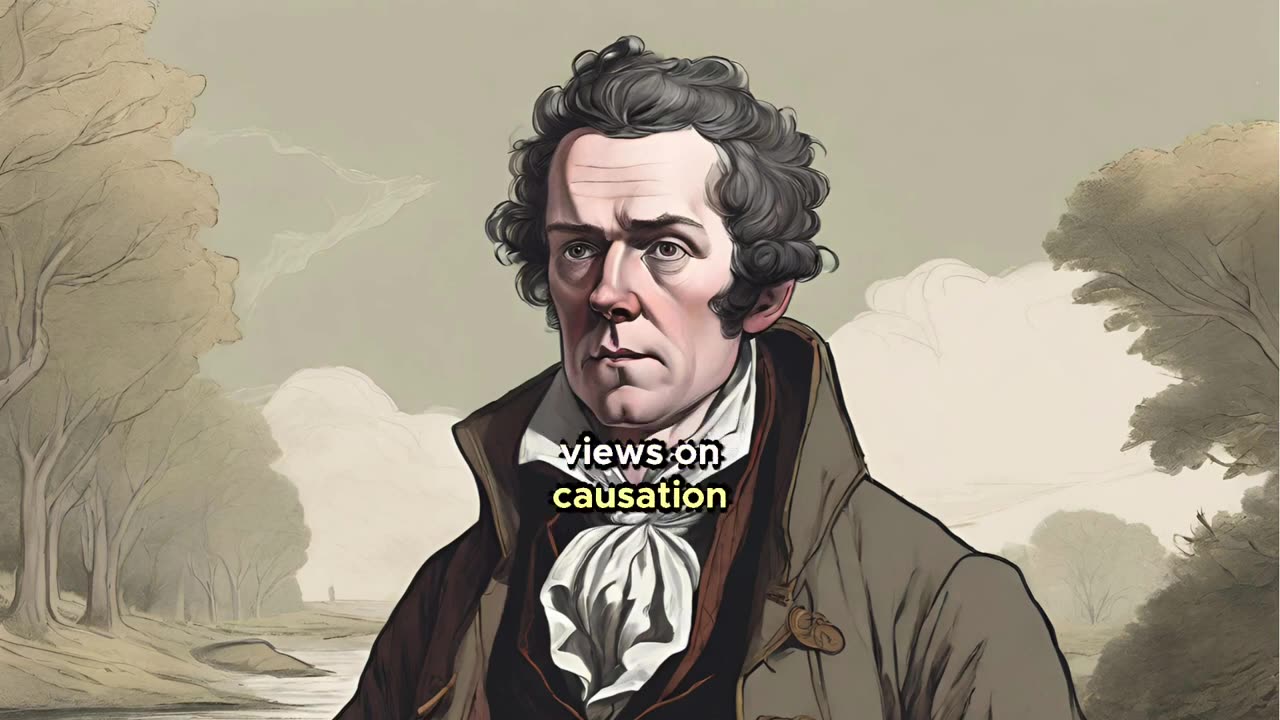
Thomas Reid Philosophy, explained and summarized in 3 minutes
Thomas Reid, an 18th-century Scottish philosopher, is renowned for his commonsense philosophy, a perspective that seeks to ground our understanding of the world in everyday experiences. Rejecting the skepticism of his contemporaries, Reid aimed to restore confidence in our perceptions and the reliability of common sense.
At the core of Reid's philosophy is the idea that our immediate perceptions provide a foundation for knowledge. He argued against the prevailing notion that the mind is a passive recipient of sensory impressions, proposing instead that we actively perceive the world through what he called "common sense." For Reid, common sense is not a set of preconceived ideas, but the innate capacity to make immediate judgments about the world around us.
Reid challenged David Hume's views on causation, asserting that we naturally believe in cause and effect based on our observations. He emphasized that our everyday experiences, rather than abstract reasoning, form the basis for understanding causation. This rejection of Humean skepticism aimed to restore confidence in our ability to know and understand the world.
Another key aspect of Reid's philosophy is his critique of the representational theory of perception. Unlike philosophers who posited that our perceptions are representations of external objects, Reid argued that we directly perceive the external world. He used the example of touch, stating that when we feel an object, we are in direct contact with it, not with a mental representation.
In ethics, Reid proposed a moral sense theory, suggesting that we have an innate capacity to distinguish between right and wrong. He rejected utilitarianism and deontological ethics, asserting that moral principles are grounded in our natural sense of morality. This approach aligns with Reid's broader emphasis on the importance of common sense in various aspects of human understanding.
While Reid's ideas gained prominence in the 19th century, they later faced challenges from other philosophical movements. However, his emphasis on the reliability of common sense and the direct perception of the external world continues to influence contemporary discussions in epistemology and philosophy of mind.
In conclusion, Thomas Reid's philosophical teachings offer a refreshing departure from the skepticism of his time. By championing common sense, he sought to establish a firm foundation for knowledge and perception, challenging prevailing philosophical trends. His ideas remain relevant, inviting us to reconsider the role of immediate experience in shaping our understanding of reality.
-
 LIVE
LIVE
Steven Crowder
3 hours ago🔴 Trump's Greenland Deal: Triumph or Taco?
25,842 watching -
 1:04:45
The Rubin Report
1 hour agoListen to ‘The View’ Crowd Gasp as Sunny Hostin Accidentally Reveals How Ignorant She Is
3.03K19 -
 LIVE
LIVE
Wendy Bell Radio
5 hours agoKing Of The World
4,953 watching -
 LIVE
LIVE
Viss
1 hour ago🔴(LIVE) - I’m Stockpiling Weapons… You’ll See Why Soon! | ARC RAIDERS
214 watching -
 1:01:09
BonginoReport
3 hours agoThe Arrests Have Begun | Episode 209 - 01/22/26 VINCE
156K117 -
 LIVE
LIVE
The Mel K Show
1 hour agoMORNINGS WITH MEL K - Behind the Curtain: World Wakes Up to Globalist Subversion with Noor Bin Ladin- 1-22-26
669 watching -
 LIVE
LIVE
The Shannon Joy Show
2 hours ago🔥SJ LIVE Jan 22 - Donald Trump: ‘I’m A Dictator’ * ICE Agents Assault Marine Corp Vet * Warrentless House Raids In Minn W/ Brett Miller🔥
189 watching -
 LIVE
LIVE
Grant Stinchfield
1 hour agoMN AG Ellison Caught on Tape - The Audio He Didn’t Want You to Hear
335 watching -
 LIVE
LIVE
LONEWOLFanCUB
3 hours ago $0.17 earnedLETS GO RUMBLE !!! HAIRCUT OR NOT TO HAIRCUT ?!?!?!?!
137 watching -
 LIVE
LIVE
LFA TV
15 hours agoLIVE & BREAKING NEWS! | THURSDAY 1/22/26
4,195 watching