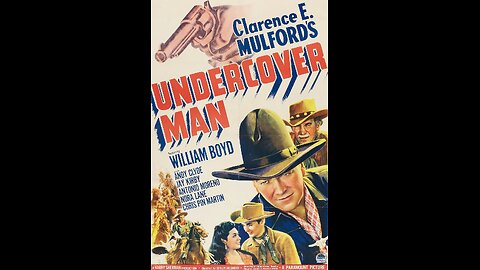
Undercover Man (1942) | Directed by Lesley Selander

Classic Films & Movies Archive
A Hopalong Cassidy Western, one of the long-running entries in the series starring William
Undercover Man is a Hopalong Cassidy Western in which Hoppy goes undercover to infiltrate a gang of rustlers who have been terrorising ranchers. Disguising himself as an outlaw, he works from the inside to expose the criminals, gather evidence, and restore order to the region. The film follows the familiar Hopalong blend of frontier justice, undercover deception, and fast-paced action.
Genre: Western
Director: Lesley Selander
Lesley Selander was one of Hollywood’s most prolific Western directors, with a career spanning over three decades and more than 100 Western features. Known for efficient production, tight pacing, and energetic action sequences, he became a mainstay of B-movie Westerns for studios such as Paramount, RKO, and United Artists. Selander’s work is often praised for its clarity and reliability within the genre.
Star Cast:
William Boyd as Hopalong Cassidy
Andy Clyde as California Carlson
Jay Kirby as Johnny Travers
Antonio Moreno
Robert Mitchum (early, small role – uncredited)
George Reeves
Roy Barcroft
Earle Hodgins
Richard Alexander
As with most Hopalong Cassidy films of the period, audiences received Undercover Man warmly for its dependable mix of action, moral clarity, and frontier heroics. Fans of the series appreciated the undercover angle, which added novelty to the usual formula. Critics considered it a solid, well-paced entry in the long-running franchise.
Fun Facts:
This film is one of the later entries in the Hopalong Cassidy series released through United Artists.
Robert Mitchum appeared in several Hopalong Cassidy films in minor or uncredited roles early in his career; Undercover Man is one of them.
Lesley Selander directed a large portion of the Hoppy films, making him one of the defining visual voices of the franchise.
The film reused several exterior locations familiar from many 1930s and 1940s Westerns due to Republic and UA’s shared production sites.
* This Rumble Movie Channel is comprehensively indexed on https://kinoquick.com - find you favourite movies fast & free!
* Follow this channel to be notified of daily movie updates.
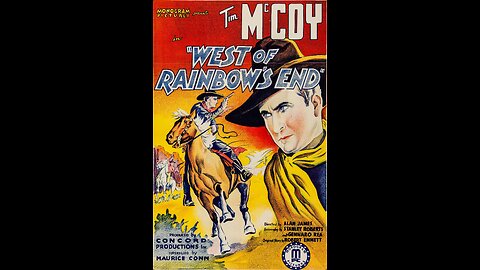
West of Rainbow's End (1938) | Directed by Alan James
Classic Films & Movies Archive
A former Texas Ranger, Tim Hart, comes out of retirement when his foster father, Lightning Ed, is murdered while investigating a string of train robberies near the settlement of Rainbow’s End. Tracking the gang, Tim discovers that a seemingly respectable local figure, George Johnson, and his henchman Speck are behind the crimes. As he digs deeper, Tim must protect the Carter family ranch, expose the bandits, and bring justice back to a troubled frontier town.
Genre: Western / Action
Director: Alan James
Alan James was an American film director and writer whose career stretched from the silent era into the sound period. Working largely in low-budget Westerns and action pictures, he became a familiar name in the B-movie world, turning out tightly paced, modestly budgeted films for studios such as Monogram and related independents. His work often featured rugged locations, fast-moving plots, and dependable cowboy leads, helping to define the look and feel of 1930s programmer Westerns.
Star Cast:
Tim McCoy as Tim Hart
Kathleen Eliot as Joan Carter
Walter McGrail as George Reynolds / Johnson
George Cooper as Happy
Mary Carr as Mrs. Martha Carter
Bob Kortman as Speck
Hank Bell as Joe
Frank LaRue as Lightning Ed
Reed Howes as Ted Crane
Edward Coxen as Joel Carter
Jimmy Aubrey as Postmaster Jed
George Chang as Elmer the Cook
At the time of its release, West of Rainbow’s End played mainly in the B-Western circuit, where audiences looked for straightforward stories, clear heroes and villains, and plenty of action. Tim McCoy’s presence as a seasoned cowboy star gave the film extra appeal to fans familiar with his earlier work. While it did not attract major critical attention and was not positioned as an “A” picture, it served its purpose as a solid, one-hour frontier adventure on double bills and Saturday matinees, particularly in small-town and rural cinemas.
Fun Facts:
The film runs just under an hour (about 57 minutes), which was typical for Monogram’s Western programmers of the late 1930s.
West of Rainbow’s End was released in January 1938, during a particularly busy period for Tim McCoy, who was starring in a run of low-budget Westerns aimed at the matinee market.
The story centers on train robberies and a ranch land grab, themes that were popular in 1930s Westerns because they allowed for both action set pieces and local-town intrigue.
Several supporting players, such as Bob Kortman, Hank Bell, and Frank LaRue, were regular faces in Westerns of the era, often appearing uncredited or in character roles across many similar productions.
Although some modern references list Conn Pictures Corporation in association with the film, contemporary documentation and later databases also credit Concord Productions and Monogram Pictures as key companies involved, reflecting the often tangled nature of small studio arrangements in the 1930s.
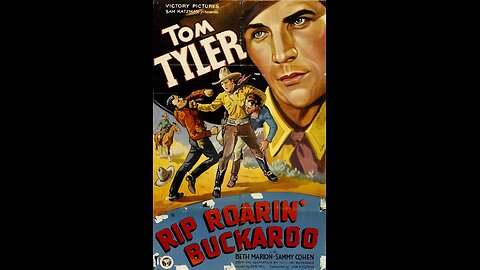
Rip Roarin' Buckaroo (1936) | Directed by Robert F. Hill
Classic Films & Movies Archive
Rip Roarin' Buckaroo is a fast-paced western adventure that follows a cowboy hero drawn into a struggle against rustlers and criminal gangs on the frontier. Blending action, justice, and romance, the film portrays the challenges of taming the lawless West while delivering plenty of horseback chases and shootouts typical of the genre.
Genre: Western
Director: Robert F. Hill
Robert F. Hill (1886–1966) was a Canadian-born director and screenwriter who worked extensively in Hollywood from the silent era through the 1950s. Known for his ability to work quickly and efficiently, he directed more than 100 films, including westerns, serials, and low-budget adventures. He often worked for Poverty Row studios and earned a reputation as a dependable craftsman in the B-movie field. Though not a household name, Hill contributed significantly to the era’s western and action film output.
Star Cast:
Tom Tyler
Beth Marion
Sammy Cohen
Forrest Taylor
Charles King
Earl Dwire
Roger Williams
At the time of its release, Rip Roarin' Buckaroo was received as an entertaining B-western aimed at fans of cowboy films. Critics regarded it as formulaic but competent, while audiences enjoyed Tom Tyler’s rugged heroism and the film’s lively pace. It fit neatly into the 1930s trend of fast, affordable westerns that filled double-bill programs.
Fun Facts:
Tom Tyler, the lead actor, was a prolific western star who later gained fame for playing Captain Marvel in the 1941 serial The Adventures of Captain Marvel.
Beth Marion was a frequent leading lady in low-budget westerns and appeared alongside many cowboy stars of the decade.
The movie was produced by Victory Pictures Corporation, a Poverty Row studio that specialized in quick, low-cost productions.
Robert F. Hill, sometimes credited as Bob Hill, directed a wide range of serials and westerns and had also worked as a screenwriter earlier in his career.
* This Rumble Movie Channel is comprehensively indexed on https://kinoquick.com - find you favourite movies fast & free!
* Follow this channel to be notified of daily movie updates.
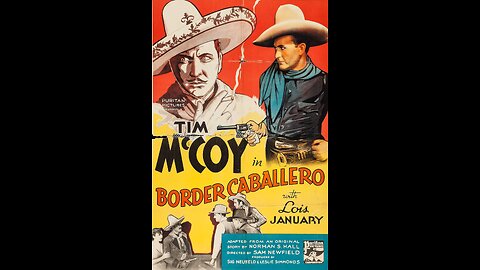
Border Caballero (1936) | Directed by Sam Newfield
Classic Films & Movies Archive
Border Caballero is a western drama that tells the story of lawmen and outlaws clashing along the U.S.–Mexico border. The film blends action, intrigue, and romance as a government agent takes on smuggling operations and criminal gangs while navigating life on both sides of the border.
Genre: Western
Director: Sam Newfield
Sam Newfield (1899–1964) was one of the most prolific directors in American cinema, with over 250 films to his name. He specialized in low-budget westerns, mysteries, and adventure films, many of them made for Poverty Row studios like Producers Releasing Corporation (PRC). Known for his fast-paced and economical style, Newfield worked under his own name as well as pseudonyms such as Peter Stewart and Sherman Scott. While his films were rarely high-prestige projects, he earned a reputation as a dependable director who could deliver complete features on very tight budgets and schedules.
Star Cast:
Tim McCoy
Lois January
J. Frank Glendon
Ralph Byrd
Wheeler Oakman
Jack Rockwell
Edward Earle
Border Caballero was released as part of the popular B-western cycle of the 1930s. Audiences enjoyed its straightforward storytelling and action, though critics often regarded it as a formulaic western typical of the era. Tim McCoy’s presence as the leading man gave the film appeal, as he was a well-known cowboy star at the time. The film did not stand out critically but found its place as a solid entry in the routine western market.
Fun Facts:
Tim McCoy, the star, was a real-life expert on western history and Native American culture, which lent authenticity to his cowboy roles.
The film was directed by Sam Newfield, later nicknamed the “king of the B’s” for his massive output of low-budget features.
Ralph Byrd, appearing in the cast, would go on to become famous for playing the comic-strip hero Dick Tracy in film serials.
Like many B-westerns of its time, Border Caballero was produced quickly and inexpensively, designed to fill out double-bill programs in neighborhood theaters.
* This Rumble Movie Channel is comprehensively indexed on https://kinoquick.com - find you favourite movies fast & free!
* Follow this channel to be notified of daily movie updates.
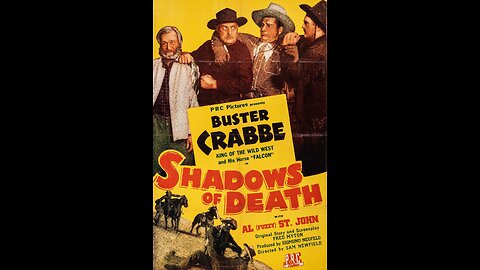
Shadows of Death (1945) | Directed by Sam Newfield
Classic Films & Movies Archive
Shadows of Death is a western from Monogram Pictures featuring the Texas Rangers in another law-and-order adventure. The story follows Tex Haines, played by Tex Ritter, and his fellow Rangers as they investigate a series of violent crimes tied to a corrupt businessman scheming to control land and resources. The film mixes action, gunfights, and songs with the straightforward good-versus-evil themes typical of B-westerns of the period.
Genre: Western
Director: Sam Newfield
Sam Newfield (1899–1964) was one of the most prolific directors in Hollywood history, with more than 250 films to his credit. Known for his fast and economical style, he specialized in low-budget westerns, adventure serials, and exploitation films, often working for Producers Releasing Corporation and Monogram Pictures. Despite limited resources, Newfield’s efficiency kept him in constant demand throughout the 1930s and 1940s.
Star Cast:
Tex Ritter as Tex Haines
Dave O’Brien as Jim Steele
Guy Wilkerson as Panhandle Perkins
Robert McKenzie as Sheriff Hodges
I. Stanford Jolley as Henry Blackstone
Carleton Young as Steve Gentry
Kay Hughes as Ruth Hodges
Like most of the Texas Rangers series, Shadows of Death was aimed squarely at western fans looking for dependable entertainment. Audiences enjoyed the blend of action, comedy, and music, while critics acknowledged it as standard B-western fare. It did not break new ground but was welcomed by moviegoers who followed Tex Ritter’s popular singing cowboy roles.
Fun Facts:
The film was part of the long-running Texas Rangers series, which included more than 20 entries released by Monogram Pictures between 1942 and 1945.
Tex Ritter, a major singing cowboy star of the era, was also a recording artist whose music career helped draw audiences to his films.
Dave O’Brien, who played Jim Steele, later became well known for his work in short subjects and as a writer/director for the Pete Smith Specialties comedy series at MGM.
The film’s director, Sam Newfield, often worked under pseudonyms like Peter Stewart and Sherman Scott to make it seem as if the studio employed more directors than it actually did.
Shadows of Death was released during the final year of World War II, a time when B-westerns offered inexpensive escapist entertainment for American audiences.
* This Rumble Movie Channel is comprehensively indexed on https://kinoquick.com - find you favourite movies fast & free!
* Follow this channel to be notified of daily movie updates.
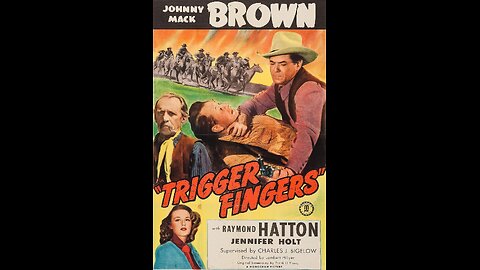
Trigger Fingers (1946) | Directed by Lambert Hillyer
Classic Films & Movies Archive
Trigger Fingers is a low-budget western from the mid-1940s that delivers a familiar tale of lawmen, outlaws, and the fight for justice in the rugged frontier. The film follows U.S. Marshals who go undercover to dismantle a gang of outlaws terrorizing a small town, blending traditional western themes of loyalty, bravery, and quick-draw gunfights.
Genre: Western
Director: Lambert Hillyer
Lambert Hillyer was an American director and screenwriter whose career spanned from the silent era into the 1950s. He directed over 160 films and numerous television episodes, often specializing in westerns and action pictures. Hillyer also directed the cult horror classic Dracula's Daughter (1936) and was known for his efficient, no-nonsense approach to filmmaking, particularly on B-movie westerns.
Star Cast:
Johnny Mack Brown as U.S. Marshal Johnny Mack Brown
Raymond Hatton as U.S. Marshal Banty
Jennifer Holt as Janet Hammond
Riley Hill as Steve Hammond
John Merton as Sheriff Ed Newman
Steve Clark as Tom Lambert
Ed Cassidy as Judge Hammond
Roy Butler as Jed Hammond
Trigger Fingers was one of many Johnny Mack Brown westerns of the 1940s, appealing mainly to fans of Saturday matinee oaters. It offered dependable entertainment with straightforward storytelling and action, though it was not a standout in critical circles. The film fit neatly into the formulaic but popular western B-pictures that kept audiences engaged week after week.
Fun Facts:
Johnny Mack Brown, a former college football star, became a popular western hero in dozens of low-budget productions during the 1930s and 1940s.
Raymond Hatton, Brown’s frequent sidekick, had a long Hollywood career dating back to the silent era and appeared in over 400 films.
Like many westerns of the time, the movie was shot quickly on modest budgets, often reusing sets and costumes from other productions.
The film was distributed by Monogram Pictures, a studio well known for churning out reliable B-movies across various genres.
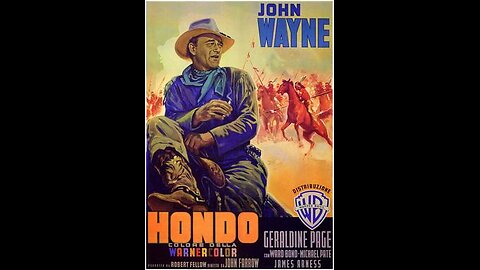
Hondo (1953) | Directed by John Farrow
Classic Films & Movies Archive
Hondo is a Western film set in the rugged American frontier. The story follows Hondo Lane, a tough and solitary U.S. cavalry scout who arrives at the isolated ranch of a woman and her young son. As tensions rise with nearby Apache tribes, Hondo becomes both protector and reluctant family figure, while facing conflicts of loyalty, survival, and honor. The film explores themes of courage, cross-cultural respect, and the harsh realities of frontier life.
Genre: Western
Director: John Farrow
John Farrow (1904–1963) was an Australian-born director, screenwriter, and producer who made a long career in Hollywood. Known for his efficiency and strong visual style, he directed a variety of films ranging from thrillers to historical epics. His notable works include Wake Island (1942), The Big Clock (1948), and Around the World in 80 Days (1956, as co-writer, which earned him an Academy Award). Farrow was married to actress Maureen O’Sullivan and was the father of actress Mia Farrow.
Star cast
* John Wayne as Hondo Lane
* Geraldine Page as Angie Lowe
* Ward Bond as Buffalo Baker
* Michael Pate as Vittorio
* James Arness as Lennie
* Leo Gordon as Ed Lowe
The film was a box office success and well received by audiences who admired John Wayne’s rugged performance. Critics praised its outdoor cinematography, action sequences, and Geraldine Page’s strong screen presence in her film debut, which earned her an Academy Award nomination for Best Supporting Actress. Though sometimes overshadowed by Wayne’s other Westerns, Hondo remains a respected entry in his career and in the genre.
Fun Facts
* The film was originally shot in 3D, making it part of the early 1950s wave of 3D cinema, though it was also widely shown in standard format.
* Geraldine Page made her film debut here and received an Academy Award nomination, unusual for a first performance.
* The story was adapted from a short story by Louis L’Amour titled "The Gift of Cochise."
* John Wayne was so impressed with the story that his production company, Batjac Productions, acquired the rights from Warner Bros.
* The movie was filmed in Mexico, adding authentic desert landscapes to the production.
* Michael Pate, who played the Apache chief Vittorio, was an Australian actor who often portrayed Native American roles in Hollywood.
* This Rumble Movie Channel is comprehensively indexed on https://kinoquick.com - find you favourite movies fast & free!
* Follow this channel to be notified of daily movie updates.
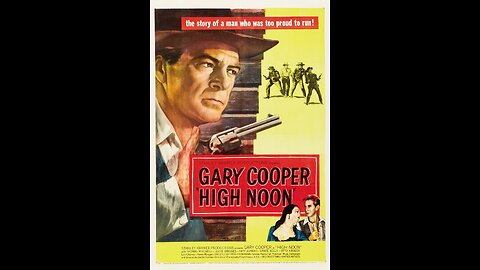
High Noon (1952) | Directed by Fred Zinnemann
Classic Films & Movies Archive
High Noon is a tense Western drama that unfolds in near real-time, telling the story of Marshal Will Kane, who learns that a dangerous outlaw he once arrested has been released and is arriving on the noon train seeking revenge. As the clock ticks down, Kane seeks help from the townspeople he has protected, only to find himself abandoned and forced to face the threat alone. The film explores themes of duty, morality, and personal courage under pressure.
Genre: Western, drama, suspense
Director: Fred Zinnemann
Fred Zinnemann (1907–1997) was an Austrian-born American film director renowned for his precise craftsmanship and focus on moral dilemmas. After emigrating to the United States, he began his career in short films before moving to features. Zinnemann’s work often balanced realism with strong emotional narratives, as seen in From Here to Eternity, The Nun’s Story, and A Man for All Seasons. He won multiple Academy Awards and is remembered for his ability to draw nuanced performances from actors.
Star cast:
* Gary Cooper as Marshal Will Kane
* Grace Kelly as Amy Fowler Kane
* Lloyd Bridges as Deputy Marshal Harvey Pell
* Katy Jurado as Helen Ramírez
* Thomas Mitchell as Mayor Jonas Henderson
* Ian MacDonald as Frank Miller
High Noon received widespread acclaim for its taut storytelling, innovative real-time structure, and moral complexity. Gary Cooper’s performance was particularly praised, earning him the Academy Award for Best Actor. The film won four Oscars, including Best Editing and Best Original Song for “Do Not Forsake Me, Oh My Darlin’,” and was nominated for Best Picture. Over time, it has become recognized as one of the greatest Westerns ever made, often cited for its political subtext during the McCarthy era.
Fun facts:
* The story was adapted from John W. Cunningham’s short story “The Tin Star.”
* Gary Cooper was suffering from serious health problems during filming, which added to the weary and strained appearance of his character.
* Grace Kelly was only 21 years old and at the start of her career, making this one of her first major film roles.
* The film’s real-time pacing was a bold narrative choice that heightened tension and made the noon showdown especially suspenseful.
* Screenwriter Carl Foreman infused the story with allegorical criticism of Hollywood’s blacklisting during the McCarthy era, making it a politically charged work for its time.
* This Rumble Movie Channel is comprehensively indexed on https://kinoquick.com - find you favourite movies fast & free!
* Follow this channel to be notified of daily movie updates.
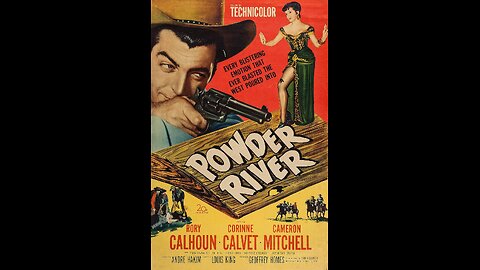
Powder River (1953) | Directed by Louis King
Classic Films & Movies Archive
Powder River is a Western about Chino Bull, a retired lawman who takes up gold prospecting in a small frontier town. His plans for a quiet life are disrupted when he becomes involved in a deadly conflict between two young gunslingers and a local saloon singer. As tensions rise, Chino is drawn back into his old role of enforcing the law, leading to a dramatic showdown. The story blends themes of redemption, loyalty, and the cost of a violent past.
Genre: Western
Director: Louis King
Louis King (1898–1962) was an American film and television director known for his steady hand in genre filmmaking, particularly in Westerns, adventure pictures, and family films. The younger brother of director Henry King, Louis began his career in the silent era and worked extensively in Hollywood’s studio system, often for 20th Century Fox. His credits include a mix of action films, light comedies, and rugged frontier tales.
Star cast:
* Rory Calhoun as Chino Bull
* Corinne Calvet as Frenchie Dumont
* Cameron Mitchell as Mitch Hardin
* Penny Edwards as Debbie Allen
* Carl Betz as Johnny Bishop
* John Dehner as Harvey Logan
Powder River was a modestly budgeted Western that appealed to fans of the genre for its straightforward storytelling and colorful characters. While not a landmark in Western cinema, it was appreciated for its pacing, engaging performances, and scenic location shooting.
Fun facts:
* The film was shot in Technicolor, showcasing the striking landscapes typical of 20th Century Fox Westerns of the era.
* Rory Calhoun was at the height of his popularity in the early 1950s, often cast as rugged but charismatic leads.
* Corinne Calvet brought a touch of glamour and humor to her role, standing out in the film’s saloon scenes.
* The plot was loosely inspired by real-life frontier conflicts and the archetype of the reluctant lawman drawn back into action.
* This Rumble Movie Channel is comprehensively indexed on https://kinoquick.com - find you favourite movies fast & free!
* Follow this channel to be notified of daily movie updates.
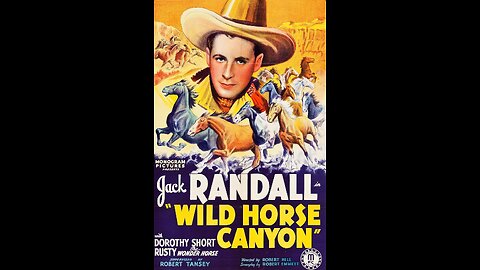
Wild Horse Canyon (1938) | Directed by Robert F. Hill
Classic Films & Movies Archive
Wild Horse Canyon is a Western adventure about a daring quest to capture a legendary wild stallion roaming the rugged canyons of the American West. The story follows ranchers and cowboys as they face natural dangers, rival horse hunters, and personal rivalries in their pursuit of the elusive animal. Themes of loyalty, grit, and the bond between humans and horses run throughout the film, set against a backdrop of sweeping outdoor scenery.
Genre: Western
Director: Robert F. Hill
Robert F. Hill (1886–1966) was a Canadian-born director, screenwriter, and actor who worked extensively in Hollywood during the silent and early sound eras. Known for his efficiency and skill at producing low-budget action films, Hill directed numerous Westerns, serials, and adventure pictures for studios such as Universal and Monogram. His work often featured straightforward storytelling, outdoor action, and a focus on genre staples.
Star cast:
* Jack Randall as Jack Gray
* Dorothy Short as Mary
* Frankie Yaconelli as Lopez
* Warner Richmond as Matt Hilton
* Dick Botiller as Henchman Pedro
* Dennis Moore as Tom Hilton
A modest B-Western of its time, Wild Horse Canyon was aimed at audiences seeking straightforward frontier entertainment. It was appreciated by fans of action-packed ranch dramas and horse-centered stories, particularly among younger viewers and rural audiences who favored Monogram Pictures’ reliable Western formula.
Fun facts:
* The film was produced by Monogram Pictures, a studio known for its steady output of low-budget Westerns during the 1930s.
* Jack Randall, the star, was one of Monogram’s contract cowboys and often performed his own riding stunts.
* Location shooting in California’s canyon country added authenticity to the action scenes.
* The movie was part of a long tradition of “wild horse” Westerns popular in the 1930s and 1940s, which combined animal adventure with frontier action.
* This Rumble Movie Channel is comprehensively indexed on https://kinoquick.com - find you favourite movies fast & free!
* Follow this channel to be notified of daily movie updates.
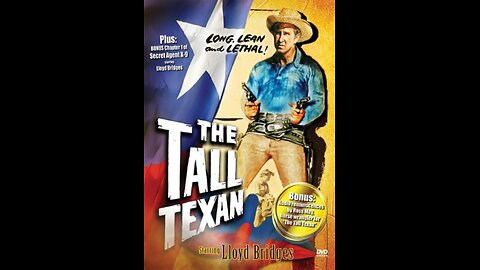
The Tall Texan (1953) | Directed by Elmo Williams
Classic Films & Movies Archive
In this Western adventure, a group of disparate travelers—including a lawman, a convict, and a greedy businessman—must rely on each other for survival when their journey through Indian territory turns into a dangerous confrontation. Tensions rise as hidden motives emerge and alliances shift amid the harsh frontier landscape.
Genre: Western
Director: Elmo Williams
Elmo Williams was primarily known as a film editor, winning an Academy Award for his editing on *High Noon* (1952). *The Tall Texan* marked his directorial debut and was one of his few films as a director. His deep understanding of cinematic pacing and editing shaped the film’s structure, though his directorial career was short-lived.
Star cast:
* Lloyd Bridges as Ben Trask
* Marie Windsor as Laura Thompson
* Lee J. Cobb as Capt. Theodore Bess
* Luther Adler as Joshua Tinnen
* Syd Saylor as Billy
* Samuel Herrick as John Case
* Dean Train as the Tall Texan
The film received mixed reviews. Some praised its strong cast and the moral complexity of its characters, while others criticized its modest production values and predictable plot. It found a modest audience among Western fans but didn’t stand out among the many similar genre films of the era.
Fun facts:
* Despite the title, the “Tall Texan” is not the main character but a pivotal figure whose actions drive the story’s climax.
* Lloyd Bridges was already gaining recognition in Hollywood, and this role helped cement his reputation in Westerns and rugged adventure roles.
* The film’s director, Elmo Williams, returned to editing after this and eventually became an executive at 20th Century Fox.
* Shot on a tight budget, the film made effective use of outdoor locations in California to portray the vast Texan frontier.
* This Rumble Movie Channel is comprehensively indexed on https://kinoquick.com - find you favourite movies fast & free!
* Follow this channel to be notified of daily movie updates.
1
comment
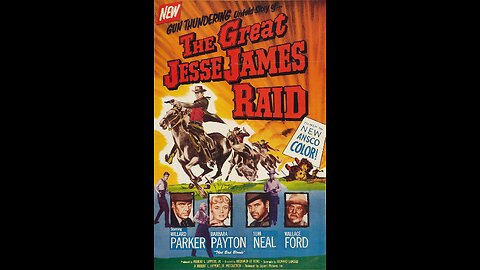
The Great Jesse James Raid (1953) | Directed by Reginald Le Borg
Classic Films & Movies Archive
The Great Jesse James Raid is a Western adventure that revisits the infamous outlaw's final attempt at a major heist. Jesse James, living quietly under an alias, is drawn back into a life of crime when a former associate proposes a lucrative gold robbery. As old tensions and rivalries surface within the gang, betrayal looms large, leading to a climactic showdown that tests loyalty and justice in the Old West.
Genre: Western
Director: Reginald Le Borg
Reginald Le Borg was an Austrian-born director known for his work in B-movies, particularly in horror and Western genres. Born in Vienna in 1902, he emigrated to the United States and began working in the film industry in the 1930s. He became a reliable director of low-budget films for Universal Pictures and other studios. While not often recognized among the top tier of Hollywood directors, Le Borg had a long career marked by efficient storytelling and a flair for genre filmmaking.
Star Cast:
* Willard Parker as Mike Treen
* Barbara Payton as Kate
* Tom Neal as Bob Ford
* Jim Bannon as Jesse James
* Wallace Ford as Arch Clements
* Richard Cutting as Sam Wells
The film received modest reviews upon release, largely regarded as a standard Western of the period. It was appreciated for its fast-paced action and familiar outlaw themes but criticized for its limited budget and uneven performances. The casting of Barbara Payton and Tom Neal—whose off-screen scandal was tabloid fodder—attracted more attention than the film itself.
Fun Facts:
* This was one of the last film appearances of Barbara Payton, whose once-promising career was derailed by personal troubles.
* Tom Neal, who played Bob Ford, was a controversial figure in Hollywood at the time due to his turbulent relationship with Payton.
* The film was made quickly and on a low budget, typical of many independent Westerns of the early 1950s.
* Jim Bannon portrayed Jesse James, though his screen time was limited, with the focus spread among other characters in the gang.
* The film is notable for offering a speculative version of Jesse James’ last days, blending legend with fictional intrigue.
* This Rumble Movie Channel is comprehensively indexed on https://kinoquick.com - find you favourite movies fast & free!
* Follow this channel to be notified of daily movie updates.
1
comment
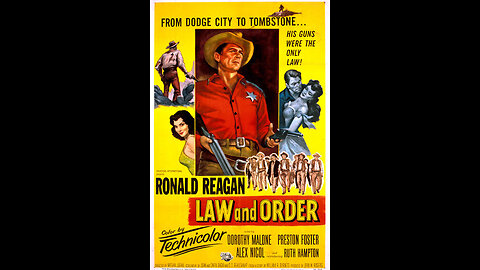
Law and Order (1953) | Directed by Nathan Juran
Classic Films & Movies Archive
Law and Order is a Western that follows the story of Frame Johnson, a legendary lawman who wants to hang up his guns and live a quiet life. However, when he arrives in Tombstone with dreams of settling down, he’s forced to face the corruption and lawlessness that plague the town. Reluctantly, he takes up the badge once more, determined to restore justice without turning into a killer himself.
Genre: Western
Director: Nathan Juran
Director Bio:
Nathan Juran was an American director known for his work in Westerns, adventure films, and later in science fiction and fantasy. Born in 1907 in Romania and raised in the U.S., Juran began his career as an art director, winning an Oscar for *How Green Was My Valley* (1941). He turned to directing in the early 1950s and became known for his efficient style and storytelling skills, particularly in genre films such as *20 Million Miles to Earth* (1957) and *The 7th Voyage of Sinbad* (1958).
Star Cast:
* Ronald Reagan as Frame Johnson
* Dorothy Malone as Jeannie
* Preston Foster as Kurt Durling
* Alex Nicol as Jimmy Johnson
* Russell Johnson as Fred Durling
Public Reaction:
Law and Order was received as a solid entry in the Western genre, praised for its moral seriousness and straightforward storytelling. Ronald Reagan, still in the midst of his acting career, was commended for his restrained and thoughtful performance. Though not a major box office hit, the film earned respect for its focused plot and classical Western themes.
Fun Facts:
* The story is a remake of several earlier versions of the same basic plot, dating back to the 1932 film also titled *Law and Order*.
* Ronald Reagan had previously played in Westerns but this role showed a more mature, principled character, foreshadowing his later political persona.
* The film was shot on location in California’s Red Rock Canyon and Universal’s Western sets, giving it an authentic Old West feel.
* Dorothy Malone, who later won an Academy Award for *Written on the Wind* (1956), provided a strong romantic counterpart to Reagan’s character.
* The script was adapted from W.R. Burnett’s story, which had inspired several Westerns emphasizing lawmen as reluctant heroes.
* This Rumble Movie Channel is comprehensively indexed on https://kinoquick.com - find you favourite movies fast & free!
* Follow this channel to be notified of daily movie updates.
1
comment
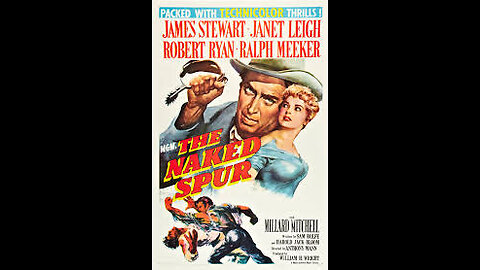
The Naked Spur (1953) | Directed by Anthony Mann
Classic Films & Movies Archive
The Naked Spur is a tense, psychological Western that follows bounty hunter Howard Kemp as he tracks a fugitive murderer through the rugged Rocky Mountains. Hoping to claim the reward money for himself, Kemp is forced to enlist the help of two strangers—a grizzled prospector and a dishonorably discharged Union soldier. As they capture the fugitive, Ben Vandergroat, and begin the journey back to civilization, Vandergroat cunningly sows mistrust among them, using his knowledge of human weakness to try and turn them against each other. The film becomes a gripping study of greed, paranoia, and moral compromise in the wilderness.
Genre: Western, psychological drama
Director: Anthony Mann
Anthony Mann was a prominent American director known for his gritty film noirs and psychologically complex Westerns during the 1940s and 1950s. Born in 1906 in San Diego, he began his career in theater before moving into Hollywood as a casting director and then a director. He developed a distinctive style marked by morally ambiguous characters and stark, expressive use of landscape. His collaborations with James Stewart, including Winchester ’73, The Man from Laramie, and The Naked Spur, redefined the Western genre by adding psychological realism and emotional depth to traditionally heroic stories.
Star cast:
James Stewart as Howard Kemp
Robert Ryan as Ben Vandergroat
Janet Leigh as Lina Patch
Ralph Meeker as Roy Anderson
Millard Mitchell as Jesse Tate
The film was a critical and commercial success, praised for its taut direction, sharp performances, and the moral complexity of its characters. Audiences responded strongly to James Stewart’s darker, more conflicted portrayal of a hero—a departure from his earlier, more wholesome roles. Critics highlighted the film’s use of natural locations and its intense, character-driven narrative. It received an Academy Award nomination for Best Screenplay and is considered one of the best examples of the “psychological Western” subgenre.
Fun facts:
* The Naked Spur was the third in a series of highly regarded Westerns directed by Anthony Mann and starring James Stewart; their partnership helped reshape Stewart’s screen persona.
* Much of the film was shot on location in the Colorado Rockies, lending it a raw, authentic atmosphere that heightened the tension among the characters.
* The story unfolds with only five speaking characters, making it one of the most intimate and tightly focused Westerns of its time.
* Robert Ryan’s performance as the manipulative, silver-tongued outlaw drew praise for its nuance and unpredictability.
* The film's themes—trust, betrayal, greed, and personal redemption—reflected postwar American anxieties and helped bring a modern, introspective edge to the Western genre.
* Though not a traditional shoot-’em-up Western, its psychological intensity and moral ambiguity influenced later filmmakers and has earned it lasting recognition among genre classics.
* This Rumble Movie Channel is comprehensively indexed on https://kinoquick.com - find you favourite movies fast & free!
* Follow this channel to be notified of daily movie updates.
1.32K
views
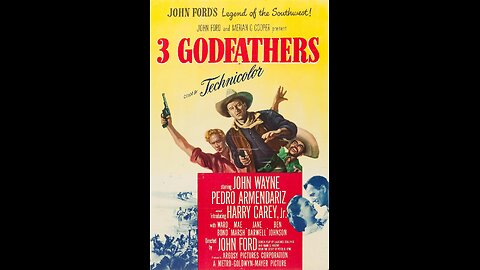
3 Godfathers (1948) | Directed by John Ford
Classic Films & Movies Archive
3 Godfathers is a Western tale of redemption and sacrifice, centering on three outlaws who, after robbing a bank, find themselves on the run across the desert. Their flight is interrupted when they come across a dying woman who has just given birth in the wilderness. With her last breath, she entrusts her newborn son to the three men, asking them to be his godfathers. Touched by her plea, they vow to protect the child and find safety for him, even as the harsh desert, dwindling water, and the law close in. Their journey becomes a test of character, faith, and humanity.
Genre: Western, drama
Director: John Ford
John Ford was one of the most celebrated American directors in film history, known especially for his mastery of the Western genre and his ability to infuse epic landscapes with deep emotional storytelling. Born in Maine in 1894, Ford directed over 140 films during his career and won four Academy Awards for Best Director—more than any other filmmaker. His works include classics such as Stagecoach, The Grapes of Wrath, My Darling Clementine, and The Searchers. Ford’s style emphasized visual poetry, moral complexity, and a strong sense of Americana, often using Monument Valley as a recurring backdrop.
Star cast:
John Wayne as Robert Marmaduke Hightower
Pedro Armendáriz as Pedro Roca Fuerte
Harry Carey Jr. as William Kearney (The Abilene Kid)
Ward Bond as Sheriff Buck Sweet
Mae Marsh as Mrs. Sweet
Jane Darwell as Miss Florie
Mildred Natwick as the dying mother
The film was well received by audiences who appreciated its blend of action, sentiment, and spiritual overtones. Critics noted its strong performances, especially by John Wayne, and praised Ford’s ability to mix frontier grit with biblical symbolism. Though not as iconic as some of Ford’s other Westerns, 3 Godfathers has developed a devoted following for its heartfelt narrative and humanistic message. It is often regarded as a Western parable, drawing clear parallels with the story of the Three Wise Men.
Fun facts:
* The film is a remake of a 1916 silent movie of the same name, which had also been directed by John Ford’s older brother, Francis Ford.
* Ford dedicated the movie to Harry Carey Sr., a close friend and longtime collaborator who starred in the earlier version and had recently passed away. Carey’s son, Harry Carey Jr., plays one of the godfathers.
* The desert scenes were filmed in Death Valley and other harsh locations in the American Southwest to emphasize the characters’ physical and spiritual ordeal.
* The story has clear religious undertones, with the baby symbolizing innocence and hope, and the three outlaws standing in for the Magi, guided by a moral star toward redemption.
* The film mixes traditional Western motifs with holiday themes, often airing on television during the Christmas season as an unconventional but moving seasonal tale.
* This Rumble Movie Channel is comprehensively indexed on https://kinoquick.com - find you favourite movies fast & free!
* Follow this channel to be notified of daily movie updates.
1
comment
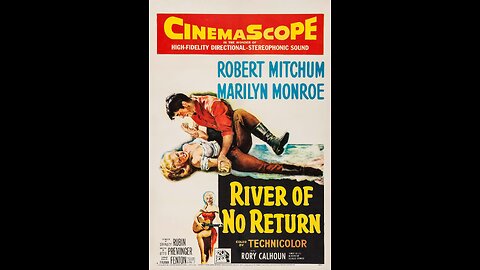
River of No Return (1954) | Directed by Otto Preminger
Classic Films & Movies Archive
River of No Return is a Western adventure film set in the rugged American frontier. It tells the story of a recently released convict, Matt Calder, who is reunited with his young son. When a saloon singer and her gambler fiancé steal his horse and rifle, Matt and the singer are forced to navigate treacherous rapids together downriver to survive and protect the boy, all while learning to trust one another.
Genre: Western, Adventure, Drama
Director: Otto Preminger
Otto Preminger was an Austrian-American director and producer known for his sophisticated and often controversial films. Born in 1905 in Austria-Hungary, Preminger began his career in theatre before moving to Hollywood. He earned a reputation for tackling taboo topics and pushing boundaries in American cinema, directing films like Laura (1944), Anatomy of a Murder (1959), and The Man with the Golden Arm (1955). He was also known for his bold visual style and strong-willed personality.
Star Cast:
* Robert Mitchum as Matt Calder
* Marilyn Monroe as Kay Weston
* Tommy Rettig as Mark Calder
* Rory Calhoun as Harry Weston
* Douglas Spencer as Ben
* Murvyn Vye as Dave Colby
River of No Return received mixed to positive reviews upon release. While praised for its stunning Cinemascope visuals and location shooting in the Canadian Rockies, critics were divided over the film’s direction and tone. Monroe’s performance, though often noted more for her star power than acting range, added significant box office draw. It became a commercial success and has remained a memorable entry in both Monroe’s and Mitchum’s filmographies.
Fun Facts:
* The film was shot on location in Jasper National Park in Alberta, Canada, showcasing impressive natural scenery.
* Marilyn Monroe reportedly disliked the rough conditions during filming and clashed with director Otto Preminger.
* Despite on-set tensions, Monroe performed many of her own stunts, including wading into freezing river water.
* River of No Return was Monroe’s first film released in Cinemascope, a then-new widescreen format.
* This Rumble Movie Channel is comprehensively indexed on https://kinoquick.com - find you favourite movies fast & free!
* Follow this channel to be notified of daily movie updates.
1
comment
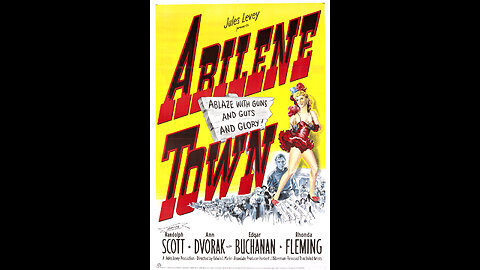
Abilene Town (1946) | Directed by Edwin L. Marin
Classic Films & Movies Archive
Abilene Town is set in the turbulent years following the American Civil War and centers on the frontier town of Abilene, Kansas. The story follows Marshal Dan Mitchell, who is caught between two conflicting factions: homesteaders seeking to settle and civilize the land, and cattlemen who want to preserve the town’s lawlessness for their own ends. As tensions escalate into violence, Mitchell must navigate political pressures, personal loyalties, and his own sense of justice to restore order.
Genre: Western
Director: Edwin L. Marin
Edwin L. Marin was a prolific American director known for his work in genre films, particularly Westerns and crime dramas. Active from the 1930s to the late 1940s, Marin directed a number of B-movies and mid-tier features for major studios, working with stars like Randolph Scott, George Raft, and John Payne. He had a reliable if understated style, emphasizing clear narrative structure and character-driven storytelling.
Star Cast:
Randolph Scott as Marshal Dan Mitchell
Ann Dvorak as Rita
Rhonda Fleming as Sherry Balder
Edgar Buchanan as Charlie Fair
Lloyd Bridges as Henry Dreiser
Abilene Town received a generally positive reception from audiences who appreciated its blend of traditional Western action and socially conscious themes. Randolph Scott’s strong, stoic performance was praised, and the film was noted for its unusually progressive take on the struggles of post-war settlement and law enforcement in the West. Though not a major studio production, it found lasting life through television syndication in later decades.
Fun Facts:
* The film is based on the novel *Trail Town* by Ernest Haycox, a writer known for elevating the Western genre with more nuanced characters and themes.
* Rhonda Fleming’s appearance in the film marked one of her early screen roles before becoming a prominent red-haired icon in Technicolor films.
* *Abilene Town* was one of the first Westerns to be shot and released by a small independent company but managed to gain distribution through United Artists.
* The film subtly explores post-Civil War class tensions, with cattle barons representing old power structures and homesteaders symbolizing democratic expansion.
* This Rumble Movie Channel is comprehensively indexed on https://kinoquick.com - find you favourite movies fast & free!
* Follow this channel to be notified of daily movie updates.
1
comment
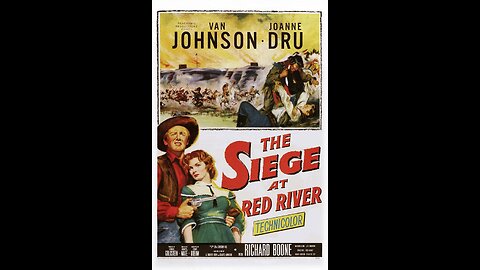
Siege at Red River (1954) | Directed by Rudolph Maté
Classic Films & Movies Archive
Set shortly after the American Civil War, *Siege at Red River* follows a Confederate officer turned renegade, Jim Farraday, who, with his companion, is transporting a stolen Gatling gun across the Western frontier with the intent of selling it to the highest bidder. When the weapon is seized by Sioux warriors, who then use it against U.S. troops, Farraday must decide where his loyalties lie and ultimately takes a stand to prevent greater bloodshed.
Genre: Western
Director: Rudolph Maté
Rudolph Maté was a Polish-Hungarian-born filmmaker and cinematographer who began his career in Europe before moving to Hollywood. As a cinematographer, he worked on acclaimed films like *Dante’s Inferno* and *Vampyr* (1932), then transitioned to directing in the 1940s. He became known for his solid craftsmanship in genre films, including noir, adventure, and Westerns. His directorial work includes *D.O.A.* (1949), *When Worlds Collide* (1951), and several Westerns throughout the 1950s.
Star Cast:
Van Johnson as Jim Farraday
Joanne Dru as Nora Curtis
Richard Boone as Frank Kelso
Milburn Stone as Harper
Jeff Morrow as Brett Manning
Public Reaction:
The film received moderate reception upon release. While not a standout in the crowded Western genre of the 1950s, *Siege at Red River* was appreciated for its action sequences, moral dilemmas, and reliable performances, particularly from Van Johnson in an uncharacteristically rugged role. Critics noted its timely themes of weapon proliferation and ethical choices during frontier conflicts.
Fun Facts:
* The film featured one of the early depictions of a Gatling gun in a Western, adding a layer of mechanical intrigue and thematic weight around the danger of advanced weaponry.
* Van Johnson, best known for his clean-cut romantic roles, took a rare turn as a morally ambiguous character in this film.
* Richard Boone, who played the villain, would later gain fame as Paladin in the TV series *Have Gun – Will Travel*.
* Shot in Technicolor, the movie made effective use of location filming in California to depict the rugged frontier terrain.
* This Rumble Movie Channel is comprehensively indexed on https://kinoquick.com - find you favourite movies fast & free!
* Follow this channel to be notified of daily movie updates.
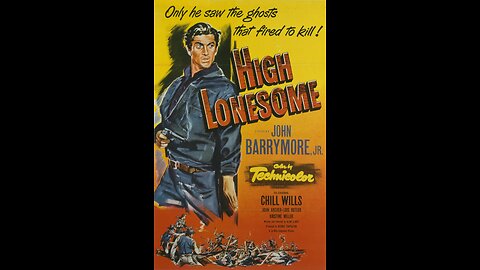
High Lonesome (1950) | Directed by Alan Le May
Classic Films & Movies Archive
High Lonesome is a Western film set in the remote Big Bend country of Texas, where a young drifter named Cooncat is accused of murder after he stumbles into a ranch community plagued by suspicion and paranoia. As the locals grow increasingly hostile, Cooncat tries to clear his name while uncovering the real threat behind the crimes. The story explores themes of justice, redemption, and the outsider’s struggle in a tightly knit frontier world.
Genre: Western, Drama, Mystery
Director: Alan Le May
Alan Le May was an American novelist, screenwriter, and director best known for his contributions to the Western genre. Born in 1899, Le May had a prolific writing career, penning stories for magazines and novels before moving into screenwriting. His most enduring legacy came from writing the novels *The Searchers* and *The Unforgiven*, both of which were later adapted into influential Western films. *High Lonesome* was his only directorial effort, showcasing his deep understanding of Western storytelling and atmosphere.
Star Cast:
* John Drew Barrymore (credited as John Barrymore Jr.) as Cooncat
* Chill Wills as Boatwhistle
* Jack Elam as Smiling Man
* John Archer as Pat Farrell
* Lois Butler as Abby
* Kristine Miller as Meagan Davis
* Charles Drake as Frank
* Basil Ruysdael as Horse Davis
High Lonesome received modest attention upon its release, appreciated by genre fans for its moody atmosphere and psychological complexity. Though not a major box office success, it has since developed a small following among Western aficionados for its offbeat tone and noir-inflected narrative. Critics noted the film's unusual blend of suspense and Western tropes, with some praising the isolated desert setting and youthful energy brought by John Drew Barrymore.
Fun Facts:
* This was the only film directed by Alan Le May, despite his prominent status as a Western novelist and screenwriter.
* The movie was shot on location in the rugged Big Bend area of Texas, lending the film an authentic, isolated Western feel.
* John Drew Barrymore, son of legendary actor John Barrymore and father of Drew Barrymore, made an early appearance here, showing flashes of talent despite a tumultuous career.
* The film’s title, "High Lonesome," refers to a term used in the American West to describe vast, empty, and often spiritually haunting landscapes.
* While overlooked in its time, modern retrospectives have pointed to *High Lonesome* as a psychologically driven precursor to darker Westerns of the late 1950s and 60s.
* This Rumble Movie Channel is comprehensively indexed on https://kinoquick.com - find you favourite movies fast & free!
* Follow this channel to be notified of daily movie updates.
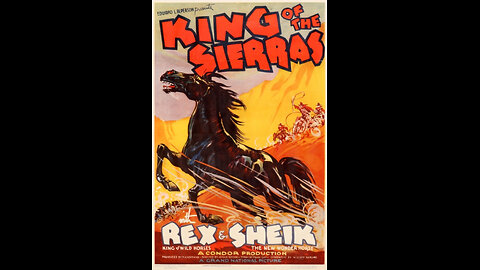
Black Stallion (aka King of the Sierras) (1938) | Directed by Samuel Diege & Arthur Rosson
Classic Films & Movies Archive
Black Stallion, initially released as *King of the Sierras*, is an adventure western centered around a wild black stallion named El Diablo who becomes the object of obsession for several men seeking to tame or capture him. The story follows a young boy and his grandfather who attempt to protect the magnificent horse from those who would exploit it. Set against sweeping landscapes, the film emphasizes themes of freedom, loyalty, and the bond between humans and animals.
Genre: Western / Adventure
Director: Samuel Diege and Arthur Rosson
Samuel Diege was a relatively lesser-known director in Hollywood, often contributing to B-movies and supporting productions. Arthur Rosson, by contrast, had a more prominent career as an assistant and second-unit director, notably working on epics such as *Ben-Hur* (1959) and *The Ten Commandments* (1956). His directorial efforts in the 1930s included a number of westerns and action films. Together, Diege and Rosson crafted a modest but heartfelt film aimed at general audiences and family entertainment.
Star Cast:
* Rex the Wonder Horse as El Diablo
* Hobart Bosworth as John Winters
* Evelyn Venable as Joyce
* Harry Harvey as Ben
* Charles Sellon as Ezra
* Wally Albright as Tom Winters
The film received a mild response upon release, appreciated more for its scenic imagery and the novelty of its animal star than for its storytelling depth. It appealed mainly to younger audiences and animal lovers. Critics found the plot thin and predictable, but Rex the Wonder Horse was praised for his on-screen charisma and well-trained performance, which became a major selling point for the film.
Fun Facts:
* The real star of the movie was Rex, the Wonder Horse, a famous animal actor in the 1920s and 1930s who had appeared in multiple westerns and serials.
* The film was re-released under the title *Black Stallion* to capitalize on the ongoing popularity of horse stories and to avoid confusion with other titles.
* Much of the film was shot on location in the American West, offering scenic backdrops that added a visual appeal to the otherwise simple narrative.
* Evelyn Venable, who played the female lead, is best known as the voice of the Blue Fairy in Disney's *Pinocchio* (1940).
* The film was one of several attempts during the 1930s to create family-friendly westerns featuring animal heroes, a trend that enjoyed moderate success during the era.
* This Rumble Movie Channel is comprehensively indexed on https://kinoquick.com - find you favourite movies fast & free!
* Follow this channel to be notified of daily movie updates.
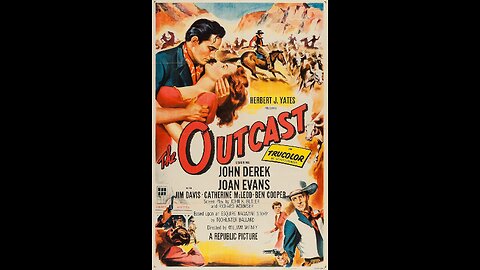
The Outcast (1954) | Directed by William Witney
Classic Films & Movies Archive
The Outcast is a Technicolor Western centered around Jet Cosgrave, a man unjustly disinherited by his corrupt uncle and branded an outcast in his own community. Seeking justice and the recovery of his rightful inheritance, Jet returns with a group of hired guns and a plan to reclaim both land and honor. Along the way, he faces betrayal, local resistance, and a romantic entanglement that tests his moral compass.
Genre: Western / Drama
Director: William Witney
William Witney was a prolific American director best known for his work on serials and action-packed B-westerns. Starting his career with Republic Pictures, he became famous for dynamic fight choreography and fast-paced storytelling. Witney was praised by filmmakers such as Quentin Tarantino for his influence on action cinema and is remembered for elevating modest-budget productions through sharp editing and relentless momentum.
Star Cast:
* John Derek as Jet Cosgrave
* Joan Evans as Judy Polsen
* Jim Davis as Major Linton Cosgrave
* Catherine McLeod as Alice Austin
* Bob Steele as Sheriff
* Slim Pickens as Rock
The Outcast was considered a solid, action-driven Western by 1950s standards. Audiences enjoyed John Derek’s brooding performance and the film’s straightforward revenge narrative. While it didn’t receive major critical acclaim, it was well-received among Western fans for its brisk pacing and colorful visuals, and it remains notable for its robust characterizations and frontier justice themes.
Fun Facts:
* The film was shot in Trucolor, Republic Pictures’ own color process, which gave the film a distinctive visual tone.
* John Derek, who played the lead, was also a rising Hollywood heartthrob and would later become known for directing and photographing his wife Bo Derek.
* Slim Pickens, later famous for roles in films like *Dr. Strangelove*, added a touch of humor and authenticity to his supporting role.
* Though produced by Republic Pictures, known mostly for B-movies and serials, *The Outcast* had slightly higher production values than many of their standard offerings.
* Director William Witney’s efficient style helped compress a compelling story into just over 90 minutes, typical of his no-nonsense approach to action storytelling.
* This Rumble Movie Channel is comprehensively indexed on https://kinoquick.com - find you favourite movies fast & free!
* Follow this channel to be notified of daily movie updates.
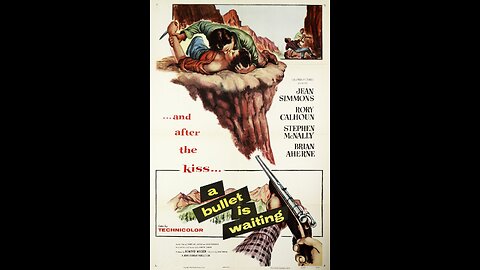
A Bullet Is Waiting (1954) | Directed by John Farrow
Classic Films & Movies Archive
A Bullet Is Waiting is a suspenseful Western-tinged drama set in the remote American wilderness, where a lawman and his dangerous prisoner are forced to shelter in a remote cabin during a storm. The arrival of an independent and resourceful woman complicates the tense dynamic, leading to an explosive confrontation as past truths are revealed.
Genre: Western / Thriller / Drama
Director: John Farrow
John Farrow was an Australian-born American director and screenwriter whose career spanned several decades, particularly prominent during the 1940s and 1950s. Known for his tight pacing and economical storytelling, Farrow directed a wide range of films including noir, adventure, and war dramas. He was married to actress Maureen O'Sullivan and was the father of actress Mia Farrow.
Star Cast:
* Jean Simmons as Cally Canham
* Rory Calhoun as Ed Stone
* Stephen McNally as Frank Munson
* Brian Aherne as David Canham
At the time of its release, A Bullet Is Waiting received modest reviews, with critics noting its atmospheric setting and Jean Simmons’s strong performance. The film was considered a solid if not groundbreaking entry into the genre, appreciated for its psychological tension and moral ambiguity rather than action.
Fun Facts:
* Jean Simmons was a rising star at the time and brought considerable presence to the role, adding depth to what might have otherwise been a stock character.
* The script reflects post-war American themes of justice, isolation, and female independence, subtly challenging gender roles for its era.
* Though set in the American wilderness, parts of the film were actually shot in California’s rugged terrain to evoke a sense of isolation and danger.
* This Rumble Movie Channel is comprehensively indexed on https://kinoquick.com - find you favourite movies fast & free!
* Follow this channel to be notified of daily movie updates.
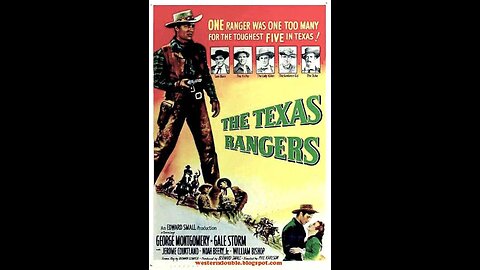
The Texas Rangers (1951) | Directed by Phil Karlson
Classic Films & Movies Archive
The Texas Rangers is a Western adventure film that takes place in the chaotic period after the American Civil War. It centers on two former outlaws who are offered a chance at redemption by joining the Texas Rangers, a law enforcement unit tasked with bringing order to a lawless land. As they work to enforce justice, they struggle with their pasts, loyalty, and the fine line between the law and the outlaw life they once lived.
Genre: Western, Action
Director: Phil Karlson
Phil Karlson was an American filmmaker known for his efficient storytelling and flair for crime and action films. Beginning his career in the 1940s, Karlson became especially prominent in the 1950s for his hard-hitting dramas. Though often working with low budgets, he brought intensity and realism to his films, gaining a reputation for sharp direction and well-paced narratives. His later films, such as Kansas City Confidential and Walking Tall, cemented his status as a director of tough, gritty cinema.
Star Cast:
George Montgomery as Johnny Carver
Gale Storm as Helen Fenton
Jerome Courtland as Danny Bonner
Noah Beery Jr. as Buff Smith
William Bishop as Captain John B. Jones
John Litel as Colonel Miles
The film was received as an entertaining, straightforward Western. It appealed to fans of the genre with its action scenes, traditional themes of justice, and charismatic lead in George Montgomery. Though not considered a standout in Western film history, it was a competent and well-made entry that fit the expectations of 1950s audiences.
Fun Facts:
The character of Captain John B. Jones is loosely based on the real-life Texas Ranger who helped restore order in post-Civil War Texas.
Some scenes were filmed in actual Texas locations to capture an authentic atmosphere.
George Montgomery was known for doing his own horseback riding and stunts, adding realism to his action scenes.
Director Phil Karlson would go on to make several notable noir and crime films that gained critical attention for their bold style and social commentary.
* This Rumble Movie Channel is comprehensively indexed on https://kinoquick.com - find you favourite movies fast & free!
* Follow this channel to be notified of daily movie updates.
1
comment
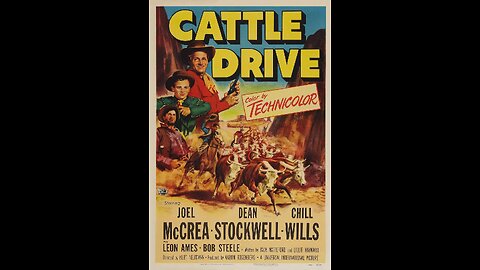
Cattle Drive (1951) | Directed by Kurt Neumann
Classic Films & Movies Archive
"Cattle Drive" is a Western adventure that follows the story of a spoiled young boy, Chester Graham Jr., the son of a wealthy railroad executive, who becomes separated from a train and is taken in by a group of cowboys on a cattle drive. Under the guidance of a tough but kind trail boss, the boy learns responsibility, discipline, and the value of hard work while traveling across the rugged terrain of the American West.
Genre: Western, Coming-of-Age
Director: Kurt Neumann
Kurt Neumann was a German-American director best known for his work in science fiction and adventure films during the 1940s and 1950s. He began his career in Germany before moving to Hollywood, where he directed a variety of low-budget features for studios such as Universal and RKO. One of his most famous later works is the original 1958 version of "The Fly." Neumann had a knack for combining character-driven stories with action and visual storytelling.
Star Cast:
- Joel McCrea as Dan Matthews
- Dean Stockwell as Chester Graham Jr.
- Chill Wills as Dallas
- Henry Brandon as Jim Currie
- Howard Petrie as Jesse White
- Griff Barnett as Chester Graham Sr.
"Cattle Drive" received generally positive reviews from audiences and critics, especially for its strong moral message and effective performances. Joel McCrea’s portrayal of the cowboy mentor was praised for its sincerity, while young Dean Stockwell's performance added emotional depth. The film was appreciated as a wholesome family Western with an educational undertone.
Fun Facts:
- Dean Stockwell was a rising child star at the time, and his role in "Cattle Drive" was one of several successful films during his early career.
- The film was shot on location in the scenic deserts of Utah and Arizona, adding authenticity and visual appeal to the story.
- Joel McCrea, a popular Western star, was known for selecting scripts with strong ethical themes, and "Cattle Drive" aligned with his values both on and off screen.
- The story shares thematic similarities with "Captains Courageous," another tale of a privileged boy learning life's lessons through manual labor and mentorship.
* This Rumble Movie Channel is comprehensively indexed on https://kinoquick.com - find you favourite movies fast & free!
* Follow this channel to be notified of daily movie updates.
1
comment
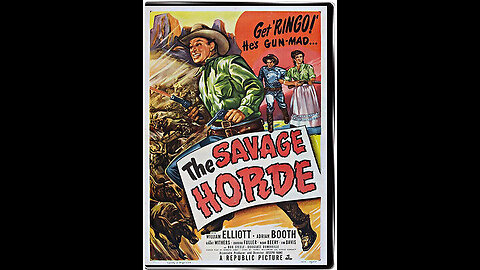
The Savage Horde (1950) | Directed by Joseph Kane
Classic Films & Movies Archive
The Savage Horde is a Western film that follows the story of a former outlaw named Ringo who tries to clear his name and start a new life. After being accused of murder, he returns to his hometown only to become embroiled in a range war between cattlemen and corrupt forces. As tensions rise, Ringo finds himself forced to choose between his violent past and a more honorable future.
Genre: Western
Director: Joseph Kane
Joseph Kane was an American film director, producer, and editor, best known for his extensive work in the Western genre. Born in 1894, Kane was a prolific director for Republic Pictures and helmed many films featuring popular cowboy stars such as Roy Rogers and Gene Autry. His straightforward storytelling style and fast-paced direction made him a reliable hand in B-movie Westerns throughout the 1930s to 1950s.
Star Cast:
- Bill Elliott as Ringo
- Lorna Gray (billed as Adrian Booth) as Sally
- Grant Withers as Joe
- Noah Beery Jr. as Hap
- Jim Davis as Jed
- Bob Steele as Brady
- Roy Barcroft as Sheriff Johnson
Public Reaction:
The Savage Horde was well-received by fans of traditional Westerns. Audiences appreciated Bill Elliott's tough but likable performance as the reformed gunslinger. While it did not receive significant critical acclaim, it satisfied the genre's fan base with solid action, moral themes, and familiar Western tropes. The film was considered a dependable offering from Republic Pictures during a time when Westerns were immensely popular.
Fun Facts:
- Bill Elliott was a major Western star known for playing calm, laconic heroes.
- Lorna Gray, credited here as Adrian Booth, was often cast in Republic Pictures Westerns and was married to actor David Brian.
- The movie features classic stunt work typical of Republic productions, known for their action sequences on tight budgets.
- Joseph Kane directed over 100 films, most of them Westerns, making him one of the genre’s most prolific directors.
- This film was one of several in which Elliott portrayed a character trying to leave a life of violence behind, a recurring theme in his roles.
* This Rumble Movie Channel is comprehensively indexed on https://kinoquick.com - find you favourite movies fast & free!
* Follow this channel to be notified of daily movie updates.
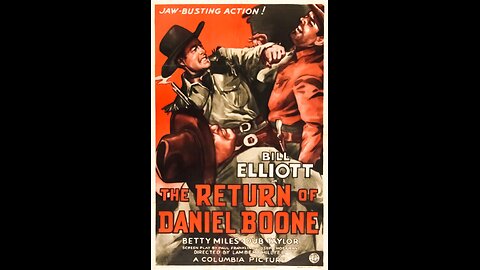
The Return of Daniel Boone (1941) | Directed by Lambert Hillyer
Classic Films & Movies Archive
The Return of Daniel Boone is a Western adventure that follows the exploits of Wild Bill Boone, a descendant of the legendary frontiersman Daniel Boone. Set in a small frontier town plagued by lawlessness and corruption, Boone arrives to bring order and justice. He poses as a mild-mannered peddler but soon reveals his true identity and mission: to take down the gang of outlaws who have taken control of the region. With quick thinking, sharp shooting, and old-fashioned frontier courage, Boone becomes a symbol of law and order in the Wild West.
Genre: Western, Action
Director: Lambert Hillyer
Lambert Hillyer was a prolific American film director and screenwriter whose career spanned the silent and sound eras. Born in 1893, he directed over 160 films, mostly in the Western and action genres. He worked extensively with cowboy stars like Buck Jones and Tim McCoy and also directed the 1936 horror classic Dracula’s Daughter. Known for his fast-paced storytelling and reliable craftsmanship, Hillyer became a staple of B-movie Westerns throughout the 1930s and 1940s.
Star Cast:
- Wild Bill Elliott as Wild Bill Boone
- Betty Miles as Ellen Brandon
- Dub Taylor as Cannonball
- Ray Bennett as Mark Dawson
- Walter Soderling as Judge Brandon
- Dick Curtis as Lefty
- Slim Whitaker as Sheriff
The Return of Daniel Boone was a popular B-Western among fans of the genre, offering audiences the familiar themes of justice, frontier valor, and good triumphing over evil. Wild Bill Elliott’s performance as the righteous hero helped solidify his standing as a Western star during the 1940s. While not a major critical success, the film delivered solid entertainment to its target audience and became part of the larger tradition of heroic cowboy stories in American cinema.
Fun Facts:
- The film was part of Columbia Pictures' series of low-budget Westerns featuring Wild Bill Elliott.
- Despite the title, the film does not feature the historical Daniel Boone but rather a fictional descendant.
- Wild Bill Elliott was known for his clean-cut image and signature twin pistols, which he uses in this film.
- Dub Taylor, who plays Cannonball, often served as comic relief in Westerns and appeared in dozens of films throughout his career.
- The film’s blend of action, humor, and traditional Western values made it a favorite for Saturday matinee audiences.
* This Rumble Movie Channel is comprehensively indexed on https://kinoquick.com - find you favourite movies fast & free!
* Follow this channel to be notified of daily movie updates.
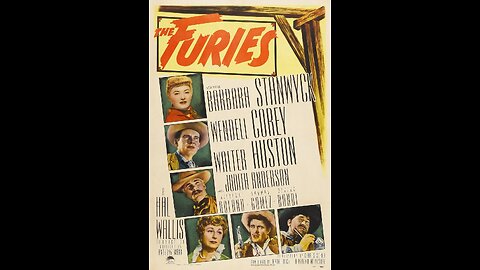
The Furies (1950) | Directed by Anthony Mann
Classic Films & Movies Archive
In 1870s New Mexico, strong-willed Vance Jeffords clashes with her domineering rancher father, T.C. Jeffords, over control of their vast family ranch, "The Furies." As emotional tensions rise, family bonds are tested, and the power struggle grows intense, leading to betrayal, revenge, and ultimately reconciliation.
Genre: Western, Drama
Director: Anthony Mann
Anthony Mann was an influential American filmmaker known for his mastery in directing film noir and Western genres. Mann's films frequently explored complex psychological conflicts, moral ambiguity, and tense human dynamics, making him a notable figure in American cinema. Some of his acclaimed films include Winchester '73, Bend of the River, and The Naked Spur.
Star Cast:
- Barbara Stanwyck as Vance Jeffords
- Walter Huston as T.C. Jeffords
- Wendell Corey as Rip Darrow
- Judith Anderson as Flo Burnett
- Gilbert Roland as Juan Herrera
Upon its initial release, The Furies received positive critical attention for its intense performances, compelling storyline, and impressive cinematography. Though not a significant box-office hit, it earned appreciation from audiences who admired Barbara Stanwyck's powerful portrayal and Anthony Mann's effective direction. Over time, the film has gained recognition as a classic Western, appreciated for its psychological depth and exploration of familial relationships.
Fun Facts:
- The film was based on the novel by Niven Busch, who also authored Duel in the Sun.
- The Furies was the final film appearance of actor Walter Huston, father of director John Huston.
- Criterion Collection released a restored version of the film in 2008, further cementing its legacy as a significant entry in classic Hollywood cinema.
* This Rumble Movie Channel is comprehensively indexed on https://kinoquick.com - find you favourite movies fast & free!
* Follow this channel to be notified of daily movie updates.

Stranger on Horseback (1954) | Directed by Jacques Tourneur
Classic Films & Movies Archive
"Stranger on Horseback" is a 1954 American Western film directed by Jacques Tourneur. The story follows Rick Thorne, a circuit judge who arrives in a town dominated by the influential Bannerman family. Determined to uphold justice, Thorne arrests Tom Bannerman for murder, challenging the family's control and facing escalating tensions as he seeks to ensure a fair trial.
Genre: Western
Director: Jacques Tourneur
Jacques Tourneur (1904–1977) was a French-American director renowned for his work in film noir and horror. Born in Paris, he began his career in French cinema before transitioning to Hollywood. Tourneur collaborated with producer Val Lewton on acclaimed films such as "Cat People" (1942) and "I Walked with a Zombie" (1943). His adeptness at creating atmospheric tension solidified his reputation in the industry.
Star Cast:
- Joel McCrea as Judge Rick Thorne
- Miroslava as Amy Lee Bannerman
- Kevin McCarthy as Tom Bannerman
- John McIntire as Josiah Bannerman
- John Carradine as Col. Buck Streeter
Upon its release, "Stranger on Horseback" was noted for its concise storytelling and strong performances, particularly by Joel McCrea. While not a major box office hit, the film was appreciated for its exploration of justice and moral integrity in the Old West. Over time, it has garnered recognition for Tourneur's direction and its place within the Western genre.
Fun Facts:
1. The film was based on a story by renowned Western author Louis L'Amour, contributing to its authentic portrayal of frontier life.
2. "Stranger on Horseback" was filmed in Ansco Color, with shooting locations including Sedona, Arizona, and Gene Autry's Melody Ranch in California, providing picturesque backdrops characteristic of classic Westerns.
3. This film marked the final Hollywood appearance of actress Miroslava, who tragically passed away shortly before its release.
4. The collaboration between Jacques Tourneur and Joel McCrea continued with another Western, "Wichita," released later in 1955, further cementing their contributions to the genre.
5. The film's runtime is approximately 66 minutes, exemplifying the era's trend of producing concise, impactful Westerns that delivered compelling narratives within a brief duration.
* This Rumble Movie Channel is comprehensively indexed on https://kinoquick.com - find you favourite movies fast & free! Subscribe to this channel to be notified of daily movie updates.
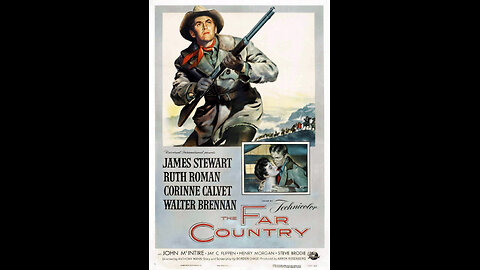
The Far Country (1954) | Directed by Anthony Mann
Classic Films & Movies Archive
"The Far Country" is a 1954 American Western film directed by Anthony Mann. The story follows Jeff Webster, a self-reliant cattleman, and his partner, Ben Tatum, as they drive their herd from Wyoming to Alaska during the Klondike Gold Rush. Upon arrival, they confront the corrupt Judge Gannon, who seizes their cattle, compelling Jeff to navigate lawlessness and seek justice in the burgeoning frontier town.
Genre: Western
Director: Anthony Mann
Anthony Mann (1906–1967) was an American film director renowned for his work in the Western genre. Collaborating frequently with actor James Stewart, Mann crafted a series of psychologically complex Westerns in the 1950s, including "Winchester '73" (1950) and "The Naked Spur" (1953). His films are noted for their intense character studies and rugged landscapes, contributing significantly to the evolution of the Western genre.
Star Cast:
- James Stewart as Jeff Webster
- Ruth Roman as Ronda Castle
- Walter Brennan as Ben Tatum
- Corinne Calvet as Renee Vallon
- John McIntire as Judge Gannon
Upon its release, "The Far Country" was well-received for its compelling narrative and strong performances, particularly by James Stewart. The film's portrayal of the Klondike Gold Rush and its moral complexities resonated with audiences, solidifying its status as a classic in the Western genre.
Fun Facts:
1. This film marked the fourth collaboration between director Anthony Mann and actor James Stewart, a partnership celebrated for redefining the Western genre with more nuanced and flawed protagonists.
2. The movie was filmed on location in Alberta, Canada, specifically in Jasper National Park and the Athabasca Glacier, providing authentic and breathtaking backdrops that enhanced the film's realism.
3. James Stewart had a unique rapport with his horse, "Pie," which he rode in 17 films, including "The Far Country." Stewart often performed scenes with Pie without the need for a trainer, showcasing their strong bond.
4. The character of Judge Gannon is loosely based on the historical figure Soapy Smith, a notorious con artist who controlled the town of Skagway during the Alaska Gold Rush.
5. The film was released in the United Kingdom in July 1954 and in the United States in February 1955, reflecting the staggered release schedules common during that era.
* This Rumble Movie Channel is comprehensively indexed on https://kinoquick.com - find you favourite movies fast & free! Subscribe to this channel to be notified of daily movie updates.
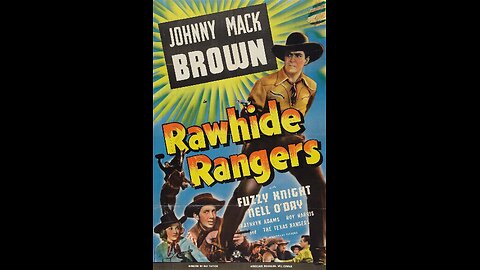
Rawhide Rangers (1941) | Directed by Ray Taylor
Classic Films & Movies Archive
"Rawhide Rangers" is a classic Western film that follows the story of Brand Calhoun, a dedicated Texas Ranger. After his brother Steve is killed during a confrontation with outlaws, Brand becomes disillusioned and leaves the Rangers. Determined to avenge his brother's death, he infiltrates the gang responsible, uncovering that the town's respected cattlemen's association leader, Ross Martin, is the mastermind behind the criminal activities. Through courage and cunning, Brand seeks to bring justice to the lawless land and restore peace to the community.
Genre: Western
Director: Ray Taylor
Ray Taylor was a prolific American director known for his extensive work in the Western and action genres during the early to mid-20th century. With a career spanning over two decades, Taylor directed numerous films and serials, often focusing on tales of rugged heroes and frontier justice. His efficient storytelling and ability to craft engaging action sequences made him a staple in the industry, particularly in the realm of B-Westerns.
Star Cast:
- Johnny Mack Brown as Brand Calhoun, the resolute Texas Ranger seeking justice for his brother's death.
- Fuzzy Knight as Porky Blake, Brand's loyal and humorous sidekick who provides comic relief amidst the tension.
- Kathryn Adams as Jo Ann Rawlings, the banker's daughter who becomes entangled in the town's turmoil and Brand's love interest.
- Nell O'Day as Patti McDowell, the spirited daughter of Captain McDowell, torn between her affection for Brand and concern for his safety.
- Riley Hill (credited as Roy Harris) as Steve Calhoun, Brand's younger brother whose untimely death propels the narrative.
- Harry Cording as Blackie, a formidable member of the outlaw gang posing significant threats to Brand's mission.
- Alan Bridge as Rawlings, Jo Ann's father and the town banker, whose establishment becomes a target for the outlaws.
- Frank Shannon as Captain McDowell, the head of the Texas Rangers and Patti's father, who assigns Brand to the perilous mission.
- Ed Cassidy as Ross Martin, the duplicitous leader of the cattlemen's association and the covert antagonist orchestrating the town's unrest.
Upon its release, "Rawhide Rangers" was well-received by audiences who appreciated its action-packed sequences and the charismatic performance of Johnny Mack Brown in the lead role. The film's blend of intrigue, betrayal, and redemption resonated with fans of the Western genre, solidifying its place as a memorable entry among early 1940s Westerns.
Fun Facts:
1. Prolific Collaboration: This film marked another collaboration between director Ray Taylor and actor Johnny Mack Brown, who worked together on numerous Westerns, contributing significantly to the genre's popularity during that era.
2. Cinematic Techniques: "Rawhide Rangers" utilized practical effects and on-location shooting to authentically depict the rugged landscapes and action scenes characteristic of classic Westerns.
3. Character Dynamics: The film features a strong ensemble cast, with Fuzzy Knight providing comic relief as Porky Blake, a common trope in Westerns to balance the intense drama.
4. Genre Staple: As a 56-minute feature, "Rawhide Rangers" exemplifies the concise storytelling typical of B-Westerns of the time, delivering a complete and engaging narrative within a brief runtime.
5. Legacy: While not as widely known today, the film contributes to the rich tapestry of early Western cinema, reflecting the themes and styles that would influence future generations of the genre.
"Rawhide Rangers" stands as a testament to the enduring appeal of Westerns, offering a narrative filled with action, moral dilemmas, and the timeless struggle between lawfulness and lawlessness on the American frontier.
🎬 Instantly Find Your Favorite Movies! This Rumble movie channel is fully indexed at 👉 https://kinoquick.com

Rawhide (1951) | Western film directed by Henry Hathaway
Classic Films & Movies Archive
Director: Henry Hathaway
Plot Summary:
The story unfolds against the backdrop of the vast and unforgiving American West. Tom Owens (Tyrone Power), a young stagecoach driver, finds himself in the company of a diverse group of people at a remote way station. The station, run by the tough yet wise stationmaster Sam Todd (Edgar Buchanan), becomes the focal point of tension and drama.
Trouble ensues when a stagecoach arrives carrying Vinnie Holt (Susan Hayward) and her baby. They are joined by others seeking refuge from an impending Native American attack. As the threat looms, the group must work together to defend themselves and survive the perilous situation.
Amidst the harsh and arid landscapes, "Rawhide" weaves a tale of survival, courage, and the bonds that form under adversity. The film captures the essence of the Wild West, exploring themes of human resilience and the challenges of frontier life.
Main Cast:
- Tyrone Power as Tom Owens
- Susan Hayward as Vinnie Holt
- Hugh Marlowe as Zimmerman
- Dean Jagger as Yancy
- Edgar Buchanan as Sam Todd
Directorial Style:
Henry Hathaway, known for his adept handling of Westerns, brings his directorial flair to "Rawhide." The film benefits from atmospheric cinematography that captures the expansive vistas of the rugged West, enhancing the overall sense of isolation and danger.
Critical Reception:
"Rawhide" received positive reviews for its suspenseful narrative, strong performances, and Hathaway's skillful direction. It stands as a notable entry in the classic Western genre, offering audiences a gripping tale of survival against the backdrop of the untamed frontier.
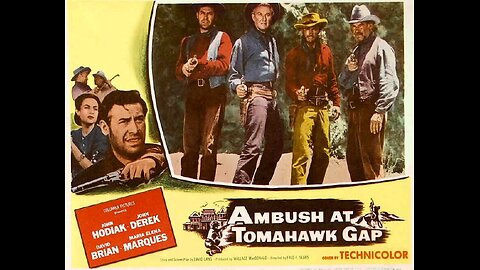
Ambush at Tomahawk Gap (1953) | A Western film set in the post-Civil War era
Classic Films & Movies Archive
Director: Fred F. Sears
Cast:
- John Hodiak as John Deakin
- John Derek as Clint McCoy
- David Brian as Captain Theodore Bess
- Maria Elena Marques as Isabella
Plot Summary:
"Ambush at Tomahawk Gap" is a western film set in the post-Civil War era, directed by Fred F. Sears. The story follows John Deakin (John Hodiak), a former Confederate soldier, who finds himself entangled in a complex web of revenge, loyalty, and frontier justice.
As the film begins, Deakin is falsely accused of being a traitor and murderer. Seeking refuge, he encounters Clint McCoy (John Derek), a young man with his own scores to settle. Together, they navigate the treacherous landscapes of the Wild West, encountering bandits, Native American tribes, and lawmen.
The central conflict revolves around Captain Theodore Bess (David Brian), a Union officer with a personal vendetta against Deakin. As the characters converge on the perilous Tomahawk Gap, tensions escalate, leading to a climactic showdown where past grievances must be confronted.
Themes:
The film explores themes of redemption, honor, and the moral complexities of life on the frontier. "Ambush at Tomahawk Gap" delves into the aftermath of the Civil War, portraying a society grappling with the scars of conflict and the challenges of forging a new identity.
Production and Reception:
Released in 1953, the film is representative of the popular western genre of the time. Directed by Fred F. Sears, known for his work in various B-movie genres, "Ambush at Tomahawk Gap" features the rugged landscapes and moral ambiguity typical of classic western storytelling.
While not considered a major classic, the film offers an engaging narrative for fans of westerns, with action-packed sequences and a cast of characters navigating the moral complexities of a lawless frontier. The performances of the lead actors contribute to the film's appeal within the context of 1950s western cinema.
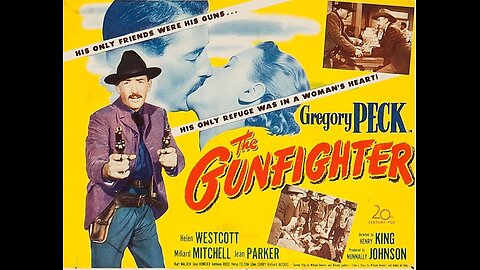
The Gunfighter (1950) | A classic Western film directed by Henry King
Classic Films & Movies Archive
Director: Henry King
Stars: Gregory Peck, Helen Westcott, Millard Mitchell, Jean Parker
"The Gunfighter" (1950) is a classic Western film directed by Henry King and starring Gregory Peck in a role that showcases his versatility as an actor. The film tells the story of Jimmy Ringo, a notorious gunslinger seeking redemption and escape from his violent past. With its gripping narrative, moral complexity, and strong performances, "The Gunfighter" stands out as a seminal work in the Western genre.
Gregory Peck takes on the role of Jimmy Ringo, a legendary gunslinger haunted by his reputation and pursued by those seeking to make a name for themselves. Ringo, tired of the constant threat to his life, decides to leave his notorious past behind and find solace in a quieter life. However, his attempts to escape the shadows of his reputation prove challenging, as his notoriety precedes him wherever he goes.
The film unfolds in real-time, capturing the tension and suspense as Ringo seeks refuge in a small town. As he tries to reconcile with his past and establish connections with the people he encounters, he faces the consequences of a life steeped in violence. The townspeople, lawmen, and those with personal vendettas all contribute to the rising tension that permeates the narrative.
Helen Westcott plays Peggy Walsh, a barmaid who becomes a significant figure in Ringo's life. Their relationship adds depth to the character of Ringo, revealing his desire for a different, more meaningful existence. Millard Mitchell and Jean Parker deliver strong supporting performances, contributing to the film's rich character dynamics.
Henry King's direction brings a nuanced touch to the Western genre, exploring the psychological and emotional complexities of the main character. The screenplay, written by William Bowers and William Sellers, defies traditional Western conventions by delving into the consequences of a life lived by the gun.
Cinematographer Arthur C. Miller's work captures the vast landscapes of the West and the intimate moments between characters, enhancing the film's visual appeal. Dimitri Tiomkin's evocative score complements the emotional weight of the narrative, adding to the overall impact of the film.
"The Gunfighter" is revered for its innovative storytelling, character-driven focus, and Gregory Peck's compelling performance. It challenges the archetypal portrayal of the Western hero and examines the toll of a violent past on an individual seeking redemption. The film remains a standout entry in the Western genre, resonating with audiences for its timeless exploration of morality and the consequences of one's actions in the unforgiving landscape of the Old West.
2
comments

The Capture (1950) | Western film directed by John Sturges
Classic Films & Movies Archive
"The Capture" is a 1950 Western film directed by John Sturges. It combines elements of the Western genre with psychological drama to tell a gripping tale of loyalty, betrayal, and the aftermath of war. Here's a detailed description of the film:
Plot Summary:
The story revolves around Lin Vanner (Lew Ayres), a World War II veteran who returns to his Arizona ranch after the war. Lin discovers that his wife Ellen (Teresa Wright) has been living with a new man, Harvey (Victor Jory), in his absence. The situation becomes more complex when Lin is accused of being a collaborator with the enemy during the war.
As tensions rise, Lin is pursued by a relentless sheriff, Captain Bent (Barry Sullivan), who is determined to bring him to justice. Lin's journey becomes a psychological and emotional struggle as he faces the challenges of proving his innocence, dealing with the betrayal of those close to him, and navigating the harsh Arizona landscape.
Key Themes:
1. Post-War Trauma: "The Capture" explores the psychological impact of war on returning veterans. Lin Vanner's struggle with accusations and suspicions reflects the challenges faced by those trying to reintegrate into civilian life after experiencing the horrors of war.
2. Betrayal and Loyalty: The film delves into themes of betrayal and loyalty as Lin discovers the changes that occurred in his absence. His relationships are tested, and he must confront the question of whom he can trust.
3. Western Tropes: While incorporating Western genre elements, "The Capture" goes beyond traditional cowboy narratives, introducing psychological and moral complexities that add depth to the story.
Production and Reception:
Directed by John Sturges, "The Capture" stands out for its blending of Western and psychological drama. The film benefits from the performances of its cast, with Lew Ayres delivering a compelling portrayal of a man caught in a web of suspicion.
Released in the early 1950s, "The Capture" received positive reviews for its unique approach to the Western genre and its exploration of complex human emotions. The film is recognized for its atmospheric cinematography and engaging storytelling, making it a noteworthy entry in the Western film canon.
Overall, "The Capture" offers audiences a thought-provoking and emotionally charged narrative set against the backdrop of post-war Arizona, where the challenges faced by its protagonist mirror the broader themes of a changing society and personal redemption.
Train to Tombstone (1950) | Western film directed by William Berke
Classic Films & Movies Archive
Train to Tombstone is a 1950 American Western film directed by William Berke and starring Don "Red" Barry, Robert Lowery, Wally Vernon, Tom Neal and Judith Allen.
Plot
Indians attack a train with an Army agent (Don Barry) and gold on board.
Cast
Don "Red" Barry as Len Howard (as Don Barry)
Robert Lowery as Marshal Staley
Wally Vernon as Clifton Gulliver
Tom Neal as Dr. Willoughty
Judith Allen as Belle Faith
Barbara Staley as Doris Clayton
Minna Phillips as Aunt Abbie
Nan Leslie as Marie Bell
Claude Stroud as Deputy Marshall
Ed Cassidy as George - Conductor
Panhandle (1948) | A Western film directed by Lesley Selander & starring Rod Cameron
Classic Films & Movies Archive
"Panhandle" is a Western film released in 1948, directed by Lesley Selander and starring Rod Cameron. As a typical Western, the movie incorporates elements of action, adventure, and morality set against the backdrop of the American frontier.
Rod Cameron plays John Sands, a cowboy and former lawman who becomes embroiled in a complex situation involving a rancher's daughter and a gang of outlaws. The story unfolds as Sands attempts to bring justice to the region and protect the innocent.
The plot involves Sands coming to the aid of Janet Calvert (Cathy Downs), whose father, a rancher, has been murdered by a ruthless gang led by Cord (Reed Hadley). Sands takes it upon himself to help Janet and her family, vowing to bring the outlaws to justice.
"Panhandle" explores classic Western themes such as justice, revenge, and the struggle between lawlessness and the efforts to establish order on the frontier. As Sands confronts the gang and faces various challenges, the film showcases the rugged landscapes and harsh conditions of the Old West.
Rod Cameron, known for his roles in Westerns, delivers a charismatic performance as the heroic cowboy with a strong sense of justice. The film features the quintessential Western elements, including shootouts, horse chases, and the moral conflict between good and evil.
Lesley Selander's direction captures the spirit of the Western genre, employing the vast outdoor landscapes to create an authentic setting. The cinematography, likely emphasizing the natural beauty of the American Southwest, contributes to the film's visual appeal.
While "Panhandle" may not be as widely remembered as some other Western classics, it remains a representative entry in the genre, offering fans of Western films a familiar and entertaining story with the iconic elements of the Old West.
Outlaw Women (1952) | Directed by Sam Newfield & Ron Ormond
Classic Films & Movies Archive
Outlaw Women is a Western film set in the unique town of Las Mujeres, a frontier settlement governed entirely by women. At the helm is Iron Mae McLeod, the shrewd owner of the Paradise Saloon, who has established a profitable enterprise where men are allowed but must adhere to the rules set by the female inhabitants. The town's equilibrium is disrupted when outlaws, led by Frank Slater, seek to exploit the women's control for their own gain. As external threats mount and internal conflicts arise, the women of Las Mujeres must defend their autonomy and way of life.
Genre: Western
Director: Sam Newfield and Ron Ormond
Sam Newfield was a prolific American director, known for his extensive work in B-movies across various genres, particularly Westerns. His efficient filmmaking style led him to direct numerous films throughout the 1930s and 1940s. Ron Ormond was an American filmmaker and producer who collaborated with Newfield on several projects, bringing a flair for sensational storytelling to their joint ventures.
Star Cast:
- Marie Windsor as Iron Mae McLeod, the formidable leader of Las Mujeres and proprietor of the Paradise Saloon.
- Richard Rober as Woody Callaway, a rival saloon owner from a neighboring town with designs on Iron Mae's establishment.
- Carla Balenda as Beth Larabee, one of the Larabee sisters who becomes embroiled in the town's defense.
- Jackie Coogan as Piute Bill, a gunslinger with a unique skill set and a penchant for trouble.
- Allan Nixon as Dr. Bob Ridgeway, a kidnapped doctor who becomes entangled in the town's affairs.
Upon its release, Outlaw Women stood out for its unconventional portrayal of a female-dominated society in the Old West. Audiences were intrigued by the film's reversal of traditional gender roles and its blend of action with lighthearted moments. While it did not achieve major box office success, the film has garnered attention over the years for its unique premise and has been discussed in retrospectives focusing on feminist themes in Western cinema.
Fun Facts:
1. The town of Las Mujeres, translating to "The Women," serves as a rare example in Western films where women hold complete societal control.
2. Marie Windsor, known as the "Queen of the B's," delivered a standout performance as Iron Mae McLeod, showcasing her ability to portray strong, authoritative characters.
3. Jackie Coogan, formerly a famous child actor, played Piute Bill, marking his successful transition into adult character roles before later gaining fame as Uncle Fester in "The Addams Family."
4. The film was shot in Cinecolor, a two-color film process, which was a cost-effective alternative to Technicolor during that era.
5. Outlaw Women was the first production by Howco Productions, Inc., a company co-owned by Joy N. Houck and J. Francis White, aiming to produce low-budget films for double features.
Outlaw Women offers a distinctive take on the Western genre, presenting a narrative where women are at the forefront of power and decision-making, challenging the conventional norms of its time.
🎬 Instantly Find Your Favorite Movies! This Rumble movie channel is fully indexed at 👉 https://kinoquick.com
2
comments
The Big Trail (1930) | Directed by Raoul Walsh
Classic Films & Movies Archive
The Big Trail is an epic Western that follows a wagon train journeying westward across the vast American frontier. The story centers on Breck Coleman, a young frontiersman who leads the settlers while seeking revenge against the men who killed his friend. As the caravan faces treacherous terrain, harsh weather, and attacks from outlaws, Breck falls in love with a fellow traveler, and his quest for justice becomes intertwined with his struggle for survival.
Genre: Western / Adventure / Epic
Director: Raoul Walsh
Raoul Walsh was a legendary American filmmaker known for his contributions to early Hollywood cinema, particularly in action, adventure, and Western films. Over a career spanning five decades, he directed classics such as High Sierra (1941) and White Heat (1949). With The Big Trail, he embraced the revolutionary new medium of widescreen filmmaking, delivering a visually stunning and ambitious Western.
Star Cast:
- John Wayne as Breck Coleman
- Marguerite Churchill as Ruth Cameron
- Tyrone Power Sr. as Red Flack
- El Brendel as Gus
- Tully Marshall as Zeke
The Big Trail was notable for its ambitious scope and pioneering use of widescreen cinematography, but it struggled at the box office due to the slow adoption of widescreen projectors in theaters. Critics at the time were divided, with some praising its grandeur and others skeptical of its technical innovations. However, in later years, the film gained recognition as an important milestone in cinema history and an early breakthrough role for John Wayne.
Fun Facts:
- The Big Trail was one of the first films shot in the experimental 70mm widescreen process known as "Fox Grandeur," though most theaters could not accommodate it at the time.
- This film was John Wayne’s first major starring role. Director Raoul Walsh cast him after seeing the young actor’s potential, despite his lack of experience as a leading man.
- Many of the scenes were shot on location across multiple states, including Arizona, California, and Wyoming, adding authenticity to the film’s portrayal of frontier life.
- The production was notoriously difficult, with cast and crew enduring extreme weather conditions and rough terrain while filming.
- The film’s large-scale action sequences, including river crossings and wagon crashes, set a precedent for later epic Westerns.
- Despite its initial box office disappointment, The Big Trail is now regarded as a landmark in Western filmmaking and a pivotal moment in John Wayne’s career.
- Raoul Walsh originally considered Gary Cooper for the lead role but ultimately decided to take a chance on Wayne, launching his legendary career.
🎬 Instantly Find Your Favorite Movies! This Rumble movie channel is fully indexed at 👉 https://kinoquick.com
1
comment
The Desperadoes (1943) | Directed by Charles Vidor
Classic Films & Movies Archive
The Desperadoes is a fast-paced Western set in the lawless frontier town of Red Valley, Utah. The story follows a reformed outlaw, Cheyenne Rogers, who tries to escape his past but gets drawn back into trouble when his former partner arrives with a plan for a bank robbery. As the town’s sheriff, Steve Upton, tries to uphold justice, loyalties are tested, and gunfights erupt in this action-packed tale of redemption and revenge.
Genre: Western / Action / Adventure
Director: Charles Vidor
Charles Vidor was a Hungarian-American director best known for his stylish and engaging films across multiple genres, including noir, musicals, and Westerns. He gained fame for directing the classic film Gilda (1946) and had a reputation for crafting visually compelling and tightly structured narratives. With The Desperadoes, he brought a touch of sophistication to the Western genre, making it one of the standout films of the 1940s.
Star Cast:
- Randolph Scott as Sheriff Steve Upton
- Glenn Ford as Cheyenne Rogers
- Claire Trevor as Allison McLeod
- Evelyn Keyes as Judy Owens
- Edgar Buchanan as Uncle Willie McLeod
The Desperadoes was a box office hit and notable for being Columbia Pictures’ first Technicolor Western. Audiences and critics praised its vibrant cinematography, well-executed action sequences, and strong performances from Randolph Scott and Glenn Ford. The film helped establish Glenn Ford as a rising star and remains a fan favorite among classic Western enthusiasts.
Fun Facts:
- The Desperadoes was Columbia Pictures’ first Technicolor Western, making it visually striking compared to earlier black-and-white Westerns.
- The film marked one of Glenn Ford’s early leading roles, helping to launch his career as a Hollywood star.
- Randolph Scott, already an established Western actor, played a rare lawman role, contrasting with his later work as a lone gunslinger in films of the 1950s.
- Claire Trevor, known for her roles in noir films, brought a strong and complex presence to her character, adding depth to the story.
- The film featured impressive stunt work and action sequences, setting a high standard for future Westerns.
- Director Charles Vidor later became more famous for films outside the Western genre, but The Desperadoes remains one of his best contributions to action-packed frontier storytelling.
🎬 Instantly Find Your Favorite Movies! This Rumble movie channel is fully indexed at 👉 https://kinoquick.com
1
comment
Masterson of Texas (1954) | Directed by William Castle
Classic Films & Movies Archive
Masterson of Texas is a Western adventure about a courageous cattle baron, Bill Johnson, who must protect his land and livelihood from ruthless outlaws and corrupt businessmen. When the region is plunged into chaos due to disputes over grazing rights, Johnson takes a stand to bring justice to the frontier, all while navigating treacherous alliances and personal sacrifices.
Genre: Western / Action / Drama
Director: William Castle
William Castle was an innovative American director and producer, best known for his later work in the horror genre with films like House on Haunted Hill and The Tingler. In his early career, Castle directed numerous Westerns, showcasing his ability to create dynamic action sequences and engaging narratives. With Masterson of Texas, Castle delivered a solid entry into the Western canon, focusing on themes of justice and perseverance.
Star Cast:
- George Montgomery as Bill Johnson
- Nancy Gates as Mary Wells
- James Griffith as Jaynes
- Jean Willes as Laurie
- Douglas Kennedy as Ben Wells
Masterson of Texas was a modest success, praised by Western enthusiasts for its action-packed story and strong central performance by George Montgomery. While not a groundbreaking entry in the genre, the film entertained audiences with its straightforward narrative and well-executed action sequences.
Fun Facts:
- George Montgomery, a staple of 1950s Westerns, brought his rugged charm to the role of Bill Johnson, cementing his reputation as a reliable leading man.
- Despite its title, the film does not feature the historical figure Bat Masterson, instead telling a fictionalized tale of frontier justice.
- Director William Castle, later famous for his gimmick-laden horror films, demonstrated his early talent for pacing and tension in this Western.
- The film was shot on location in the rugged landscapes of California, providing an authentic backdrop for the story.
- Nancy Gates, who played Mary Wells, appeared in several Westerns throughout her career, often portraying strong, resilient female characters.
- The movie's exploration of land disputes and cattle barons reflects the classic Western theme of taming the lawless frontier.
🎬 Instantly Find Your Favorite Movies! This Rumble movie channel is fully indexed at 👉 https://kinoquick.com
Silver Lode (1954) | Directed by Allan Dwan
Classic Films & Movies Archive
Silver Lode is a tense and gripping Western that unfolds in real-time. The story follows Dan Ballard, a respected man in the small town of Silver Lode, who is about to marry his fiancée, Rose, when a U.S. marshal named McCarty arrives with accusations of murder and theft. As McCarty manipulates the townsfolk and turns them against Ballard, the film explores themes of mob mentality, truth, and justice in a dramatic showdown that tests the strength of character and community.
Genre: Western / Drama / Thriller
Director: Allan Dwan
Allan Dwan was a legendary director whose career began during the silent film era and spanned five decades. Known for his versatility and efficiency, Dwan directed films in nearly every genre, bringing a keen eye for storytelling and pacing to his work. With Silver Lode, he delivered a sharp, socially conscious Western that remains a standout in his filmography.
Star Cast:
- John Payne as Dan Ballard
- Lizabeth Scott as Rose Evans
- Dan Duryea as Marshal McCarty
- Dolores Moran as Dolly
- Harry Carey Jr. as Johnson
Silver Lode was well-received for its taut narrative and its subtle critique of McCarthy-era politics, with some viewers recognizing its allegorical commentary on mob justice and paranoia. John Payne’s portrayal of the wrongly accused Ballard and Dan Duryea’s villainous turn as McCarty earned particular praise. Over the years, the film has gained recognition as one of the most thought-provoking Westerns of its time.
Fun Facts:
- The film’s story, centered on a man wrongly accused and hunted by his community, is widely seen as an allegory for the anti-communist hysteria of the McCarthy era.
- Director Allan Dwan shot the film in just 15 days, showcasing his trademark efficiency.
- Dan Duryea, known for his roles as a villain, delivers one of his most menacing performances as Marshal McCarty.
- Silver Lode was shot in Technicolor, giving it a vibrant aesthetic that contrasted with its dark themes.
- The film takes place over the course of a single day, heightening the sense of urgency and tension.
- Critics have noted parallels between Silver Lode and the earlier Western High Noon, though this film's focus on mob mentality sets it apart as a unique take on justice and morality.
🎬 Instantly Find Your Favorite Movies! This Rumble movie channel is fully indexed at 👉 https://kinoquick.com

Garden of Evil (1954) | Directed by Henry Hathaway
Classic Films & Movies Archive
Garden of Evil is a suspenseful Western about greed, survival, and redemption. The story follows three strangers who are hired by a desperate woman, Leah Fuller, to rescue her husband trapped in a remote gold mine in Mexico. As they venture deep into treacherous terrain, the group faces physical and emotional trials, including dangerous Apache warriors and their own conflicting motivations. The journey forces them to confront their desires and ultimately decide what kind of people they want to be.
Genre: Western / Adventure / Drama
Director: Henry Hathaway
Henry Hathaway was a prominent American filmmaker known for his expertise in directing action-packed, character-driven dramas. A specialist in Westerns and adventure films, Hathaway brought a gritty realism to his stories, often emphasizing the psychological and moral dilemmas of his characters. His extensive filmography includes classics such as True Grit and The Sons of Katie Elder. In Garden of Evil, he combined stunning visuals with intense human drama.
Star Cast:
- Gary Cooper as Hooker
- Susan Hayward as Leah Fuller
- Richard Widmark as Fiske
- Hugh Marlowe as John Fuller
- Cameron Mitchell as Luke Daly
Garden of Evil received praise for its breathtaking Cinemascope visuals and strong performances, particularly those of Gary Cooper and Susan Hayward. Critics admired the film’s exploration of moral ambiguity, though some felt the pacing lagged at times. Over the years, the film has earned a reputation as a standout Western, notable for its suspenseful atmosphere and philosophical undertones.
Fun Facts:
- The film was shot on location in Mexico, including at the stunning Parícutin volcano, lending authenticity to its rugged setting.
- Cinematographer Milton R. Krasner’s use of Cinemascope highlighted the expansive landscapes, making the wilderness feel like a character in itself.
- Composer Bernard Herrmann, known for his collaborations with Alfred Hitchcock, provided the dramatic score, enhancing the film’s tension.
- Gary Cooper reportedly did many of his own stunts, despite his advancing age, demonstrating his commitment to the role.
- Susan Hayward’s strong-willed performance as Leah Fuller was celebrated as a rare portrayal of a complex female character in a male-dominated genre.
- The theme of moral redemption in the face of greed and danger gave the film a depth that resonated with audiences and influenced later Westerns.
🎬 Instantly Find Your Favorite Movies! This Rumble movie channel is fully indexed at 👉 https://kinoquick.com
Frontier Marshal (1939) | Directed by Allan Dwan
Classic Films & Movies Archive
Frontier Marshal is a classic Western loosely based on the life of Wyatt Earp. Set in the lawless town of Tombstone, Arizona, the story follows lawman Wyatt Earp as he attempts to restore order while contending with dangerous outlaws and a powerful saloon owner. The film builds to the legendary gunfight at the O.K. Corral, delivering a mix of action, romance, and drama.
Genre: Western / Action / Drama
Director: Allan Dwan
Allan Dwan was a prolific Canadian-born filmmaker whose career began during the silent era and extended into the 1950s. Known for his versatility, Dwan directed films across numerous genres, including Westerns, comedies, and dramas. With Frontier Marshal, he brought his keen sense of pacing and action to one of Hollywood’s most enduring stories, cementing his reputation as a skilled storyteller.
Star Cast:
- Randolph Scott as Wyatt Earp
- Nancy Kelly as Sarah Allen
- Cesar Romero as Doc Holliday
- Binnie Barnes as Jerry
- John Carradine as Ben Carter
Frontier Marshal was well-received upon release and contributed to Hollywood’s growing fascination with the Wyatt Earp legend. Audiences praised Randolph Scott’s stoic portrayal of Earp and Cesar Romero’s charismatic turn as Doc Holliday. The film’s tight pacing and dramatic action sequences made it a standout Western of its time.
Fun Facts:
- The film is an adaptation of Stuart N. Lake’s book Wyatt Earp: Frontier Marshal, which romanticized Earp’s life and helped establish his legendary status in popular culture.
- Frontier Marshal was one of the earlier films to depict the Gunfight at the O.K. Corral, a story that would later be retold in numerous Westerns.
- Randolph Scott, a Western icon, brought gravitas to the role of Wyatt Earp, further solidifying his association with the genre.
- Cesar Romero’s portrayal of Doc Holliday added flair and charm to the character, contrasting with later, grittier interpretations.
- Director Allan Dwan had previously worked with John Ford and brought some of Ford’s influence to the film’s visual style.
- The film faced criticism for its historical inaccuracies, as it fictionalized many details of Wyatt Earp’s life and relationships for dramatic effect.
🎬 Instantly Find Your Favorite Movies! This Rumble movie channel is fully indexed at 👉 https://kinoquick.com
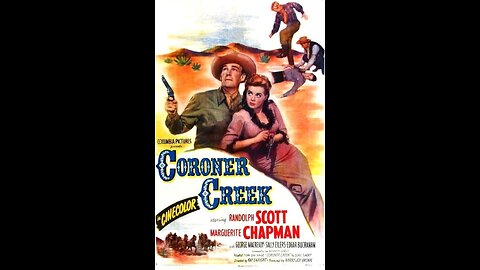
Coroner Creek (1948) | Directed by Ray Enright
Classic Films & Movies Archive
Coroner Creek is a gripping Western about vengeance and redemption. The story follows Chris Danning, a hardened man on a relentless quest to find and kill the man responsible for his fiancée’s death during a stagecoach robbery. As Danning closes in on his prey, he uncovers a web of greed and betrayal that forces him to confront his own morality. The film combines classic Western action with a deeply personal story of justice and loss.
Genre: Western / Drama
Director: Ray Enright
Ray Enright was an American director known for his work on Westerns and action films during the 1930s and 1940s. His career included collaborations with notable stars of the era, and he had a knack for crafting solid, fast-paced stories that appealed to mainstream audiences. Coroner Creek is one of his more serious and emotionally resonant Westerns, showcasing his ability to blend action with character-driven drama.
Star Cast:
- Randolph Scott as Chris Danning
- Marguerite Chapman as Kate Hardison
- George Macready as Younger Miles
- Sally Eilers as Della Harms
- Edgar Buchanan as Sheriff O'Hea
Coroner Creek was well-received for its strong central performance by Randolph Scott and its engaging revenge-driven plot. Audiences appreciated its balance of action, suspense, and emotional depth, while critics noted the film’s darker tone compared to other Westerns of the time. It became a solid entry in Scott’s long list of successful Western roles.
Fun Facts:
- The film was adapted from the novel of the same name by Luke Short, a popular writer of Western fiction.
- Randolph Scott, known for his stoic and heroic Western characters, delivers one of his more brooding performances in Coroner Creek.
- The movie’s title refers to the fictional town where much of the action takes place, emphasizing the grim undertones of the story.
- George Macready’s portrayal of the villain Younger Miles is remembered for its cold and calculating demeanor, adding tension to the narrative.
- The film was shot in Technicolor, which was still relatively uncommon for Westerns at the time, adding a vibrant visual quality to its rugged landscapes.
- Director Ray Enright worked with Randolph Scott on several films, and their collaboration helped shape Scott’s career as one of the great Western stars of the era.
🎬 Instantly Find Your Favorite Movies! This Rumble movie channel is fully indexed at 👉 https://kinoquick.com
1
comment
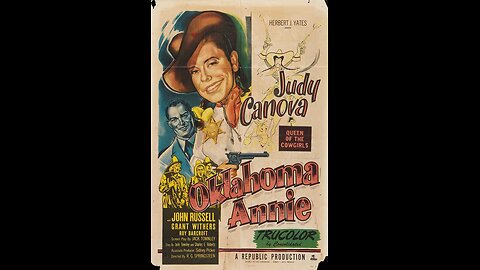
Oklahoma Annie (1952) | Directed by R.G. Springsteen
Classic Films & Movies Archive
Oklahoma Annie is a lively western comedy that follows Annie Oakley-like heroine Judy Canova, a shopkeeper with big dreams of becoming a law enforcement officer. When a band of outlaws begins terrorizing her small town, Judy gets the chance to prove her mettle. With humor, charm, and a touch of action, she teams up with a straight-laced sheriff to bring justice to the Wild West.
Genre: Western / Comedy
Director: R.G. Springsteen
R.G. Springsteen was a prolific director of westerns and action films during the 1940s and 1950s. Known for his ability to blend humor with action, Springsteen crafted films that were both entertaining and engaging. His knack for storytelling and efficient direction made him a favorite in the genre, particularly for lighter, family-friendly westerns like Oklahoma Annie.
Star Cast:
- Judy Canova as Judy, the spirited shopkeeper turned deputy
- John Russell as Sheriff Dan Fraser, the no-nonsense lawman who reluctantly partners with Judy
- Grant Withers as Bull McCready, the leader of the outlaw gang
- Roy Barcroft as Ace, Bull’s scheming second-in-command
Oklahoma Annie was well-received for its mix of humor and western tropes, with audiences enjoying Judy Canova’s comedic timing and charismatic performance. Critics praised the film’s lighthearted tone and entertaining storyline, making it a hit among fans of family-friendly westerns.
Fun Facts:
1. Oklahoma Annie was filmed in Trucolor, a vibrant two-color film process, giving the movie a bright and unique visual appeal.
2. Judy Canova, known for her singing and comedic talent, performed several musical numbers in the film, adding to its charm.
3. The movie’s comedic elements drew comparisons to popular slapstick westerns of the era, solidifying its place as a fan favorite.
4. John Russell, who played the sheriff, later became a prominent western star, known for his role in the TV series Lawman.
5. The film’s blend of action, comedy, and music made it a unique entry in the western genre, appealing to a wide audience.
Oklahoma Annie remains a delightful blend of comedy and western adventure, showcasing Judy Canova’s star power and the genre’s versatility.
🎬 Instantly Find Your Favorite Movies! This Rumble movie channel is fully indexed at 👉 https://kinoquick.com
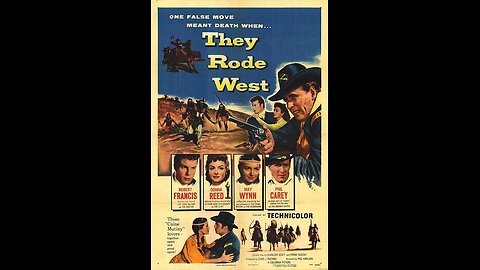
They Rode West (1954) | Directed by Phil Karlson
Classic Films & Movies Archive
"They Rode West" is a Western drama set on a remote cavalry outpost in the American frontier. The story follows Dr. Allen Seward, an idealistic Army surgeon who arrives at the fort determined to provide proper medical care to both soldiers and the local Cheyenne tribe. His progressive views clash with hardened military officers who harbor deep mistrust of the Native Americans. As tensions rise, Dr. Seward must choose between following orders and doing what he believes is right, testing his courage and compassion in a hostile environment.
Genre: Western / Drama
Director: Phil Karlson
Phil Karlson was an American filmmaker known for his gritty, hard-hitting crime dramas of the 1950s and 1960s, such as "Kansas City Confidential" and "The Phenix City Story." His direction often emphasized moral complexity and strong storytelling. Though he specialized in crime and noir, Karlson brought the same sense of realism and intensity to Westerns like "They Rode West."
Star Cast:
- Robert Francis as Dr. Allen Seward
- Donna Reed as Laurie
- Philip Carey as Lieutenant Sayre
- May Wynn as Manyi-ten
- Onslow Stevens as Major Gibson
"They Rode West" was moderately successful among Western enthusiasts. Critics noted the film’s emphasis on moral dilemmas and the sympathetic portrayal of Native Americans, which distinguished it from more conventional frontier tales. While overshadowed by other Westerns released during the era, it earned praise for its earnest performances and compelling themes of empathy and integrity.
Fun Facts:
- The film was based on the short story "Wood Hawk," written by Leo Katcher and originally published in The Saturday Evening Post.
- Robert Francis, who played Dr. Seward, tragically died in a plane crash a year after the film’s release, cutting short a promising career.
- Donna Reed’s appearance in "They Rode West" showcased her versatility; she was already known for her roles in both drama ("From Here to Eternity") and classic family cinema ("It’s a Wonderful Life").
- Phil Karlson’s experience with noir films influenced the Western’s darker undertones, evident in its unflinching portrayal of prejudice and conflict.
- "They Rode West" was shot in Technicolor, capturing the rugged beauty of the frontier landscapes and adding a vivid visual dimension to its themes of justice and compassion.
🎬 Instantly Find Your Favorite Movies! This Rumble movie channel is fully indexed at 👉 https://kinoquick.com
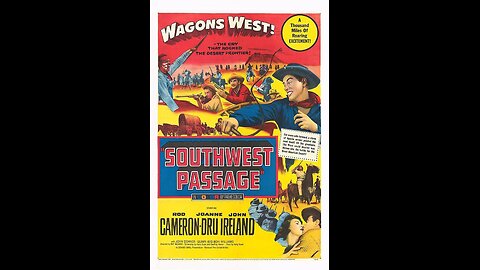
Southwest Passage (1954) | Directed by Ray Nazarro
Classic Films & Movies Archive
Southwest Passage is an adventurous western about a group of pioneers journeying across the perilous southwestern frontier. The story centers on Dr. Baxter, a fugitive posing as a physician, who joins a camel caravan expedition led by Edward Beale. As the group faces hostile terrain, danger from Native tribes, and internal conflict, secrets are revealed, and loyalties are tested. The film combines thrilling action with a unique historical backdrop.
Genre: Western / Adventure
Director: Ray Nazarro
Ray Nazarro was a prolific director known for his work in westerns during the 1940s and 1950s. He specialized in crafting fast-paced, character-driven stories set against rugged landscapes. With a career spanning over three decades, Nazarro brought an efficiency and authenticity to his films, often working with tight budgets and schedules. His works remain a staple of the golden age of western cinema.
Star Cast:
- Rod Cameron as Edward Beale, the expedition leader with a vision for using camels in the desert
- Joanne Dru as Lilly, a woman running from her past who becomes entangled with Dr. Baxter
- John Ireland as Dr. Baxter, a fugitive using the expedition as a means to escape the law
- Guinn "Big Boy" Williams as Tall Tale, a colorful and loyal member of the caravan
Southwest Passage was moderately successful upon release, appreciated for its unique premise involving camels in the American West. Audiences enjoyed the sweeping desert landscapes and the chemistry between the leads. While critics noted that the plot followed standard western tropes, they praised its originality in exploring an overlooked historical episode.
Fun Facts:
1. The film was inspired by the real-life Camel Corps experiment in the mid-19th century, where camels were imported to the United States for desert exploration.
2. Southwest Passage was one of the first films to explore this little-known historical venture, making it a unique entry in the western genre.
3. The camels used in the film were brought in from a private ranch in California.
4. Joanne Dru and John Ireland, the leading stars, had previously worked together in several films, adding to their on-screen chemistry.
5. Despite its modest budget, the film's cinematography captured the grandeur of the Arizona desert, lending authenticity to the story.
Southwest Passage remains a fascinating blend of historical intrigue and classic western adventure, offering a fresh take on the frontier narrative.
🎬 Instantly Find Your Favorite Movies! This Rumble movie channel is fully indexed at 👉 https://kinoquick.com
The Paleface (1948) | A classic Western comedy directed by Norman Z. McLeod Private Video
Classic Films & Movies Archive
"The Paleface" (1948) is a classic Western comedy directed by Norman Z. McLeod, featuring the comedic genius of Bob Hope and Jane Russell. This uproarious film takes the Western genre and turns it on its head, blending slapstick humor, romance, and musical numbers to create an entertaining cinematic experience.
Bob Hope stars as "Painless" Peter Potter, a timid traveling dentist who unwittingly finds himself in the midst of a Wild West adventure. Jane Russell plays Calamity Jane, a sharpshooting frontierswoman with a knack for getting into trouble. When Peter becomes the unwitting target of a group of criminals, hilarity ensues as he attempts to navigate the dangers of the frontier while Calamity Jane reluctantly becomes his protector.
The film is characterized by Bob Hope's signature wit and physical comedy, offering a comedic take on the conventions of the Western genre. Jane Russell adds charm and feistiness to her role, creating a dynamic on-screen pairing with Hope that contributes to the film's comedic success.
"The Paleface" not only delivers laughs but also features memorable musical performances, including the Academy Award-winning song "Buttons and Bows." The film cleverly satirizes Western tropes while incorporating elements of romance and adventure.
With its fast-paced humor, lively musical numbers, and the delightful pairing of Bob Hope and Jane Russell, "The Paleface" remains a beloved classic that showcases the versatility of its lead actors. This Western comedy is a testament to the enduring appeal of laughter and entertainment in the landscape of Hollywood's Golden Age cinema. Saddle up for a hilarious ride through the Old West with "The Paleface."
2
comments

The Last of the Comanches (1953) | Western film directed by Andre DeToth
Classic Films & Movies Archive
"The Last of the Comanches" is a Western film released in 1953, directed by Andre DeToth. Also known as "The Sabre and the Arrow," the film is set against the backdrop of the Indian Wars in the post-Civil War American West. It features a storyline that blends elements of action, drama, and survival, typical of many Westerns of that era.
Plot Summary:
The story is set in the aftermath of the Civil War, and Captain Lance Caldwell (Broderick Crawford) leads a group of Confederate prisoners of war who are being transported to Fort Benham. En route, they come across a decimated cavalry unit, slaughtered by a Comanche war party led by the fierce Chief Quanah Parker (Mickey Shaughnessy). The prisoners and their Union guards must now band together to survive the hostile Comanche territory.
Amidst the struggle for survival, Captain Caldwell and Sergeant Matt Trainor (Charles Buchinsky, later known as Charles Bronson) find themselves taking on leadership roles. The group faces challenges from both the relentless pursuit of the Comanches and internal conflicts among the men. The tension is heightened by the harsh environment, limited supplies, and the constant threat of attack.
As the group makes its way through Comanche territory, they must navigate the treacherous landscape while battling the elements, hunger, and the ever-present danger of ambushes by the Comanches. The film explores themes of survival, camaraderie, and the clash of cultures in the untamed West.
Key Themes:
1. Survival in Hostile Territory: The film revolves around the group's struggle for survival as they navigate the dangerous and unforgiving terrain of Comanche territory. The harsh environment becomes a significant adversary in itself.
2. Cultural Conflict: "The Last of the Comanches" touches on the cultural conflict between the settlers and Native American tribes during the Indian Wars. The film explores the tensions and misunderstandings that arise as different groups vie for control of the land.
3. Leadership and Camaraderie: Captain Caldwell and Sergeant Trainor emerge as leaders during the perilous journey. The film examines the dynamics of leadership and the importance of camaraderie among individuals facing common threats.
4. Post-Civil War Setting: The backdrop of the post-Civil War era adds a layer of historical context, with former enemies forced to unite against a common foe in the challenging frontier.
Production and Reception:
"The Last of the Comanches" is a product of the 1950s Western genre, known for its straightforward storytelling and rugged depiction of life on the frontier. The film's action sequences, survival elements, and depictions of the Comanche threat contribute to its appeal within the Western genre.
While not necessarily a groundbreaking or critically acclaimed film, it falls within the conventions of Western cinema of its time. Fans of classic Westerns may appreciate its exploration of survival and conflict in the untamed American West.
In summary, "The Last of the Comanches" is a Western film that explores the challenges of survival, cultural conflict, and camaraderie in the post-Civil War American West. The film's narrative is driven by the characters' struggle against the Comanches and the harsh elements of the frontier.

Kit Carson (1940) | Directed by George B. Seitz
Classic Films & Movies Archive
"Kit Carson" (1940) is a classic Western adventure directed by George B. Seitz, bringing to life the legendary frontiersman and explorer Kit Carson in a thrilling tale of courage, romance, and frontier justice. Starring Jon Hall in the titular role, the film captures the essence of the American West during a time of exploration and conflict.
The plot follows Kit Carson as he navigates the untamed wilderness, facing challenges from both nature and the dangers posed by warring Native American tribes. Carson's journey is intertwined with a romantic subplot involving Dolores Murphy, portrayed by Lynn Bari, adding depth and emotion to the narrative.
"Kit Carson" (1940) showcases the rugged beauty of the Western landscapes and the excitement of the frontier era. The film's action sequences, including frontier battles and daring rescues, contribute to its overall sense of adventure.
George B. Seitz's direction, coupled with Jon Hall's charismatic portrayal of Kit Carson, makes for an engaging cinematic experience that captures the spirit of the Wild West. The film pays homage to the historical figure's exploits and contributions to the expansion of the United States.
Step into the boots of a Western legend with "Kit Carson," a classic film that transports audiences to a time of exploration, danger, and honor on the American frontier. With its thrilling storyline, picturesque landscapes, and a strong central performance, the film remains a timeless contribution to the Western genre.
Yellow Sky (1948) | Directed by William A. Wellman
Classic Films & Movies Archive
"Yellow Sky" (1948) is a classic Western film directed by William A. Wellman, known for its atmospheric storytelling, moral complexity, and standout performances. Starring Gregory Peck, Anne Baxter, and Richard Widmark, this film offers a gripping tale of greed, survival, and redemption set against the rugged backdrop of the Old West.
The story follows a group of outlaws led by James "Stretch" Dawson (Gregory Peck) who, after a successful robbery, find themselves pursued by lawmen. As they seek refuge in the harsh desert, tensions rise within the group, and they stumble upon a ghost town called Yellow Sky. There, they encounter a lone prospector (Richard Widmark) and his tomboyish granddaughter (Anne Baxter). The dynamics shift as alliances form, secrets are revealed, and the line between right and wrong becomes increasingly blurred.
"Yellow Sky" stands out for its character-driven narrative, moral ambiguity, and the intense performances of its cast. Gregory Peck's portrayal of the conflicted Stretch adds depth to the film, while the atmospheric cinematography captures the harsh beauty of the desert landscape.
William A. Wellman's direction skillfully navigates the complexities of human nature, making "Yellow Sky" a Western that transcends traditional genre conventions. The film explores themes of morality, survival, and the possibility of redemption in a visually striking and morally challenging tale.
Venture into the vast and unforgiving terrain of the Old West with "Yellow Sky," a classic Western that explores the depths of human character against the backdrop of a haunting and desolate ghost town. With its compelling narrative and standout performances, the film remains a timeless entry in the Western genre.
In Old Oklahoma (1943) | Western directed by Albert S. Rogell
Classic Films & Movies Archive
"In Old Oklahoma" (1943), also known as "War of the Wildcats," is a spirited Western directed by Albert S. Rogell, blending elements of action, romance, and humor against the backdrop of the Oklahoma oil rush. Starring John Wayne, Martha Scott, and Albert Dekker, this classic film captures the rugged spirit of the American frontier during a tumultuous period of economic expansion.
The narrative revolves around Dan Somers (John Wayne), a wildcatter with dreams of striking it rich in the Oklahoma oil fields. As the oil boom transforms the landscape, Dan faces both competition and romance. When he clashes with Jim Gardner (Albert Dekker), a rival oilman, the stakes rise, leading to a series of thrilling confrontations that culminate in a high-stakes oil war.
John Wayne delivers a charismatic performance as the determined and rough-edged Dan Somers, embodying the archetypal Western hero. Martha Scott provides a strong counterpart as Catherine Allen, a newspaper editor caught in the midst of the oil rivalry and romance.
"In Old Oklahoma" balances its Western action with moments of humor and romance, creating a film that caters to a broad audience. The film's portrayal of the Oklahoma landscape during this pivotal historical period adds depth to the storytelling, capturing the essence of a region undergoing rapid change.
Directed by Albert S. Rogell, "In Old Oklahoma" is a classic example of the Hollywood Western, featuring the iconic John Wayne in a role that showcases his enduring appeal as a leading man in the genre. With its combination of action, romance, and humor, the film stands as an entertaining cinematic journey into the heart of the Old West during a time of transformative change.

Two Flags West (1950) | A Western war film directed by Robert Wise
Classic Films & Movies Archive
"Two Flags West" is a Western war film released in 1950, directed by Robert Wise. The film is set during the American Civil War and explores the complexities of allegiances and conflicts in the midst of war. Starring Joseph Cotten, Linda Darnell, and Jeff Chandler, "Two Flags West" blends elements of historical drama, romance, and action.
Plot Summary:
The story is set in 1864, during the American Civil War. Confederate prisoners of war are given a chance for parole if they agree to join the Union Army and serve in the western territories against Native American tribes. The prisoners, led by Colonel Clay Tucker (Joseph Cotten), reluctantly accept this offer.
The group of Confederate soldiers, now wearing Union uniforms, is sent to a remote fort in the New Mexico Territory. There, they encounter a diverse and tense mix of soldiers and civilians. Among the characters are Captain Mark Bradford (Jeff Chandler), who is initially skeptical of the Confederate recruits, and Elena Kenniston (Linda Darnell), a Southern woman whose loyalties are divided.
As the group adjusts to their new surroundings, they face not only the threat of Native American attacks but also internal conflicts among the soldiers with different allegiances. Colonel Tucker attempts to lead his men honorably, but loyalty is tested as tensions rise.
The film explores themes of honor, duty, and the personal toll of war. The characters must navigate the complexities of their allegiances, both to their respective sides in the war and to each other as they form new bonds in the challenging frontier environment.
Key Themes:
1. Allegiance and Loyalty: "Two Flags West" delves into the theme of loyalty as the Confederate soldiers grapple with their parole and service in the Union Army. The characters face internal and external pressures as they navigate conflicting allegiances.
2. Civil War on the Frontier: The movie explores the unique challenges of the Civil War in the western territories, where the conflict with Native American tribes adds an additional layer of danger and complexity.
3. Internal Conflict: The film depicts the internal conflicts among the soldiers, highlighting their personal struggles, prejudices, and the process of forging new identities within the Union Army.
4. Romance and Relationships: The romantic subplot involving Colonel Tucker and Elena Kenniston adds a personal dimension to the story, exploring the challenges of love and relationships amidst the backdrop of war.
Production and Reception:
"Two Flags West" was directed by Robert Wise, who later became known for his work on acclaimed films such as "West Side Story" and "The Sound of Music." The film received positive reviews for its engaging narrative, strong performances, and its exploration of the moral dilemmas faced by the characters.
While perhaps not as widely remembered as some other classic Westerns, "Two Flags West" is appreciated for its unique take on the Civil War and its examination of the complexities of loyalty and duty. It remains a notable entry in the Western genre, blending historical drama with the action and romance typical of the era.
In summary, "Two Flags West" is a Western war film that explores themes of allegiance, loyalty, and internal conflict during the American Civil War. The movie combines historical drama with romance and action, offering a nuanced portrayal of the challenges faced by Confederate soldiers in the western territories.

The Ox-Bow Incident (1943) | Directed by William A. Wellman
Classic Films & Movies Archive
"The Ox-Bow Incident" (1943) is a gripping and thought-provoking Western directed by William A. Wellman. Adapted from Walter Van Tilburg Clark's novel, the film unfolds in a small, tense frontier town during the Old West. Starring Henry Fonda, Dana Andrews, and Anthony Quinn, the narrative revolves around the dark consequences of a seemingly impromptu posse formed to address the alleged theft and murder of a local rancher.
As the posse embarks on a pursuit of justice, emotions escalate, and the line between guilt and innocence becomes increasingly blurred. Fueled by moral ambiguity and a haunting sense of inevitability, the film explores themes of mob mentality, justice, and the harsh realities of frontier life.
"The Ox-Bow Incident" is a masterfully crafted and morally challenging work, praised for its stark cinematography and powerful performances. The film remains a significant entry in the Western genre, offering a compelling exploration of human nature and the consequences of unchecked vigilante justice.
Indian Uprising (1952) | A Western film directed by Ray Nazarro
Classic Films & Movies Archive
"Indian Uprising" is a Western film released in 1952, directed by Ray Nazarro. Starring George Montgomery, Audrey Long, and Carl Benton Reid, the film is set against the backdrop of the Indian Wars in the American West during the late 19th century.
**Plot Summary:**
The story unfolds in the Arizona Territory during the late 1880s, a time marked by tensions between the U.S. government, settlers, and Native American tribes. Captain Case Britton (George Montgomery) is an officer assigned to maintain peace between the Apache Indians and the settlers. He faces the challenge of negotiating with the Apache chief Diablito (Monte Blue) and preventing a full-scale uprising.
Complications arise when the settlers, led by the ambitious and ruthless Lee Quince (Carl Benton Reid), encroach upon Apache territory in search of gold. The settlers' actions escalate the conflict, leading to a series of skirmishes and battles between the Apache warriors and the U.S. Army.
Amidst the chaos, Captain Britton finds himself torn between his duty to the government and his empathy for the Apache people. His efforts to prevent bloodshed and broker peace are complicated by the aggressive tactics employed by Quince, who is determined to exploit the situation for personal gain.
The film explores themes of justice, prejudice, and the clash of cultures as it depicts the struggle for control of the land and resources in the American West. The characters must navigate moral dilemmas and the consequences of their actions in the volatile and dangerous frontier environment.
**Key Themes:**
1. **Indian Wars:** "Indian Uprising" delves into the historical period of the Indian Wars, exploring the conflicts between Native American tribes and the encroaching settlers and military forces.
2. **Land and Resources:** The film examines the motivations behind the settlers' pursuit of gold and the resulting impact on the relationships between settlers and Native Americans. The struggle for control of land and resources is a central theme.
3. **Leadership and Morality:** Captain Britton's character represents the moral center of the narrative, navigating the complexities of leadership and morality in the midst of a volatile situation. The film explores the ethical choices faced by individuals in positions of authority.
4. **Cultural Clash:** The clash of cultures between the Apache people and the settlers is a prominent theme. The film portrays the misunderstandings, prejudices, and hostilities that arise as different groups vie for control of the territory.
**Production and Reception:**
"Indian Uprising" is a product of the classic Hollywood Western genre, known for its straightforward storytelling and action sequences. George Montgomery's portrayal of Captain Britton and the film's exploration of the Indian Wars received moderate acclaim.
While not necessarily a groundbreaking or critically acclaimed film, "Indian Uprising" contributes to the cinematic representation of the Indian Wars and the challenges faced by both Native American tribes and settlers in the historical context of the American West.
In summary, "Indian Uprising" is a Western film that explores the conflicts and tensions during the Indian Wars in the late 19th century. The narrative focuses on the struggle for land and resources, the clash of cultures, and the moral dilemmas faced by individuals in a turbulent frontier setting.
Bugles in the Afternoon (1952) | A Western film directed by Roy Rowland
Classic Films & Movies Archive
"Bugles in the Afternoon" is a Western film released in 1952, directed by Roy Rowland. Starring Ray Milland and Helena Carter, the movie is set in the aftermath of the American Civil War and explores themes of redemption, conflict, and the challenges faced by soldiers returning to civilian life.
Plot Summary:
The story centers around Captain Kern Shafter (Ray Milland), a Confederate officer who fought in the Civil War. Shafter returns home to Texas after the war to find that his fiancée, Norah (Helena Carter), has married another man in his absence. Disillusioned and seeking a fresh start, Shafter decides to leave Texas and head to Montana, where he hopes to escape his past and find a new purpose.
In Montana, Shafter becomes involved in the conflicts between settlers and Native American tribes. The tension between these groups is further exacerbated by the construction of the Northern Pacific Railway, which disrupts the traditional lands of the Native Americans.
Shafter takes a job as a wagon master for the railroad construction crew, leading a group of settlers through dangerous territory. Along the way, he encounters various challenges, including the threat of Indian attacks and internal conflicts among the settlers.
As Shafter navigates the perils of the frontier, he finds himself torn between loyalty to the settlers, including a woman named Sidney (Mary Murphy), and sympathy for the plight of the Native Americans. The film unfolds as a tale of personal redemption, as Shafter confronts his own demons and seeks a path toward forgiveness and a new beginning.
Key Themes:
1. Post-Civil War Disillusionment: The film explores the challenges faced by Civil War veterans as they return home and attempt to reintegrate into society. Shafter's journey reflects the sense of displacement and disillusionment experienced by many soldiers after the war.
2. Conflict on the Frontier: "Bugles in the Afternoon" delves into the conflicts between settlers, railroad workers, and Native American tribes in the changing landscape of the American West. The film portrays the tensions and violence that accompanied westward expansion.
3. Personal Redemption: Captain Shafter's character arc revolves around personal redemption. As he faces moral dilemmas and internal conflicts, the film examines his journey toward forgiveness, self-discovery, and a chance at a new life.
4. Romantic Elements: The film includes romantic elements as Shafter navigates relationships with Sidney and grapples with the romantic entanglements of the past with Norah. These relationships add depth to the character's emotional journey.
Production and Reception:
"Bugles in the Afternoon" is a classic Western that reflects the themes and styles of the genre in the 1950s. Ray Milland's performance as Captain Shafter received positive reviews, and the film was generally well-received for its engaging narrative and exploration of post-Civil War themes.
While not as widely remembered as some other Western classics, the film remains a notable entry in the genre, offering a blend of action, romance, and character-driven storytelling. It contributes to the cinematic representation of the challenges faced by individuals in the turbulent post-Civil War era.
In summary, "Bugles in the Afternoon" is a Western film that explores the personal and societal challenges faced by a Civil War veteran as he seeks redemption and a new beginning in the changing landscape of the American West.

Angel and the Badman (1947) | Directed by James Edward Grant
Classic Films & Movies Archive
"Angel and the Badman" (1947) is a classic Western film that stands out for its blend of romance and frontier justice. Directed by James Edward Grant, the story revolves around Quirt Evans, a notorious gunslinger played by John Wayne, who is wounded and taken in by a Quaker family led by Gail Russell's character, Penelope Worth. As Quirt recovers, he undergoes a transformation influenced by the peaceful Quaker lifestyle. This film beautifully weaves together elements of action, romance, and morality, making it a compelling and enduring entry in the Western genre.
Green Grass of Wyoming (1948) | Western film directed by Louis King
Classic Films & Movies Archive
"Green Grass of Wyoming" is a 1948 Western film directed by Louis King, featuring an ensemble cast. The main characters are portrayed by Peggy Cummins as Carey Greenway, Charles Coburn as Beaver Greenway, Robert Arthur as Ken McLaughlin, and Charles Winninger as Gus. The story follows Ken's journey as he navigates the challenges of raising a horse, Thunderhead, and dealing with conflicts in the community. Filled with themes of love, loyalty, and the beauty of the Wyoming landscape, the film captures the spirit of the American West during a transformative period.
My Darling Clementine (1946) | Western directed by John Ford
Classic Films & Movies Archive
"My Darling Clementine" is a classic 1946 Western directed by John Ford. Set against the backdrop of the legendary gunfight at the O.K. Corral, the film stars Henry Fonda as the iconic lawman Wyatt Earp. When Earp and his brothers arrive in the lawless town of Tombstone, they find themselves embroiled in a feud with the Clanton gang. The narrative unfolds with themes of justice, honor, and frontier justice. Known for its masterful direction, strong performances, and atmospheric cinematography, "My Darling Clementine" remains a timeless portrayal of the American Old West.
Flame of Barbary Coast (1945) | Western film directed by Joseph Kane
Classic Films & Movies Archive
"Flame of Barbary Coast" is a 1945 Western film directed by Joseph Kane, set against the vibrant backdrop of San Francisco during the Gold Rush era. The story unfolds with the charismatic Duke Fergus (played by John Wayne), a handsome and fearless gambler who becomes enamored with the beautiful saloon owner Flaxen Tarry (Ann Dvorak). As the tumultuous romance between Duke and Flaxen develops, it collides with the harsh realities of the gambling world and the challenges posed by rival gamblers. The film combines elements of action, romance, and drama, offering a captivating narrative that explores the dynamics of love and ambition in a visually stunning historical setting. With its engaging storyline, dynamic performances, and the iconic presence of John Wayne, "Flame of Barbary Coast" remains a classic representation of Hollywood's golden age of Western cinema.
Lust for Gold (1949) | Directed by S. Sylvan Simon
Classic Films & Movies Archive
"Lust for Gold" is a riveting 1949 Western adventure film that takes audiences on a journey through the treacherous landscapes of the Arizona desert in search of an elusive fortune. Directed by S. Sylvan Simon, the film unfolds against the backdrop of the legendary Lost Dutchman Mine, a fabled source of unimaginable wealth.
The story revolves around the determined and ambitious Jacob "Dutch" Walz, portrayed by Glenn Ford, who becomes entangled in the dangerous pursuit of gold. As Dutch navigates the harsh terrain, he discovers that the pursuit of wealth comes at a cost, and he must contend with the perils of greed, betrayal, and the unforgiving desert.
"Lust for Gold" combines elements of mystery, suspense, and action, creating a gripping narrative that explores the human desire for riches and the consequences it may entail. With its compelling storytelling and impressive performances, the film stands as a captivating entry in the classic Western genre, offering both thrills and moral introspection.
Passion (1954) | Directed by Allan Dwan
Classic Films & Movies Archive
"Passion" is a Western drama set in the rugged frontier of 19th-century California. The story follows Juan Obregon, a proud rancher determined to protect his land and his loved ones. When a violent feud erupts between local ranchers and corrupt authorities, Juan finds himself torn between love, loyalty, and the call for justice. The film weaves themes of revenge, sacrifice, and the unyielding spirit required to tame a hostile landscape.
Genre: Western / Drama
Director: Allan Dwan
Allan Dwan was a pioneering Canadian-born filmmaker whose career spanned the silent era into the early days of widescreen productions. Known for his versatility, Dwan directed hundreds of films in various genres—comedies, dramas, westerns, and swashbucklers—becoming a key figure in Hollywood’s formative years. His work often combined tight storytelling with a strong visual flair, showcasing his deep understanding of cinematic craft.
Star Cast:
- Cornel Wilde as Juan Obregon
- Yvonne De Carlo as Rosa
- Raymond Burr as Captain Rodriguez
- John Qualen as Tio
Upon its release, "Passion" received modest praise from audiences, who appreciated the film’s vibrant cinematography and dramatic tension. Critics of the day noted Allan Dwan’s steady direction and the strong performances by Cornel Wilde and Yvonne De Carlo. While not a major box-office hit, the movie has since found appreciation among fans of classic Westerns for its passionate storytelling and atmospheric setting.
Fun Facts:
- Allan Dwan’s extensive experience in early Hollywood helped him efficiently manage complex outdoor shoots, capturing sweeping vistas with a relatively small budget.
- Cornel Wilde performed many of his own stunts, eager to bring authenticity to the character of Juan Obregon.
- Yvonne De Carlo was already known for her roles in adventure and fantasy-tinged films; her appearance in a traditional Western highlighted her versatility as an actress.
- Raymond Burr, later famous as Perry Mason, delivered a menacing performance as Captain Rodriguez, showcasing his ability to play both heroic and villainous roles.
- The movie’s title, “Passion,” reflects the intense emotions driving the central conflict: love for one’s land, one’s family, and the burning need to defend them at all costs.
🎬 Instantly Find Your Favorite Movies! This Rumble movie channel is fully indexed at 👉 https://kinoquick.com

They Died with Their Boots On (1941) | Directed by Raoul Walsh
Classic Films & Movies Archive
"They Died with Their Boots On" (1941), directed by Raoul Walsh, is a historical epic that dramatizes the life of General George Armstrong Custer, a controversial figure in American history. Errol Flynn delivers a charismatic performance as Custer, with Olivia de Havilland co-starring as Elizabeth Bacon, Custer's romantic interest.
The film traces Custer's journey from his early days at West Point to his rise as a military leader during the Civil War and the Indian Wars. Custer's flamboyant personality, military exploits, and complex relationships are explored against the backdrop of significant historical events. The narrative culminates in the infamous Battle of the Little Bighorn, where Custer and his men make their heroic last stand against overwhelming odds.
Errol Flynn brings a mix of charm and bravado to his portrayal of Custer, capturing both the legendary aspects and human complexities of the historical figure. Olivia de Havilland provides a strong supporting performance as Elizabeth Bacon, adding depth to the personal side of Custer's story.
"They Died with Their Boots On" blends elements of adventure, romance, and historical drama, presenting a stylized and somewhat fictionalized account of Custer's life. While the film takes liberties with historical accuracy, it remains a notable entry in the genre of historical epics, offering audiences a captivating and entertaining portrayal of one of America's most enigmatic military leaders.
Stars:
Errol Flynn as General George Armstrong Custer
Olivia de Havilland as Elizabeth Bacon
Arthur Kennedy as Ned Sharp
Charley Grapewin as California Joe
Gene Lockhart as Secretary of War Edwin M. Stanton
1
comment

Bend of the River (1952) | Classic Western film directed by Anthony Mann
Classic Films & Movies Archive
"Bend of the River" (1952) is a classic Western film directed by the legendary Anthony Mann, known for his contributions to the genre. Starring James Stewart in the lead role, the movie takes audiences on an adventurous journey along the rugged landscapes of the Oregon Trail. Stewart plays Glyn McLyntock, a reformed outlaw seeking redemption as he guides a wagon train of pioneers through treacherous terrain. The film is a gripping tale of loyalty, betrayal, and the challenges faced in the untamed wilderness. With breathtaking cinematography capturing the majestic beauty of the American frontier, "Bend of the River" is a compelling Western that combines action, drama, and moral complexity.
- James Stewart as Glyn McLyntock
- Arthur Kennedy as Emerson Cole
- Rock Hudson as Trey Wilson
"Bend of the River" received positive acclaim from audiences and critics, solidifying its status as a standout Western in the 1950s. James Stewart's charismatic performance, coupled with Anthony Mann's expert direction, contributed to the film's success. Audiences appreciated the film's dynamic storytelling, well-drawn characters, and the tension that arises from the moral dilemmas faced by the protagonists. The scenic backdrop of the Oregon Trail and the intense action sequences added to the film's visual appeal. "Bend of the River" remains a notable entry in the Western genre, celebrated for its narrative depth and the compelling exploration of the complexities of frontier life.

The Cowboy and the Lady (1938) | Directed by H.C. Potter
Classic Films & Movies Archive
"The Cowboy and the Lady" (1938), directed by H.C. Potter, is a romantic comedy that blends elements of the Western genre with the charm of a classic love story. Starring Gary Cooper and Merle Oberon, the film explores the unlikely romance between a cowboy and a socialite, offering a lighthearted and entertaining cinematic experience.
Gary Cooper, known for his roles in Westerns and romantic dramas, brings his signature stoic charm to the character of Stretch Willoughby, a cowboy with a heart of gold. Merle Oberon, in the role of Mary Smith, a socialite seeking a break from her privileged life, provides a delightful contrast to Cooper's rugged persona. The chemistry between the two leads is a key strength of the film, as they navigate the challenges of their disparate worlds.
H.C. Potter's direction infuses the film with a sense of humor and warmth. The narrative unfolds with a blend of comedy, romance, and Western elements, creating a delightful atmosphere that caters to a broad audience. Potter's ability to balance the genre elements while delivering a heartwarming love story contributes to the film's overall appeal.
The screenplay, written by S.N. Behrman and Sonya Levien, showcases witty dialogue and clever situational humor. The narrative follows Mary's attempt to escape societal expectations by pretending to be a maid, leading to her unexpected encounter with Stretch. The ensuing romantic complications and comedic misunderstandings drive the film's engaging plot.
The supporting cast, including Walter Brennan, Fuzzy Knight, and Patsy Kelly, adds humor and depth to the film. Brennan, in particular, brings his comedic prowess to the role of George, Stretch's loyal sidekick. The ensemble cast effectively contributes to the film's comedic and romantic dynamics.
While "The Cowboy and the Lady" may be considered a product of its time with certain narrative conventions, it remains a charming and enjoyable film for those who appreciate classic Hollywood romance and humor. The film's ability to blend the Western genre with romantic comedy elements showcases the versatility of its director and cast.
The cinematography by Harry Fischbeck captures the picturesque landscapes of the Western setting, providing a visually appealing backdrop for the unfolding romance. The film's production design and costume choices also contribute to the overall period charm.
In conclusion, "The Cowboy and the Lady" (1938) is a delightful romantic comedy directed by H.C. Potter, featuring strong performances from Gary Cooper and Merle Oberon. With its blend of Western charm and classic Hollywood romance, the film remains an entertaining example of the era's filmmaking, providing audiences with a lighthearted escape into the world of love and laughter.

The Secret of Convict Lake (1951) | Directed by Michael Gordon
Classic Films & Movies Archive
Step into the rugged terrain of the Old West with "The Secret of Convict Lake," a 1951 Western drama directed by Michael Gordon. Starring a stellar cast led by Glenn Ford and Gene Tierney, this film weaves a tale of redemption, justice, and the complexities of human relationships. Set against the stunning backdrop of Convict Lake, the movie unfolds as a group of strangers with dark pasts discovers a shared secret that binds them together in unexpected ways.
- Glenn Ford as Jim Canfield:
Ford takes on the role of Jim Canfield, a character shrouded in mystery, whose presence sets off a chain of events that will unearth long-buried secrets.
- Gene Tierney as Marcia Stoddard:
Tierney portrays Marcia Stoddard, a woman caught in the web of the convicts' pasts, grappling with her own convictions and the unfolding drama around her.
"The Secret of Convict Lake" garnered positive reviews for its gripping narrative, atmospheric cinematography, and strong performances from its cast. Audiences of the time appreciated the film's departure from conventional Western tropes, delving into the psychological and moral complexities of its characters.
The chemistry between Glenn Ford and Gene Tierney, coupled with the supporting cast's nuanced portrayals, contributed to the film's success. Viewers praised the movie for its suspenseful storytelling, moral dilemmas, and the evocative depiction of the rugged landscapes that mirror the characters' internal struggles.
As a classic Western drama, "The Secret of Convict Lake" has endured as a notable entry in the genre, offering a compelling exploration of justice, redemption, and the indelible marks of the past. The film's legacy lies in its ability to transcend the typical Western narrative, presenting a tale that resonates with timeless themes and captivates audiences with its suspenseful twists and turns.

Distant Drums (1951) | Directed by Raoul Walsh
Classic Films & Movies Archive
"Distant Drums" is a 1951 American Western film directed by Raoul Walsh. The film stars Gary Cooper, Mari Aldon, and Richard Webb in lead roles.
Set during the Second Seminole War in the 1840s, "Distant Drums" follows Captain Quincy Wyatt (played by Gary Cooper), who leads a group of soldiers on a mission to destroy a Seminole fort in the Florida Everglades. Along the way, Wyatt and his men face numerous challenges, including treacherous terrain, hostile Seminole warriors, and the ever-present threat of alligators. During the journey, Wyatt encounters Judy Beckett (played by Mari Aldon), a woman who survived a Seminole attack, and they develop a romantic connection. The film culminates in a dramatic battle between the soldiers and the Seminole warriors.
"Distant Drums" is recognized for its thrilling action sequences, particularly the climactic battle scenes set in the Florida Everglades. Gary Cooper delivers a solid performance as the stoic and determined Captain Wyatt, embodying the archetypal Western hero. The film benefits from Raoul Walsh's direction, known for his expertise in handling action and adventure genres.
The cinematography captures the lush and dangerous beauty of the Florida Everglades, adding to the film's visual appeal. While the narrative is somewhat formulaic for a Western, the setting and the unique challenges faced by the characters set "Distant Drums" apart.
Overall, "Distant Drums" is regarded as an entertaining and well-executed Western film of its time, showcasing the charisma of Gary Cooper and the directorial skill of Raoul Walsh. The film's success lies in its ability to deliver a thrilling and action-packed story against the backdrop of a unique and challenging environment.
Hellgate (1952) | Directed by Charles Marquis Warren
Classic Films & Movies Archive
"Hellgate" (1952) is a Western film directed by Charles Marquis Warren. The movie features Sterling Hayden, Joan Leslie, Ward Bond, James Arness, and Peter Coe in prominent roles. As a Western, "Hellgate" follows a familiar genre formula but incorporates elements of redemption and moral dilemmas.
Directed by Charles Marquis Warren, known for his contributions to the Western genre, "Hellgate" tells the story of a man named Bill Gatlin, played by Sterling Hayden, who is released from prison and struggles to reintegrate into society. Gatlin's journey involves facing his past, seeking redemption, and dealing with the challenges of forgiveness.
The film is set against the backdrop of a small Western town, and Sterling Hayden delivers a solid performance as the conflicted protagonist. The narrative explores themes of second chances, the consequences of one's actions, and the potential for personal transformation.
"Hellgate" benefits from the atmospheric cinematography typical of Westerns, capturing the vast landscapes and rugged settings. The film also incorporates action sequences and the tense dynamics of a town grappling with Gatlin's return.
While "Hellgate" may not be as widely remembered as some other Western classics, it has received appreciation for its character-driven approach and its exploration of moral complexities. The performances, particularly Hayden's, contribute to the film's emotional depth.
Some critics might argue that the film adheres to certain Western conventions and tropes, making it somewhat predictable in its narrative arc. Additionally, the pacing and character development may be seen as less nuanced compared to more acclaimed entries in the genre.
In conclusion, "Hellgate" (1952), directed by Charles Marquis Warren and starring Sterling Hayden, offers a solid entry in the Western genre. The film explores themes of redemption and moral dilemmas, with Hayden's performance anchoring the narrative. While it may not reach the heights of other Western classics, "Hellgate" remains a respectable addition to the genre's cinematic landscape.
Only The Valiant (1951) | Directed by Gordon Douglas
Classic Films & Movies Archive
"Only the Valiant" is a 1951 Western film directed by Gordon Douglas. Set during the Apache Wars, the story revolves around a small group of soldiers stationed at an isolated desert outpost commanded by Captain Richard Lance. Their mission is to defend against Apache attacks and secure the territory for settlers. When Apache warriors lay siege to the fort, tensions rise, testing the soldiers' courage and resolve.
The film offers a tense and claustrophobic atmosphere, effectively capturing the isolation and vulnerability of the soldiers in hostile territory. Gregory Peck delivers a compelling performance as Captain Lance, portraying the conflicted leader torn between duty and personal demons. The cinematography captures the rugged beauty of the landscape while emphasizing the harsh realities of frontier life. Despite some predictable plot elements, "Only the Valiant" delivers solid Western entertainment with themes of sacrifice, redemption, and camaraderie.
"Only the Valiant" was released on April 13, 1951, receiving mixed reviews from critics but finding appreciation among Western enthusiasts for its solid performances and gripping narrative.
Stars:
- Gregory Peck as Captain Richard Lance
- Barbara Payton as Cathy Eversham
- Ward Bond as Sergeant Ben Murdock
- Gig Young as Lieutenant "Jim" Gresham
- Lon Chaney Jr. as Trooper Kebussyan
- Neville Brand as Trooper Onstot

Angel and the Badman (1947) | Directed by James Edward Grant
Classic Films & Movies Archive
"Angel and the Badman" is a 1947 American Western film directed by James Edward Grant. The story follows Quirt Evans, a notorious gunslinger wounded during a shootout. Nursed back to health by a Quaker family led by Penelope Worth, Quirt undergoes a transformation as he grapples with his violent past and the peaceful ways of the Quakers. As Quirt falls in love with Penelope, he faces challenges from his old life that threaten their newfound tranquility.
The film offers a compelling exploration of redemption and the clash between violence and pacifism. John Wayne delivers a memorable performance as Quirt Evans, showcasing his range as an actor beyond typical Western tropes. Gail Russell shines as Penelope Worth, bringing depth to her character's unwavering faith and compassion. The supporting cast, including Harry Carey and Bruce Cabot, adds layers to the narrative with their performances.
Director James Edward Grant effectively captures the stark beauty of the Western landscape while delving into themes of morality and redemption. The film's pacing allows for character development and tension to build, culminating in a satisfying and poignant conclusion. "Angel and the Badman" remains a classic of the Western genre, celebrated for its nuanced portrayal of complex characters and timeless themes of love, forgiveness, and redemption.
The Thundering Trail (1951) | Directed by Ron Ormond
Classic Films & Movies Archive
The Thundering Trail (1951) is an American Western film that centers on a mysterious masked rider, The Durango Kid, as he confronts outlaws and corruption in a small frontier community. In keeping with the Durango Kid series, the story combines traditional Western elements such as horse chases, gunfights, and the timeless struggle between honest ranchers and lawless opportunists. Its narrative is straightforward and action-driven, providing audiences with a familiar blend of heroism, treachery, and justice.
Genre: Western
Director: Ron Ormond
Director bio: Ron Ormond (1910–1981) was an American filmmaker who directed, wrote, and produced numerous low-budget genre films, especially Westerns, during the 1940s and 1950s. Working at a time when studios were churning out B-movies in quick succession, Ormond was known for his ability to deliver efficiently produced, audience-pleasing features. While his name never reached top-tier recognition, he contributed to the roster of mid-century Westerns that played reliably in small-town theaters. Later in his career, Ormond ventured into exploitation films and religious-themed productions, making him a unique figure in the annals of American independent cinema.
The film stars Charles Starrett as The Durango Kid and features Smiley Burnette as his comic sidekick. Charles Starrett had a long association with the role of The Durango Kid, becoming closely identified with the masked hero persona. Smiley Burnette, a familiar face in B-Westerns, was known for providing humorous relief and musical interludes, further bolstering the film’s family-friendly charm.
At the time of release, The Thundering Trail was seen as a routine entry in the Durango Kid series, pleasing longtime fans of the character but failing to draw much critical acclaim. Audiences who regularly attended Saturday matinees and enjoyed B-Westerns found its familiar formula comforting and entertaining, though critics and sophisticated viewers were less impressed by its conventional storytelling and limited production values.
By 1951, Charles Starrett had been playing The Durango Kid for several years and the character was well established. The Thundering Trail emerged at a time when the popularity of B-Westerns was starting to wane in favor of television and bigger-budget Westerns. Consequently, films like this served as a transitional bridge between the era of low-cost double features and the more lavish productions soon to dominate the genre.

Comanche Territory (1950) | Directed by George Sherman
Classic Films & Movies Archive
Comanche Territory (1950) is an American Western film set in the mid-nineteenth century when Jim Bowie is sent by the U.S. government to negotiate a treaty with the Comanche tribe over valuable silver-bearing land. The story involves shifting alliances, betrayals, and attempts to ensure peace in the face of schemers who seek to exploit the Comanche land for personal gain. The narrative balances action, cultural tension, and the moral complexities of frontier negotiations.
Genre: Western
Director: George Sherman
George Sherman (1908–1991) was an American film director known for his extensive work in the Western genre. Over a career spanning several decades, Sherman directed numerous B-Westerns before eventually helming more prominent projects. He was known for his efficient shooting style, his ability to bring energy and pace to the screen, and for working with established genre actors. Though never one of the era’s most celebrated auteurs, Sherman’s films remain a notable part of the mid-century Western landscape.
The film stars Macdonald Carey as Jim Bowie and Maureen O’Hara as Katie Howard. Carey, often cast in earnest, upright roles, delivers the part of Bowie with reliability and conviction. O’Hara, known for her fiery spirit and strong screen presence, adds depth and charisma as a woman caught in the frontier’s moral struggles. Will Geer and Charles Drake round out the supporting cast, bringing authenticity to the frontier setting.
At the time of its release, Comanche Territory was generally seen as a serviceable, entertaining Western, appreciated for its color cinematography and the magnetic presence of Maureen O’Hara. Critics regarded it as a solid, if not particularly groundbreaking, entry into the genre’s robust postwar output. Audiences looking for Western action and frontier drama found it satisfying, though it never achieved the iconic status of some of its contemporaries.
Maureen O’Hara, renowned for her vibrant roles in Technicolor productions, added Comanche Territory to her growing portfolio of adventuresome Westerns, coming off a series of memorable performances opposite John Wayne. Her involvement lent the film added star power and appealed to audiences who enjoyed her blend of beauty, courage, and screen intensity.
Vengeance Valley (1951) | Directed by Richard Thorpe
Classic Films & Movies Archive
Vengeance Valley is a 1951 Western that follows the tense rivalry between two brothers set against the rugged backdrop of the American frontier. The story revolves around Owen Daybright, a loyal ranch foreman who has spent years covering up for his irresponsible and spiteful brother. When a scandal involving a young woman escalates into violence, the two men collide in a dramatic struggle over honor, loyalty, and the family legacy. The film is noted for its realistic portrayal of complex familial relationships and moral ambiguity, reflecting the changing sensibilities of early 1950s Western cinema.
Genre: Western
Director: Richard Thorpe
Richard Thorpe was an American filmmaker who directed over 180 films during his long career, spanning the silent era through the 1960s. Known for his versatility, Thorpe worked in multiple genres, including adventure, mystery, musical, and comedy, but often found himself drawn to Westerns and historical dramas. His efficient, no-nonsense style earned him a reputation as a dependable journeyman director, and he became a reliable figure for major studios seeking swift and professional production values.
Star Cast:
Burt Lancaster as Owen Daybright
Robert Walker as Lee Strobie
Joanne Dru as Jen Strobie
Sally Forrest as Lily Fasken
John Ireland as Hub Fasken
At the time of its release, Vengeance Valley received generally favorable reviews for its compelling family drama and strong performances, particularly from Burt Lancaster. Although not considered a major classic of the genre, the film appealed to Western aficionados who appreciated its unvarnished take on frontier life and the moral conflicts that arise when family loyalty clashes with personal integrity.
Fun Fact: Vengeance Valley marked Burt Lancaster’s first Western film appearance, helping to establish him as a versatile leading man capable of handling rugged, outdoor roles. He would go on to star in several more Westerns, proving his range beyond the swashbuckling and dramatic parts that initially made him famous.

The Doolins of Oklahoma (1949) | Directed by Gordon Douglas
Classic Films & Movies Archive
"The Doolins of Oklahoma" (1949) is a thrilling Western film directed by Gordon Douglas. Inspired by true events, the movie chronicles the exploits of the notorious Doolin-Dalton gang during the late 19th century. After a botched bank robbery, Bill Doolin finds himself on the run from the law with his loyal gang members by his side. As they evade capture across the rugged terrain of Oklahoma, the gang faces numerous obstacles and challenges, including betrayal from within their ranks and relentless pursuit by lawmen determined to bring them to justice. Set against the backdrop of the Old West, "The Doolins of Oklahoma" is a gripping tale of honor, loyalty, and the pursuit of freedom in the face of adversity.
"The Doolins of Oklahoma" stands out as a captivating Western that captures the spirit of the Old West with its thrilling storyline and dynamic characters. Gordon Douglas's direction brings depth and authenticity to the film, transporting viewers to a bygone era of lawlessness and adventure. Randolph Scott delivers a standout performance as Bill Doolin, portraying the charismatic outlaw with a blend of rugged charm and steely resolve. His on-screen chemistry with co-star George Macready, who plays the relentless lawman Heck Thomas, adds tension and drama to the narrative. Supported by a talented ensemble cast and breathtaking cinematography, "The Doolins of Oklahoma" offers a compelling blend of action, suspense, and human drama that will leave audiences captivated from start to finish.
Cast List:
- Randolph Scott as Bill Doolin
- George Macready as Marshal Heck Thomas
- Louise Allbritton as Rose of Cimarron
- John Ireland as Bitter Creek Dalton
- Noah Beery Jr. as Little Bill
- Walter Reed as Dynamite Dick Dalton
- Elliott Reid as Tulsa Jack Blake
- Frank Fenton as Arkansas Tom Jones
- J. Carrol Naish as Marshal Sam Hughes
- Virginia Huston as Cattle Kate Kennedy
- Charles Kemper as Polecat Perkins
- Robert Barrat as Marshal Dan Smith
- Ann Doran as Ma Dalton
- Mary Anderson as Lily McBride
- Jody Gilbert as Ollie Jenkins
Fury at Furnace Creek (1948) | Directed by H. Bruce Humberstone
Classic Films & Movies Archive
"Fury at Furnace Creek" (1948) is a gripping Western drama directed by H. Bruce Humberstone. Set in the aftermath of the Civil War, the film unfolds against the rugged landscapes of the American West, where two brothers, Cash and Vance McQueen, find themselves embroiled in a deadly conflict over the inheritance of their family ranch. As tensions rise and old wounds resurface, the McQueen brothers must confront their past and forge a path forward amidst betrayal, revenge, and redemption. Against the backdrop of a lawless frontier, "Fury at Furnace Creek" explores themes of justice, family, and the untamed spirit of the American West.
"Fury at Furnace Creek" is a compelling Western that captivates audiences with its thrilling storyline and rich character development. H. Bruce Humberstone's direction expertly captures the rugged beauty and harsh realities of the frontier, immersing viewers in a world of dust, danger, and daring adventure. Victor Mature delivers a standout performance as Cash McQueen, portraying the conflicted rancher with depth and intensity. His on-screen chemistry with co-star Coleen Gray, who plays the spirited Molly Baxter, adds heart and emotion to the narrative. Supported by a talented ensemble cast, including Glenn Langan as Vance McQueen and Albert Dekker as Major Benson, "Fury at Furnace Creek" offers a gripping blend of action, drama, and suspense that keeps audiences engaged from start to finish.
Cast List:
- Victor Mature as Cash McQueen
- Coleen Gray as Molly Baxter
- Glenn Langan as Vance McQueen
- Albert Dekker as Major Benson
- Reginald Gardiner as Major General Fletcher Blackwell
- Fred Clark as Sheriff Rance
- Robert Warwick as Colonel Joe Sawyer
- Charles Kemper as Sergeant Major
- Jay Silverheels as Little Dog
- James Millican as Sergeant Carnes
- Alan Mowbray as Colonel Desmond
- Rodd Redwing as Red Dog
- Tom Tyler as Riker
- Byron Foulger as Captain Moffatt
- Margaret Hamilton as Sarah Jackson
1
comment
War Paint (1953) | Western film directed by Lesley Selander
Classic Films & Movies Archive
War Paint is a 1953 American Western film directed by Lesley Selander and starring Robert Stack and Joan Taylor. A U.S. Cavalry lieutenant is assigned to deliver a peace treaty to a powerful Indian chief, but two Indians have vowed to kill the officer before he completes his mission.
Two Flags West (1950) | Western drama directed by Robert Wise
Classic Films & Movies Archive
Director: Robert Wise
Stars: Joseph Cotten, Jeff Chandler, Linda Darnell
"Two Flags West" (1950) is a compelling Western drama directed by Robert Wise that explores the complexities of loyalty, honor, and survival during the American Civil War.
The story unfolds in 1864, as Confederate prisoners of war are given the choice to swear allegiance to the Union and join the Union Army to fight against the Native American tribes threatening the western frontier. Colonel Clay Tucker (Joseph Cotten), a former Southern officer, reluctantly agrees to lead this diverse group of Confederate soldiers on a perilous mission.
As the group makes its way to a remote outpost in New Mexico, they encounter numerous challenges, including harsh weather, hostile Native American tribes, and internal conflicts. The soldiers, hailing from both sides of the Civil War, must learn to trust one another and overcome their deep-seated animosities for the sake of survival.
Joseph Cotten delivers a powerful performance as Colonel Tucker, a man torn between his Southern roots and a sense of duty to his new command. Jeff Chandler, playing a Confederate officer named Rod Crawford, and Linda Darnell, portraying Elena Kenniston, a Southern woman who has taken refuge with the Union soldiers, contribute to the film's emotional depth with their nuanced performances.
The film skillfully explores the dynamics of the group, highlighting the personal struggles and allegiances that arise. Themes of redemption, sacrifice, and the impact of war on individuals are woven into the narrative, adding layers of complexity to the characters and their interactions.
Robert Wise's direction brings authenticity to the period and setting, capturing the vast landscapes of the American West and the tension within the group. The cinematography by Leon Shamroy enhances the film's visual appeal, showcasing the rugged beauty of the frontier and the challenges faced by the characters.
The screenplay, written by Frank S. Nugent and Curtis Kenyon, successfully balances action sequences with character-driven storytelling. The moral dilemmas faced by the soldiers and their evolving relationships provide thought-provoking elements that elevate "Two Flags West" beyond a typical Western.
The film's score, composed by Hugo Friedhofer, complements the emotional nuances of the narrative, heightening the tension and poignancy of key moments. The combination of strong performances, adept direction, and a well-crafted screenplay makes "Two Flags West" a notable entry in the genre of Western dramas.
"Two Flags West" stands as a thought-provoking exploration of the human condition in times of war, emphasizing the universal themes of unity and sacrifice that transcend regional and ideological differences. With its rich character development and gripping storyline, the film remains a compelling and enduring piece of cinematic storytelling.

Buffalo Bill (1944) | A biographical Western film directed by William A. Wellman.
Classic Films & Movies Archive
"Buffalo Bill" is a biographical Western film released in 1944, directed by William A. Wellman. The movie is a fictionalized account of the life of the legendary American frontiersman, showman, and military figure William F. "Buffalo Bill" Cody. Starring Joel McCrea in the titular role, the film explores Buffalo Bill's adventures in the Wild West and his involvement with the famous Wild West shows of the late 19th and early 20th centuries.
Plot Summary:
The film begins with a young William Cody witnessing the murder of his father by anti-abolitionists. Determined to avenge his father's death, Cody grows up with a strong sense of justice and a desire for adventure on the American frontier.
As an adult, Buffalo Bill becomes a buffalo hunter, army scout, and a skilled marksman. His reputation grows, and he becomes known for his sharpshooting skills and bravery. He is enlisted as a scout for the United States Army during the Indian Wars, where he gains further recognition for his exploits.
Buffalo Bill's adventures lead him to the creation of the famous Wild West show, which reenacts frontier life and becomes a popular attraction across the United States and Europe. The film highlights the challenges and triumphs of Buffalo Bill's career, including his encounters with Native American tribes, his relationships with historical figures like General George Custer, and the ups and downs of show business.
The narrative also weaves in a romantic subplot involving Cody and a singer named Louisa Frederici (Maureen O'Hara), adding a personal dimension to the larger-than-life tale of Buffalo Bill.
Key Themes:
1. Frontier Adventure: The film captures the spirit of adventure associated with the American frontier during the late 19th century. Buffalo Bill's experiences as a buffalo hunter, army scout, and showman reflect the challenges and excitement of life in the Wild West.
2. Show Business and Entertainment: A significant portion of the film is dedicated to Buffalo Bill's involvement in show business, particularly the creation and success of his Wild West show. The movie explores the behind-the-scenes aspects of show production and the impact of the Wild West spectacle on audiences.
3. Friendship and Camaraderie: Buffalo Bill's relationships with historical figures like General Custer and others highlight themes of friendship and camaraderie in the context of the American frontier and military campaigns.
4. Romance: The romantic subplot involving Buffalo Bill and Louisa Frederici adds a personal dimension to the film, exploring the challenges and sacrifices associated with Cody's adventurous lifestyle.
Production and Reception:
"Buffalo Bill" was produced during a time when Western films were popular in Hollywood, and biopics about historical figures were prevalent. Joel McCrea's portrayal of Buffalo Bill received praise for capturing the charisma and spirit of the legendary character.
While the film takes some liberties with historical accuracy for dramatic effect, it was generally well-received by audiences. "Buffalo Bill" is considered a classic example of the Hollywood Western genre, blending action, adventure, and a touch of romance to create an entertaining portrayal of one of the most iconic figures of the American West.
In summary, "Buffalo Bill" is a biographical Western that chronicles the life and adventures of William F. "Buffalo Bill" Cody, from his early days on the frontier to his success as a showman with the Wild West show. The film captures the excitement, challenges, and personal relationships associated with Buffalo Bill's legendary career.
South of St. Louis (1949) | Western film directed by Ray Enright
Classic Films & Movies Archive
"South of St. Louis" is a Western film released in 1949, directed by Ray Enright. Set in the aftermath of the Civil War, the movie explores themes of loyalty, revenge, and the challenges faced by Confederate sympathizers in the post-war period. The film stars Joel McCrea, Alexis Smith, and Zachary Scott in lead roles.
Plot Summary:
The story is set in the border state of Missouri after the Civil War. Three Confederate veterans—Kip Davis (Joel McCrea), Colonel Cord McNally (Zachary Scott), and Lieutenant Jeremiah Burns (Douglas Kennedy)—are trying to rebuild their lives amid the lingering tensions between the Union and Confederate sympathizers.
The three men decide to go into the freight business together, facing challenges from both sides of the post-war conflict. They aim to transport supplies and goods across the Missouri River to help support the construction of a railroad. However, their loyalty to the Confederacy puts them at odds with Union sympathizers in the region.
Complicating matters, Kip becomes romantically involved with Josie Sullivan (Alexis Smith), the daughter of a Union officer. The romantic entanglements add personal drama to the broader conflicts, creating tension and mistrust among the characters.
As the tensions escalate, the three Confederate veterans find themselves entangled in a web of revenge, betrayal, and shifting allegiances. The film unfolds against a backdrop of violence and danger, as the characters navigate the challenges of the post-Civil War West.
Key Themes:
1. Post-Civil War Reconciliation: "South of St. Louis" explores the challenges of reconciliation and rebuilding in the aftermath of the Civil War. The characters grapple with loyalty to their cause and the need to move forward in a changed and divided society.
2. Loyalty and Betrayal: The theme of loyalty is central to the narrative. The characters must navigate their allegiances to each other and their principles, leading to moments of betrayal and conflict.
3. Romance in a Divided Society: The romantic subplot between Kip and Josie adds a layer of complexity to the story, as the characters' personal relationships are affected by the political and social divisions of the time.
4. Conflict in the Border State: The film is set in Missouri, a border state that experienced significant internal strife during the Civil War. The movie reflects the tensions and conflicts that persisted in such regions even after the war had ended.
Production and Reception:
"South of St. Louis" is a product of the classic Hollywood Western genre, known for its straightforward storytelling and character-driven narratives. The film features the rugged landscapes and action sequences typical of Westerns from this era.
While not as well-remembered as some other Western classics, "South of St. Louis" received moderate acclaim for its performances and its portrayal of post-Civil War challenges. Joel McCrea's leading role and the film's exploration of the complexities of loyalty in a divided society are noteworthy aspects.
In summary, "South of St. Louis" is a Western that delves into themes of loyalty, revenge, and romance in the post-Civil War West. The film's narrative is driven by the characters' struggles to reconcile their pasts with the challenges of a changing society.
1.08K
views
Woman They Almost Lynched (1953) | A Western film directed by Allan Dwan.
Classic Films & Movies Archive
"Woman They Almost Lynched" is a Western film released in 1953, directed by Allan Dwan. The movie is set against the backdrop of the American Civil War and explores themes of justice, revenge, and the struggle for women's rights in the Old West. Starring John Lund, Brian Donlevy, and Audrey Totter, the film blends elements of drama, action, and social commentary.
Plot Summary:
The story unfolds in the small frontier town of Border City during the Civil War. After a Confederate officer is found murdered, the town is thrown into turmoil. Two women, Jesse (Joan Leslie) and Maria (Nina Varela), find themselves accused of the crime. Jesse, the daughter of a local judge, insists on a fair trial, but the town is quick to turn against them.
As tensions rise, local rancher and Confederate sympathizer, Charles Quantrill (John Lund), steps in to prevent the lynching of the two women. He takes them under his protection, leading to further controversy and challenges. The women, now under Quantrill's care, navigate the complexities of loyalty, justice, and survival in a town torn apart by war and prejudice.
The plot thickens as Quantrill and the women become entangled in a web of political intrigue and personal vendettas. The film delves into the moral ambiguities of war and the struggles faced by women in a society dominated by men, where justice is often determined by the barrel of a gun.
Key Themes:
1. Civil War Setting: The movie is set during the American Civil War, using the historical backdrop to explore the impact of the conflict on a small frontier town and its residents.
2. Justice and Revenge: The central theme revolves around the pursuit of justice and the temptation of revenge. As the characters grapple with the consequences of the murder accusation, moral dilemmas emerge, questioning the boundaries between right and wrong.
3. Gender Dynamics: "Woman They Almost Lynched" addresses gender dynamics in the Old West, depicting the challenges faced by women in a society where they often had limited agency. The two female protagonists navigate the harsh realities of a male-dominated world.
4. Political Intrigue: The film incorporates elements of political intrigue and power struggles within the town, adding layers of complexity to the narrative. Loyalties are tested as characters confront their allegiances during a tumultuous time in American history.
Production and Reception:
Directed by Allan Dwan, known for his extensive work in the film industry, "Woman They Almost Lynched" is a product of the 1950s Western genre. The film explores social issues within the framework of a traditional Western narrative, offering audiences a blend of action, drama, and historical context.
While not widely considered a classic, the film has gained some appreciation for its exploration of complex themes and its attempt to address social issues within the Western genre. The performances of the cast, particularly Joan Leslie and John Lund, contribute to the film's overall impact.
In summary, "Woman They Almost Lynched" is a Western that goes beyond the typical cowboy and Indian tropes, delving into issues of justice, revenge, and gender dynamics against the backdrop of the American Civil War.

Operation Haylift (1950) | Post War Western
Classic Films & Movies Archive
"Operation Haylift" is a 1950 American Western film starring Bill Williams and Ann Rutherford. The film is set against the backdrop of post-World War II America and explores the challenges faced by ranchers dealing with severe winter conditions in Nevada. Bill Williams portrays the central character, who takes on the responsibility of organizing an unconventional and daring effort to save stranded livestock.
As harsh winter weather traps thousands of cattle in the snow-covered terrain, the protagonist devises a plan to airlift hay to the stranded animals using military aircraft. Ann Rutherford plays a key supporting role, adding to the human drama as characters come together to execute this unprecedented rescue mission. The film unfolds as a unique blend of Western action, humanitarian endeavor, and the ingenuity required to overcome nature's obstacles.
"Operation Haylift" captures the spirit of resilience and resourcefulness in the face of adversity, portraying a community's collaborative efforts to save both livelihoods and livestock. The film reflects the real-life Operation Haylift that took place in the late 1940s, showcasing a remarkable intersection of military and civilian efforts to address the needs of rural America during challenging times.
The Westerner (1940) | Directed by William Wyler
Classic Films & Movies Archive
The Westerner (1940) is a Western drama centered on the uneasy friendship between Cole Harden, a drifter accused of horse theft, and Judge Roy Bean, a quirky yet authoritarian judge who claims to rule the lawless frontier. As Harden seeks to win the judge’s trust, he finds himself drawn into a conflict over land rights between homesteaders and cattlemen, ultimately challenging his loyalty and moral convictions.
Genre: Western Drama
Director: William Wyler
William Wyler was one of Hollywood’s most acclaimed directors, known for his meticulous craftsmanship and ability to draw powerful performances from his actors. He directed several classics across genres, including *Jezebel* (1938), *Mrs. Miniver* (1942), and *Ben-Hur* (1959), winning three Academy Awards for Best Director during his illustrious career.
Star Cast:
Gary Cooper as Cole Harden: A charismatic and resourceful drifter who embodies the classic Western hero.
Walter Brennan as Judge Roy Bean: In a standout performance, Brennan portrays the eccentric yet morally complex "law west of the Pecos," earning an Academy Award for Best Supporting Actor.
Doris Davenport as Jane Ellen Mathews: A homesteader and love interest who inspires Harden to take a stand.
Fred Stone as Caliphet Mathews: Jane’s father and a determined leader of the homesteaders.
The Westerner was highly praised for its strong performances, particularly Walter Brennan’s nuanced portrayal of Judge Roy Bean. Critics and audiences appreciated the film’s blend of character-driven drama and action, along with its exploration of justice and personal ethics on the frontier. It became a significant entry in the Western genre.
Fun Fact:
Walter Brennan’s portrayal of Judge Roy Bean in *The Westerner* earned him his third Academy Award for Best Supporting Actor, a record that remains unbroken. Brennan was known for his ability to bring depth and humanity to colorful supporting roles, cementing his legacy as one of the finest character actors of his time.
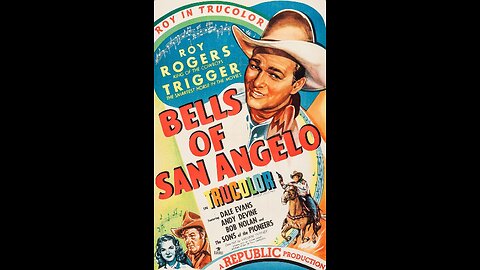
Bells of San Angelo (1947) | Directed by William Witney
Classic Films & Movies Archive
"Bells of San Angelo" is a Western adventure featuring singing cowboy Roy Rogers as he protects a small border town from smugglers running an illegal silver mine operation. Teaming up with an Eastern mystery writer, who is also investigating the area, Roy uncovers a web of criminal activities that threatens the peace of San Angelo. Filled with action, music, and humor, the film is a lively mix of Western excitement and mystery.
Genre: Western / Musical Adventure
Director: William Witney
Director Bio: William Witney was a prolific American director known for his work on Westerns and action serials. His career took off at Republic Pictures, where he directed numerous Roy Rogers films and popular serials like "The Lone Ranger." Witney’s signature style involved expertly choreographed stunts and high-energy scenes, making him a favorite among action-loving audiences. In "Bells of San Angelo," Witney brought his dynamic direction to create a fast-paced and entertaining Western.
Star Cast:
- Roy Rogers as Roy Rogers
- Dale Evans as Lee Madison
- Andy Devine as Cookie Bullfincher
- John McGuire as Martin Stoddard
- Trigger as Trigger (Roy's horse)
Public Reaction: "Bells of San Angelo" was a hit with audiences, especially fans of Roy Rogers, who loved the blend of action, music, and Rogers' wholesome cowboy persona. Dale Evans' performance and chemistry with Rogers added charm, while Andy Devine’s comedic presence lightened the tone. The film became a fan favorite, solidifying Rogers' status as a beloved Western hero.
Fun Fact: "Bells of San Angelo" was one of the first Roy Rogers films to be made in Trucolor, an early color film process by Republic Pictures. This brought a vibrant look to the Western landscape and marked a departure from the usual black-and-white Westerns of the era. The film also featured several musical numbers, including performances by Roy Rogers and Dale Evans, adding to its appeal as both a Western and a musical
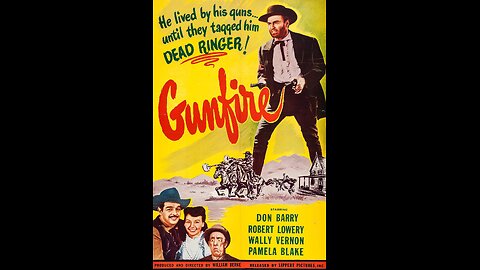
Gunfire (1950) | Directed by William Berke
Classic Films & Movies Archive
"Gunfire," released in 1950, is a Western film directed by William Berke. The story centers on Billy the Kid, one of the American West's most infamous outlaws, who finds himself wrongfully accused of a crime he didn’t commit. With lawmen and bounty hunters on his trail, he must clear his name while navigating tense showdowns, daring escapes, and close encounters in a world where loyalty is rare and trust is dangerous.
William Berke was a prolific B-movie director known for his work on low-budget action films and Westerns, and he directed more than 100 films during his career. "Gunfire" is emblematic of Berke’s quick-paced, action-focused style, a hallmark of his productions during Hollywood's golden era of Westerns.
The movie stars Don “Red” Barry as Billy the Kid, alongside Robert Lowery and Wally Vernon. Barry, who gained fame in the 1940s as the titular character in "The Adventures of Red Ryder," brought a rugged, street-smart quality to the role of Billy the Kid, which resonated with fans of classic Western heroes. Lowery and Vernon supported Barry with performances that underscored the film’s action-packed narrative.
Public reaction to "Gunfire" was generally positive, especially among fans of Western films, who enjoyed its straightforward, action-oriented story. Although it didn’t break new ground, it was praised for its solid performances and Berke’s dependable direction, which contributed to its success on the B-movie circuit.
A fun fact about "Gunfire" is that it was one of the first Westerns to be released in cinecolor, an economical two-color process that gave the film a distinctive, slightly exaggerated look. This effect added to the movie’s atmosphere, making it stand out visually against the many black-and-white Westerns of its day.

Renegade Girl (1946) | Directed by William Berke
Classic Films & Movies Archive
"Renegade Girl" (1946) is an American Western film that combines elements of action, romance, and historical drama, set against the backdrop of the American Civil War and its aftermath. Directed by William Berke, the film stars Ann Savage as Jean Shelby, a Southern woman who becomes involved with a band of Confederate guerrillas in Missouri, seeking revenge against the Union forces for the death of her brother. Her loyalty is tested when she falls in love with a Union spy, played by Alan Curtis.
The film follows Jean Shelby (Ann Savage), a determined and fierce Southern belle turned guerrilla fighter, who is driven by vengeance and loyalty to the Confederate cause. The narrative weaves Jean's personal vendetta with her romantic entanglements, particularly her complex relationship with Alan Curtis's character, a Union officer undercover as a Confederate sympathizer. As Jean navigates her duties to her cause and her growing feelings for the spy, she finds herself caught in a web of espionage, betrayal, and conflicting loyalties.
"Renegade Girl" offers a unique perspective on the Civil War era, focusing on the role of women and the moral complexities faced by individuals caught in the crossfire of history. Ann Savage delivers a compelling performance as Jean Shelby, embodying the strength and resilience of her character with a nuanced portrayal that adds depth to the film. Alan Curtis provides a solid counterbalance as the Union spy, creating a dynamic and tense chemistry that drives the narrative forward.
Directed by William Berke, the film benefits from his experience with action and adventure genres, presenting well-staged sequences and a brisk pace that keeps the audience engaged. However, the film's limited budget and production values typical of B-movies of the era are evident in some of the less convincing set pieces and action scenes.
The supporting cast, including Ray Corrigan, John Forrest, and Russell Wade, add flavor to the story, though the film primarily focuses on the leads' relationship and the broader historical context. "Renegade Girl" stands out for its attempt to blend romance, historical drama, and action, offering a glimpse into the complexities of loyalty and love during a turbulent period in American history.
- Ann Savage as Jean Shelby: A fierce and loyal Southern woman turned Confederate guerrilla.
- Alan Curtis as the Union spy: A complex character who falls in love with Jean despite their opposing sides.
- Ray Corrigan as Captain Steve Clanton: A Confederate officer who aids Jean in her guerrilla activities.
- John Forrest and Russell Wade as supporting characters, contributing to the film's depiction of Civil War-era conflicts and loyalties.
While "Renegade Girl" may not have the polish and depth of larger studio productions, its engaging story, strong performances, and unique perspective make it a noteworthy entry in the genre of Westerns and Civil War dramas. Ann Savage's portrayal of Jean Shelby is particularly memorable, offering a strong female lead in a genre often dominated by male characters.

Little Big Horn (1951) | Directed by Charles Marquis Warren
Classic Films & Movies Archive
"Little Big Horn" (1951) is an American Western film directed by Charles Marquis Warren, which dramatizes the events leading up to the Battle of the Little Bighorn. The movie stars Lloyd Bridges as Captain Phillip Donlin, who leads a small detachment of cavalrymen on a dangerous mission to warn General Custer and his regiment of an impending attack by a large coalition of Native American tribes.
The cast also includes John Ireland as Lieutenant John Haywood, Marie Windsor as Celie Donlin, and Reed Hadley as Sergeant Maj. Peter Grierson, among others. The film explores themes of bravery, duty, and the tragic misunderstandings and conflicts between the U.S. military and Native American tribes.
"Little Big Horn" is notable for its attempt to mix historical events with the storytelling conventions of the Western genre. While it takes liberties with historical accuracy, the film attempts to capture the tension and impending doom faced by the soldiers as they navigate through hostile territory. The performance by Lloyd Bridges, as well as the action sequences and scenic locations, contribute to the film's appeal.
However, like many Westerns of its time, "Little Big Horn" reflects the attitudes and perceptions of the early 1950s, which may not align with contemporary understandings of American history and the experiences of Native American peoples. It remains a product of its era, offering a blend of action, drama, and the Western genre's exploration of American myths and legends.
1
comment
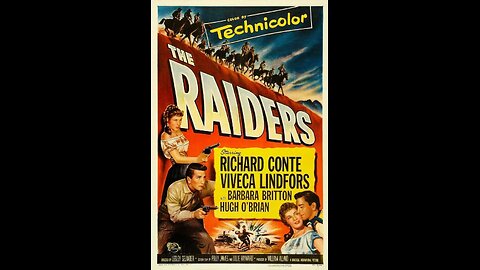
The Raiders (1952) | Directed by Lesley Selander
Classic Films & Movies Archive
"The Raiders" (1952) is an American Western film directed by Lesley Selander. The movie stars Richard Conte as Jan Morrell, Viveca Lindfors as Elena de Ortega, and Barbara Britton as Sue Morrell. Set in the mid-19th century, the film follows the story of a group of California settlers who band together to defend their land against unscrupulous carpetbaggers during the period following the California Gold Rush.
The plot centers on Morrell and his struggle to maintain justice and protect his community's rights against those looking to exploit the region's resources and people. Elena de Ortega is a landowner who becomes an ally and love interest, adding a romantic subplot to the story, while Sue Morrell supports her husband's endeavors.
"The Raiders" combines action, romance, and drama, typical of the Western genre during this era. The film explores themes of justice, community resistance, and the challenges faced by settlers and indigenous peoples during a period of rapid expansion and exploitation in American history.
While "The Raiders" might not be as widely recognized as some other films from the golden age of Westerns, it features solid performances from its cast and effectively uses the Western setting to tell a story of resilience and moral fortitude. The film's portrayal of historical events and cultural dynamics is reflective of its time, offering a window into the popular perceptions and cinematic trends of the early 1950s.

The Beautiful Blonde from Bashful Bend (1949) | Directed by Preston Sturges
Classic Films & Movies Archive
"The Beautiful Blonde from Bashful Bend" (1949) is a comedy Western that tells the story of Freddie Jones, a feisty, sharp-shooting saloon singer. After a series of misunderstandings and mishaps involving her quick temper and even quicker trigger finger, Freddie finds herself on the run. Disguised as a schoolteacher, she arrives in a small town where her attempts to lay low lead to even more trouble and a hilarious string of events. The film is a lively mix of slapstick, romance, and Western shenanigans.
Star Cast:
- Betty Grable as Freddie Jones
- Cesar Romero as Blackie Jobero
- Rudy Vallee as Judge Alfalfa J. O'Toole
- Olga San Juan as Conchita
- Hugh Herbert as Doctor
Director: Preston Sturges
Public Reaction: "The Beautiful Blonde from Bashful Bend" was a colorful and entertaining film that brought the vibrant energy of Betty Grable to the forefront. Audiences enjoyed the blend of humor and Western adventure, along with the playful direction of Preston Sturges. While the film received mixed reviews from critics, with some noting its chaotic plot, fans appreciated Grable's performance and the film's slapstick humor. It was seen as a fun, light-hearted romp that appealed to those looking for a comedy with a Western twist.

The Daring Caballero (1949) | Directed by Wallace Fox
Classic Films & Movies Archive
"The Daring Caballero" (1949) is a Western adventure film set in the Old West. The story follows the exploits of the charismatic and daring caballero, Cisco Kid, as he fights against corruption and injustice. When a ruthless land baron schemes to take over a small town and drive out the local ranchers, Cisco Kid, with his sidekick Pancho, steps in to protect the community. With charm, wit, and a quick draw, he navigates through danger, confronts outlaws, and wins the admiration of the townspeople.
Star Cast:
- Duncan Renaldo as Cisco Kid
- Leo Carrillo as Pancho
- Kippee Valez as Dolores
- Stanley Andrews as Sheriff Blake
- William F. Leicester as Jack Ames
Director: Wallace Fox
Public Reaction: "The Daring Caballero" was received as an entertaining and light-hearted Western that provided a mix of action, humor, and romance. Fans of the Cisco Kid character enjoyed Duncan Renaldo's portrayal, which brought a mix of charm and bravery to the screen. Leo Carrillo's comedic sidekick role as Pancho was also well-liked, offering comic relief throughout the film. Although not a major blockbuster, the film was appreciated for its fun, adventurous spirit and was considered a solid entry in the Cisco Kid series.

Pursued (1947) | Directed by Raoul Walsh
Classic Films & Movies Archive
"Pursued" (1947) is a Western film noir directed by Raoul Walsh. The film stars Robert Mitchum as Jeb Rand, a man haunted by traumatic childhood memories and struggling to uncover the truth about his past. Set against the rugged landscape of the American Southwest, "Pursued" weaves a tale of revenge, love, and family secrets.
Jeb Rand is raised by Mrs. Callum (Judith Anderson) after his family is mysteriously killed. As he grows up, Jeb experiences recurring nightmares of the traumatic event, leading him to seek answers about his past. Despite the love he finds with his foster sister, Thorley Callum (Teresa Wright), Jeb becomes entangled in a cycle of vengeance and betrayal when he learns that his foster brother, Adam Callum (John Rodney), is determined to kill him. The story unfolds as Jeb navigates his complicated feelings for Thorley and his desire to avenge his family's murder.
"Pursued" stands out as a unique blend of Western and film noir, creating a moody and atmospheric narrative that delves into themes of memory, identity, and fate. Robert Mitchum's performance as Jeb Rand is compelling, capturing the character's inner turmoil and determination. Raoul Walsh's direction is masterful, balancing intense action sequences with moments of introspection and psychological depth. The film's cinematography, by James Wong Howe, is particularly noteworthy, utilizing shadow and light to enhance the noir elements and the stark beauty of the Western setting.
Critics have lauded "Pursued" for its innovative merging of Western and film noir genres. The film has been praised for its strong performances, especially by Robert Mitchum and Teresa Wright, and its complex, character-driven plot. Reviewers have highlighted the film's exploration of psychological themes, which adds depth to the traditional Western storyline. The cinematography by James Wong Howe has been widely acclaimed for its atmospheric quality and visual storytelling. Some critics, however, have noted that the film's intricate plot can be challenging to follow at times.
Cast:
- Robert Mitchum as Jeb Rand
- Teresa Wright as Thorley Callum
- Judith Anderson as Mrs. Callum
- Dean Jagger as Grant Callum
- Alan Hale as Jake Dingle
- John Rodney as Adam Callum
- Harry Carey Jr. as Prentice
"Pursued" remains a significant film in both the Western and film noir canons, admired for its artistic ambition and emotional resonance. Its blending of genres, strong performances, and striking visuals make it a memorable and influential piece of cinema from the late 1940s.
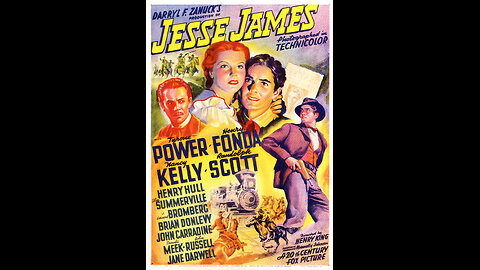
Jesse James (1939) | Directed by Henry King
Classic Films & Movies Archive
"Jesse James" is a 1939 American Western film directed by Henry King. The film stars Tyrone Power as Jesse James and Henry Fonda as his brother Frank James. It is a dramatized account of the life of the infamous outlaw Jesse James, focusing on his transition from a law-abiding citizen to a notorious criminal.
The film tells the story of Jesse James (Tyrone Power), a young farmer who turns to a life of crime after railroad agents kill his mother and forcefully take away his family's land. Alongside his brother Frank (Henry Fonda), Jesse embarks on a series of train and bank robberies that make him a legendary figure in the American West. The narrative explores Jesse's relationships, his motivations, and the pressures that lead him deeper into a criminal lifestyle. The film climaxes with Jesse's betrayal and assassination by a member of his own gang, Robert Ford.
"Jesse James" is regarded as one of the classic Westerns of its time, known for its compelling storytelling and strong performances. Tyrone Power and Henry Fonda deliver memorable portrayals of the James brothers, capturing the complexities of their characters. The film is notable for its high production values, including stunning Technicolor cinematography, which was relatively new at the time. It also features impressive action sequences that helped set a standard for future Westerns.
Critics praised "Jesse James" for its engaging narrative and strong performances. Tyrone Power's charismatic portrayal of Jesse James was particularly lauded, as was Henry Fonda's nuanced performance as Frank James. The film's direction by Henry King and its production design received positive reviews for bringing the story to life in a vivid and compelling manner. However, some critics noted the film's historical inaccuracies, as it took significant liberties with the true story of Jesse James. Despite this, the film was a commercial success and remains a beloved classic in the Western genre.
Cast:
- Tyrone Power as Jesse James
- Henry Fonda as Frank James
- Nancy Kelly as Zerelda "Zee" Cobb
- Randolph Scott as Will Wright
- Henry Hull as Major Rufus Cobb
- John Carradine as Bob Ford
- Brian Donlevy as Barshee
"Jesse James" remains a significant film in the Western genre, remembered for its dramatic interpretation of the outlaw's life, its strong performances, and its influence on subsequent Westerns. Its portrayal of the James brothers, despite historical liberties, continues to captivate audiences.
3
comments

The Return of Frank James (1940) | Directed by Fritz Lang
Classic Films & Movies Archive
"The Return of Frank James" is a 1940 American Western film directed by Fritz Lang. It serves as a sequel to the 1939 film "Jesse James," continuing the story of Frank James (Henry Fonda) as he seeks revenge for the murder of his brother Jesse.
The film picks up where "Jesse James" left off, with Frank James (Henry Fonda) now living a quiet life under an alias. When he learns that his brother Jesse's killers, Bob and Charlie Ford, have been pardoned, Frank decides to take matters into his own hands. Alongside his loyal companion Clem (Jackie Cooper) and the determined young reporter Eleanor Stone (Gene Tierney), Frank sets out on a mission to bring the Ford brothers to justice. The narrative follows Frank's journey as he navigates the complexities of vengeance and the law.
"The Return of Frank James" is celebrated for its strong performances and compelling direction by Fritz Lang, a notable figure in both European and American cinema. Henry Fonda's portrayal of Frank James is lauded for its depth and intensity, capturing the character's internal struggle between justice and revenge. The film is also praised for its engaging script and solid pacing, which keep the audience invested in Frank's quest. Although it doesn't reach the iconic status of its predecessor, the sequel is a worthy continuation that explores the consequences of the first film's events.
Critics responded positively to "The Return of Frank James," highlighting Fritz Lang's skillful direction and the film's strong performances. Henry Fonda's reprisal of his role as Frank James received particular acclaim, as did Gene Tierney's performance in her first major film role. The film's moral complexity and exploration of themes such as justice and retribution were noted as strengths. Some critics, however, pointed out that the film's historical inaccuracies and deviations from the true story of the James brothers detracted from its authenticity. Despite these critiques, the film was well-received and remains a notable entry in the Western genre.
Cast:
- Henry Fonda as Frank James
- Gene Tierney as Eleanor Stone
- Jackie Cooper as Clem
- Henry Hull as Major Rufus Cobb
- John Carradine as Bob Ford
- J. Edward Bromberg as George Runyan
- Donald Meek as McCoy
"The Return of Frank James" continues the story of the James brothers with a focus on themes of revenge and justice. Its strong direction and performances make it a compelling sequel that adds depth to the legacy of Jesse James, while exploring the moral complexities faced by his surviving brother, Frank.

El Paso (1949) | Directed by Lewis R. Foster
Classic Films & Movies Archive
"El Paso" is a 1949 Western film directed by Lewis R. Foster. Set in the post-Civil War era, the film stars John Payne as a Confederate captain who ventures to the tumultuous town of El Paso, Texas, to restore order and deliver justice. The movie explores themes of lawlessness, retribution, and redemption in the Old West.
After the Civil War, ex-Confederate captain Clay Fletcher (John Payne) travels to El Paso to collect a debt owed to his father. He discovers that the town is under the tyrannical control of Judge Henry Jeffers (Henry Hull) and his corrupt henchmen. Fletcher, initially planning to leave quickly, finds himself drawn into the town's struggles after witnessing the injustice and violence inflicted upon the citizens. With the help of a local lawyer, Paul Morrison (John Payne), and a courageous schoolteacher, Susan Jeffers (Gail Russell), Fletcher takes on the judge and his cohorts to bring peace and justice to El Paso.
"El Paso" is a classic Western that captures the spirit and atmosphere of the genre. The film benefits from solid performances, particularly from John Payne, whose portrayal of Clay Fletcher is both charismatic and commanding. The narrative is straightforward, focusing on the fight against corruption and the quest for justice, typical of many Westerns of its time. The direction by Lewis R. Foster ensures a tight pace and engaging action sequences, making it a satisfying watch for fans of the genre.
Upon its release, "El Paso" received generally positive reviews from critics who praised its strong performances, engaging story, and effective direction. Critics noted that the film successfully combines action, drama, and moral conflict, hallmarks of a good Western. While not considered a groundbreaking film, it was appreciated for its solid craftsmanship and entertainment value. Modern reviews often highlight its place within the Western canon, acknowledging it as a well-executed example of mid-20th-century Western filmmaking.
Cast:
John Payne as Clay Fletcher
Gail Russell as Susan Jeffers
Sterling Hayden as Sheriff La Farge
George 'Gabby' Hayes as Pesky
Henry Hull as Judge Henry Jeffers
Dick Foran as Bert Donner
Eduardo Noriega as Don Nacho Vazquez
"El Paso" stands as a testament to the enduring appeal of Westerns during the late 1940s, offering a blend of action, moral dilemmas, and the classic struggle between good and evil. Its competent direction and strong performances make it a memorable entry in the genre.

The Walking Hills (1949) | Directed by John Sturges
Classic Films & Movies Archive
"The Walking Hills" is a 1949 Western film directed by John Sturges. The movie blends elements of mystery and adventure as it tells the story of a group of men searching for a lost wagon train filled with gold in the California desert. The film stars Randolph Scott, Ella Raines, and William Bishop, featuring a strong ensemble cast that brings to life this tale of greed, deception, and survival.
In the desolate dunes of the California desert, a diverse group of individuals gathers to find a long-lost treasure of gold buried in a wagon train. Led by Jim Carey (Randolph Scott), the treasure seekers include a mix of shady characters and honest men, each with their own motivations. As they dig deeper into the sand and their personal agendas, tensions rise, secrets are revealed, and alliances are tested. The harsh desert environment and the ever-present danger of betrayal add to the suspense, culminating in a dramatic showdown.
"The Walking Hills" stands out in the Western genre due to its intriguing premise and the psychological depth of its characters. Director John Sturges, known for his ability to craft tension, effectively uses the desert setting to create a sense of claustrophobia and paranoia. The film's strong narrative is supported by its well-developed characters and the moral complexities they face. Randolph Scott delivers a solid performance as the rugged and morally ambiguous Jim Carey, while Ella Raines brings depth to her role as the lone woman in the group.
Upon its release, "The Walking Hills" received positive reviews for its unique blend of Western and noir elements. Critics praised Sturges' direction and the film's ability to maintain suspense throughout. The performances, particularly those of Scott and Raines, were highlighted for their emotional resonance and complexity. Modern critics continue to appreciate the film for its character-driven story and its departure from traditional Western tropes. The film is often lauded for its atmospheric cinematography and the way it explores themes of greed, trust, and redemption.
Cast:
- Randolph Scott as Jim Carey
- Ella Raines as Chris Jackson
- William Bishop as Shep Wilson
- Edgar Buchanan as Old Willy
- Arthur Kennedy as Frazee
- John Ireland as Johnny
- Jerome Courtland as Dave Wilson
"The Walking Hills" is remembered as a standout film in the Western genre, combining the rugged action of a treasure hunt with the psychological intrigue of a character study. Its exploration of human nature and morality against the backdrop of the unforgiving desert makes it a compelling watch.

The Gal Who Took the West (1949) | Directed by Frederick de Cordova
Classic Films & Movies Archive
"The Gal Who Took the West" is a 1949 Technicolor Western film directed by Frederick de Cordova. The film stars Yvonne De Carlo, Charles Coburn, Scott Brady, and John Russell. Set in the post-Civil War American West, it tells the story of a captivating entertainer whose arrival at a military post causes romantic rivalries and comedic conflicts among the men stationed there.
The film centers on Lillian Marlowe (Yvonne De Carlo), a lively and alluring singer who becomes the center of attention at a remote Western fort. Her charm and beauty spark a fierce competition between three men: the venerable General Michael O'Hara (Charles Coburn), his ambitious son Captain James O'Hara (Scott Brady), and the handsome but less privileged Lieutenant Tom (John Russell). As Lillian navigates the affections of her suitors, she also deals with the challenges and intrigues of frontier life, leading to humorous and dramatic situations.
"The Gal Who Took the West" is praised for its vibrant Technicolor cinematography and Yvonne De Carlo's engaging performance. The film successfully blends comedy, romance, and Western action, making it an enjoyable watch. Frederick de Cordova's direction keeps the pace lively, and the supporting cast provides solid performances that complement De Carlo's star turn. While the film adheres to many Western genre conventions, its comedic elements and romantic subplot add a refreshing twist.
Critics responded positively to the film, highlighting Yvonne De Carlo's charismatic presence and the film's lighthearted tone. The picturesque Western landscapes and colorful production design received commendations for enhancing the visual appeal. Some reviews noted that while the plot was predictable, the film's charm lay in its spirited performances and entertaining script. The interplay between the main characters, coupled with De Carlo's magnetic performance, made "The Gal Who Took the West" a delightful entry in the Western comedy genre.
Cast:
- Yvonne De Carlo as Lillian Marlowe
- Charles Coburn as General Michael O'Hara
- Scott Brady as Captain James O'Hara
- John Russell as Lieutenant Tom
- Myrna Dell as Rita Murphy
- James Millican as Sergeant Mahoney
"The Gal Who Took the West" remains a classic Western comedy, showcasing Yvonne De Carlo's versatility as an actress and providing an entertaining mix of romance, humor, and adventure. Its engaging plot and lively performances make it a memorable film from the late 1940s.
The Outlaw (1943) | Directed by Howard Hughes
Classic Films & Movies Archive
"The Outlaw" (1943) is a Western drama that centers around the infamous outlaw Billy the Kid, played by Jack Buetel. The film explores his tumultuous relationships with Doc Holliday and Pat Garrett, set against the backdrop of the rugged Old West. The story delves into themes of loyalty, love, and betrayal, highlighted by Billy's romantic entanglement with the fiery Rio McDonald, portrayed by Jane Russell in her breakout role. As tensions rise and conflicts ensue, the film captures the essence of the wild, untamed frontier.
"The Outlaw" is notable for its controversial marketing and the sexualized portrayal of Jane Russell, which pushed the boundaries of the era's cinematic norms. Directed by Howard Hughes, the film faced significant censorship challenges but eventually gained a cult following. Critics have praised the movie for its bold direction, compelling character dynamics, and visually stunning cinematography. Although it stirred controversy, "The Outlaw" remains an influential piece of Western cinema, remembered for its daring approach and memorable performances.
Star Cast:
Jack Buetel as Billy the Kid
Jane Russell as Rio McDonald
Thomas Mitchell as Pat Garrett
Walter Huston as Doc Holliday
Mimi Aguglia as Guadalupe
Joe Sawyer as Charley Woodruff
Gene Rizzi as Deputy
The film's legacy is marked by its innovative promotional strategies and the captivating on-screen presence of its stars, particularly Jane Russell, whose performance continues to be a highlight in the history of Western films.
Silver River (1948) | Directed by Raoul Walsh
Classic Films & Movies Archive
"Silver River" is a Western drama set during the post-Civil War era, following the rise and fall of Mike McComb, a gambler who becomes a silver baron in Nevada. The film explores themes of ambition, greed, and morality as McComb navigates the treacherous waters of business and politics in the West, ultimately facing the consequences of his ruthless pursuit of power.
The film is notable for its lavish production values and strong performances, particularly from Errol Flynn and Ann Sheridan. Flynn, known for his swashbuckling roles, brings a darker edge to the character of Mike McComb, showcasing his range as an actor. The film's exploration of the moral complexities of wealth and power in the American West adds depth to the narrative, making it more than just a typical Western.
Raoul Walsh's direction emphasizes the grand scale of the Western landscape while delving into the psychological aspects of its characters. The film is a mix of action, drama, and romance, with strong chemistry between Flynn and Sheridan adding to its appeal. Despite some criticism for its pacing, "Silver River" remains a compelling entry in the Western genre, offering a nuanced portrayal of ambition and its consequences. The film's rich cinematography and Flynn's dynamic performance contribute to its lasting impact on audiences and its place in the history of classic Westerns.
Star Cast:
- Errol Flynn as Mike McComb
- Ann Sheridan as Georgia Moore
- Thomas Mitchell as John Plato Beck
- Bruce Bennett as Stanley Moore
- Tom D'Andrea as Pistol Porter
- Barton MacLane as "Boss" Tweed
- Monte Blue as Captain Coffin
Relentless (1948) | Directed by George Sherman
Classic Films & Movies Archive
"Relentless" (1948) is a Western film directed by George Sherman, based on the novel *Three Were Thoroughbreds* by Kenneth Perkins. The film stars Robert Young, Marguerite Chapman, and Barton MacLane in a tense and dramatic story of survival, betrayal, and the pursuit of justice. Set against the backdrop of the vast deserts and rugged landscapes of the American West, the film follows Nick Buckley (Robert Young), a cowboy who becomes a fugitive after being wrongly accused of murder.
The plot revolves around Nick’s desperate journey to clear his name while being pursued by relentless bounty hunters and lawmen. As the film progresses, Nick races against time to find the real killer, while evading capture and contending with the harsh frontier elements. His only allies are Luella Purdy (Marguerite Chapman), a strong-willed woman who believes in his innocence, and his loyal horse named Mike.
"Relentless" captures the moral complexities of the American West, where loyalty, justice, and survival often clash. With stunning cinematography that showcases the unforgiving wilderness, the film offers a compelling blend of action, suspense, and character-driven drama.
"Relentless" is a noteworthy example of post-World War II Westerns, a genre that gained renewed popularity in the late 1940s. Directed by George Sherman, known for his skill in crafting action-packed Westerns, the film is a well-paced, visually striking portrayal of the American frontier. Sherman’s direction emphasizes both the physical and emotional struggles of the characters, with Robert Young giving a strong, relatable performance as Nick Buckley, the wrongfully accused cowboy.
Robert Young, typically known for his roles in contemporary dramas and romantic films, surprises in this Western role with his effective portrayal of Nick—a man determined to clear his name while battling insurmountable odds. His performance brings emotional depth to the character, portraying desperation and determination that elevate the film beyond a simple man-on-the-run story. His on-screen chemistry with Marguerite Chapman (Luella) adds warmth to the film, providing a balance between action and romance.
The supporting cast adds further richness to the film. Barton MacLane, playing Sheriff Jeff Moyer, is a standout, portraying the determined lawman intent on capturing Nick. Akim Tamiroff, in his role as Joe Faringo, provides a lighter, humorous touch, breaking up the tension with his shady yet entertaining character.
The film’s cinematography, overseen by Edward Cronjager, plays a crucial role in making "Relentless" visually compelling. The vast desert landscapes and treacherous mountains serve not only as a backdrop but as another character in the film, representing the harsh and unforgiving nature of life on the frontier. Cronjager’s work successfully captures the tension and isolation that Nick feels as he battles both human and environmental adversaries.
The pacing of the film allows for moments of reflection amidst the action, giving it a more contemplative quality than the typical Western. However, the action scenes—especially the chase sequences—are well-executed, demonstrating Sherman’s ability to build suspense and deliver thrilling cinematic moments.
"Relentless" was well-received by critics upon its release in 1948. While the plot was recognized as somewhat formulaic, following familiar Western themes, the film was praised for its strong execution, solid direction, and the performances of Robert Young and Marguerite Chapman. The visual appeal of the desert landscapes and action-packed sequences added to the film’s appeal.
Robert Young’s performance garnered significant attention, as it marked a departure from his typical roles. His portrayal of Nick Buckley was praised for its intensity and emotional grounding, making him a sympathetic and compelling protagonist. The moral ambiguity of the story, with Nick falsely accused and hunted, resonated with audiences, reflecting a postwar America that was beginning to question traditional notions of justice and right versus wrong.
Though not considered a groundbreaking film in the Western genre, "Relentless" succeeded in providing an engaging story with a strong character arc and well-crafted action scenes. It remains a respected entry among Western films of the 1940s.
Over time, "Relentless" has earned its place as a well-regarded Western, offering a nuanced take on the genre’s classic themes of justice and survival. It is remembered for its engaging performances, particularly by Robert Young, who successfully stepped into a Western role, and for its striking use of the American landscape to enhance its storytelling.
While it may not have reached the iconic status of other Westerns from the period, "Relentless" remains a solid example of the genre and a testament to George Sherman’s ability to craft a tight, character-driven Western. Today, it continues to be appreciated by fans of classic Westerns and offers a glimpse into the changing moral and social dynamics of postwar America, as portrayed through the lens of the frontier.
Full Cast:
- Robert Young as Nick Buckley
- Marguerite Chapman as Luella Purdy
- Barton MacLane as Sheriff Jeff Moyer
- Willard Parker as Tex Brandaw
- Akim Tamiroff as Joe Faringo
- Mike (the Horse) as Nick’s horse, Mike
- Florence Bates as Mrs. Purdy
- Griff Barnett as Judge Donaldson
1
comment

Western Union (1941) | Directed by Fritz Lang
Classic Films & Movies Archive
"Western Union" (1941) is a Western directed by Fritz Lang, based on the novel by Zane Grey. The film follows the dramatic story of the building of the Western Union telegraph line across the wild frontier during the 1860s.
Vance Shaw (played by Randolph Scott) is a reformed outlaw who, seeking a fresh start, gets hired by Western Union to help construct the telegraph line. His new boss, Edward Creighton (Dean Jagger), is unaware of Shaw’s criminal past. Alongside Shaw is Richard Blake (Robert Young), an Eastern dandy turned Western Union engineer, and together they face natural hazards and hostile forces, including Shaw’s former outlaw gang.
As tensions build, Shaw must decide where his loyalties lie, particularly when his outlaw past catches up to him, and Blake competes for the affections of Creighton’s sister, Sue Creighton (Virginia Gilmore). With breathtaking Western landscapes and a gripping plot, "Western Union" showcases themes of redemption, personal conflict, and the transformative power of technology in the American frontier. The film blends action, romance, and moral dilemmas against the backdrop of one of the most significant achievements of the Old West.
Pirates on Horseback (1941) | Directed by Lesley Selander
Classic Films & Movies Archive
"Pirates on Horseback" (1941) is a Western adventure film directed by Lesley Selander, featuring William Boyd as the iconic Hopalong Cassidy. In this installment of the Hopalong Cassidy series, Hoppy, along with his sidekicks Lucky Jenkins (Russell Hayden) and California Carlson (Andy Clyde), must tackle a group of ruthless outlaws.
The story centers around Hoppy's efforts to protect a gold mine that has attracted the attention of a gang of bandits led by the villainous Chalky Martin (Morris Ankrum). As the outlaws attempt to steal the gold and terrorize the miners, Hoppy and his friends step in to bring justice to the lawless territory. Along the way, they encounter an array of Western challenges, from shootouts to rugged landscapes, while also uncovering the mystery behind the "pirates on horseback" — bandits who have been striking fear into the hearts of locals.
Filled with action, horseback chases, and a touch of humor, "Pirates on Horseback" is a thrilling entry in the Hopalong Cassidy series, highlighting the bravery and resourcefulness of Hoppy and his companions as they fight to maintain law and order in the Old West.
Angel and the Badman (1947) | Directed by James Edward Grant
2 years ago
104
"Angel and the Badman" (1947) is a classic Western film that stands out for its blend of romance and frontier justice. Directed by James Edward Grant, the story revolves around Quirt Evans, a notorious gunslinger played by John Wayne, who is wounded and taken in by a Quaker family led by Gail Russell's character, Penelope Worth. As Quirt recovers, he undergoes a transformation influenced by the peaceful Quaker lifestyle. This film beautifully weaves together elements of action, romance, and morality, making it a compelling and enduring entry in the Western genre.
Loading comments...
-
 2:15:29
Classic Films & Movies Archive
10 days agoThe Red Shoes (1948) | Directed by Michael Powell & Emeric Pressburger
212 -
 LIVE
LIVE
Steven Crowder
3 hours ago🔴Be Careful - Woke Isn't Dead Yet & Netflix Proves It
24,091 watching -
 58:55
58:55
The Rubin Report
1 hour agoBill Maher Makes Ana Kasparian Squirm by Refusing to Let Her Avoid This Question
3.62K8 -
 LIVE
LIVE
The Shannon Joy Show
1 hour ago🔥SJ Show Dec 9: Food Price Controls & Welfare For Farmers * War With Venezuela * Epstein Victims Update W/ Investigative Reporter Nick Bryant🔥
176 watching -
 LIVE
LIVE
The Mel K Show
1 hour agoMORNINGS WITH MEL K Bread & Circuses: People Worldwide Standing for Freedom and Sovereignty 12-9-25
533 watching -
 LIVE
LIVE
LFA TV
15 hours agoLIVE & BREAKING NEWS! | TUESDAY 12/09/25
4,346 watching -
 35:01
35:01
Clintonjaws
3 hours agoNick Fuentes Visibly Angry as Piers Morgan Stops His Show & Adds Surprise Guest
666 -
 1:00:51
VINCE
3 hours agoHOT MIC: President Trump Is Fed Up! | Episode 184 - 12/09/25 VINCE
169K124 -
 1:56:44
Benny Johnson
2 hours agoBOMBSHELL: Confirmed Proof Biden FBI Identified Pipe Bomber in 2021, Cover Up EXPOSED In New Docs
25.1K31 -
 LIVE
LIVE
Trumpet Daily
41 minutes agoTrumpet Daily LIVE | Dec. 9, 2025
384 watching