PBS American Experience: The Gilded Age

PBS American Experience: Panama Canal

PBS American Experience: Butch Cassidy and the Sundance Kid
PBS American Experience: Billy the Kid
PBS American Experience: Alexander Hamilton

PBS American Experience: The Nuremberg Trials
PBS American Experience: Ruthless: Monopoly's Secret History
PBS American Experience: The Greely Expedition
PBS American Experience: Henry Ford

PBS American Experience: Edison

PBS American Experience: Mount Rushmore
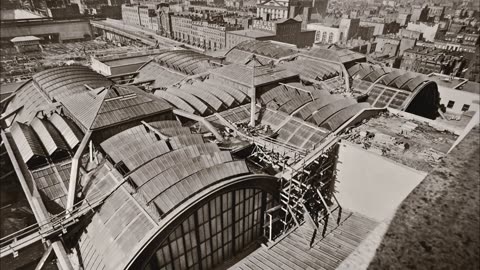
PBS American Experience: The Rise and Fall of Penn Station
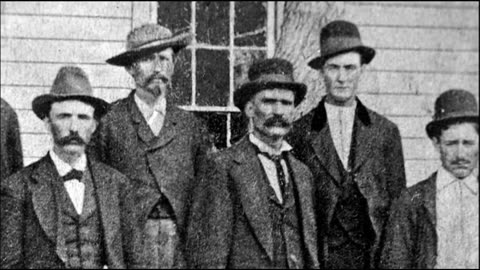
PBS American Experience: Jesse James
PBS American Experience: Riveted - The History of Jeans

PBS American Experience: Silicon Valley
PBS American Experience: The Big Burn
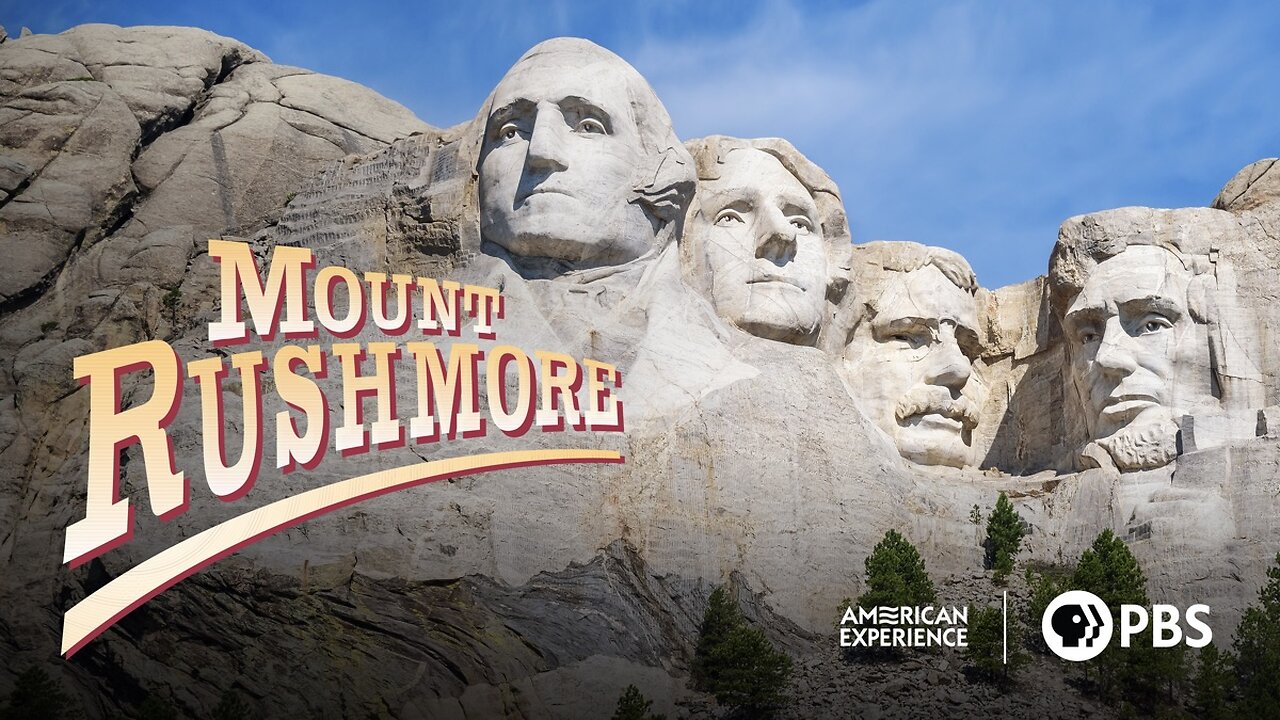
PBS American Experience: Mount Rushmore
High on a granite cliff in South Dakota's Black Hills tower the huge carved faces of four American presidents: George Washington, Thomas Jefferson, Abraham Lincoln, and Theodore Roosevelt. Together they constitute one of the world's largest pieces of sculpture.
The story of Mount Rushmore's creation is as bizarre and wonderful as the monument itself. It is the tale of a hyperactive, temperamental artist whose talent and determination propelled the project, even as his ego and obsession threatened to tear it apart. It is the story of hucksterism and hyperbole, of a massive public works project in the midst of an economic depression. And it is the story of dozens of ordinary Americans who suddenly found themselves suspended high on a cliff face with drills and hammers as a Danish sculptor they considered insane directed them in the creation what some would call a monstrosity, and others a masterpiece.
On October 1, 1925, hundreds of citizens made their way up a rough mountain pass, heading for a remote peak in the Black Hills of South Dakota called Mount Rushmore. Just weeks before, the men of Keystone, South Dakota, had cut a three-mile long path through a heavy forest with nothing but picks, shovels and horse-drawn scrapers. In the meantime, local women had worked around the clock stitching five 30-foot flags, cooking, and generally beautifying the grounds. The locals had bent themselves to these tasks all so an odd little artist named Gutzon Borglun could announce to the world his plan to carve 160-foot likenesses of George Washington, Thomas Jefeferson, Abraham Lincoln and Teddy Roosevelt onto the mountain face.
The story of Mount Rushmore's creation is as bizarre and wonderful as the monument itself. It is the tale of a hyperactive, temperamental artist whose talent and determination propelled the project, even as his ego and obsession threatened to tear it apart. It is the story of hucksterism and hyperbole, of a massive public works project in the midst of an economic depression. And it is the story of dozens of ordinary Americans who suddenly found themselves suspended high on a cliff face with drills and hammers as a Danish American sculptor they considered insane directed them in the creation of what some would call a monstrocity, and others a masterpiece.
Gutzon Borglum was a loud-mouth and a big-head — a sculptor with undisputed skill, but little genius for artistic invention and with a knack of calling attention to himself. Highly critical of his fellow artists, he once claimed that most of the nation's public monuments were worthless and should be dynamited. American art was supposed to be "big," he would say. "There isn't a monument in this country as big as a snuff box." His proposed colossal monument on the face of Mount Rushmore would certainly be "big" — it would be one of the largest sculptures in the world.
From October 1925, when Borglum announced the project, until July 1939. when the final head was unveiled, Mount Rushmore was his obsession. He started the project without any money and with little support. One newspaper columnist wrote, "Thank God it is in South Dakota where no one will ever see it." Work stopped repeatedly because money ran out. And the men hired to carve the rock were miners, not sculptors, men hired for their skills with jackhammer and dynamite. Borglum complained bitterly about them. "I must have men who know how to carve mountains," he would say, which as one local writer points out, "was kind of stupid because nobody ever had."
In all, it took 14 years to complete Mount Rushmore. The men removed half a million tons of granite, blasting and carving as much as 120 feet into the cliff. George Washington's face is 60 feet long, his nose 20, and his eyes are 11 feet wide. Lincoln's mole is 16 inches across. The carving cost $989,999.32. Perhaps the most startling fact is that Borglum and the South Dakotans were able to convince the federal government to foot $836,000 of that bill. And the monument now receives nearly 2 million visitors each year.
-
 2:21:04
Steven Crowder
4 hours agoThe Cinnabon N-Bomb: We Just Don't Care Anymore
316K328 -
 1:07:57
The Rubin Report
3 hours ago‘Shark Tank’ Legend Notices Something in Drug Boat Strike Others Are Unwilling to See
32.8K48 -
 LIVE
LIVE
LFA TV
17 hours agoLIVE & BREAKING NEWS! | MONDAY 12/08/25
2,497 watching -
 1:45:18
The Mel K Show
2 hours agoMORNINGS WITH MEL K - The Destruction of the Old Guard-The Chessboard has Flipped - 12-8-25
19.4K3 -
 1:01:05
VINCE
5 hours agoStop the Somali Steal | Episode 183 - 12/08/25 VINCE
225K156 -
 1:27:39
Benny Johnson
4 hours agoUkraine In COLLAPSE: Zelensky To Resign for Corruption? Ilhan Omar Somali Fraud CAUGHT, $30M Profit…
68.9K68 -
 3:26:12
Nikko Ortiz
3 hours agoTop Military Fails And Try Not To Cringe... | Rumble LIVE
27K -
 LIVE
LIVE
LadyDesireeMusic
4 hours ago $1.48 earnedLive Piano Music & Convo - Bob Ross Vibes
129 watching -
 LIVE
LIVE
Viss
3 hours ago🔴LIVE - Extracting With Over 200K Worth Of Loot Challenge - Arc Raiders
82 watching -
 32:51
32:51
Rethinking the Dollar
3 hours agoAffordability? The Real Cost of Trump’s Economic Playbook (RTD News Update)
18.5K4