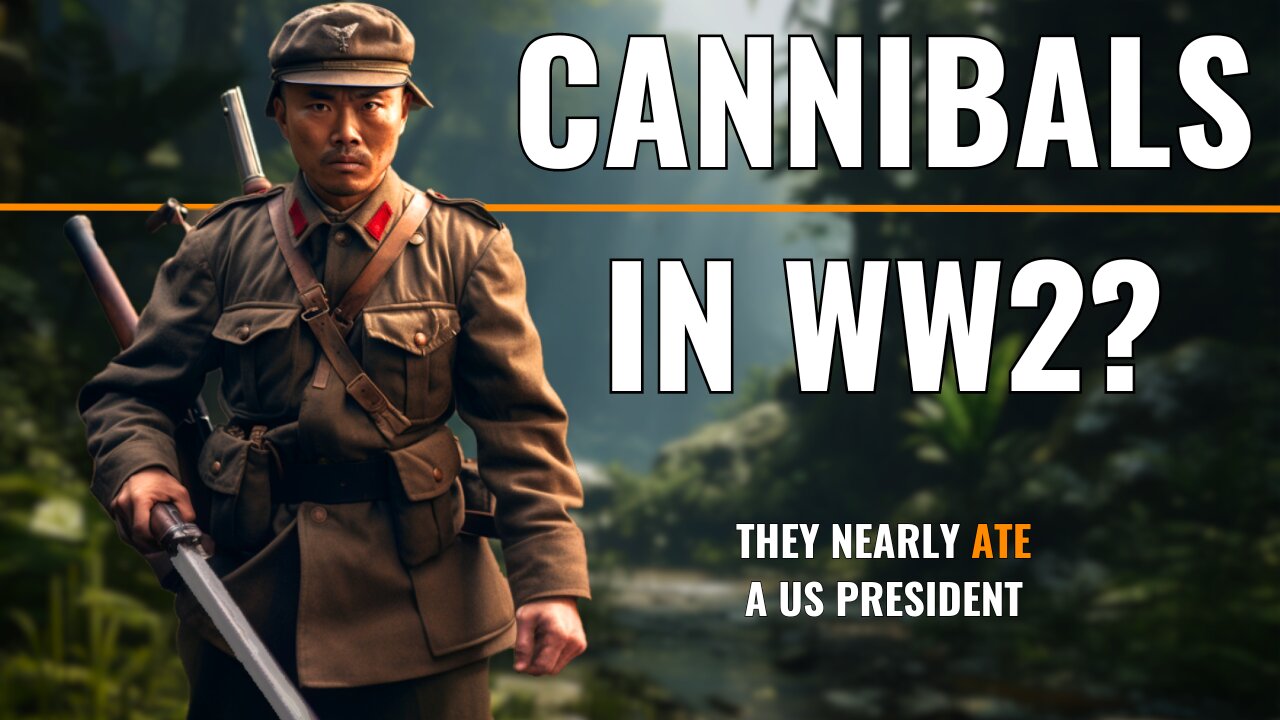
Unknown Horrors of the Imperial Japanese Army During WW2
(An edited version for all audiences)
Ever heard of soldiers munching on other soldiers? Yeah, that happened.
________
To truly grasp the intensity of these horrors, we must first understand the ethos that drove many Japanese soldiers: Bushidō, a Japanese equivalent of a knight’s chivalric code.
It was as intense as it sounds. But it was also about a lot more than just swinging a katana and wearing armor.
Originating in the Edo period, which spanned from 1603 to 1868, Bushidō was a way of life, deeply ingrained in the samurai culture.
And while it might be tempting to draw parallels with European chivalry, let's not get too hasty. Sure, there were similarities, like a focus on honor and loyalty… to a degree.
But Bushidō had its own unique flavor, a blend of Confucianism, Shinto, and Zen Buddhism, giving it a depth and complexity that was distinctly Japanese, emphasizing values like sincerity, frugality, and loyalty above all else.
Loyalty especially, was paramount, even if not all samurai adhered to this principle… let alone all IJA members.
The pursuit of excellence in martial arts? That was expected of course. But it wasn't just about physical prowess. It was about the mind, strategy, discipline, and honor.
Honor until death. In fact, the concept of "seppuku" or ritual suicide was a testament to this. If a samurai felt they had lost their honor, they'd rather end their life than live in disgrace, ritualistically stabbing themselves in the stomach with the aim of disembowelment.
Ever heard of soldiers munching on other soldiers? Yeah, that happened.
________
To truly grasp the intensity of these horrors, we must first understand the ethos that drove many Japanese soldiers: Bushidō, a Japanese equivalent of a knight’s chivalric code.
It was as intense as it sounds. But it was also about a lot more than just swinging a katana and wearing armor.
Originating in the Edo period, which spanned from 1603 to 1868, Bushidō was a way of life, deeply ingrained in the samurai culture.
And while it might be tempting to draw parallels with European chivalry, let's not get too hasty. Sure, there were similarities, like a focus on honor and loyalty… to a degree.
But Bushidō had its own unique flavor, a blend of Confucianism, Shinto, and Zen Buddhism, giving it a depth and complexity that was distinctly Japanese, emphasizing values like sincerity, frugality, and loyalty above all else.
Loyalty especially, was paramount, even if not all samurai adhered to this principle… let alone all IJA members.
The pursuit of excellence in martial arts? That was expected of course. But it wasn't just about physical prowess. It was about the mind, strategy, discipline, and honor.
Honor until death. In fact, the concept of "seppuku" or ritual suicide was a testament to this. If a samurai felt they had lost their honor, they'd rather end their life than live in disgrace, ritualistically stabbing themselves in the stomach with the aim of disembowelment.
Ever heard of soldiers munching on other soldiers? Yeah, that happened.
________
To truly grasp the intensity of these horrors, we must first understand the ethos that drove many Japanese soldiers: Bushidō, a Japanese equivalent of a knight’s chivalric code.
It was as intense as it sounds. But it was also about a lot more than just swinging a katana and wearing armor.
Originating in the Edo period, which spanned from 1603 to 1868, Bushidō was a way of life, deeply ingrained in the samurai culture.
And while it might be tempting to draw parallels with European chivalry, let's not get too hasty. Sure, there were similarities, like a focus on honor and loyalty… to a degree.
But Bushidō had its own unique flavor, a blend of Confucianism, Shinto, and Zen Buddhism, giving it a depth and complexity that was distinctly Japanese, emphasizing values like sincerity, frugality, and loyalty above all else.
Loyalty especially, was paramount, even if not all samurai adhered to this principle… let alone all IJA members.
The pursuit of excellence in martial arts? That was expected of course. But it wasn't just about physical prowess. It was about the mind, strategy, discipline, and honor.
Honor until death. In fact, the concept of "seppuku" or ritual suicide was a testament to this. If a samurai felt they had lost their honor, they'd rather end their life than live in disgrace, ritualistically stabbing themselves in the stomach with the aim of disembowelment.
-
 LIVE
LIVE
TheCrucible
38 minutes agoThe Extravaganza! EP: 71 with Guest Co-Host Rob Noerr (12/08/25)
7,291 watching -
 LIVE
LIVE
Redacted News
1 hour agoThe EU is Collapsing and Elon Musk just went Nuclear on Brussels, Trump slams Zelensky | Redacted
7,799 watching -
 18:17
18:17
Stephen Gardner
1 hour agoYou WON’T Believe The GOOD NEWS Trump Just Got!!
5561 -
 LIVE
LIVE
Red Pill News
1 hour agoSCOTUS is The Last Hope For US Courts on Red Pill News Live
1,886 watching -
 1:36:08
Russell Brand
21 hours agoCandace Owens: Unfiltered, unafraid, and breaking the narrative- SF660
176K216 -
 1:15:01
vivafrei
2 hours agoDave Portnot is a DEGENERATE Hypocrite! States Releaseing VIOLENT Illegals? Pipe Bomber & MORE!
18.9K18 -
 1:46:41
The Quartering
3 hours agoPiers Morgan VS Nick Fuentes, MTG Blasts Trump, ICE Arrests 75,000 & Supreme Court Rulings!
113K43 -
 24:29
24:29
Simply Bitcoin
1 day ago $0.86 earnedIs the NEW Pro-Bitcoin Fed Appointee About to LAUNCH a Super-Cycle??
5.46K2 -
 1:56:13
MattMorseTV
4 hours ago $6.78 earned🔴Trump's Round Table UPDATE.🔴
18.8K34 -
 LIVE
LIVE
Dr Disrespect
6 hours ago🔴TARKOV LIVE - DR DISRESPECT - NO GEAR, NO FEAR
1,277 watching