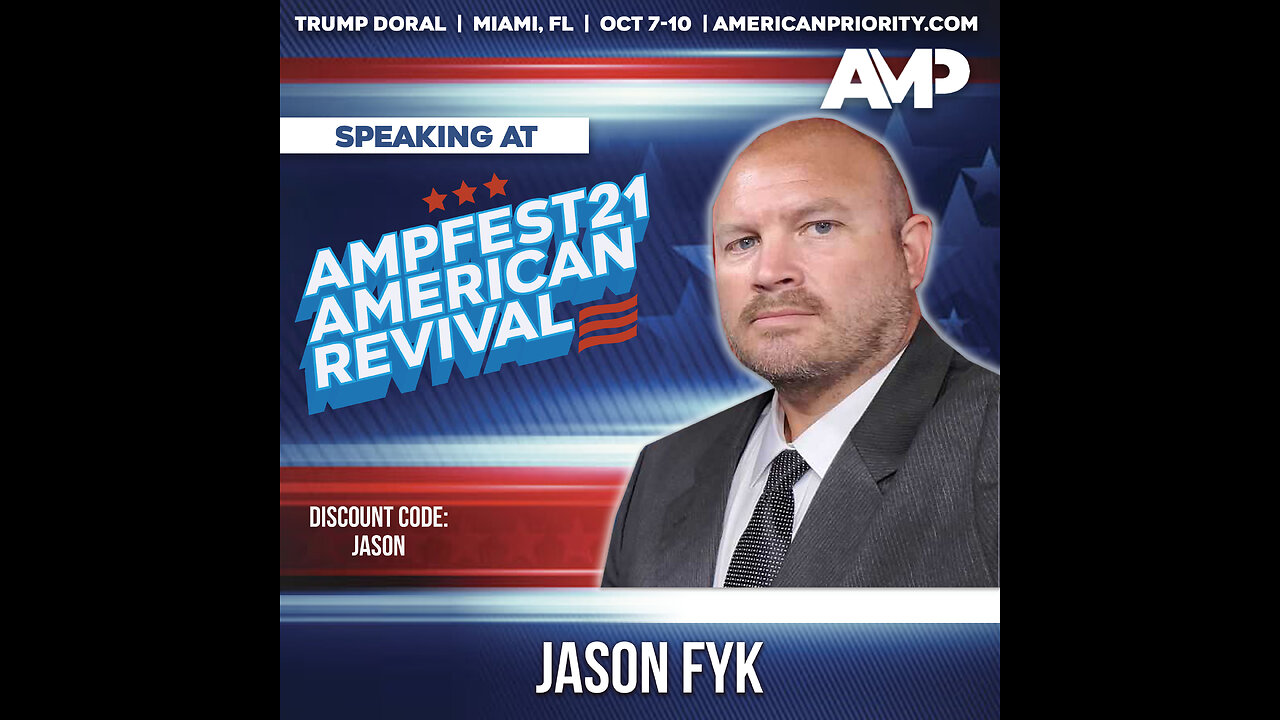
AmpFest 2021 - Jason Fyk Explains the dangers of violating Section 230
The Online Freedom Act (OFA) is co-authored by David Morgan (a concerned citizen) and Jason Fyk (actively involved in Section 230 litigation and a concerned citizen). The OFA resolves every known problem that can be fixed within Section 230, at least constitutionally.
Fundamentally, Section 230 is a statutory delegation of regulatory authority granted to private entities.
An initial fact that must be considered is there is no legislation that can be enacted that will stop all online censorship or compel a website to host unwanted content!
However, the OFA would substantially disincentivize arbitrary censorship of lawful speech by limiting civil liability protection granted by the current Section 230.
Under the OFA, Section 230(c)(2) has been converted from “or otherwise objectionable” to now read “and is otherwise unlawful” emulating the prior categories of legally regulated speech (e.g., obscene, lewd, lascivious, filthy, excessively violent, harassing).
The OFA addresses the courts misapplication of 230(c)(1) which has rendered the “Good Faith” provisions of 230(c)(2) entirely superfluous. In a 2020 review of more than 500 Section 230 decisions over two decades, the Internet Association found only 19 that involved Section (c)(2).
In practice, “Good Faith” (c)(2) is not even being considered in content moderation cases. The Online Freedom Act clarifies the ambiguity of the statute and realigns it with Congress’ original purpose and function.
Another major concern with Section 230 is a Service Provider’s arbitrary and often self-motivated discretion. Self-interested private corporations are not subject to the same qualifications, procedural safeguards and legislative or judicial oversight that a public commission would normally be subjected to if it was delegated similar statutory authority.
The Online freedom Act establishes procedural safeguards in the form of a new obligations section. These obligations are voluntary by design but required if the platform seeks to maintain its liability protection. Put simply, if the provider or user wants protection, it must voluntarily act accordingly.
Section 230’s ambiguity has been exploited by big tech companies, at the detriment to all users, and the courts have been largely unable to control their actions. The Online Freedom Act reigns in their inconsistent behavior and offers protection in the strictest of circumstances.
The problem is clear – speech is precious – bold action is needed. Are you bold enough to act or are you afraid.
-
 6:33
6:33
PureSocialTV
2 years agoPureTalk - Interview With Joe Knopp
119 -
 LIVE
LIVE
TimcastIRL
52 minutes agoCandace Owens Says MILITARY INVOLVED In Kirk Killing, Says Tim Pool's Brother Tried To SHOOT HIM
20,528 watching -
 LIVE
LIVE
Laura Loomer
1 hour agoEP160: THE UNITED STATES OF QATAR
148 watching -
 LIVE
LIVE
MattMorseTV
1 hour ago $2.38 earned🔴Musk is FINALLY talking about it…🔴
1,221 watching -
 LIVE
LIVE
SpartakusLIVE
2 hours agoAim Assist NERFED - I LOVE IT || #1 Spartan Solo Session
375 watching -
Glenn Greenwald
4 hours agoJasmine Crockett: The Avatar of Democratic Emptiness; Bari Weiss Chooses Fanatical Israel Supporter as New CBS Anchor | SYSTEM UPDATE #556
78.3K26 -
 LIVE
LIVE
Barry Cunningham
1 day agoLIVE BREAKING NEWS: He's Back!! President Trump Hosts a Rally In Pennsylvania!
2,103 watching -
Dr Disrespect
8 hours ago🔴LIVE - DR DISRESPECT - TARKOV 1.0 - THE VIOLENCE EVOLVES
87.2K6 -
 DVR
DVR
The White House
6 hours agoPresident Trump Delivers Remarks on the Economy
20.9K6 -
 LIVE
LIVE
megimu32
3 hours agoON THE SUBJECT: ULTIMATE 90s Kids’ Christmas List!
94 watching