
Crimean Tatar & Interfaith Relations Chair, Ibraim Shirin, Counters Western Lies on Crimea

EvaKareneBartlettJournalism
This interview was conducted in Simferopol, Crimea, May 2024.
Mr. Shirin Ibraim Reshatovich, Chairman of the Commission on Interethnic and Interfaith Relations and Public Diplomacy in the Public Chamber of the Republic of Crimea—is himself Tatar. The West has for years tried to claim Tatars are oppressed in Crimea & didn't support the 2014 referendum to (rejoin) join Russia. Listen to this delightful man to hear the truth on how life improved dramatically for Tatars in Crimea, and for Crimeans as a whole!
—My related 2019 article after visiting Crimea then: Return to Russia: Crimeans Tell the Real Story of the 2014 Referendum and Their Lives Since (
https://ingaza.wordpress.com/2019/10/10/return-to-russia-crimeans-tell-the-real-story-of-the-2014-referendum-and-their-lives-since/
)
2
comments
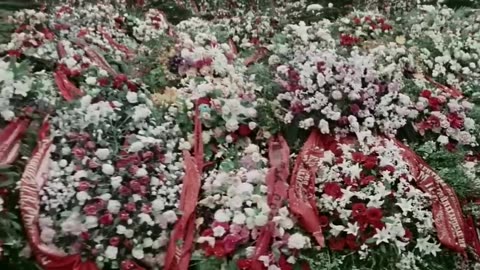
Смерть Сталина (2019) Документальный фильм о смерти и похоронах Вождя.

Multerland2023
СССР, 1953 год. Товарищ Сталин всё так же занимается своими политическими обязанностями и доживает свои последние дни на Ближней даче. 5 марта 1953 года генсек умирает.
YT channel: https://www.youtube.com/watch?v=e0fJbSsa-lY

Березы - Birches
Multerland2023
Отчего так в России берёзы шумят?
Отчего белоствольные всё понимают?
У дорог, прислонившись по ветру, стоят
И листву так печально кидают
Я пойду по дороге - простору я рад
Может это лишь всё, что я в жизни узнаю
Отчего так печальные листья летят
Под рубахою душу лаская
А на сердце опять горячо-горячо
И опять, и опять без ответа
А листочек с берёзки упал на плечо
Он, как я, оторвался от веток
Посидим на дорожку, родная, с тобой
Ты пойми, я вернусь - не печалься, не стоит
И старуха махнет на прощанье рукой
И за мною калитку закроет
Отчего так в России берёзы шумят?
Отчего хорошо так гармошка играет?
Пальцы ветром по кнопочкам враз пролетят
А последняя вверх западает
А на сердце опять горячо, горячо
И опять, и опять без ответа
А листочек с берёзки упал на плечо
Он, как я, оторвался от веток
А на сердце опять горячо, горячо
И опять, и опять без ответа
А листочек с берёзки упал
Упал
Он, как я, оторвался...

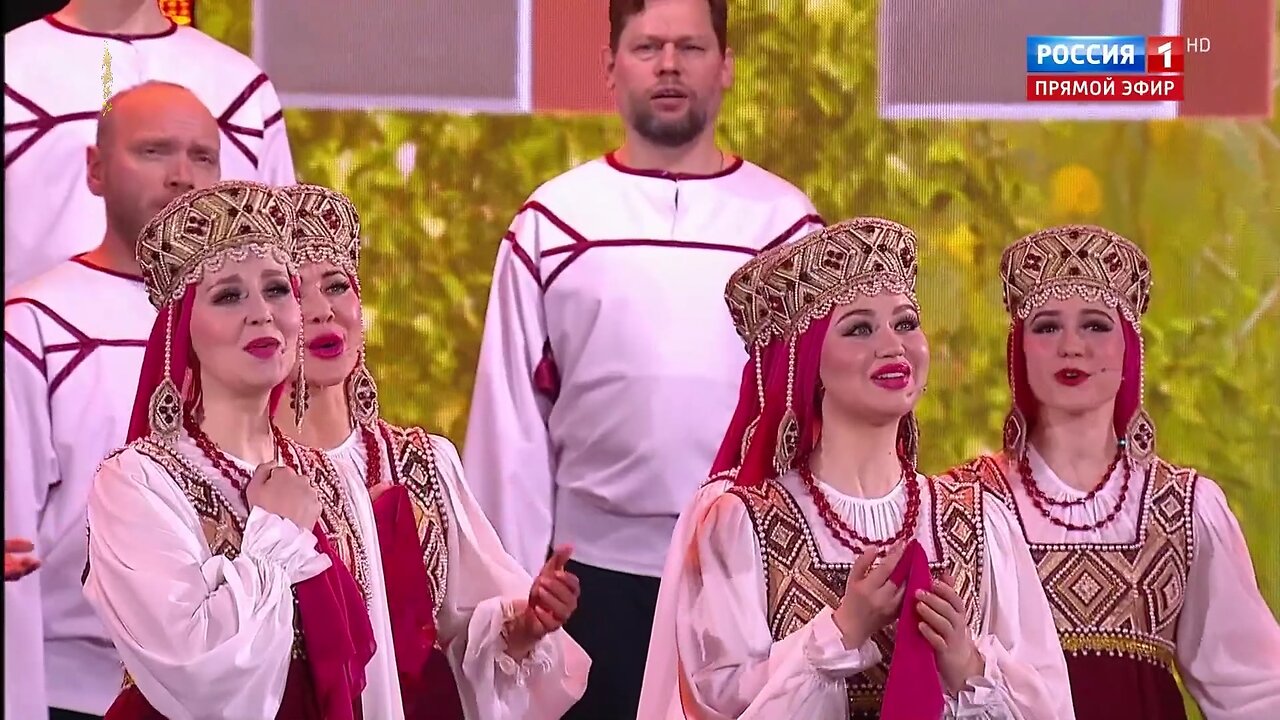
RUSS (Russia) - Kuban Cossack Choir (2022)
DjukiNew1957
🎧AUDIO REMASTERED BY DJUKI🎧
SUBTITLES (Lyrics): Русский, Еspañol.
Солист: Иван Немченко
Soloist: Ivan Nemchenko
Музыка: В. Захарченко
Стихи: И. Никитин
Music: V. Zakharchenko
Lyrics: I. Nikitin
Виктор Захарченко - художественный руководитель - генеральный директор и главный дирижёр хора
Viktor Zakharchenko - artistic director - general director and chief conductor of the choir
Государственный академический Кубанский казачий хор
Праздничный концерт
Московский международный дом музыки, 6 января 2022 г.
State Academic Kuban Cossack Choir
Festive concert
Moscow International House of Music, January 6, 2022
РУСЬ
Под большим шатром голубых небес —
вижу — даль степей зеленеется.
И на гранях их, выше темных туч,
цепи гор стоят великанами.
Посмотрю на юг — нивы зрелые,
что камыш густой, тихо движутся;
Гляну к северу — там, в глуши пустынь,
снег, что белый пух, быстро кружится;
Это ты, моя Русь державная,
моя родина православная!
Широко ты, Русь, по лицу земли
в красе царственной развернулася!
У тебя ли нет поля чистого,
где б разгул нашла воля смелая?
У тебя ли нет богатырских сил,
старины святой, громких подвигов?
И давно ль было, когда с запада
облегла тебя туча темная?
Под грозой ее леса падали,
мать сыра-земля колебалася,
и зловещий дым от горевших сел
высоко вставал черным облаком!
Но лишь кликнул царь свой народ на брань —
вдруг со всех концов поднялася Русь.
Собрала детей, стариков и жен,
приняла гостей на кровавый пир.
И в глухих степях, под сугробами,
улеглися спать гости навеки.
И теперь среди городов твоих
муравьем кишит православный люд.
И во всех концах света белого
про тебя идет слава громкая.
Уж и есть за что, Русь могучая,
полюбить тебя, назвать матерью,
стать за честь твою против недруга,
за тебя в нужде сложить голову!
стать за честь твою против недруга,
за тебя в нужде сложить голову!

Birches - Ensemble "Beryozka" and Pyatnitsky Choir (2024)
DjukiNew1957
🎧AUDIO REMASTERED BY DJUKI🎧
Берёзы - Брезе - Birches - Betulle - Birken - Bouleaux
Исполнители: Ансамбль «Берёзка» и Хор имени Пятницкого
Performers: Ensemble "Beryozka" and Pyatnitsky Choir
Музыка / Слова: И. Матвиенко — М. Андреев
Music / Lyrics: I. Matvienko - M. Andreev
Большой праздничный концерт, посвященный Дню защитника Отечества, 23. 2. 2024.
Big festive concert dedicated to Defender of the Fatherland Day, February 23, 2024.

Katyusha - Nikolay Baskov and the Alexandrov Ensemble (2023) - MULTI SUB
DjukiNew1957
🎧AUDIO REMASTERED BY DJUKI🎧
Исполнители: Николай Басков и Ансамбль Александрова
Performers: Nikolay Baskov and the Alexandrov Ensemble
Слова: Михаил Исаковский
Lyrics: Mikhail Isakovsky
Музыка: Матвей Блантер
Music: Matvey Blanter
Большой праздничный концерт "Песни русского мира"
Сцене Государственного Кремлевского Дворца, 04.11.2023
Big festive concert "Songs of the Russian World"
Stage of the State Kremlin Palace, November 4, 2023
КАТЮША
Расцветали яблони и груши,
поплыли туманы над рекой.
Выходила на берег Катюша,
на высокий берег на крутой.
Выходила на берег Катюша,
на высокий берег на крутой.
Выходила, песню заводила
про степного, сизого орла,
про того, которого любила,
про того, чьи письма берегла.
Про того, которого любила,
про того, чьи письма берегла.
Ой ты, песня, песенка девичья,
ты лети за ясным солнцем вслед.
И бойцу на дальнем пограничье
от Катюши передай привет.
И бойцу на дальнем пограничье
от Катюши передай привет.
Пусть он вспомнит девушку простую,
пусть услышит, как она поет,
пусть он землю бережет родную,
а любовь Катюша сбережет.
Пусть он землю бережет родную,
а любовь Катюша сбережет.
Расцветали яблони и груши,
поплыли туманы над рекой.
Выходила на берег Катюша,
на высокий берег на крутой.
Выходила на берег Катюша,
на высокий берег на крутой.
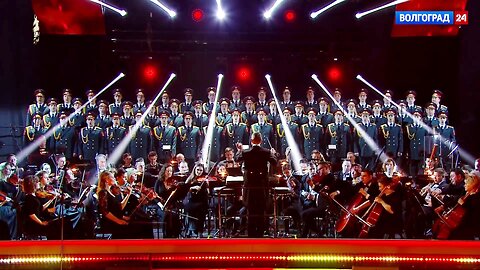
Years of Fire - Alexandrov Ensemble (2023) - SUB
DjukiNew1957
🎧AUDIO REMASTERED BY DJUKI🎧
SUBTITLES (Lyrics): Русский, Српски, Srpski, English.
Музыка: В.Соловьев-Седой
Слова: Е.Долматовский
Music: V. Solovyov-Sedoy
Lyrics: E. Dolmatovsky
Ансамбль песни и пляски Российской армии имени А. В. Александрова
80 лет Сталинградской Победе Концерт в честь 80-летия Сталинградской Победы, 2 февраля 2023
The Alexandrov Red Army Ensemble
80 years of the Stalingrad Victory Concert in honor of the 80th anniversary of the Stalingrad Victory, February 2, 2023
ОГНЕННЫЕ ГОДЫ
Вспомни, друг, соратник верный,
Сражения былые,
Вспомни, вспомни сорок первый,
Страдания России.
Полыхал закат багровый,
Героев смерть косила.
По земле, политой кровью,
Ушли мы вглубь России.
Припев:
Мы никогда и нигде
Не уронили честь солдата,
Бывалые ребята,
Товарищи в беде.
Помни всегда и везде
Победный год наш сорок пятый,
Как водружен алый флаг,
Как водружен был алый флаг
В Берлине на рейхстаг.
Мы прошли путем суровым
Сквозь пули и осколки
И в дыму сорок второго
Дошли до самой Волги.
Но настал конец терпенью,
Конец разлуке долгой,
В сорок третьем в наступленье
Рванули мы от Волги.
Припев.
А в году сорок четвертом
Границу брали с ходу,
Шли в атаку шагом твердым,
Неся друзьям свободу.
Мы в броне уральской стали
Прошли огонь и воду,
Пол-Европы прошагали,
Неся друзьям свободу.
Припев.
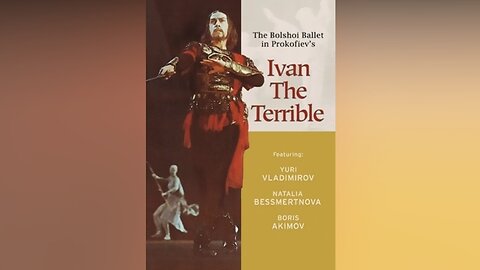
Ivan the Terrible - Prokofiev | Vladimirov, Bessmertnova, Akimov (The Bolshoi Ballet 1976)

Adaneth - Arts & Literature
"Ivan the Terrible" is a classical ballet in 2 Acts. The world premiere of the ballet Ivan the Terrible took place at the Bolshoi Theater on 20th of February 1975. Yuri Vladimirov performed as the tsar, Natalia Bessmertnova as Anastasia, and Boris Akimov as Kurbsky. The second production, in 1977, was performed by Vladimir Vasiliev (Ivan IV), Lyudmila Semenyaka (Anastasia) and Boris Akimov ((Prince Kurbsky).
The premiere caused great resonance. That same summer the troupe toured in the USA, where „Ivan the Terrible” created a great sensation and collected innumerable comments from viewers and media. Next year the ballet was staged at the Paris Opera, where it met the same warm reception, and soon it was shown on the stage constructed specifically for this performance in Louvre during the summer season.
"Ivan the Terrible" is music by Sergei Prokofiev originally composed for the Sergei Eisenstein film about the sixteenth-century ruler. Prokofiev composed music to Part 1 in 1942-44, and to Part 2 in 1945; the score is cataloged as Op. 116. After the composer’s death, music for the film was arranged first into an oratorio (with speaker, soloists, chorus, and orchestra) by Alexander Stasevich (1961), who was the conductor of the film score, and later into a concert scenario by Christopher Palmer (1990).
It was Abraham Stassevitch, conductor for Sergei Prokofiev's score for director Sergei Eisenstein's "Ivan the Terrible - Part II" (1958), who proposed to Grigorovich that he transfigure IVAN, along with its music, into a full-length dramaturgic dance work. In 1973 the choreographer and theatre director of Bolshoi Yuri Grigorovich, commissioned the distinguished Soviet composer as well as professor of composition, Mikhail Chulaki, to create a balletic scoring based upon Eisenstein's cinema masterpiece. It is cobbled from 377 fragments from Prokofiev's Ivan Part II musical design in addition to other pieces by the great composer.
In 1976, based on this Bolshoi Theater performance, the film-ballet was shot, which was released on screens in 1978 by Mosfilm.
Composer: Sergei Prokofiev, in a musical edition and composition by Mikhail Chulaki
Choreography: Yuri Grigorovich
Costume Designer: Simon Virsaladze
Set Designer: Simon Virsaladze
Screenplay and Directors: Vadim Derbenev, Yuri Grigorovich
Artistic Director: Yuri Grigorovich
Cast & Characters:
Ivan the Terrible - Yuri Vladimirov
Anastasia - Natalia Bessmertnova
Prince Kurbsky - Boris Akimov
Ballet dancers and the orchestra of the Bolshoi Theater of the USSR
Conducted by Algis Žiūraitis
For Yuri Vladimirov, the title role became a milestone, and the part of Tsaritsa Anastasia became one of the most consistent to Natalia Bessmertnova’s acting personality and professional talents in her creative biography. The following tsars, which have always included artists, distinguished by technical virtuosity and endowed with acting temperament, – Mikhail Lavrovsky, Alexander Godunov, Irek Mukhamedov, Alexei Fadeyechev, Alexander Vetrov – left a vivid mark on this ballet’s history.
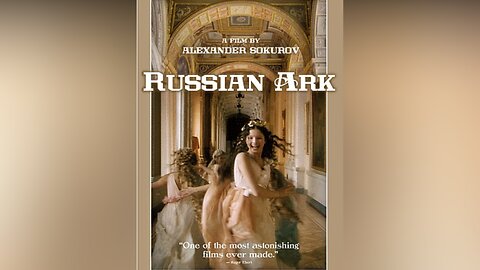
Russian Ark
Adaneth - Arts & Literature
Russian Ark (Russian: Russkij Kovcheg) is a 2002 German-Russian co-production experimental historical drama film directed by Alexander Sokurov. Audio in Russian with English subtitles.
In Russian Ark, an unnamed narrator wanders through the Winter Palace in Saint Petersburg, and implies that he died in some horrible accident and is a ghost drifting through the palace. In each room, he encounters various real and fictional people from various periods in the city's 300-year history. He is accompanied by "the European", who represents the Marquis de Custine, a 19th-century French traveler. A grand ball follows, featuring music by Mikhail Glinka, with many of the participants in spectacular period costume, and a full orchestra conducted by Valery Gergiev, then a long final exit with a crowd down the grand staircase.
The film was recorded entirely in the Winter Palace of the Russian State Hermitage Museum on 23 December 2001 using a one-take single 96-minute Steadicam sequence shot.
Russian Ark uses the fourth wall device extensively, but repeatedly broken and re-erected. At times the narrator and the companion interact with the other performers, whilst at other times they pass unnoticed. The film displays 33 rooms of the museum, which are filled with a cast of over 2,000 actors and three orchestras.
Cast & Characters:
Alexander Sokurov as Narrator
Sergei Dontsov (Sergey Dreyden) as the European (Marquis de Custine)
Mariya Kuznetsova as Catherine the Great
Marksim Sergeyev as Peter the Great
Anna Aleksakhina as Alexandra Feodorovna
Vladimir Baranov as Nicholas II
2
comments

Agafia. Hermit Surviving in Russian Wilderness for 70 years

Entertainment2you
Hermit Surviving in Russian Wilderness for 70 years

Glinka - A Life for the Tsar (The Bolshoi Opera 1992)
Adaneth - Arts & Literature
Composer: Mikhail Ivanovič Glinka
Librettist: Nestor Kukolnik, Egor Fyodorovich (von) Rozen, Vladimir Sollogub and Vasily Zhukovsky
Premiere: 27 November 1836 OS (9 December NS) at the Bolshoi Kamenny Theatre in St. Petersburg
Language: Russian
Translation: English subtitles
A Life for the Tsar is a "patriotic-heroic tragic opera" in four acts with an epilogue by Mikhail Glinka. During the Soviet era the opera was known under the name Ivan Susanin.
Cast & Characters:
Evgeny Nesternko as Ivan Susanin
Marina Mescheriakova as Antonida
Alexander Lomonosov as Bogdan Sobinin
Elena Zaremba as Vanya
Boris Bezhko as Polish Commander
The Bolshoi Symphony Orchestra and Chorus
Conducted by Alexander Lazarev
The original Russian libretto, based on historical events. The historical basis of the plot involves Ivan Susanin, a patriotic hero of the early 17th century who died in the expulsion of the invading Polish army for the newly elected Tsar Michael of Russia, the first of the Romanov dynasty, elected in 1613. The opera was immediately hailed as a great success, and became the obligatory season-opener in the Imperial Russian opera theaters. A Life for the Tsar occupies an important position in Russian musical theater as the first native opera to win a permanent place in the repertoire. It was one of the first Russian operas to be known outside Russia. In keeping with Glinka's European training, much of A Life for the Tsar was structured according to conventional Italian and French models of the period. Nevertheless, several passages in the opera are based on Russian folk songs or folk melodic idioms that become a full part of the musical texture. Most importantly, this opera laid the foundation for the series of Russian nationalistic historical operas continued by works such as Serov's Rogneda, Mussorgsky's Boris Godunov, Rimsky-Korsakov's Maid of Pskov, Tchaikovsky's The Oprichnik or Mazeppa, and Borodin's Prince Igor.
SYNOPSIS
ACT I - The village of Domnino
Antonida is eager to marry Sobinin, but her father, Susanin, refuses permission until a Russian has been duly chosen to take the tsar's throne. When Sobinin informs him that the Grand Council in Moscow has chosen a tsar, everyone celebrates.
ACT II - Poland
In a sumptuous hall, the nobility celebrates the Polish dominance over the Russians by singing and dancing. Suddenly, a messenger comes in with the news that Mikhail Romanov has been selected as the tsar of Russia but is now in hiding. The Poles vow to overthrow him.
ACT III - Susanin's cabin
Susanin and his adopted son, Vanya, pledge to defend the new tsar. Susanin blesses Sobinin and Antonida on their upcoming wedding when a detachment of Polish soldiers bursts in to demand the tsar's whereabouts. Instead, Susanin sends Vanya to warn the tsar while Susanin leads the soldiers off the trail into the woods. Antonida is devastated. Sobinin gathers some men to go on a rescue mission.
ACT IV - A dense forest
Sobinin reassures his men of the rightness of their mission. When night falls, in a part of the forest near a monastery, Vanya knocks at the gates and alerts the inhabitants to spirit the tsar away. Susanin has led the suspicious Polish troops into an impassable, snow-covered area of the forest. The Poles sleep while Susanin waits for the dawn and bids farewell to his children. A blizzard sets in, and when day breaks, the Poles awake. They realise that Susanin has deceived them and so kill him.
EPILOGUE - Red Square, Moscow.
Across the stage walks a crowd of people, celebrating the triumph of the new tsar. Alone in their own solemn procession, Antonida, Sobinin and Vanya mourn Susanin. A detachment of Russian troops comes upon them, discovers their connection with Susanin and comforts them. As the scene changes to Red Square, the people proclaim glory to the tsar and to Susanin's memory.


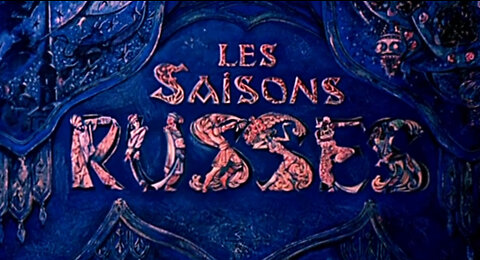
Les Saisons Russes | Sheherazade by Rimskij-Korsakov (Bolshoi Ballet 2002)
Adaneth - Arts & Literature
Scheherazade, also commonly Sheherazade Op. 35, is a symphonic suite composed by Nikolai Rimsky-Korsakov in 1888 and based on One Thousand and One Nights (also known as The Arabian Nights). The music premiered in Saint Petersburg on October 28, 1888, conducted by Rimsky-Korsakov.
This orchestral work combines two features typical of Russian music in general and of Rimsky-Korsakov in particular: dazzling, colorful orchestration and an interest in the East, which figured greatly in the history of Imperial Russia, as well as orientalism in general. The name "Scheherazade" refers to the main character Scheherazade of the One Thousand and One Nights. It is one of Rimsky-Korsakov's most popular works.
The original ballet adaptation of Scheherazade premiered on June 4, 1910, at the Opéra Garnier in Paris by the Ballets Russes. The choreography for the ballet was by Michel Fokine and the libretto was from Fokine and Léon Bakst. The Ballets Russes' Scheherazade is known for its traditionally dazzling costumes, opulent scenery, and erotic choreography and narrative which was rarely seen in ballets of the time.
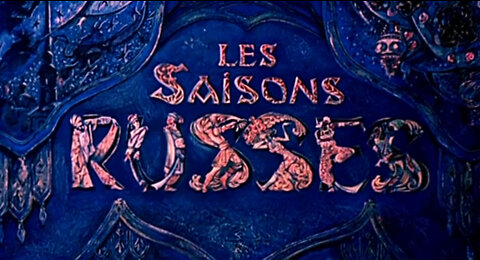
Les Saisons Russes | Firebird by Stravinskij (Bolshoi Ballet 2002)
Adaneth - Arts & Literature
The Firebird is a ballet and orchestral concert work by the Russian composer Igor Stravinsky. It was written for the 1910 Paris season of Sergei Diaghilev's Ballets Russes company; the original choreography was by Michel Fokine, who collaborated with Alexandre Benois on a scenario based on the Russian fairy tales of the Firebird and the blessing and curse it possesses for its owner. It was first performed at the Opéra de Paris on 25 June 1910 and was an immediate success, catapulting Stravinsky to international fame.
Although designed as a work for the stage, with specific passages accompanying characters and action, the music achieved equal if not greater recognition as a concert piece. Stravinsky was a young and virtually unknown composer when Diaghilev commissioned him to compose The Firebird for the Ballets Russes. Its success was the start of Stravinsky's partnership with Diaghilev, which would subsequently produce further ballet productions until 1928, including Petrushka (1911), The Rite of Spring (1913), and Apollo (1928).
Benois collaborated with the choreographer Michel Fokine, drawing from several books of Russian fairy tales including the collection of Alexander Afanasyev, to concoct a story involving the Firebird and the evil magician Koschei. The scenery was designed by Aleksandr Golovin and the costumes by Léon Bakst.
Synopsis: The ballet centers on the journey of its hero, Prince Ivan. While hunting in the forest, he strays into the magical realm of the evil Koschei the Immortal, whose immortality is preserved by keeping his soul in a magic egg hidden in a casket. Ivan chases and captures the Firebird and is about to kill her; she begs for her life, and he spares her. As a token of thanks, she offers him an enchanted feather that he can use to summon her should he be in dire need. Prince Ivan then meets thirteen princesses who are under the spell of Koschei and falls in love with one of them, Tsarevna. The next day, Ivan confronts the magician and eventually they begin quarrelling. When Koschei sends his minions after Ivan, he summons the Firebird. She intervenes, bewitching the monsters and making them dance an elaborate, energetic dance (the "Infernal Dance").
Exhausted, the creatures and Koschei then fall into a deep sleep. While they sleep, the Firebird directs Ivan to a tree stump where the casket with the egg containing Koschei's soul is hidden. Ivan destroys the egg, and with the spell broken and Koschei dead, the magical creatures that Koschei held captive are freed and the palace disappears. All of the "real" beings, including the princesses, awaken and with one final hint of the Firebird's music (though in Fokine's choreography she makes no appearance in that final scene on-stage), celebrate their victory.
Les Saisons Russes | Petrushka by Stravinskij (Bolshoi Ballet 2002)
Adaneth - Arts & Literature
Petrushka is a ballet by Russian composer Igor Stravinsky. It was written for the 1911 Paris season of Sergei Diaghilev's Ballets Russes company; the original choreography was by Michel Fokine and stage designs and costumes by Alexandre Benois, who assisted Stravinsky with the libretto. The ballet premiered at the Théâtre du Châtelet on 13 June 1911 with Vaslav Nijinsky as Petrushka, Tamara Karsavina as the lead ballerina, Alexander Orlov as the Moor, and Enrico Cecchetti the charlatan.
Petrushka tells the story of the loves and jealousies of three puppets. The three are brought to life by the Charlatan during the 1830 Shrovetide Fair (Maslenitsa) in Saint Petersburg, Russia. Petrushka loves the Ballerina, but she rejects him. She prefers the Moor. Petrushka is angry and hurt, and challenges the Moor. The Moor kills him with his scimitar. Petrushka's ghost rises above the puppet theatre as night falls. He shakes his fist at the Charlatan, then collapses in a second death.
Petrushka is a puppet. He is a character known across Europe under different names: Punch in England, Polichinelle in France, Pulcinella in Italy, Kasperle in Germany, and Petrushka in Russia. Petrushka brings music, dance, and design together in a unified whole. It is one of the most popular of the Ballets Russes productions. It is usually performed today using the original designs and choreography.

La Bayadère - Act I (Bolshoi 2013)
Adaneth - Arts & Literature
Composer: Ludwig Minkus
Librettist/Text Author: Marius Petipa
Librettist/Text Author: Sergei Khudekov
Ballet Company: Bolshoi Ballet
Choreographer: Yuri Grigorovich
Choreographer: Marius Petipa
Act II: https://rumble.com/v2e3ehu-la-bayadre-act-ii-bolshoi-2013.html
Cast & Characters:
Nikiya: Svetlana Zakharova
Solor: Vladislav Lantratov
Dugmanta: Alexeii Loparevich
Gamzatti: Maria Alexandrova
Noble Warrior: Vladislav Lantratov
Rajah: Alexei Loparevich
The High Brahmin: Andrei Sitnikov
Corps de Ballet: Bolshoi Ballet
Orchestra: Bolshoi Theatre Orchestra
Conductor: Pavel Sorokin
Television Director: Vincent Bataillon
Lighting Designer: Mikhail Sokolov
Set Designer: Nikolay Sharonov
Costumer Designer: Nikolay Sharonov
La Bayadere is set in ancient India. It is a story of love, intrigue, & betrayal between Solor (the warrior prince), Nikiya (the chosen bayadere), Gamzatti (a princess) and the High Brahmin (spiritual leader of the realm). Yuri Grigorovich's sumptuous recreation of Petipa's choreography, with breathtaking sets and costumes designed by Nikolay Sharonov, stars Svetlana Zakharova as the Bayadere Nikiya, Vladislav Lantratov as Solor and Maria Alexandrova as Gamzatti whose alluring presence challenges Solor's love for Nikiya.
Act 1.Outside the temple. The High Brahmin, monks and servants gather around the sacred fire, just outside the temple, to celebrate the Indian Ritual of Fire. Magadeveya (a trusted servant & fire dancer) and his compaions are summoned by the High Brahmin to light the sacred fire. Temple dancers (Bayaderes) come out of the temple, gather around the fire and dance the Ritual of Fire dance orchestrated by the High Brahmin. After the dance Nikiya, the chosen bayadere (or temple dancer), enters from the temple to dance a solo fire dance. At this point, while the other bayaderes dance around the fire, the High Brahmin confesses his love to Nikiya. Taken back, she refuses his pledge of love. Upset, the High Brahmin ends the Indian Ritual of Fire, He leaves followed by the Bayaderes, monks and servants. Magdeveya stays behind waiting for his master Solor (the warrior prince) to return from a hunt. Solor enters the glen and Magdeveya tells him that Nikiya will return later to meet him. Solor and Magdeveya leave as Nikiya comes back to fill a vase with water from the well. It is at this point Solor returns. They dance and swear their love over the sacred fire. Magdeveya returns to warn them that the High Brahmin will return. At that moment the High Brahmin looks out from the temple and sees the lovers together. Urged by Magdeveya, Nikiya and Solor leave just as the High Brahmin enters. Angered by what he has seen, the High Brahmin swears that someone will pay.
La Bayadère ("the temple dancer") (Russsian: Bayaderka) is a ballet, originally staged in four acts and seven tableaux created by the dramatist Sergei Khudekov and French choreographer Marius Petipa to the music of Ludwig Minkus. The ballet was staged especially for the benefit performance of the Russian Prima ballerina Ekaterina Vazem, who created the principal role of Nikiya. La Bayadère was first presented by the Imperial Ballet at the Imperial Bolshoi Kamenny Theatre in St. Petersburg, Russia, on 4 February [O.S. 23 January] 1877. From the first performance the ballet was universally hailed by contemporary critics as one of the choreographer Petipa's supreme masterpieces, particularly the scene from the ballet known as The Kingdom of the Shades, which became one of the most celebrated pieces in all of classical ballet. By the turn of the 20th century, The Kingdom of the Shades scene was regularly extracted from the full-length work as an independent showpiece, and it has remained so to the present day. Nearly all modern versions of La Bayadère are derived from the Kirov Ballet's production of 1941, which was a severely redacted edition staged by Vakhtang Chabukiani and Vladimir Ponomarev in Leningrad in 1941.

La Bayadère - Act II (Bolshoi 2013)
Adaneth - Arts & Literature
- Act 2, Scene 1.Room inside the palace.
The Raja enters followed by Solor. It had been decided before ther were born tha Solor and Gamzatti would one day marry. Gamzatti enters and is preseted to Solor. At this point the High Brahmin enters, whereupon the Raja dismisses all so that they would be alone. The High Brahmin tells the Raja of Solor's vow of love to Nikiya at the fire in hopes that the Raja will have Solor killed. However, the Raja rebukes the High Brahmin and dismisses him. He secertly decides to have Nikiya killed instead. Nikiya is summoned by Gamzatti to the palace where Nikiya sees a portrait of Solor. The two fight over Solor's love until Nikiya grabs and knife attempting to kill Gamzatti, only to be stopped by the servant Aya. Nikiya, horrified by what she almost did, leaves the palace.
- Act 2, Scene 2. The Palace Garden.
A grand party, celebrating the engagement of Solor and Gamzatti is being held in the Raja's palace garden. The scene begins with a festive Fan Dance, followed by many festive dances including the engagement adagio and solos of the betrothed: Gamzatti and Solor. At the end of the celebration Nikiya arrives uninvited and dances for the couple but cannot help showing her feeling for Solor. Upset, the Raja secretly summons the royal assisstant Aya and instructs her to find a basket of flowers and put a poisonous snake inside. Aya gives the basket to Nikiya who dances until she is fatally bitten. The High Brahmin gives her an antidote. However, at the last moment Nikiya, seeing Solor and Gamzatti together, throws the antidote away chosing instead death.
Act III: https://rumble.com/v2e3j18-la-bayadre-act-iii-bolshoi-2013.html
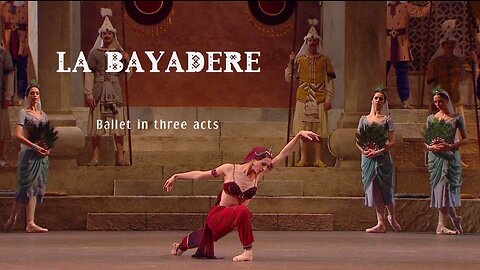
La Bayadère - Act III (Bolshoi 2013)
Adaneth - Arts & Literature
Act 3. Kingdom of the shades
The act opens in Solor's room where Magadeva is waiting to console his master. He offers up the opium pipe to Solor who, twice has a vision of Nikiya. After the second vision Solor has a mystical experience and is transported to the Kingdom of the Shades where he is reunited with NIkiya.
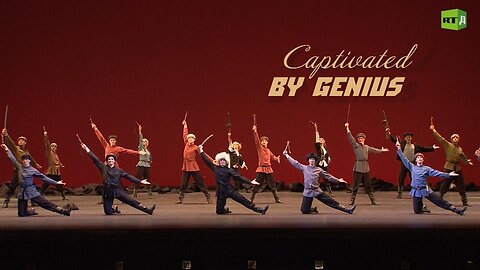
Moiseyev Ballet | RT Documentary

RT.Doc
The Moiseyev Ballet is a world-known and loved folk dance ensemble, which has played an important role in establishing Russia’s international cultural ties since its inception in 1943. Its dancers are under constant pressure to do justice to the legacy of its visionary founder, Igor Moiseyev, and to keep proving the Ballet’s leadership among folk dance groups of the world. They undergo gruelling rehearsals and have to accept the inevitability of injuries and health problems – all in the name of art. Yet they are always trying to reach perfection, no matter the cost. They give the dance their all and, unlike in classic ballet, are prepared to share fame with each other, rather than stand out as lead dancers.
Related: The hard path to becoming professional ballerina: a look Inside Russia's most famous ballet academy
In 1943, the visionary Russian choreographer founded the Moiseyev Ballet, which showcased traditional dances from various cultures not just from around Russia and former Soviet republics, but from around the world - from English arrangements to Cossack dances. His ballet exists and performs to this day, still using his original choreography.
The Moiseyev Ballet is grueling for the young dancers who perform there. Hours and hours of rehearsal, scores of injuries and high emotions are all par for the course on this stage. As they say, being polite and soft with people won’t get results. But in the end, the result here certainly shows.
Related: What it takes Russian rhythmic Gymnasts to keep Russia's leadership in this beautiful and demanding sport
The Moiseyev Ballet is at its heart an ensemble, and to that end so-called “superstars” have no place here. The dancers must all share the stage with one another, and work and perform as one flowing unit.
This famous ensemble has been travelling all over the world for decades. They were among the first Russians to go to America after the Cold War, and were on the first Russian flight to Israel after a long hiatus in relations. However, they also make sure to travel around Russia’s vast territories.
During the course of the film, one young dancer suffers a debilitating knee injury, and must undertake surgery. It’s heartbreaking, but he takes it in stride. It’s understood by all in the Moiseyev Ballet that these things happen, and at any rate the career of a dancer is bound to be short.
For the time being, though, these young stars shine brightly on the stage, and work tirelessly to show their own and others’ culture all over the world.
1.87K
views
3
comments

Igor Stravinsky Conducts Stravisnky | The Firebird, Suite (Royal Festival Hall - 1965)
Adaneth - Arts & Literature
The Firebird, Suite (1945)
New Philharmonia Orchestra
Filmed at the Royal Festival Hall, London
14 September 1965
1. Introduction
2. Dance of the Firebird
3. Variations of the Firebird
4. Pantomime I
5. Pas de deux (The Firebird and Ivan)
6. Pantomime II
7. Scherzo, Dance of the Princesses
8. Pantomime III
9. Round Dance of the Princesses (Khorovode)
10. Infernal Dance
11. Lullaby (The Firebird)
12. Finale
6
comments
Birches - Ensemble "Beryozka" and Pyatnitsky Choir (2024)
1 year ago
19
🎧AUDIO REMASTERED BY DJUKI🎧
Берёзы - Брезе - Birches - Betulle - Birken - Bouleaux
Исполнители: Ансамбль «Берёзка» и Хор имени Пятницкого
Performers: Ensemble "Beryozka" and Pyatnitsky Choir
Музыка / Слова: И. Матвиенко — М. Андреев
Music / Lyrics: I. Matvienko - M. Andreev
Большой праздничный концерт, посвященный Дню защитника Отечества, 23. 2. 2024.
Big festive concert dedicated to Defender of the Fatherland Day, February 23, 2024.
Loading comments...
-
 7:27
7:27
DjukiNew1957
1 month agoMorning briefing of the Ministry of Defense of Russia (21 October 2025) - SUBTITLES
1622 -
 DVR
DVR
VINCE
2 hours agoThe Boys At The Bureau Got The Bomber | Episode 182 - 12/05/25 VINCE
60.5K72 -
 LIVE
LIVE
LFA TV
12 hours agoLIVE & BREAKING NEWS! | FRIDAY 12/05/25
3,564 watching -
 LIVE
LIVE
Benny Johnson
1 hour agoFBI To EXPOSE January 6th Pipe Bomb Cover Up As Evidence Revealed | 'Bomber Family Was Anti-Trump…'
5,095 watching -
 LIVE
LIVE
Rethinking the Dollar
26 minutes agoRTD News Update: Retail Silver FOMO Starting In Asia
178 watching -
 1:36:52
Graham Allen
2 hours agoCandace Owens BACKS DOWN?! It’s Time To Burn All Of This Insanity To The Ground…..
126K704 -

Matt Kohrs
14 hours agoLive Day Trading, Breaking Market News & Payday Friday || The Matt Kohrs Show
10.6K5 -
 LIVE
LIVE
Badlands Media
7 hours agoBadlands Daily - J6 Pipe Bomber Caught(?), Hegseth Exonerated, Drug Boat Blown Up, Texas Map Upheld
3,607 watching -
 LIVE
LIVE
Wendy Bell Radio
6 hours agoRobbing America Blind
7,257 watching -
 LIVE
LIVE
The Big Mig™
1 hour agoThe U.S. Will Betray Kiev?
562 watching