
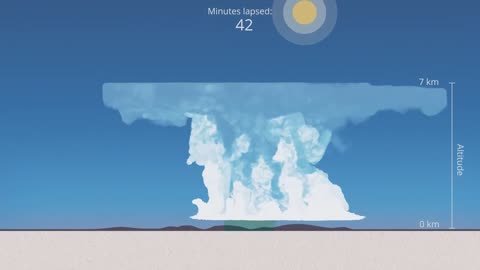
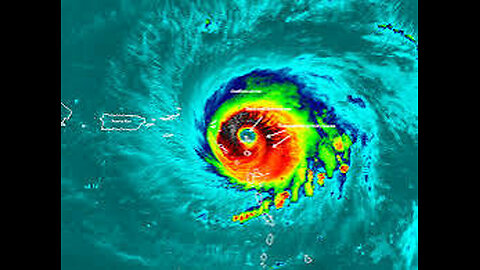
How Do Hurricanes Form? Meteorology - Weather Basics
What Causes a Tornado? - Meteorological Basics

NOAA: 'The Hurricane Hunters'

What is the Enhanced Fujita Tornado Scale - Weather Basics - Meteorology
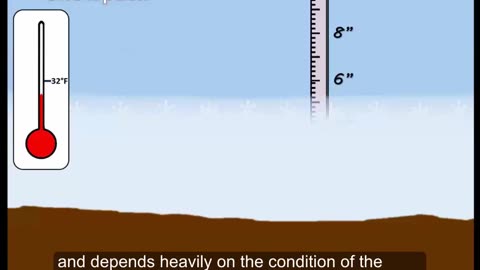
What is a Blizzard? Weather Basics - Meteorology
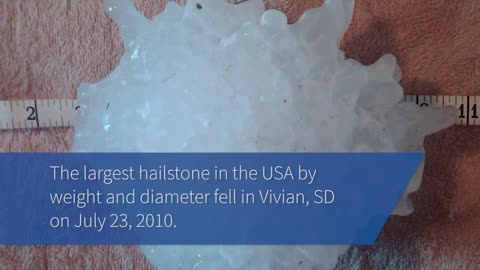
The Science of Hail - Meteorology - Weather Basics
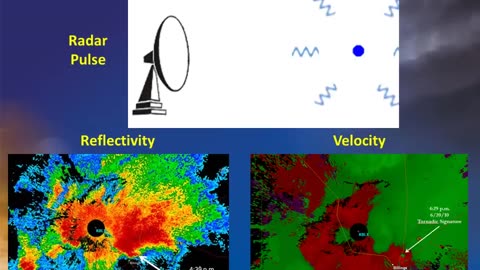
Doppler Weather Radar Basics - Weather Basics - Meteorology

How Do Rainbows Form? - Weather Basics

Thunderstorm Types - Meteorology - Weather

How Does Rain Form? What is the Water Cycle?
Hurricanes - Weather Basics - Meteorology 101

The Science Behind Lightning - Meteorology

How does snow form? - Meteorology
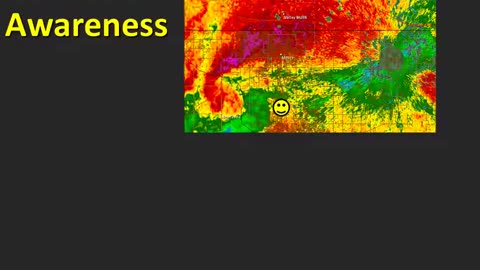
Storm Spotting: Storm Motion and Positioning- Meteorology
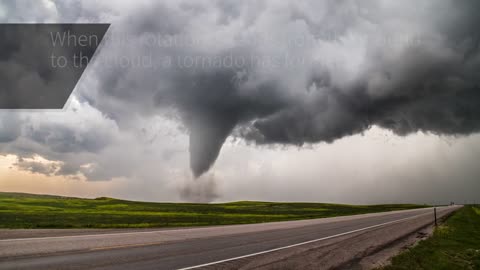
The Science Behind Tornadoes - Meteorology
A Tutorial on Cloud Types - Weather 101 - Meteorology
How Do Hurricanes Form? Meteorology - Weather Basics
Hurricanes are very large and intense storms. But where do these giant storms come from?
Hurricanes are dangerous and can cause major damage from storm surge, wind damage, rip currents and flooding. They can happen along any U.S. coast or in any territory in the Atlantic or Pacific oceans. Storm surge historically is the leading cause of hurricane-related deaths in the United States.
The Saffir-Simpson Hurricane Wind Scale is a 1 to 5 rating based on a hurricane's sustained wind speed. This scale estimates potential property damage. Hurricanes reaching Category 3 and higher are considered major hurricanes because of their potential for significant loss of life and damage. Category 1 and 2 storms are still dangerous, however, and require preventative measures. In the western North Pacific, the term "super typhoon" is used for tropical cyclones with sustained winds exceeding 150 mph. Note that all winds are using the U.S. 1-minute average.
Category One Hurricane
Winds 74-95 mph (64-82 kt or 119-153 km/hr). Very dangerous winds will produce some damage: Well-constructed frame homes could have damage to roof, shingles, vinyl siding and gutters. Large branches of trees will snap and shallowly rooted trees may be toppled. Extensive damage to power lines and poles likely will result in power outages that could last a few to several days. Irene of 1999, Katrina of 2005, and several others were Category One hurricanes at landfall in South Florida.
Category Two Hurricane
Winds 96-110 mph (83-95 kt or 154-177 km/hr). Extremely dangerous winds will cause extensive damage: Well-constructed frame homes could sustain major roof and siding damage. Many shallowly rooted trees will be snapped or uprooted and block numerous roads. Near-total power loss is expected with outages that could last from several days to weeks. Frances of 2004 was a Category Two when it hit just north of Palm Beach County, along with at least 10 other hurricanes which have struck South Florida since 1894.
Category Three Hurricane
Winds 111-129 mph (96-112 kt or 178-208 km/hr). Devastating damage will occur: Well-built framed homes may incur major damage or removal of roof decking and gable ends. Many trees will be snapped or uprooted, blocking numerous roads. Electricity and water will be unavailable for several days to weeks after the storm passes. Unnamed hurricanes of 1909, 1910, 1929, 1933, 1945, and 1949 were all Category 3 storms when they struck South Florida, as were King of 1950, Betsy of 1965, Jeanne of 2004, and Irma of 2017.
Category Four Hurricane
Winds 130-156 mph (113-136 kt or 209-251 km/hr). Catastrophic damage will occur: Well-built framed homes can sustain severe damage with loss of most of the roof structure and/or some exterior walls. Most trees will be snapped or uprooted and power poles downed. Fallen trees and power poles will isolate residential areas. Power outages will last weeks to possibly months. Most of the area will be uninhabitable for weeks or months. The 1888, 1900, 1919, 1926 Great Miami, 1928 Lake Okeechobee/Palm Beach, 1947, Donna of 1960 made landfall in South Florida as Category Four hurricanes.
Category Five Hurricane
Winds 157 mph or higher (137 kt or higher or 252 km/hr or higher). Catastrophic damage will occur: A high percentage of framed homes will be destroyed, with total roof failure and wall collapse. Fallen trees and power poles will isolate residential areas. Power outages will last for weeks to possibly months. Most of the area will be uninhabitable for weeks or months. The Keys Hurricane of 1935 and Andrew of 1992 made landfall in South Florida as Category Five hurricanes.
More Meteorology Videos
https://rumble.com/playlists/JfAj918PQuc
-
 UPCOMING
Sean Unpaved
46 minutes agoAaron Rodgers & Steelers BOUNCE BACK In WIN vs. Dolphins! | UNPAVED
1 -
 1:49:22
Steven Crowder
3 hours agoCandace & Erika: What The Meeting Really Says About Conservative Media
275K225 -
 16:28
16:28
Adam Does Movies
41 minutes agoIT: Welcome To Derry Episode 8 Recap - What A Finale!
-
 LIVE
LIVE
LFA TV
15 hours agoLIVE & BREAKING NEWS! | TUESDAY 12/16/25
4,264 watching -
 1:01:57
VINCE
4 hours agoThis Could Win Us The Midterms | Episode 189 - 12/16/25 VINCE
194K165 -
 LIVE
LIVE
The Mel K Show
1 hour agoMORNINGS WITH MEL K- The End of Zero Sum Game Theory Thinking Has Arrived - 12-16-25
838 watching -
 LIVE
LIVE
The Shannon Joy Show
1 hour agoSJ LIVE Dec 16 - TACO Trump Flees California After Judge Orders Him To Remove Troops! Plus The Bitcoin Collapse & AI Bubble W/ Fin-Analyst Jack Gamble!
308 watching -
 UPCOMING
TheAlecLaceShow
1 hour agoBrown University | Rob Reiner | Guests: Senator Rick Scott & Sec. Linda McMahon | The Alec Lace Show
12 -
 57:04
57:04
efenigson
2 hours agoSentenced For Building Freedom! Live: Samourai Wallet's Keonne Rodriguez
10.5K5 -
 1:56:02
Benny Johnson
3 hours agoDark New Mysterious Footage Of Brown University Killer RELEASED After Republican Leader MURDERED...
47.3K25